Stock Option and Dividend Equivalent Plan with exhibits of UGI Corp.
Understanding this form
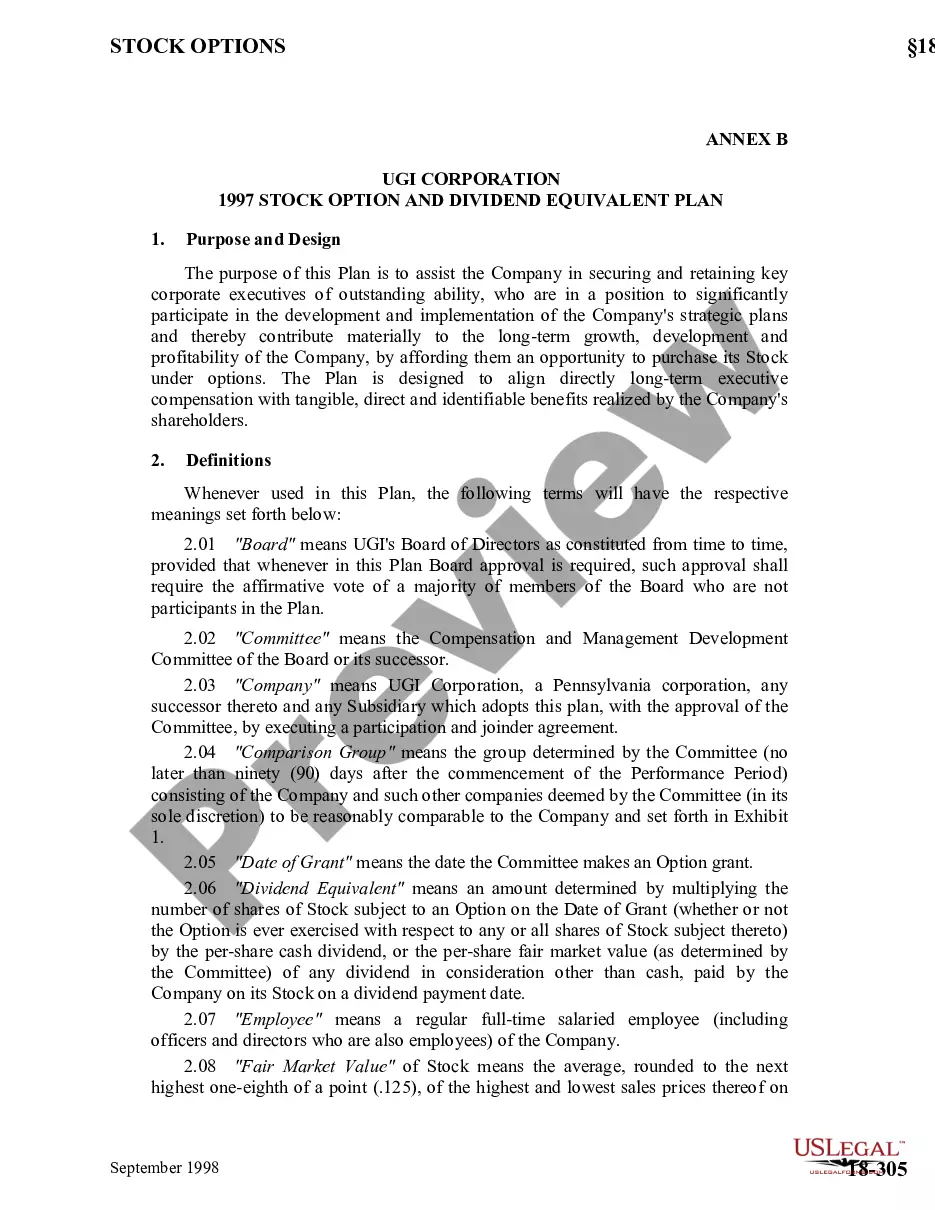
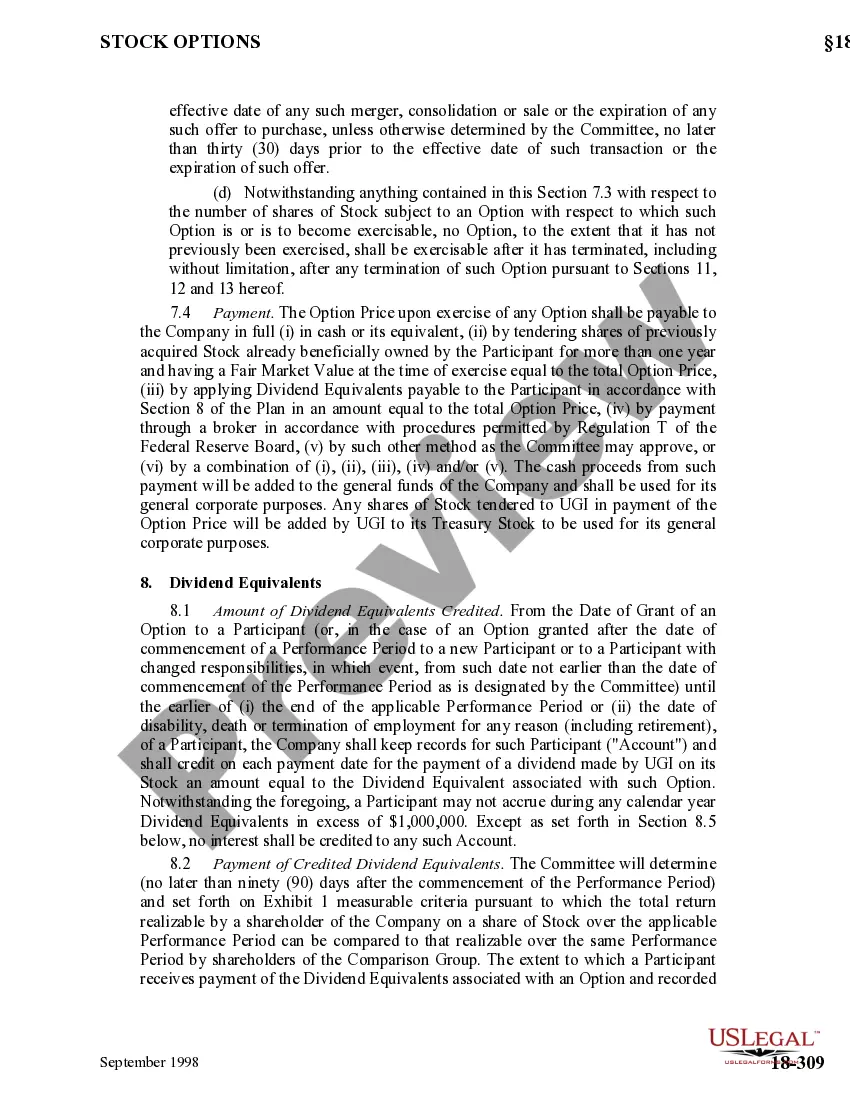
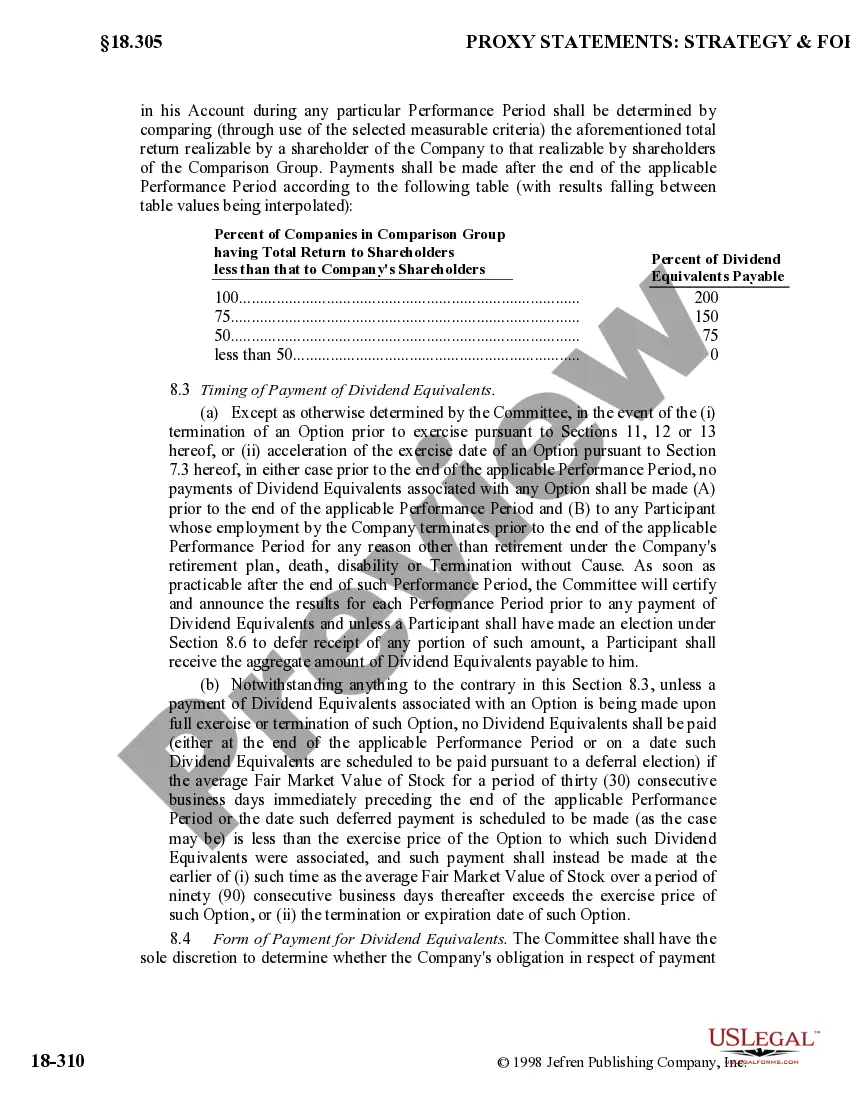
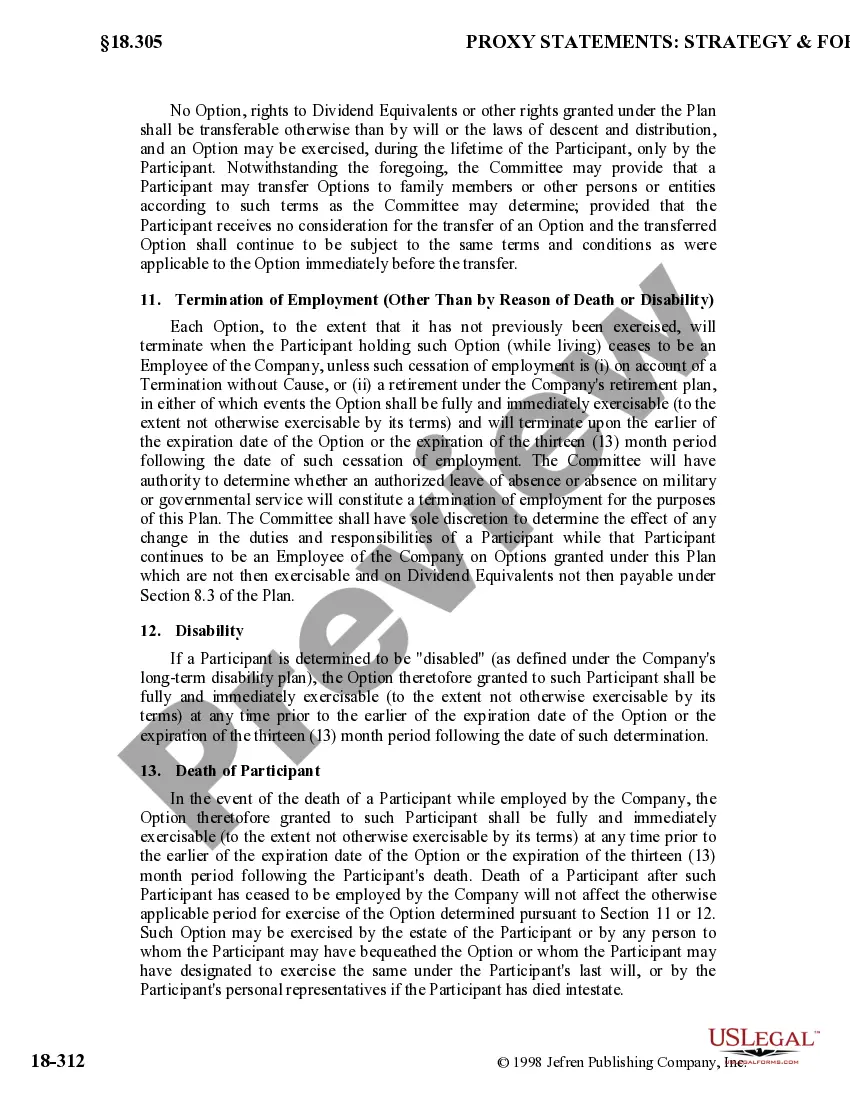
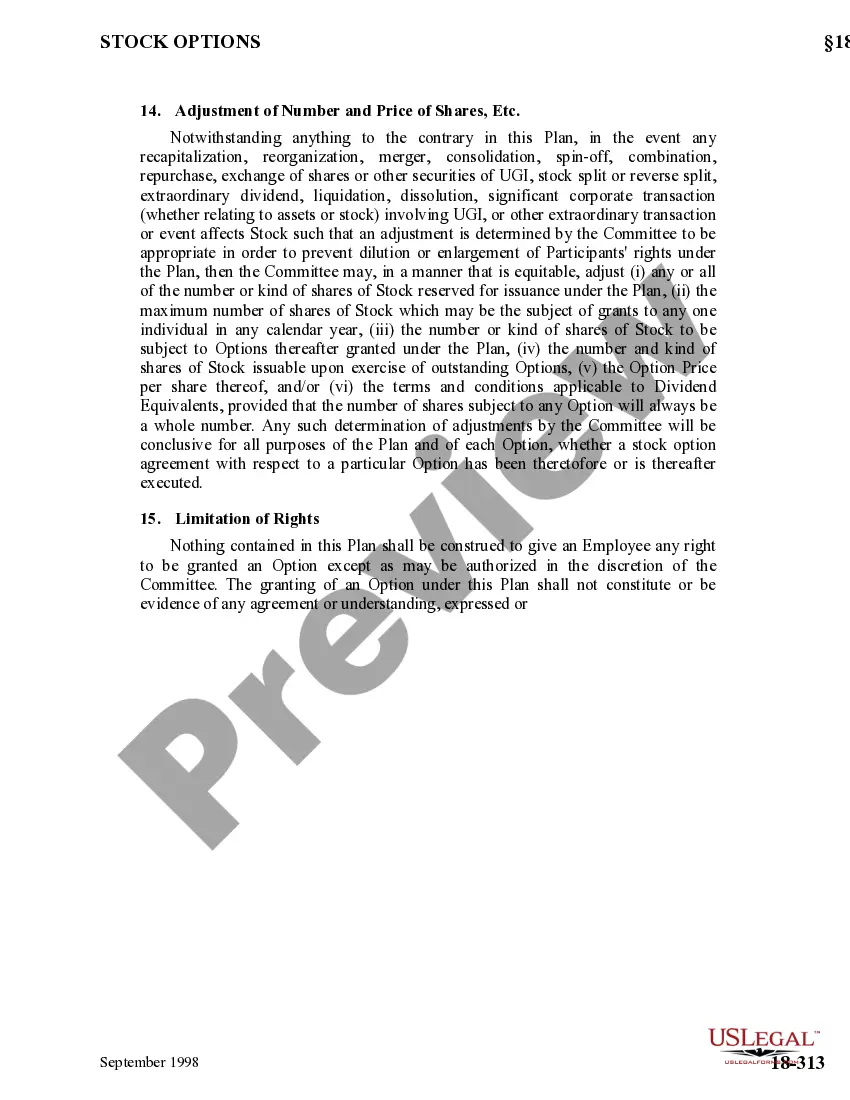
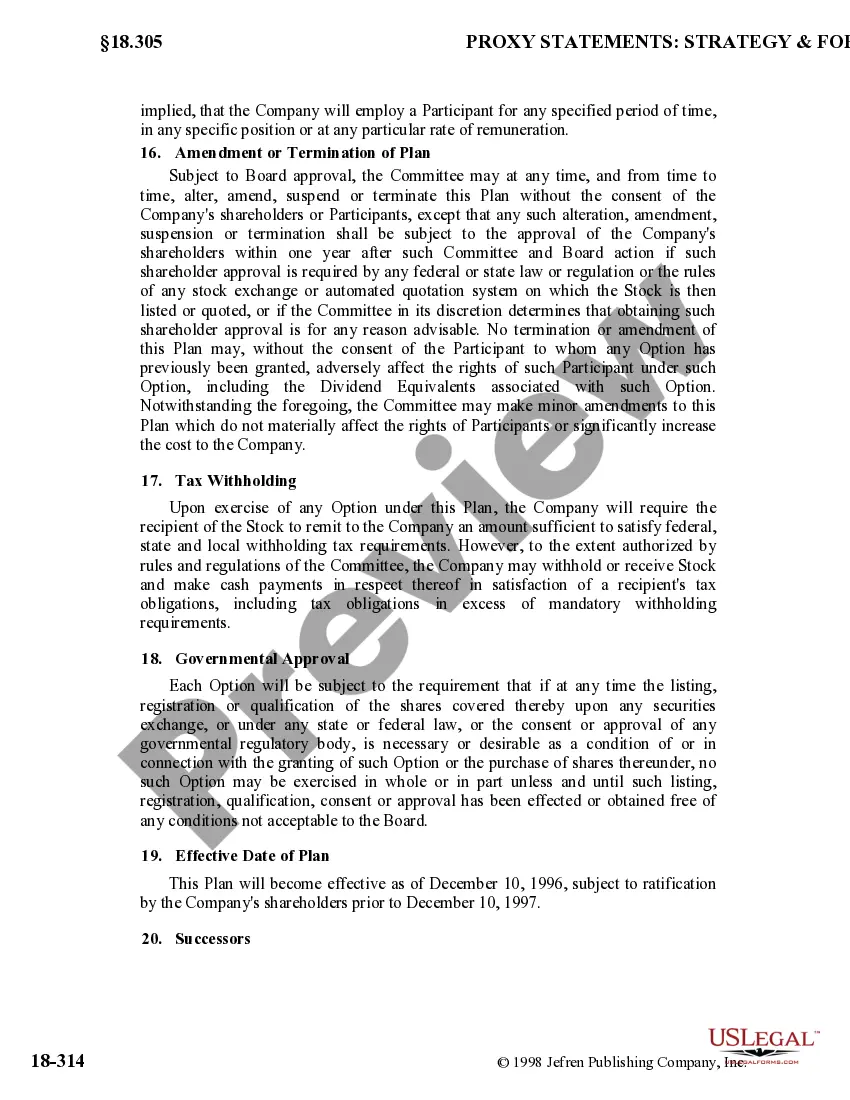
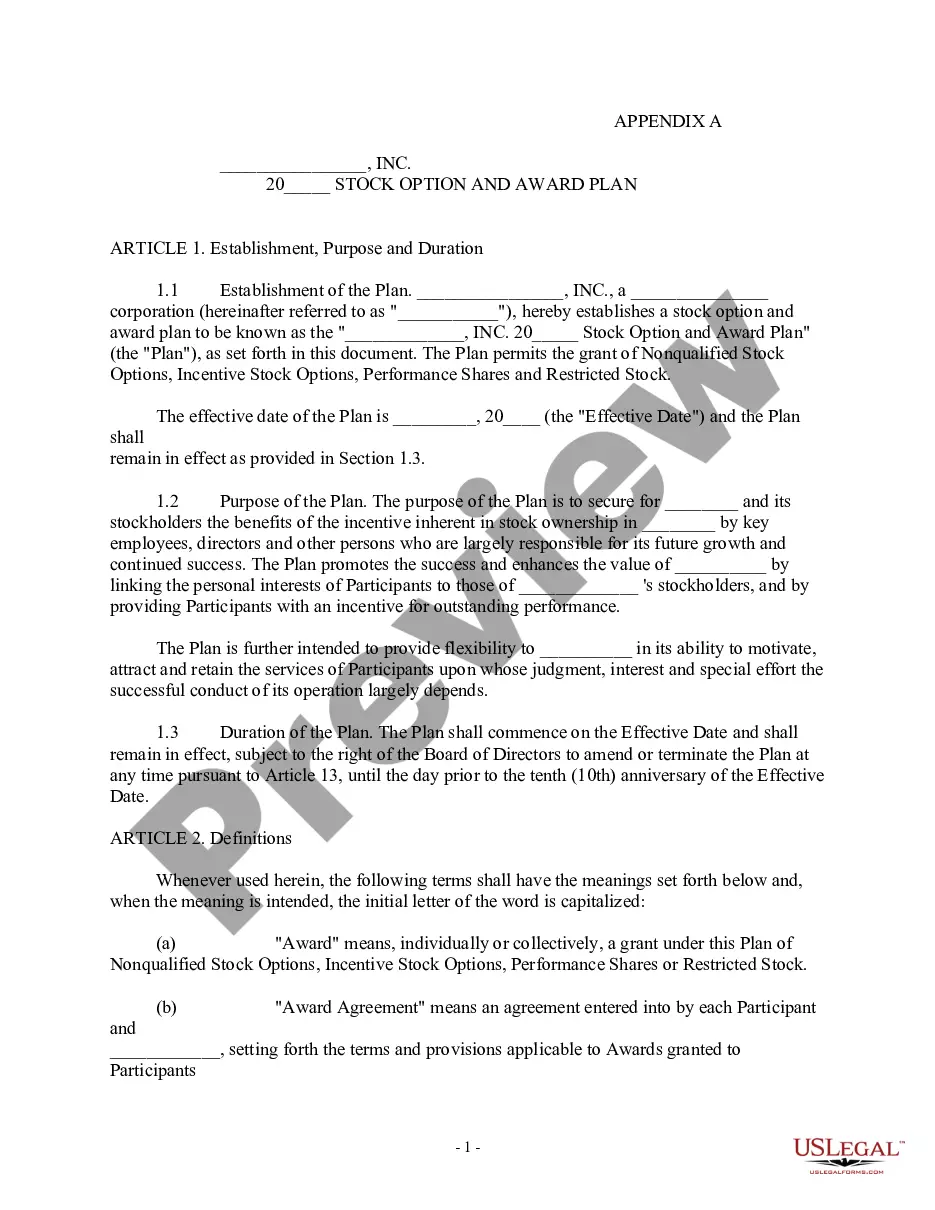
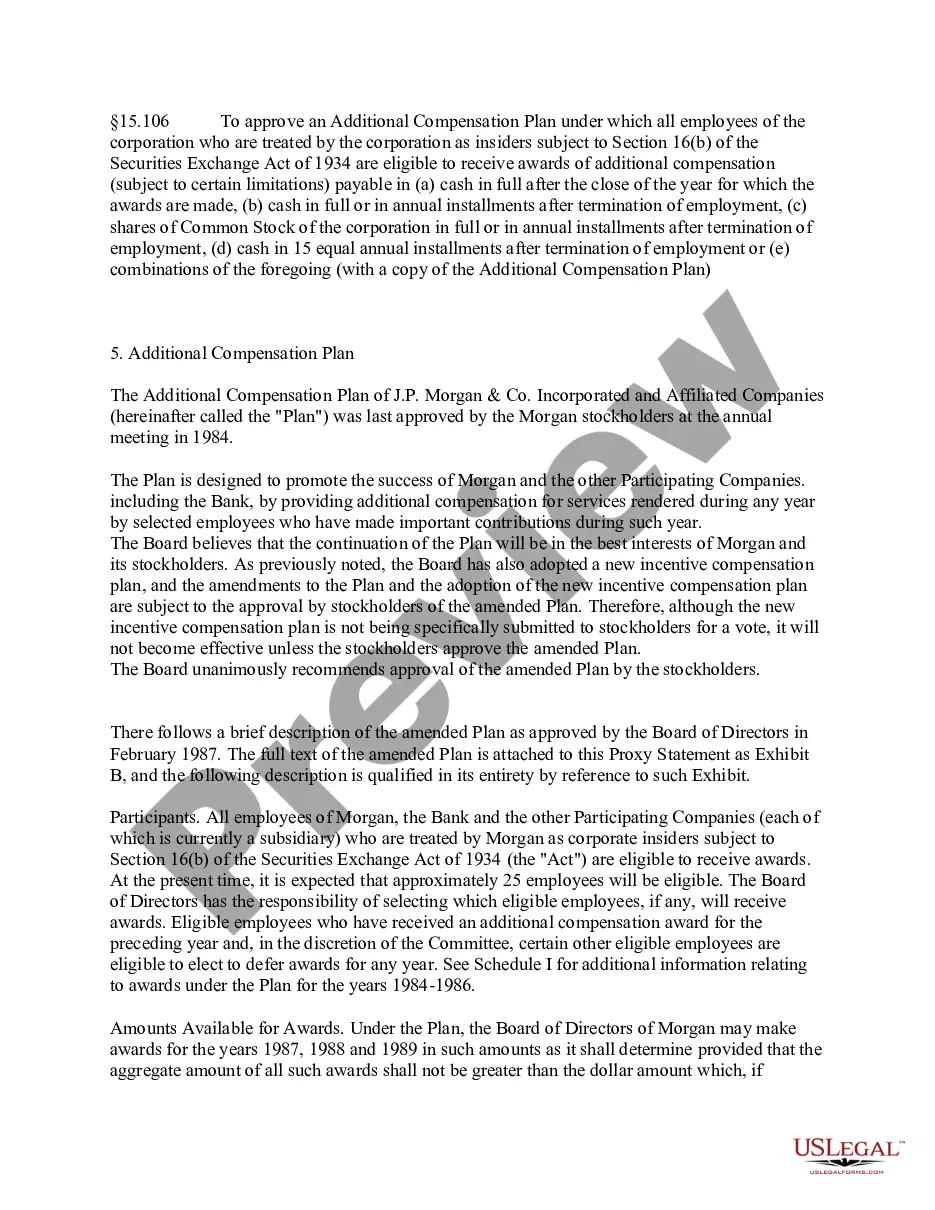
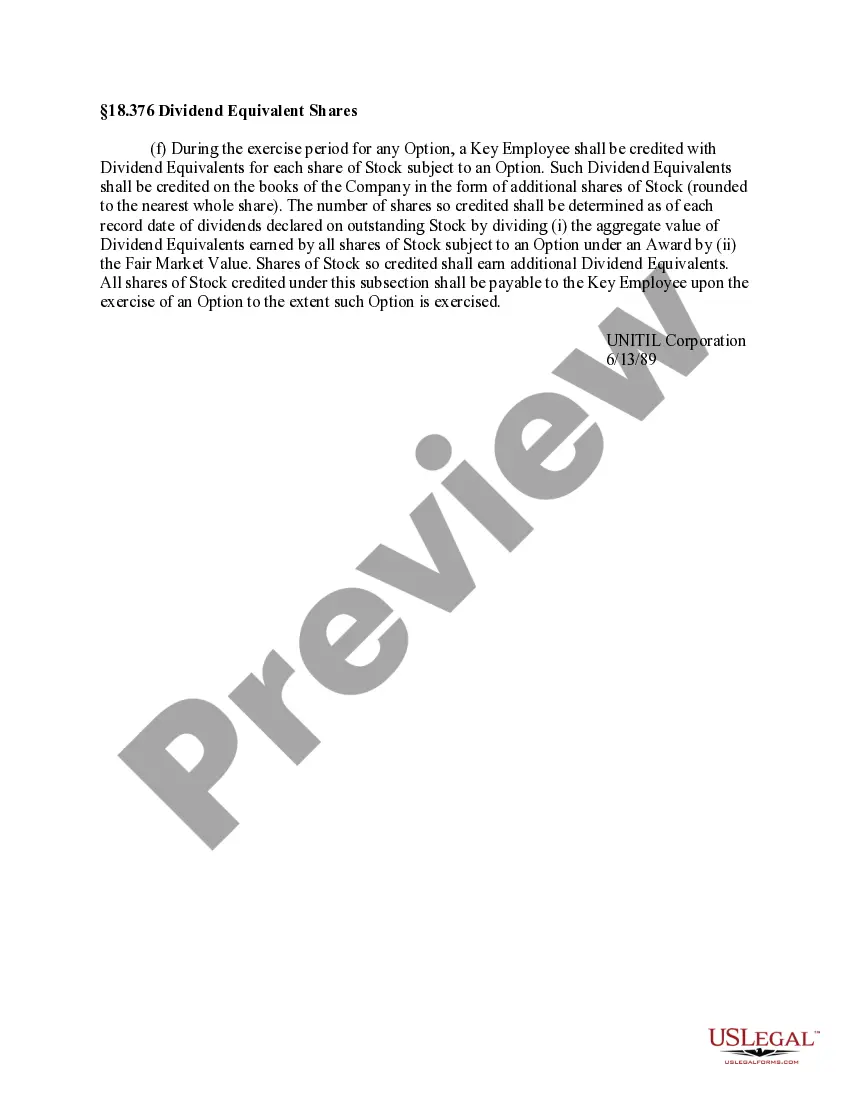
The Stock Option and Dividend Equivalent Plan is designed to offer non-qualified stock options and dividend equivalents to key employees of UGI Corporation. This plan helps align the interests of executives with those of shareholders by providing them the opportunity to purchase company stock, thereby contributing to the companyâs long-term growth and profitability. Unlike other compensation plans, this plan integrates the performance of UGI stock with dividend equivalents, which are payments based on dividends paid on the stock, further incentivizing employees.
Key parts of this document
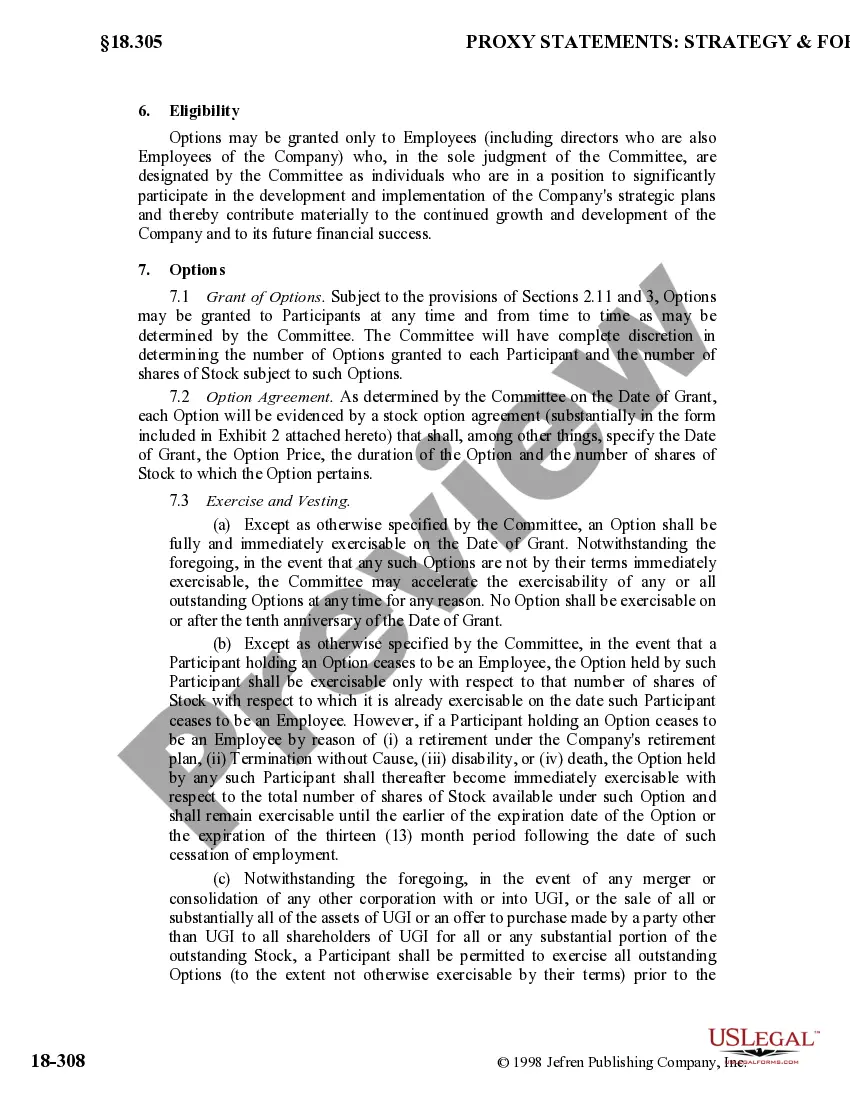
- Purpose: To retain and motivate key executives by granting them options to buy shares of UGI stock at a predetermined price.
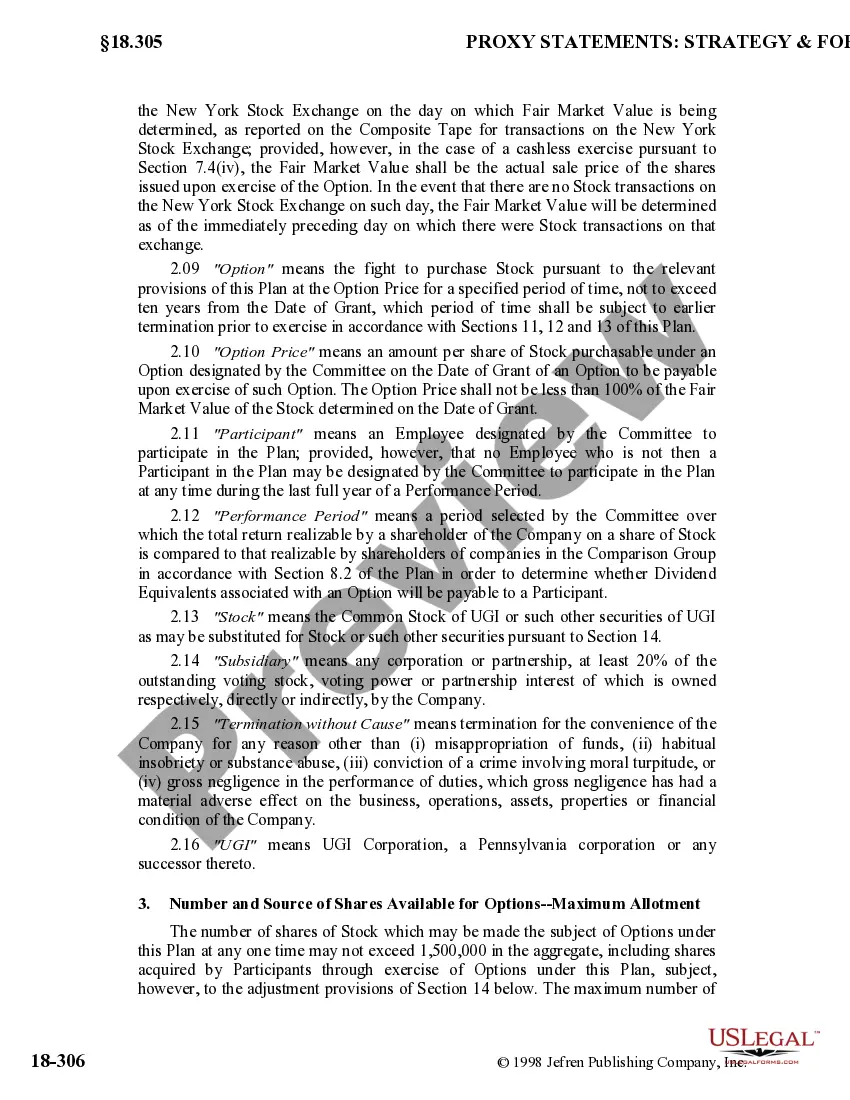
- Definitions: Clear definitions of key terms such as "Dividend Equivalent," "Fair Market Value of Stock," and "Performance Period."
- Eligibility: Available to full-time salaried employees designated by the Committee as suitable participants.
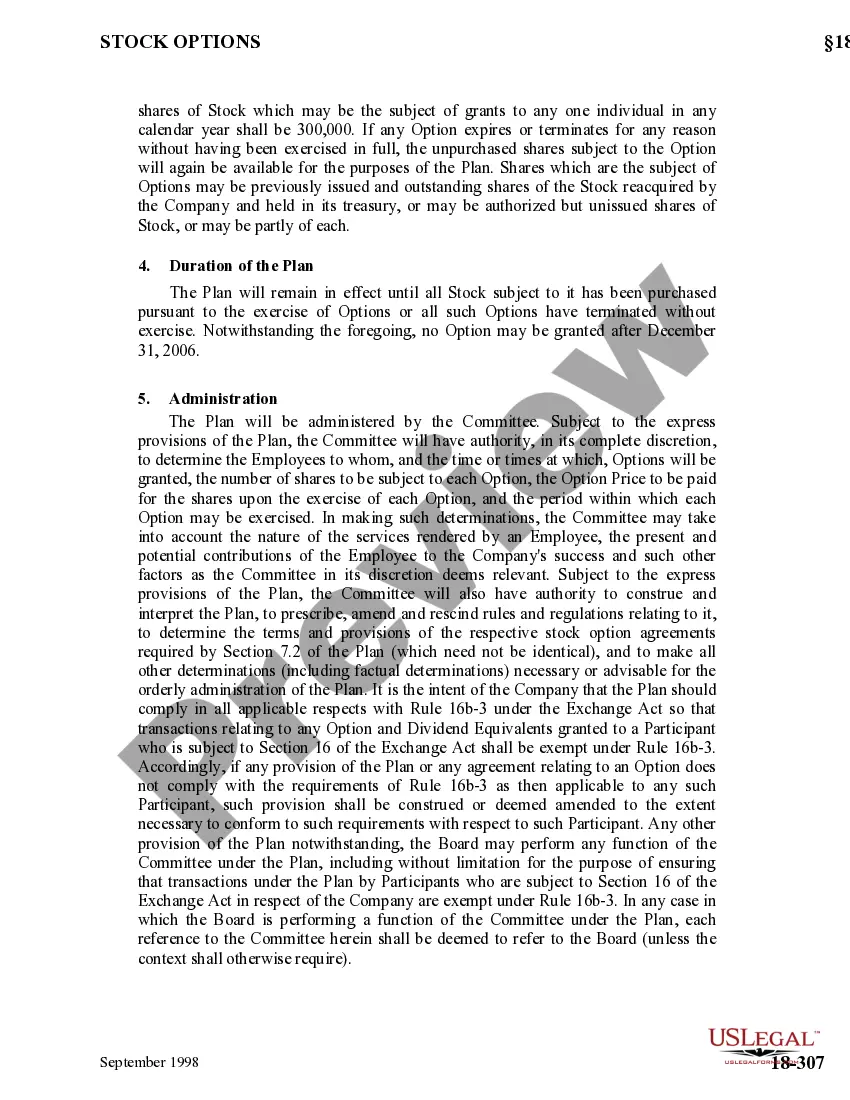
- Administration: Managed by the Compensation and Management Development Committee, which sets the terms for options and dividend equivalents.
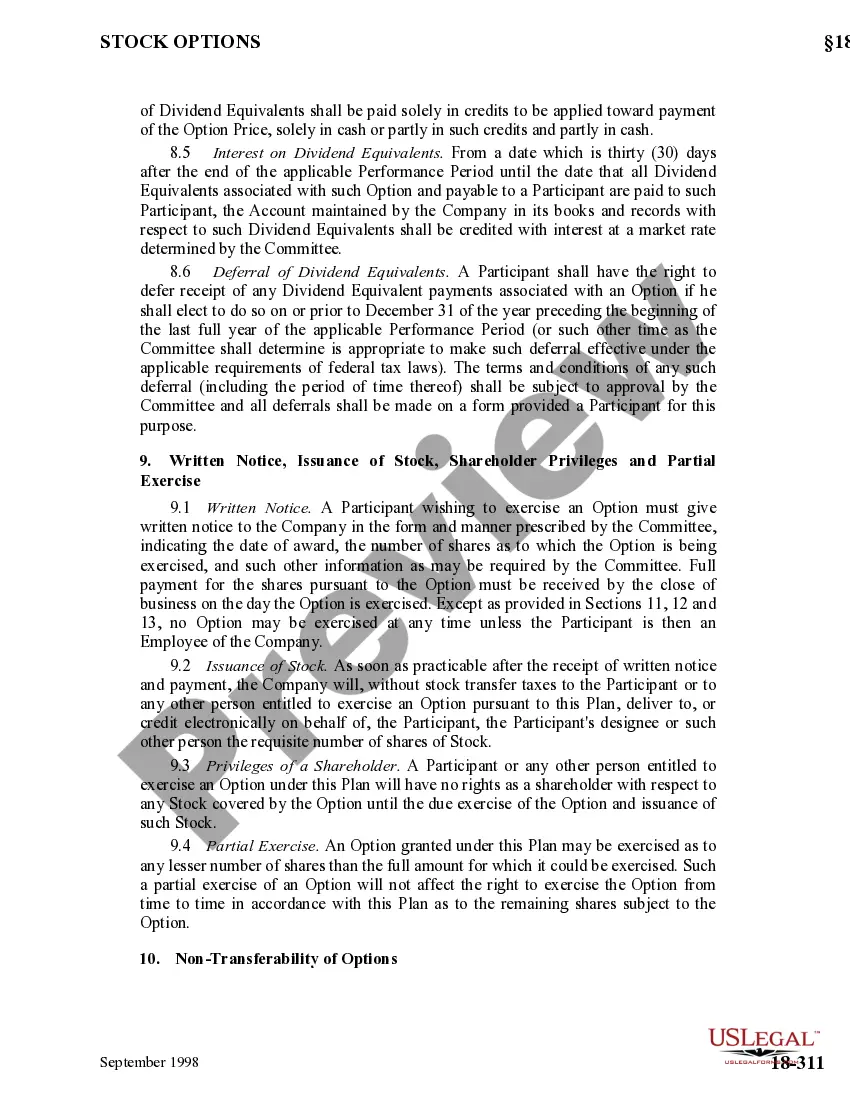
- Vesting Schedule: Details on when options can be exercised and conditions under which they become immediately exercisable.


When to use this document
This form is utilized when an employee is granted stock options and dividend equivalents under UGI Corporation's plan. It is commonly used in scenarios involving compensation negotiations for top executives, when aiming to offer performance-linked incentives to retain talent, or during major corporate events such as mergers or acquisitions.
Who can use this document
Eligibility and Target Audience:
- Key corporate executives at UGI Corporation.
- Employees who are part of the management team and can significantly contribute to the company's strategic goals.
- Eligible employees recognized and selected by the Compensation and Management Development Committee.
How to complete this form
Steps to complete the form:
- Identify the employee to whom stock options are granted.
- Specify the number of shares and the option price in the stock option agreement.
- Determine and record the performance period for evaluating dividend equivalents.
- Outline any vesting schedules and expiration dates for the stock options.
- Provide signatures from both the employer and the employee to finalize the grant of options.
Is notarization required?
This form does not typically require notarization unless specified by local law. Always verify specific jurisdictional requirements that may apply to your situation.
Get your form ready online
Our built-in tools help you complete, sign, share, and store your documents in one place.
Make edits, fill in missing information, and update formatting in US Legal Forms—just like you would in MS Word.
Download a copy, print it, send it by email, or mail it via USPS—whatever works best for your next step.
Sign and collect signatures with our SignNow integration. Send to multiple recipients, set reminders, and more. Go Premium to unlock E-Sign.
If this form requires notarization, complete it online through a secure video call—no need to meet a notary in person or wait for an appointment.
We protect your documents and personal data by following strict security and privacy standards.

Make edits, fill in missing information, and update formatting in US Legal Forms—just like you would in MS Word.

Download a copy, print it, send it by email, or mail it via USPS—whatever works best for your next step.

Sign and collect signatures with our SignNow integration. Send to multiple recipients, set reminders, and more. Go Premium to unlock E-Sign.

If this form requires notarization, complete it online through a secure video call—no need to meet a notary in person or wait for an appointment.

We protect your documents and personal data by following strict security and privacy standards.
Mistakes to watch out for
- Failing to clearly identify the employee eligible for the stock options.
- Not specifying the option price accurately.
- Overlooking the vesting schedule which can lead to misunderstandings about when options can be exercised.
Benefits of using this form online
- Convenience: This form allows for easy completion and processing of stock options and dividend equivalents.
- Editability: The downloadable format enables personalized adjustments to be made as needed.
- Reliability: Legal forms provided by UGI Corporation ensure compliance with corporate governance and tax regulations.
- Enforceability: The stock options and dividend equivalents must comply with federal and state laws to ensure they are legally binding.
- Tax Considerations: Employees should consult tax professionals regarding the tax implications of exercising stock options and receiving dividends.
Key takeaways
- The Stock Option and Dividend Equivalent Plan encourages key executives to align their performance with shareholder interests.
- It is crucial to understand the terms, vesting schedules, and eligibility criteria before utilizing this form.
- Accurate completion of the form is important to avoid any legal complications in the future.
Looking for another form?




Form popularity
FAQ
RSUs don't provide dividends, as actual shares are not allocated. However, an employer may pay dividend equivalents that can be moved into an escrow account to help offset withholding taxes, or be reinvested through the purchase of additional shares.
You typically receive the shares after the vesting date. Only then do you have voting and dividend rights. Companies can and sometimes do pay dividend equivlent payouts for unvested RSUs.Unlike stock options, RSUs always have some value to you, even when the stock price drops below the price on the grant date.
Restricted stock refers to unregistered shares of ownership in a corporation that are issued to corporate affiliates, such as executives and directors. Restricted stock is non-transferable and must be traded in compliance with special Securities and Exchange Commission (SEC) regulations.
Dividend equivalents paid on restricted stock units are treated as compensation income and will be subject to federal income tax when paid to the employee.When dividend equivalents are paid on a current basis, they are subject to federal income tax at the time of the payment.
RSUs do not offer voting rights until actual shares are issued at vesting. No Dividends. RSUs cannot pay dividends, because no actual shares are used (employers can pay cash dividend equivalents if they choose).
RSUs do not offer voting rights until actual shares are issued at vesting. No Dividends. RSUs cannot pay dividends, because no actual shares are used (employers can pay cash dividend equivalents if they choose). No Section 83(b) Election.
Shares outstanding include shares of unvested restricted stock.Shares of unvested restricted stock are excluded from our calculation of basic weighted average shares outstanding, but their dilutive impact is added back in the calculation of diluted weighted average shares outstanding.
Dividends paid from money market accounts, such as deposits in savings banks, credit unions, or other financial institutions, do not qualify and should be reported as interest income.
A dividend equivalent payment is any gross amount that references the payment of a dividend on a U.S. equity and that is used to compute any net amount transferred to or from the long party, even if the long party make a net payment to the short party or the net payment is zero.