Stock Option Plan For Federal Savings Association
What this document covers
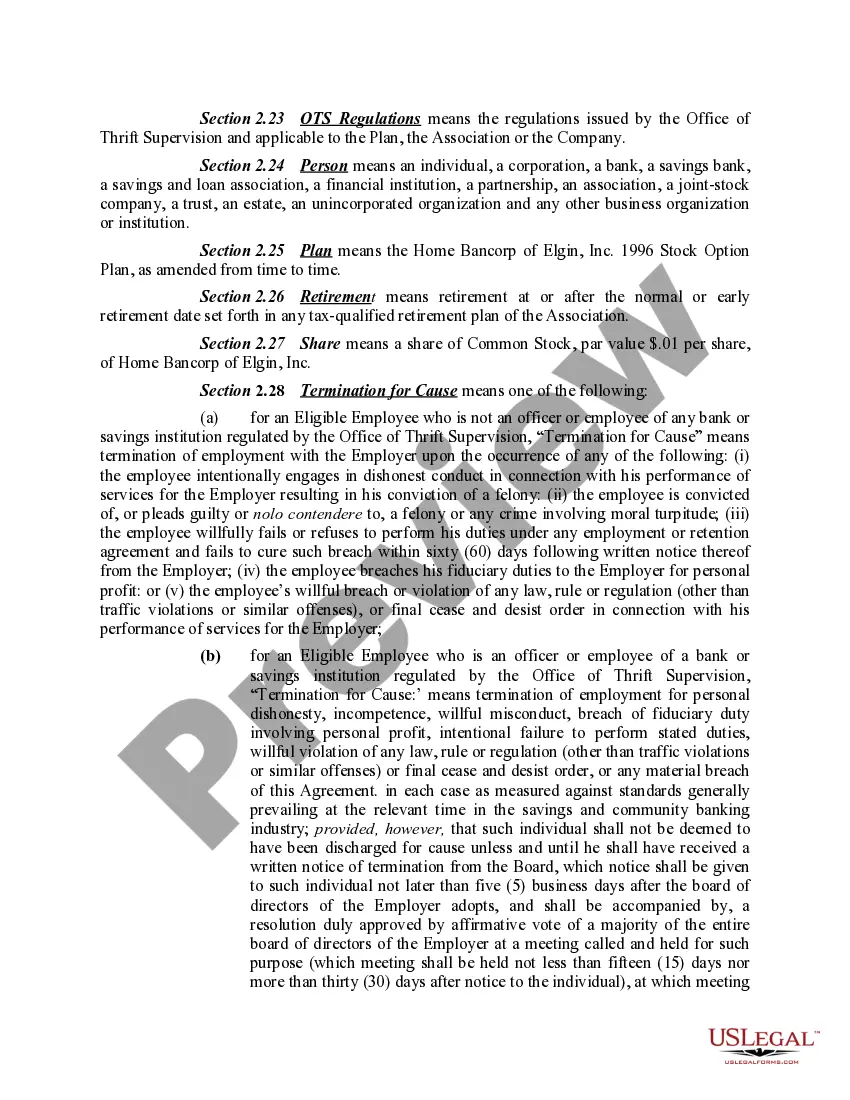
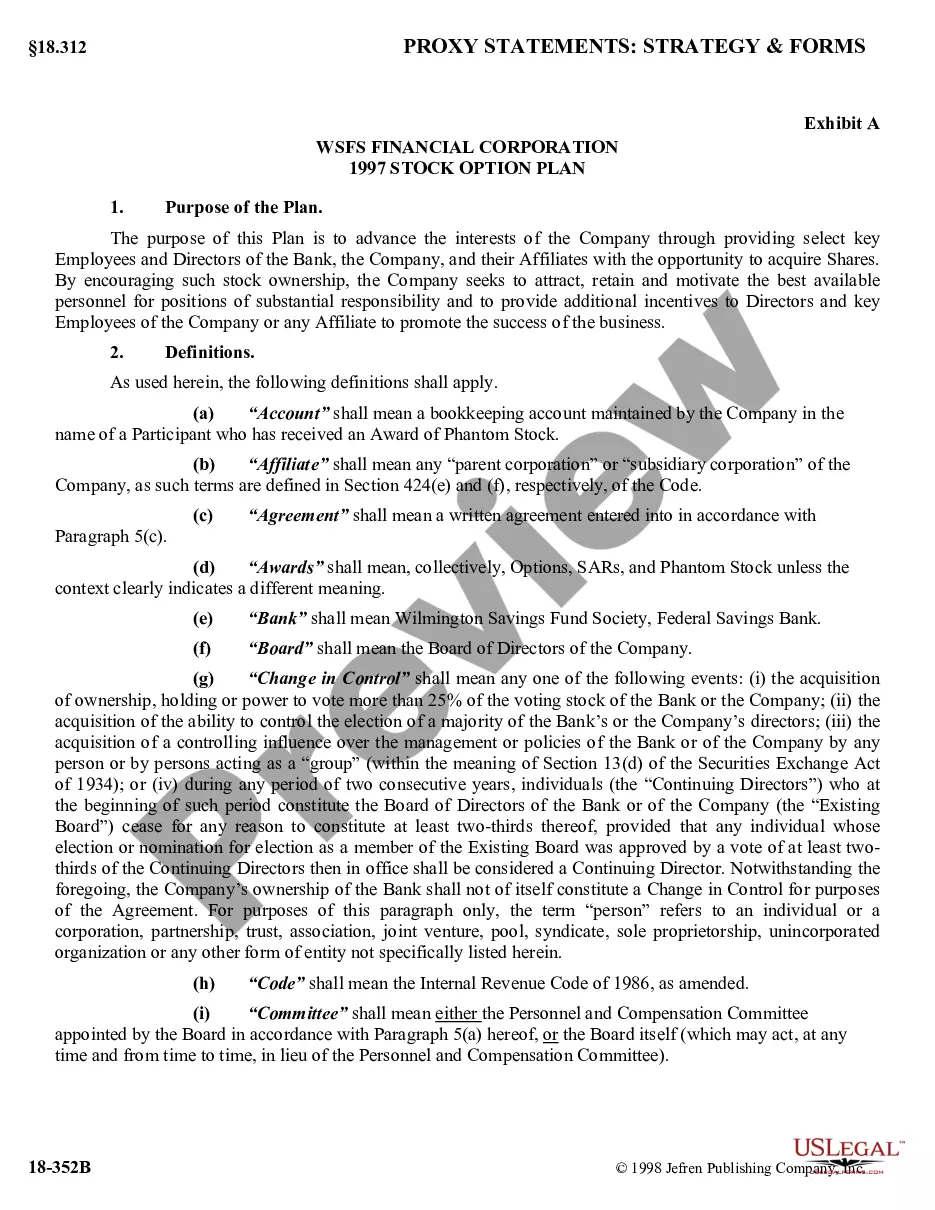
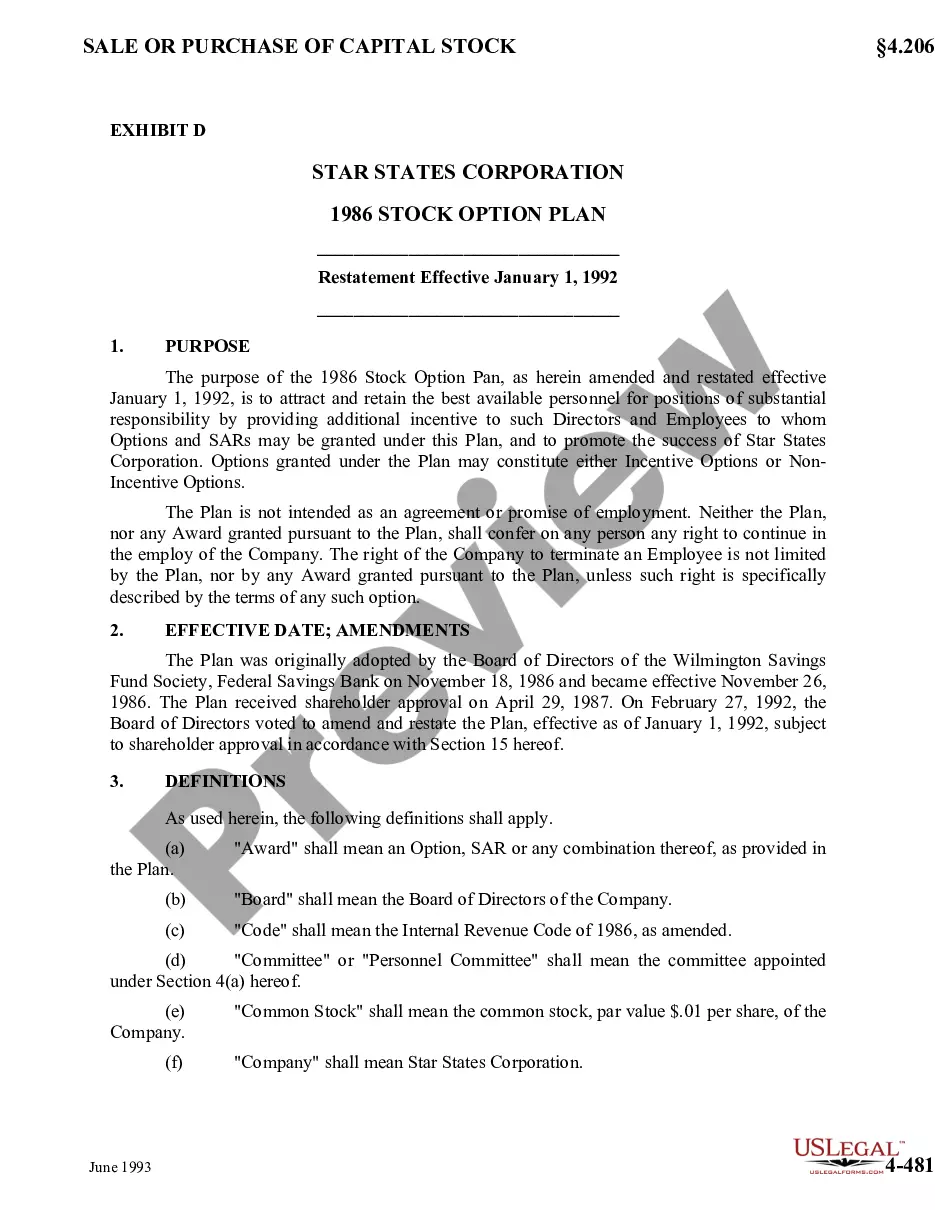
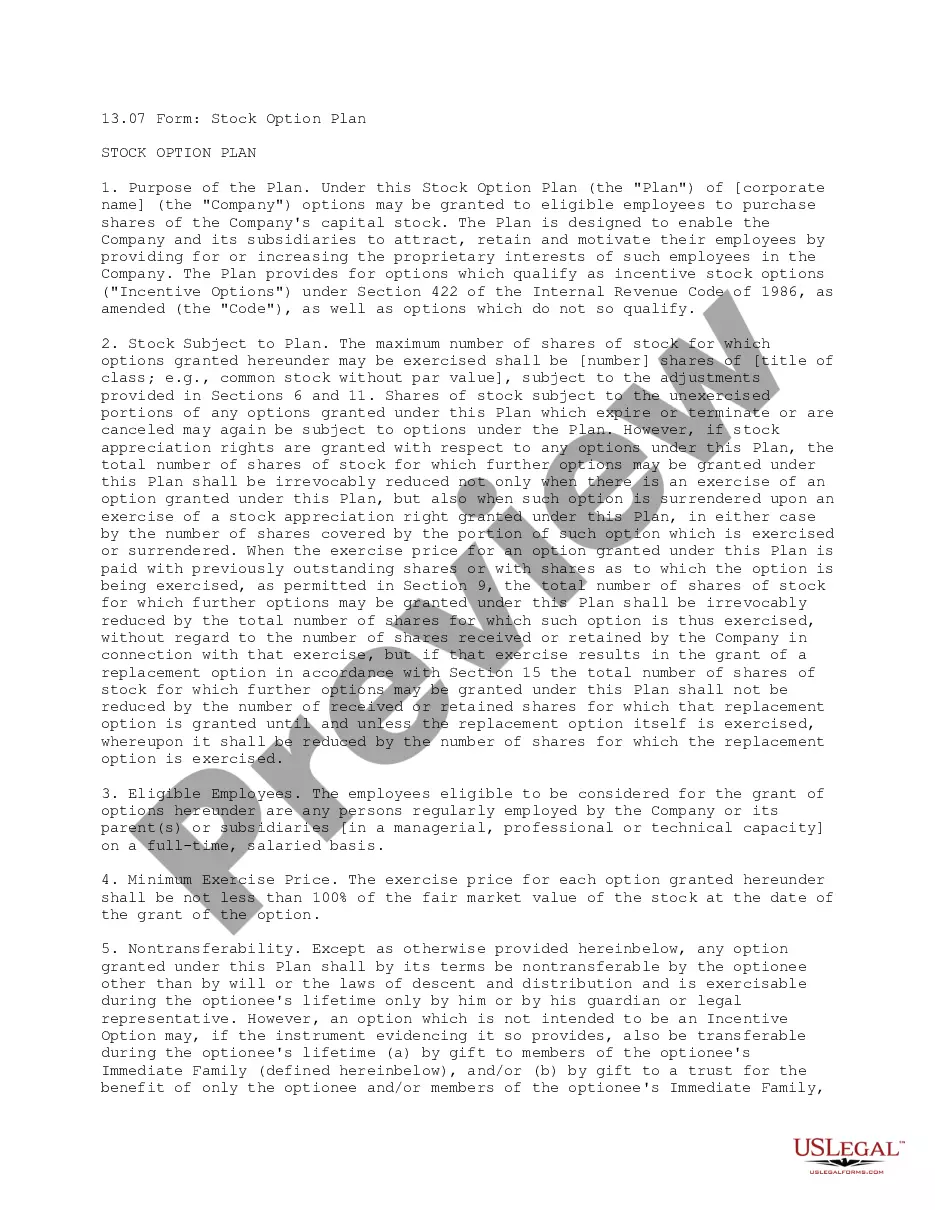
The Stock Option Plan for Federal Savings Association is a legal document that establishes a framework for granting stock options to officers, employees, and outside directors of a financial institution. This plan differentiates between Incentive Stock Options and Non-qualified Stock Options, providing valuable incentives to promote growth and attract talents. The plan complies with regulations set forth by the Office of Thrift Supervision, ensuring it meets necessary legal standards for financial institutions.
What’s included in this form
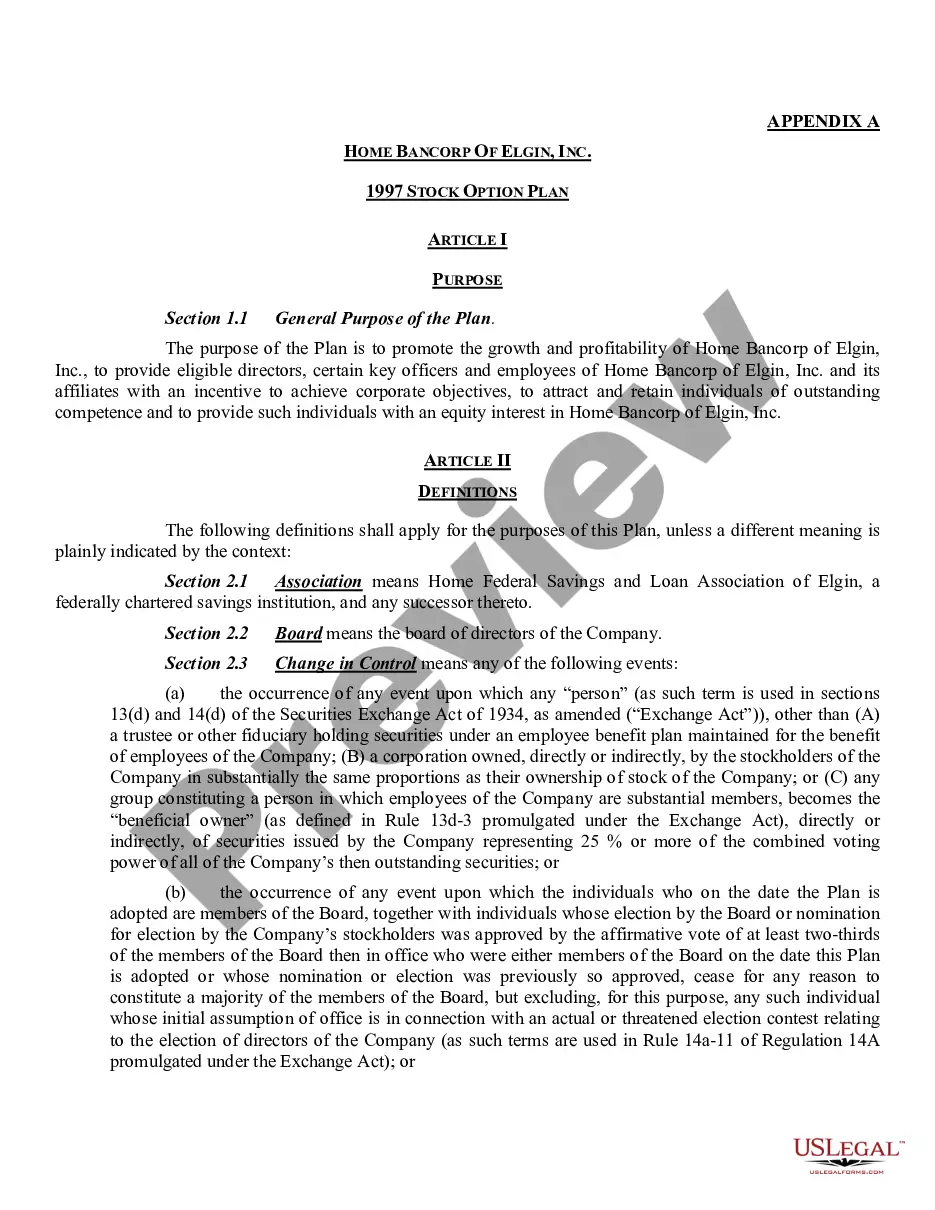
- Article I: Purpose defines the goals of the stock option plan.
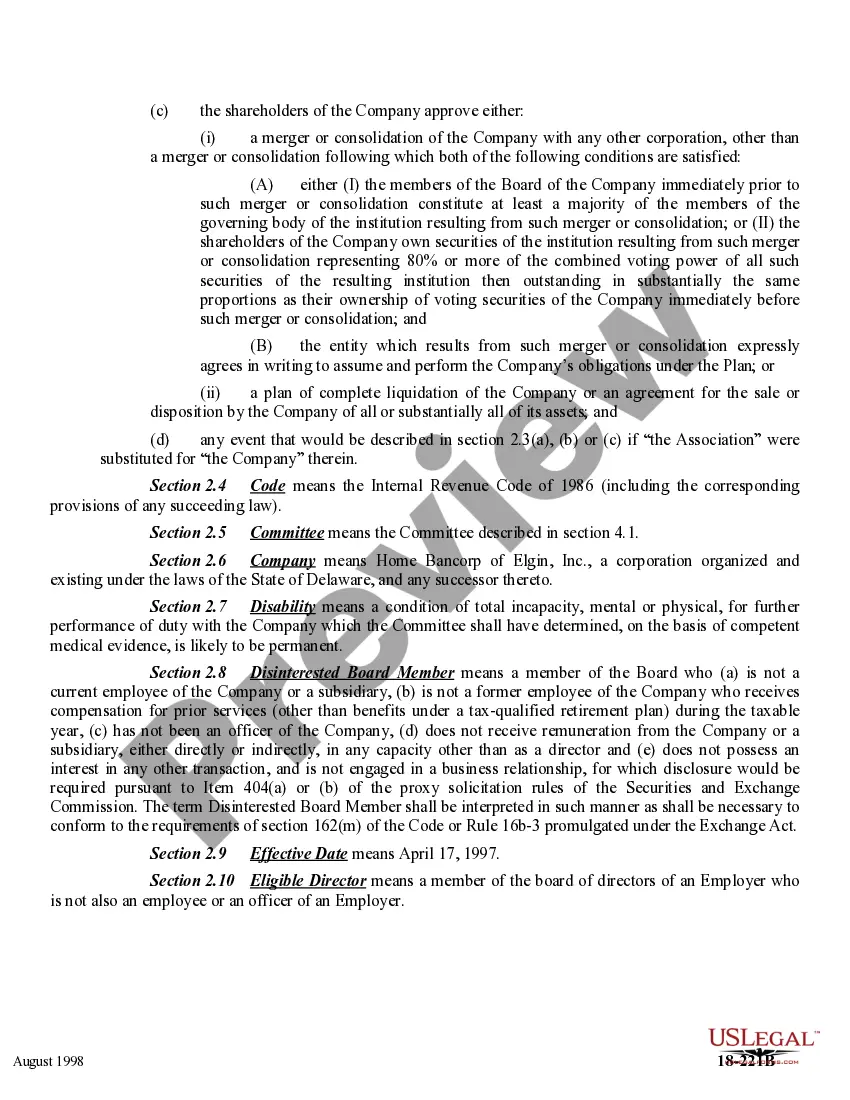
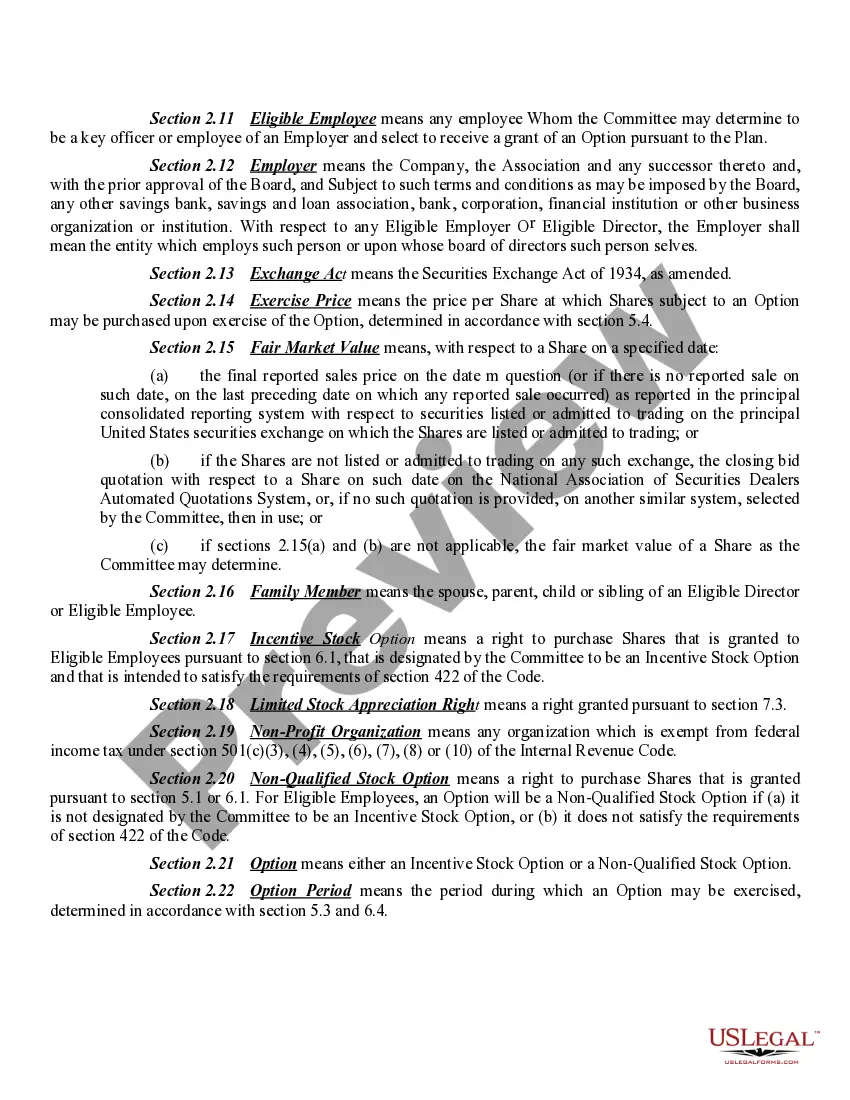
- Article II: Definitions clarifies terms used in the plan, such as Eligible Employee and Eligible Director.
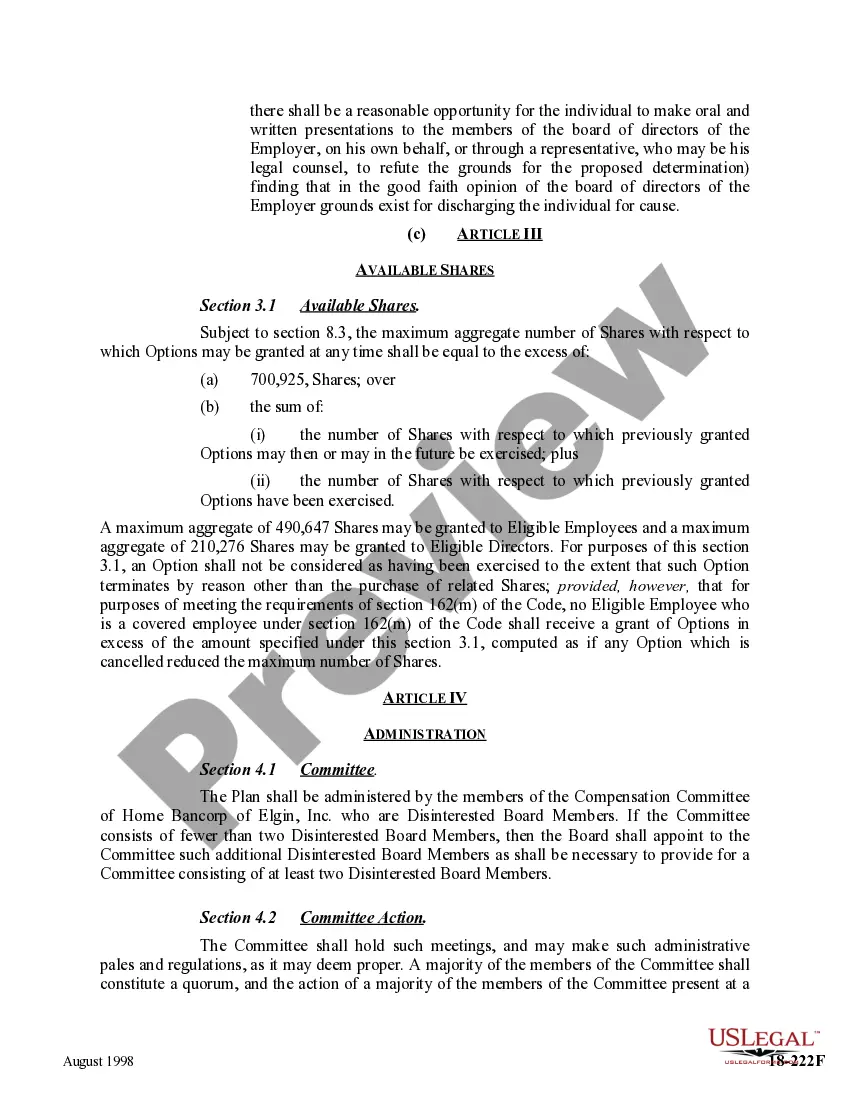
- Article III: Available Shares outlines the maximum number of shares that may be granted under the plan.
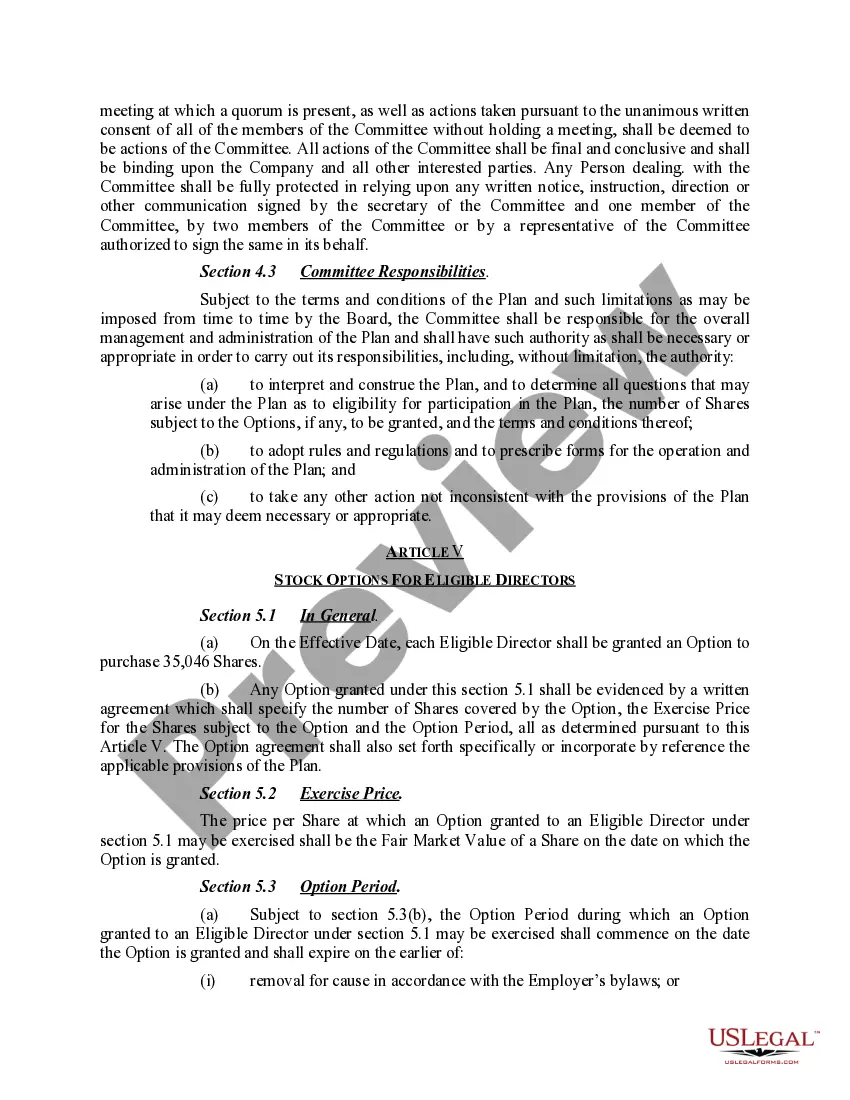
- Article IV: Administration explains how the plan is managed and by whom.
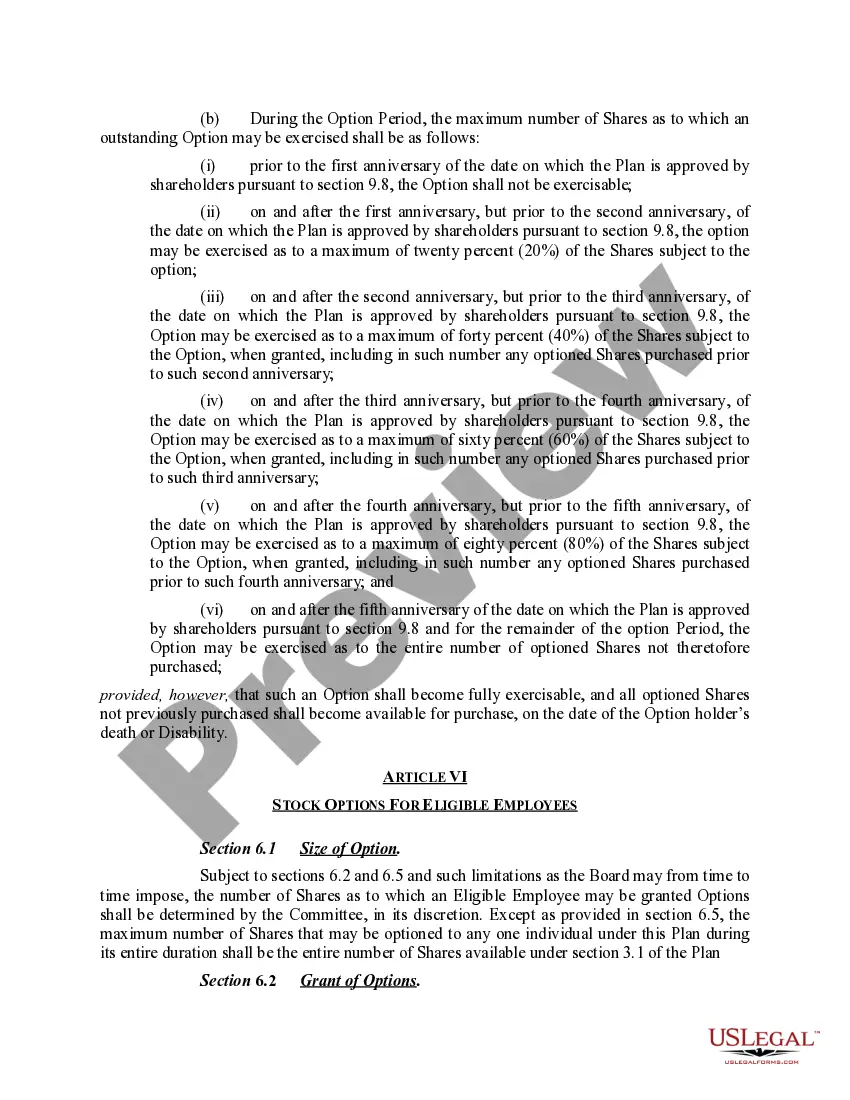
- Article V: Stock Options for Eligible Directors details the specific options available to eligible directors.
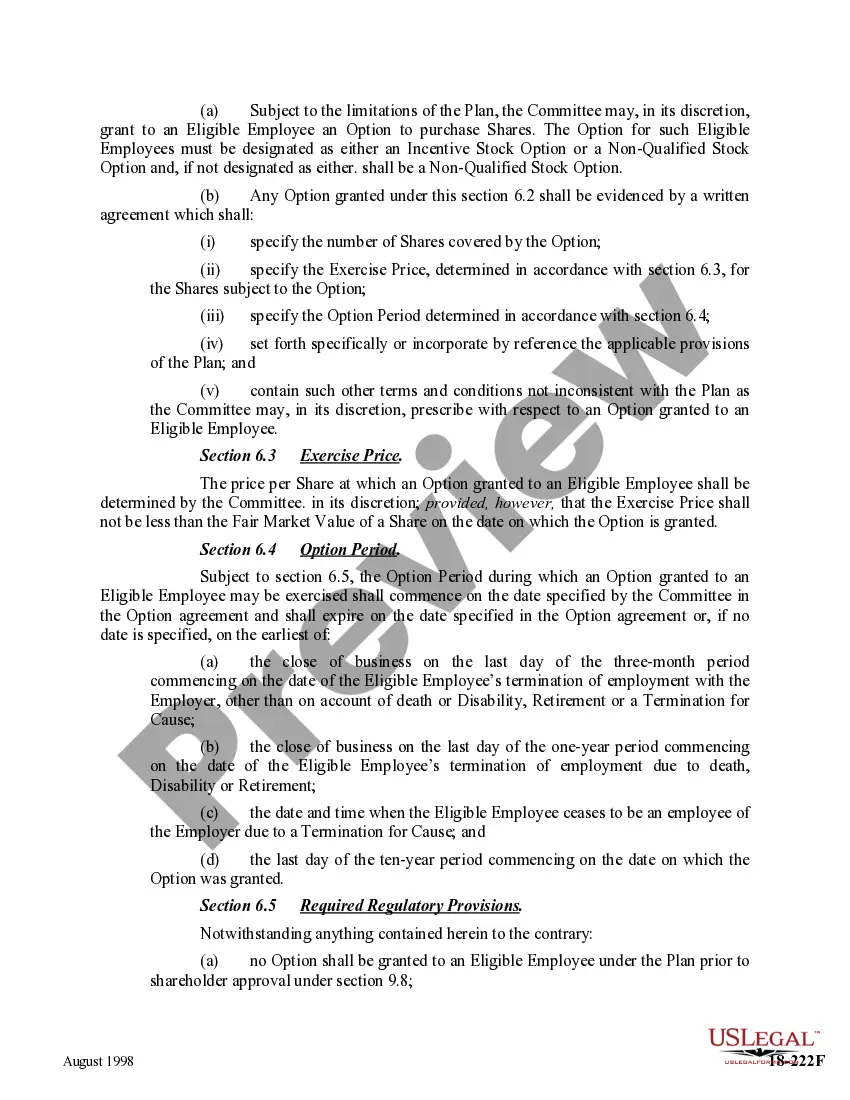
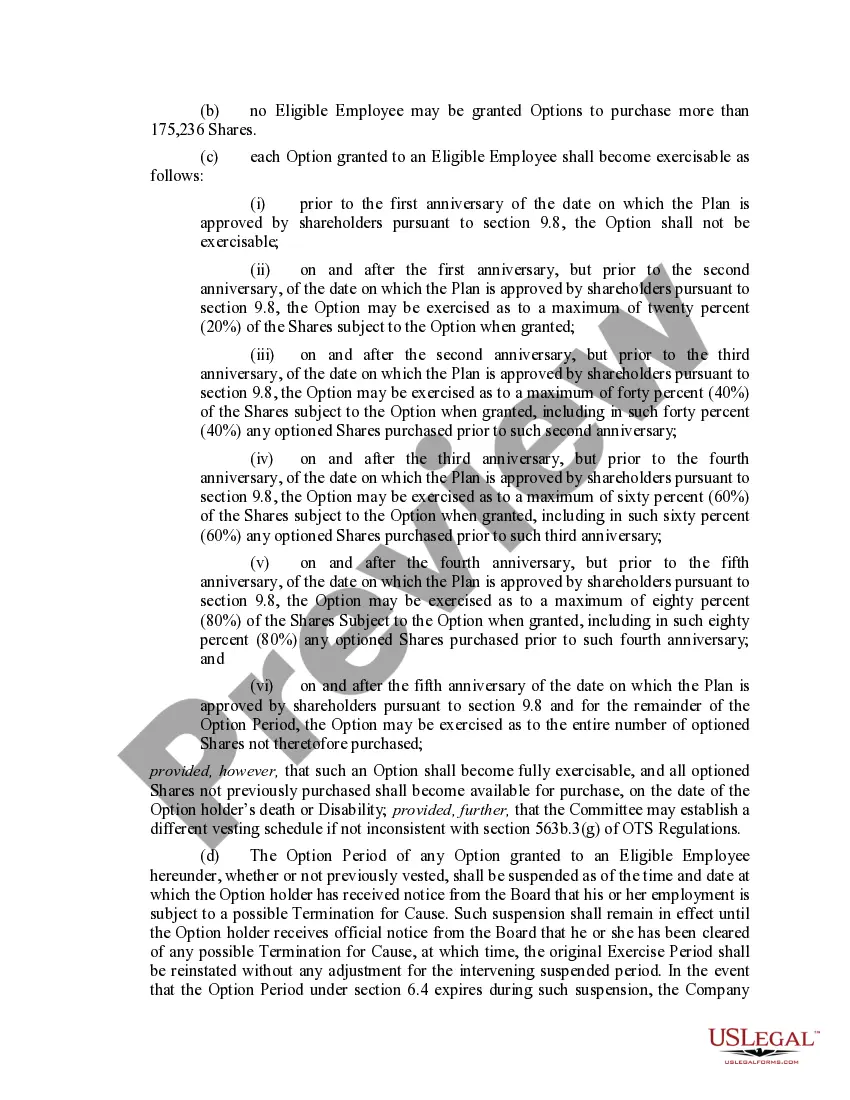
- Article VI: Stock Options for Eligible Employees describes the stock options available for eligible employees.


When to use this document
This form is essential when a federal savings association wants to implement a structured stock option plan. It is particularly useful in situations where the organization aims to incentivize key personnel to achieve corporate objectives, enhance growth, or retain talented employees and directors. Companies anticipating mergers or those undergoing significant changes may also find this form relevant as it helps define compensation packages for their leadership teams.
Who needs this form
- Federal savings associations looking to implement a stock option plan.
- Corporate boards seeking to align employee and director interests with the company's success.
- Human resource departments wanting to provide competitive compensation packages to attract top talent.
- Legal teams involved in drafting or reviewing stock option agreements.
How to prepare this document
- Identify the officers, employees, and directors who will be eligible for stock options.
- Specify the total number of shares available for stock options within the plan.
- Define the terms for both Incentive Stock Options and Non-qualified Stock Options, including exercise price and option period.
- Establish an administration committee to oversee the plan's execution and compliance.
- Include any necessary amendments and ensure shareholder approval is obtained, if required by law.
Notarization requirements for this form
Notarization is not commonly needed for this form. However, certain documents or local rules may make it necessary. Our notarization service, powered by Notarize, allows you to finalize it securely online anytime, day or night.
Get your form ready online
Our built-in tools help you complete, sign, share, and store your documents in one place.
Make edits, fill in missing information, and update formatting in US Legal Forms—just like you would in MS Word.
Download a copy, print it, send it by email, or mail it via USPS—whatever works best for your next step.
Sign and collect signatures with our SignNow integration. Send to multiple recipients, set reminders, and more. Go Premium to unlock E-Sign.
If this form requires notarization, complete it online through a secure video call—no need to meet a notary in person or wait for an appointment.
We protect your documents and personal data by following strict security and privacy standards.

Make edits, fill in missing information, and update formatting in US Legal Forms—just like you would in MS Word.

Download a copy, print it, send it by email, or mail it via USPS—whatever works best for your next step.

Sign and collect signatures with our SignNow integration. Send to multiple recipients, set reminders, and more. Go Premium to unlock E-Sign.

If this form requires notarization, complete it online through a secure video call—no need to meet a notary in person or wait for an appointment.

We protect your documents and personal data by following strict security and privacy standards.
Avoid these common issues
- Failing to obtain necessary shareholder approval before implementing the plan.
- Not clearly defining eligibility criteria for employees and directors.
- Neglecting to address tax implications associated with stock options.
- Overlooking the need to comply with both federal and state regulations regarding stock options.
Benefits of using this form online
- Easy access to downloadable templates drafted by licensed attorneys.
- Convenient customization options to tailor the document to specific organizational needs.
- Time-saving online process compared to traditional paper-based methods.
- Reliable legal compliance resources integrated into the form.
Looking for another form?






Form popularity
FAQ
A savings and loan association also called an S&L, a thrift, or simply a savings and loan is a financial institution similar to a bank that specializes in helping people get residential mortgages.
Federal savings associations (also called "federal thrifts" or "federal Savings Banks"), in the United States, are institutions chartered by the Office of Thrift Supervision which is now administered by Office of the Comptroller of the Currency after the agencies merged.They are not savings and loan associations.
In 2019, there were only 659 Savings and Loans, according to the FDIC. The agency supervised almost half of them. 14feff Today, S&Ls are like any other bank, thanks to the FIRREA bailout of the 1980s. Another key difference is the local focus of most S&Ls.
Savings and loan institutionsalso referred to as S&Ls, thrift banks, savings banks, or savings institutionsprovide many of the same services to customers as commercial banks, including deposits, loans, mortgages, checks, and debit cards.Many commercial banks conduct many of their operations exclusively online.
Members of an S&L deposit money into savings accounts, and this money is lent out in the form of home mortgage loans.Borrowers pay interest on their home loans, and this interest is passed on to the members and the bank itself.
The Federal Savings and Loan Insurance Corporation paid $20 billion to depositors of failed S&Ls before it went bankrupt. More than 500 S&Ls were insured by state-run funds. Their failures cost $185 million before they collapsed. The crisis ended what had once been a secure source of home mortgages.
S&Ls are owned and chartered differently than commercial banks. More of their customer-base tends to be locally-drawn. S&Ls can be owned in either of two ways. Under what is known as the mutual ownership model, an S&L can be owned by its depositors and borrowers.
Add in a recessionsparked by high-interest rates set by the Fed in an effort to end double-digit inflation. The S&Ls were left with little more than an ever-dwindling portfolio of low-interest mortgage loans. Their revenue stream had become severely tightened. By 1982 the fortunes of S&Ls had turned.
A financial institution owned by and operated for the benefit of those using its services. The savings and loan association's primary purpose is making loans to its members, usually for the purchase of real estate or homes.