Restricted Stock Plan of RPM, Inc.
About this form
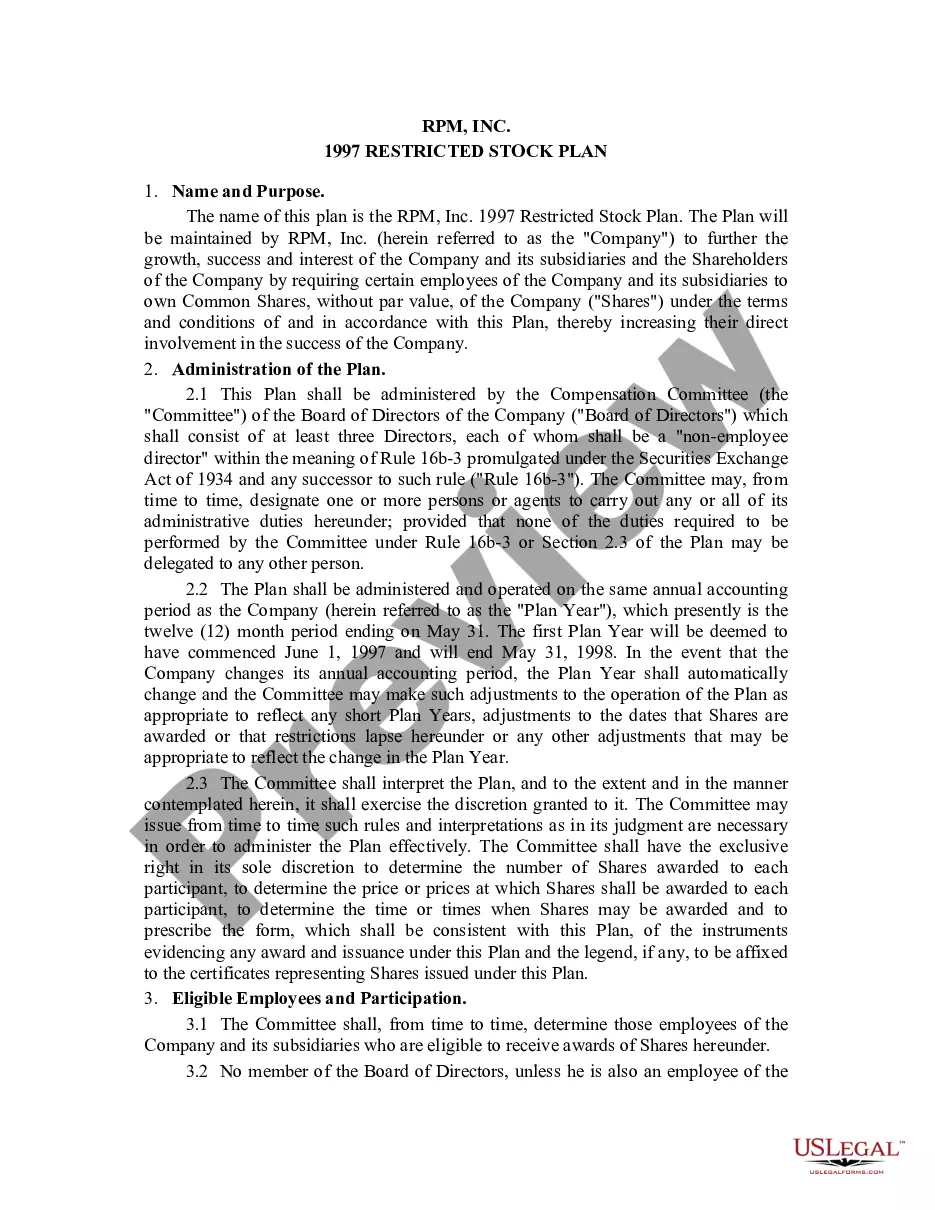
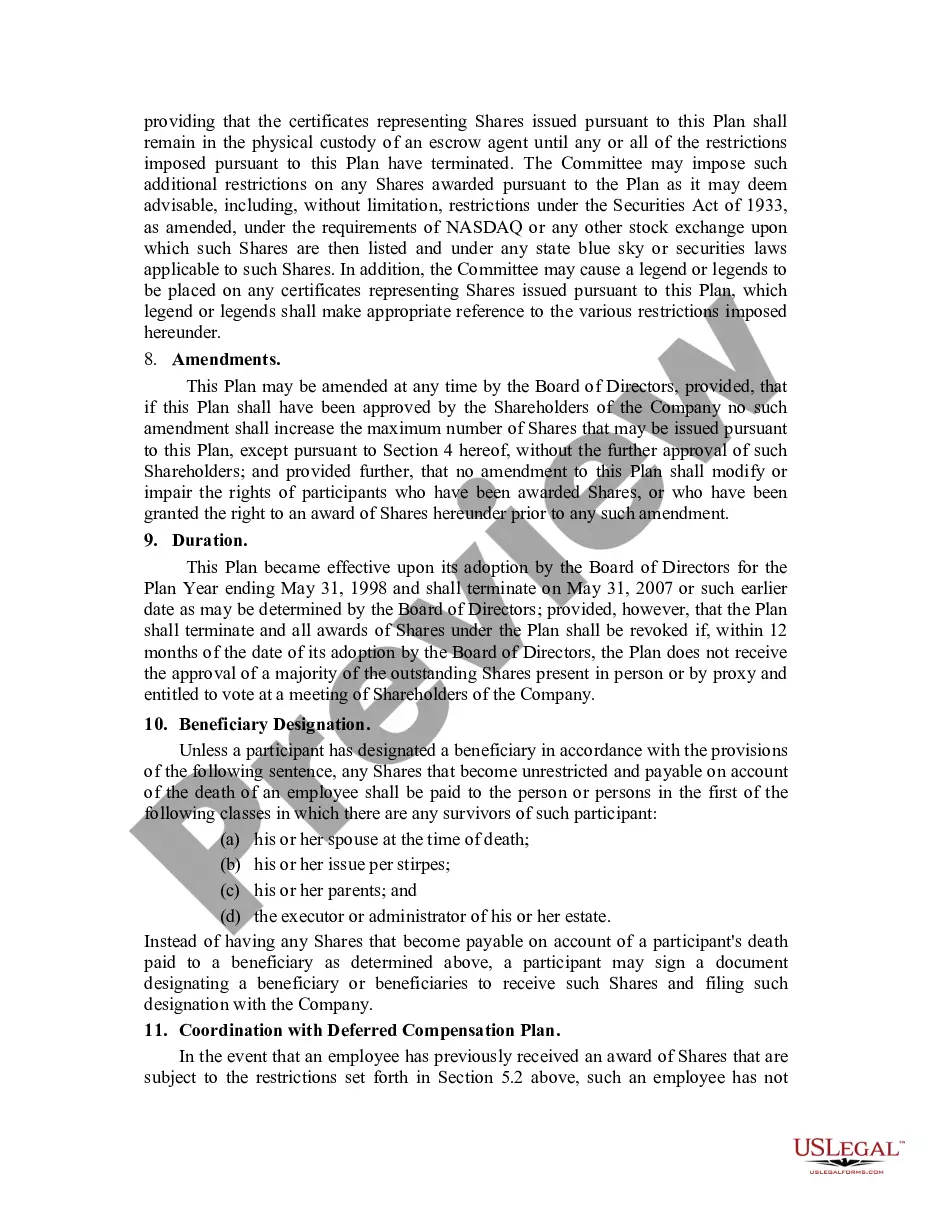
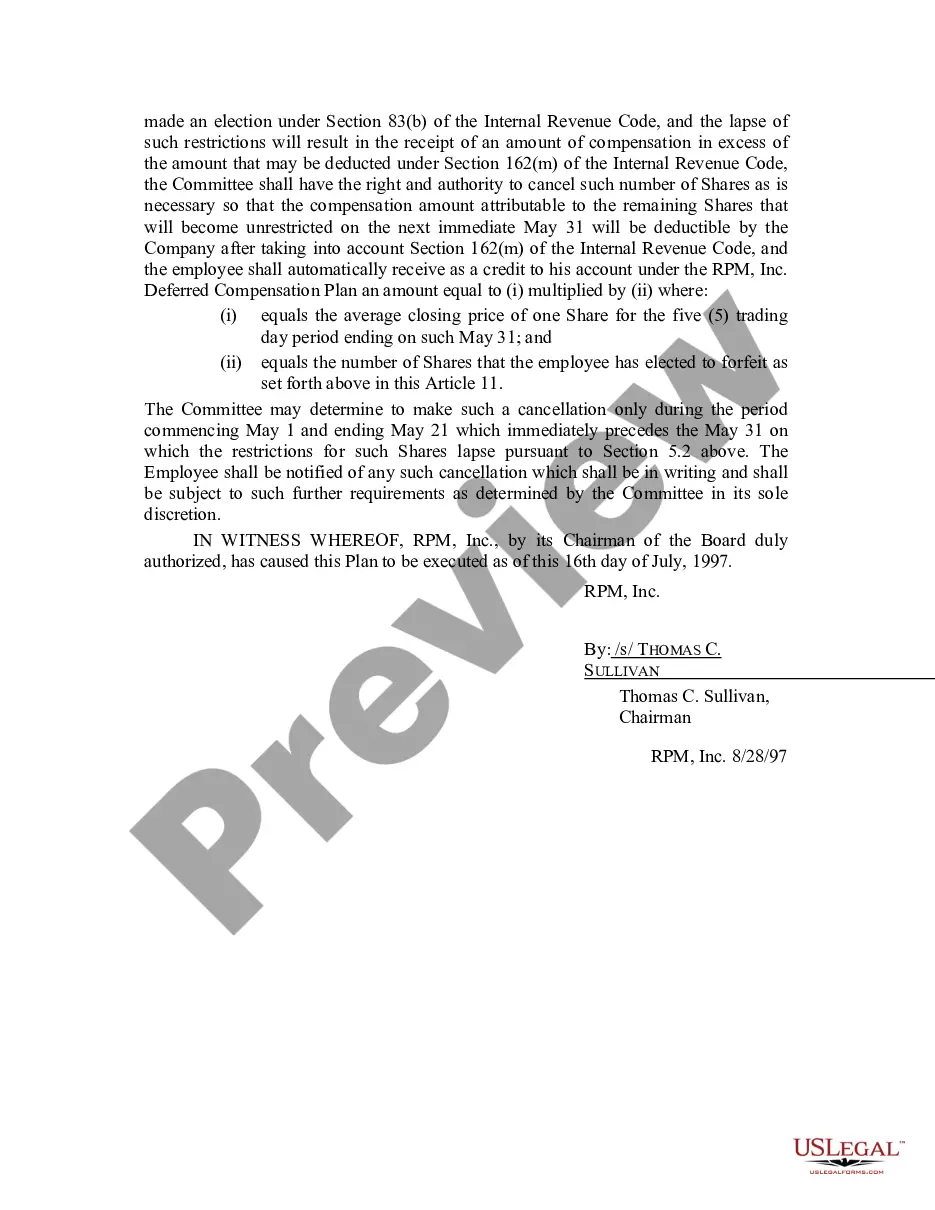
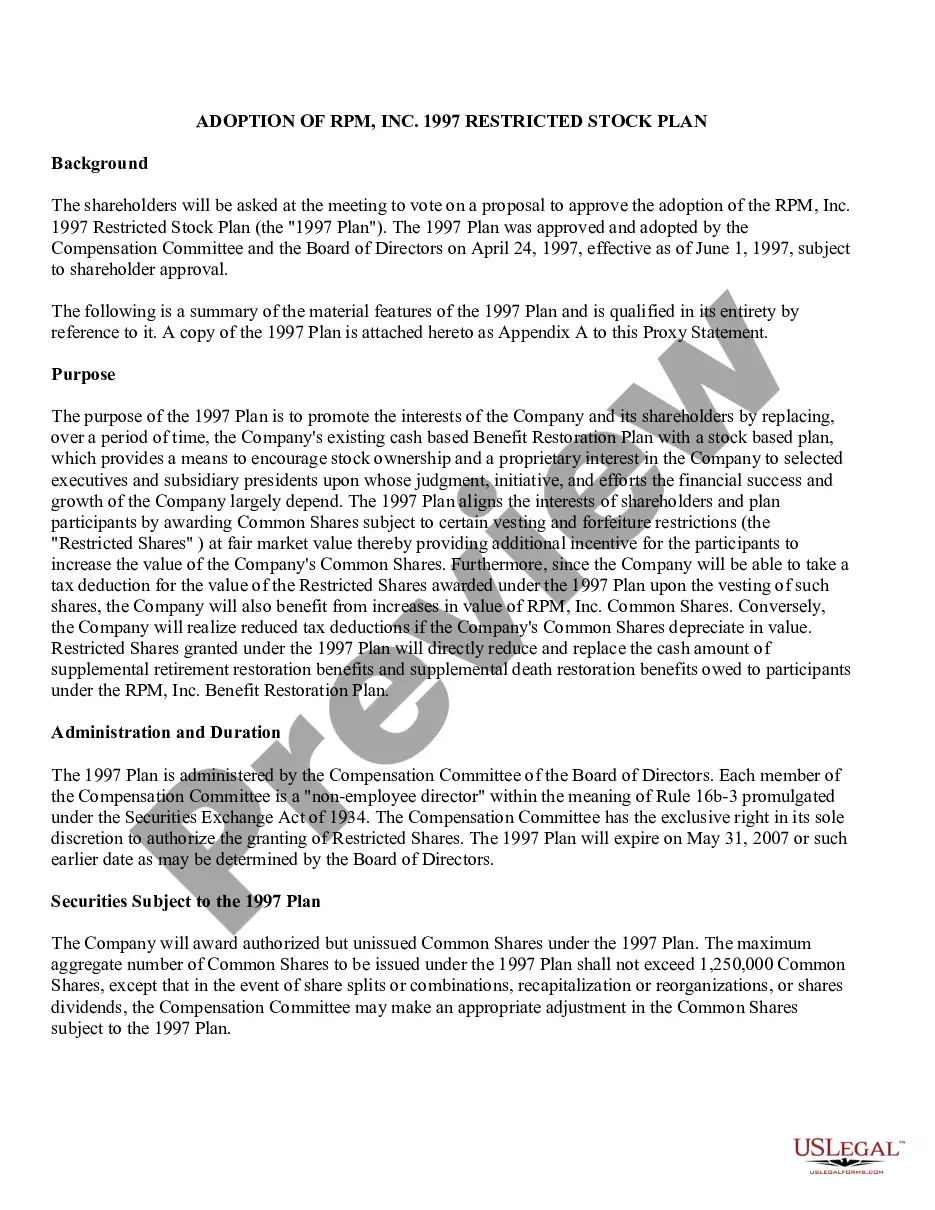
The Restricted Stock Plan of RPM, Inc. is a legal document that outlines a compensation strategy incentivizing eligible employees by awarding them restricted stock shares. Unlike standard stock options, these restricted shares come with specific conditions involving forfeiture and transfer restrictions tied to the employee's tenure and performance. This plan aims to enhance employee participation in the company's growth and aligns their interests with those of shareholders.
Main sections of this form
- Name and Purpose: Describes the plan's objectives and administration.
- Administration: Outlines the roles and responsibilities of the Compensation Committee in managing the plan.
- Eligible Employees: Defines who qualifies for the restricted stock awards.
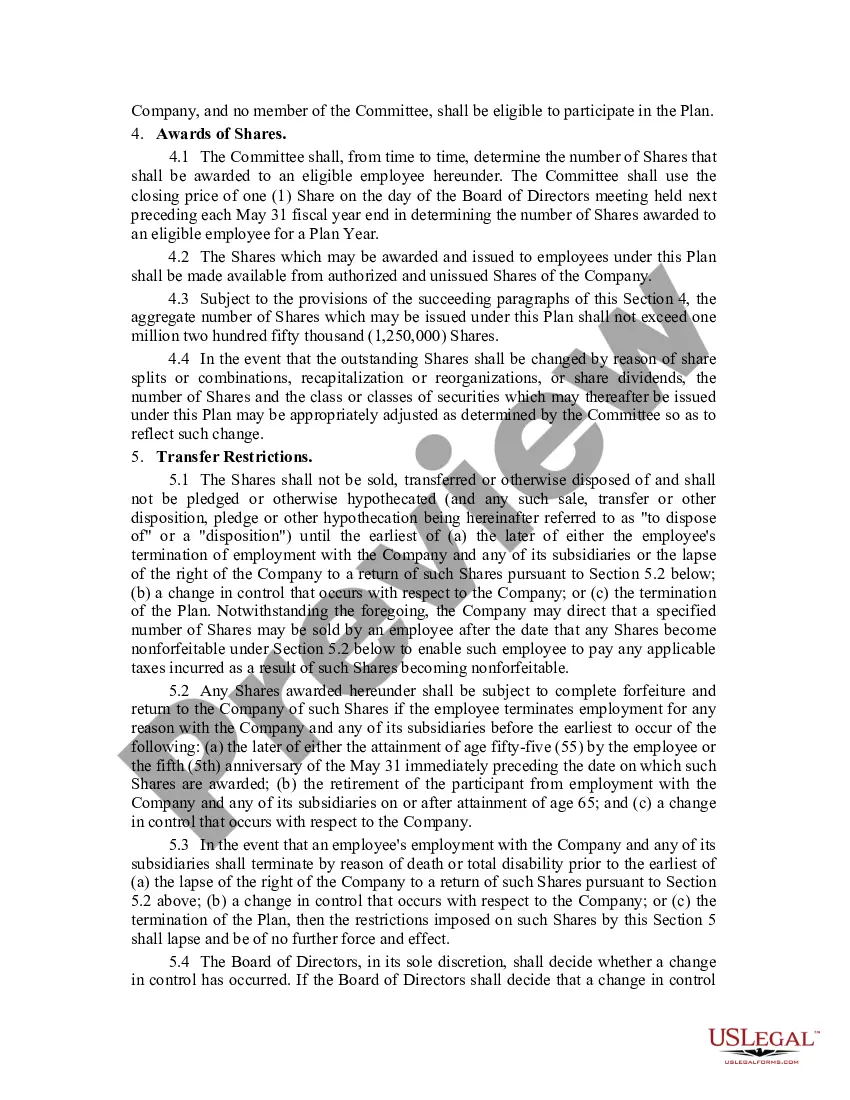
- Awards of Shares: Details the criteria and process for awarding shares to selected employees.
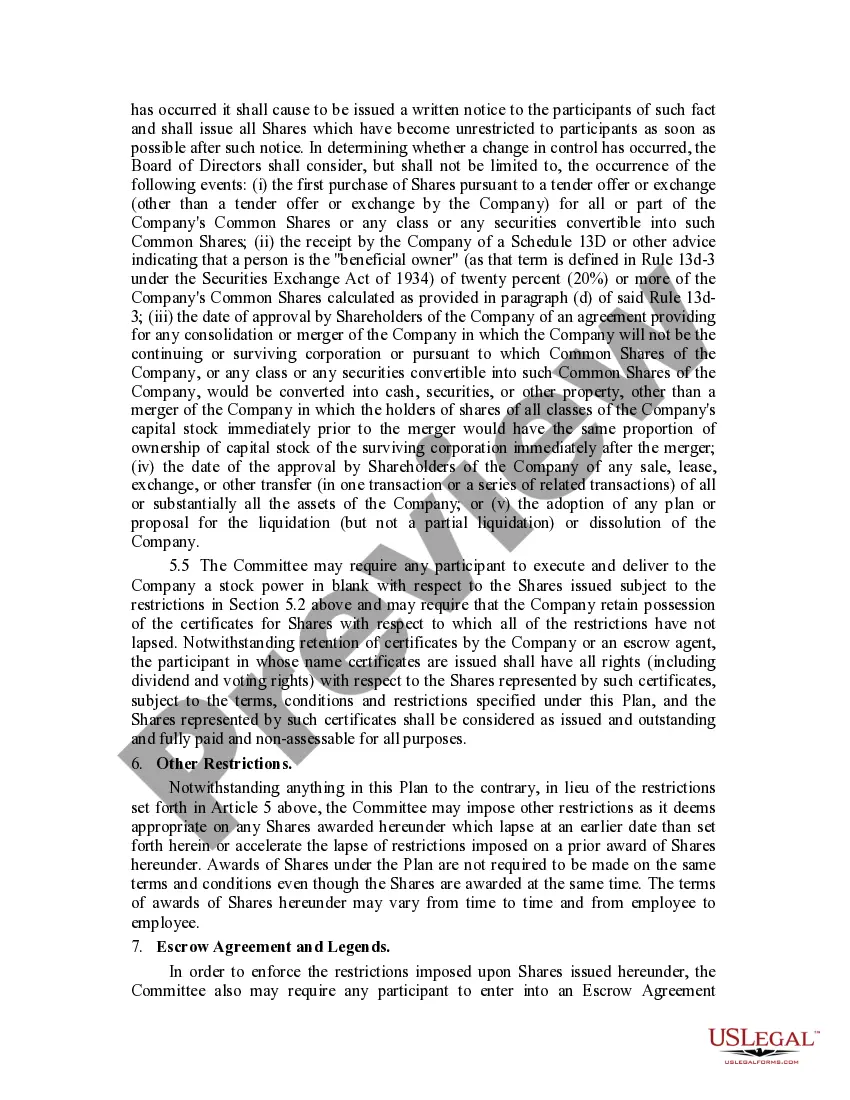
- Transfer Restrictions: Explains conditions under which shares can be sold or transferred.
- Beneficiary Designation: Specifies how beneficiaries are determined in case of an employee's death.
Common use cases
This form should be used when a corporation, specifically RPM, Inc., seeks to grant restricted stock awards to its eligible employees as part of a compensation package. It is beneficial for companies looking to retain talent and motivate employees by providing them with a stake in the company's success. The plan can be particularly useful during times of corporate restructuring or change in ownership, ensuring that employees remain engaged and aligned with company goals.
Who needs this form
Eligibility for this form includes:
- Employees of RPM, Inc. and its subsidiaries who are selected by the Compensation Committee.
- Individuals who are not members of the Board of Directors or the Compensation Committee unless they are also employees.
- Employees aiming for long-term financial benefits through ownership in their employer's stock.
How to complete this form
To complete the Restricted Stock Plan of RPM, Inc., follow these steps:
- Identify eligible employees who will receive stock awards based on the committee's decisions.
- Determine the number of shares to be awarded to each eligible employee using the closing price from the Board meeting preceding the fiscal year-end.
- Specify the vesting periods and conditions under which the shares will become unrestricted.
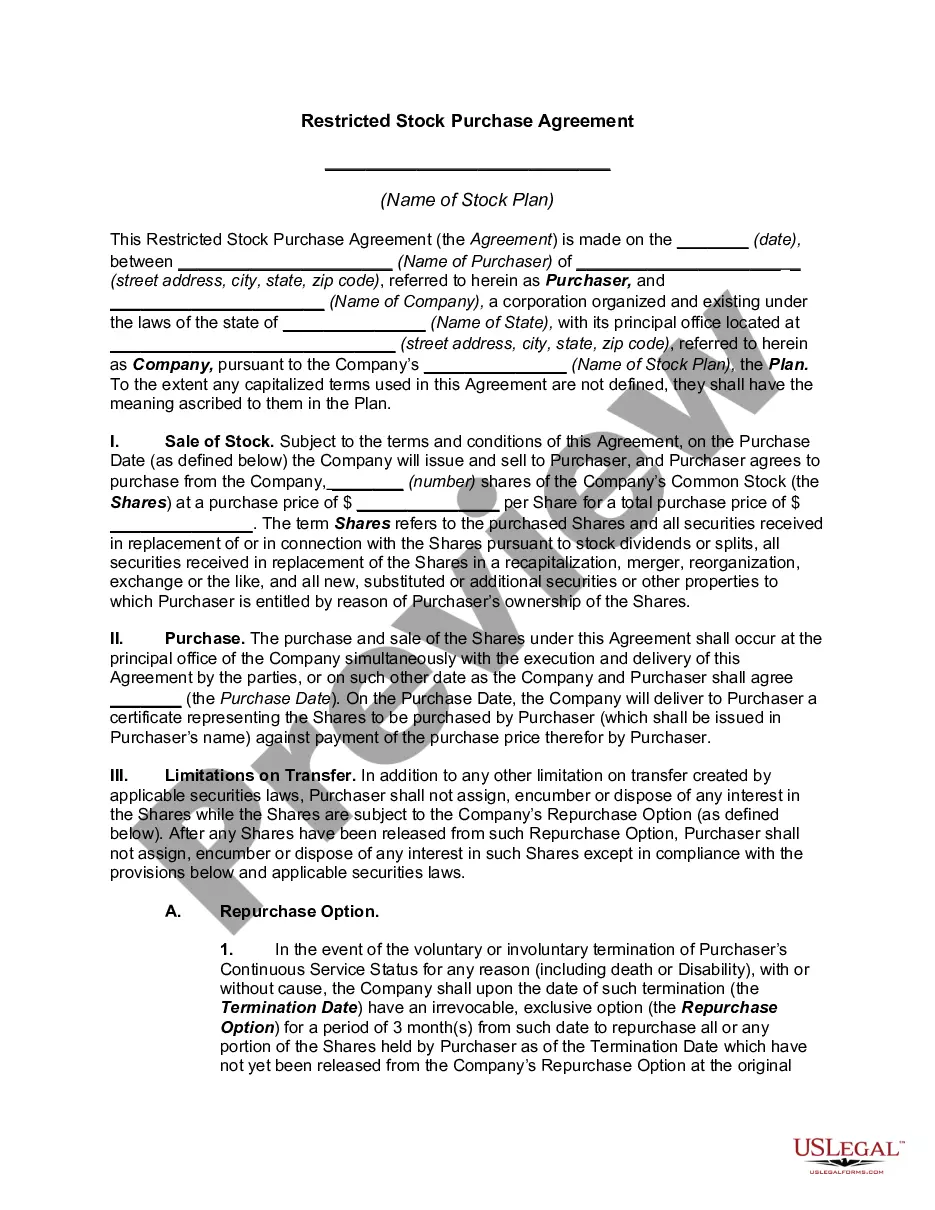
- Include transfer restrictions to ensure compliance with the terms outlined in the plan.
- Designate beneficiaries for shares that may become payable in the event of the employee's death.
Does this document require notarization?
This form does not typically require notarization unless specified by local law. It is advisable to check with legal counsel to ensure compliance with any specific state regulations related to stock awards.
Get your form ready online
Our built-in tools help you complete, sign, share, and store your documents in one place.
Make edits, fill in missing information, and update formatting in US Legal Forms—just like you would in MS Word.
Download a copy, print it, send it by email, or mail it via USPS—whatever works best for your next step.
Sign and collect signatures with our SignNow integration. Send to multiple recipients, set reminders, and more. Go Premium to unlock E-Sign.
If this form requires notarization, complete it online through a secure video call—no need to meet a notary in person or wait for an appointment.
We protect your documents and personal data by following strict security and privacy standards.

Make edits, fill in missing information, and update formatting in US Legal Forms—just like you would in MS Word.

Download a copy, print it, send it by email, or mail it via USPS—whatever works best for your next step.

Sign and collect signatures with our SignNow integration. Send to multiple recipients, set reminders, and more. Go Premium to unlock E-Sign.

If this form requires notarization, complete it online through a secure video call—no need to meet a notary in person or wait for an appointment.

We protect your documents and personal data by following strict security and privacy standards.
Avoid these common issues
- Failing to clearly define eligibility criteria can lead to misunderstandings among employees.
- Not specifying the method for determining the number of shares can cause inconsistencies in awards.
- Overlooking necessary compliance with state laws can result in regulatory issues.
- Neglecting to communicate the vesting schedule can leave employees unclear about their benefits.
Why use this form online
- Convenient online access allows for easy downloading and editing of the form.
- Drafted by licensed attorneys, ensuring legal reliability and compliance with current laws.
- Flexible structure can accommodate changes in corporate governance or strategic direction.
- Instant access to updates or revisions as corporate needs evolve.
Legal use & context
- This plan must comply with federal and state securities regulations.
- Approval from company shareholders may be required for the plan to be enforceable.
- Compensation and tax implications should be reviewed in accordance with IRS guidelines.
Main things to remember
- The Restricted Stock Plan incentivizes employee retention and participation in corporate success.
- Eligibility is determined by the Compensation Committee, focusing on certain employee roles.
- Shares have vesting requirements and transfer restrictions to protect the companyâs interests.
- This plan should align with the company's broader compensation strategy and comply with applicable laws.
Looking for another form?



Form popularity
FAQ
Stock options are only valuable if the market value of the stock is higher than the grant price at some point in the vesting period. Otherwise, you're paying more for the shares than you could in theory sell them for. RSUs, meanwhile, are pure gain, as you don't have to pay for them.
Restricted stock refers to unregistered shares of ownership in a corporation that are issued to corporate affiliates, such as executives and directors. Restricted stock is non-transferable and must be traded in compliance with special Securities and Exchange Commission (SEC) regulations.
RSUs are generally always worth something versus stock options, which can expire worthless if the stock price is below the strike price. Additionally, with RSUs you don't have to come up with the cash to exercise the options if your company doesn't offer some sort of cashless exercise option.
Restricted stock units are often offered as part of a compensation package to attract and retain key employees They are restricted in that certain requirements must be met before the employee can obtain full ownership rights to the value of the units.
RSUs give an employee interest in company stock but they have no tangible value until vesting is complete.Upon vesting, they are considered income, and a portion of the shares is withheld to pay income taxes. The employee receives the remaining shares and can sell them at their discretion.