Form of Indemnification Agreement by Kyle Technology Corp.
What is this form?
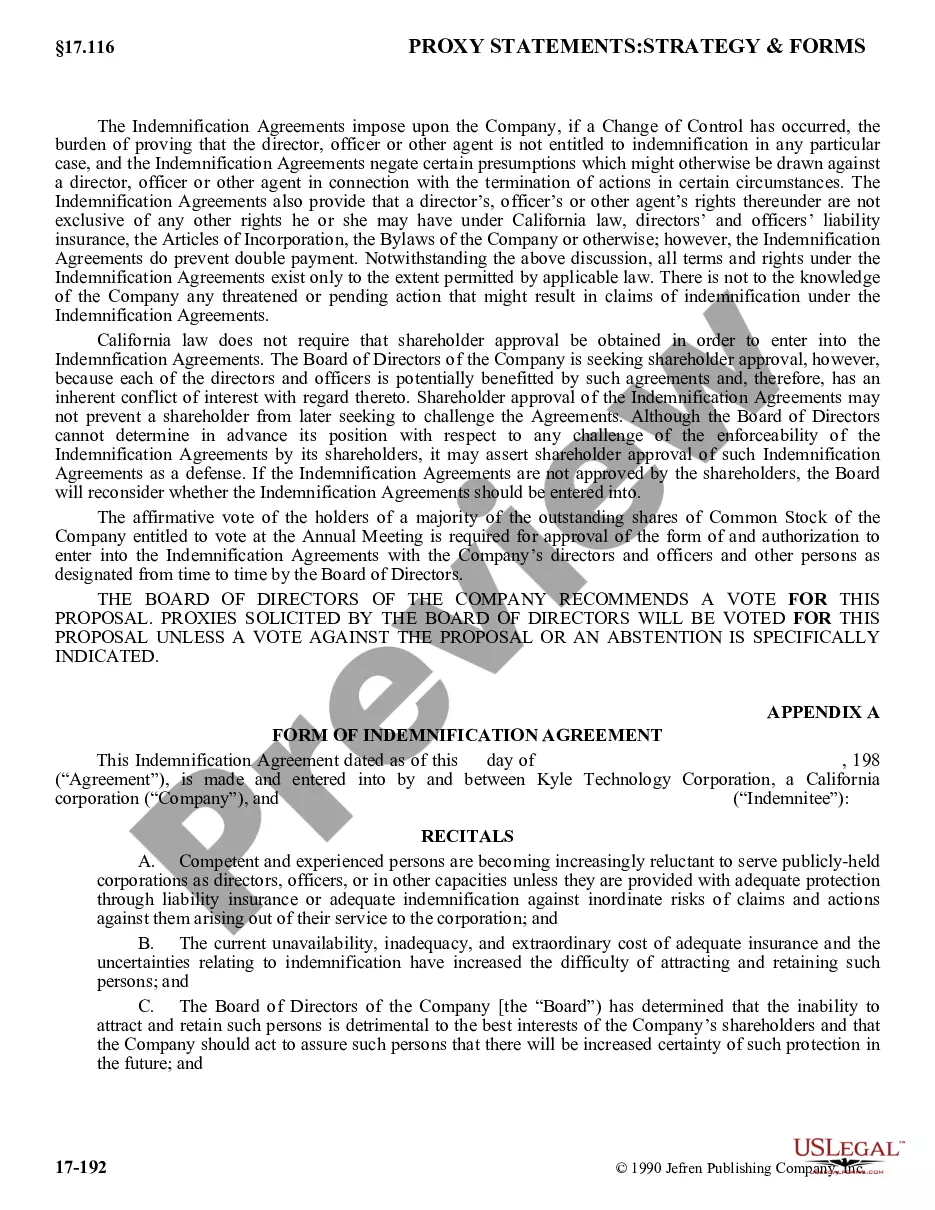
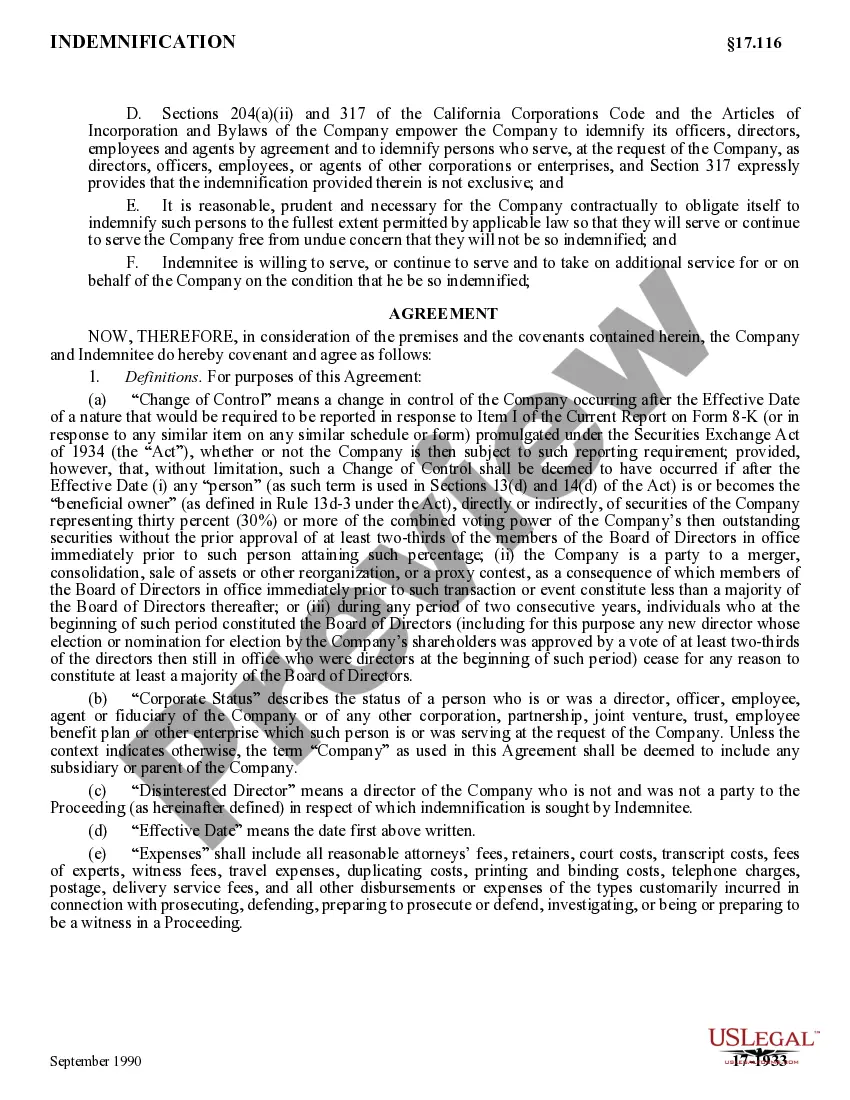
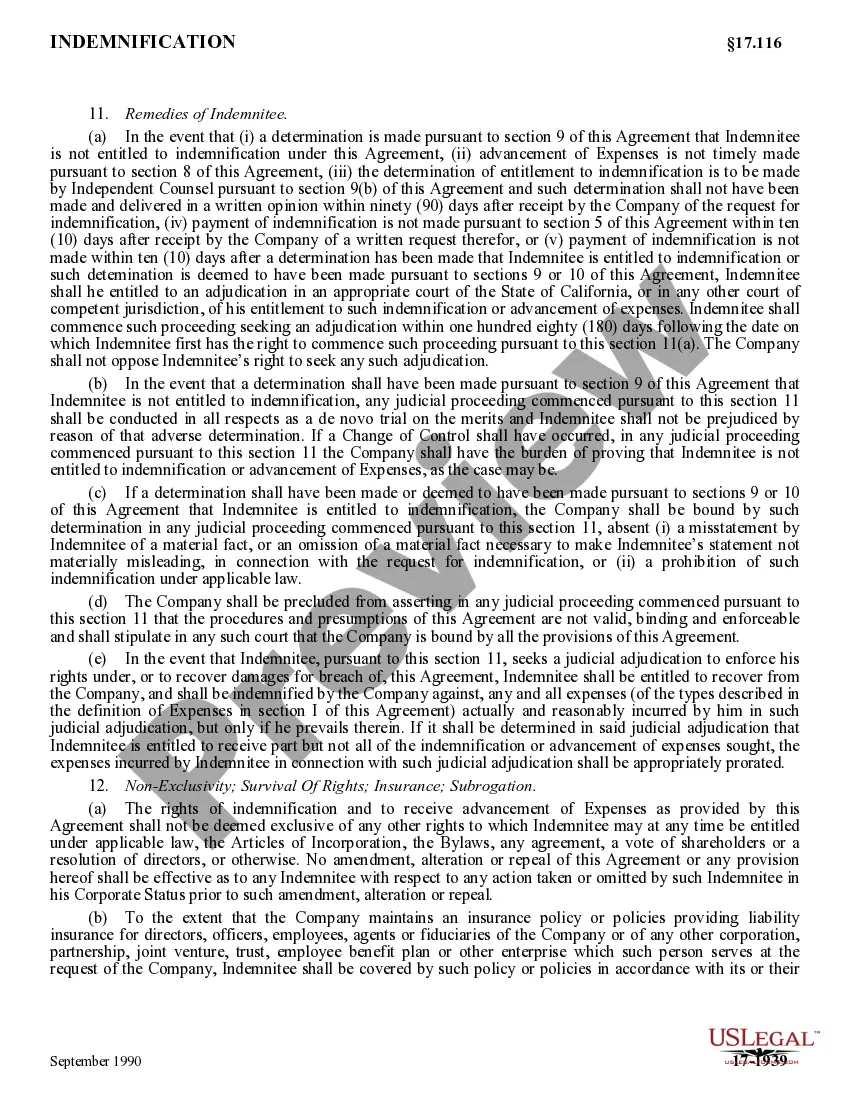
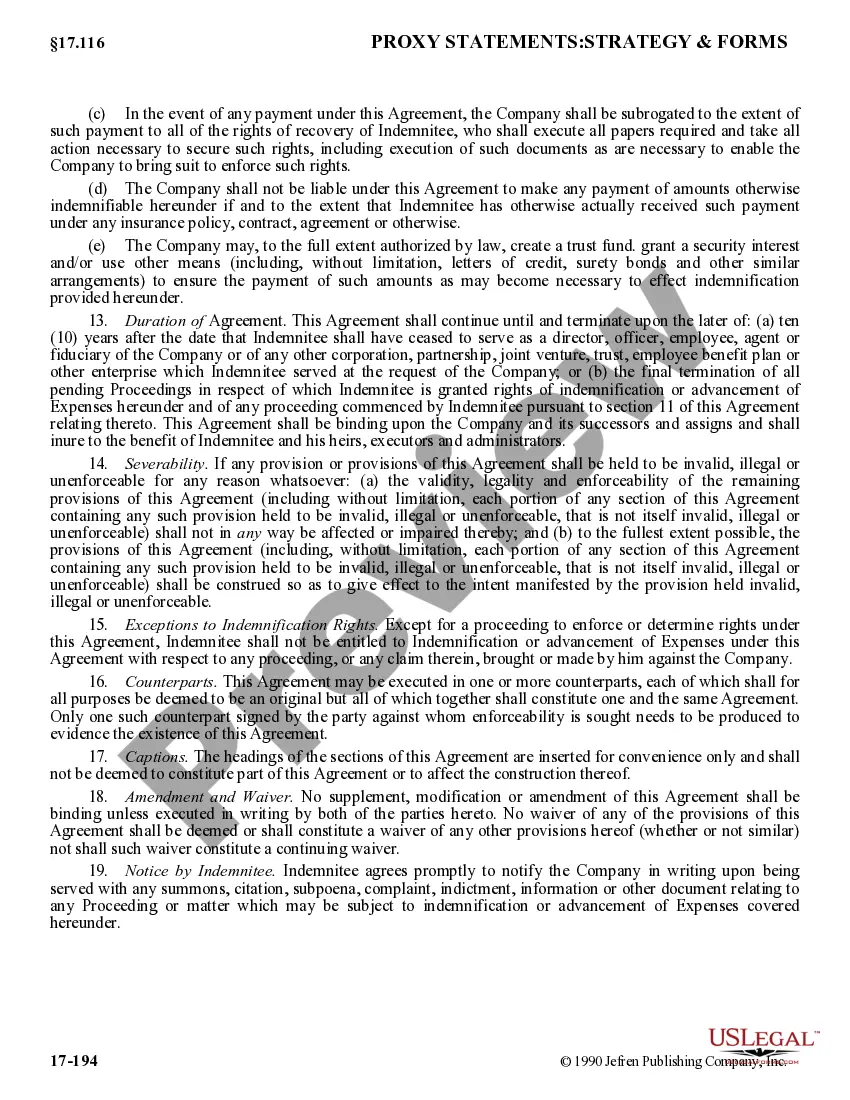
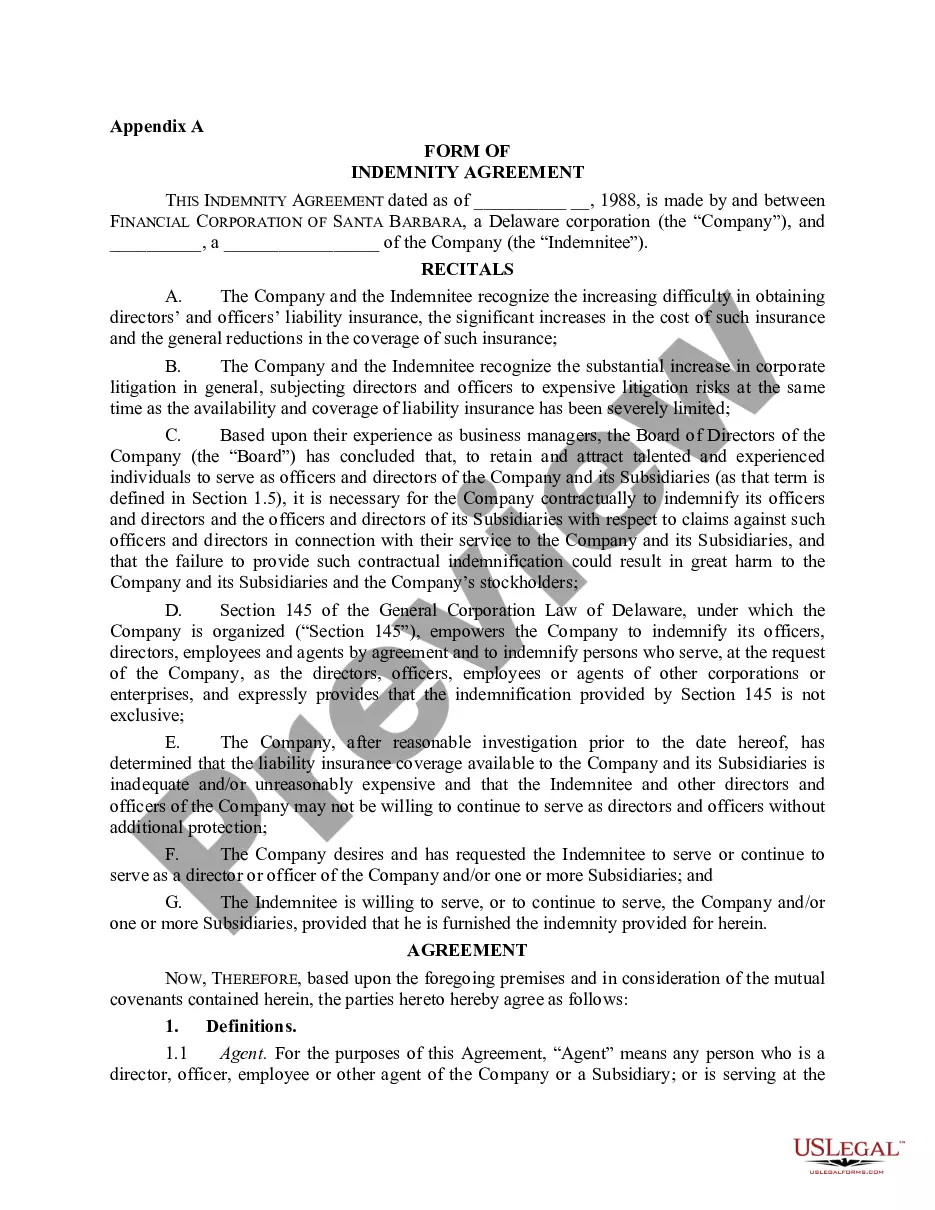
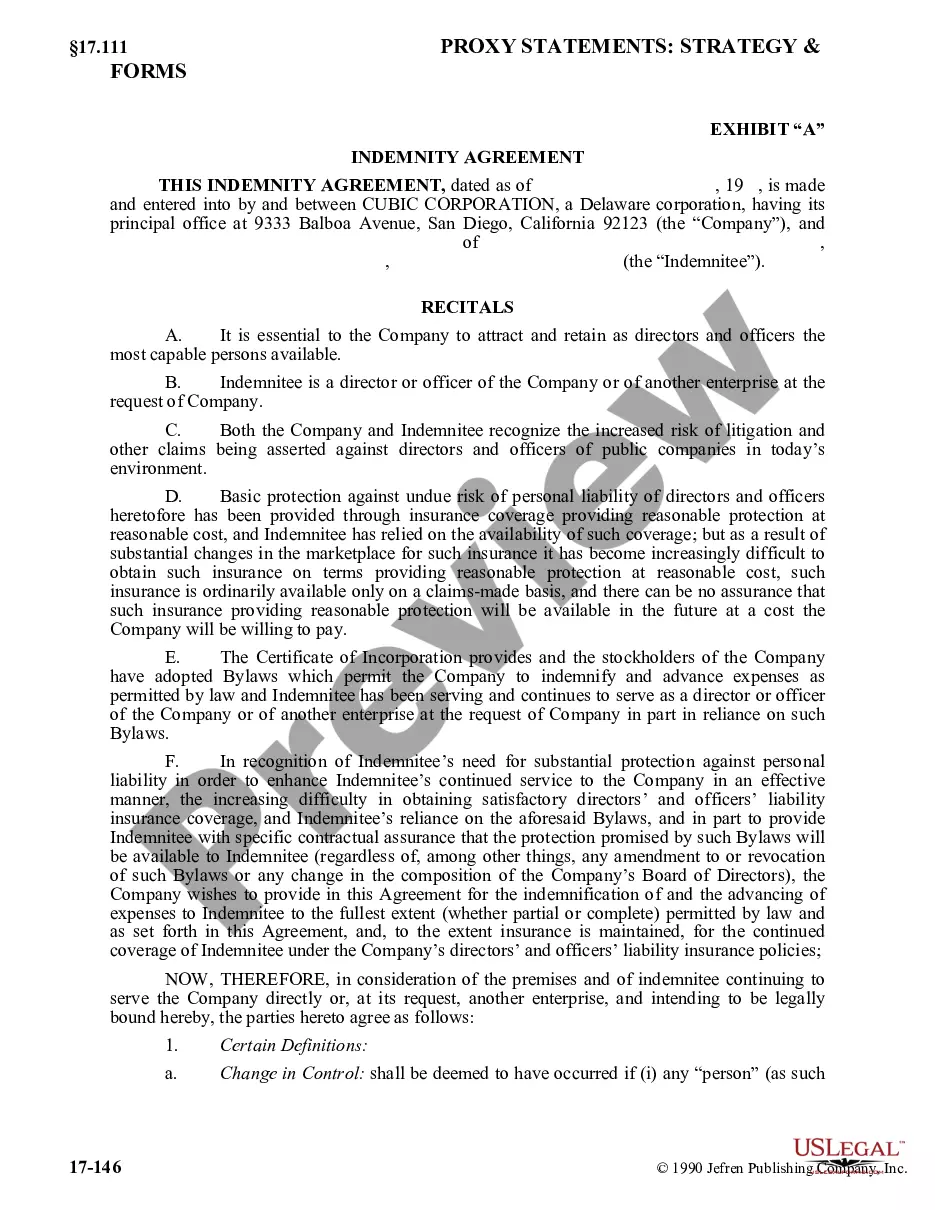
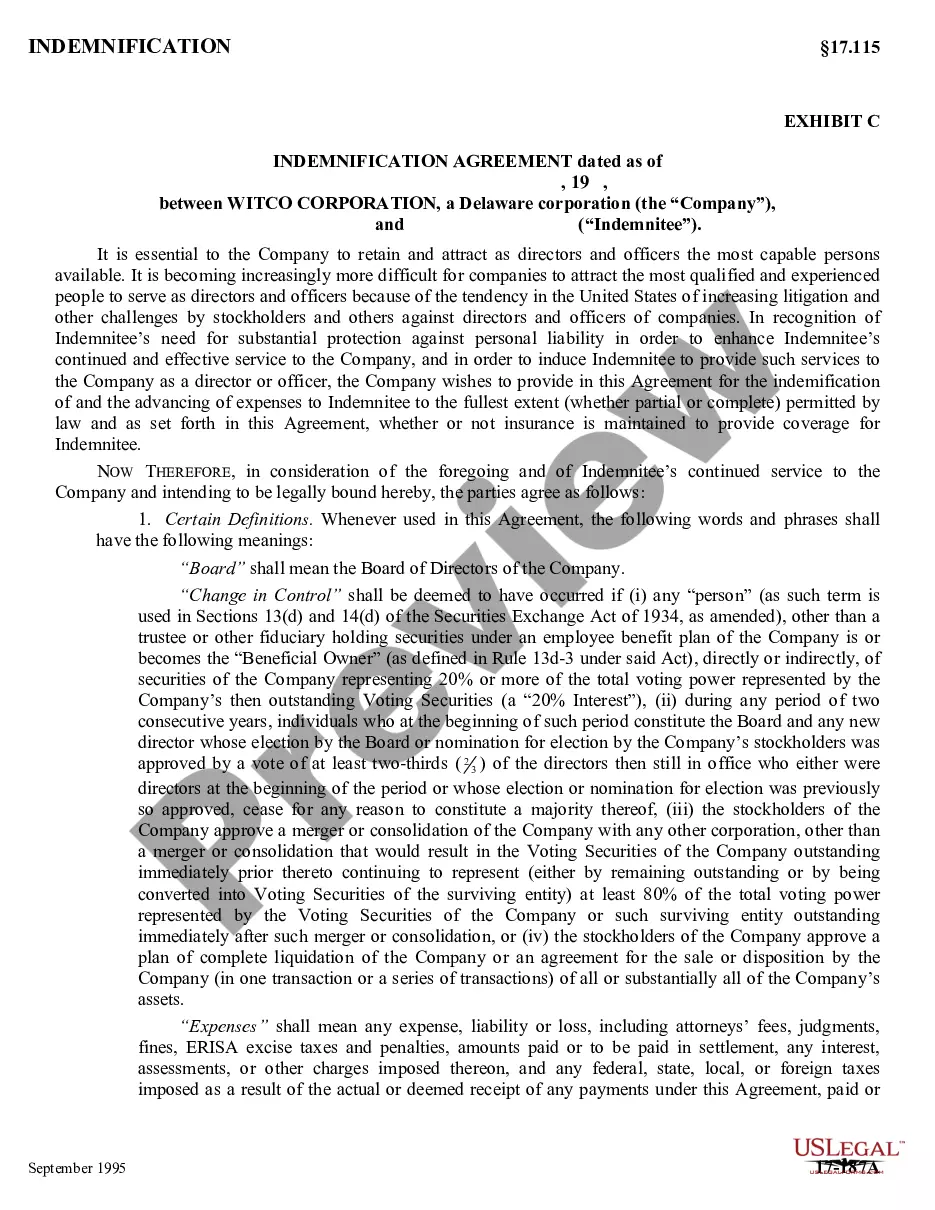
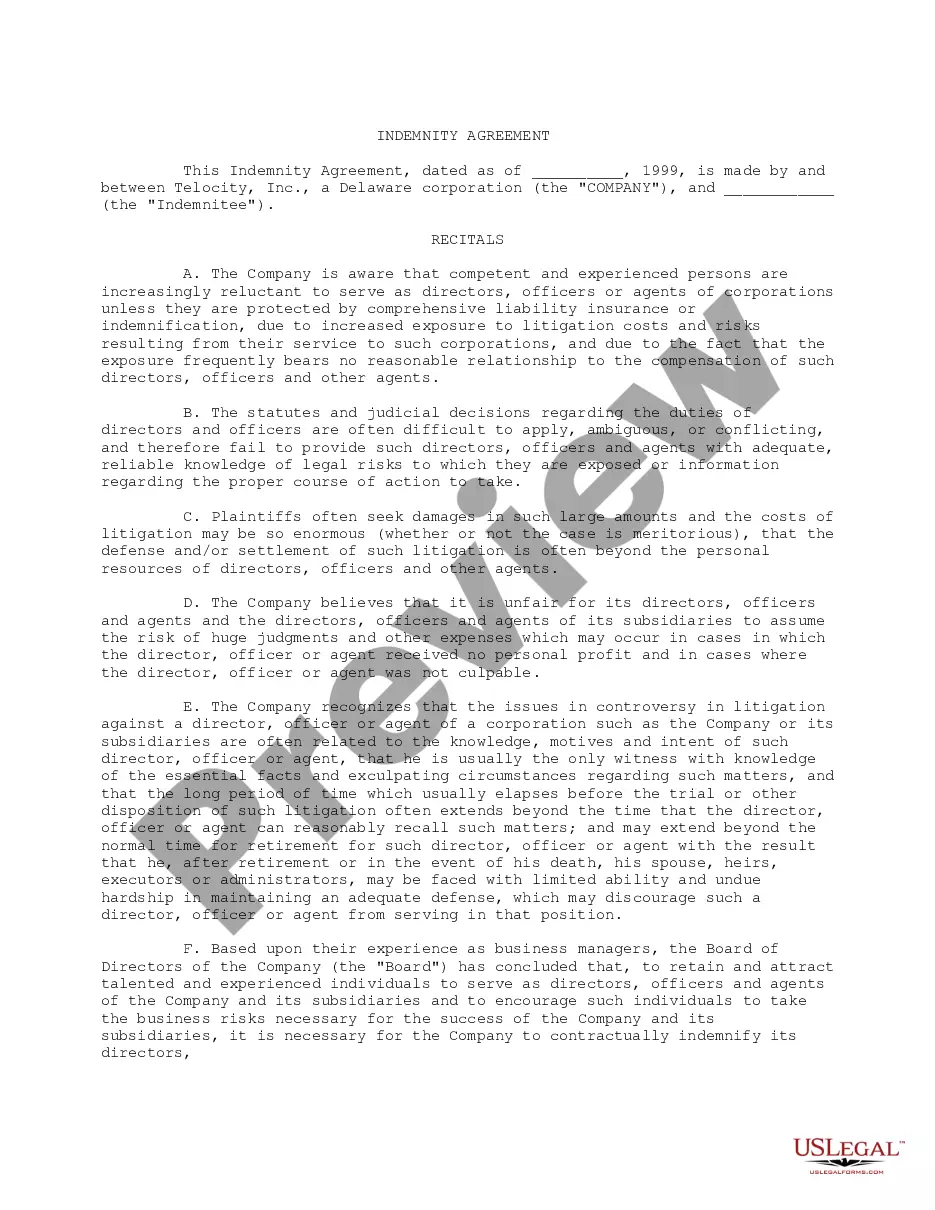
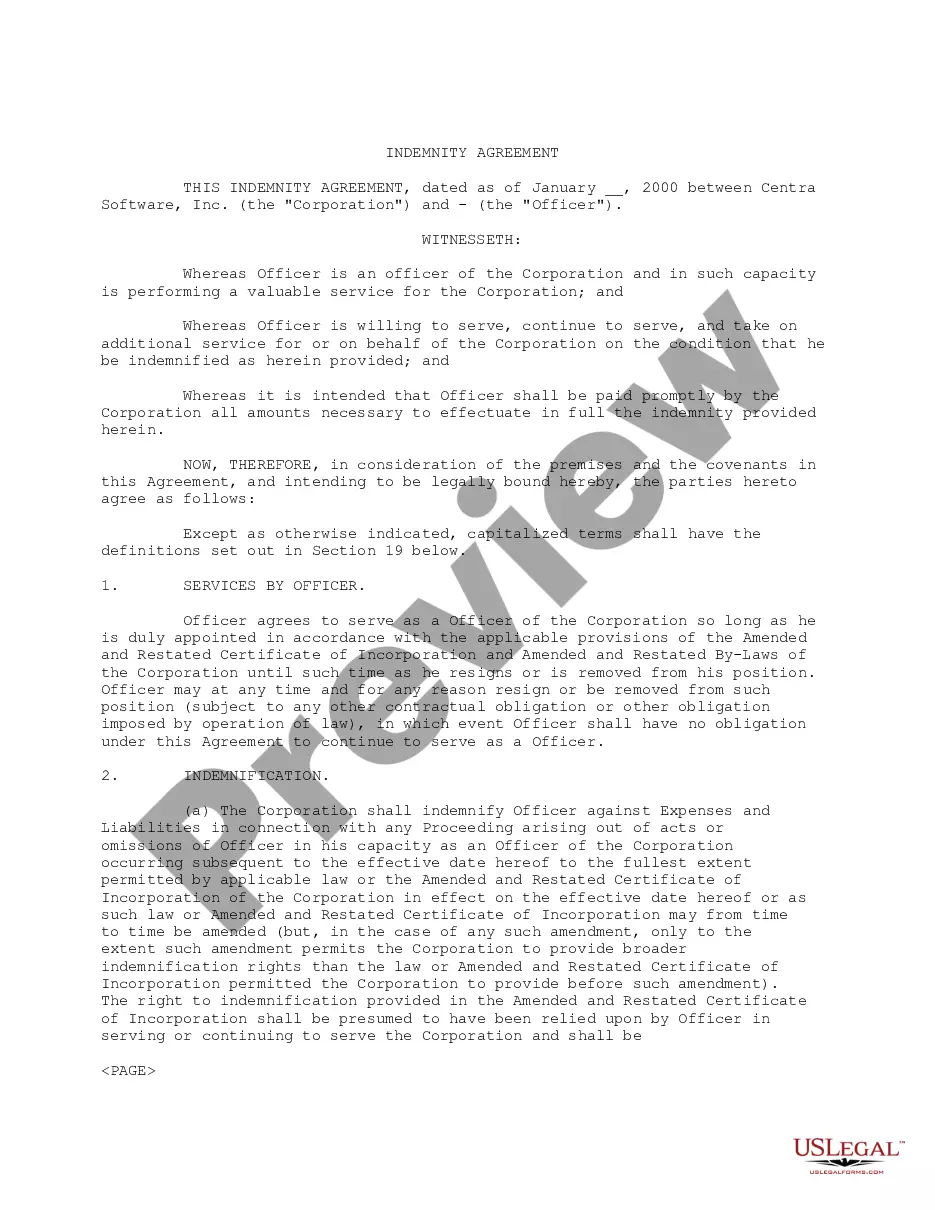
The Form of Indemnification Agreement by Kyle Technology Corp. is a legal document that outlines the terms under which a corporation agrees to indemnify its directors, officers, employees, and agents from liabilities incurred while performing their duties. This form is distinct from other indemnification agreements as it specifically addresses the requirements and conditions under California law, while also providing a framework for multi-state applicability. This form is essential for corporate governance and helps ensure that individuals in leadership roles are protected against legal challenges they may face as a result of their corporate activities.
Main sections of this form
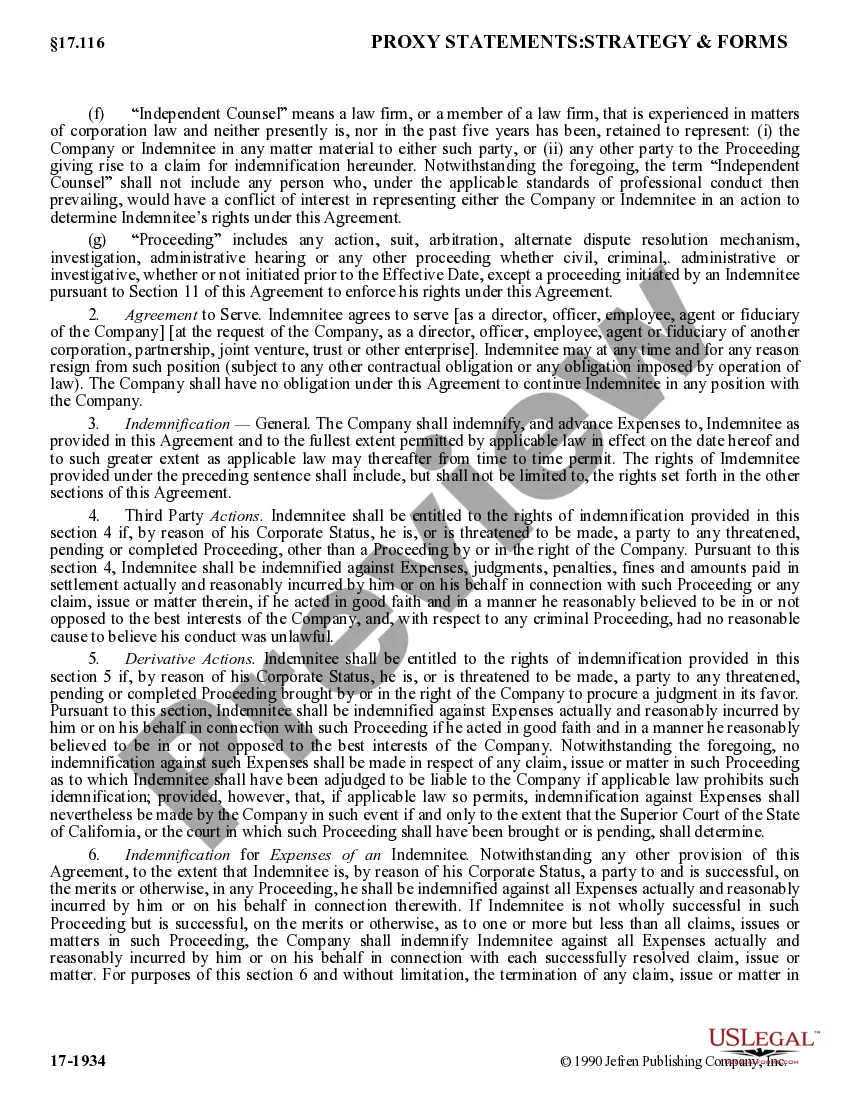
- Definitions: Clarifies terms such as "Change of Control" and "Corporate Status".
- Agreement to Serve: Establishes the obligation of the indemnitee to serve in their role under agreement with the corporation.
- Indemnification: Specifies the extent of indemnification the company provides, covering various legal costs.
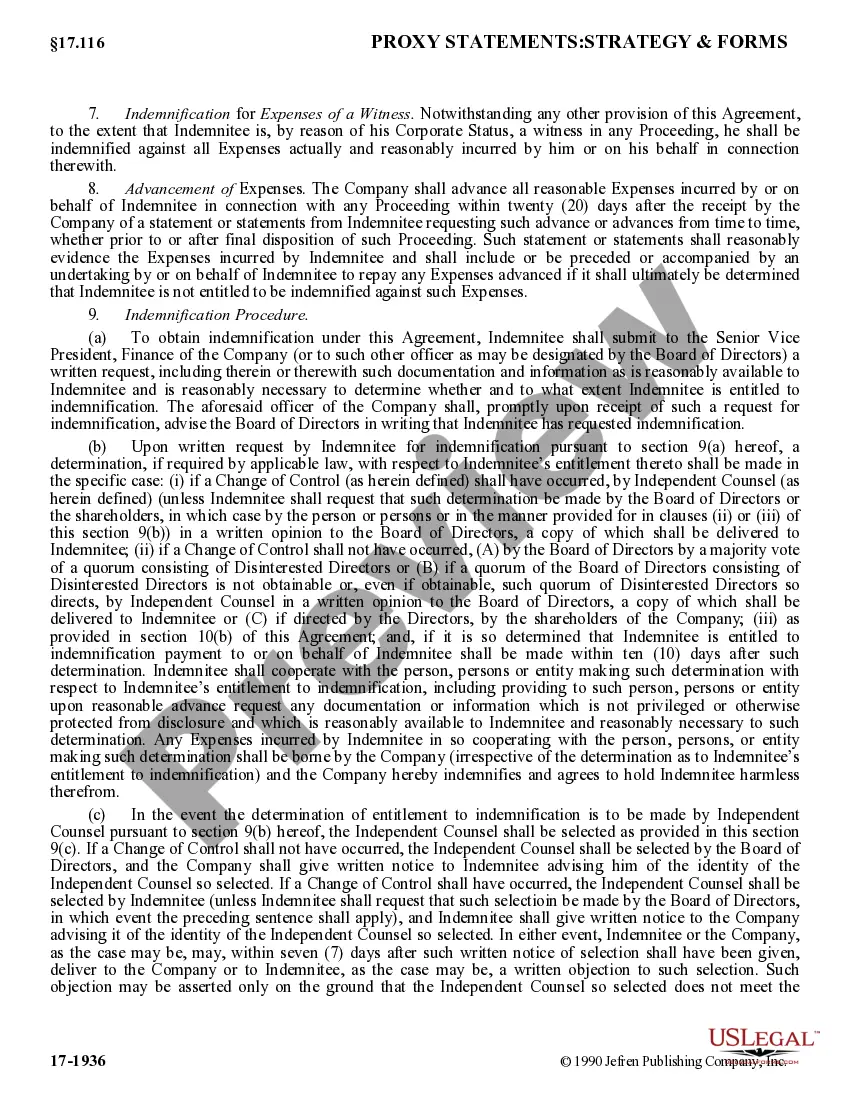
- Advancement of Expenses: Details how and when legal costs will be advanced to the indemnitee.
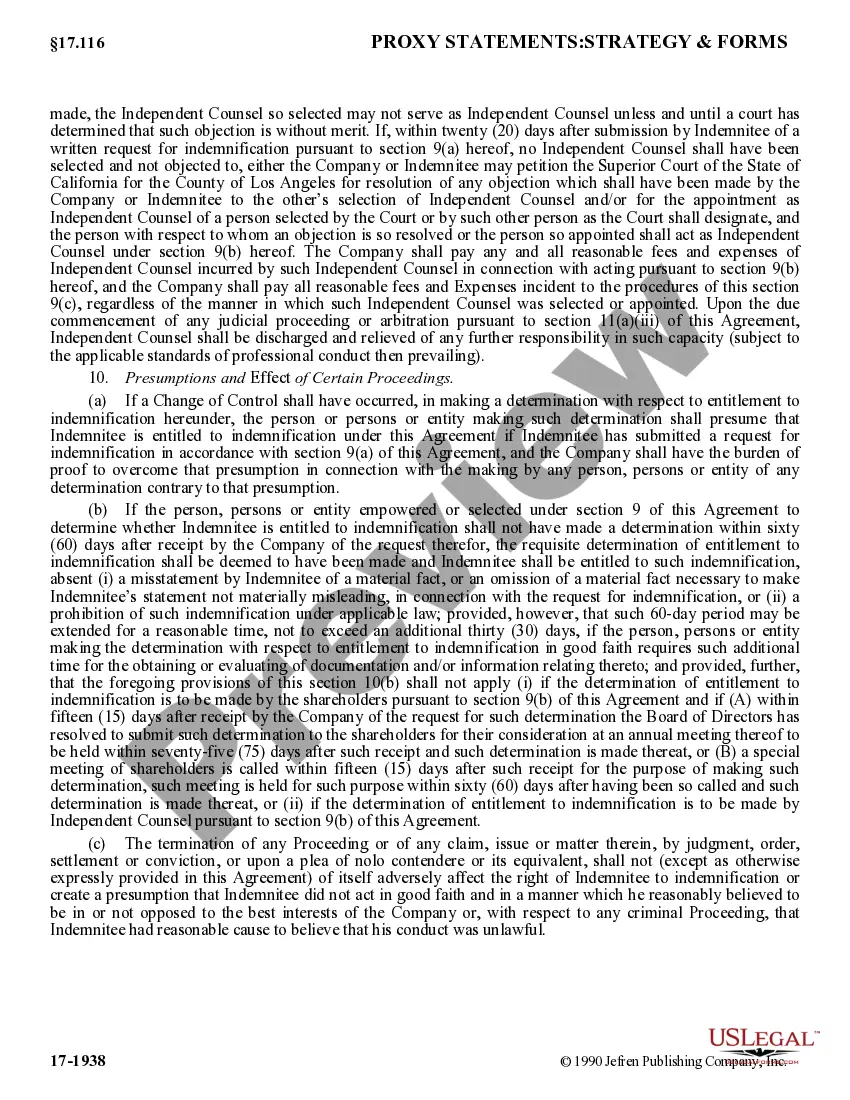
- Indemnification Procedure: Describes the steps the indemnitee must follow to request indemnification.
- Duration of Agreement: Outlines how long the indemnification agreement remains in effect.

When this form is needed
This form should be used when a corporation intends to provide indemnification to its directors and officers. It is especially beneficial during annual meetings when shareholder approval is needed or when a corporation is looking to ensure that its leaders feel secure in their roles without the fear of personal liability arising from their official actions. Companies facing challenges in attracting and retaining qualified leadership due to concerns over liability may also find this form essential.
Who this form is for
- Corporations seeking to protect their directors and officers from personal liability.
- Board members and executives who wish to formalize their indemnification terms.
- Shareholders involved in decision-making regarding indemnification policies within the company.
Steps to complete this form
- Identify the parties: Enter the names of Kyle Technology Corporation and the indemnitee.
- Specify the terms: Clearly define the extent of indemnification being provided.
- Collect necessary approvals: Ensure that the required shareholder approvals are documented as necessary.
- Document dates: Fill in the effective date of the indemnification agreement.
- Signatures: Ensure all involved parties sign the agreement to make it legally valid.
Notarization guidance
This form does not typically require notarization to be legally valid. However, some jurisdictions or document types may still require it. US Legal Forms provides secure online notarization powered by Notarize, available 24/7 for added convenience.
Get your form ready online
Our built-in tools help you complete, sign, share, and store your documents in one place.
Make edits, fill in missing information, and update formatting in US Legal Forms—just like you would in MS Word.
Download a copy, print it, send it by email, or mail it via USPS—whatever works best for your next step.
Sign and collect signatures with our SignNow integration. Send to multiple recipients, set reminders, and more. Go Premium to unlock E-Sign.
If this form requires notarization, complete it online through a secure video call—no need to meet a notary in person or wait for an appointment.
We protect your documents and personal data by following strict security and privacy standards.

Make edits, fill in missing information, and update formatting in US Legal Forms—just like you would in MS Word.

Download a copy, print it, send it by email, or mail it via USPS—whatever works best for your next step.

Sign and collect signatures with our SignNow integration. Send to multiple recipients, set reminders, and more. Go Premium to unlock E-Sign.

If this form requires notarization, complete it online through a secure video call—no need to meet a notary in person or wait for an appointment.

We protect your documents and personal data by following strict security and privacy standards.
Common mistakes
- Failing to obtain necessary shareholder approval, even when not legally required, can lead to disputes.
- Not clearly defining the terms of indemnification, which can create ambiguity in coverage.
- Overlooking the importance of accurate and complete signatures, which may invalidate the agreement.
Why use this form online
- Convenience: Easily download and fill out the form from anywhere.
- Editability: Make necessary changes before printing, ensuring the document suits specific needs.
- Reliability: Access a form drafted by licensed attorneys, ensuring it meets legal standards.
Legal use & context
- This indemnification agreement is enforceable under California law, which recognizes indemnification provisions.
- It helps provide legal protection to corporate officers and directors, encouraging qualified individuals to take on leadership roles.
- Indemnification agreements do not typically protect individuals against misconduct or illegal acts.
Looking for another form?









Form popularity
FAQ
Indemnity is compensation paid by one party to another to cover damages, injury or losses.An example of an indemnity would be an insurance contract, where the insurer agrees to compensate for any damages that the entity protected by the insurer experiences.
Company/Business/Individual Name shall fully indemnify, hold harmless and defend _______ and its directors, officers, employees, agents, stockholders and Affiliates from and against all claims, demands, actions, suits, damages, liabilities, losses, settlements, judgments, costs and expenses (including but not
An indemnity agreement is a contract that 'holds a business or company harmless' for any burden, loss, or damage. An indemnity agreement also ensures proper compensation is available for such loss or damage.
Indemnity is defined by Black's Law Dictionary as a duty to make good any loss, damage, or liability incurred by another. Indemnity has a general meaning of holding one harmless; that is to say, that one party holds the other harmless for some loss or damage.
A typical example is an insurance company wherein the insurer or indemnitor agrees to compensate the insured or indemnitee for any damages or losses he/she may incur during a period of time.
Indemnity is a contractual agreement between two parties, which outlines a form of insurance compensation for any damages and losses.For instance, in the case of home insurance, homeowners pay insurance to an insurance company in return for the homeowners being indemnified if the worst were to happen.
The main difference in this case is that hold harmless may require a party to protect against actual losses as well as potential losses while indemnification protects against actual losses only.
In practice, a hold harmless and an indemnity are functionally equivalent in that both require a party to assume responsibility for losses incurred by another party in connection with certain acts and circumstances. Some argue that while an indemnity shifts losses, a hold harmless shifts both losses and liability.
Indemnity is a comprehensive form of insurance compensation for damages or loss.Indemnity is a contractual agreement between two parties. In this arrangement, one party agrees to pay for potential losses or damages caused by another party.