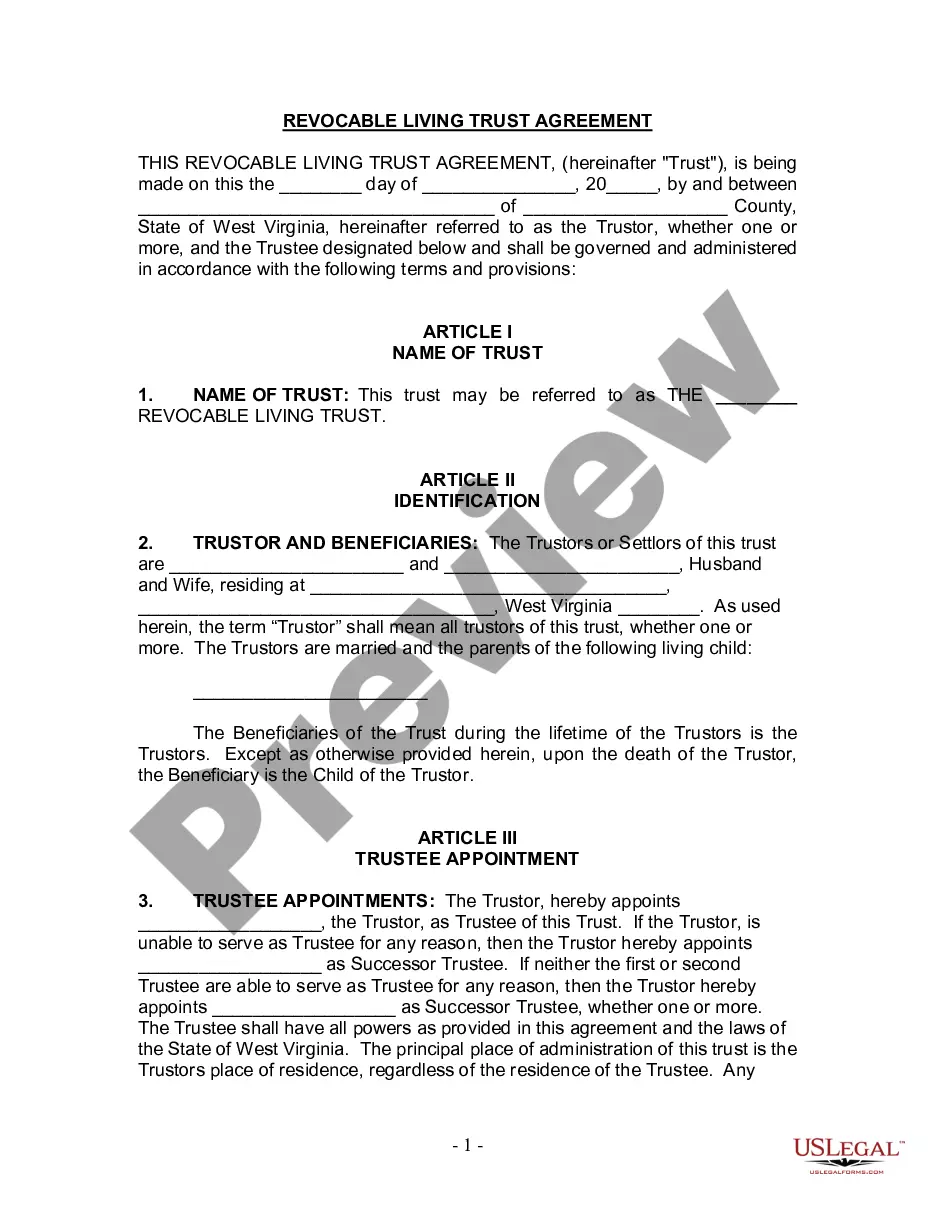
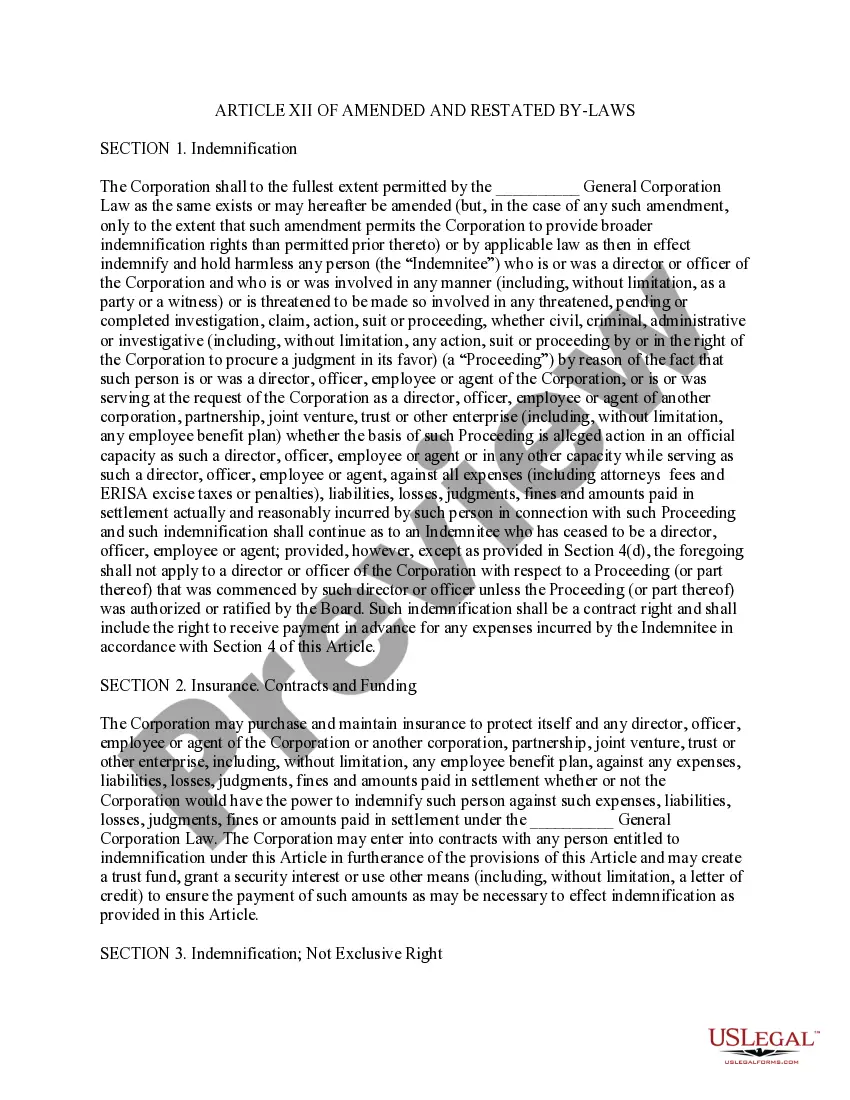
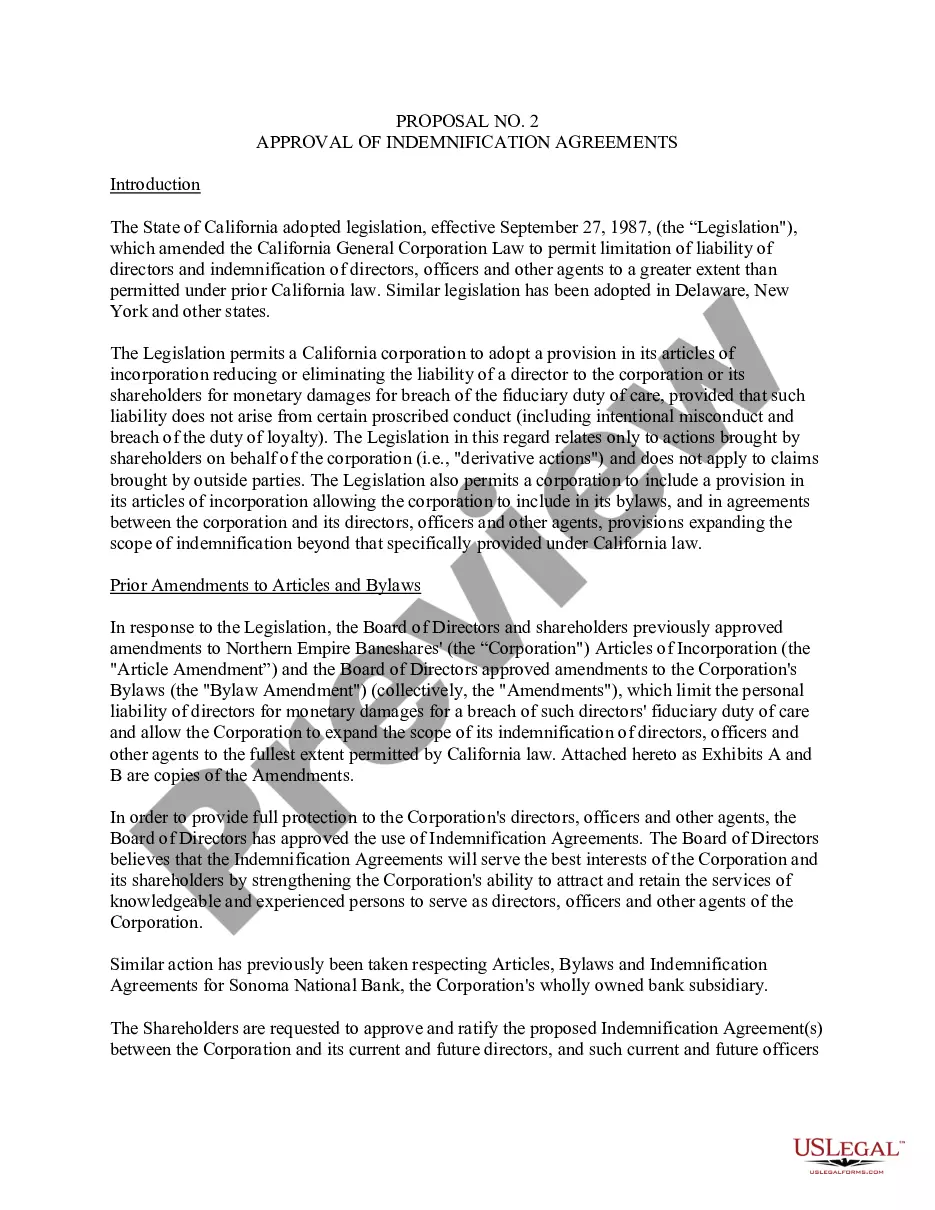
Proposed amendment to Bylaws regarding director and officer indemnification with copy of amendment
What this document covers
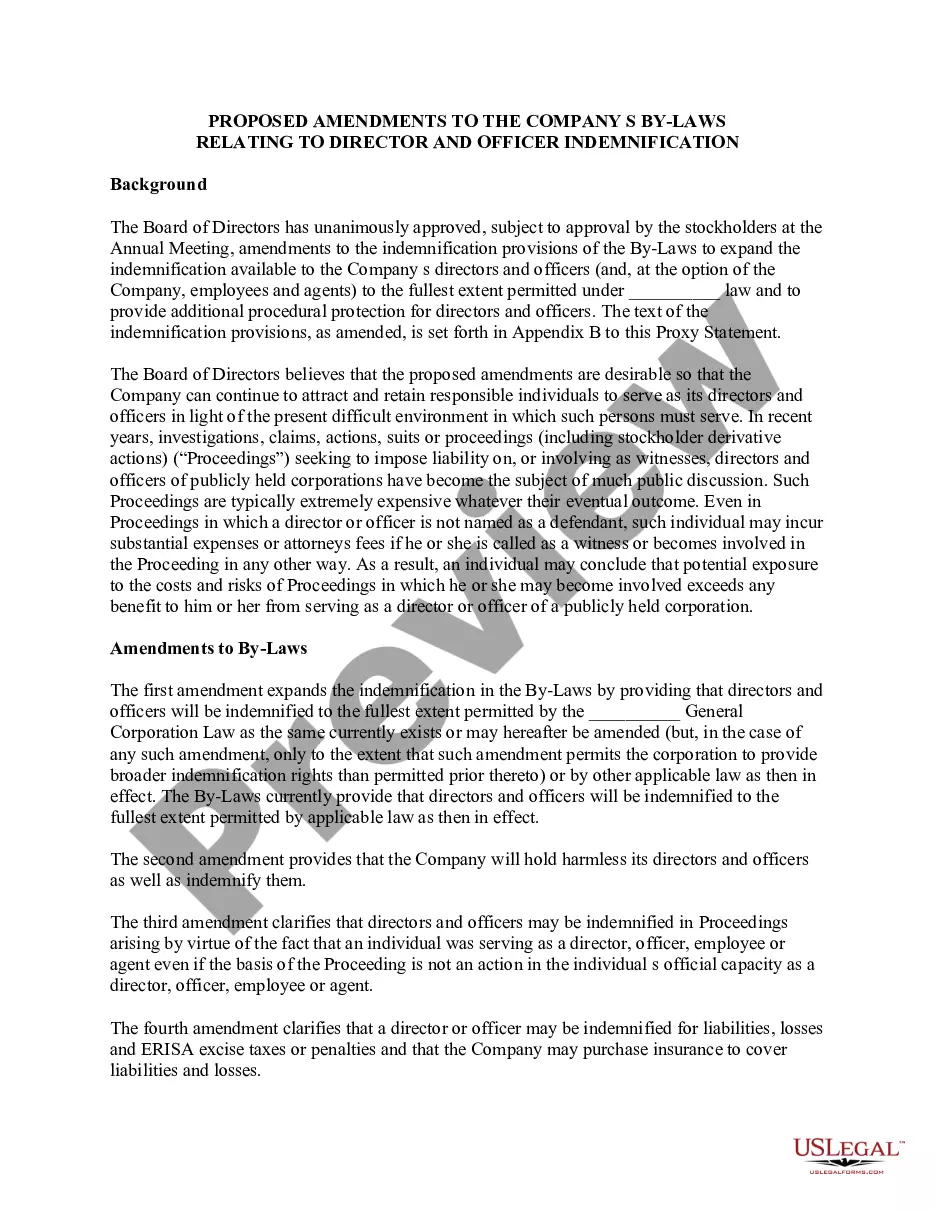
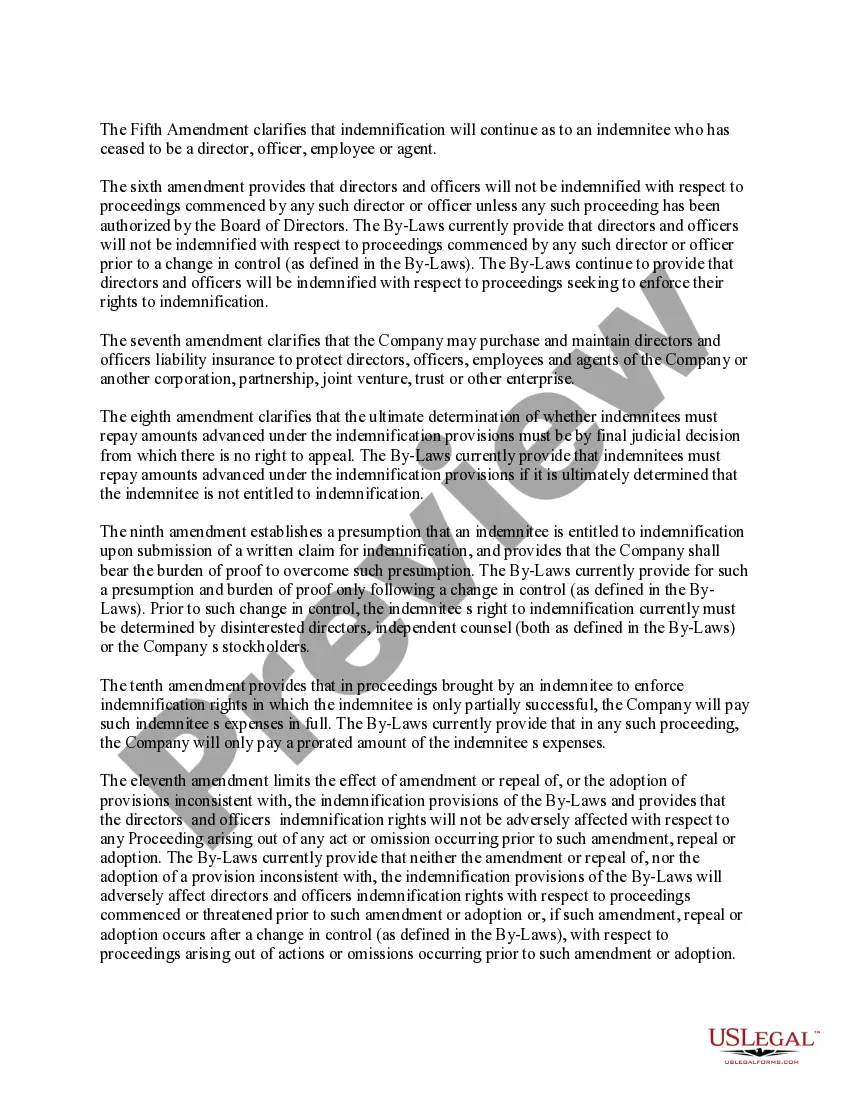
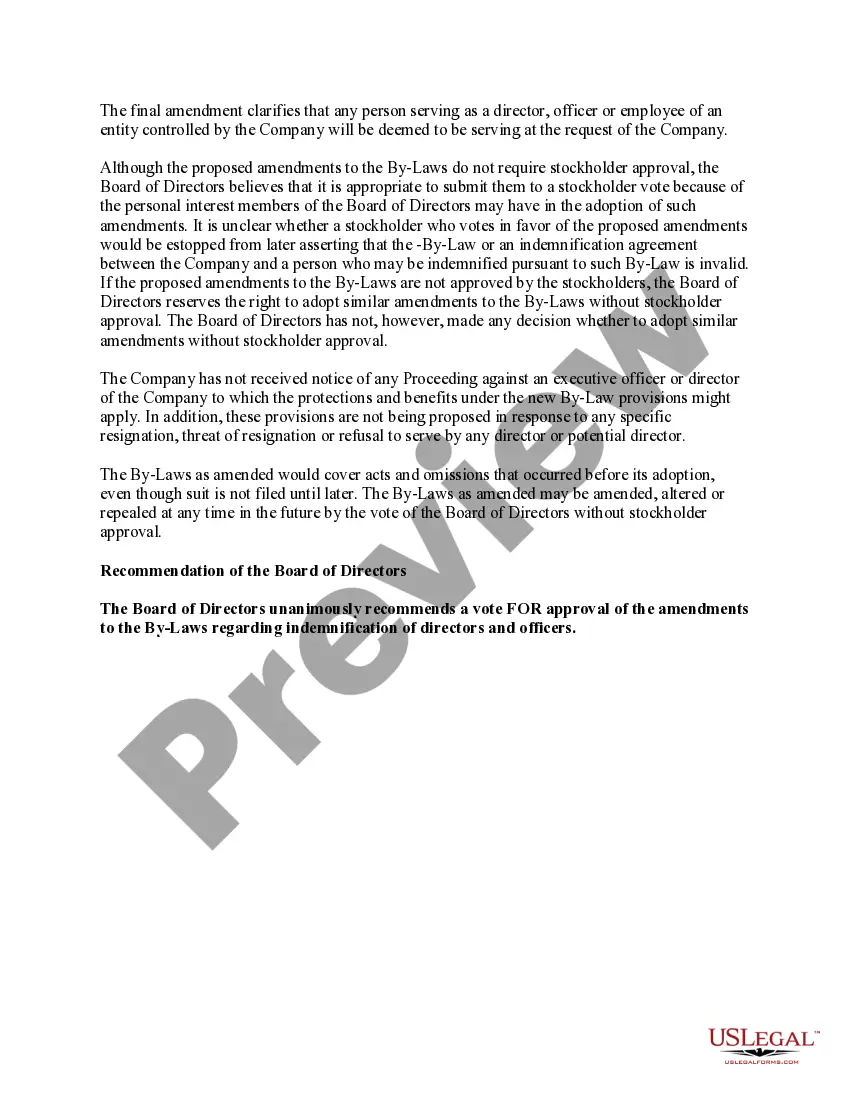
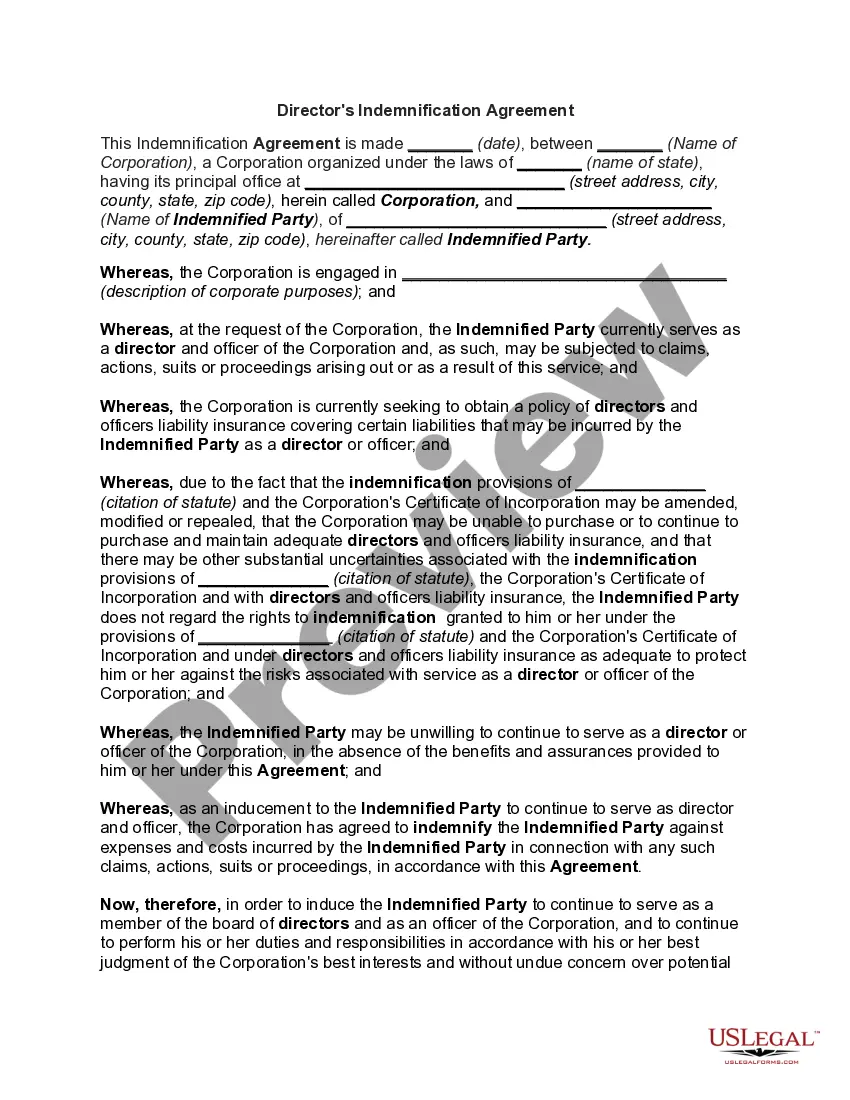
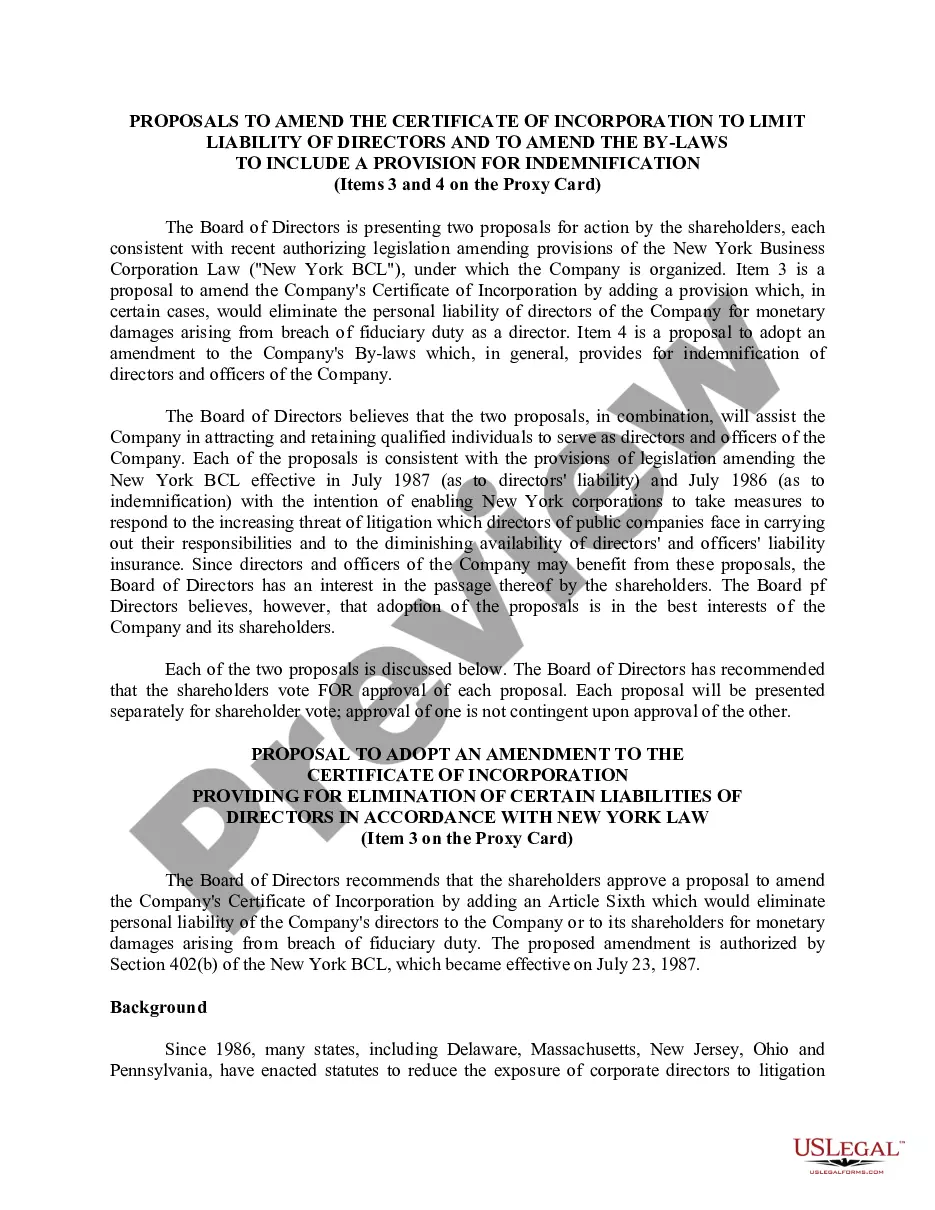
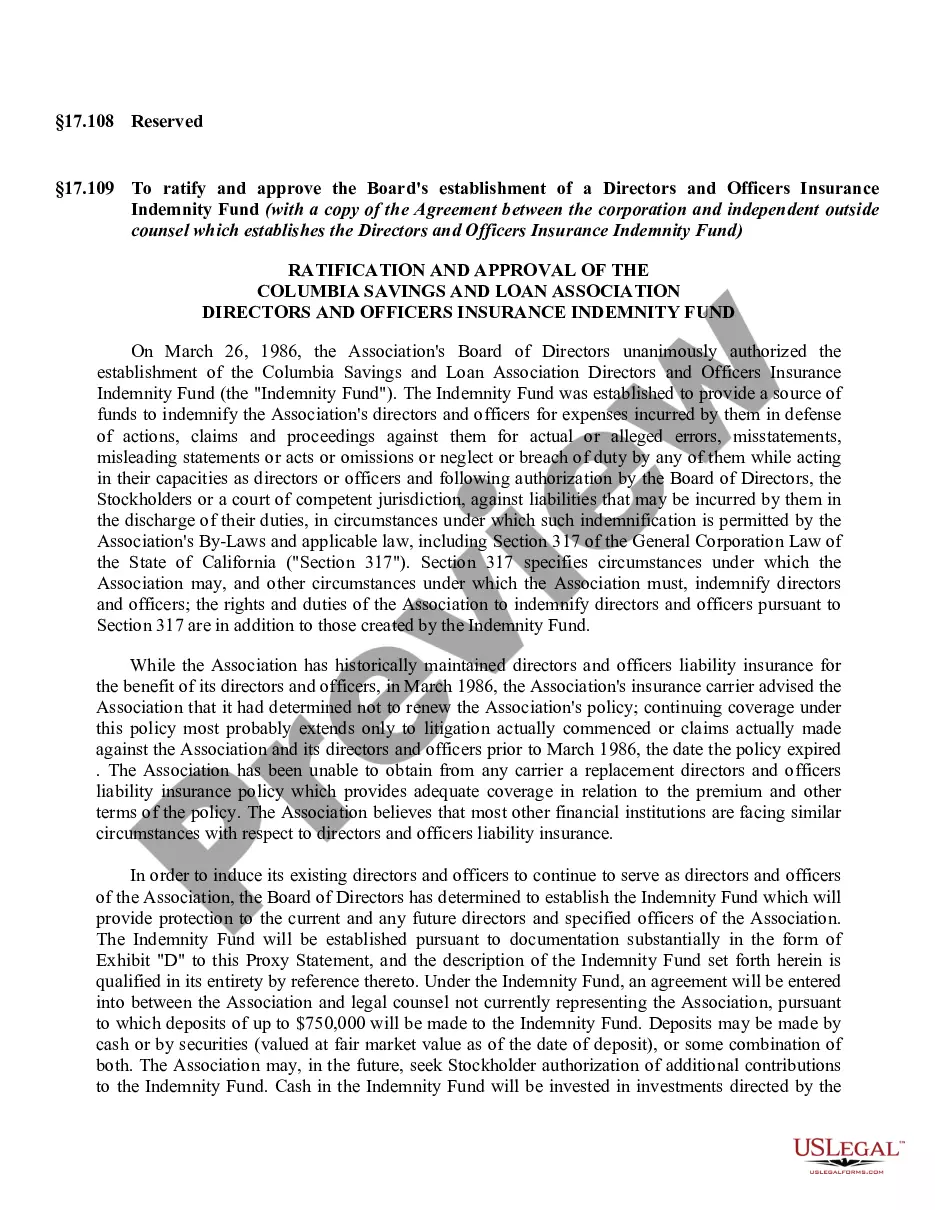
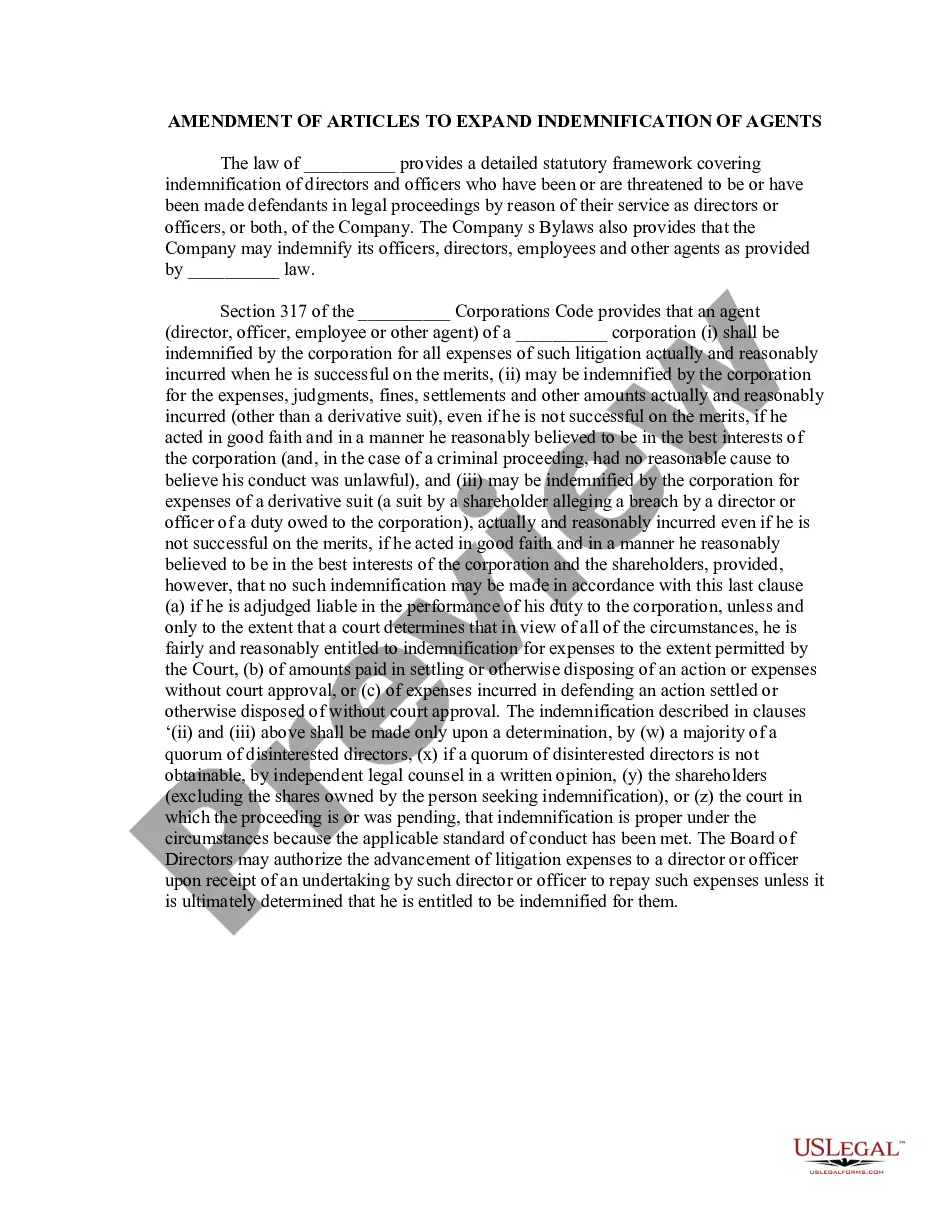
This Proposed Amendment to Bylaws regarding director and officer indemnification is a legal document designed for corporations. It outlines changes to the company's bylaws to enhance the indemnification protections offered to directors and officers. Unlike standard bylaws, this amendment includes specific provisions that clarify the extent of indemnification and the procedural rights of indemnified parties, ensuring a higher level of protection against potential liabilities they may face while serving the corporation.
Main sections of this form
- Background information on the necessity of indemnification.
- Detailed amendments expanding indemnification scope.
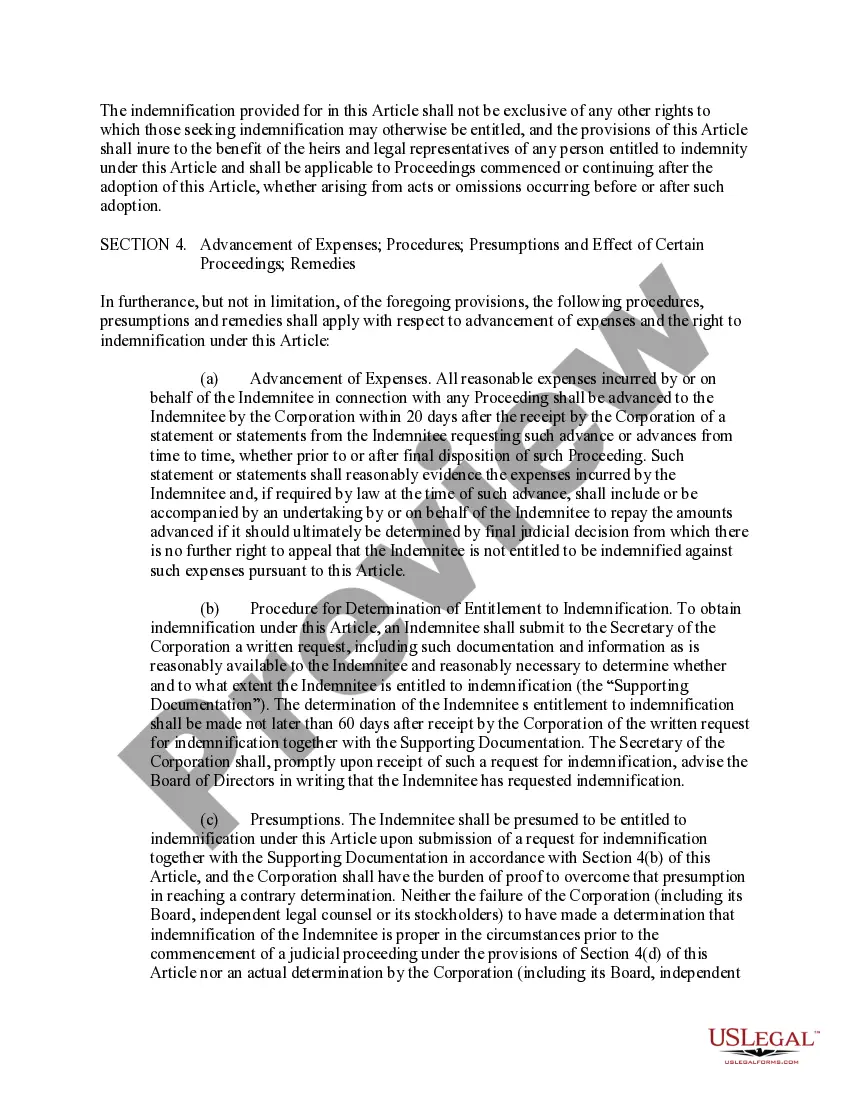
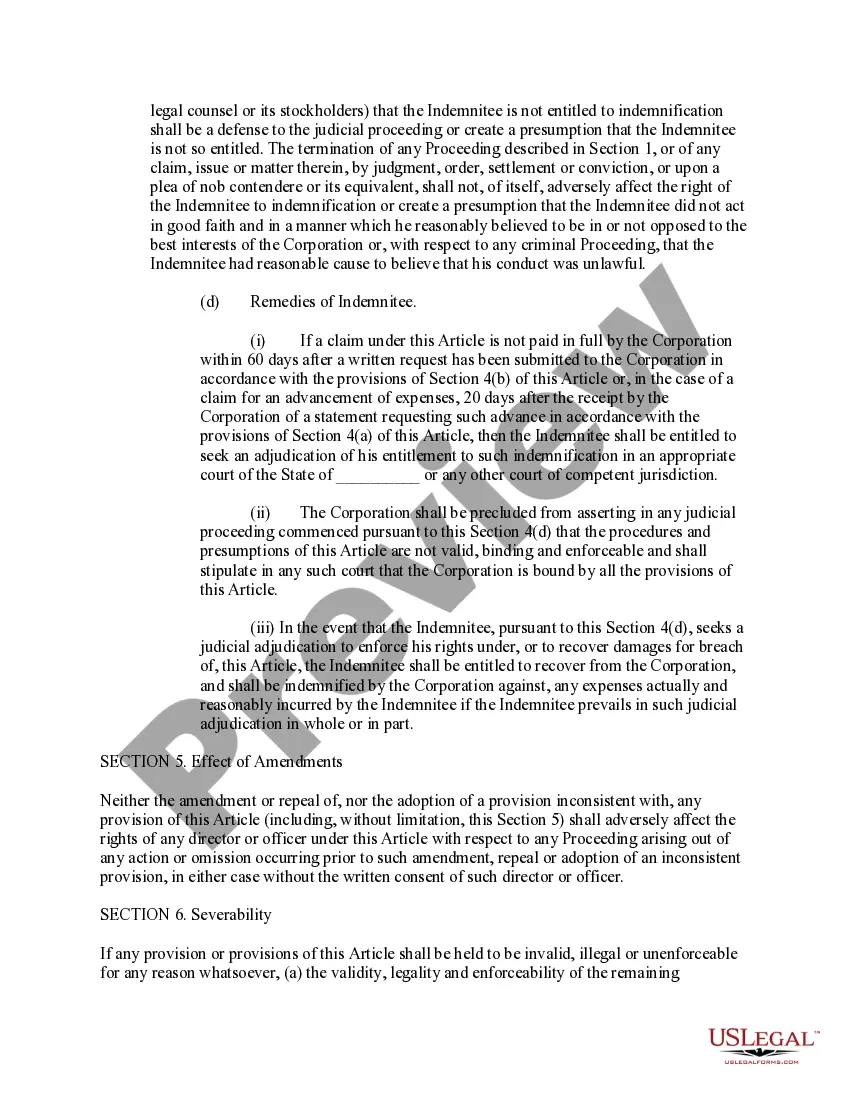
- Procedural protections for indemnified parties.
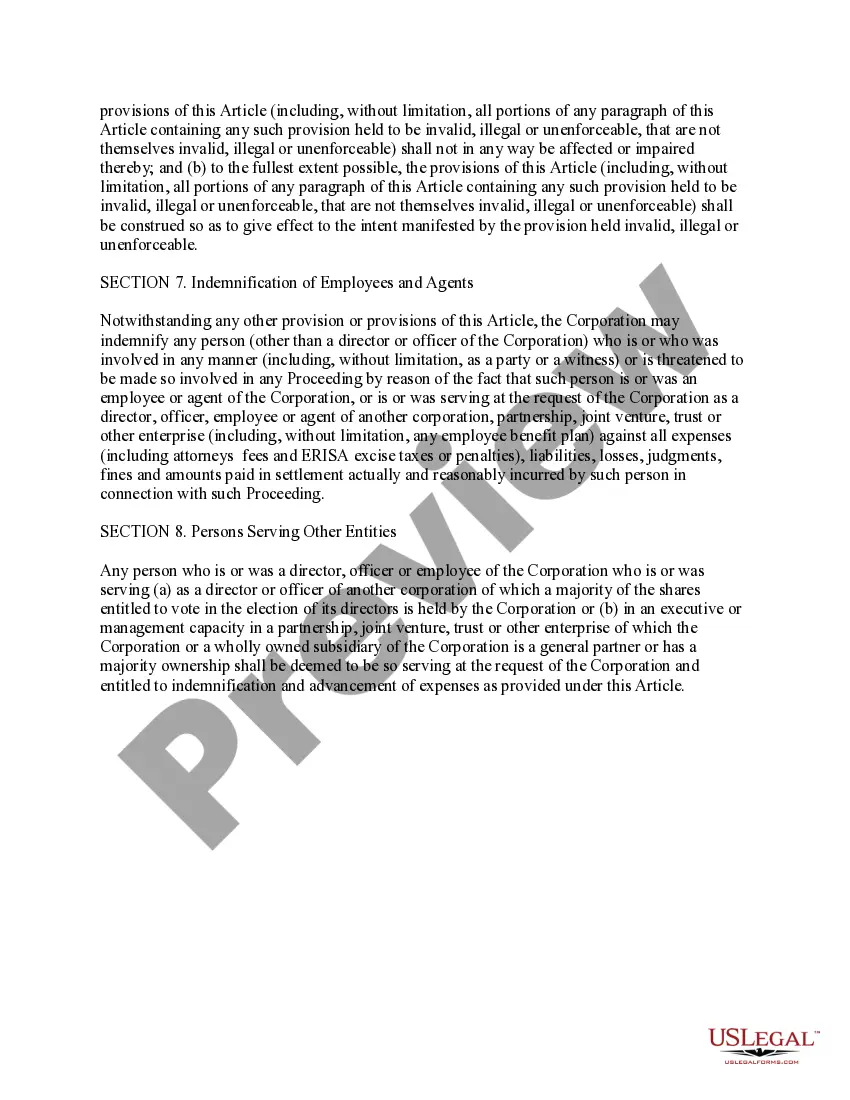
- Clarifications about insurance for directors and officers.
- Provisions for advance expense payment and repayment conditions.
- Presumptions regarding entitlement to indemnification.
- Indemnification rights continuity after the individual leaves office.
Situations where this form applies
This form is appropriate when a company seeks to amend its bylaws to provide broader indemnification rights for its directors and officers. It is particularly relevant in environments where potential legal challenges are prevalent, enabling companies to attract and retain qualified individuals for governance roles by assuring them of legal protection. You would use this amendment when preparing for a stockholder vote on these proposed changes during an annual meeting.
Intended users of this form
- Corporations looking to strengthen indemnification provisions.
- Board of Directors members responsible for governance.
- Legal advisors drafting amendments to bylaws.
- Shareholders interested in understanding the implications of indemnification.
How to complete this form
- Review the existing bylaws to identify current indemnification terms.
- Draft the amendment text, specifying changes to indemnification provisions.
- Include a copy of the proposed changes with technical and legal language tailored to your jurisdiction.
- Present the proposed amendment to the Board of Directors for approval.
- Schedule the amendment for a vote at the next annual stockholder meeting.
- Document the outcomes of the voting process and incorporate approved amendments into the bylaws.
Does this form need to be notarized?
Notarization is not commonly needed for this form. However, certain documents or local rules may make it necessary. Our notarization service, powered by Notarize, allows you to finalize it securely online anytime, day or night.
Get your form ready online
Our built-in tools help you complete, sign, share, and store your documents in one place.
Make edits, fill in missing information, and update formatting in US Legal Forms—just like you would in MS Word.
Download a copy, print it, send it by email, or mail it via USPS—whatever works best for your next step.
Sign and collect signatures with our SignNow integration. Send to multiple recipients, set reminders, and more. Go Premium to unlock E-Sign.
If this form requires notarization, complete it online through a secure video call—no need to meet a notary in person or wait for an appointment.
We protect your documents and personal data by following strict security and privacy standards.

Make edits, fill in missing information, and update formatting in US Legal Forms—just like you would in MS Word.

Download a copy, print it, send it by email, or mail it via USPS—whatever works best for your next step.

Sign and collect signatures with our SignNow integration. Send to multiple recipients, set reminders, and more. Go Premium to unlock E-Sign.

If this form requires notarization, complete it online through a secure video call—no need to meet a notary in person or wait for an appointment.

We protect your documents and personal data by following strict security and privacy standards.
Common mistakes to avoid
- Failing to align the amendment with state laws and regulations.
- Not providing adequate notice to shareholders about the amendment vote.
- Using ambiguous language in the amendment that may lead to misinterpretation.
- Neglecting to obtain proper approvals from the Board of Directors.
Benefits of completing this form online
- Convenience of accessing the form anytime and from anywhere.
- Editability allows customization to fit specific corporate needs.
- Reliability of templates drafted by licensed attorneys ensures legal compliance.
Looking for another form?

Form popularity
FAQ
When to Update Your Bylaws. Your board of directors should regularly review the bylaws to ensure they are following the procedures outlined in the document, and to make updates as necessary. Review Your State's Laws. Draft the Amendment. Review and Follow Procedures for Updates. Submit Amendments to Government Agencies.
Point out to them that bylaws are not a suggestion, they are mandatory. They form the foundation of how the entire organization functions. Failing to follow them puts the board, and the nonprofit, at legal risk. It may also put each director at individual risk, which D&O insurance will not cover.
The bylaws of a corporation are the governing rules by which the corporation operates. Bylaws are created by the board of directors when the corporation is formed.
Prepare the amendment. Make sure you indicate which section of the articles or bylaws will be changing. Hold a meeting of the board of directors. Hold a vote. Keep minutes. Distribute notices. Hold the shareholder meeting. Keep minutes. File the amended document.
Your nonprofit's bylaws are both a legal document and a roadmap for your organization's actions. A required element when forming a corporation, bylaws are a form of agreement or a contract between the corporation and its owners to conduct itself in a certain way.
How does one amend the bylaws? The first step is to look in your bylaws to see what it states as the procedure. Just because Robert's Rules of Order gives a procedure that does not mean that your bylaws must give the same procedure. Normally, it requires previous notice and a two-thirds vote to amend the bylaws.
Bylaws are legally binding. And while your Bylaws aren't a public document (like your IRS Form 990), they also aren't confidential. You can share them, for instance, with a prospective board member who asks to review them before joining your board.
Directors and officers who violate a corporation's bylaws run the risk of being removed from office. State law authorizes the directors to remove an officer without cause.If the shareholders are not removing the entire board, an individual director may be protected from removal depending on state law.