Directors and Officers Indemnity Trust
Understanding this form
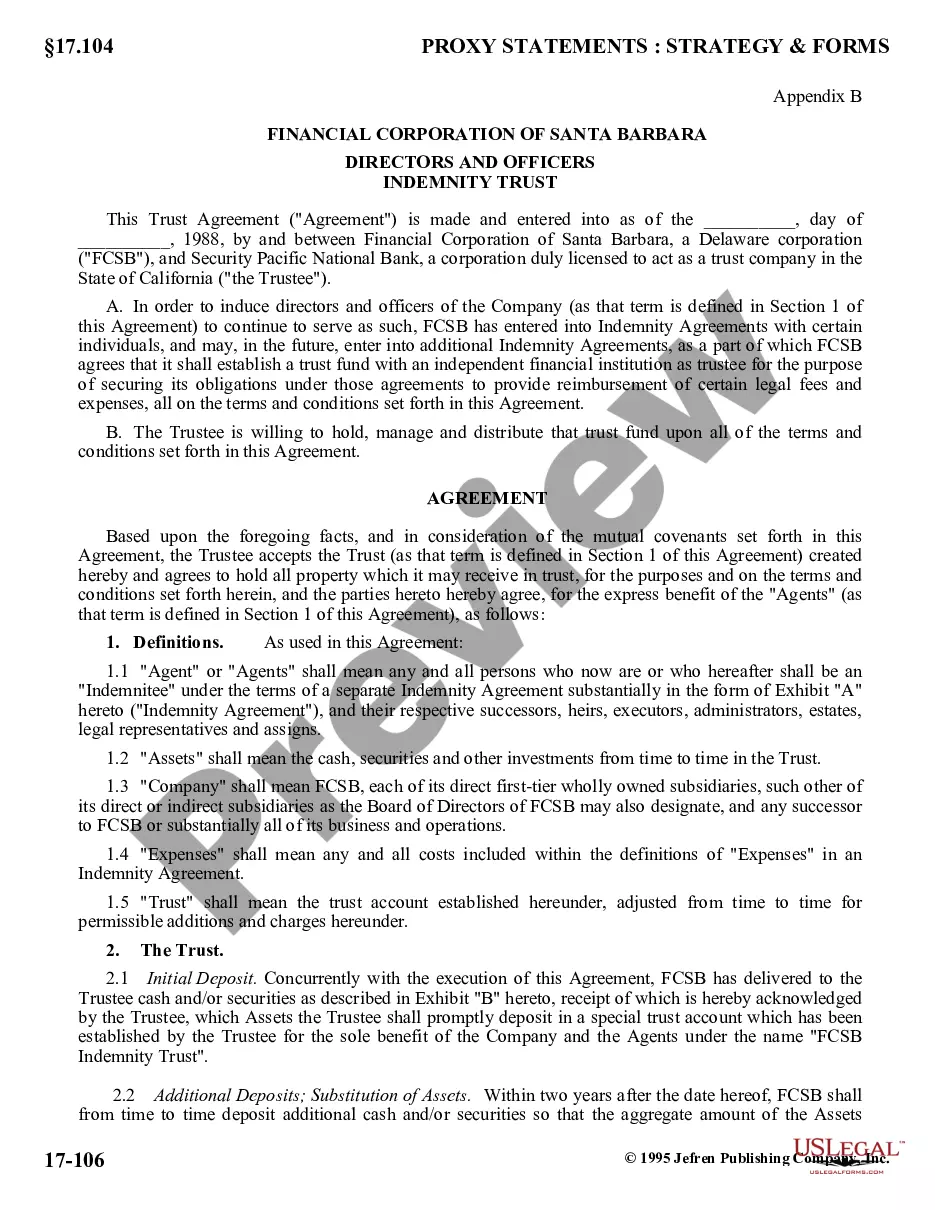
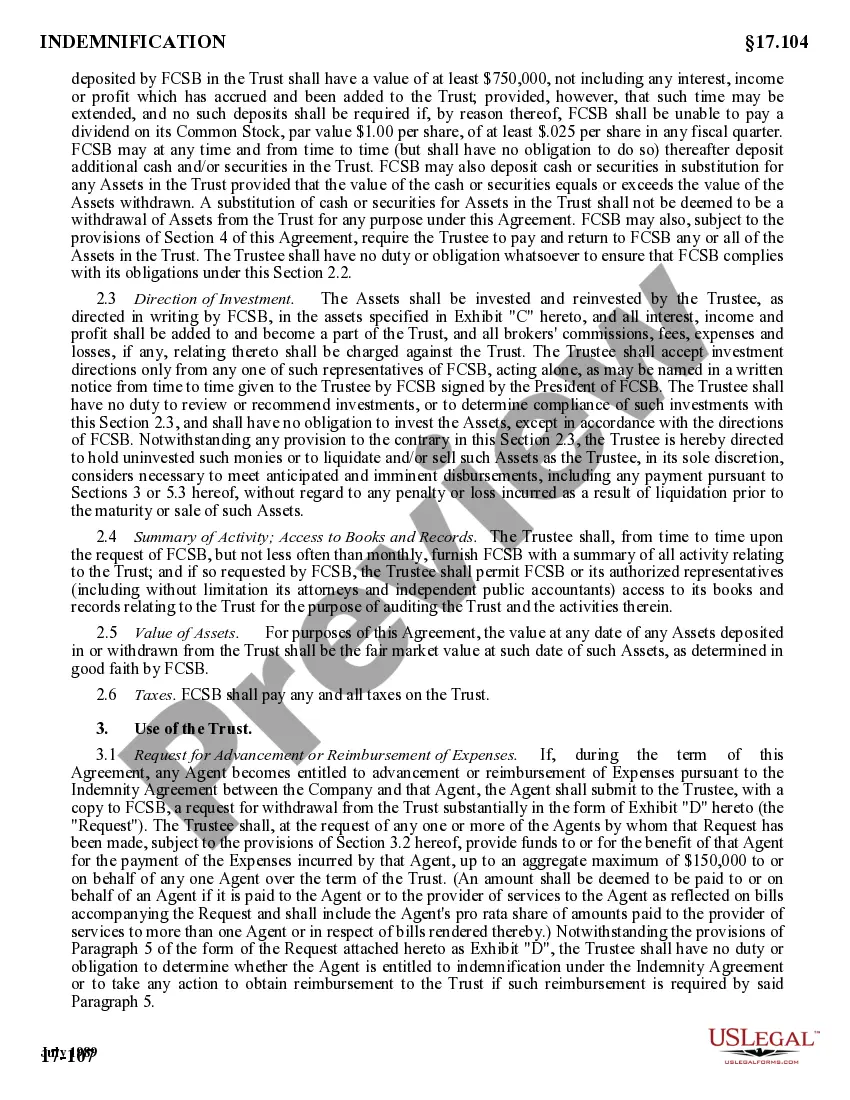
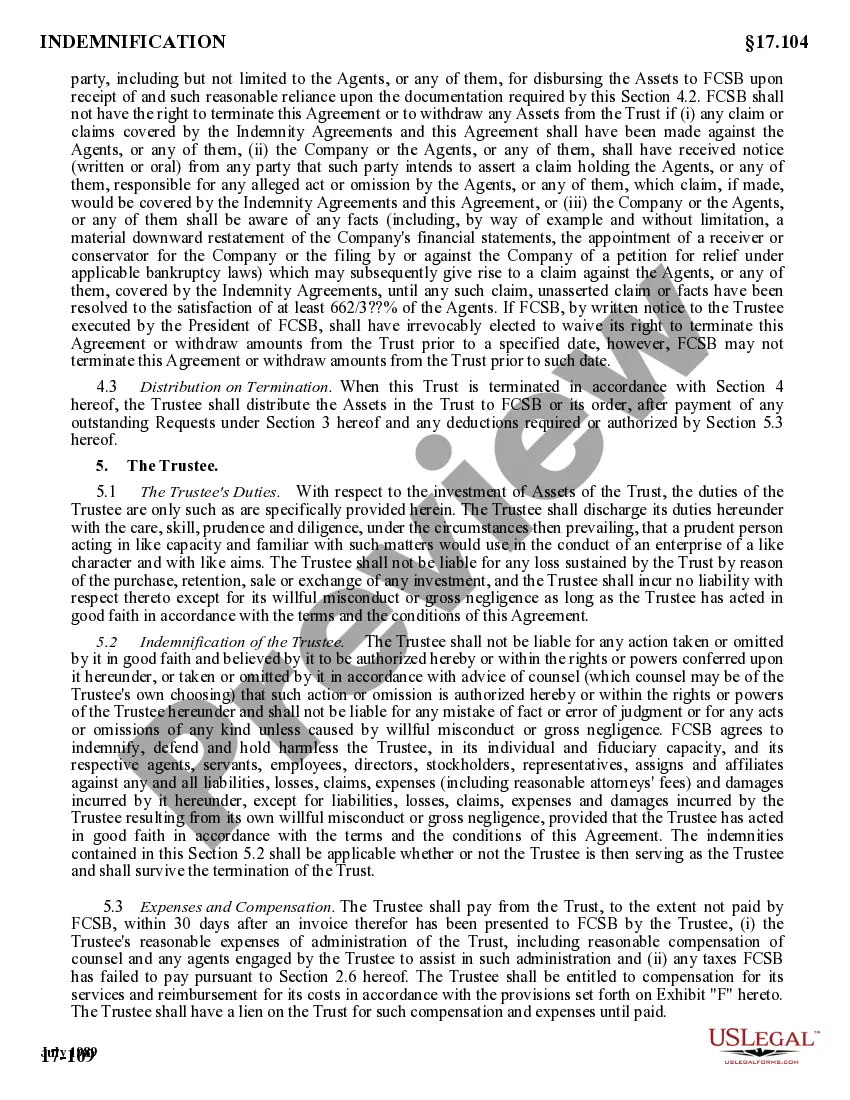
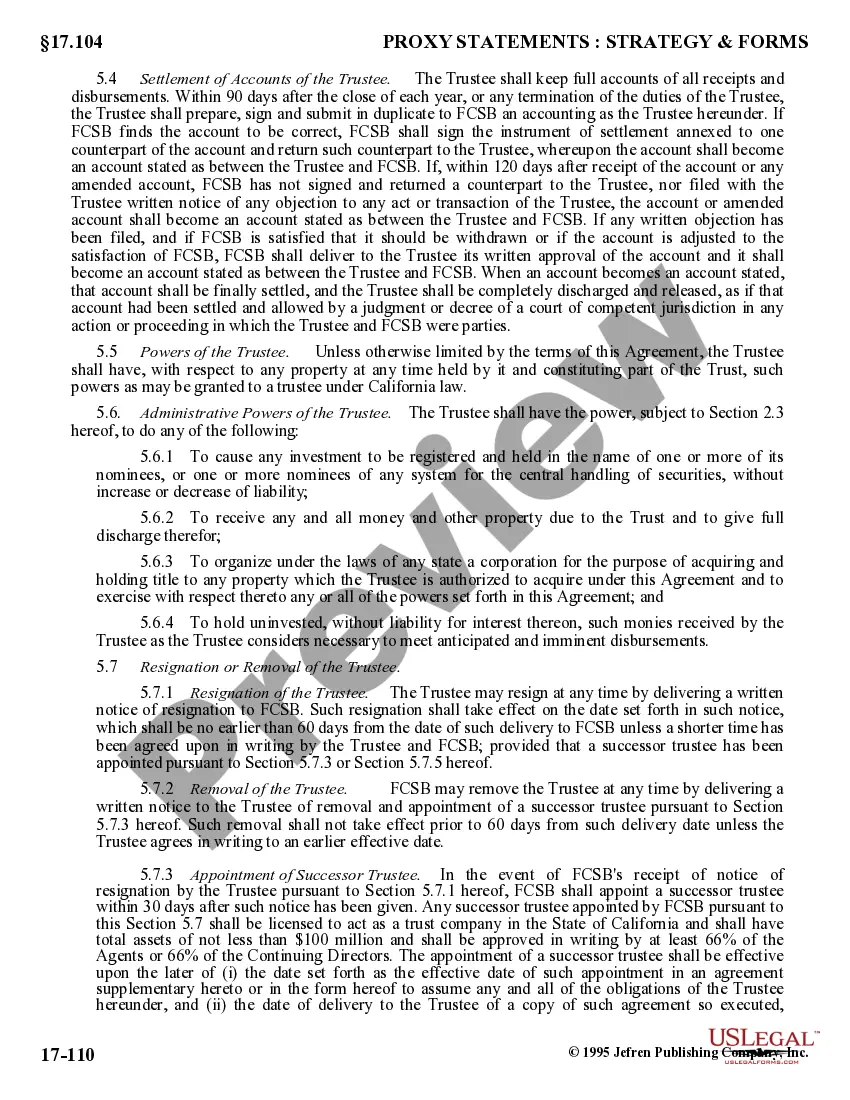
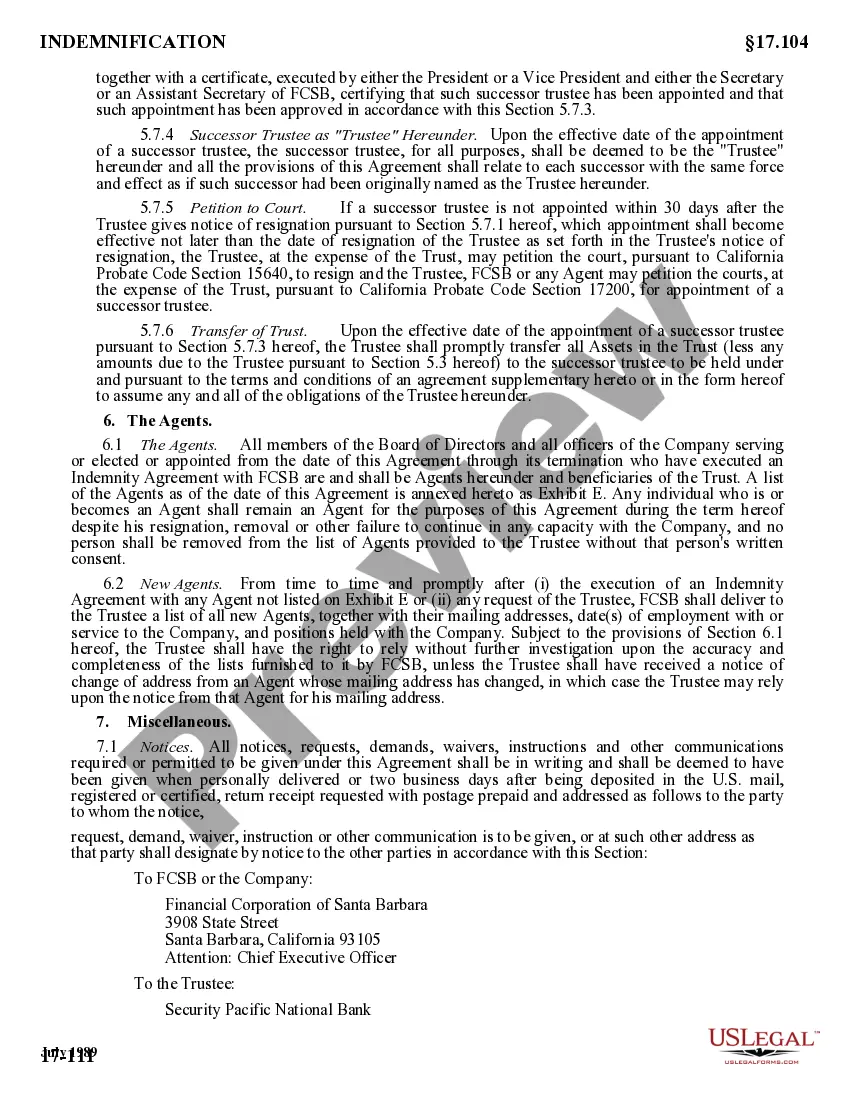
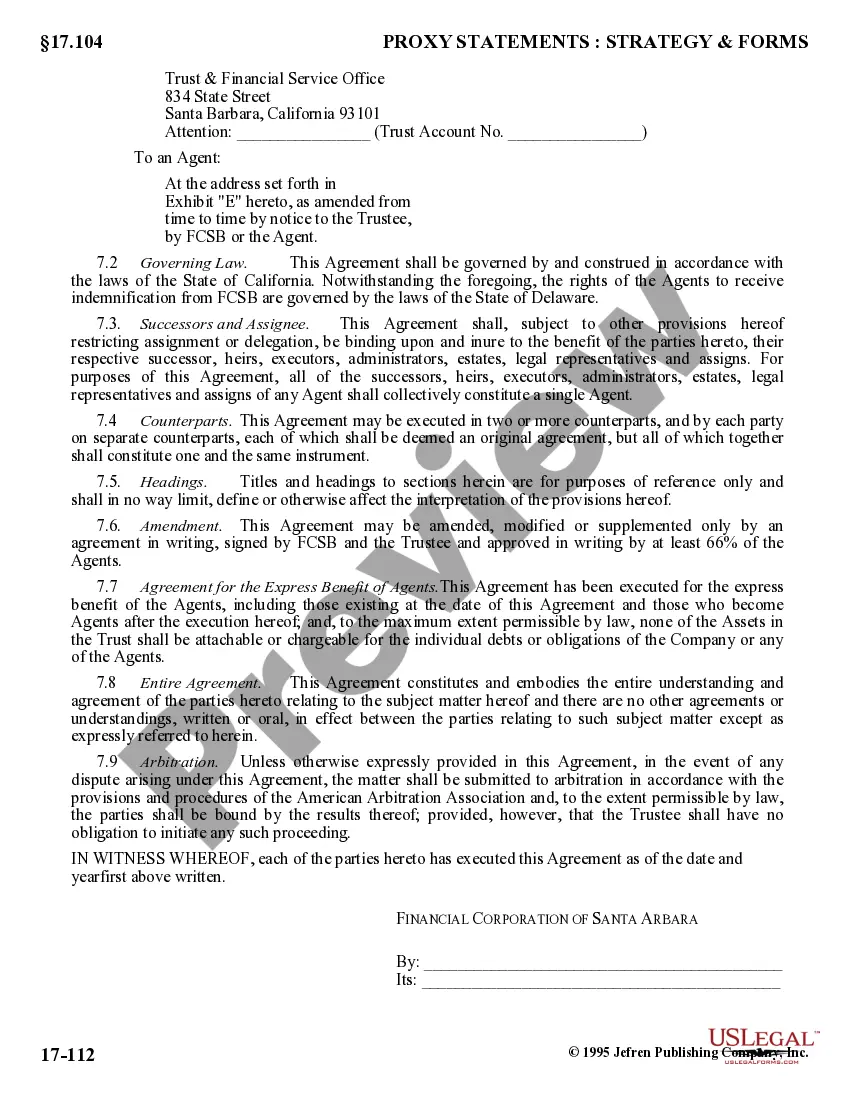
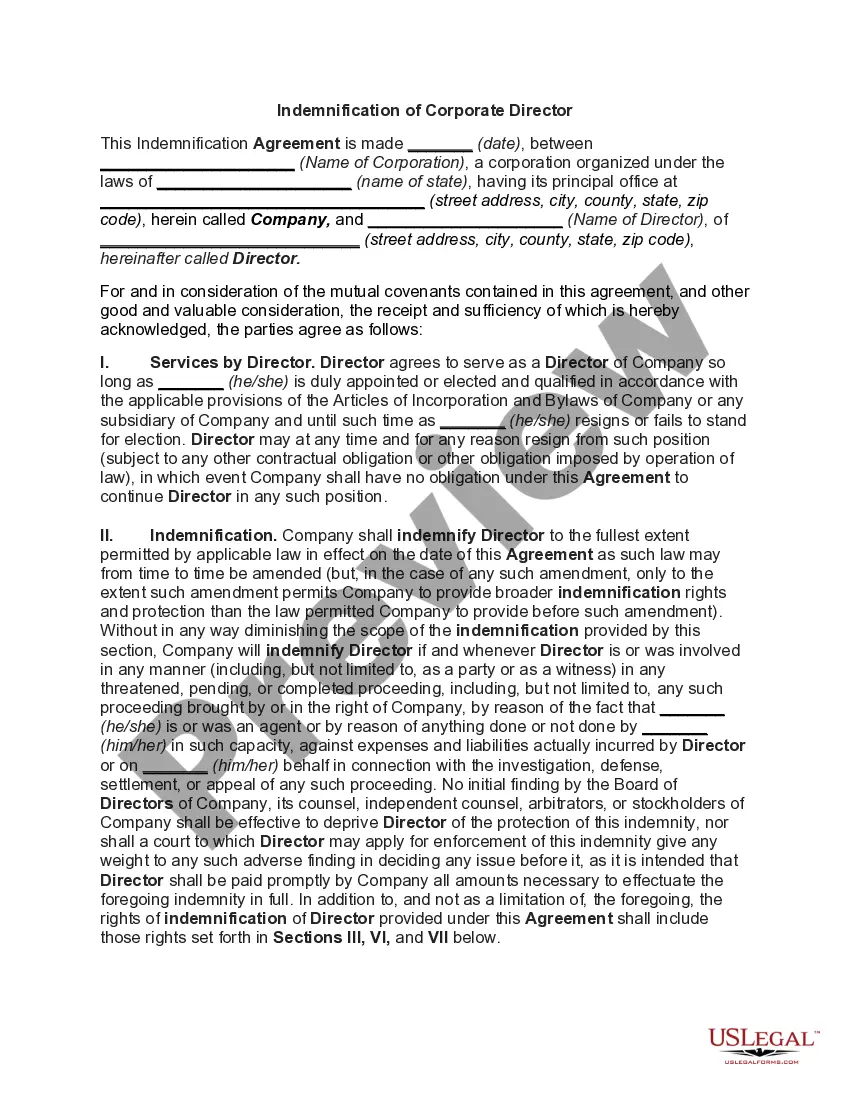
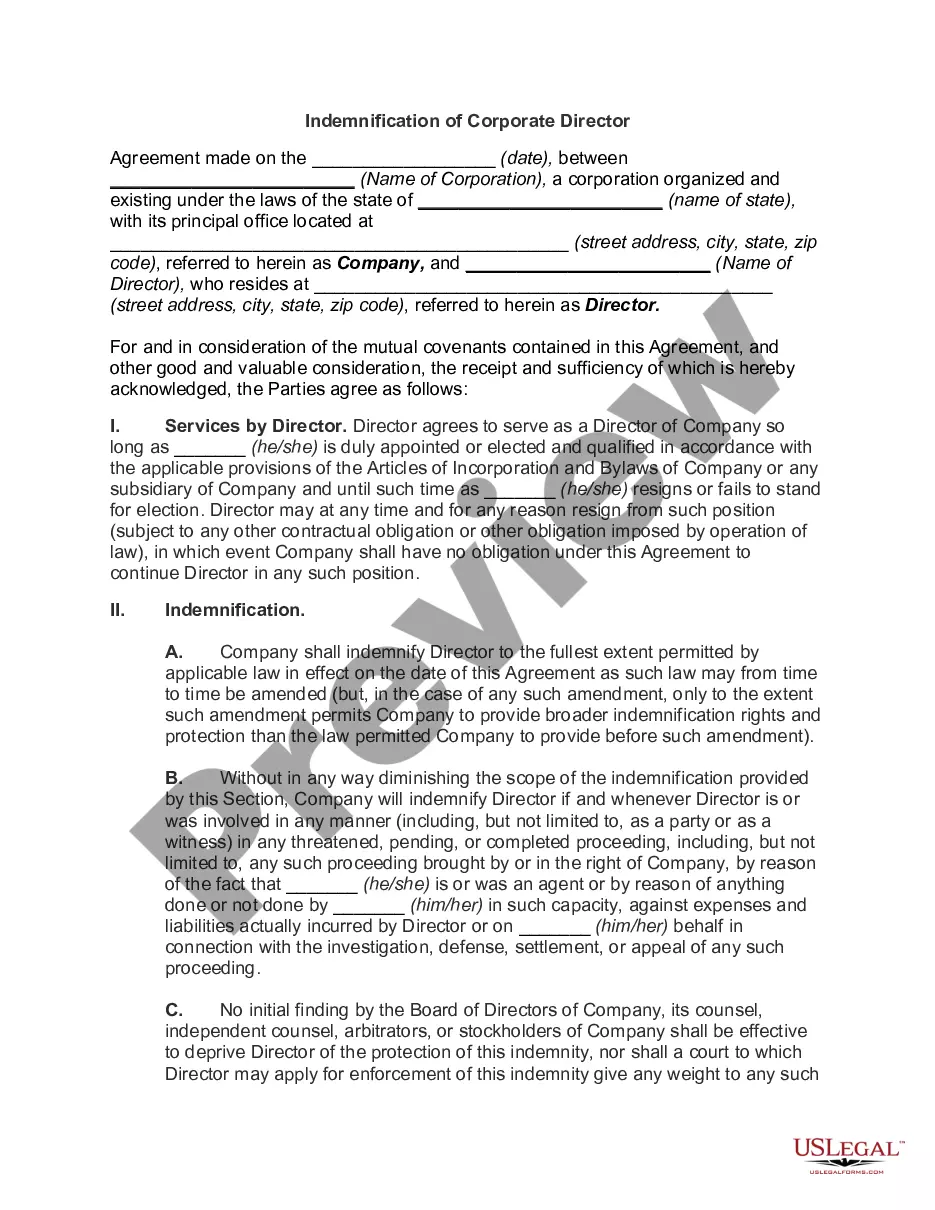
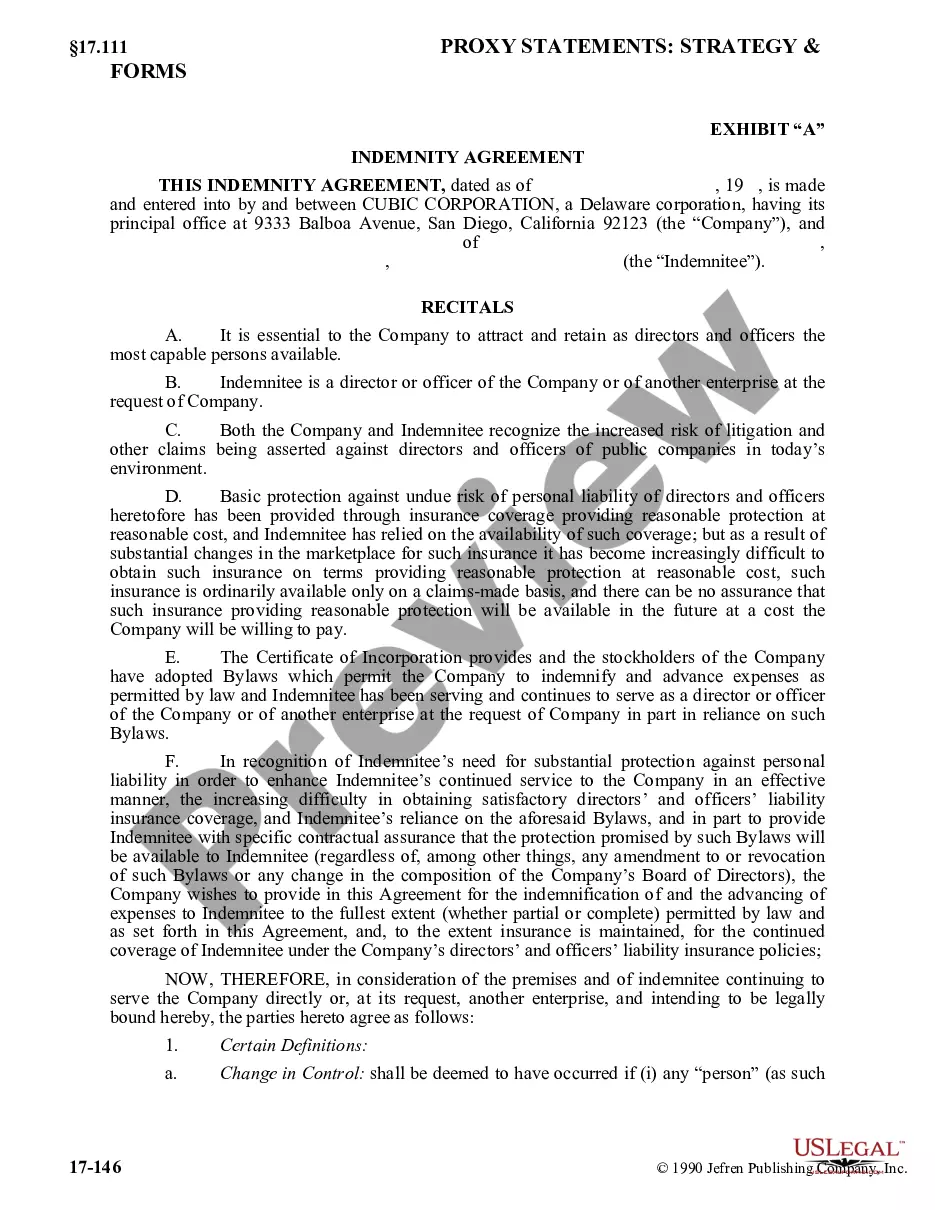
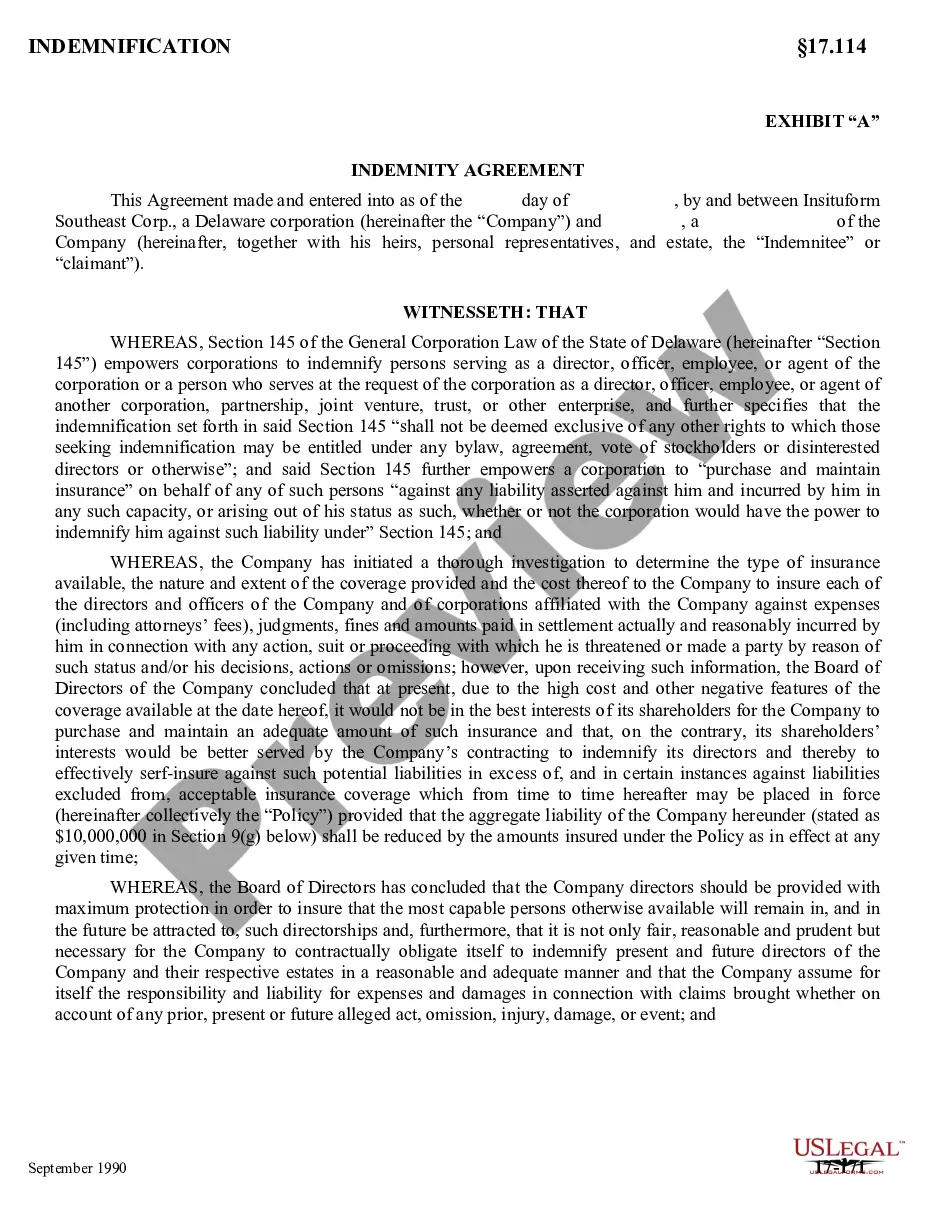
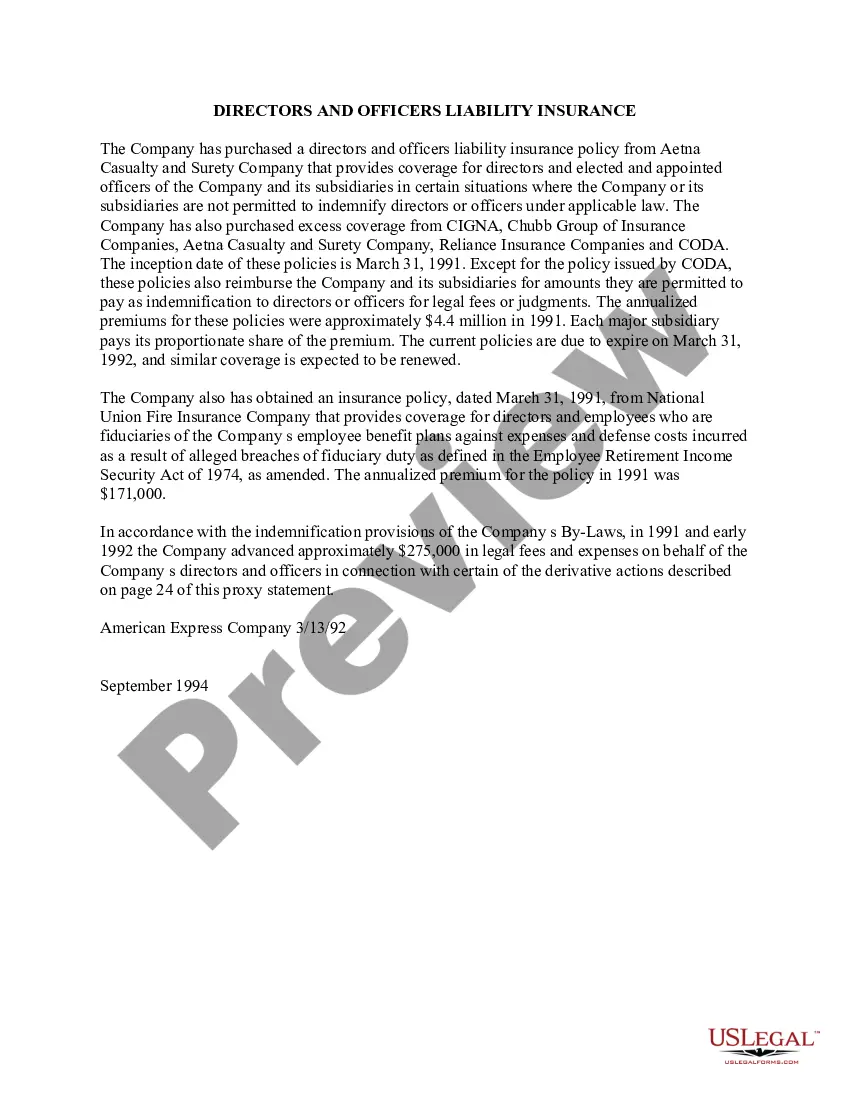
The Directors and Officers Indemnity Trust is a legal document that establishes a trust fund to protect and indemnify the directors and officers of a corporation against certain liabilities and expenses incurred while performing their corporate duties. This form is vital to encourage individuals to accept such positions, ensuring they receive reimbursement for legal fees and expenses under indemnity agreements. This trust uniquely secures the corporation's obligations to its agents, differing from standard indemnity agreements by formally establishing a financial resource for claims.
Form components explained
- Definitions: Outlines key terms used in the agreement, including "Agent," "Company," and "Expenses."
- The Trust: Specifies initial and additional deposits to the trust and management of assets for the benefit of the agents.
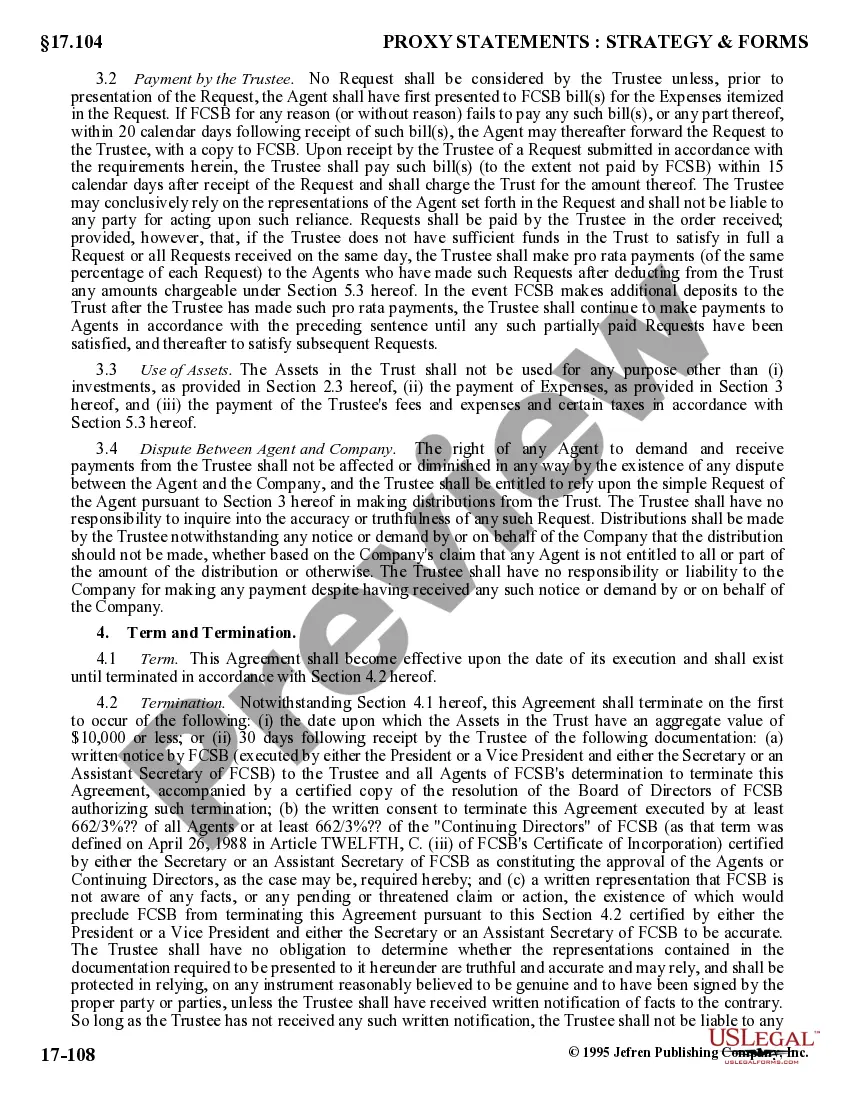
- Use of the Trust: Details the process for agents to request reimbursement for expenses and the trustee's responsibilities in approving these requests.
- Term and Termination: Defines the duration of the trust and the conditions under which it can be terminated.
- The Trustee: Describes the roles and duties of the trustee, including investment management and record-keeping requirements.
- The Agents: Designates who qualifies as agents under the trust and outlines the benefits they are entitled to.

Common use cases
This form should be used when a corporation wants to establish a mechanism to indemnify its directors and officers against potential legal liabilities. It is particularly useful when the company wishes to encourage experienced individuals to serve in key leadership roles by offering them security against personal financial losses related to their roles. Companies may also consider this trust if they foresee potential legal challenges based on past or future actions taken by their leadership.
Who needs this form
- Corporation boards looking to protect their directors and officers.
- Newly formed corporations wanting to establish indemnification provisions from the outset.
- Existing corporations revising their indemnification policies to offer more comprehensive protections.
- Companies facing legal uncertainties where leadership decisions might be questioned.
How to complete this form
- Identify the parties involved, including the corporation and the trustee.
- Define the initial asset deposits to the trust that secure the indemnity obligations.
- Outline the rights and responsibilities of the trustee in managing the trust assets.
- Detail the process for agents to request reimbursement for expenses related to their duties.
- Include definitions and additional provisions as necessary to comply with state law.
Notarization guidance
In most cases, this form does not require notarization. However, some jurisdictions or signing circumstances might. US Legal Forms offers online notarization powered by Notarize, accessible 24/7 for a quick, remote process.
Get your form ready online
Our built-in tools help you complete, sign, share, and store your documents in one place.
Make edits, fill in missing information, and update formatting in US Legal Forms—just like you would in MS Word.
Download a copy, print it, send it by email, or mail it via USPS—whatever works best for your next step.
Sign and collect signatures with our SignNow integration. Send to multiple recipients, set reminders, and more. Go Premium to unlock E-Sign.
If this form requires notarization, complete it online through a secure video call—no need to meet a notary in person or wait for an appointment.
We protect your documents and personal data by following strict security and privacy standards.

Make edits, fill in missing information, and update formatting in US Legal Forms—just like you would in MS Word.

Download a copy, print it, send it by email, or mail it via USPS—whatever works best for your next step.

Sign and collect signatures with our SignNow integration. Send to multiple recipients, set reminders, and more. Go Premium to unlock E-Sign.

If this form requires notarization, complete it online through a secure video call—no need to meet a notary in person or wait for an appointment.

We protect your documents and personal data by following strict security and privacy standards.
Common mistakes to avoid
- Failing to adequately define roles and responsibilities of the trustee.
- Not including provisions for the handling of disputes between agents and the company.
- Neglecting to clearly state the process for submitting requests for reimbursement.
- Omitting updates to the list of agents as new individuals join the company.
Why complete this form online
- Convenience: Easily downloadable and printable for immediate use.
- Editability: Customizable to fit specific corporate structures and requirements.
- Reliability: Drafted by licensed attorneys to ensure legal integrity.
- Time-saving: Rapid access without the need for in-person legal consultations.
Legal use & context
- This trust agreement is legally binding and ensures that all qualified directors and officers are protected under its terms.
- Indemnity agreements created as part of this trust are enforceable under California law.
- The trust serves as a separate legal entity, ensuring the assets are protected from claims against the corporation itself.
Quick recap
- The Directors and Officers Indemnity Trust is critical for protecting corporate leadership from financial risks.
- Understanding key components and proper usage of the form is essential for compliance and effectiveness.
- Legal advice can clarify specific obligations under the trust agreement and enhance its enforceability.
Looking for another form?



Form popularity
FAQ
Q: How much does D&O insurance typically cost? Pamela: Organizations with no employees can purchase $1 million in D&O limits for around $600 per year. Organizations with employees can expect to pay anywhere from about $1,200 for those with just a few employees, to around $4,000 to $5,000 for 50 employees.
What does "Corporate Indemnification" mean?In the context of business organizations, a limited liability company or corporation will often indemnify its officers and directors, covering their expenses (including legal fees) and judgment amounts incurred by such persons as a result of their service to the entity.
D&O insurance costs can range anywhere from $250 all the way up to $10,000, however, most businesses pay around $600 a year on average. Depending on your companies needs and risks, you may be able to get it for a better price though.
Indemnity is a comprehensive form of insurance compensation for damages or loss.Indemnity is a contractual agreement between two parties. In this arrangement, one party agrees to pay for potential losses or damages caused by another party.
Indemnification. Indemnification is an undertaking by the company to defend the director and officer against the cost of certain claims, including legal fees, litigation awards and settlement costs.
Lower risk businesses could pay as little as $250 a year for $1 million in coverage, while companies with a higher risk might pay more than $10,000 a year. However, the average cost of Directors and Officers Insurance is around $600 for $1 million in coverage.
It's still your business decision whether you sign them or not, but you should do so only where it is a critical contract that you have no way of modifying or negotiating changes. In contrast, the best kind of Indemnity Agreement is commonly called a Mutual Indemnity Agreement or a Mutual Hold Harmless Provision.
To indemnify means to compensate someone for his/her harm or loss. In most contracts, an indemnification clause serves to compensate a party for harm or loss arising in connection with the other party's actions or failure to act. The intent is to shift liability away from one party, and on to the indemnifying party.