Election of Directors for a Company
Overview of this form
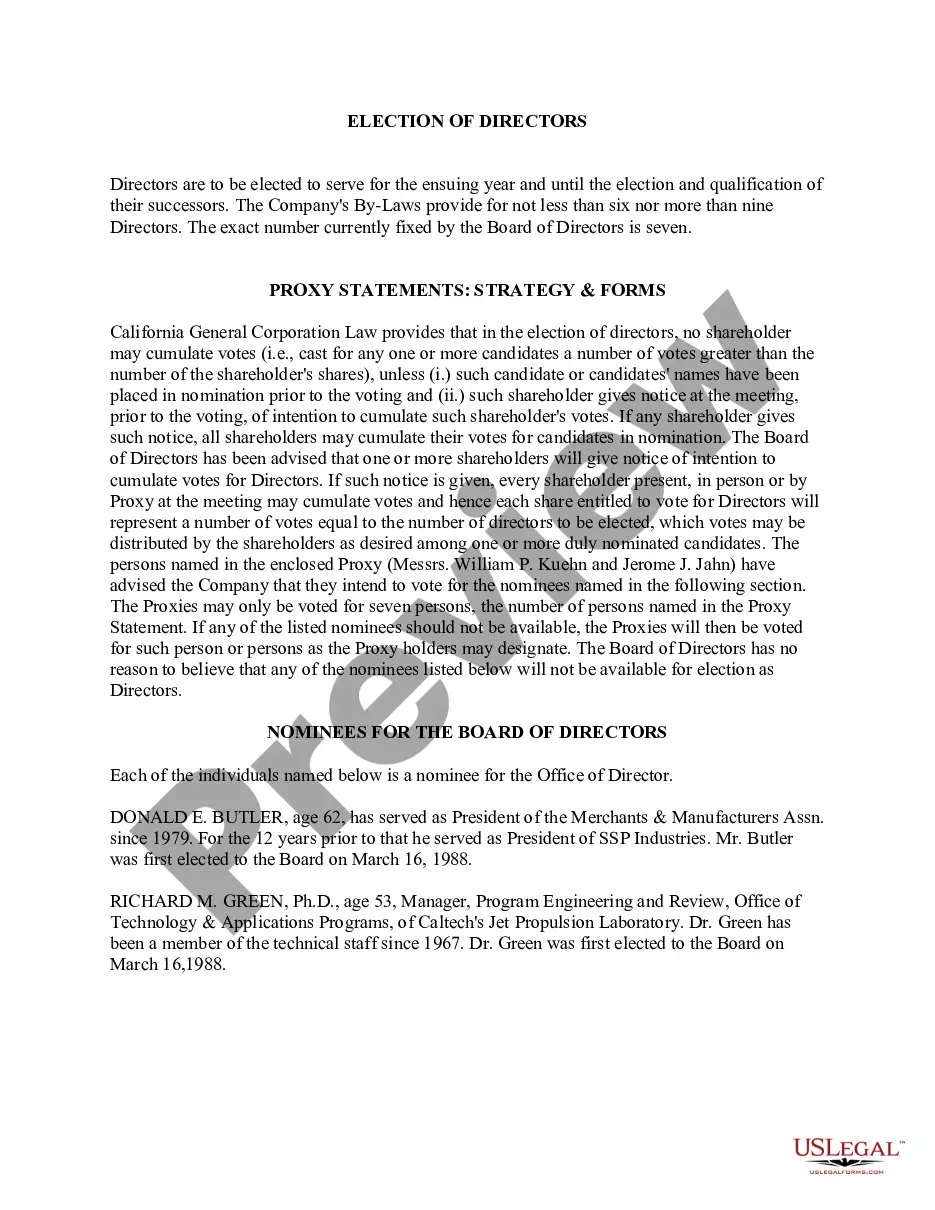
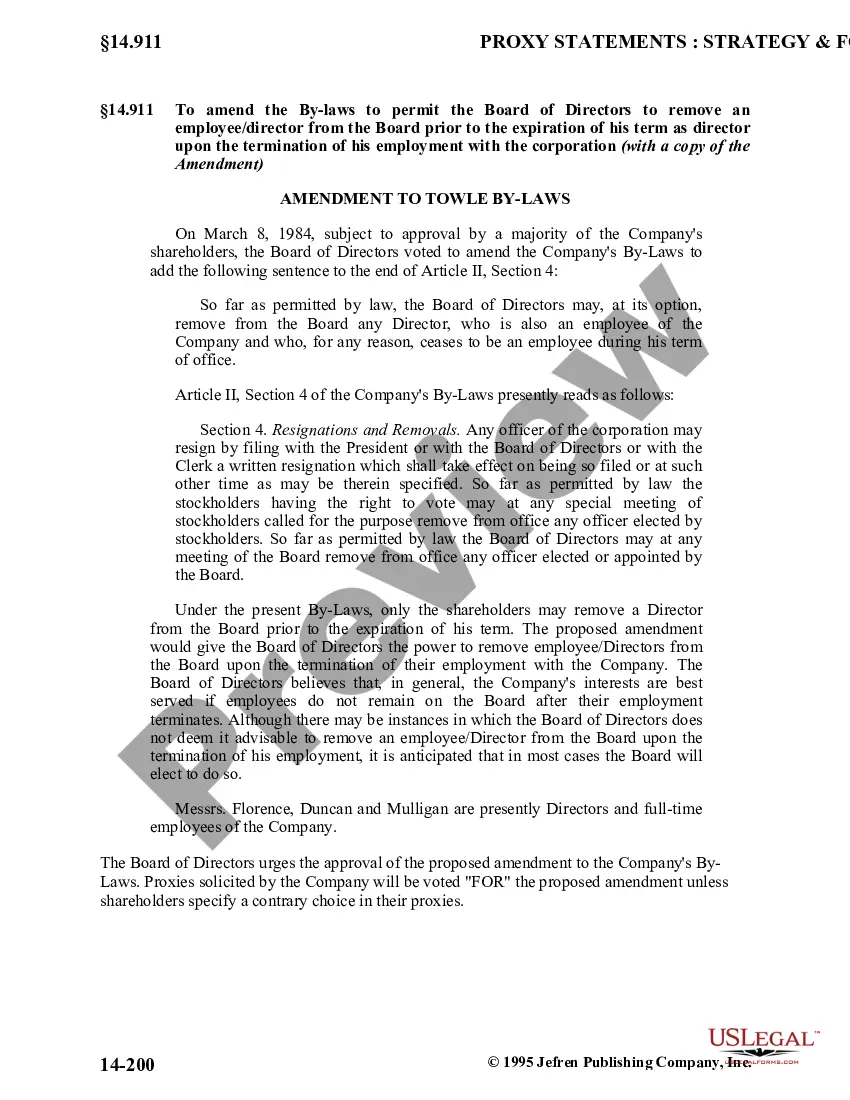
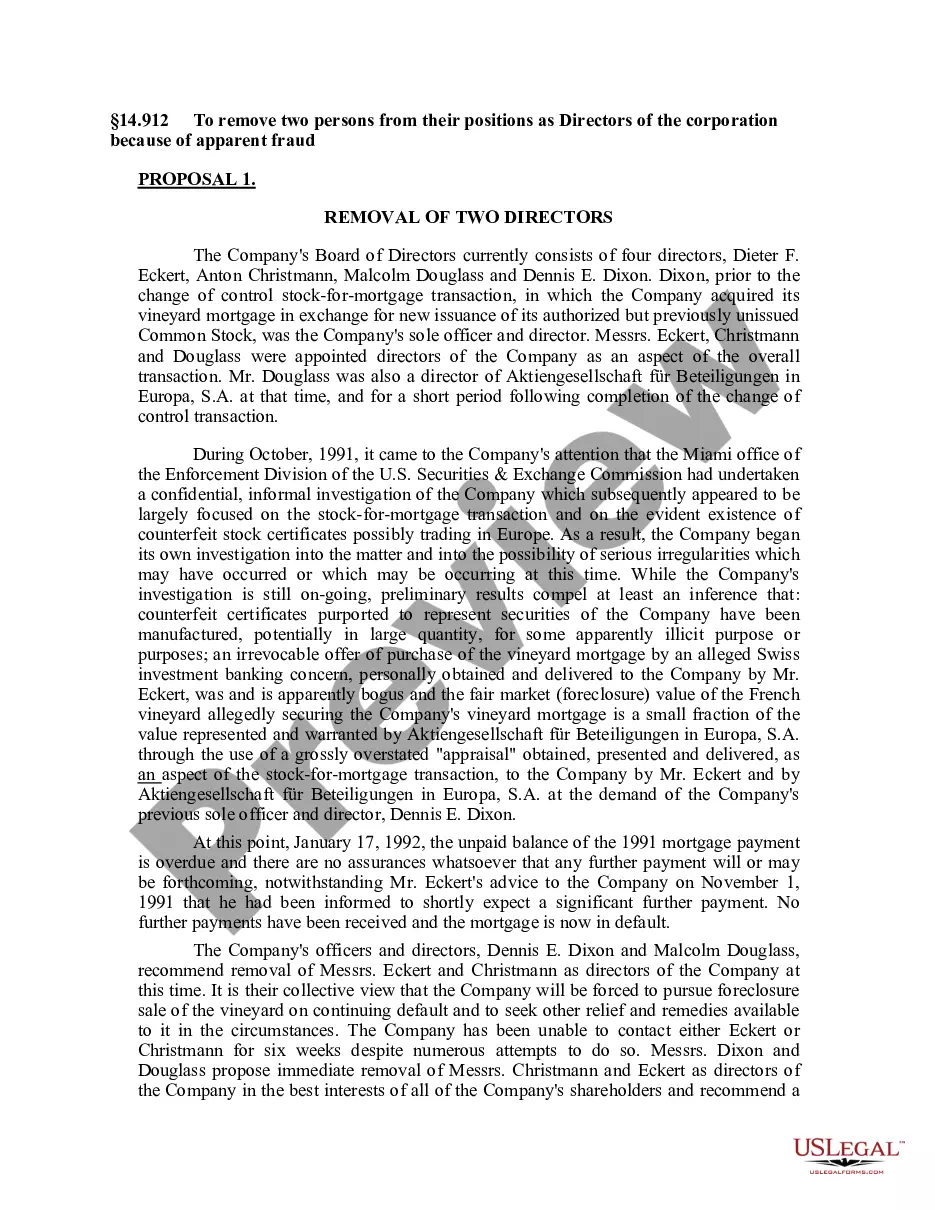
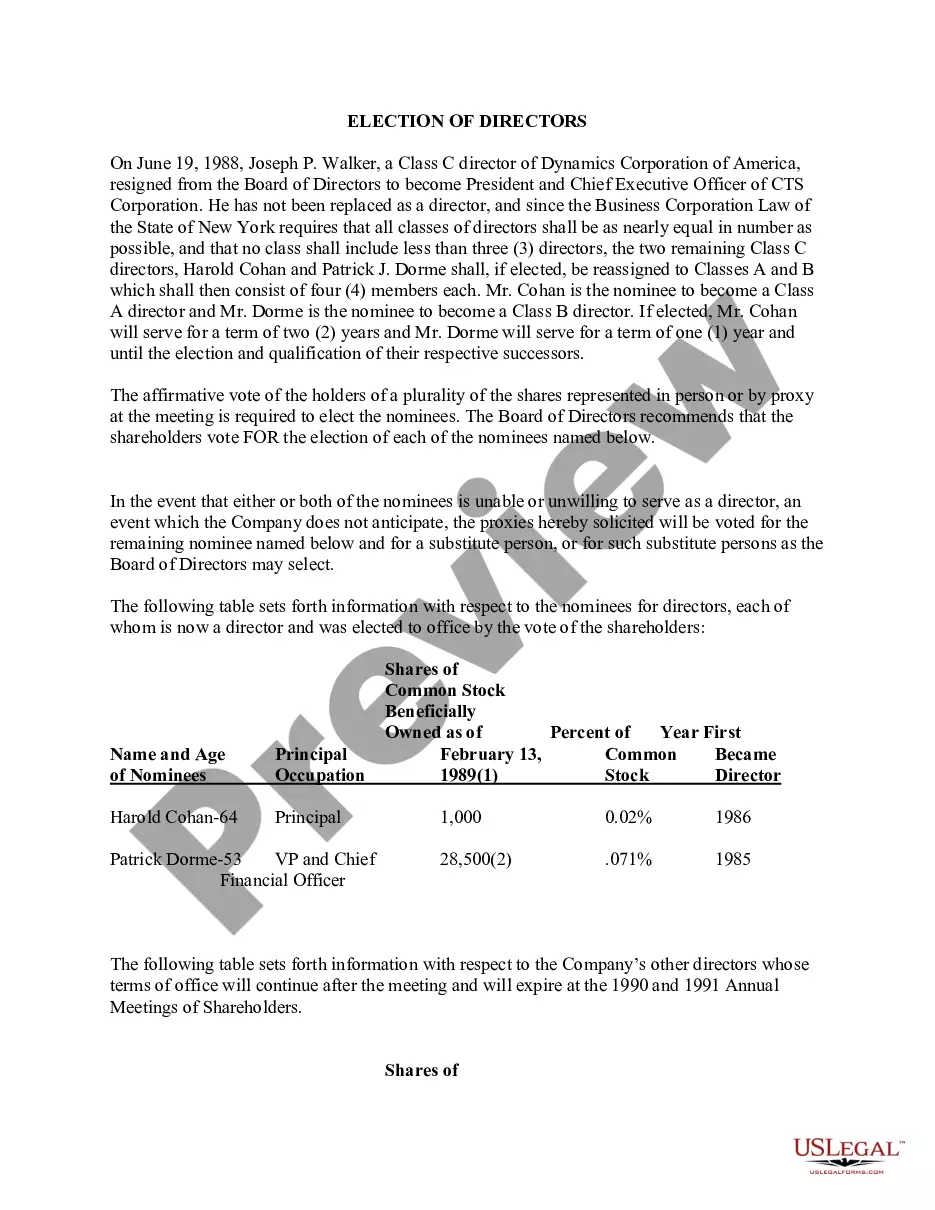
The Election of Directors for a Company form is a legal document that facilitates the election process for a company's Board of Directors. This form provides essential information to shareholders prior to voting, including the number of directors to be elected, the rules regarding proxy voting, and other critical details that guide the election process. This form is essential for ensuring transparency and proper governance within the company. Unlike general meeting notices, this form specifically outlines the election of directors and the voting procedures involved.
Key parts of this document
- Details on the number of directors to be elected and their terms of service.
- Instructions on how proxy votes will be handled during the election.
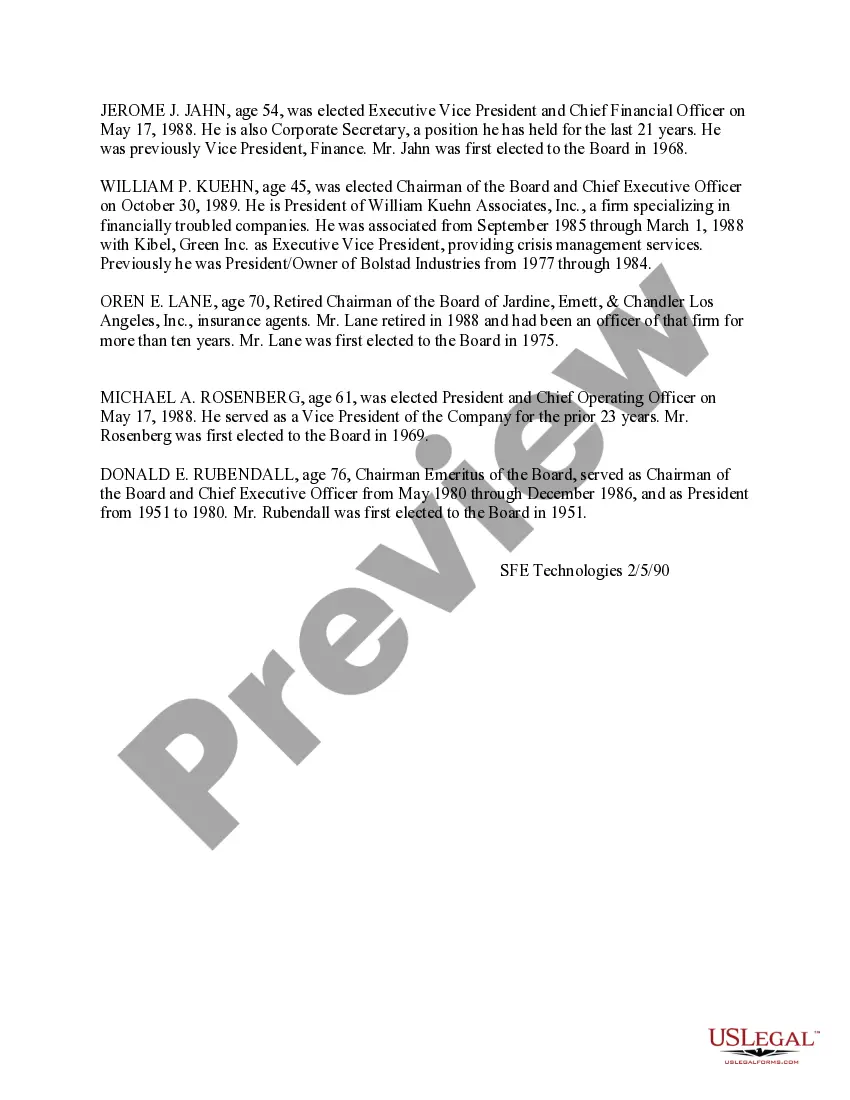
- List of nominees for the Board of Directors, along with their qualifications.
- Information on cumulative voting procedures for shareholders.
- Confirmation of the availability of the nominated candidates.

When this form is needed
This form should be used when a company is preparing for an upcoming election of directors. It is especially relevant during annual meetings where shareholders vote to elect new members to the Board or re-elect existing members. Additionally, this form is crucial when the company is implementing changes to its governance structure or when there are significant shareholder proposals regarding directors.
Who needs this form
- Companies looking to conduct a formal election of their Board of Directors.
- Shareholders who wish to understand the voting process and nominees.
- Corporate Secretaries responsible for managing the company's election procedures.
- Legal advisors and consultants guiding companies through the election process.
Steps to complete this form
- Determine the number of directors to be elected based on the company's by-laws.
- List all nominees for the Board of Directors, including their qualifications and experience.
- Include instructions for shareholders on how to submit proxy votes if needed.
- Specify any rights for shareholders to cumulate votes during the election.
- Prepare a statement confirming that all nominees are available for election.
Does this form need to be notarized?
This form usually doesn’t need to be notarized. However, local laws or specific transactions may require it. Our online notarization service, powered by Notarize, lets you complete it remotely through a secure video session, available 24/7.
Get your form ready online
Our built-in tools help you complete, sign, share, and store your documents in one place.
Make edits, fill in missing information, and update formatting in US Legal Forms—just like you would in MS Word.
Download a copy, print it, send it by email, or mail it via USPS—whatever works best for your next step.
Sign and collect signatures with our SignNow integration. Send to multiple recipients, set reminders, and more. Go Premium to unlock E-Sign.
If this form requires notarization, complete it online through a secure video call—no need to meet a notary in person or wait for an appointment.
We protect your documents and personal data by following strict security and privacy standards.

Make edits, fill in missing information, and update formatting in US Legal Forms—just like you would in MS Word.

Download a copy, print it, send it by email, or mail it via USPS—whatever works best for your next step.

Sign and collect signatures with our SignNow integration. Send to multiple recipients, set reminders, and more. Go Premium to unlock E-Sign.

If this form requires notarization, complete it online through a secure video call—no need to meet a notary in person or wait for an appointment.

We protect your documents and personal data by following strict security and privacy standards.
Common mistakes to avoid
- Failing to include all necessary nominee details in the form.
- Not clearly explaining the proxy voting process to shareholders.
- Neglecting to adhere to specific state laws regarding director elections.
- Omitting instructions for cumulative voting, leading to shareholder confusion.
Benefits of completing this form online
- Convenience: Facilitate quick access and completion from any location.
- Editability: Easily modify nominee information as needed before finalization.
- Reliability: Utilize templates drafted by licensed attorneys to ensure legal accuracy.
Looking for another form?









Form popularity
FAQ
Officers are appointed by the board of directors to run the day-to-day operations of the corporation. Commonly, and by law in many states, a corporation will have at least three officers: (1) a president, (2) a treasurer or chief financial officer, and (3) a secretary.
The shareholders elect the Board of Directors. But there is usually a nominating entity that puts directors up for election by the shareholders. If the founder controls the company, then he/she is usually that nominating entity.
The structure, responsibilities, and powers given to a board of directors are determined by the bylaws of a company or organization. The bylaws generally determine how many board members there are, how the members are elected, and how frequently the board members meet.
According to the Companies Act, only an individual can be appointed as a member of the board of directors. Usually, the appointment of directors is done by shareholders. A company, association, a legal firm with an artificial legal personality cannot be appointed as a director.
He should then be reappointed by an ordinary resolution of the shareholders at the same annual general meeting. Article 78 of Table A articles of association also allows that a director can be appointed by an ordinary resolution of the shareholders.
In most legal systems, the appointment and removal of directors is voted upon by the shareholders in general meeting or through a proxy statement. For publicly traded companies in the U.S., the directors which are available to vote on are largely selected by either the board as a whole or a nominating committee.
While members of the board of directors are elected by shareholders, which individuals are nominated is decided by a nomination committee.Ideally, directors' terms are staggered to ensure only a few directors are elected in a given year. Removal of a member by resolution in a general meeting can present challenges.