Designation of Rights, Privileges and Preferences of Preferred Stock
What this document covers
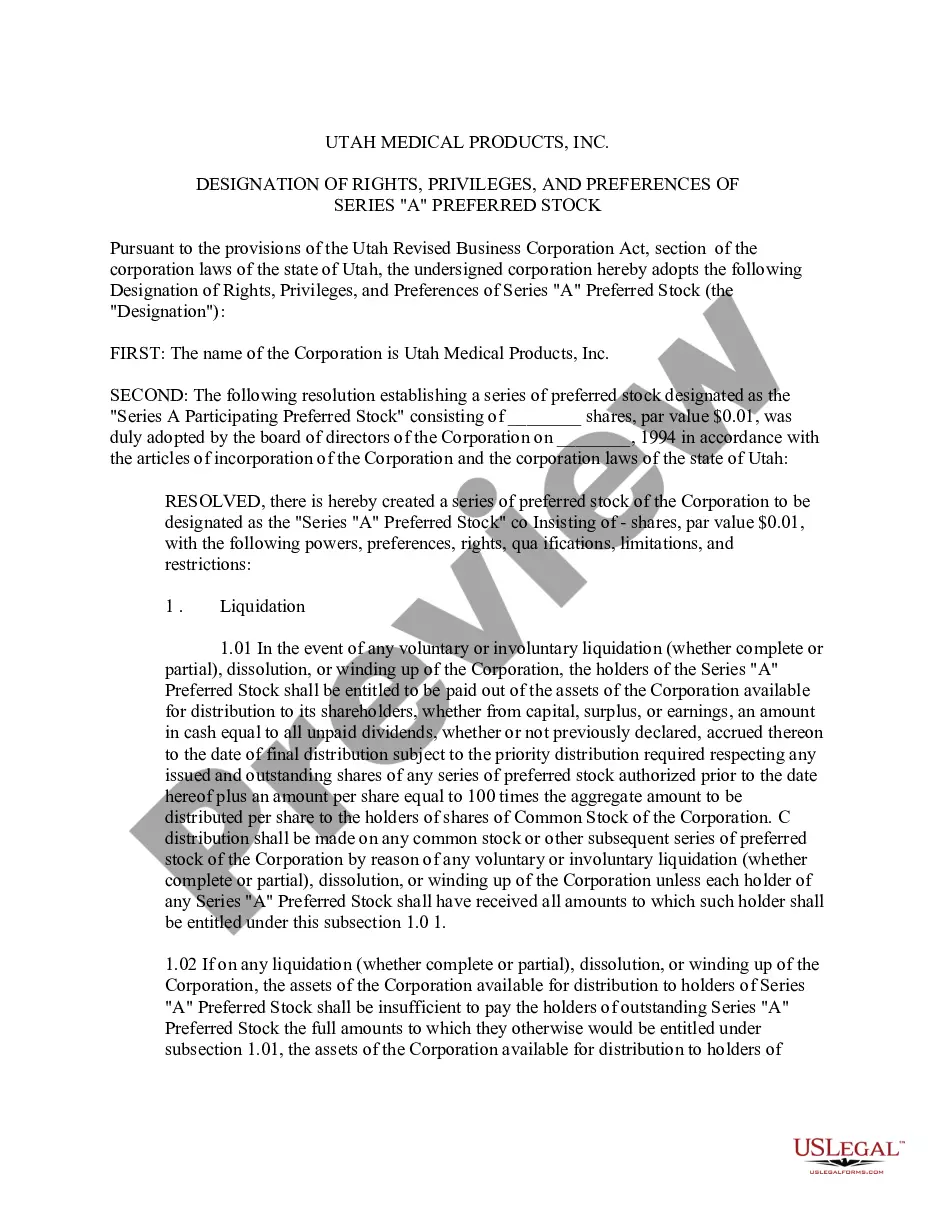
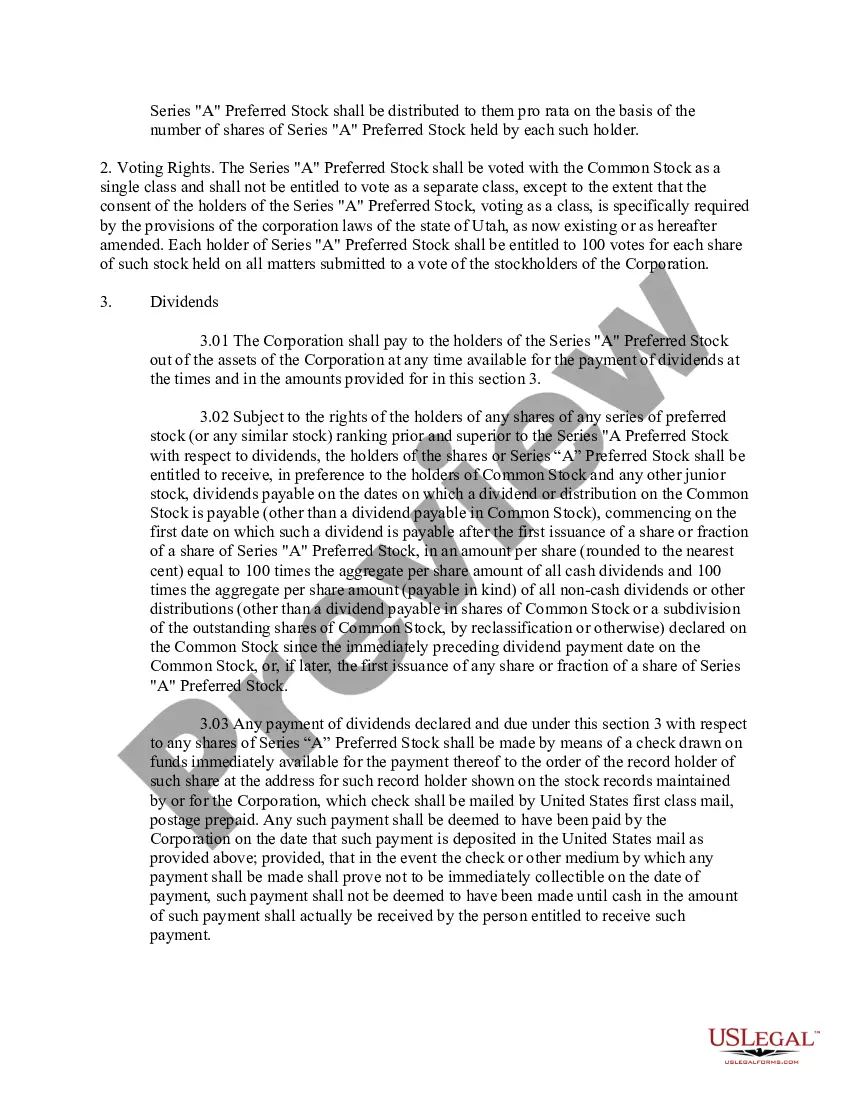
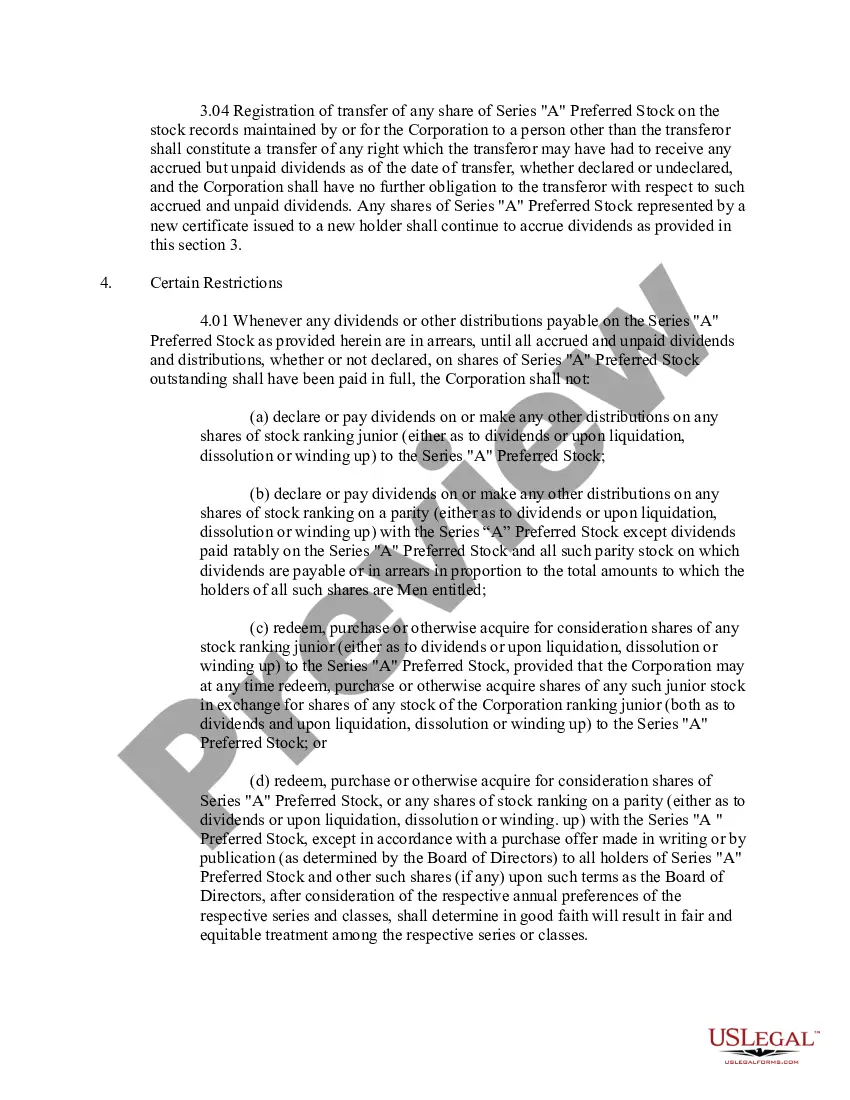
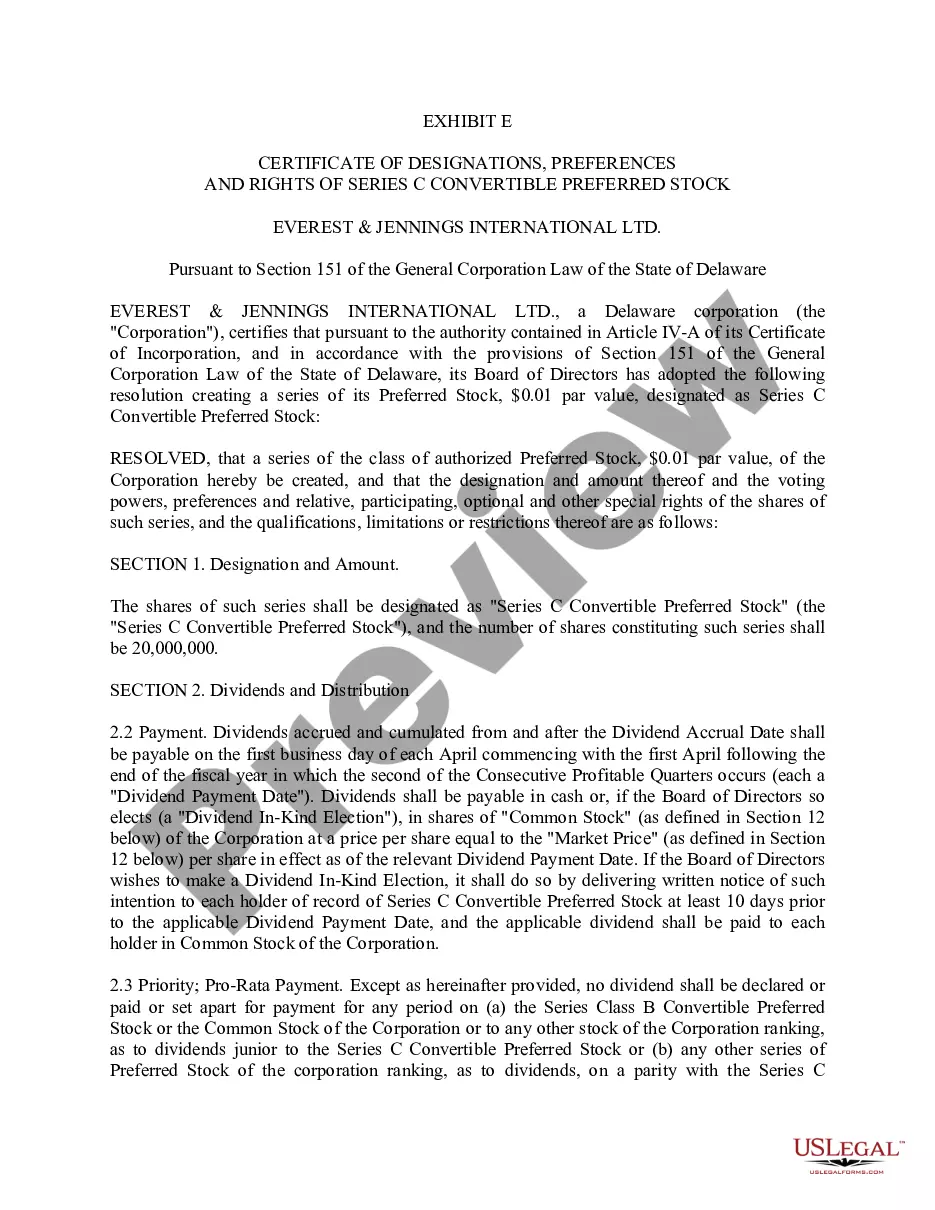
The Designation of Rights, Privileges, and Preferences of Preferred Stock is a legal document that outlines the specific entitlements and characteristics associated with a series of preferred stock. This form is crucial for corporations to formally establish the rights of shareholders of preferred stock, distinguishing these rights from those of common stockholders. It provides clarity on matters like liquidations, dividends, and voting rights, which are essential for compliance with corporate governance and securities regulations.
Form components explained
- Corporate Information: Identifies the corporation and the series of preferred stock.
- Liquidation Rights: Details payment entitlements upon liquidation of the corporation.
- Voting Rights: Specifies the voting privileges associated with preferred stock.
- Dividend Provisions: Outlines the conditions and amounts for dividend payments to preferred stockholders.
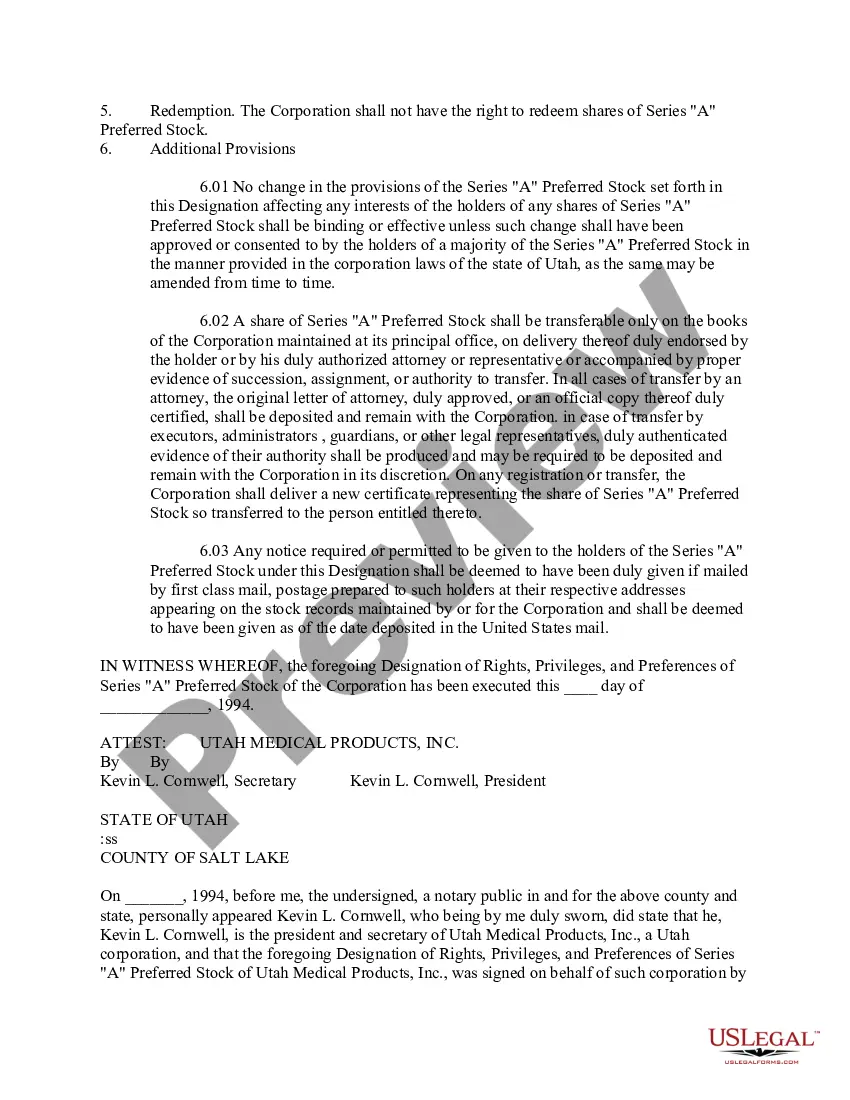
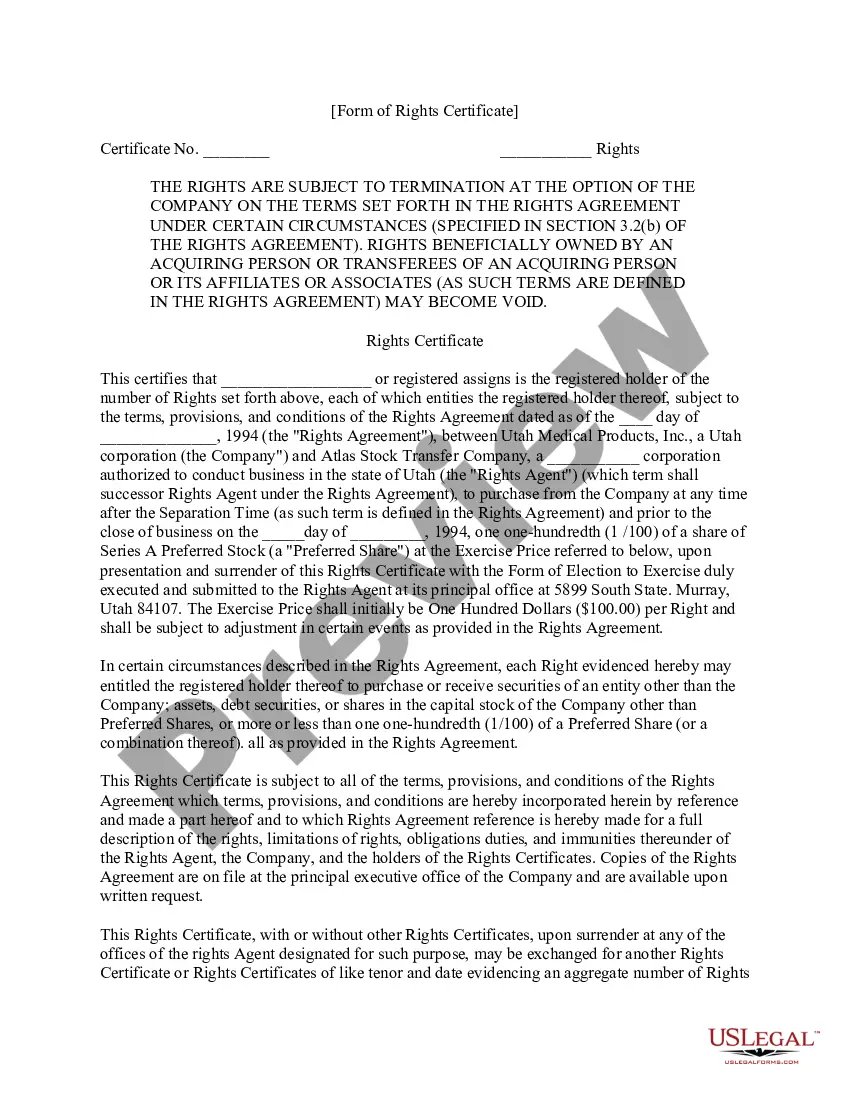
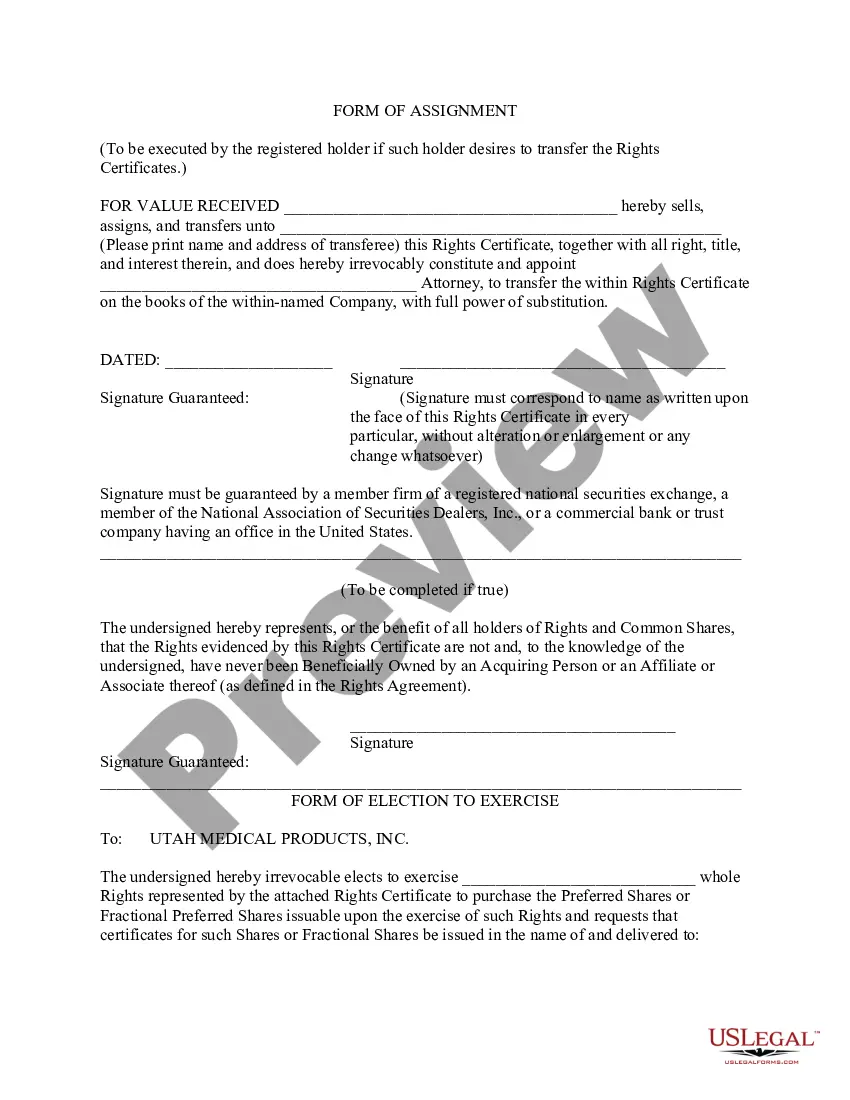
- Transferability: Addresses how shares of preferred stock can be transferred or assigned.


Common use cases
This form should be used when a corporation intends to establish a series of preferred stock. It is necessary during the formation phase of a corporation when stock structures are being defined, or during an amendment to corporate bylaws. Additionally, this document is critical when a corporation is preparing for an investment round or any financial restructuring involving preferred shares.
Who can use this document
- Corporations looking to create or modify a series of preferred stock.
- Corporate secretaries or legal professionals involved in corporate governance.
- Investors or shareholders interested in understanding their rights and benefits related to preferred stock.
- Board of directors members involved in corporate finance decisions.
Instructions for completing this form
- Identify the corporation's name and relevant details for the preferred stock series.
- Specify the number of shares and the par value of the preferred stock.
- Detail the voting rights and how they relate to common stockholders.
- Outline provisions regarding dividends, including payment schedules and calculations.
- Include any specific restrictions or conditions regarding the transfer of shares.
Is notarization required?
To make this form legally binding, it must be notarized. Our online notarization service, powered by Notarize, lets you verify and sign documents remotely through an encrypted video session.
Get your form ready online
Our built-in tools help you complete, sign, share, and store your documents in one place.
Make edits, fill in missing information, and update formatting in US Legal Forms—just like you would in MS Word.
Download a copy, print it, send it by email, or mail it via USPS—whatever works best for your next step.
Sign and collect signatures with our SignNow integration. Send to multiple recipients, set reminders, and more. Go Premium to unlock E-Sign.
If this form requires notarization, complete it online through a secure video call—no need to meet a notary in person or wait for an appointment.
We protect your documents and personal data by following strict security and privacy standards.

Make edits, fill in missing information, and update formatting in US Legal Forms—just like you would in MS Word.

Download a copy, print it, send it by email, or mail it via USPS—whatever works best for your next step.

Sign and collect signatures with our SignNow integration. Send to multiple recipients, set reminders, and more. Go Premium to unlock E-Sign.

If this form requires notarization, complete it online through a secure video call—no need to meet a notary in person or wait for an appointment.

We protect your documents and personal data by following strict security and privacy standards.
Avoid these common issues
- Failing to accurately specify the number of shares issued.
- Neglecting to clarify the conditions for dividend payments.
- Inadequate details on voting rights associated with preferred stock.
- Ignoring state-specific legal requirements during completion.
Benefits of completing this form online
- Easy access to professionally drafted legal forms that save time and reduce errors.
- Ability to download and edit forms to suit specific needs quickly.
- Convenient storage and management of important legal documents.
- Assurance of compliance with relevant laws in multiple jurisdictions.
Looking for another form?
Form popularity
FAQ
Preference shares come with no voting rights but they do provide an advantage over ordinary shareholders when it comes to receiving dividends.Dividend payments for preference shareholders are often at an agreed level and are made at defined points throughout the year.
The main difference between preferred and common stock is that preferred stock gives no voting rights to shareholders while common stock does. Preferred shareholders have priority over a company's income, meaning they are paid dividends before common shareholders.
Preference shareholders are restricted to vote only on those resolutions which directly affect their rights, however, Section 47(2) of the 2013 Act removes the limitation of exercising their voting rights and entitles the preference shareholder to vote on every resolution placed before the company in general meetings
It sports the name preferred because its owners receive dividends before the owners of common stock. On a classified balance sheet, a company separates accounts into classifications, or subsections, within the main sections. Preferred stock is classified as part of capital stock in the stockholders' equity section.
In general, preferred stock has preference in dividend payments. The preference does not assure the payment of dividends, but the company must pay the stated dividends on preferred stock before or at the same time as any dividends on common stock. Preferred stock can be cumulative or noncumulative.
Unlike common stockholders, preferred stockholders have limited rights which usually does not include voting. 1feff Preferred stock combines features of debt, in that it pays fixed dividends, and equity, in that it has the potential to appreciate in price.
Ordinary Shares: Meaning and Types of Shares Ordinary or equity share is the commonest variant of stock that a public company issues to raise capital. Typically, holders of ordinary shares enjoy voting rights, can attend general and annual meetings of a company, and are also entitled to a company's surplus profits.
For example, the holder of 100 shares of a corporation's 8% $100 par preferred stock will receive annual dividends of $800 (8% X $100 = $8 per share X 100 shares) before the common stockholders are allowed to receive any cash dividends for the year.
Preference shares also commonly known as preferred stock, is a special type of share where dividends are paid to shareholders prior to the issuance of common stock dividends. Ergo, preference share holders hold preferential rights over common shareholders when it comes to sharing profits.