Bylaws of Condominium
What this document covers
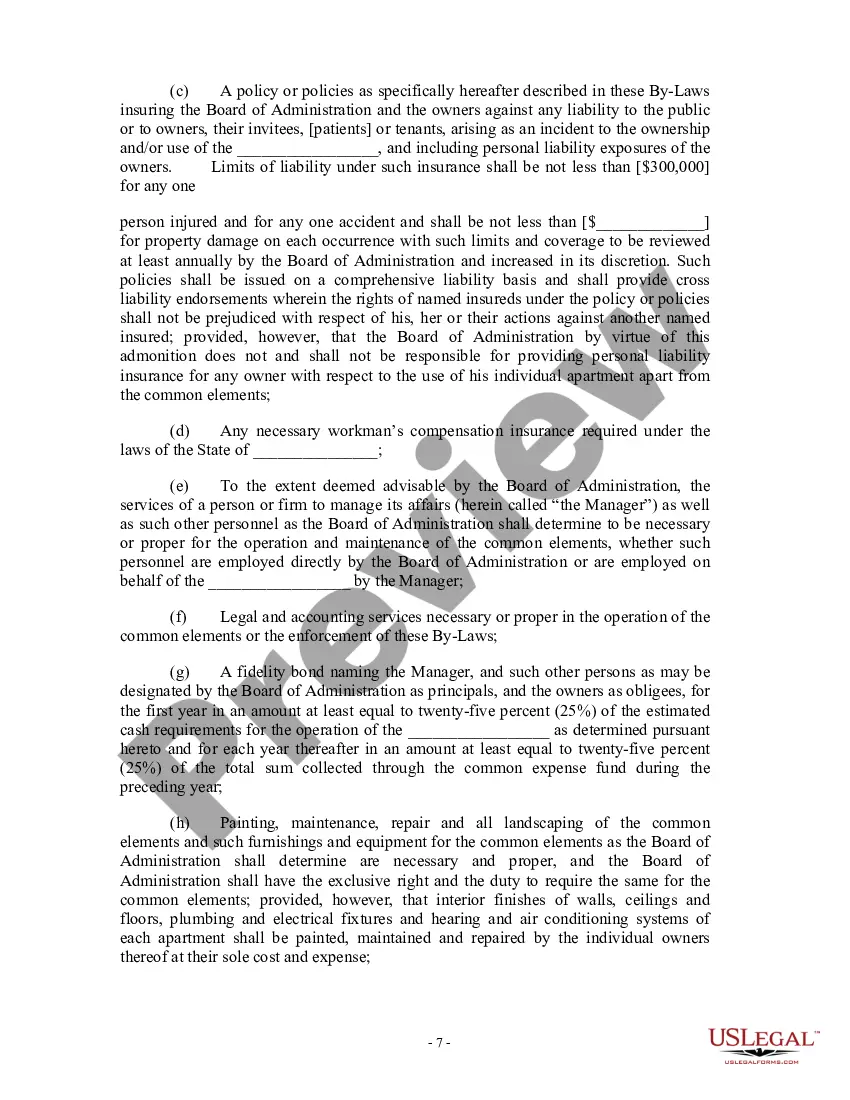
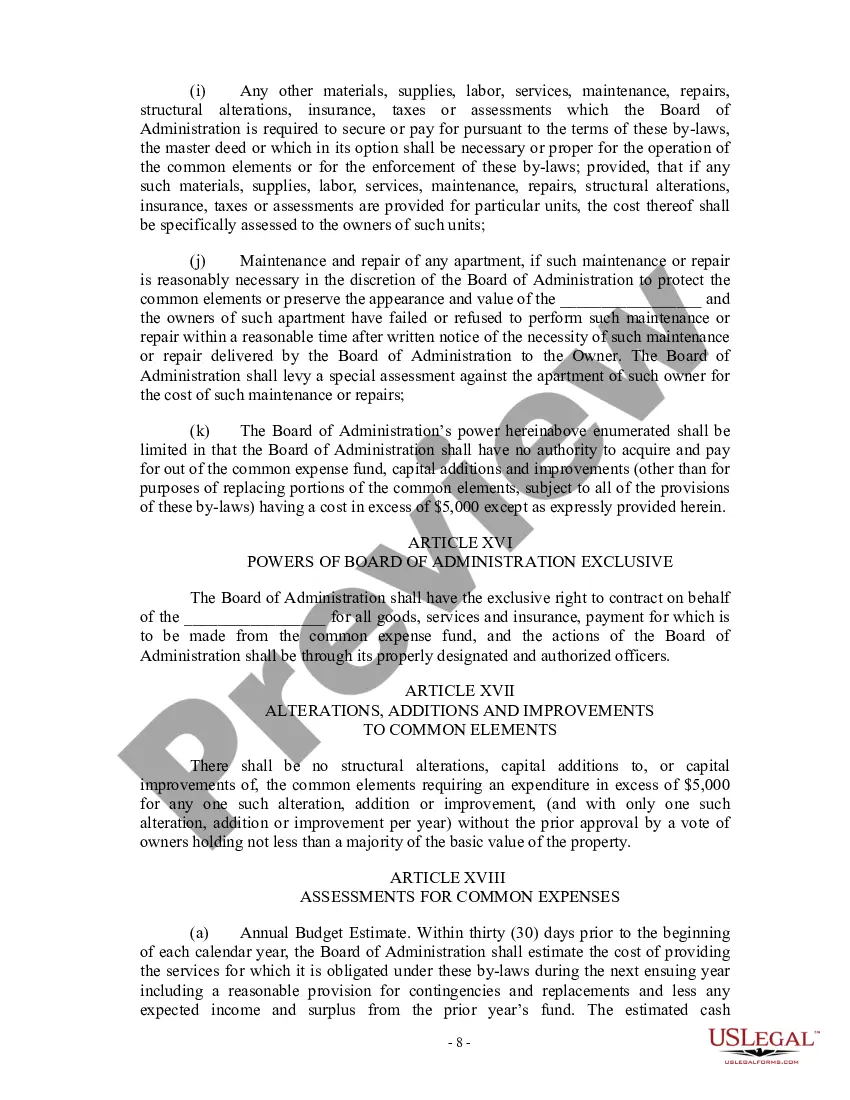
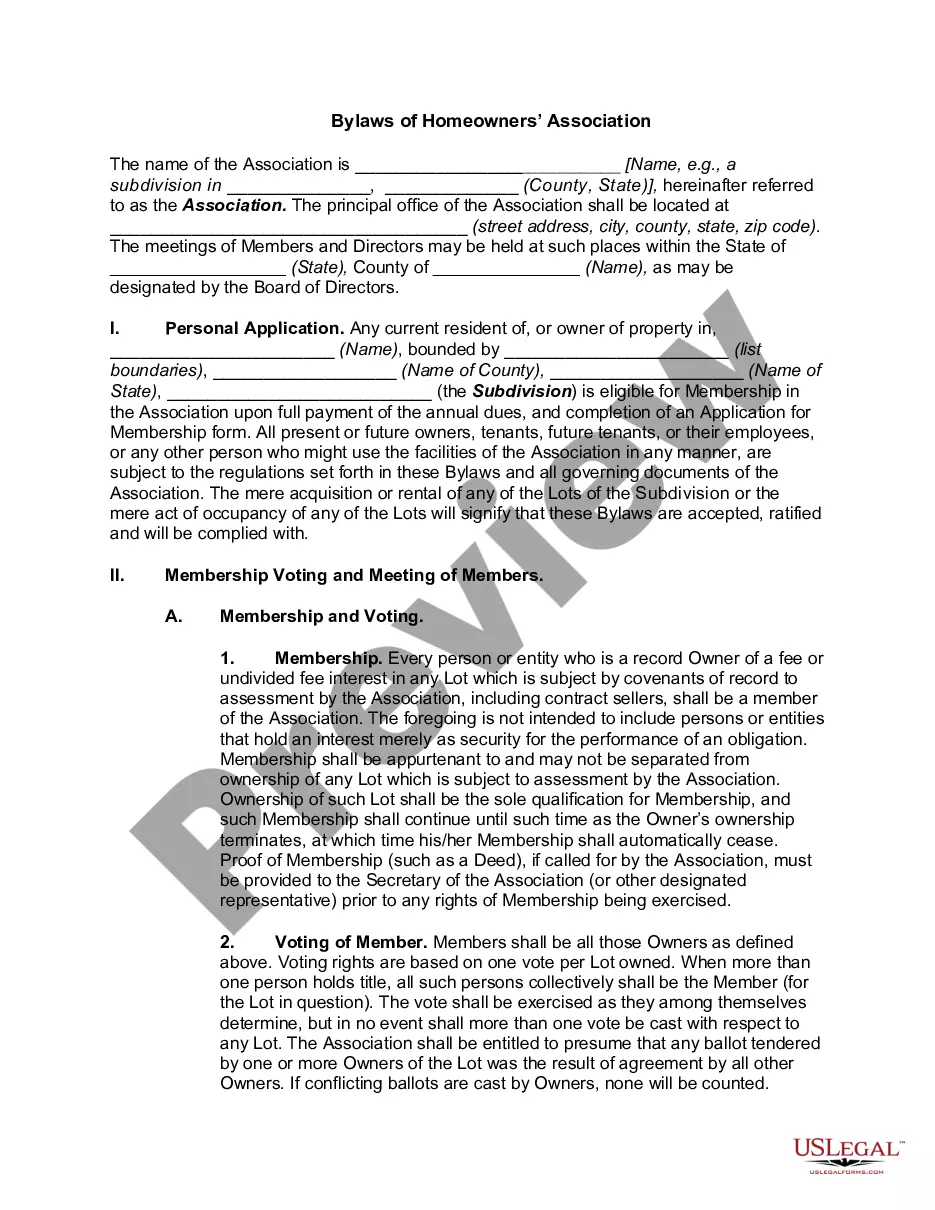
The Bylaws of Condominium form serves as an essential document to govern the operations and management of a condominium project. This form outlines the rights and responsibilities of the co-owners and establishes the framework for decision-making, management, and use of common areas. Unlike other property management forms, the Bylaws of Condominium specifically focus on the unique aspects of condominium ownership and the communal nature of the living arrangement.
Key components of this form
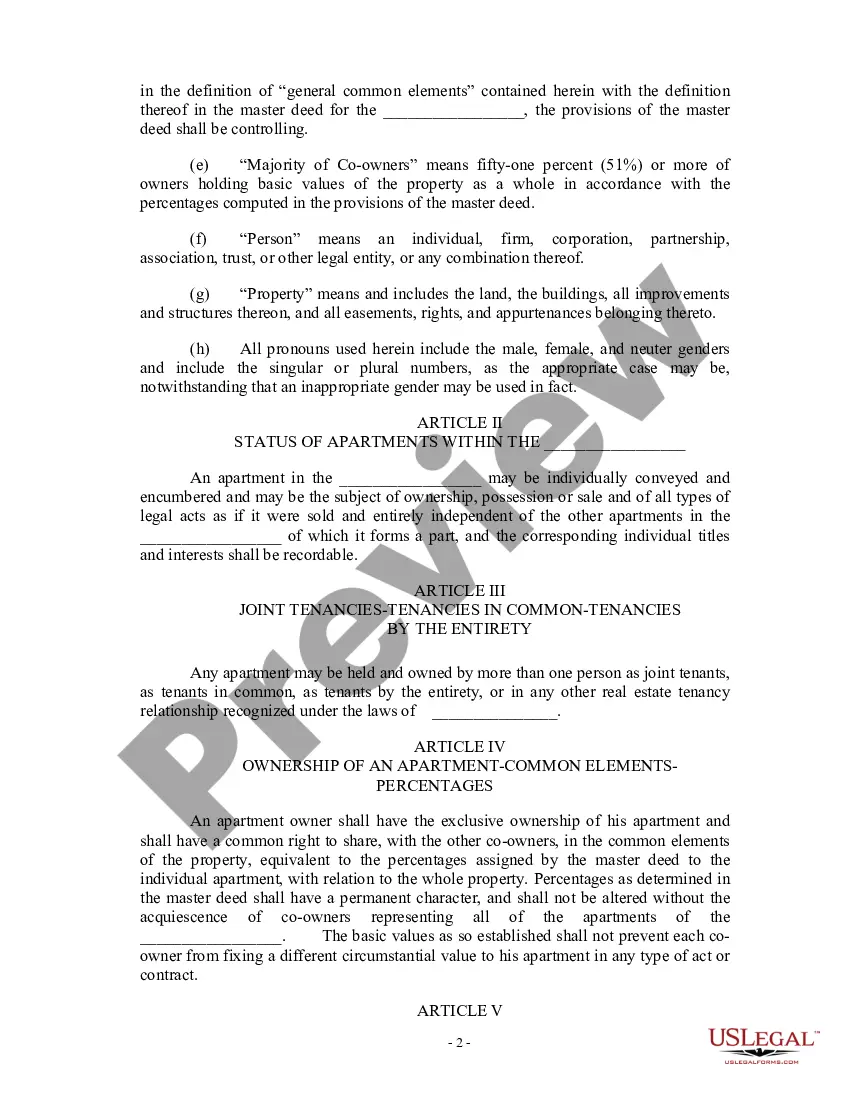
- Definitions of key terms related to condominium ownership, such as "Apartment," "Owner," and "General Common Elements."
- Details on the status and ownership of individual apartments within the condominium.
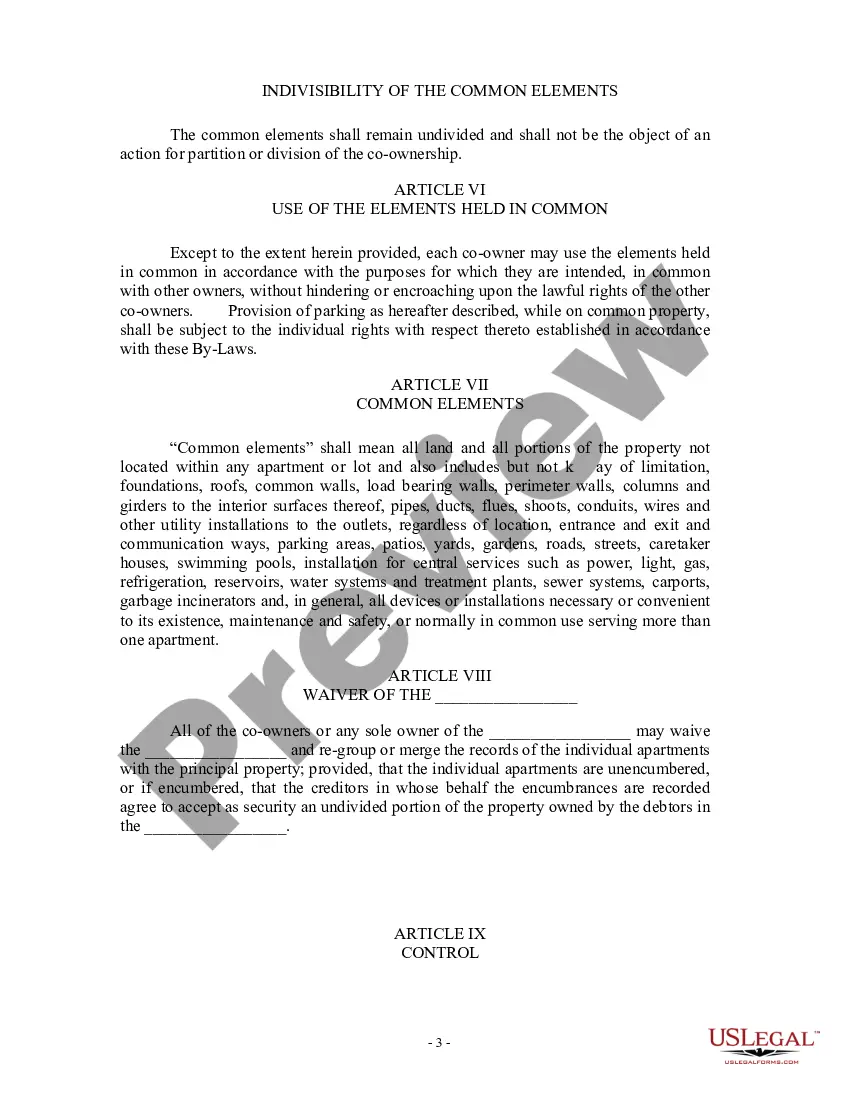
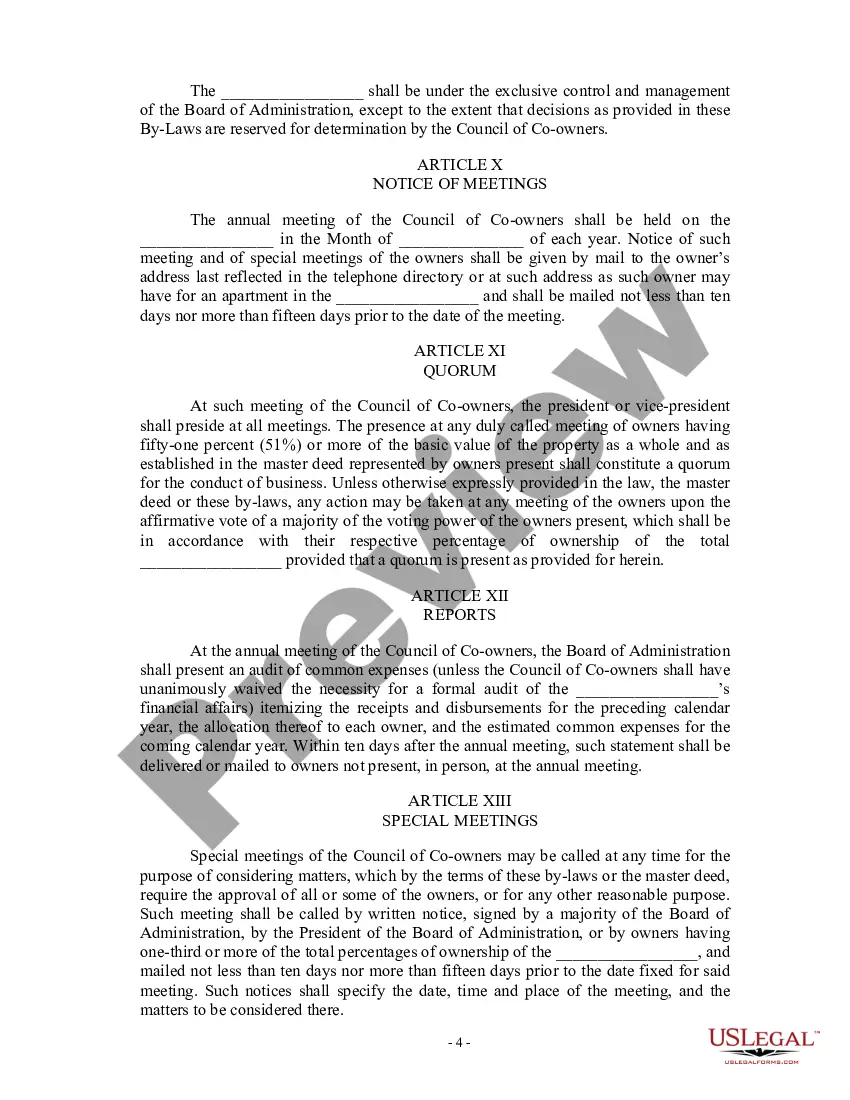
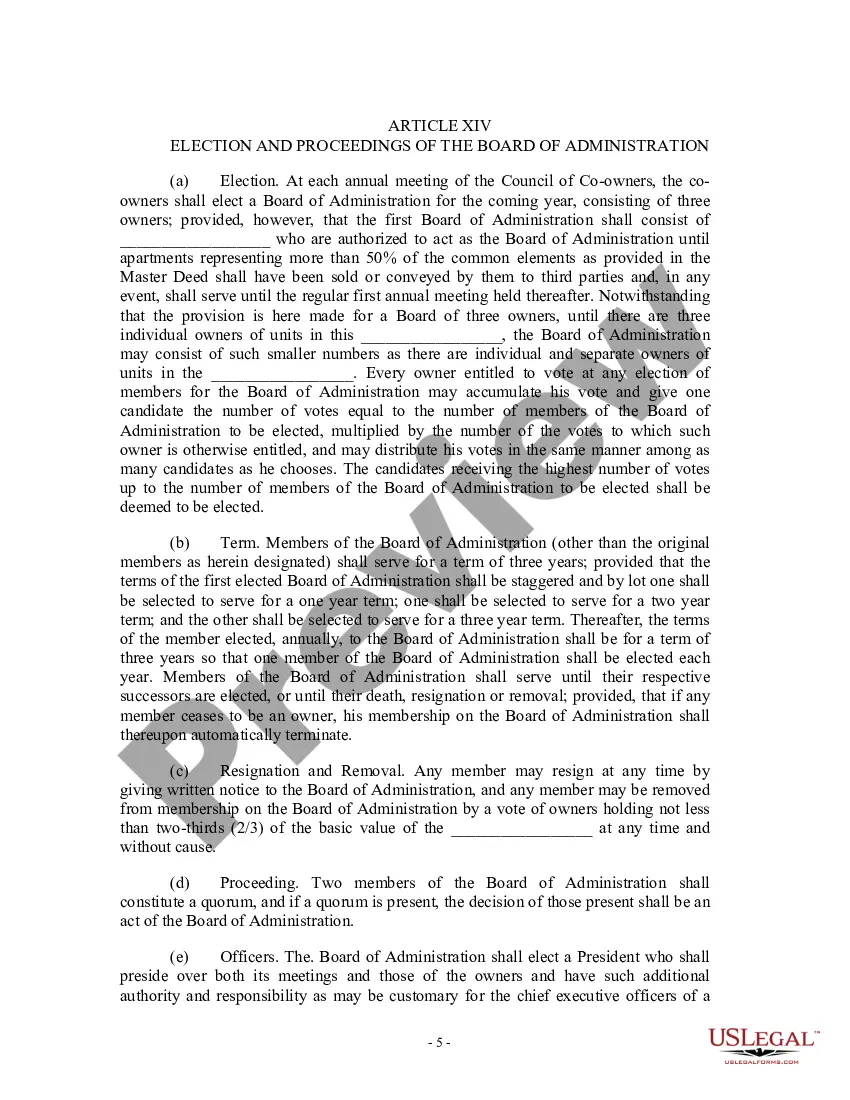
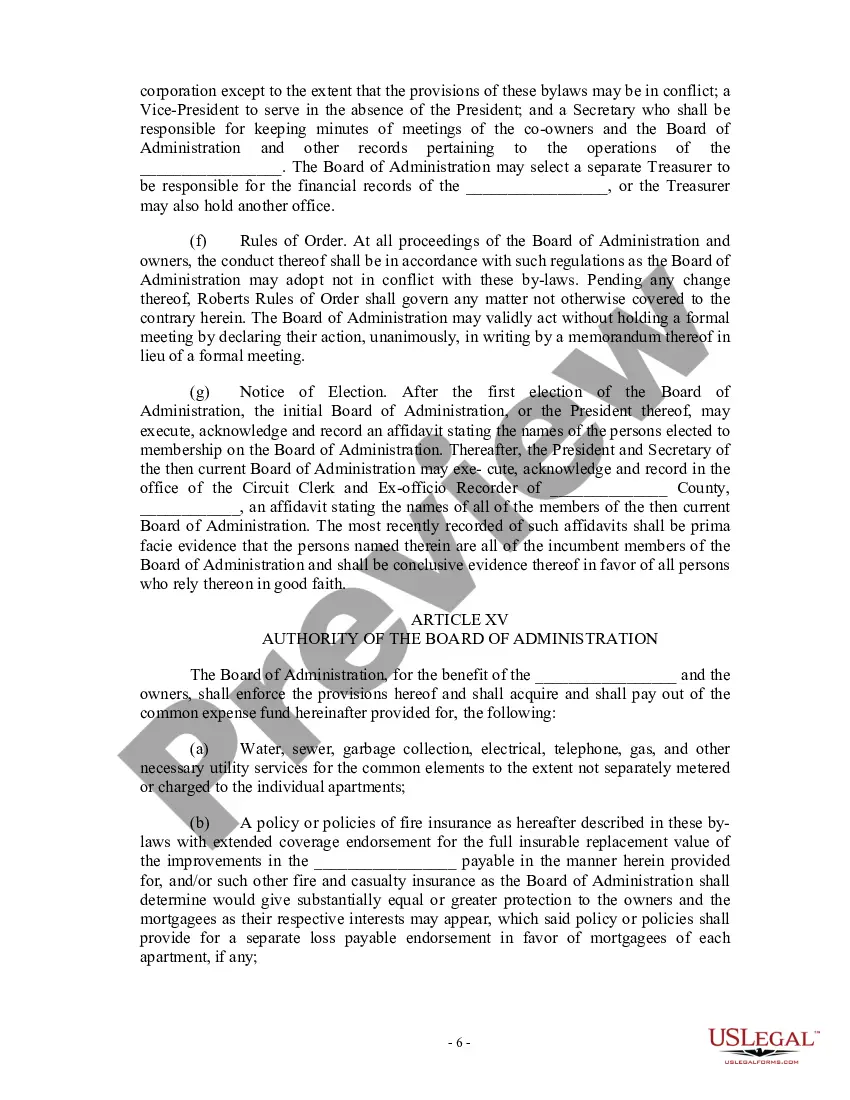
- Procedures for the management and control of the condominium by the Board of Administration.
- Guidelines for conducting meetings, establishing quorums, and voting on issues by the Council of Co-owners.
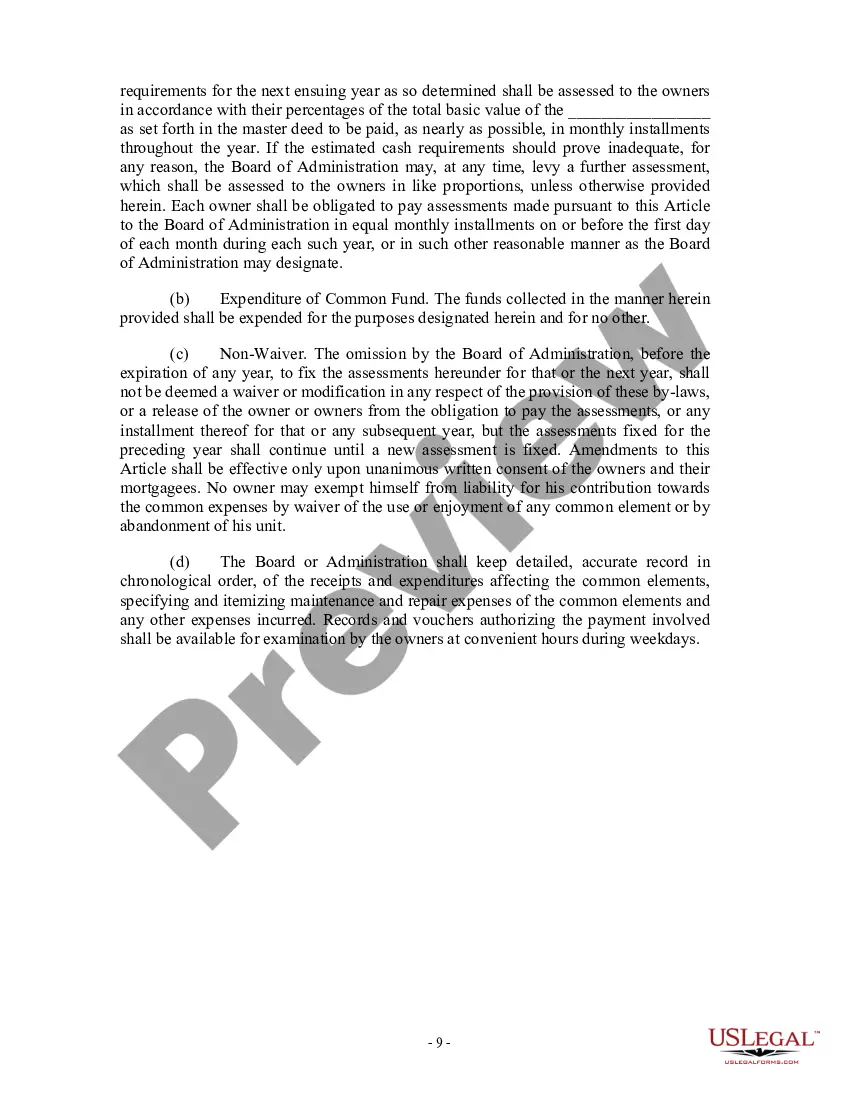
- Provisions regarding financial management, including budgeting and assessments for common expenses.



When to use this document
This form should be used when establishing a new condominium project or when existing condominium owners decide to formalize their bylaws. It is particularly relevant during initial governance setup, community rule-making, or when amendments are required to adapt to changing legal or operational circumstances.
Who this form is for
- Real estate developers forming a new condominium.
- Existing condominium owners looking to establish or amend their governing rules.
- Board members of a condominium association managing community affairs.
- Property managers involved in the administration of condominium properties.
Steps to complete this form
- Fill in the name and address of the condominium project where indicated.
- Define any relevant terms that will be used in the bylaws, according to the context of the condominium.
- Specify the roles and responsibilities of the Board of Administration in managing the common areas.
- Outline the procedures for meetings and voting among co-owners.
- Establish guidelines for financial management, including how common expenses will be assessed.
Does this form need to be notarized?
This form does not typically require notarization to be legally valid. However, some jurisdictions or document types may still require it. US Legal Forms provides secure online notarization powered by Notarize, available 24/7 for added convenience.
Get your form ready online
Our built-in tools help you complete, sign, share, and store your documents in one place.
Make edits, fill in missing information, and update formatting in US Legal Forms—just like you would in MS Word.
Download a copy, print it, send it by email, or mail it via USPS—whatever works best for your next step.
Sign and collect signatures with our SignNow integration. Send to multiple recipients, set reminders, and more. Go Premium to unlock E-Sign.
If this form requires notarization, complete it online through a secure video call—no need to meet a notary in person or wait for an appointment.
We protect your documents and personal data by following strict security and privacy standards.

Make edits, fill in missing information, and update formatting in US Legal Forms—just like you would in MS Word.

Download a copy, print it, send it by email, or mail it via USPS—whatever works best for your next step.

Sign and collect signatures with our SignNow integration. Send to multiple recipients, set reminders, and more. Go Premium to unlock E-Sign.

If this form requires notarization, complete it online through a secure video call—no need to meet a notary in person or wait for an appointment.

We protect your documents and personal data by following strict security and privacy standards.
Mistakes to watch out for
- Failing to define key terms clearly, which can lead to misunderstandings.
- Not including provisions for regular meetings and updates, which can hinder effective management.
- Neglecting to outline financial management responsibilities properly, leading to budgetary issues.
- Overlooking state-specific laws that might affect the bylaws.
Advantages of online completion
- Convenient access to downloadable formats that allow for quick customization.
- Easy editing capabilities to tailor the bylaws to specific project needs.
- Reliable templates drafted by licensed attorneys, ensuring compliance with legal standards.
Legal use & context
- Establishes formal governance for condominium associations, making it enforceable in court.
- Helps clarify the rights and responsibilities of co-owners, reducing potential disputes.
- Facilitates compliance with state laws governing property management and ownership.
Quick recap
- The Bylaws of Condominium document essential governance for condominium projects.
- Proper completion is crucial for clarity on ownership and management duties.
- Awareness of state-specific regulations may impact the application of the bylaws.
Looking for another form?

Form popularity
FAQ
The key differences between standing rules and bylaws therefore relate to both effect and scope: bylaws are more overarching and refer to procedures while standing rules tend to be more administrative and speak to specifics. Bylaws and standing rules are also hierarchical in nature: bylaws supersede standing rules.
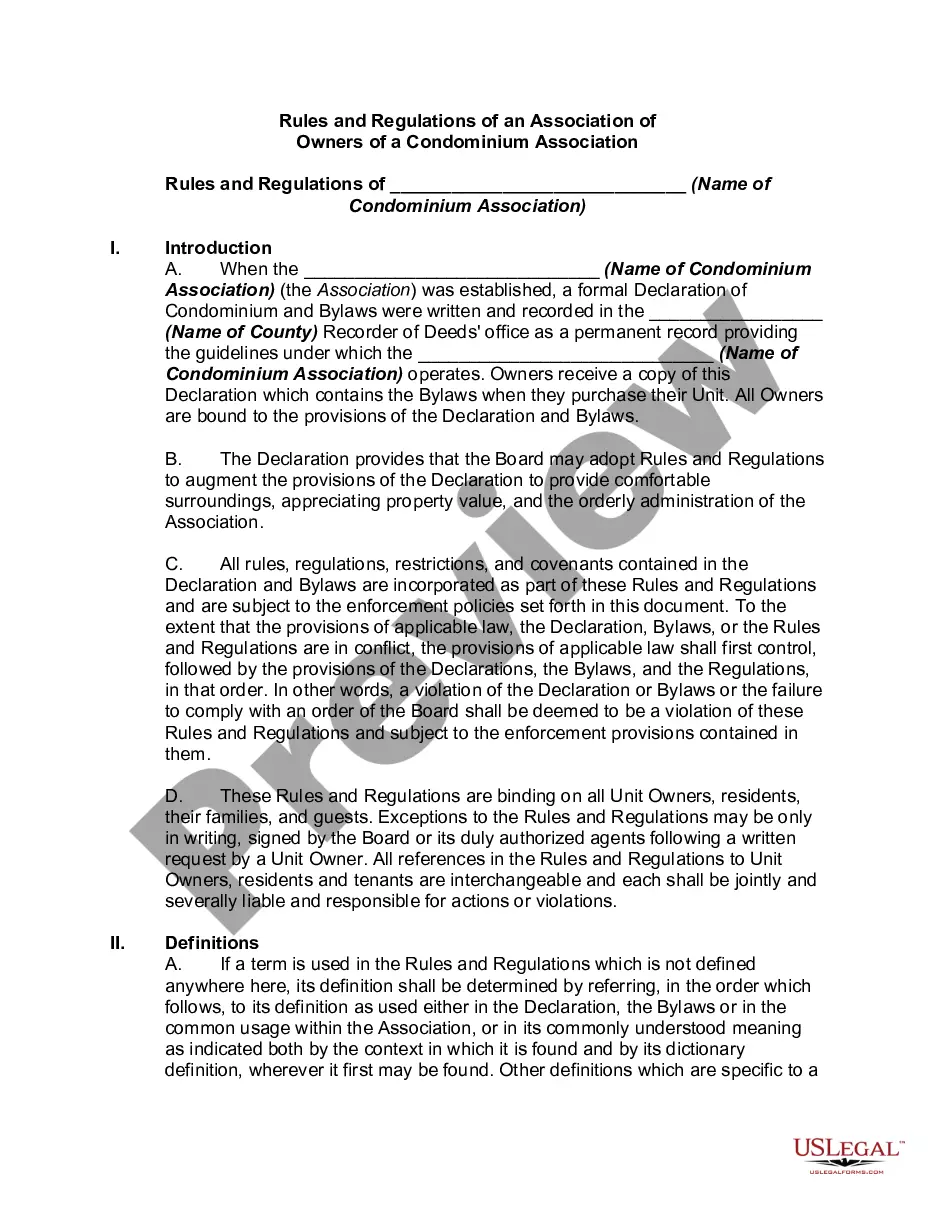
It is the document that, among other things, establishes the association, contains the use restrictions, the maintenance requirements, and defines the common elements. The Bylaws set up the corporation and how it is to be run.When it comes to the documents, the Declaration rules the roost.
The CC&Rs are a legally binding document filed with the state, and the bylaws are the procedures by which the association is run. Those documents require a vote of the members to change. The rules are voted on by the board of directors, following procedures set up by the association and complying with state law.
A city's bylaws govern how the city and its residents interact with each other, themselves and outside actors.Corporate bylaws outline the rights, powers and responsibilities of the shareholders, directors and officers, and when they can choose to exercise those powers, and when they can choose not to.
Bylaws are legally binding. And while your Bylaws aren't a public document (like your IRS Form 990), they also aren't confidential. You can share them, for instance, with a prospective board member who asks to review them before joining your board.
The Condominium Act requires the unit owners association and its board to comply with the act and with the condominium's declaration, bylaws, rules, and regulations.Unit owners also have the right to inspect financial and other condominium records and to vote to approve or disapprove budgets recommended by the board.
The condominium bylaws are a self-governing document for the association. This covers board member qualifications and the direction of the board of directors, including how it administers policies according to the bylaws and how it oversees the maintenance and administration of the association.
Typically, Rules and Regulations can be changed by a vote of the Board or Directors, but the Declaration and Bylaws require a vote of the homeownersoften a significant percentage, such as 2/3 or 3/4 of all owners.