Summary of Departmental Goals - Individual Employee Chart
Understanding this form
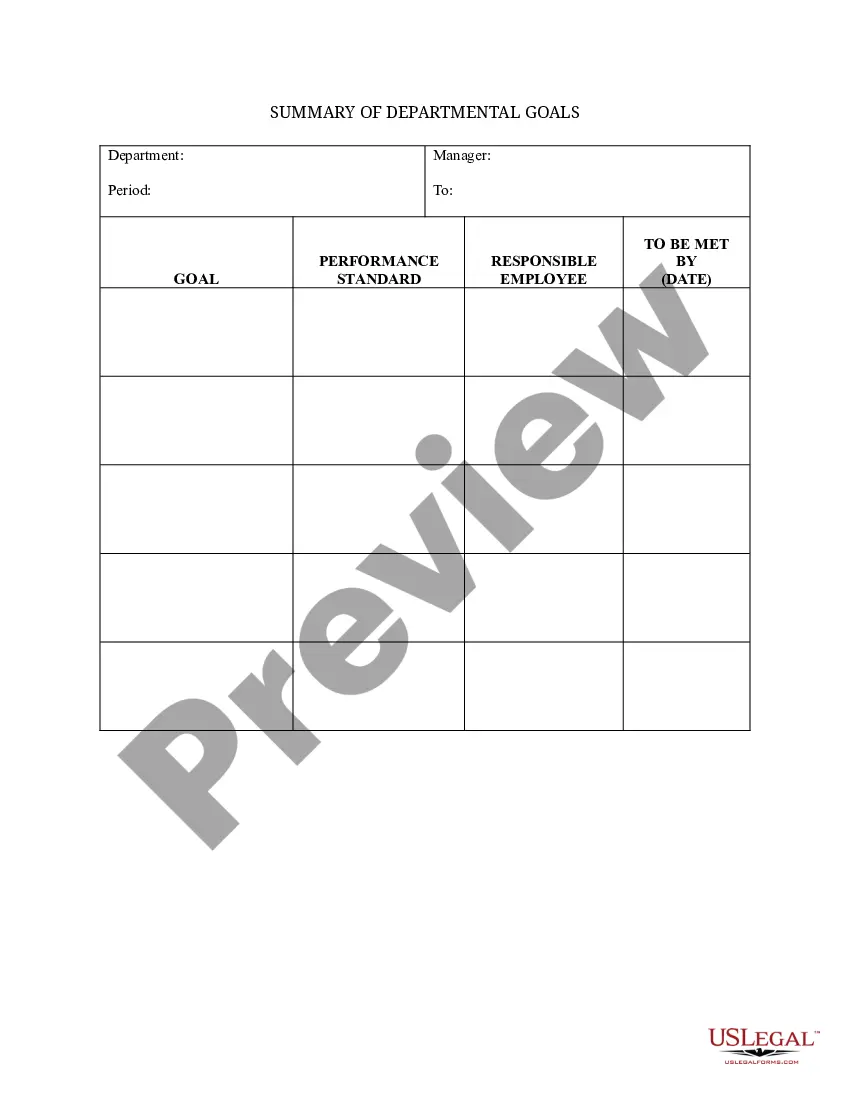
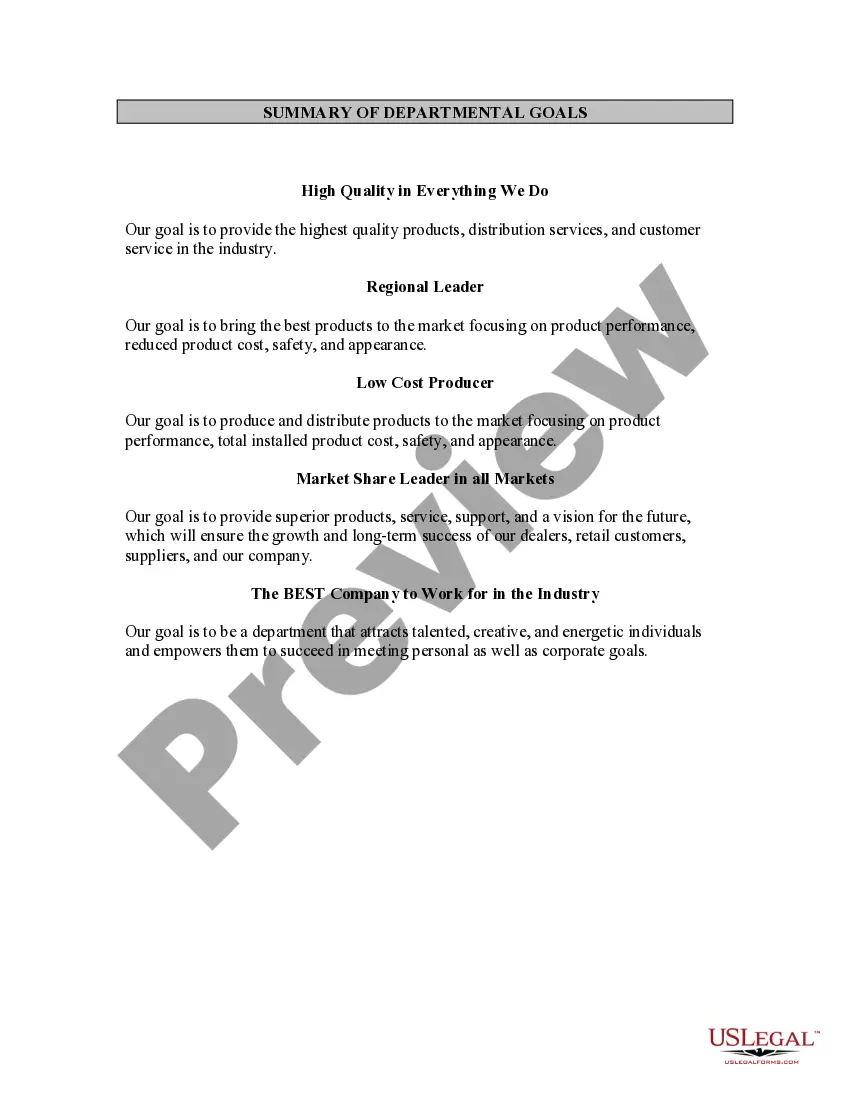
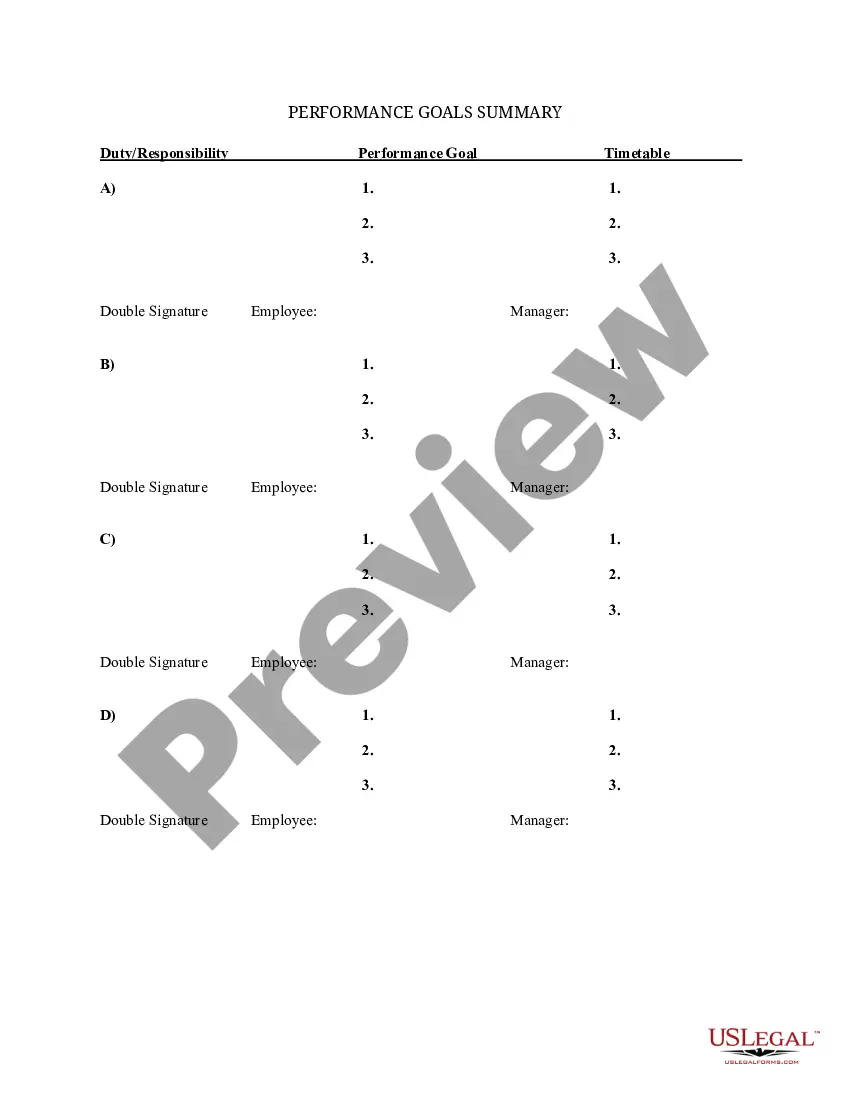
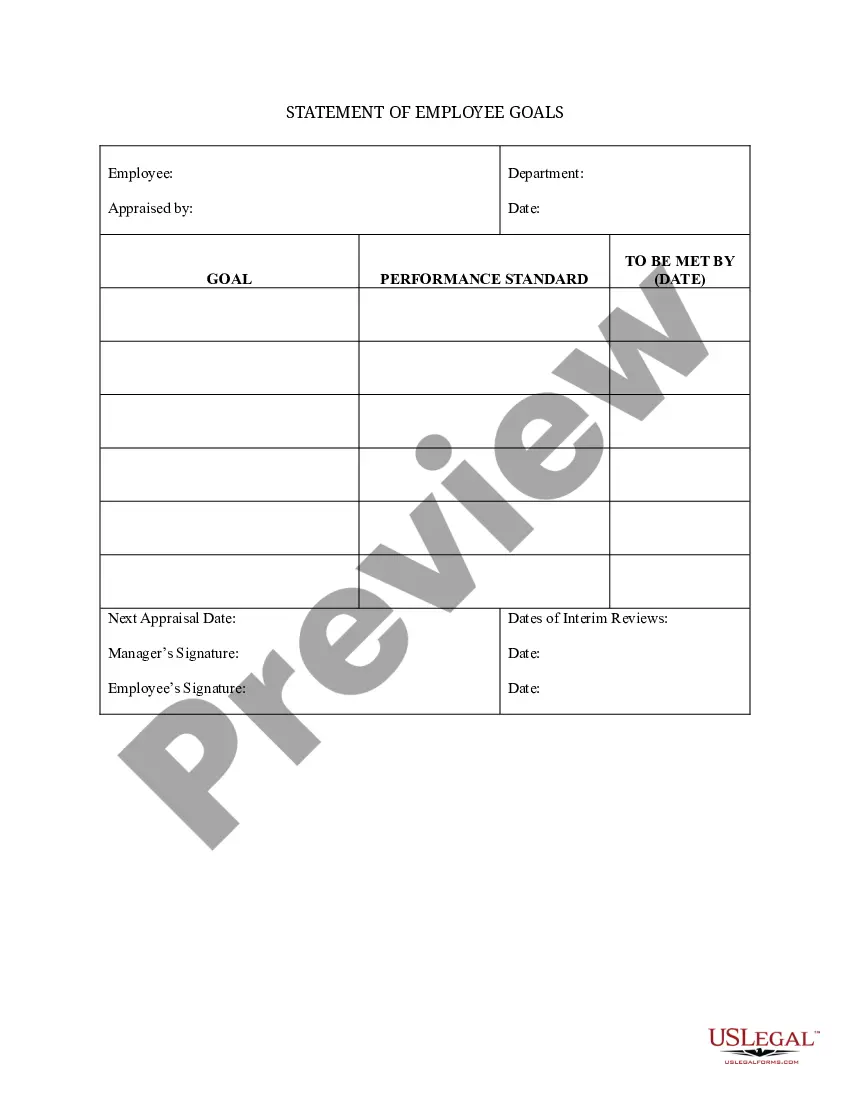
The Summary of Departmental Goals - Individual Employee Chart is a structured document that outlines the objectives set for each department within an organization. This form serves to summarize these goals, along with the deadlines by which they should be achieved. Unlike other internal planning documents, this chart focuses specifically on individual employee contributions and clarifies departmental aims, making it easier to track progress and accountability.
Key components of this form
- Department Field: Identifies the specific department associated with the goals.
- Period: Specifies the timeframe within which the goals are expected to be met.
- Manager: Names the responsible manager who will oversee the progress of the goals.
- Goals: Describes the specific objectives that need to be accomplished.
- Performance Standards: Details the criteria that will be used to measure the success of goal completion.
- Responsible Employee: Lists the employee accountable for achieving the respective goals.
- Deadline: Indicates the date by which each goal should be completed.

When to use this document
This form should be used during performance evaluation cycles, goal-setting meetings, and strategic planning sessions within an organization. It is essential when departments need to align their objectives with overall business goals or to provide clarity on employee responsibilities regarding departmental targets. Additionally, utilizing this form can streamline communication between employees and management regarding expectations and deadlines.
Who this form is for
- Department heads and managers responsible for setting and tracking team objectives.
- Human resources professionals involved in performance management and employee assessments.
- Employees who need to understand their specific targets and related responsibilities.
- Project leaders who require clarity on goal assignments for their team members.
Instructions for completing this form
- Identify the department and fill in the department field.
- Specify the performance period during which goals are to be completed.
- Name the manager responsible for overseeing the department's goals.
- List each goal that is to be accomplished in the corresponding section.
- Define the performance standards that will measure success for each goal.
- Assign responsibility to the employee who will be accountable for each goal and document the deadlines.
Notarization requirements for this form
Notarization is generally not required for this form. However, certain states or situations might demand it. You can complete notarization online through US Legal Forms, powered by Notarize, using a verified video call available anytime.
Get your form ready online
Our built-in tools help you complete, sign, share, and store your documents in one place.
Make edits, fill in missing information, and update formatting in US Legal Forms—just like you would in MS Word.
Download a copy, print it, send it by email, or mail it via USPS—whatever works best for your next step.
Sign and collect signatures with our SignNow integration. Send to multiple recipients, set reminders, and more. Go Premium to unlock E-Sign.
If this form requires notarization, complete it online through a secure video call—no need to meet a notary in person or wait for an appointment.
We protect your documents and personal data by following strict security and privacy standards.

Make edits, fill in missing information, and update formatting in US Legal Forms—just like you would in MS Word.

Download a copy, print it, send it by email, or mail it via USPS—whatever works best for your next step.

Sign and collect signatures with our SignNow integration. Send to multiple recipients, set reminders, and more. Go Premium to unlock E-Sign.

If this form requires notarization, complete it online through a secure video call—no need to meet a notary in person or wait for an appointment.

We protect your documents and personal data by following strict security and privacy standards.
Common mistakes to avoid
- Failing to specify clear, measurable goals.
- Not involving the responsible employee in the goal-setting process.
- Omitting deadlines, which can lead to misunderstandings about expectations.
- Inaccurately assigning responsibility by not matching goals with the employee's capabilities.
Why complete this form online
- Easy access for team members and managers to track goals and performance.
- Editability allows real-time updates and adjustments to goals as needed.
- Enhances accountability by clearly documenting responsibilities and timelines.
- Facilitates collaboration among team members through shared visibility of goals.
Key takeaways
- The form is essential for summarizing departmental goals and assigning responsibility.
- Clear deadlines and performance standards are vital for ensuring accountability.
- Involving employees in the goal-setting process enhances buy-in and ownership.
- This tool contributes to aligning departmental objectives with overall business strategies.
Looking for another form?


Form popularity
FAQ
An overall performance summary is prepared after the evaluations have been done on each of the areas being assessed.A manager should base the performance summary on how an employee has fared on the categories being evaluated such as communication skills, attendance, customer service, dependability, and initiative.
Accurate, neat, attentive to detail, consistent, thorough, high standards, follows procedures. Increase in number of errors, lacks attention to detail, inconsistency in quality, not thorough, work often incomplete, diminished standards of work produced, does not follow procedures.
Productivity. Productivity is the amount of work you produce in an hour, week, month or year. Efficiency. Efficiency is the amount of resources consumed for an output. Cost Reduction. Customer Satisfaction. Management. Change Management. Business Capabilities. Risk Management.
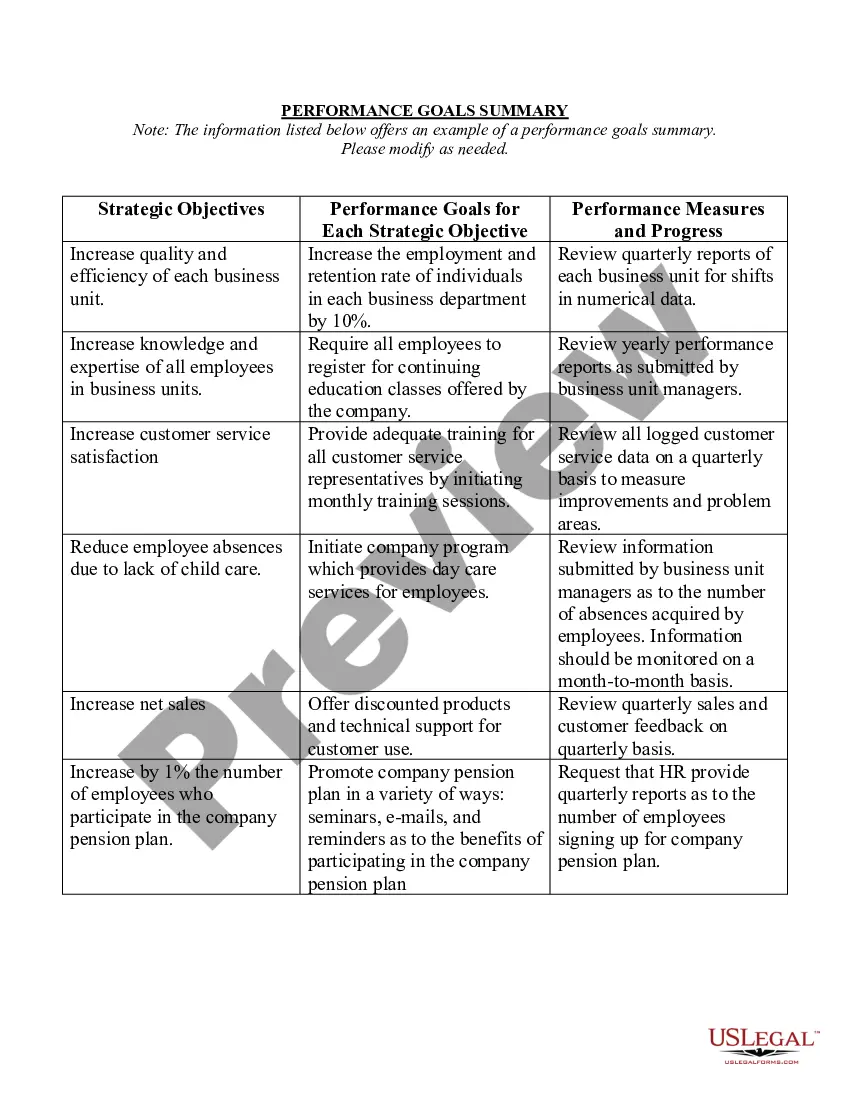
Set goals that align with company objectives. Invite employees to identify job-specific goals. Set SMART goals. Emphasize attainable goals. Set consistent goals for employees with similar responsibilities.
Specific. You should clearly define goals in specific terms as to what is to be achieved. Measurable. Goals should be measurable, making it easy to track their achievement. Achievable. Relevant. Time-bound.
Be Specific. Business department goals should be specific. Make Progress Measurable. A business department goals report should also assign a degree of measurability to goals. Set Attainable Goals. Be Realistic. Include Timetables.
Creativity. Complex problem solving. Cognitive flexibility. Emotional intelligence. Transdisciplinary skills. People management. New media and virtual communication. Cross cultural fluency.
Motivation. Employee development and organizational improvement. Protection for both the employee and the employer. Productivity goals. Efficiency goals. Education goals. Communication goals. Creativity and problem-solving goals.
Include specific examples to support your observations. Provide guidance for career growth and professional development opportunities. Make sure your default tone is a positive one. SMART goals. Always follow up.