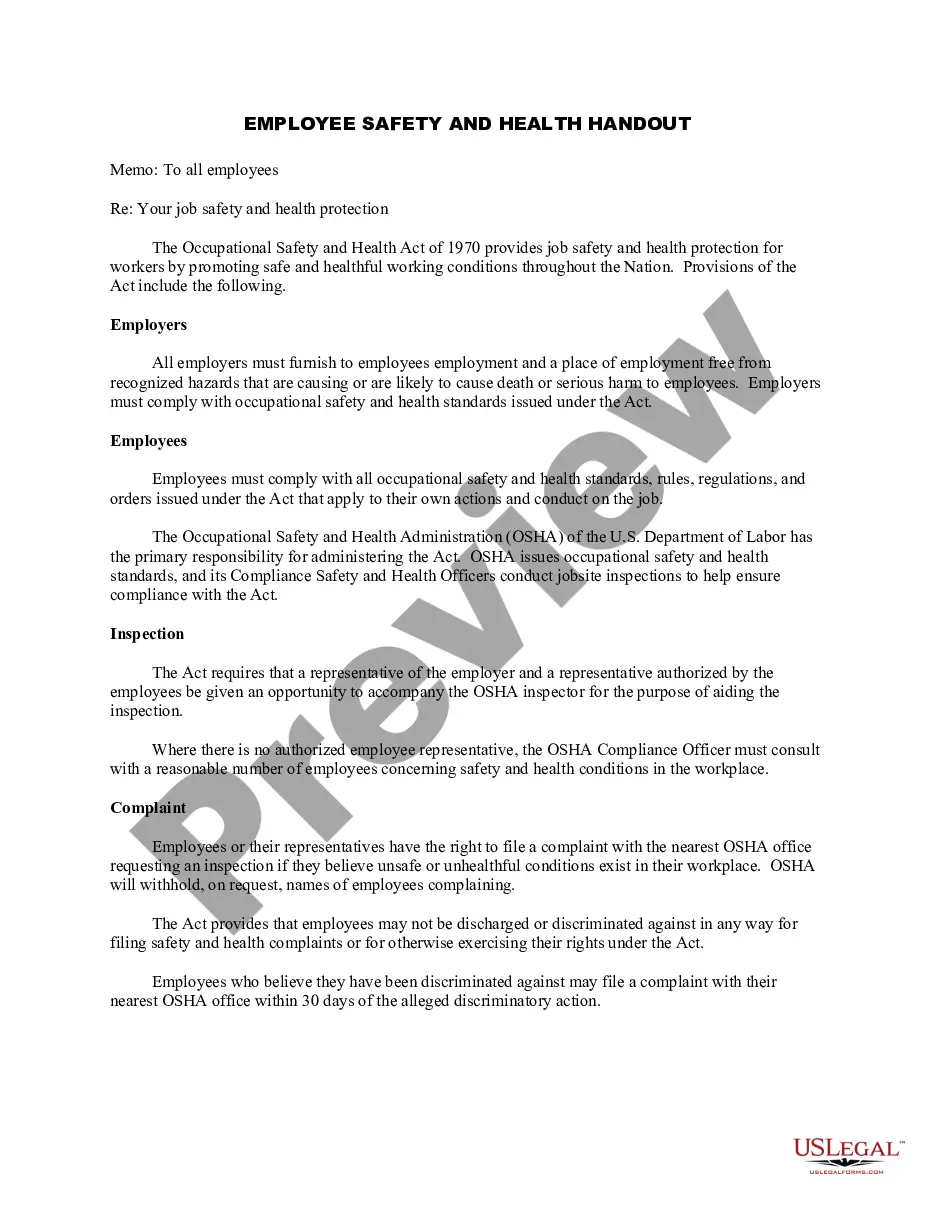
Employee Safety and Health Handout
About this form
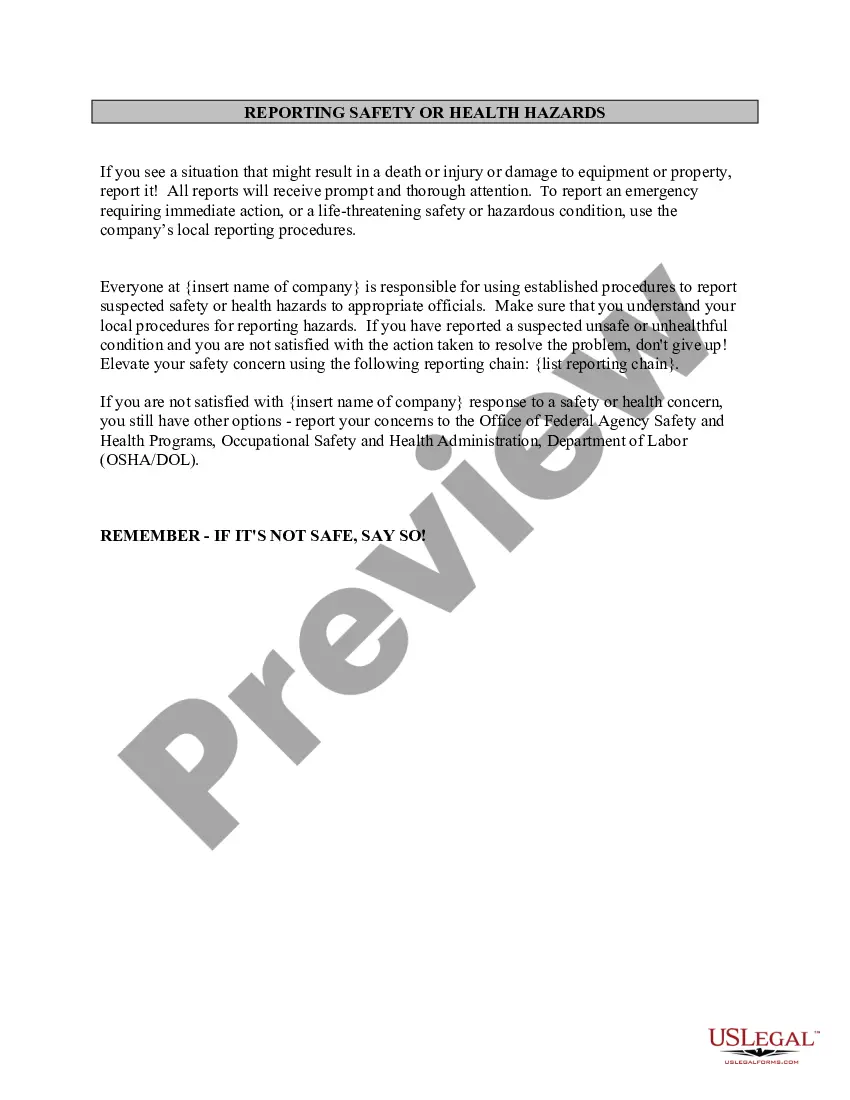
The Employee Safety and Health Handout is a legal document designed to inform employees of their rights and responsibilities regarding workplace safety and health. This form is essential for ensuring compliance with the Occupational Safety and Health Act and differs from similar documents in its focus on educating employees about specific safety protocols and legal standards that employers must uphold to create a safe working environment.
Key parts of this document
- Overview of employer responsibilities regarding employee safety.
- Employee obligations to follow safety regulations and standards.
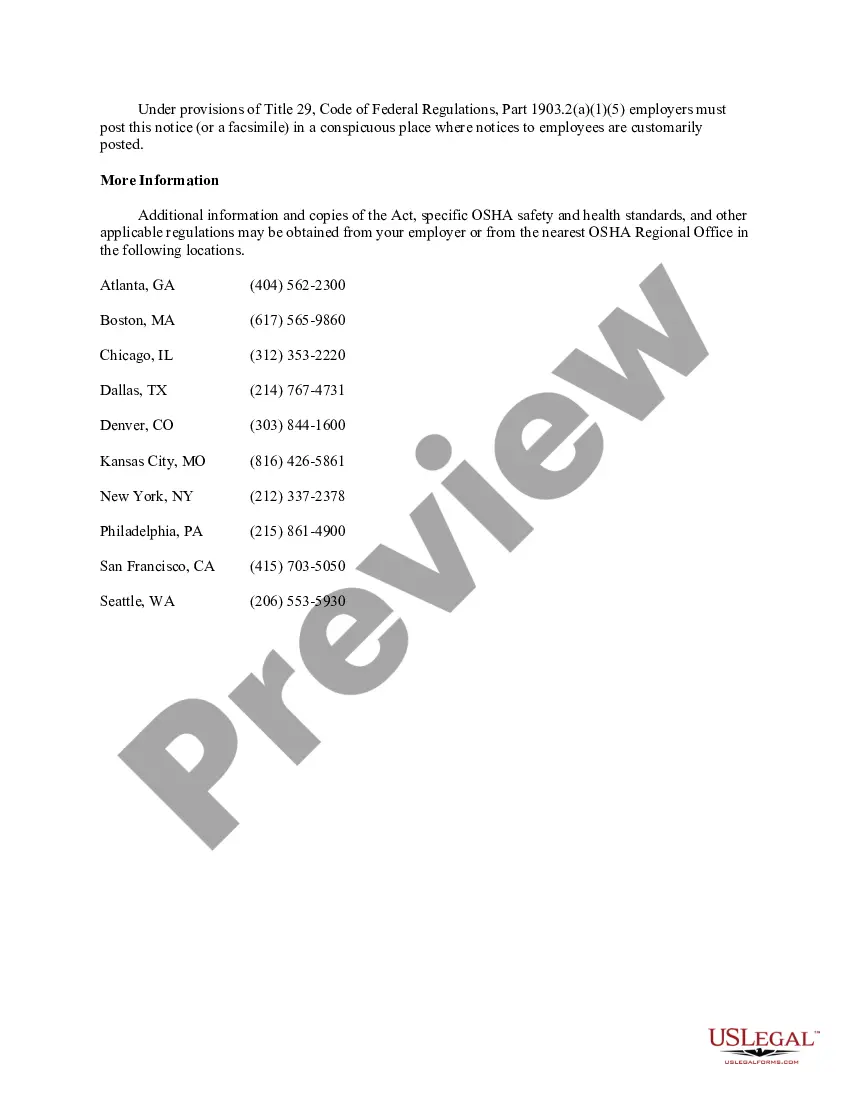
- Information on the role of OSHA (Occupational Safety and Health Administration).
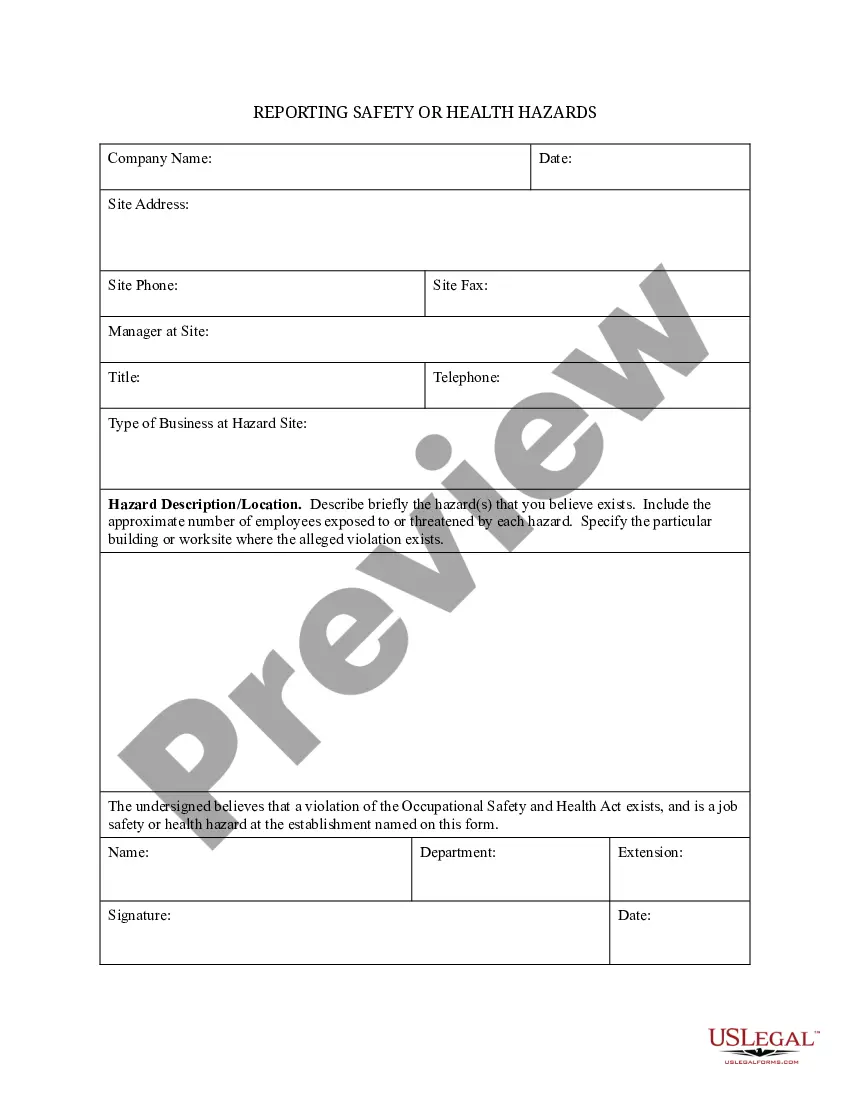
- Details on the complaint process for unsafe working conditions.
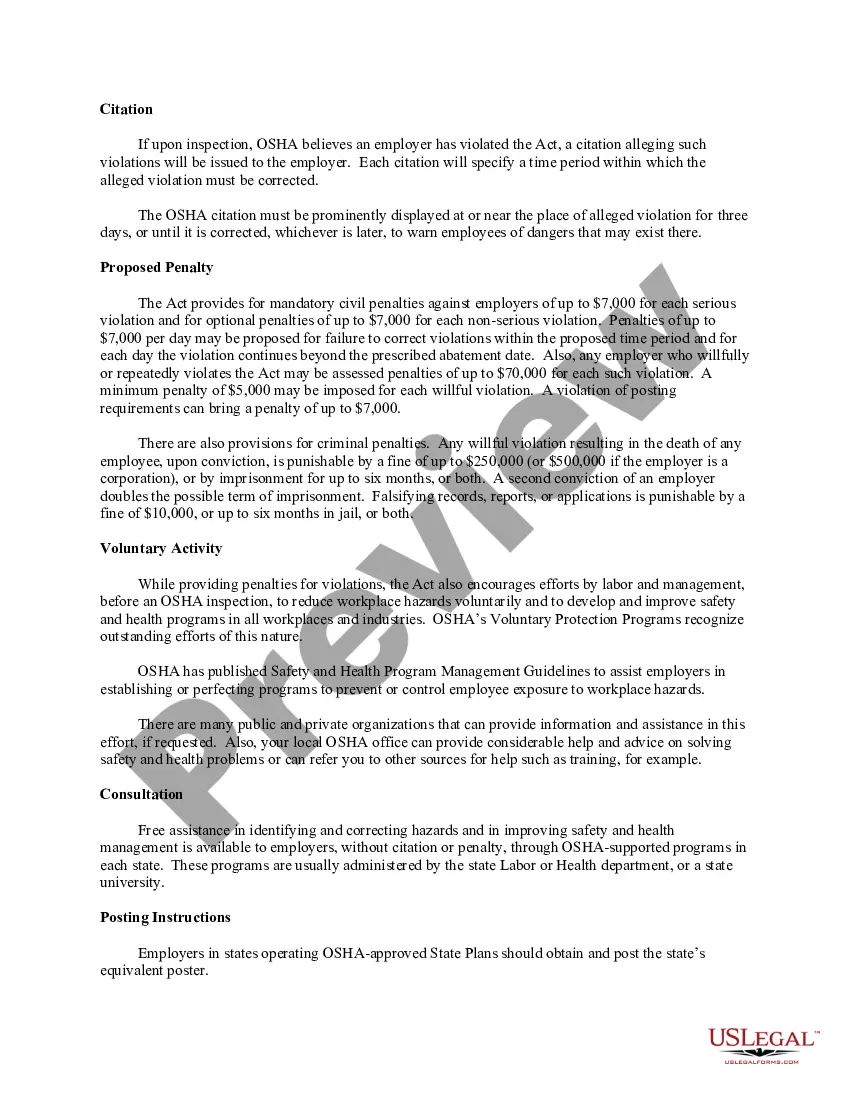
- Guidance on potential citations and penalties for violations.
- Voluntary programs and resources for improving workplace safety.
When to use this document
This form should be used whenever an employer needs to communicate their safety policies to employees. It is especially relevant during onboarding, before major projects, or when workplace safety protocols are updated. Additionally, it can be utilized when an employee raises concerns about workplace safety, ensuring they receive clear and accurate information regarding their rights and the necessary procedures to report issues.
Intended users of this form
- Employers seeking to comply with OSHA regulations.
- Managers and HR personnel responsible for employee communications.
- Employees who need to understand their rights concerning workplace safety.
Completing this form step by step
- Distribute the handout to all employees in a manner that ensures receipt and acknowledgment.
- Review key sections with employees during training sessions or meetings.
- Make a copy available in common areas of the workplace for easy access.
Is notarization required?
This form does not typically require notarization to be legally valid. However, some jurisdictions or document types may still require it. US Legal Forms provides secure online notarization powered by Notarize, available 24/7 for added convenience.
Get your form ready online
Our built-in tools help you complete, sign, share, and store your documents in one place.
Make edits, fill in missing information, and update formatting in US Legal Forms—just like you would in MS Word.
Download a copy, print it, send it by email, or mail it via USPS—whatever works best for your next step.
Sign and collect signatures with our SignNow integration. Send to multiple recipients, set reminders, and more. Go Premium to unlock E-Sign.
If this form requires notarization, complete it online through a secure video call—no need to meet a notary in person or wait for an appointment.
We protect your documents and personal data by following strict security and privacy standards.

Make edits, fill in missing information, and update formatting in US Legal Forms—just like you would in MS Word.

Download a copy, print it, send it by email, or mail it via USPS—whatever works best for your next step.

Sign and collect signatures with our SignNow integration. Send to multiple recipients, set reminders, and more. Go Premium to unlock E-Sign.

If this form requires notarization, complete it online through a secure video call—no need to meet a notary in person or wait for an appointment.

We protect your documents and personal data by following strict security and privacy standards.
Common mistakes
- Failing to update the handout when regulations change.
- Not providing copies to all employees, including new hires.
- Ignoring state-specific safety regulations that supplement federal laws.
Why use this form online
- Convenient access for both employers and employees, enabling quick updates and distribution.
- Editability allows employers to customize the handout according to specific workplace hazards.
- Reliable format ensures compliance with legal standards across various jurisdictions.
Legal use & context
- This form serves as a critical communication tool to fulfill legal obligations under OSHA.
- Employees are protected from discrimination when reporting unsafe conditions, as outlined in the form.
Quick recap
- The Employee Safety and Health Handout educates employees about workplace safety and their rights.
- Both employers and employees have specific responsibilities outlined in the handout.
- Relevant for all organizations aiming to comply with OSHA regulations.
Looking for another form?

Form popularity
FAQ
Management commitment and employee involvement; Worksite analysis; Hazard prevention and control; Safety and health training; Recordkeeping and program evaluation.
OSHA does so by enforcing the standards developed under the Act; by assisting and encouraging the States in their efforts to assure safe and healthful working conditions; by providing research, information, education, and training in the field of occupational safety and health.
OSHA administers the Occupational Safety and Health (OSH) Act. Safety and health conditions in most private industries are regulated by OSHA or OSHA-approved state plans.
OSHA requires every business with one or more employees to have a written safety manual (also known as IIPP or Injury, Illness and Prevention Program) in place.
The safety and health conditions in the majority of businesses in the private sector are regulated by OSHA and the OSH Act of 1970. The act is then primarily enforced by compliance safety and health officers. OSHA inspections are carried out through the order of priority.
The initial training shall be for 24 hours and refresher training shall be for eight hours annually. Employees who have received the initial training required by this paragraph shall be given a written certificate attesting that they have successfully completed the necessary training.
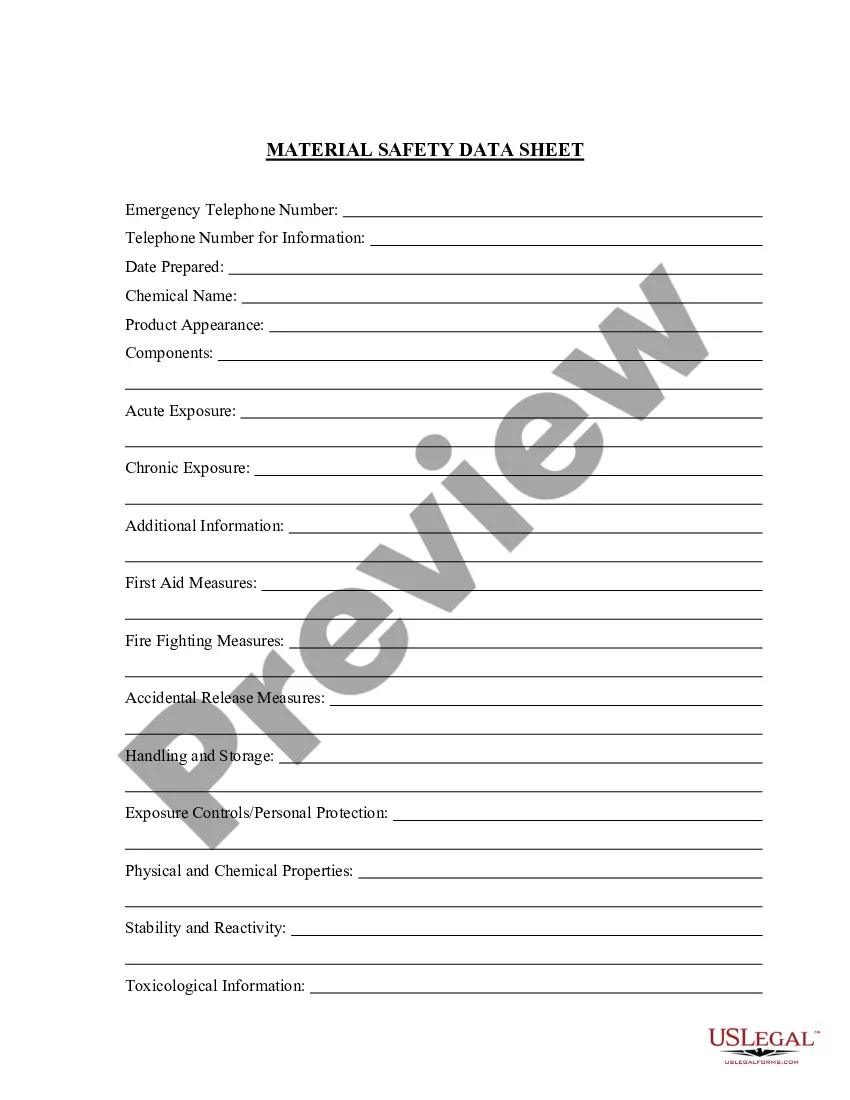
Safety. Safety hazards encompass any type of substance, condition or object that can injure workers. Chemical. Workers can be exposed to chemicals in liquids, gases, vapors, fumes and particulate materials. Biological. Physical. Ergonomic.
OSHA enforces its regulations and standards by conducting inspections based on priority such as an imminent danger situation, fatality, or a worker complaint.
To enforce the standards, OSHA is authorized under the ACT to conduct workplace inspections. OSHA compliance officers will conduct the inspection. Typically, such inspections can be triggered by fatal accidents on the job site, employee complaints, or random inspections of any industry that OSHA is targeting.