Checklist for Information in Employment Contracts
What is this form?
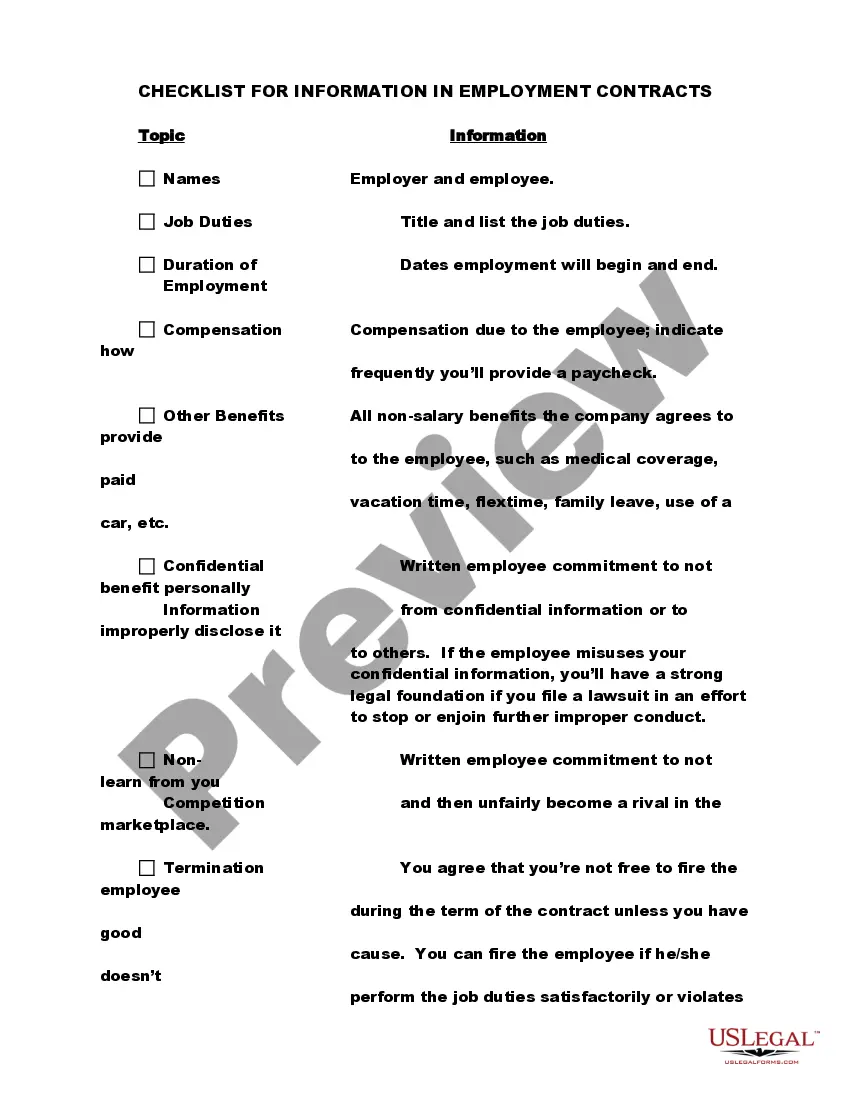
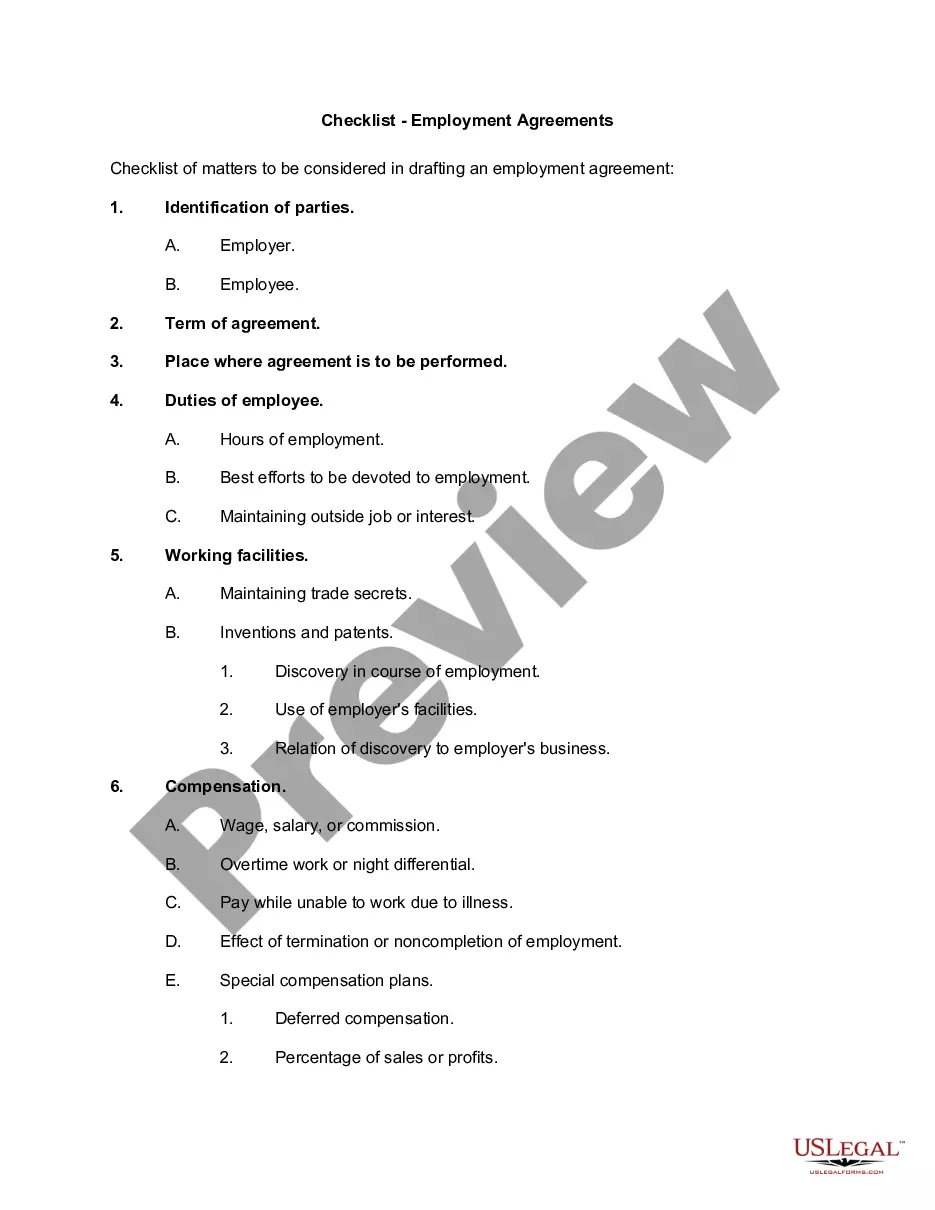
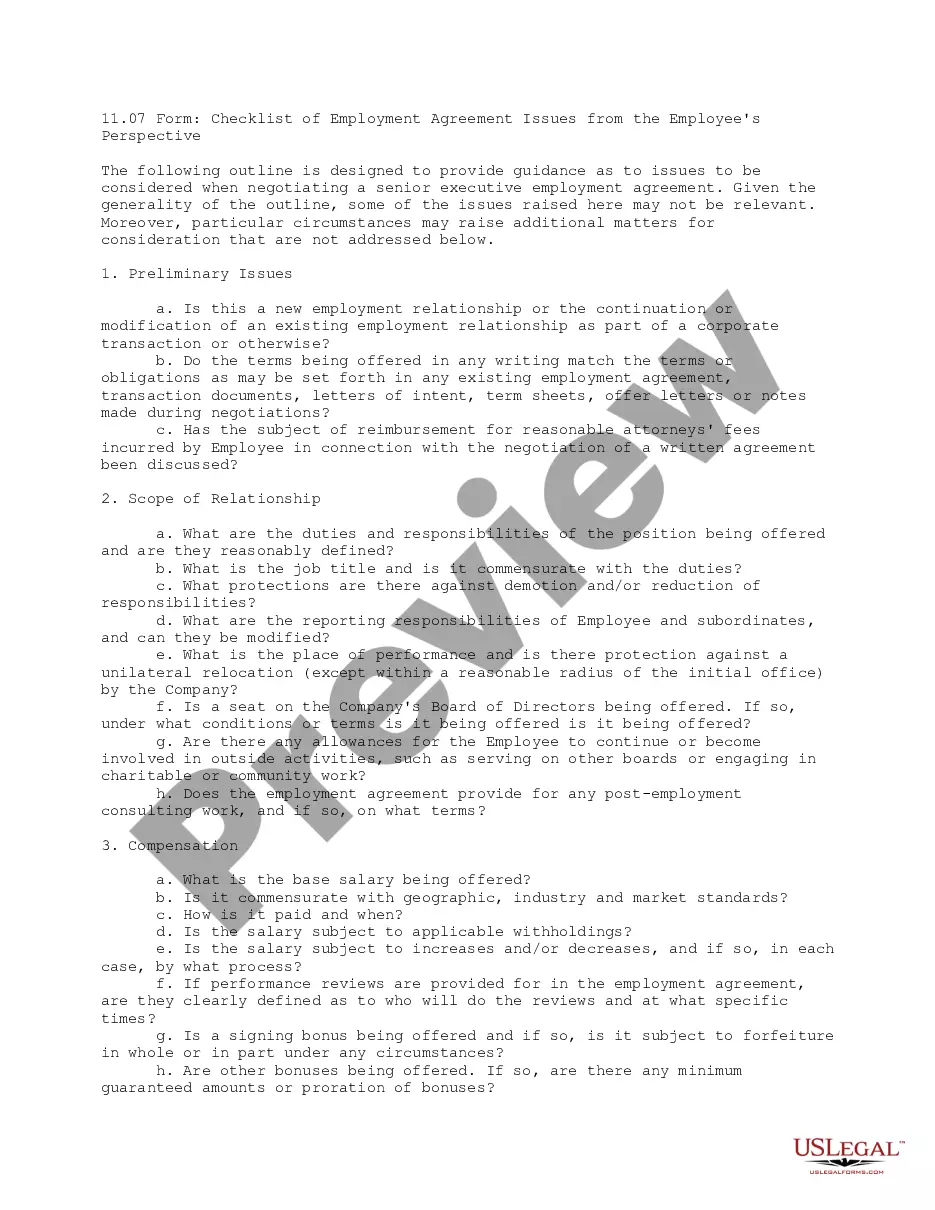
The Checklist for Information in Employment Contracts is a detailed guide used to ensure that all essential components are included in employment contracts. This checklist helps employers and legal teams verify that vital information such as job duties, compensation, and termination policies are thoroughly covered. Unlike standard employment contracts, this checklist serves as a preparatory tool to avoid omissions that could lead to complications or disputes down the line.
Key parts of this document
- Employer and employee identification details.
- Job duties, including the title and specific responsibilities.
- Duration of employment, indicating start and end dates.
- Compensation details, specifying salary and payment frequency.
- Other benefits like medical coverage or paid vacation.
- Confidential information clauses, safeguarding sensitive company data.
- Non-compete clauses to prevent unfair competition.
- Termination policies that outline just causes for dismissal.
- Dispute resolution protocols to manage potential conflicts.
- Entire agreement declaration to ensure comprehensive contract integrity.
- Signature requirements for both parties.
When this form is needed
This checklist is useful when drafting or reviewing employment contracts to ensure all critical elements are included for clarity and legal compliance. Employers should use this form if they are hiring a new employee, updating an existing contract, or attempting to standardize employment agreements across their organization. It can also be beneficial during contract negotiations to ensure both parties have a mutual understanding of the terms involved.
Who can use this document
- Human resources professionals involved in hiring and contracting.
- Business owners drafting employment agreements.
- Legal advisors ensuring compliance with employment laws.
- Individuals seeking employment and wanting to understand their contract terms.
Instructions for completing this form
- Identify the parties involved (employer and employee).
- Outline the job title and duties the employee will be responsible for.
- Specify the duration of employment with clear start and end dates.
- Detail the compensation structure, including salary and pay frequency.
- List additional benefits offered to the employee.
- Include provisions for confidentiality and non-compete agreements.
- Ensure all parties sign and date the checklist to confirm understanding and agreement.
Does this form need to be notarized?
This form usually doesn’t need to be notarized. However, local laws or specific transactions may require it. Our online notarization service, powered by Notarize, lets you complete it remotely through a secure video session, available 24/7.
Get your form ready online
Our built-in tools help you complete, sign, share, and store your documents in one place.
Make edits, fill in missing information, and update formatting in US Legal Forms—just like you would in MS Word.
Download a copy, print it, send it by email, or mail it via USPS—whatever works best for your next step.
Sign and collect signatures with our SignNow integration. Send to multiple recipients, set reminders, and more. Go Premium to unlock E-Sign.
If this form requires notarization, complete it online through a secure video call—no need to meet a notary in person or wait for an appointment.
We protect your documents and personal data by following strict security and privacy standards.

Make edits, fill in missing information, and update formatting in US Legal Forms—just like you would in MS Word.

Download a copy, print it, send it by email, or mail it via USPS—whatever works best for your next step.

Sign and collect signatures with our SignNow integration. Send to multiple recipients, set reminders, and more. Go Premium to unlock E-Sign.

If this form requires notarization, complete it online through a secure video call—no need to meet a notary in person or wait for an appointment.

We protect your documents and personal data by following strict security and privacy standards.
Common mistakes to avoid
- Omitting key benefits such as health insurance or retirement plans.
- Failing to clearly define job responsibilities.
- Not specifying duration, leading to potential misunderstandings.
- Neglecting to include dispute resolution processes.
- Using ambiguous language that can lead to misinterpretation.
Advantages of online completion
- Convenience of accessing the checklist anytime, anywhere.
- Easily editable to tailor the checklist according to specific employment needs.
- Reliable structure ensuring all important elements are considered.
- Time-saving compared to manually creating checklists from scratch.
Legal use & context
- This checklist serves as a preparatory document aiding in drafting employment contracts.
- Ensures that both employer and employee are aware of their rights and obligations.
- Helps reduce the risk of legal disputes through clear definitions and provisions.
Quick recap
- The Checklist for Information in Employment Contracts is essential for thorough employment contract preparation.
- Utilizing this checklist helps prevent omissions that could lead to disputes.
- It is applicable across various states but may need customization based on local regulations.
- Both employers and employees will benefit from the clarity this checklist provides.
Looking for another form?
Form popularity
FAQ
For a contract to be valid, it must have four key elements: agreement, capacity, consideration, and intention.
Names and address of all parties involved. Description of business. Clearly defined job position and role. Company specific requirements and/or protections. Length of job and duration of schedule/work hours. Pay, compensation, & benefits.
The employee's or worker's name, job title or a description of work and start date. how much and how often an employee or worker will get paid. hours and days of work and if and how they may vary (also if employees or workers will have to work Sundays, nights or overtime)
Compensation. Equity Grants. Scope of Employment. Benefits. Term and Termination. Reimbursement of Expenses. Liability Protection for the Employee. Confidentiality Restrictions.
The nature and description of the job. As an employee you will be required to provide your services to the employer. Remuneration and benefits. Duration. Leave. Termination.
Names and address of all parties involved. Description of business. Clearly defined job position and role. Company specific requirements and/or protections. Length of job and duration of schedule/work hours. Pay, compensation, & benefits.
Additional Vacation Time. Maybe the company only offers 7-10 days of paid vacation each year. Flexible Scheduling. One of the best non-salary perks is by far a flex schedule. Daycare Reimbursement. Tuition Reimbursement. An Office. Guaranteed Severance Package. Housing Subsidy. Transportation Reimbursement.
1) agreement. An agreement i cludes offer and acceptance by both parties. 2) Consideration. Promises made by parties must have sufficient and bargained consideration (money or other legal means of payment. Contractual capacity. Legality.
The five requirements for creating a valid contract are an offer, acceptance, consideration, competency and legal intent.