Consulting Contract Questionnaire - Self-Employed
What this document covers
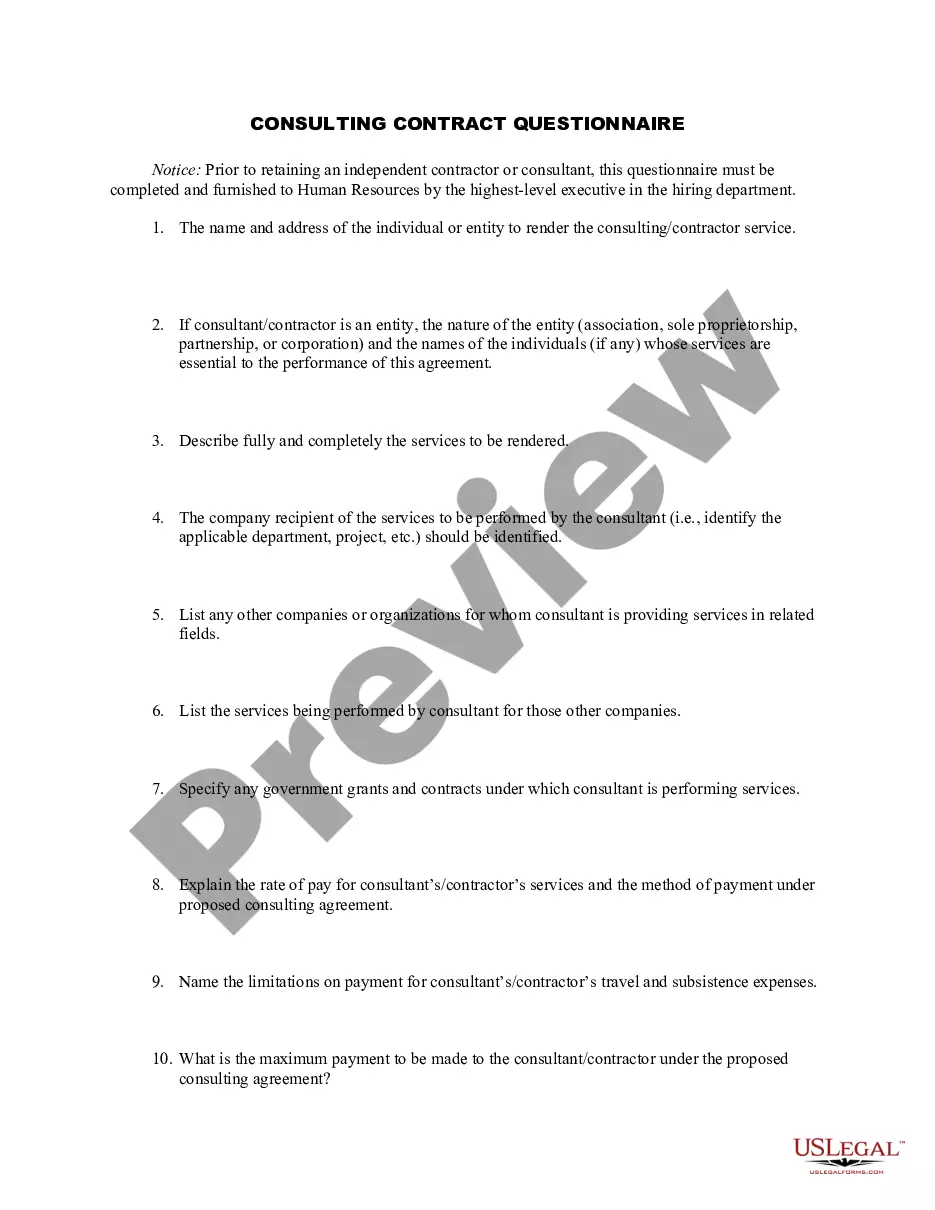
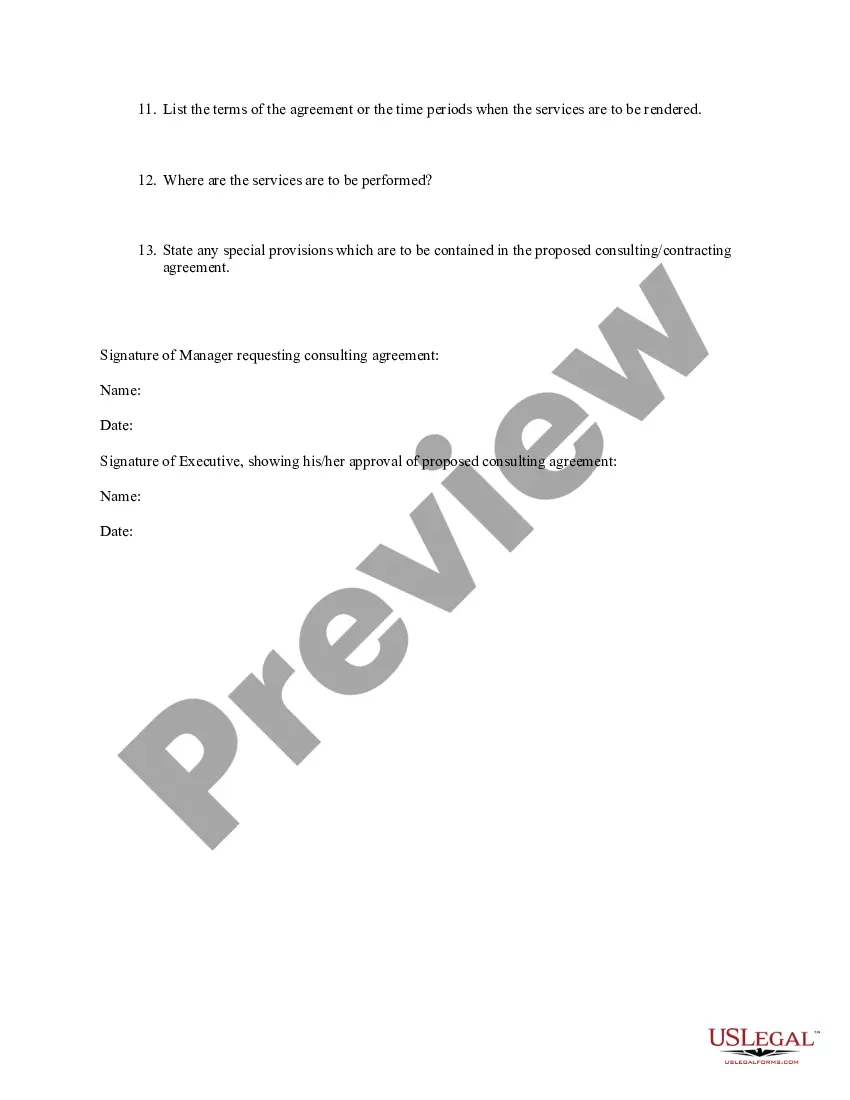
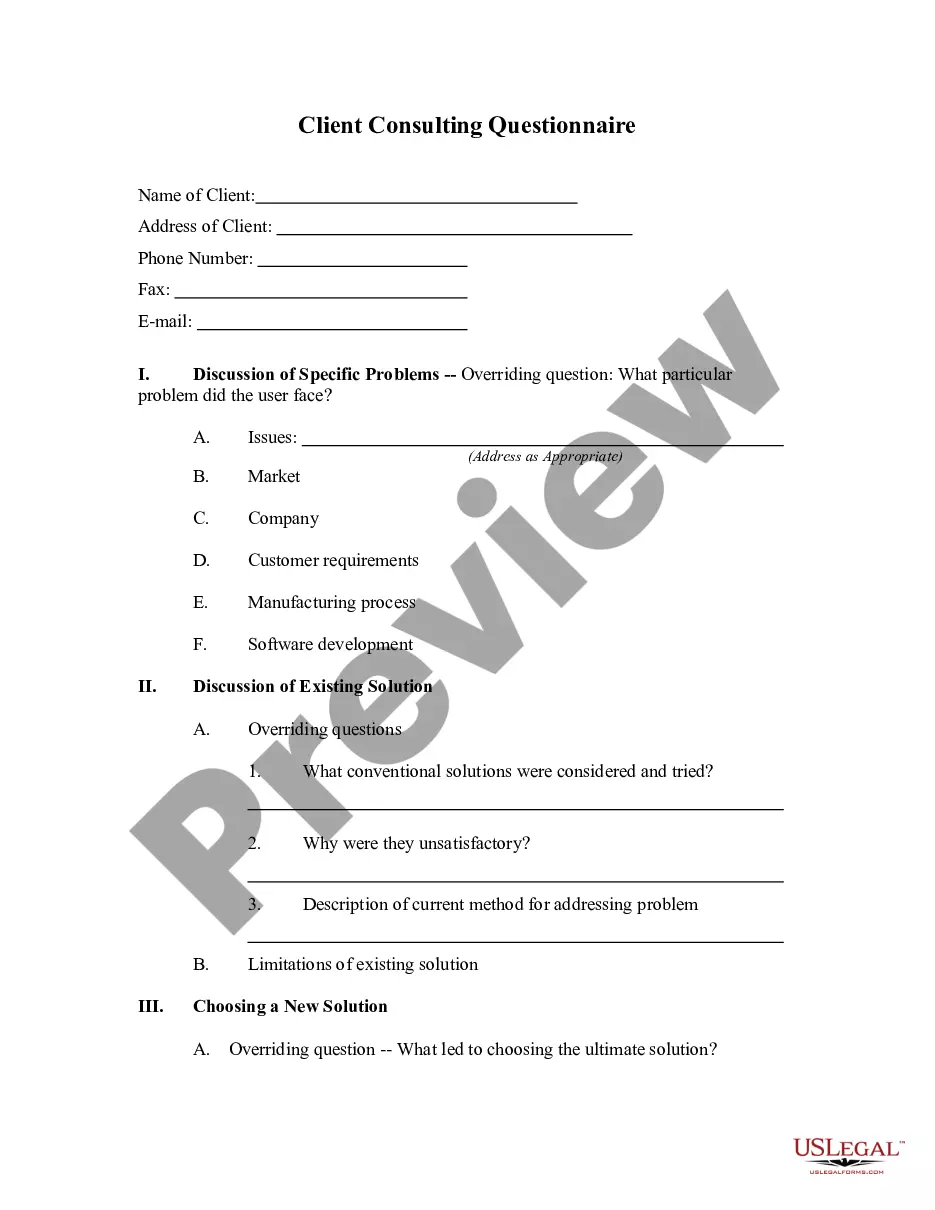
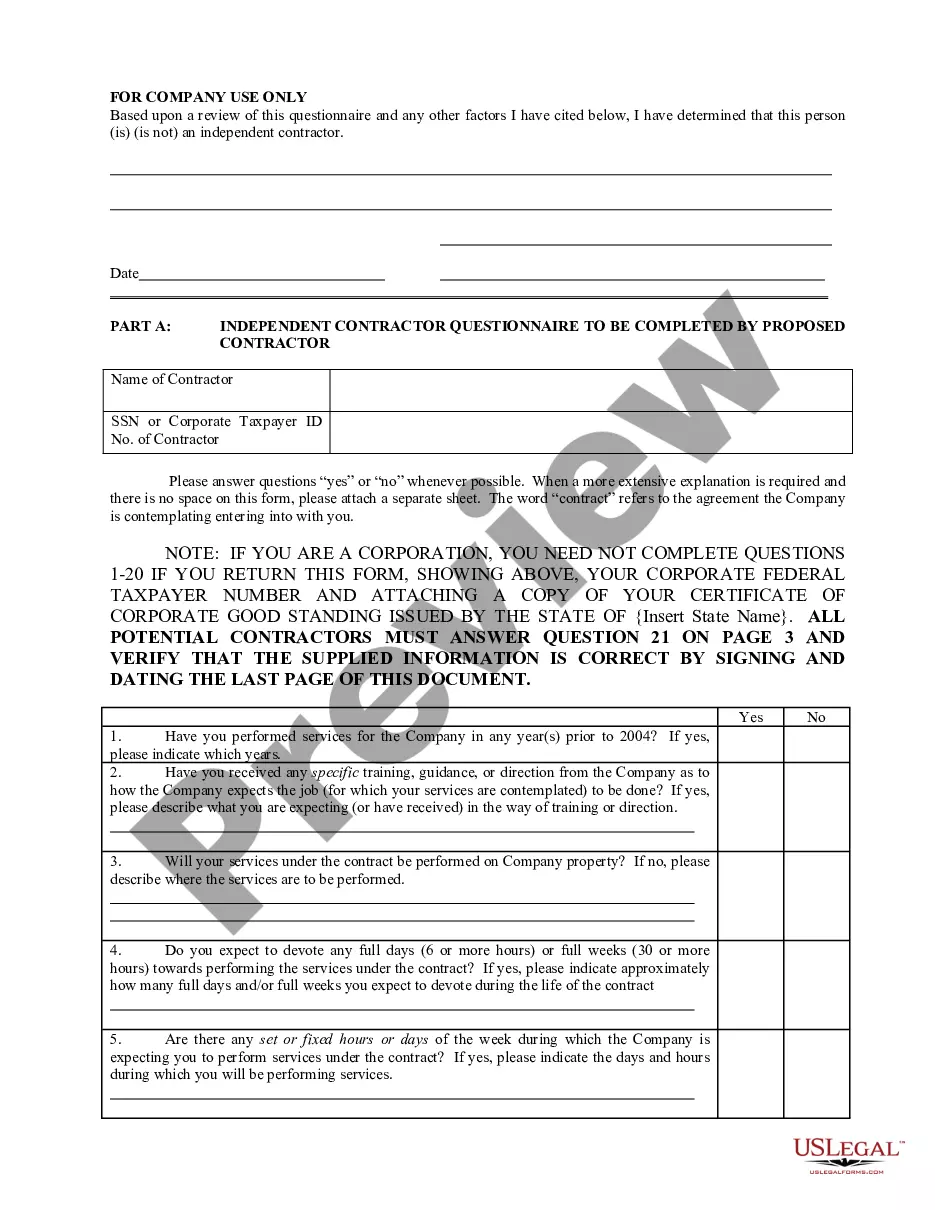
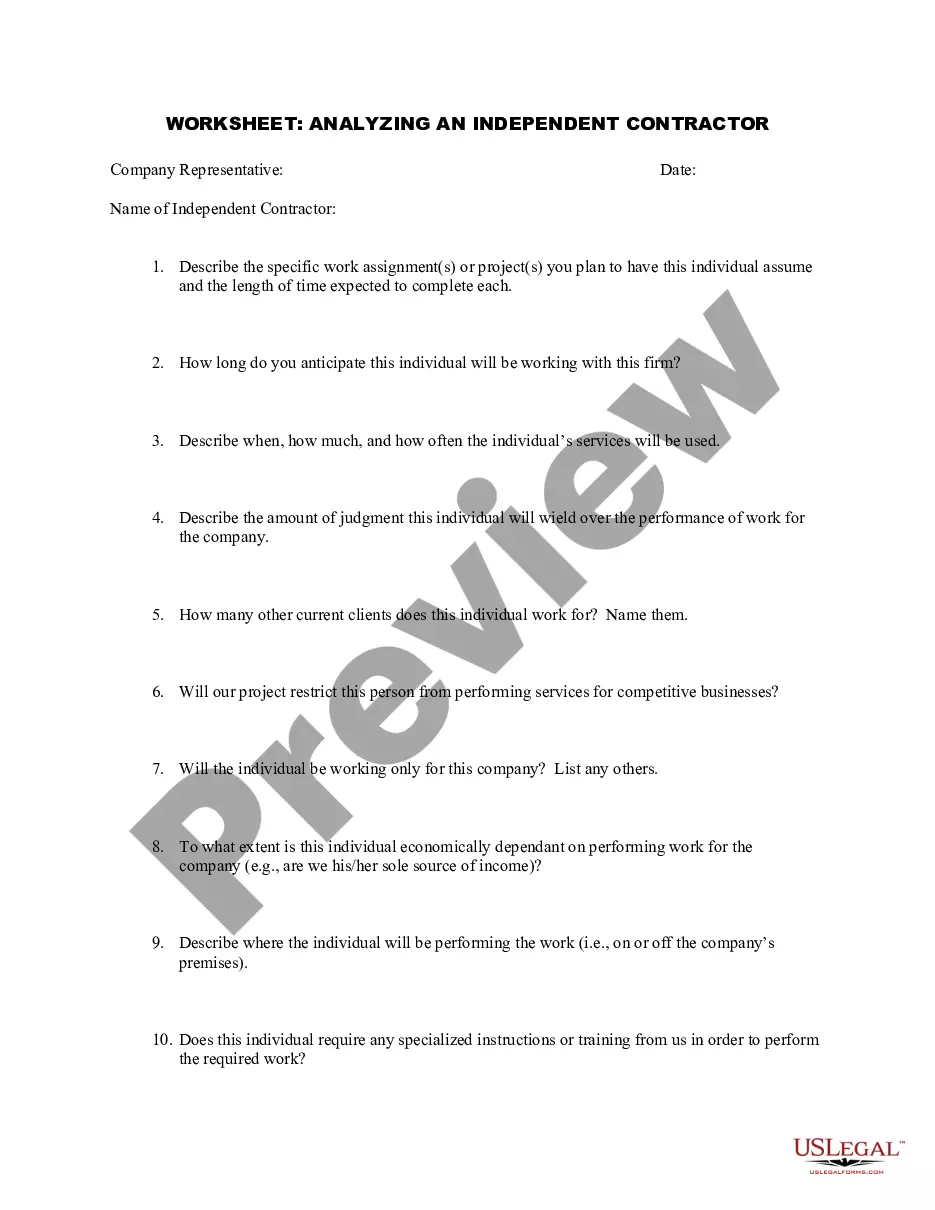
The Consulting Contract Questionnaire for Self-Employed individuals is a vital form used to collect necessary information before engaging an independent contractor or consultant. Its primary purpose is to ensure that the hiring department has a clear understanding of the consultant's scope of work, identity, and related services, which helps mitigate potential legal issues and promotes transparency in the consulting process. This form is distinct from general consulting agreements as it focuses specifically on gathering comprehensive details from the contractor or consultant prior to formalizing an engagement.
Key parts of this document
- Consultant's name and address for service provision.
- Nature of the entity (if applicable) and involved representatives.
- Detailed description of services to be rendered.
- Identification of the company department or project receiving the services.
- List of other clients served by the consultant in related fields.
- Outline of payment terms and any expense limitations related to travel and subsistence.
- Dates or terms of the consulting agreement.
- Signature fields for managerial approval and date of authorization.
Common use cases
This form should be utilized when an organization is considering hiring an independent contractor or consultant. It is particularly important in the following situations:
- When launching a new project that requires specialized expertise.
- Prior to any verbal agreements to ensure clarity and prevent misunderstandings.
- When managing multiple consultants to ensure consistent information is collected.
Who this form is for
This form is intended for:
- Human resources personnel involved in hiring external consultants.
- Managers or executives in charge of specific projects requiring external expertise.
- Business owners seeking to engage independent contractors for various services.
Completing this form step by step
To complete the Consulting Contract Questionnaire, follow these steps:
- Identify the parties involved by entering the name and address of the consultant or contractor.
- Select the type of entity if applicable and provide names of any key personnel involved in the service.
- Clearly describe the specific services the consultant will provide.
- Designate the department or project that will be the primary recipient of the consulting services.
- List any additional organizations where the consultant provides related services.
- Specify the payment terms, including rates and any limitations on travel expenses.
Does this form need to be notarized?
This form does not typically require notarization unless specified by local law.
Get your form ready online
Our built-in tools help you complete, sign, share, and store your documents in one place.
Make edits, fill in missing information, and update formatting in US Legal Forms—just like you would in MS Word.
Download a copy, print it, send it by email, or mail it via USPS—whatever works best for your next step.
Sign and collect signatures with our SignNow integration. Send to multiple recipients, set reminders, and more. Go Premium to unlock E-Sign.
If this form requires notarization, complete it online through a secure video call—no need to meet a notary in person or wait for an appointment.
We protect your documents and personal data by following strict security and privacy standards.

Make edits, fill in missing information, and update formatting in US Legal Forms—just like you would in MS Word.

Download a copy, print it, send it by email, or mail it via USPS—whatever works best for your next step.

Sign and collect signatures with our SignNow integration. Send to multiple recipients, set reminders, and more. Go Premium to unlock E-Sign.

If this form requires notarization, complete it online through a secure video call—no need to meet a notary in person or wait for an appointment.

We protect your documents and personal data by following strict security and privacy standards.
Typical mistakes to avoid
- Failing to provide complete information about the consultant.
- Not describing the services in sufficient detail, which can lead to ambiguity.
- Overlooking specific terms related to payment and expenses.
Advantages of online completion
- The ability to easily edit and tailor the form to fit specific consulting needs.
- Instant access to completed forms for efficient processing and record-keeping.
- Increased reliability and compliance with legal standards established by licensed attorneys.
Summary of main points
- The Consulting Contract Questionnaire is essential for collecting key information before hiring independent contractors.
- It is crucial to ensure all details about the consultant are accurate and complete.
- Utilization of this form can significantly enhance the clarity and legal standing of the consulting engagement process.
Definitions you should know
- Consultant: A professional who provides expert advice in a particular area.
- Independent contractor: An individual or entity contracted to perform services for another entity while maintaining independence in how those services are performed.
- Entity: Any organization or business structure that can engage in legal contracts.
Looking for another form?

Form popularity
FAQ
Terms. This is the first section of any agreement or contract and states the names and locations of the parties involved. Responsibilities & Deliverables. Payment-Related Details. Confidentiality Clause. Contract Termination. Choice of Law.
The earnings of a person who is working as an independent contractor are subject to Self-Employment Tax. If you are an independent contractor, you are self-employed. To find out what your tax obligations are, visit the Self-Employed Tax Center.
The earnings of a person who is working as an independent contractor are subject to Self-Employment Tax. If you are an independent contractor, you are self-employed. To find out what your tax obligations are, visit the Self-Employed Tax Center.
Though consultants work closely with companies, they are not official employees of these organizations. This is an important distinction for insurance, legal, and HR purposes.
A freelance business consultant is no other company's employee, but their own employee, and has a set of duties that come with the job, and that set of duties is more wide-ranging for a self-employed business consultant because you need to sell your knowledge and expertise.
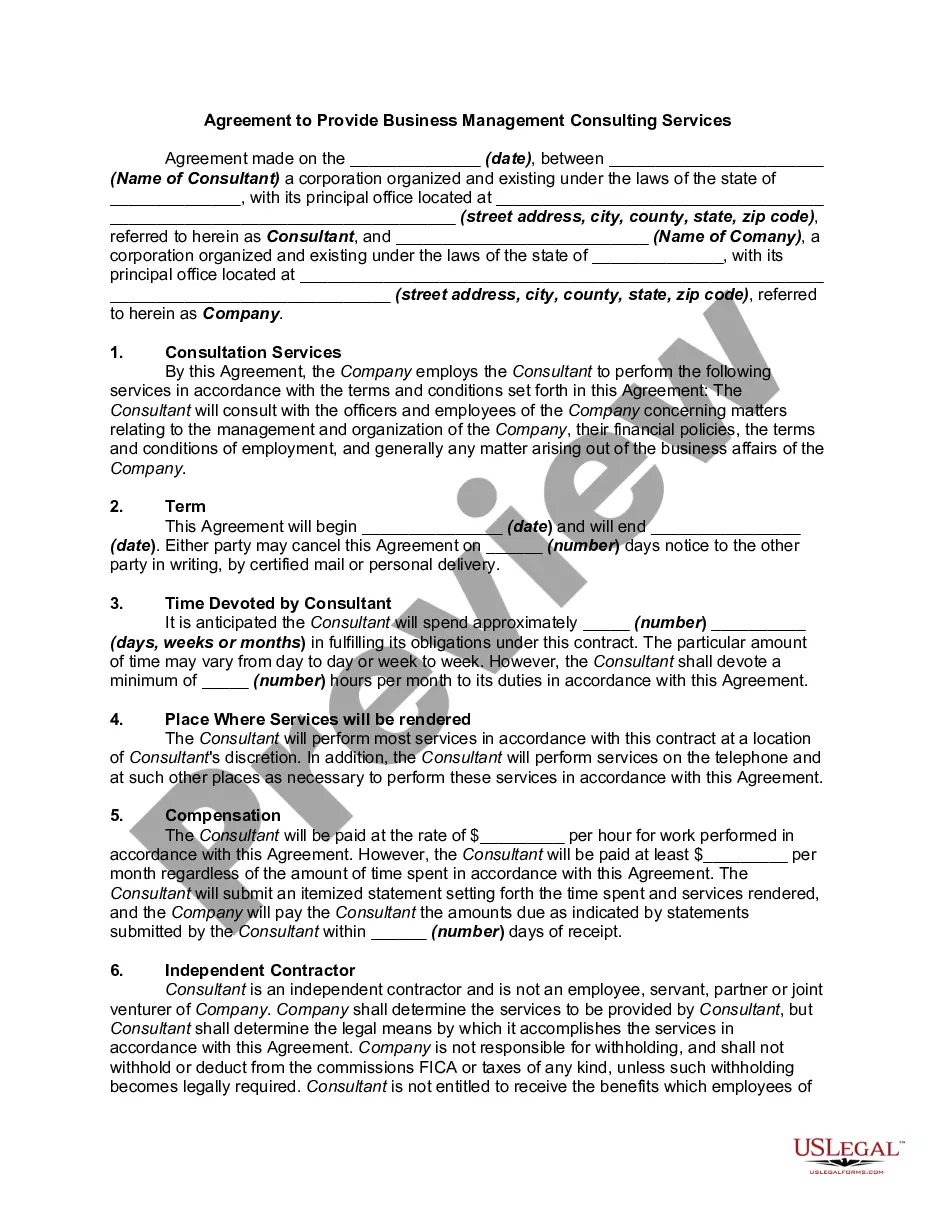
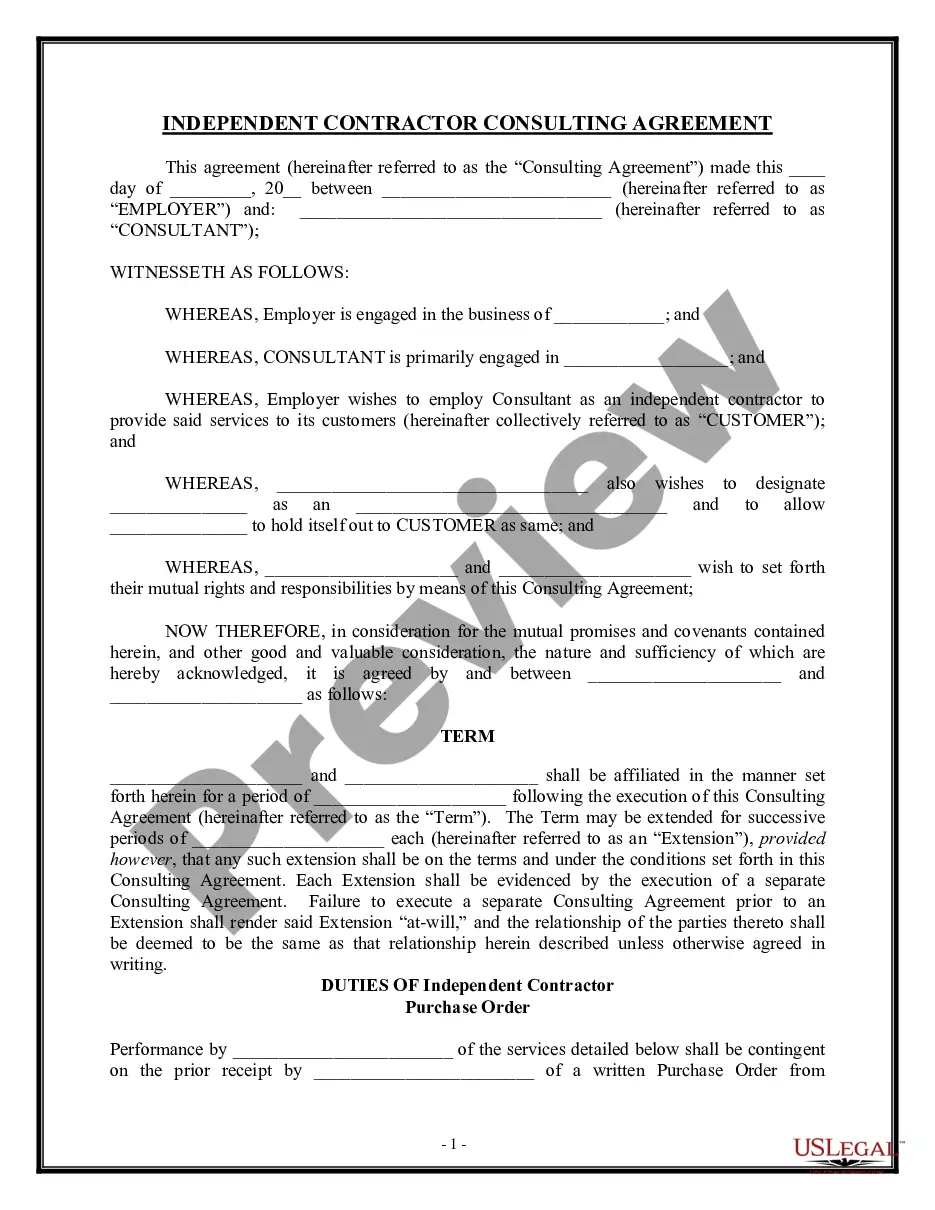
Consultant agreements are important because they outline what work will be done, as well as the terms of the agreement between the client and the consultant. A consultant agreement should be detailed and include compensation terms, contract termination, intellectual property ownership and confidentiality agreements.
You must pay Social Security and Medicare taxes as an independent consultant, in addition to income tax. These represent the self-employment tax. Normally, you and your employer would each pay half, but you must pay 100% if you're self-employed.
The IRS requires contractors to fill out a Form W-9, request for Taxpayer Identification Number and Certification, which you should keep on file for at least four years after the hiring. This form is used to request the correct name and Taxpayer Identification Number, or TIN, of the worker or their entity.
As an independent consultant you are considered self-employed, so if you earn more than $400 for the year, the IRS expects you to pay your own tax. The self-employment tax rate is 15.3% of your net earnings.