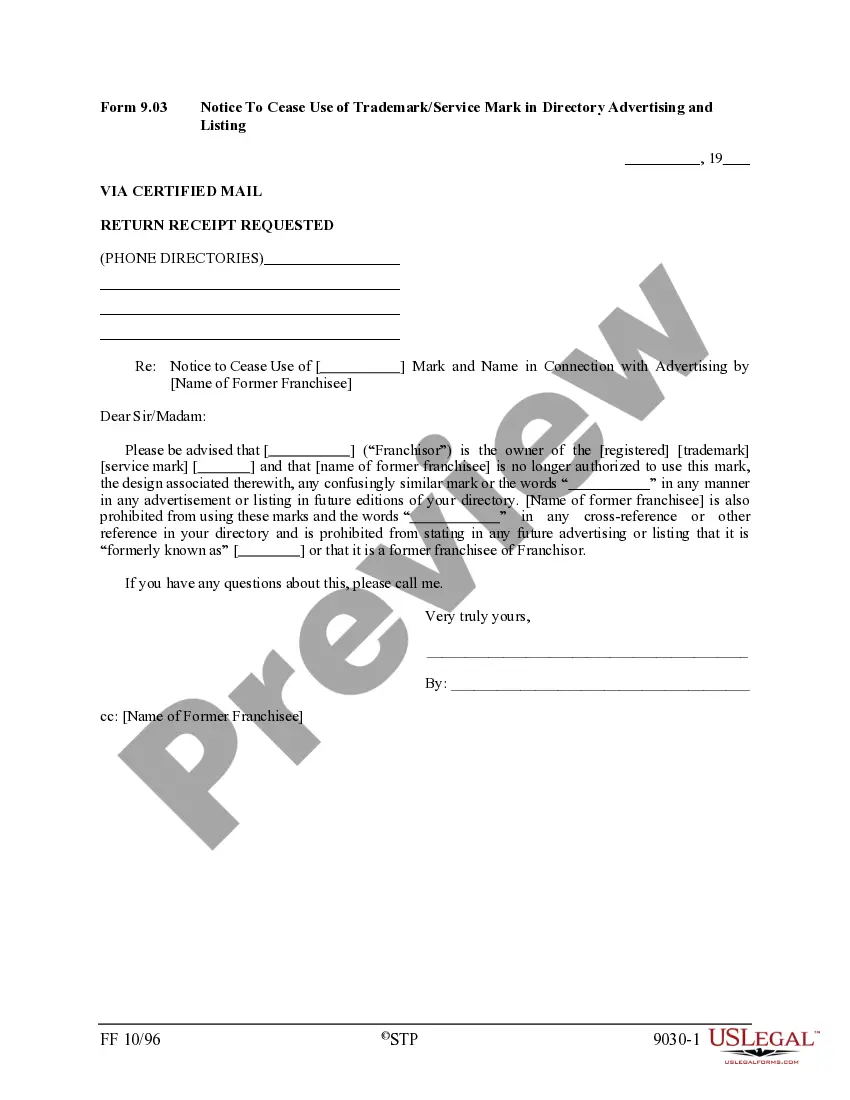
Notice To Cease Use of Trademark / Servicemark in Directory Advertising and Listing
What is this form?
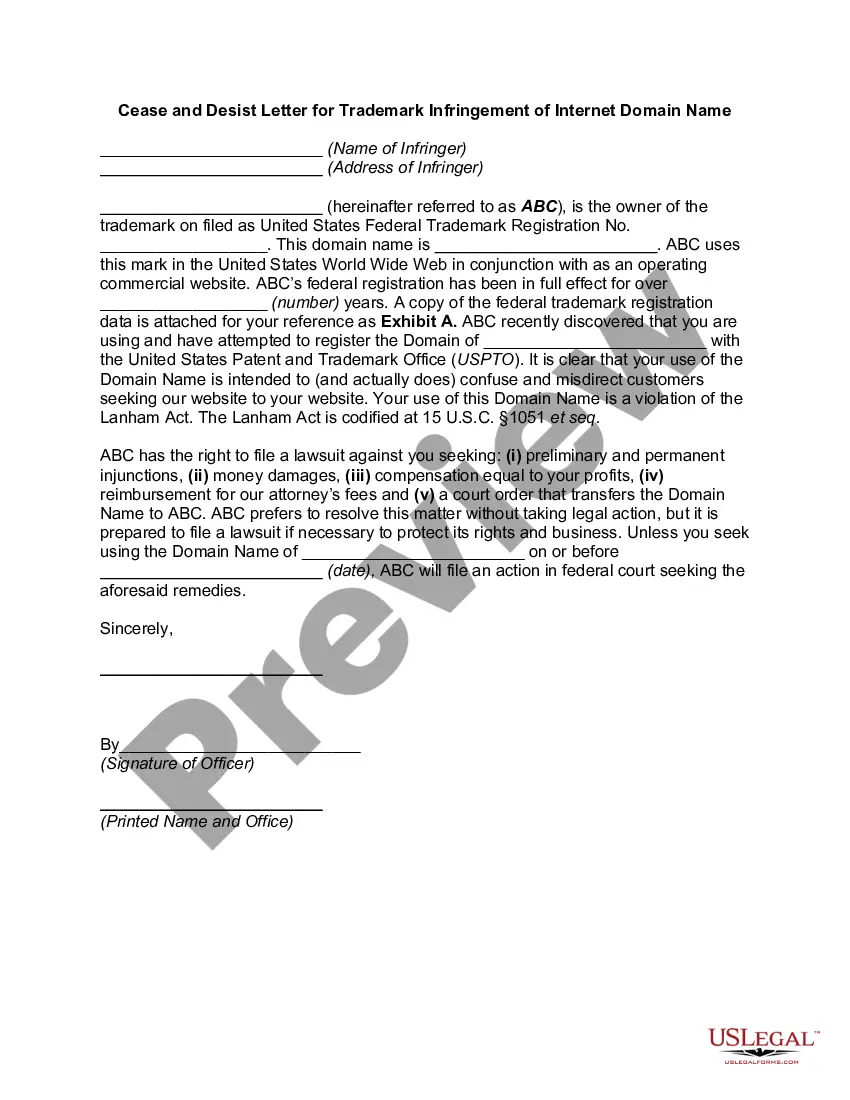
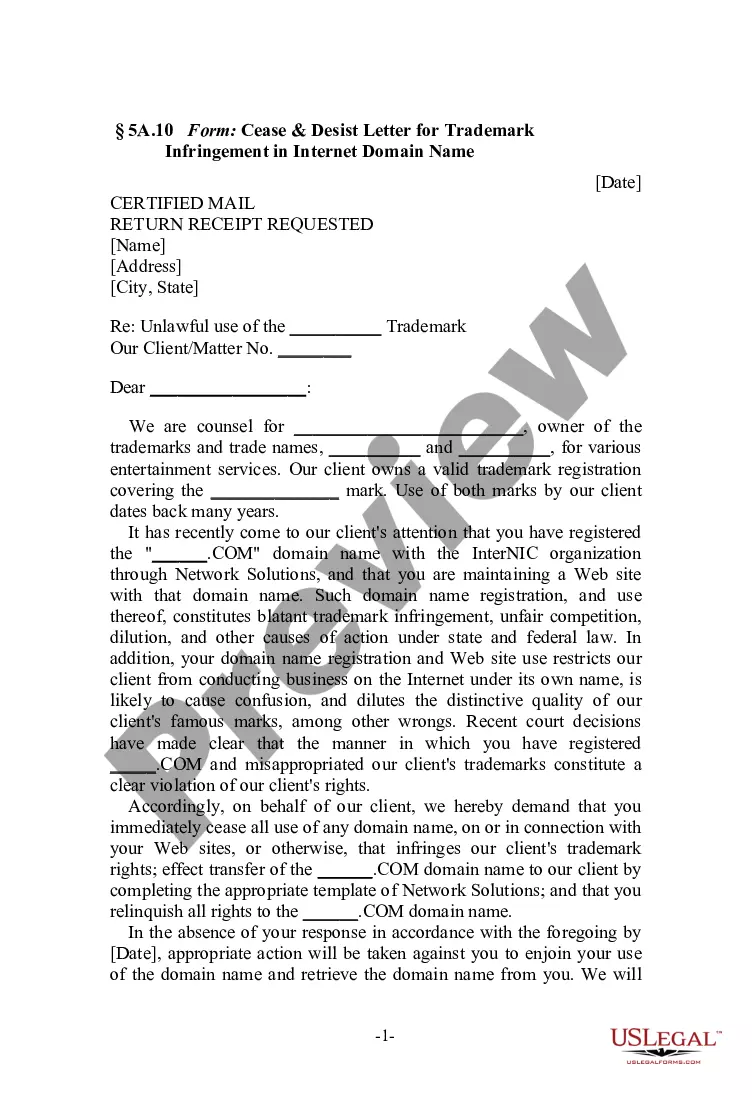
The Notice to Cease Use of Trademark/Servicemark in Directory Advertising and Listing is a legal document used by a franchisor to inform a former franchisee that they are prohibited from using the franchisor's trademark or servicemark in any form of directory advertising. This form is crucial for protecting trademark rights and ensuring that former franchisees do not misrepresent their association with the franchisor in future advertising efforts.
Key components of this form
- Identification of the franchisor and the trademark/service mark.
- Details about the former franchiseeâs prior authorization to use the mark.
- Clear statements prohibiting further use of the trademark/service mark in directory advertising.
- Instructions on contacting the franchisor for any questions.
- Signature line for the franchisor's representative.
When to use this document
This form should be used when a franchisor seeks to formally notify a former franchisee that they can no longer use the franchisor's trademarks or servicemarks in any advertising material, particularly in directories. This notification is essential when the franchise relationship has ended and to protect the trademark rights of the franchisor.
Intended users of this form
- Franchisors who have terminated a franchise agreement.
- Legal representatives of franchisors handling trademark issues.
- Franchise management teams ensuring compliance with trademark usage standards.
How to prepare this document
- Begin by identifying the names of the franchisor and former franchisee.
- Insert the date of the notice and ensure it is sent via certified mail.
- Clearly state that the franchisor is the owner of the trademark/service mark.
- Explicitly mention that the former franchisee is prohibited from using the mark in any directory advertising.
- Include the signature of the franchisor's representative and any necessary contact information.
Is notarization required?
This form does not typically require notarization unless specified by local law. It is recommended to check any jurisdiction-specific requirements regarding notarization for added security.
Get your form ready online
Our built-in tools help you complete, sign, share, and store your documents in one place.
Make edits, fill in missing information, and update formatting in US Legal Forms—just like you would in MS Word.
Download a copy, print it, send it by email, or mail it via USPS—whatever works best for your next step.
Sign and collect signatures with our SignNow integration. Send to multiple recipients, set reminders, and more. Go Premium to unlock E-Sign.
If this form requires notarization, complete it online through a secure video call—no need to meet a notary in person or wait for an appointment.
We protect your documents and personal data by following strict security and privacy standards.

Make edits, fill in missing information, and update formatting in US Legal Forms—just like you would in MS Word.

Download a copy, print it, send it by email, or mail it via USPS—whatever works best for your next step.

Sign and collect signatures with our SignNow integration. Send to multiple recipients, set reminders, and more. Go Premium to unlock E-Sign.

If this form requires notarization, complete it online through a secure video call—no need to meet a notary in person or wait for an appointment.

We protect your documents and personal data by following strict security and privacy standards.
Avoid these common issues
- Failing to send the notice via certified mail, which can affect proof of delivery.
- Not clearly identifying the trademark or service mark in question.
- Using ambiguous language that may lead to misinterpretation of the restrictions.
Why complete this form online
- Convenient access and ability to complete the form at your own pace.
- Editability allows for easy customization to your specific situation.
- Reliability of using a template drafted by licensed attorneys ensures legal accuracy.
Legal use & context
- Using this notice helps enforce trademark rights and prevents unauthorized use by former franchisees.
- This document is critical in maintaining brand integrity and eliminating confusion in the market.
Quick recap
- The form is essential for franchisors to protect their trademarks.
- Ensure all necessary information is complete to avoid legal complications.
- This notice serves as a formal warning and can prevent further misuse of the trademark.
Looking for another form?

Form popularity
FAQ
Can I Write a Cease and Desist Letter, or Must I Hire an Attorney?Anyone (whether the complaint is well-founded or not) can send out a cease and desist letter. However, there are reasons why you may want an attorney who specializes in copyright laws at least review your letter before sending it out.
Collection agency harassment. Trademark or patent infringement. Harassment (e.g. slander, libel, and defamation) Copyright infringement (of original web content, music, video or audio, etc.)
Even if action is demanded or required by the sender, cease and desist letters are not summons and complaints. The sender may threaten to file litigation if a response is not received, but the letter does not mean a lawsuit has been filed. Instead, the letter is a warning of sorts.
The sender and receiver's name and contact information. The date the letter was written. A clear, concise description of the infringing or harassing behavior or action.
Even if action is demanded or required by the sender, cease and desist letters are not summons and complaints. The sender may threaten to file litigation if a response is not received, but the letter does not mean a lawsuit has been filed. Instead, the letter is a warning of sorts.
If you ignore it, the attorney who sent the letter will eventually file a lawsuit in federal court against you for trademark infringement and/or copyright infringement. This action may not happen right away. You might even think you are out of danger.
For example, a public figure fears he will be defamed or libeled, in a book that is about to be published. He may petition the court for a cease and desist order stopping the publishing process until a trial can be held to determine whether the book contains libelous statements about the person.
If you ignore it, the attorney who sent the letter will eventually file a lawsuit in federal court against you for trademark infringement and/or copyright infringement. This action may not happen right away. You might even think you are out of danger.