Solicitud de Arrendamiento de Vivienda - Residential Lease Application
What is this form?
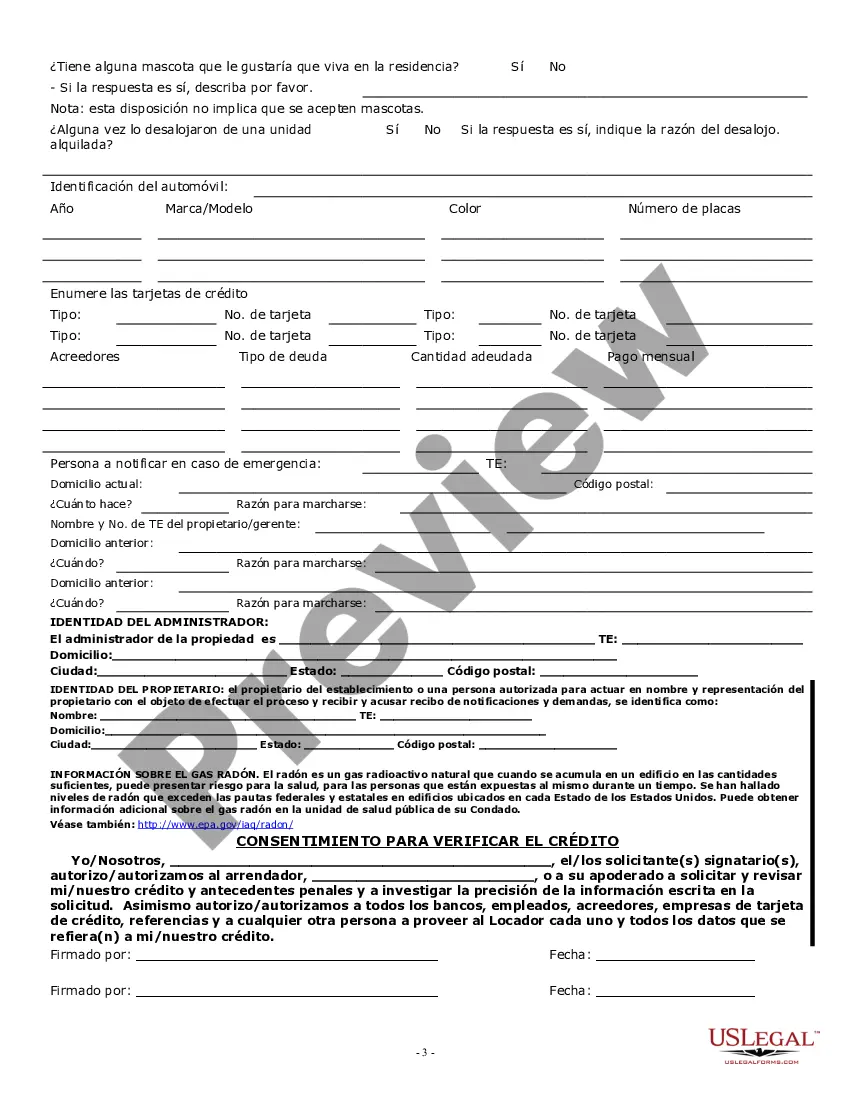
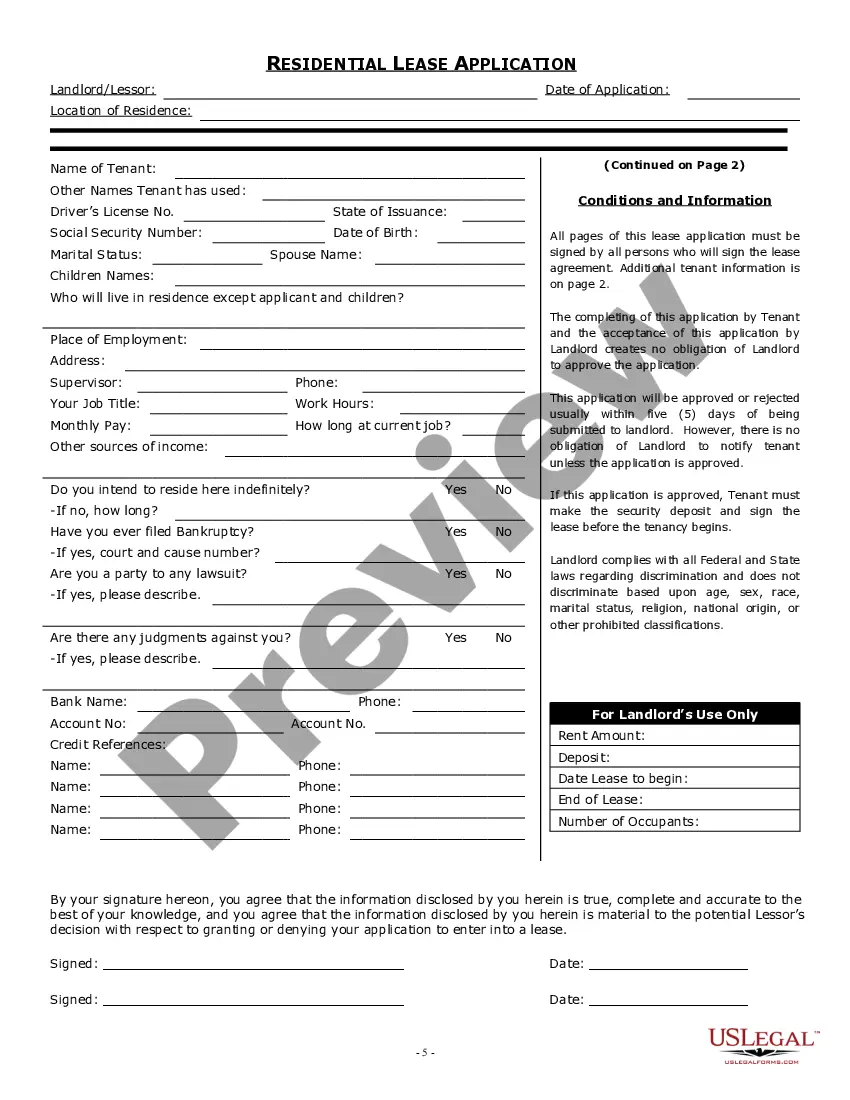
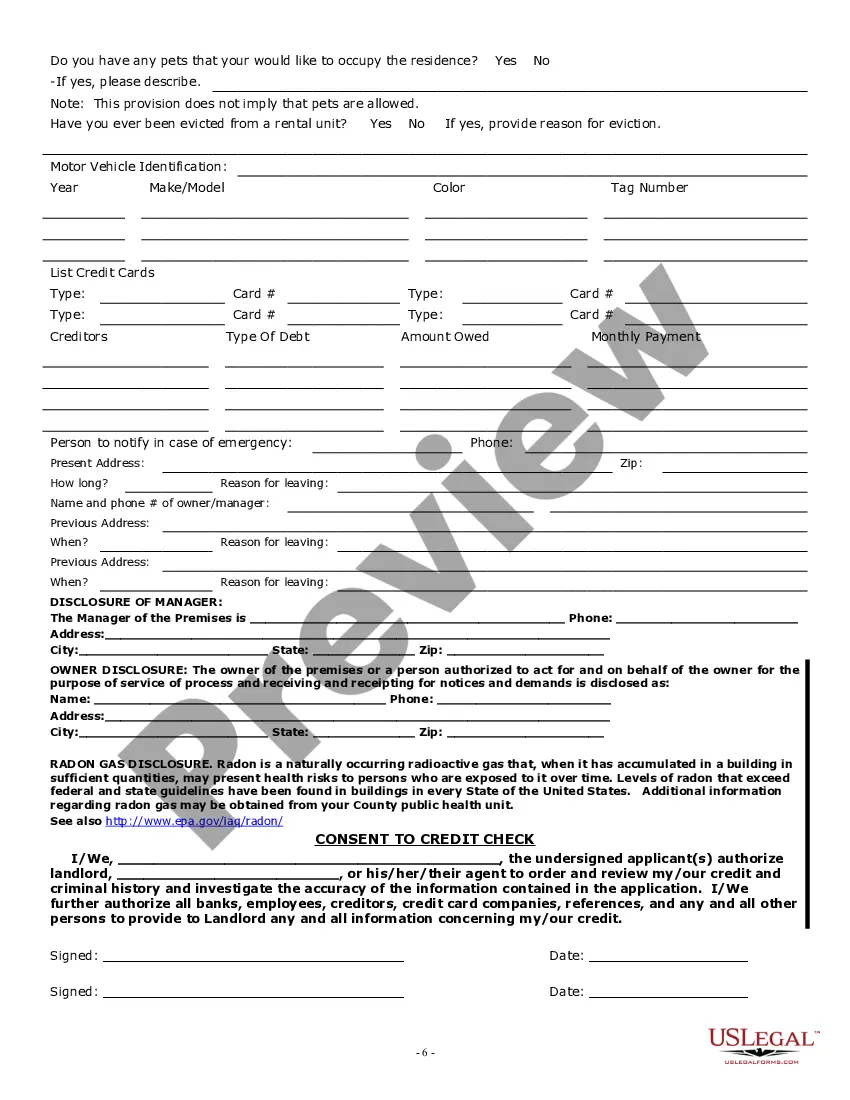
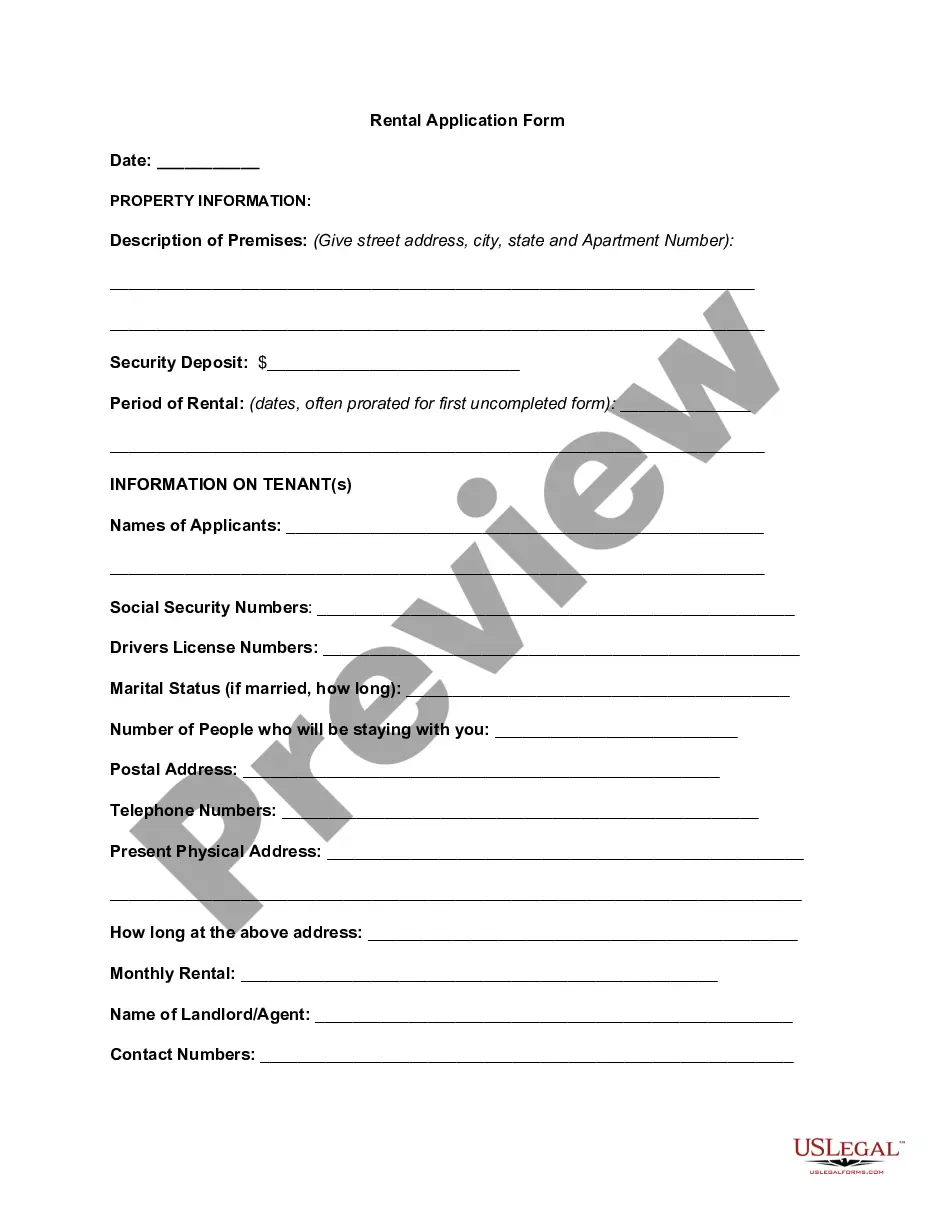
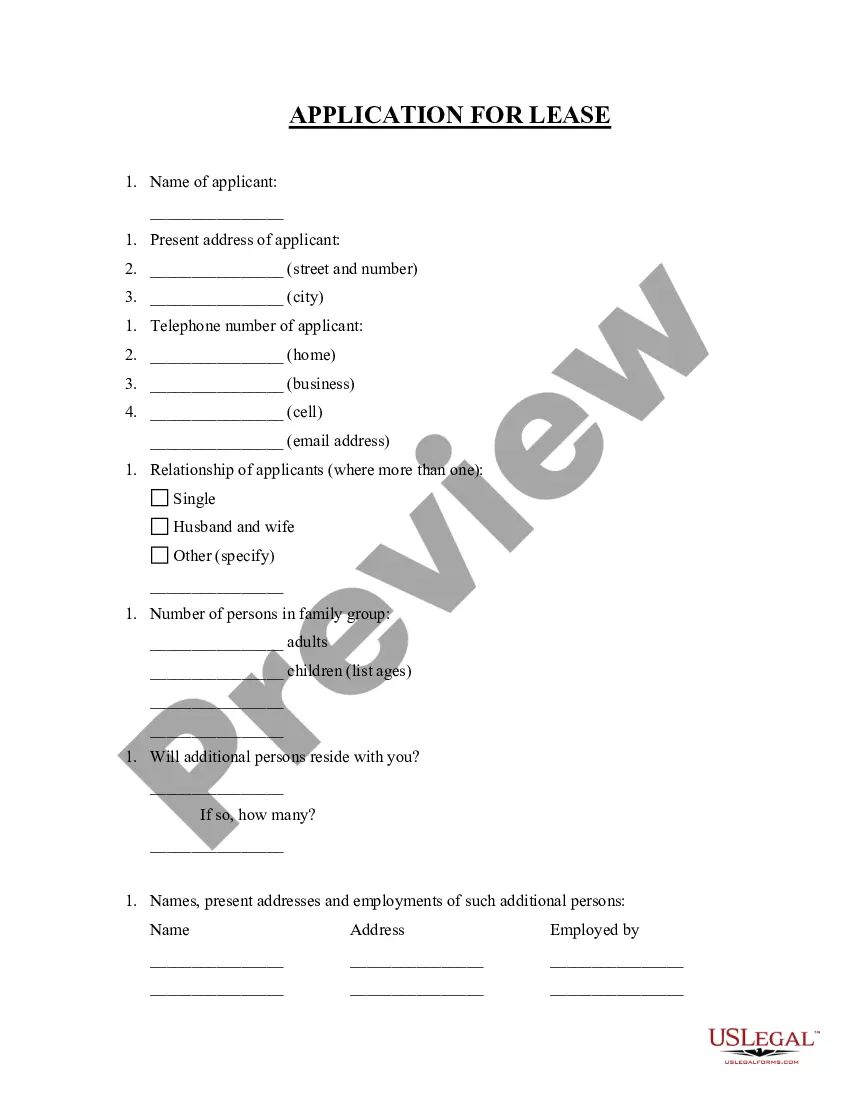
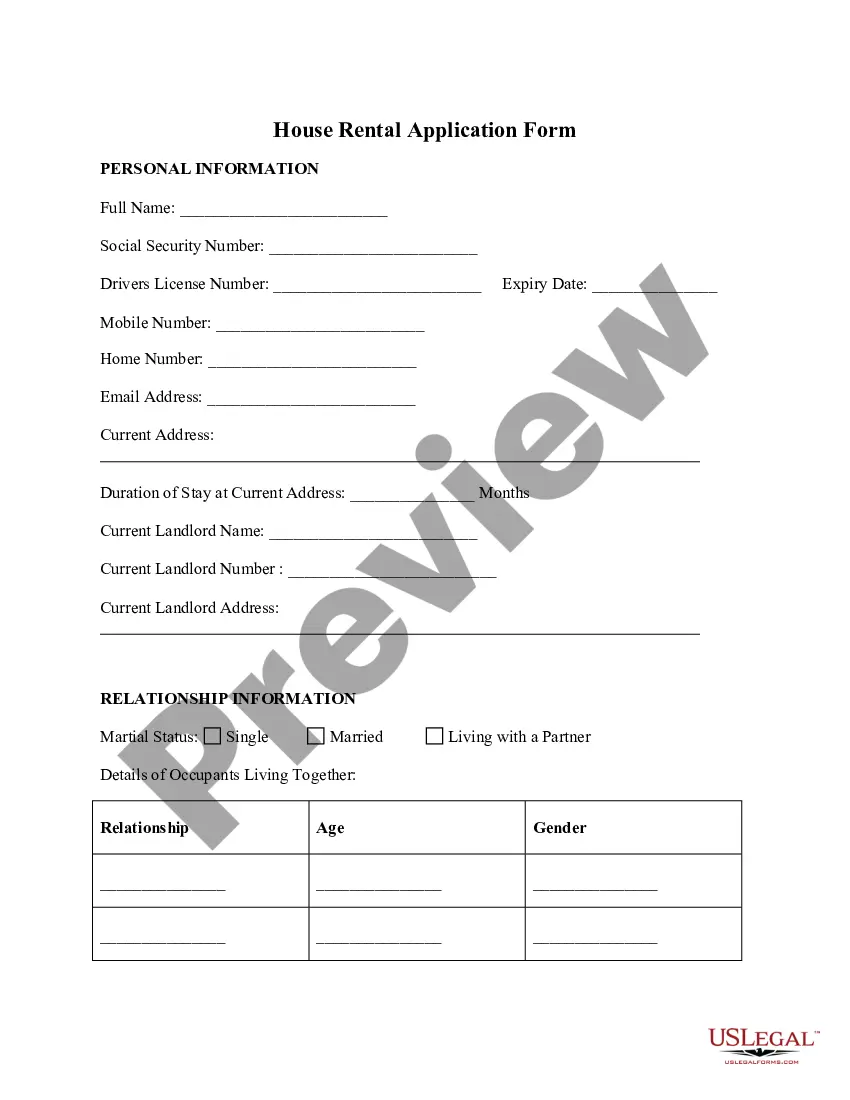
The Solicitud de Arrendamiento de Vivienda, or Residential Lease Application, is a document used by potential tenants to apply for rental housing. This form enables landlords to gather essential information about applicants to assess their suitability for tenancy. Unlike other rental documents, this application specifically requires disclosures and authorization for background checks to evaluate the applicant's financial and rental history.
Key parts of this document
- Basic tenant information, including name, contact details, and Social Security number.
- Employment details, including job title, income, and supervisor's contact information.
- Questions regarding past rental history, including evictions and reasons for leaving previous residences.
- Disclosure regarding radon gas and acknowledgment of associated risks.
- Authorization for the landlord to conduct credit and background checks.


Situations where this form applies
This form should be used when a potential tenant seeks to rent a residential property. It is typically completed and submitted to the landlord as part of the application process before a rental agreement is finalized. It is applicable in various scenarios, such as when relocating for work, transitioning to a new home, or looking for a change in living arrangements.
Who can use this document
This form is intended for:
- Individuals or families seeking to rent a home.
- Anyone who has identified a rental property and needs to apply formally.
- Tenants who may have prior rental issues such as evictions and need to provide full disclosure.
Steps to complete this form
- Provide personal information including your name, address, and contact details.
- List your employment details, including your employer's name, your job title, and monthly income.
- Answer questions regarding your rental history, including previous addresses and any evictions.
- Review and acknowledge the radon gas disclosure information.
- Sign the application to authorize credit and background checks.
Does this document require notarization?
This form does not typically require notarization to be legally valid. However, some jurisdictions or document types may still require it. US Legal Forms provides secure online notarization powered by Notarize, available 24/7 for added convenience.
Get your form ready online
Our built-in tools help you complete, sign, share, and store your documents in one place.
Make edits, fill in missing information, and update formatting in US Legal Forms—just like you would in MS Word.
Download a copy, print it, send it by email, or mail it via USPS—whatever works best for your next step.
Sign and collect signatures with our SignNow integration. Send to multiple recipients, set reminders, and more. Go Premium to unlock E-Sign.
If this form requires notarization, complete it online through a secure video call—no need to meet a notary in person or wait for an appointment.
We protect your documents and personal data by following strict security and privacy standards.

Make edits, fill in missing information, and update formatting in US Legal Forms—just like you would in MS Word.

Download a copy, print it, send it by email, or mail it via USPS—whatever works best for your next step.

Sign and collect signatures with our SignNow integration. Send to multiple recipients, set reminders, and more. Go Premium to unlock E-Sign.

If this form requires notarization, complete it online through a secure video call—no need to meet a notary in person or wait for an appointment.

We protect your documents and personal data by following strict security and privacy standards.
Avoid these common issues
- Failing to provide accurate or complete information about employment and income.
- Not disclosing all previous evictions if applicable.
- Neglecting to sign all required sections of the application.
- Overlooking the radon gas disclosure section.
Why use this form online
- Convenience of completing the application from home.
- Editability allows for easy corrections and updates prior to submission.
- Access to professionally drafted legal content ensuring reliability and compliance.
Legal use & context
- The completed application serves as a legal basis for landlords to evaluate potential tenants.
- Information provided is subject to verification, protecting landlords from fraudulent applications.
- Application approval can lead to lease signing, while failure to disclose accurate information can result in denial.
What to keep in mind
- The Residential Lease Application is essential for tenants seeking to rent a property.
- It includes necessary disclosures and authorizations for background and credit checks.
- Accurate and complete information increases your chances of rental approval.
Looking for another form?

Form popularity
FAQ
Getting accepted for a residential lease application can vary based on several factors, including credit score, income, and rental history. While some landlords have strict criteria, many are willing to work with applicants who can show a steady income and good references. To improve your chances, prepare all necessary documentation and be honest about your situation. The US Legal Forms platform can help streamline this process and give you the tools needed to enhance your application.
To apply for a residential lease application, most landlords prefer a credit score of 600 or higher. A good credit score demonstrates your reliability as a tenant and helps you secure a rental property more easily. However, some landlords may consider other factors, such as income and rental history, alongside your credit score. If you are unsure about your qualification, consider using the resources available at US Legal Forms for guidance.
When reviewing rental leases, be on the lookout for red flags, such as vague terms, unclear fees, or unusual clauses. It’s also essential to note if the landlord is unwilling to discuss or negotiate specific terms. Understanding the lease fully can help you avoid issues and ensure you make a well-informed decision.
The procedure for a lease generally starts with finding a suitable rental property and completing a residential lease application. Upon approval, you'll need to review and sign the lease agreement, paying any required deposits or fees. Finally, be sure to keep an open line of communication with your landlord for any ongoing needs or questions.
Yes, you can create your own lease agreement, but it is crucial to ensure that it complies with local laws. Utilizing a template for a residential lease application can help you include all necessary elements while following legal guidelines. Consider consulting a legal professional if you’re unsure about any specific terms.
To fill a residential lease, start by reviewing each section carefully to ensure you understand what is required. Input your personal information, specify the rental amount, and outline the lease duration. It’s also important to detail any special agreements or conditions you have discussed with the landlord.
Filling out a housing application involves providing your contact information, income details, and rental history. Be honest and precise in your answers, as inaccurate information can lead to complications in securing the property. Additionally, ensure that you check for any required documents that may need to accompany your application.
To fill in the lease agreement, read through the document thoroughly to understand its terms. Next, enter your relevant information, including your name, the landlord's name, and the property details. Ensure you define the duration of the lease and any specific conditions before signing to avoid misunderstandings later.
The application process for renting typically begins by submitting a residential lease application to the landlord or property manager. This application often includes personal information, employment details, and rental history. Once submitted, the landlord may conduct background and credit checks before deciding on your application.
To fill out a residential lease form, start by gathering the necessary information, such as your personal details and the property address. Be sure to provide accurate information about the lease term, rent amount, and payment due dates. Once you have all the details, ensure you read the entire document carefully, so you understand your rights and responsibilities.