Self-Employed Independent Contractor Employment Agreement - Hair Salon or Barber Shop
Overview of this form
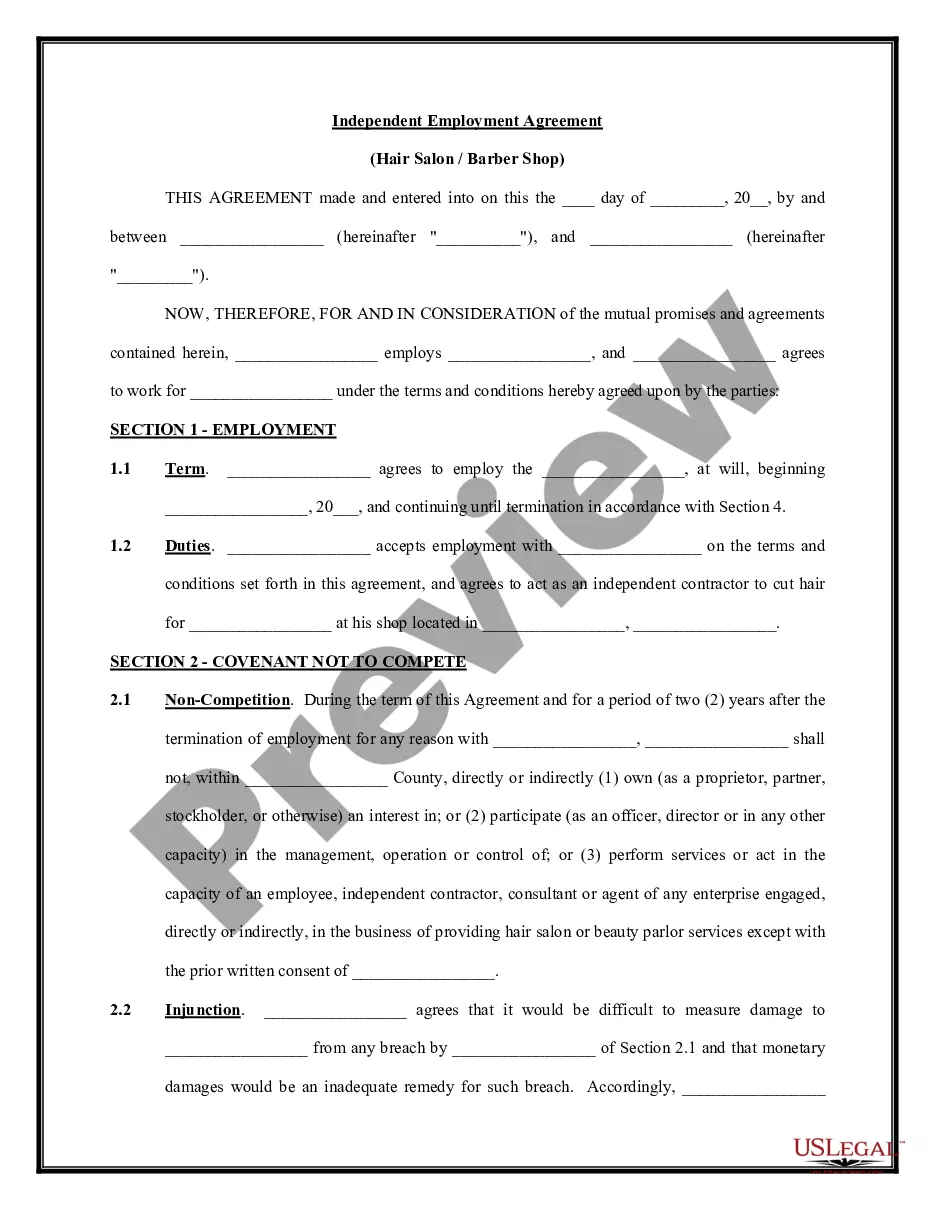
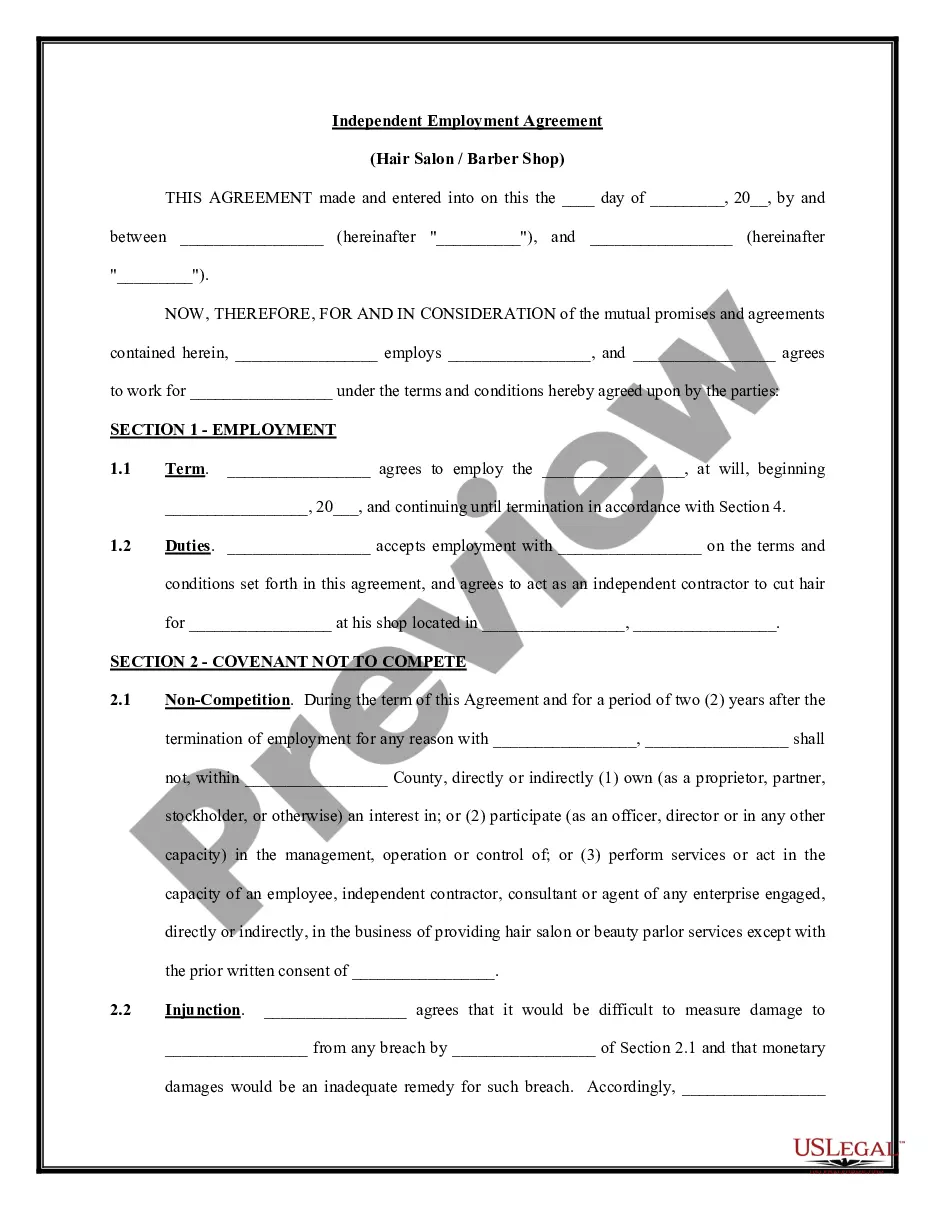
The Self-Employed Independent Contractor Employment Agreement for a Hair Salon or Barber Shop is a legal document that outlines the working relationship between a salon or barber shop owner and an independent contractor providing hair cutting services. This agreement differentiates itself from other employment contracts by emphasizing the independent contractor status of the worker, establishing specific terms for employment, compensation, and a non-compete clause to protect the business interests of the employer.
Key parts of this document
- Employment Terms: Details the duration of employment, which is at will, starting from a specified date.
- Duties: Specifies the services the independent contractor will provide, primarily hair cutting for the employer's business.
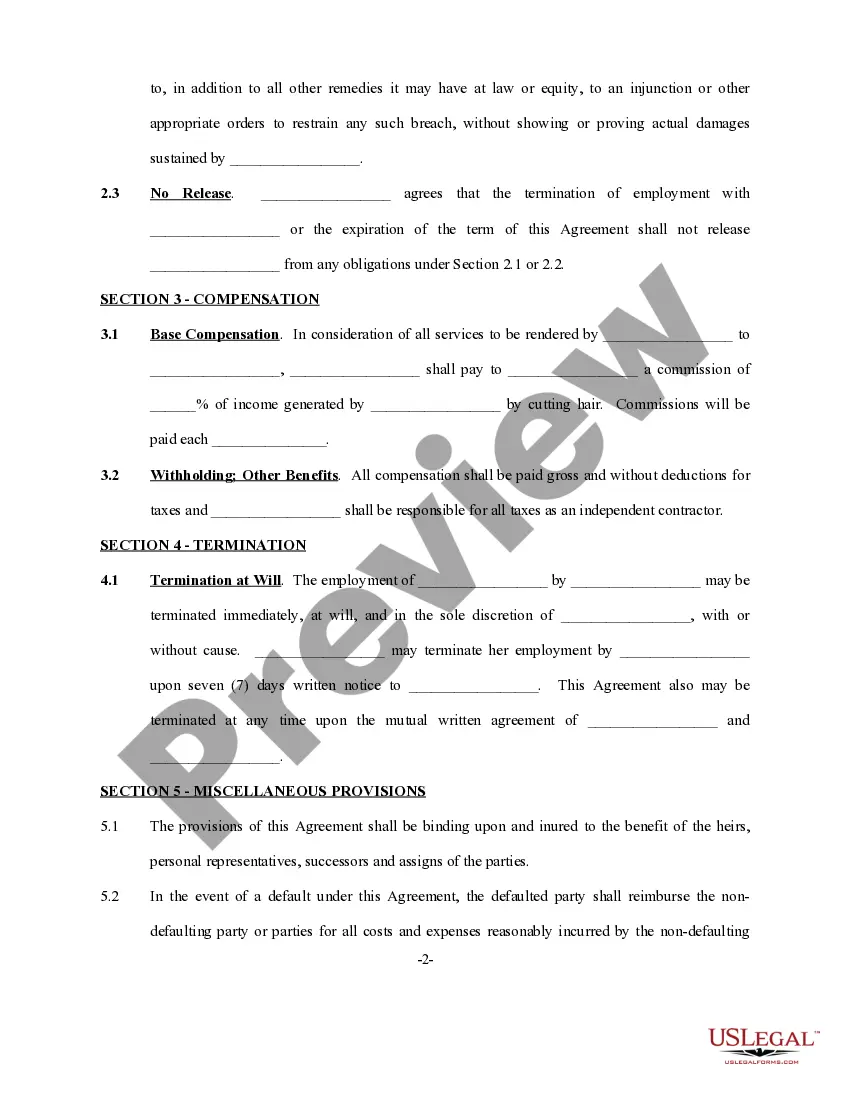
- Non-Competition Clause: Outlines restrictions on the contractor's ability to compete within a defined radius after the agreement ends.
- Compensation Structure: Describes how and when the contractor will be paid, emphasizing that all compensation is gross amount with tax responsibilities on the contractor.
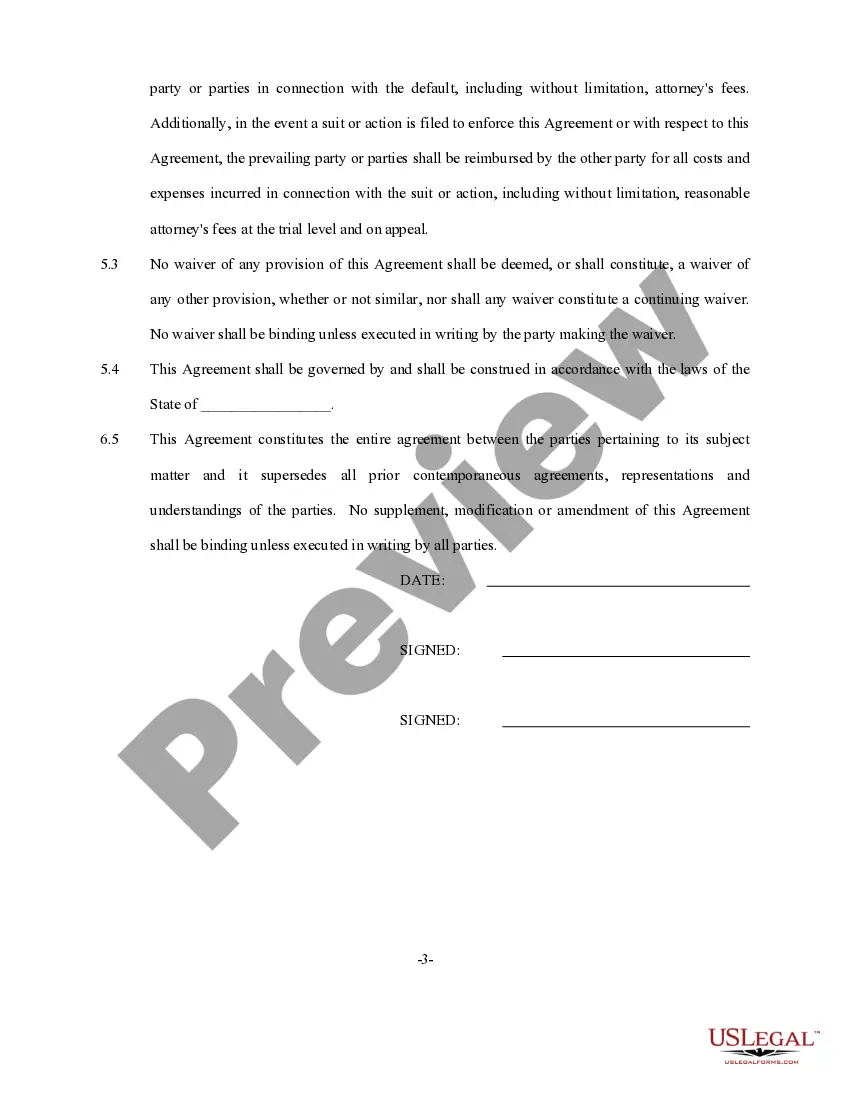
- Termination Conditions: Explains the terms under which either party can terminate the agreement, allowing for immediate termination at will.
When this form is needed
This form should be used when a hair salon or barber shop owner wants to hire an independent contractor to provide hair cutting or grooming services. It is particularly essential when there is a need to clarify the contractor's status, responsibilities, and compensation structure while also protecting the business from competition after the contractor departs.
Who should use this form
This form is intended for:
- Hair salon or barber shop owners who are hiring independent contractors.
- Independent contractors seeking to formalize their employment relationship with a salon or shop.
- Business owners looking to protect their client base and prevent competition from former contractors.
Completing this form step by step
- Identify the parties involved by entering the names of the employer and the independent contractor.
- Specify the start date of the employment and any other relevant dates.
- Clearly outline the duties and services to be provided by the contractor.
- Fill in the details of the compensation arrangement, including commission percentages and payment frequency.
- Include any other provisions relevant to the employment relationship, such as the non-compete agreement.
- Ensure both parties sign and date the agreement to finalize it.
Does this document require notarization?
In most cases, this form does not require notarization. However, some jurisdictions or signing circumstances might. US Legal Forms offers online notarization powered by Notarize, accessible 24/7 for a quick, remote process.
Get your form ready online
Our built-in tools help you complete, sign, share, and store your documents in one place.
Make edits, fill in missing information, and update formatting in US Legal Forms—just like you would in MS Word.
Download a copy, print it, send it by email, or mail it via USPS—whatever works best for your next step.
Sign and collect signatures with our SignNow integration. Send to multiple recipients, set reminders, and more. Go Premium to unlock E-Sign.
If this form requires notarization, complete it online through a secure video call—no need to meet a notary in person or wait for an appointment.
We protect your documents and personal data by following strict security and privacy standards.

Make edits, fill in missing information, and update formatting in US Legal Forms—just like you would in MS Word.

Download a copy, print it, send it by email, or mail it via USPS—whatever works best for your next step.

Sign and collect signatures with our SignNow integration. Send to multiple recipients, set reminders, and more. Go Premium to unlock E-Sign.

If this form requires notarization, complete it online through a secure video call—no need to meet a notary in person or wait for an appointment.

We protect your documents and personal data by following strict security and privacy standards.
Mistakes to watch out for
- Failing to specify the exact terms of the non-compete clause, leaving it open to interpretation.
- Not clearly defining the contractor's duties, which can lead to misunderstandings.
- Overlooking the need for both parties' signatures, which could invalidate the agreement.
Benefits of using this form online
- Convenience: Easily download and customize the form from anywhere.
- Editability: Adjust the terms of the agreement to fit your specific needs without hassle.
- Reliability: Forms are drafted by licensed attorneys, ensuring legal soundness and compliance.
Legal use & context
- This form clarifies the contractor's role, reducing the risk of misclassification as an employee.
- Non-competition clauses are enforceable in many jurisdictions but may have limitations based on reasonableness in scope and duration.
Main things to remember
- The agreement specifies the terms between the salon/barber shop owner and the independent contractor.
- The non-competition clause protects the business from potential competition.
- Independent contractors are responsible for their own taxes, as this agreement stipulates gross payments without deductions.
Looking for another form?





Form popularity
FAQ
Terms. This is the first section of any agreement or contract and states the names and locations of the parties involved. Responsibilities & Deliverables. Payment-Related Details. Confidentiality Clause. Contract Termination. Choice of Law.
The earnings of a person who is working as an independent contractor are subject to Self-Employment Tax. If you are an independent contractor, you are self-employed.You are not an independent contractor if you perform services that can be controlled by an employer (what will be done and how it will be done).
They have a dress code to follow, behavioral or procedural policies are in place, they need to arrive on time and their prices are determined by the salon owner. In this structure stylists are paid their agreed upon commission split throughout the year and then are handed a 1099 to file on their own.
If you run your own hair salon, you already know you're self-employed. But if you're working at someone else's establishment, your status as either an employee or an independent contractor may not be so clear.If you're self-employed you'll need to pay self-employment tax, and you might need to pay taxes quarterly.
Under the new test for independent contractor vs employee status in California, it is illegal to classify a barber or hair stylist as an independent contractor unless the salon can prove that: (1) the hair stylist is free the hair salon's control; (2) the job of cutting or styling hair falls outside the salon's usual
Under the new test for independent contractor vs employee status in California, it is illegal to classify a barber or hair stylist as an independent contractor unless the salon can prove that: (1) the hair stylist is free the hair salon's control; (2) the job of cutting or styling hair falls outside the salon's usual