Model Temporary Agency - Client Agreement
Understanding this form
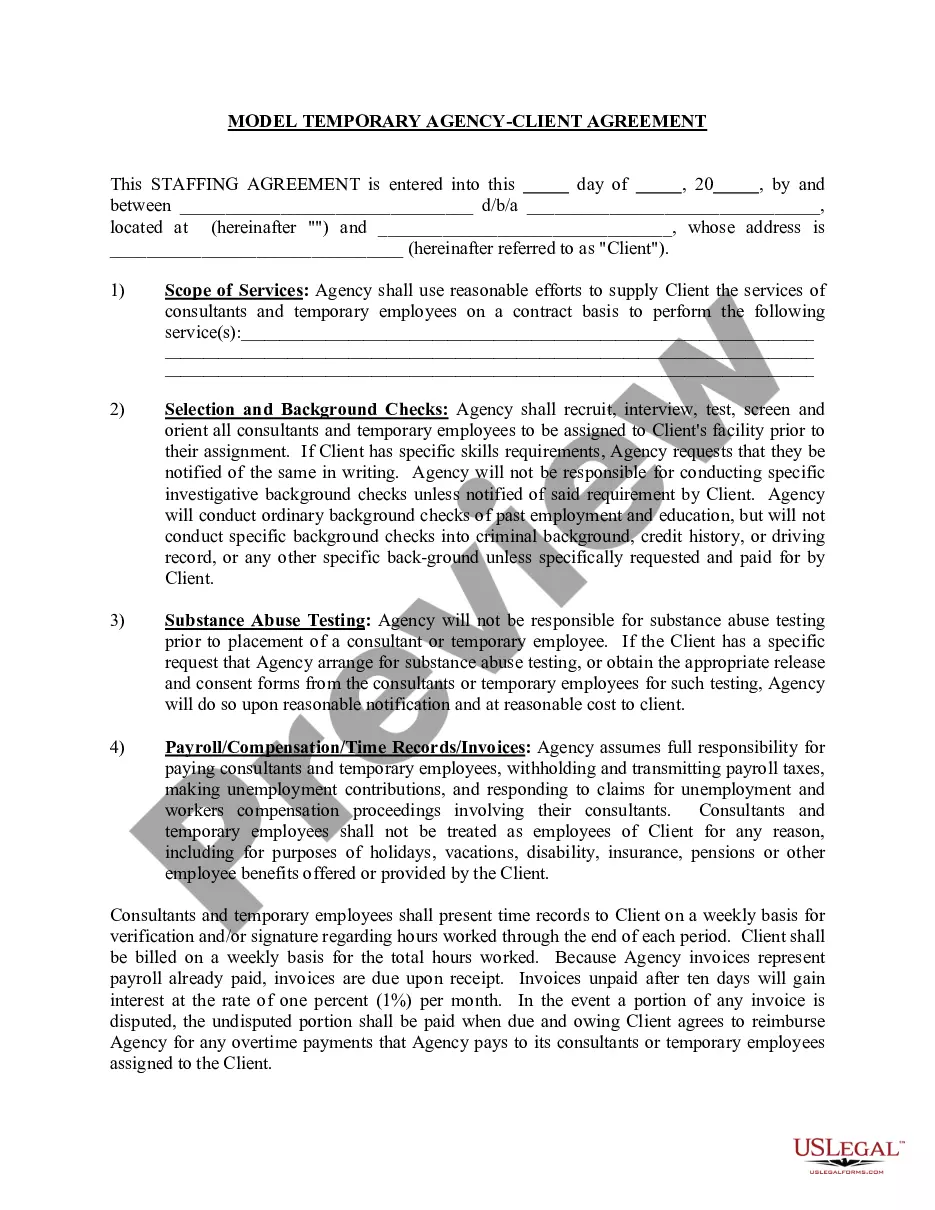
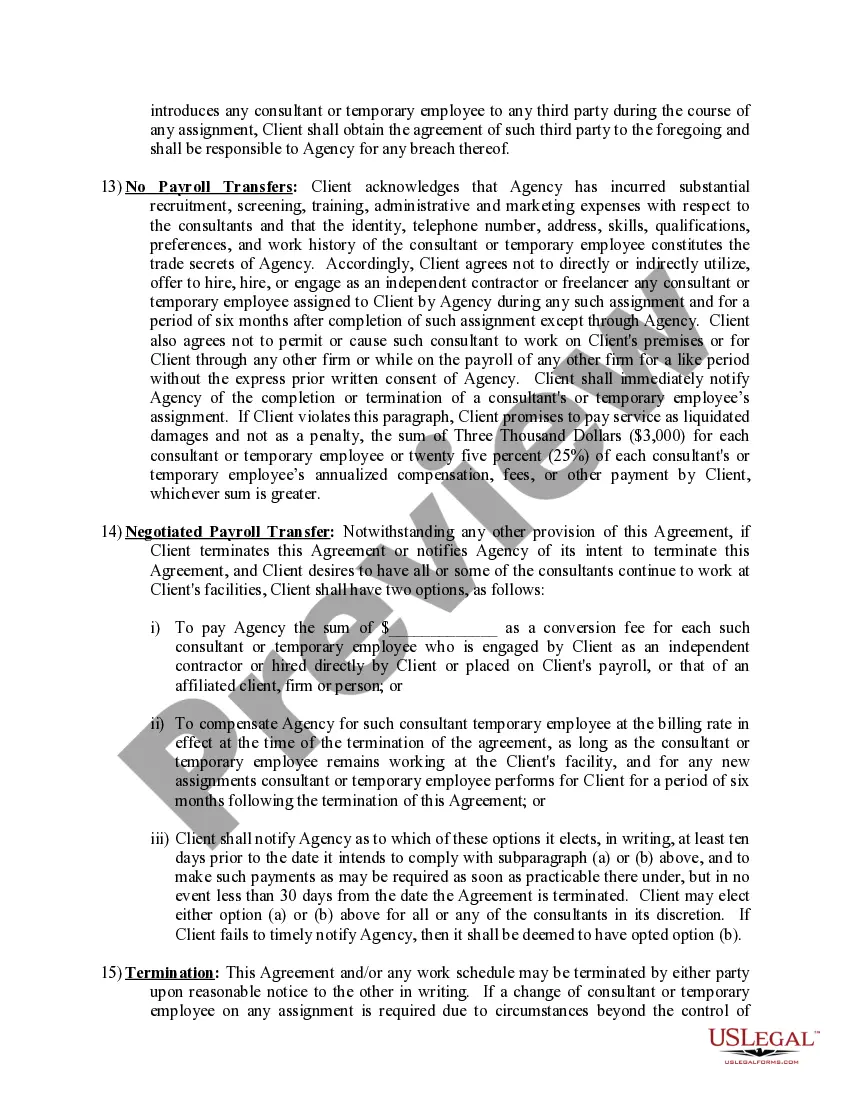
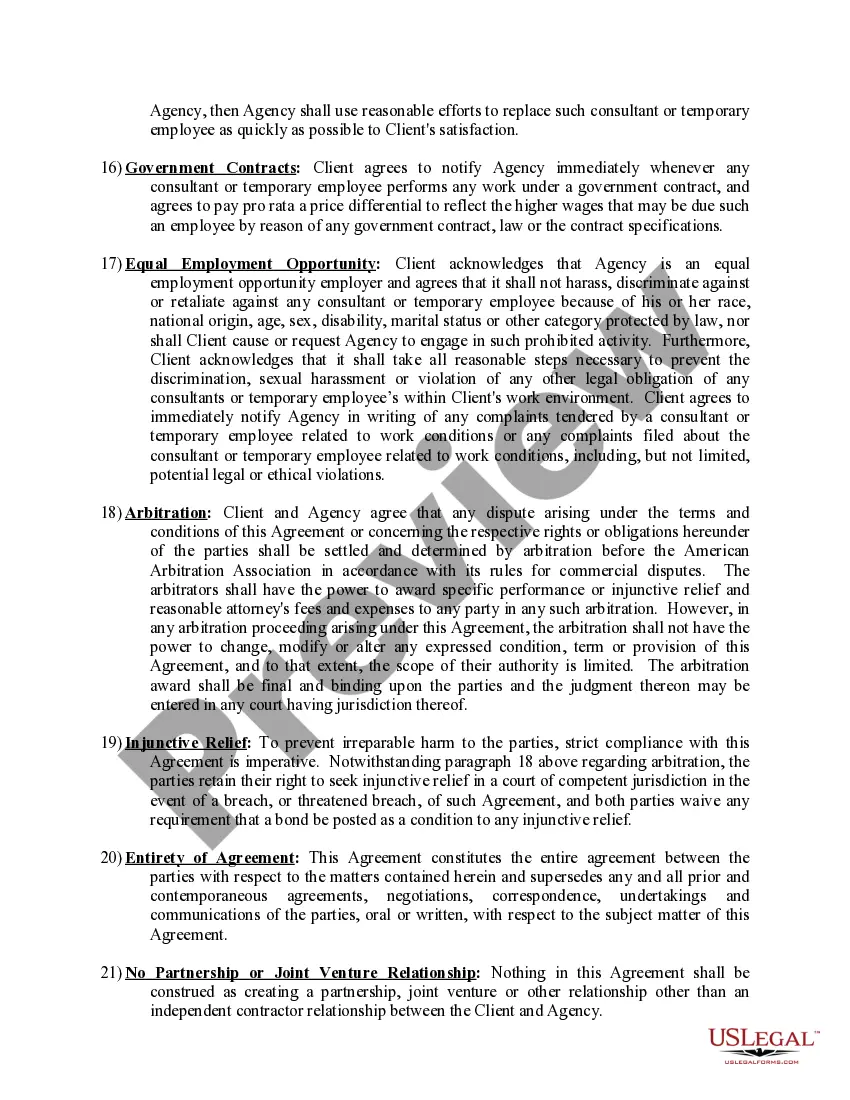
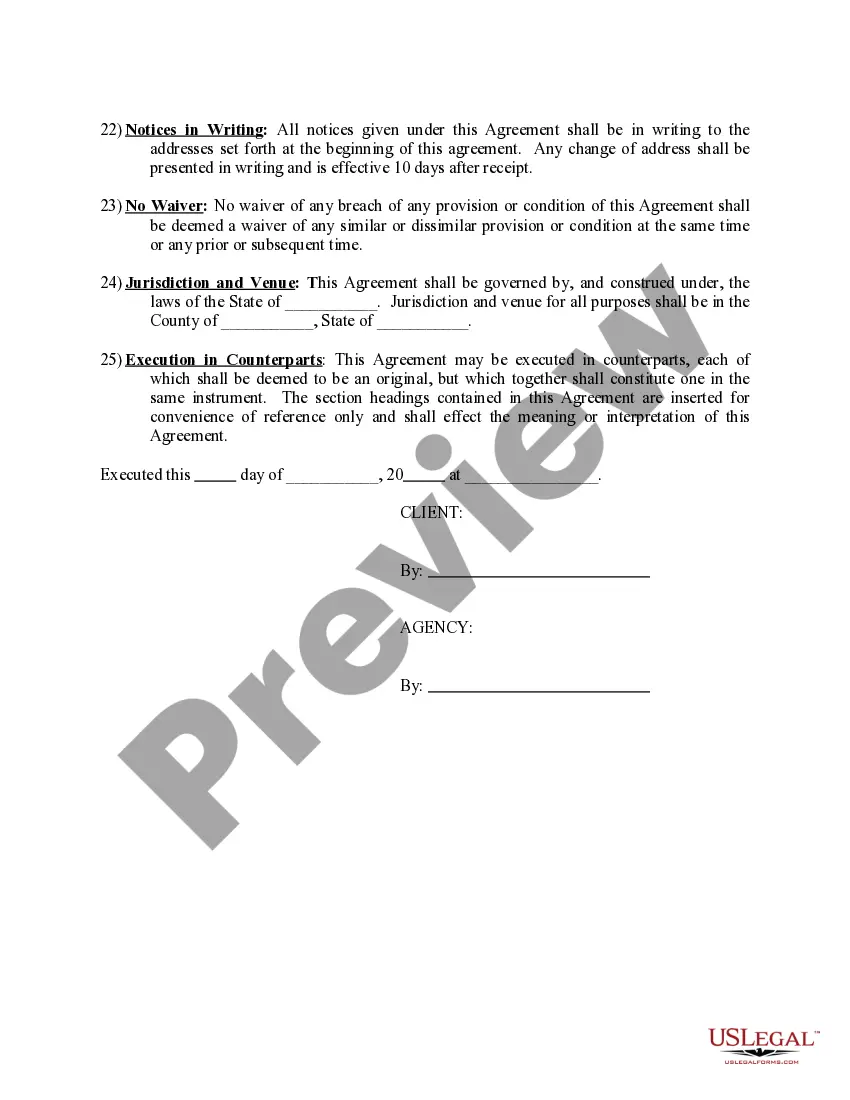
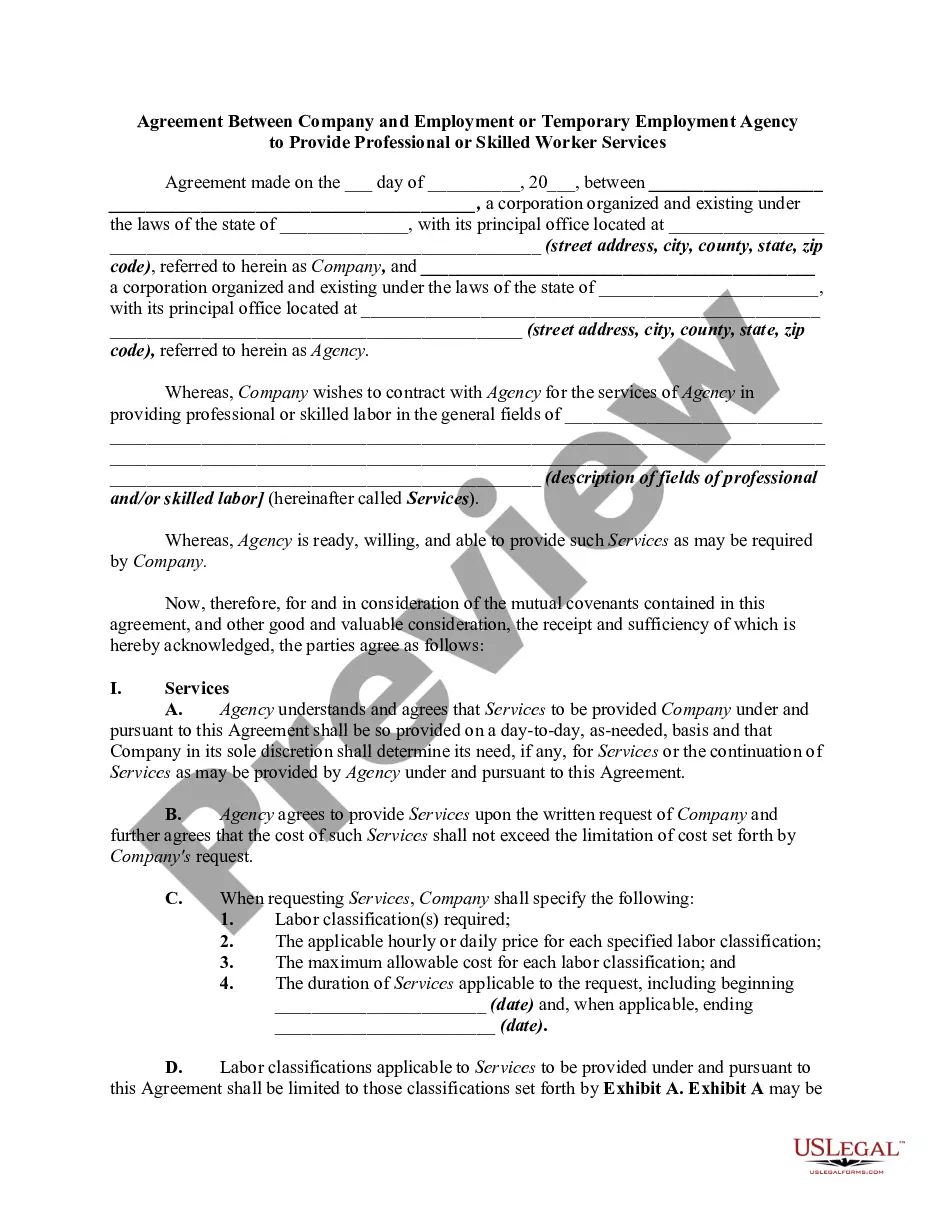
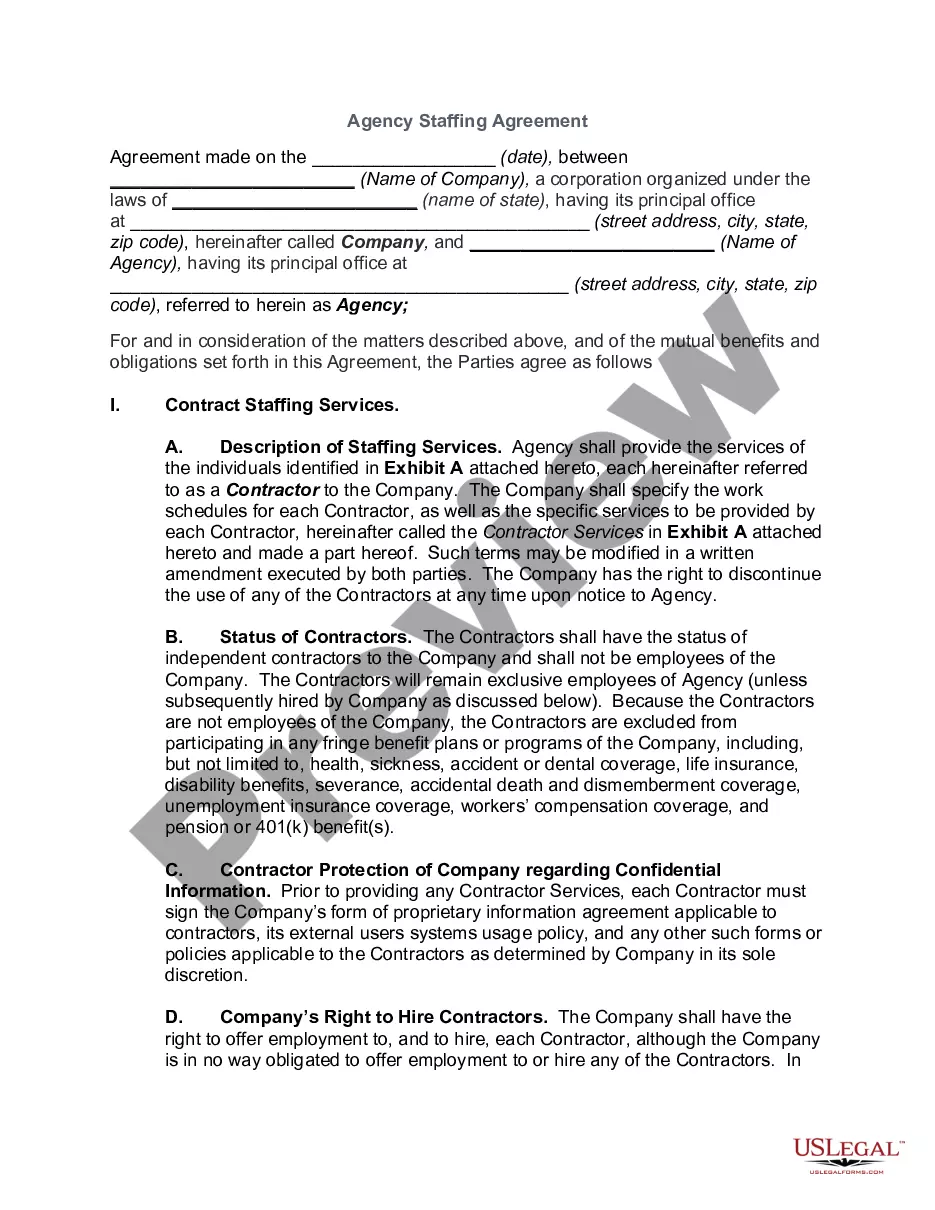
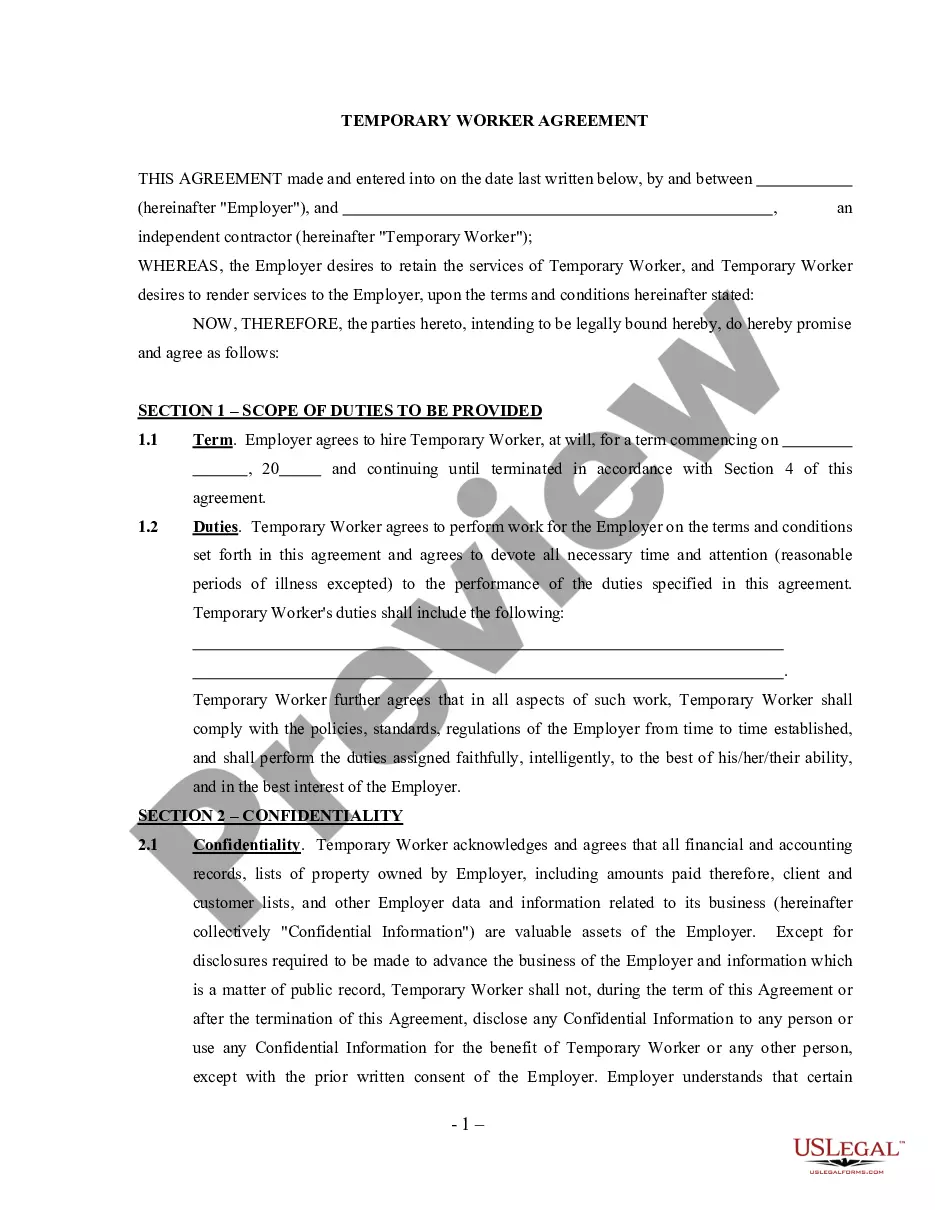
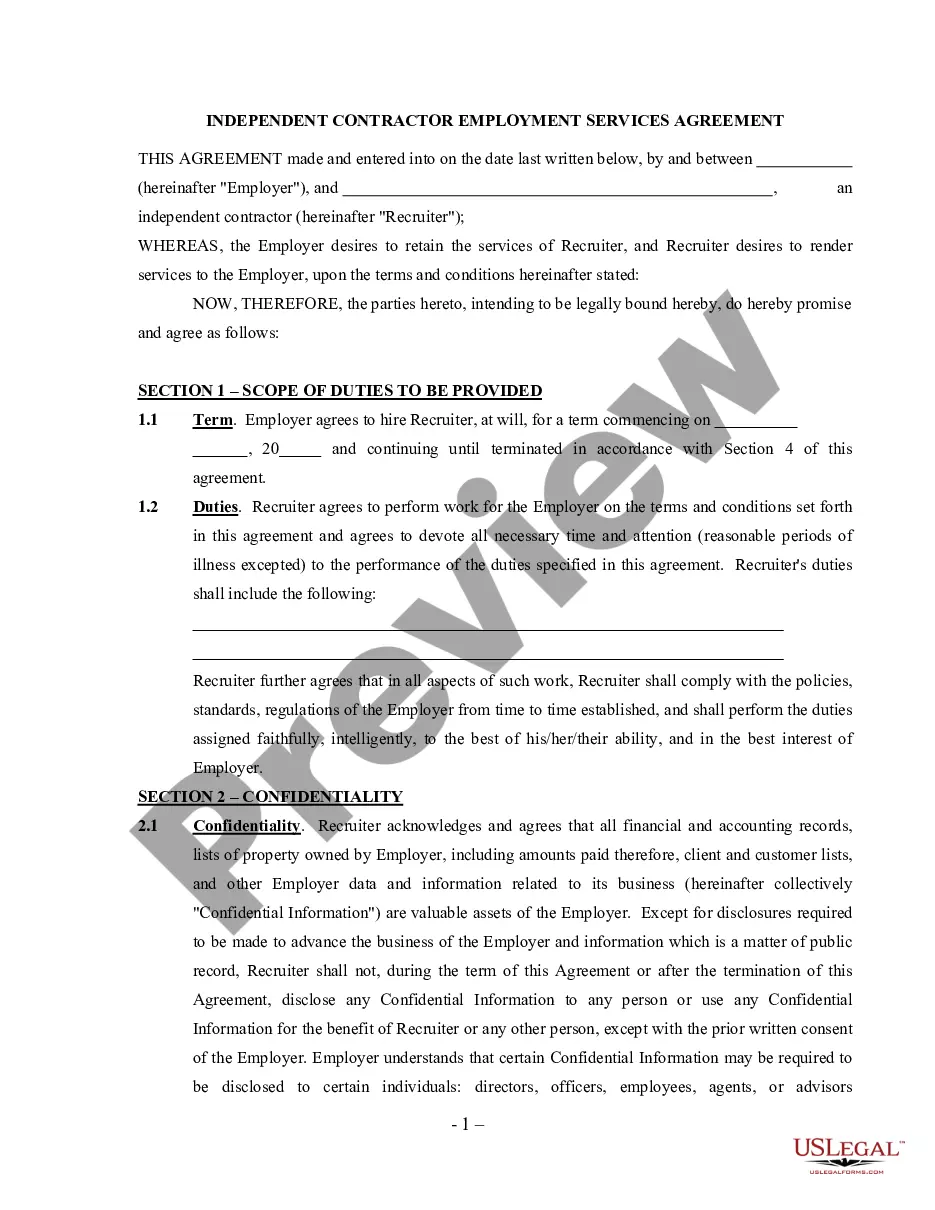
The Model Temporary Agency - Client Agreement is a legal document that outlines the relationship between a temporary staffing agency and a client requesting temporary employees or consultants. This form is essential for clarifying the terms of service, responsibilities, and liabilities of both parties, ensuring compliance with employment laws and protecting the rights of each entity.
Form components explained
- Scope of services provided by the agency.
- Background checks and substance abuse testing requirements.
- Payroll responsibilities and compensation details.
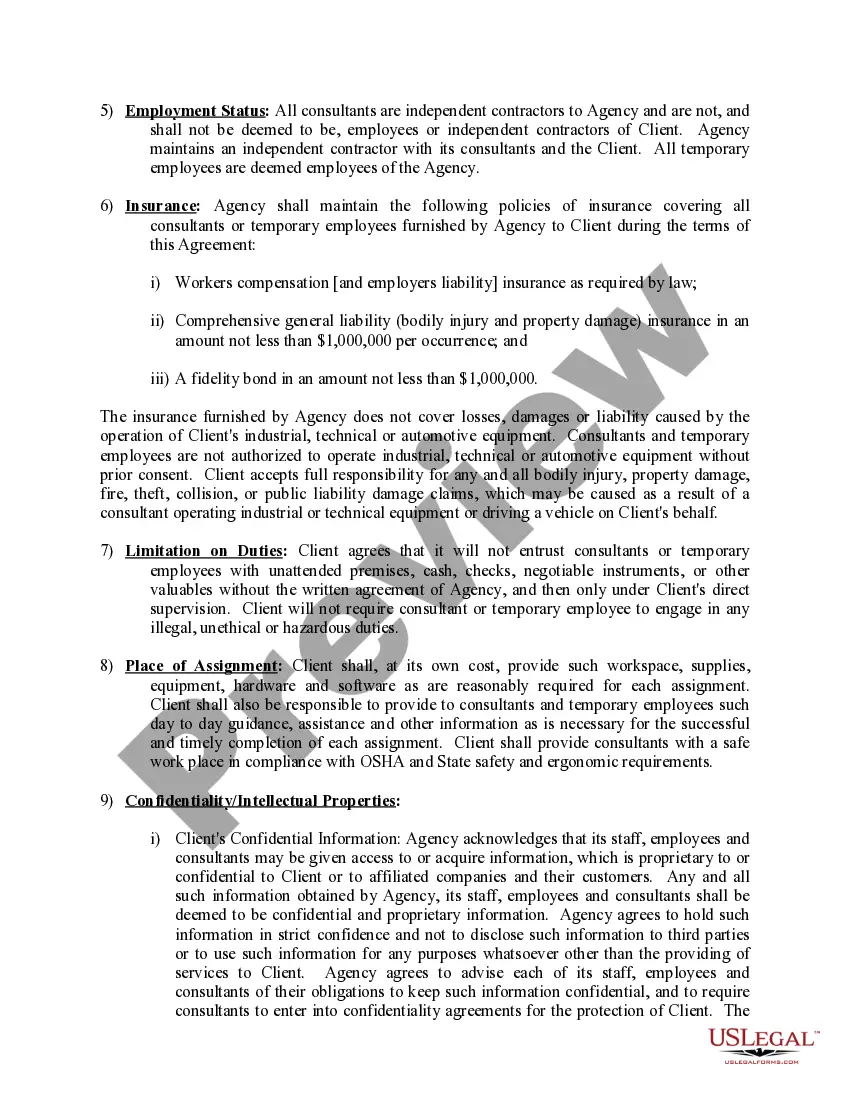
- Insurance obligations of the agency.
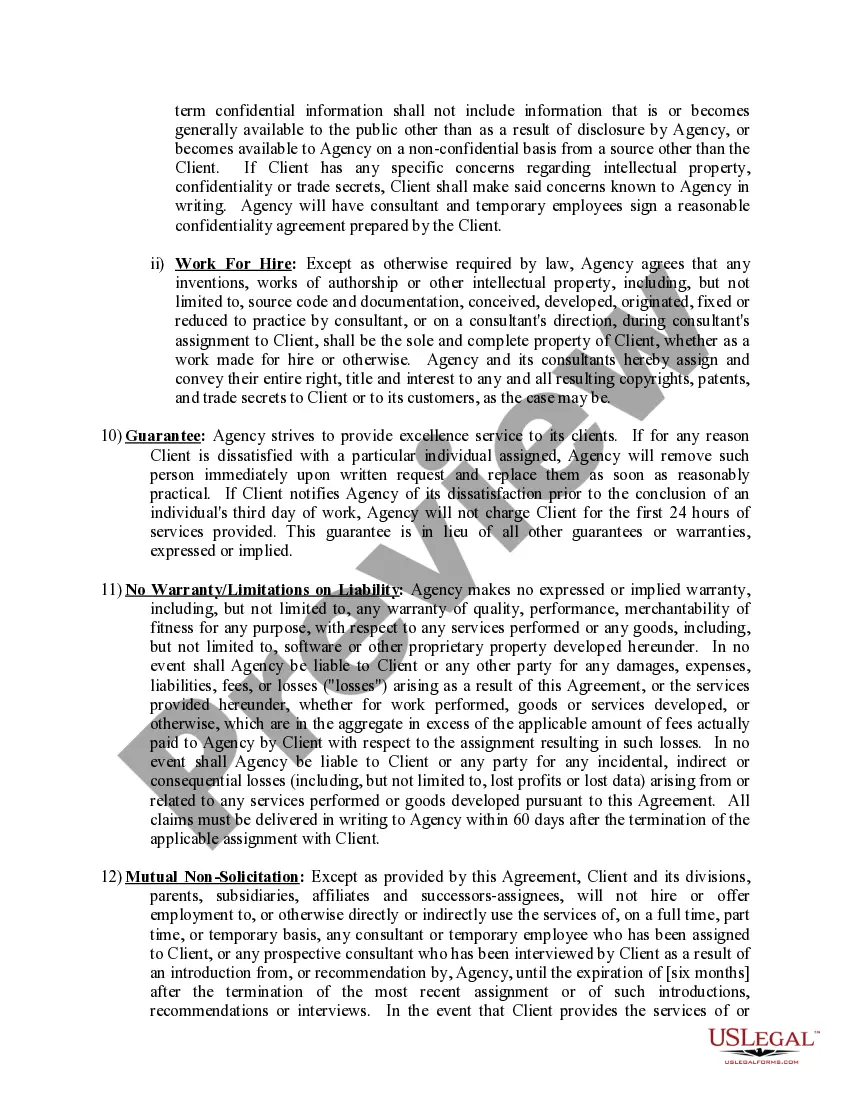
- Confidentiality and intellectual property protections.
- Termination and non-solicitation clauses.
When to use this form
This agreement should be used when a business or organization engages a temporary staffing agency to supply temporary employees or consultants. It is suitable for any employer, regardless of size, seeking to define the working relationship, set compensation terms, and establish legal obligations related to employment conditions.
Who should use this form
- Employers seeking to hire temporary employees or consultants.
- Human resource managers responsible for workforce planning.
- Business owners looking to clarify terms with staffing agencies.
- Legal representatives overseeing employment agreements.
Steps to complete this form
- Identify the parties involved: include the agency name and client's information.
- Specify the scope of services needed in the provided blank sections.
- Outline any specific skills or background check requirements.
- Detail compensation agreements, including billing rates and payment terms.
- Review sections on confidentiality and liability before signing.
Is notarization required?
This form does not typically require notarization unless specified by local law. It can be signed by both parties to create a binding agreement without the need for a notary.
Get your form ready online
Our built-in tools help you complete, sign, share, and store your documents in one place.
Make edits, fill in missing information, and update formatting in US Legal Forms—just like you would in MS Word.
Download a copy, print it, send it by email, or mail it via USPS—whatever works best for your next step.
Sign and collect signatures with our SignNow integration. Send to multiple recipients, set reminders, and more. Go Premium to unlock E-Sign.
If this form requires notarization, complete it online through a secure video call—no need to meet a notary in person or wait for an appointment.
We protect your documents and personal data by following strict security and privacy standards.

Make edits, fill in missing information, and update formatting in US Legal Forms—just like you would in MS Word.

Download a copy, print it, send it by email, or mail it via USPS—whatever works best for your next step.

Sign and collect signatures with our SignNow integration. Send to multiple recipients, set reminders, and more. Go Premium to unlock E-Sign.

If this form requires notarization, complete it online through a secure video call—no need to meet a notary in person or wait for an appointment.

We protect your documents and personal data by following strict security and privacy standards.
Common mistakes
- Failing to define specific requirements for temporary employees or consultants.
- Not clarifying payroll responsibilities and invoice terms.
- Overlooking confidentiality clauses regarding proprietary information.
- Neglecting to discuss termination conditions, leading to disputes later.
Benefits of using this form online
- Quick access to a professionally drafted legal agreement.
- Easy customization to meet your specific needs and circumstances.
- Secure storage and the ability to retrieve documents when needed.
- Streamlined process saves time compared to manual drafting.
Legal use & context
- This agreement is enforceable as a contract between two independent partiesâ the agency and the client.
- It helps delineate responsibilities and liabilities, making it crucial for legal protection.
- The agreement should be adhered to strictly to avoid disputes over terms and enforcement.
Summary of main points
- The Model Temporary Agency - Client Agreement clarifies the responsibilities between a staffing agency and its clients.
- Defining terms like compensation and duties is essential for a smooth working relationship.
- Employers must ensure they follow state-specific legal requirements when using this form.
Looking for another form?




Form popularity
FAQ
Grant. Financial assistance for a specific purpose or specific project without expectation of any tangible deliverables other than a final report. Cooperative Agreement. Contract. Memorandum of Understanding. Non-Disclosure Agreement. Teaming Agreement. Material Transfer Agreement. IDIQ/Master Agreement.
Include Contact Information of Both Parties. Specify Project Terms and Scope. Establish Payment Terms. Set the Schedule. Decide What Happens If a Contract Is Terminated. Determine Who Owns Final Copyrights.
Services: Clearly outline the scope of services and how they will be provided. Payment: Set out the fees that are payable by the client, how these fees are calculated, the required payment methods, key payment dates, and any consequences for failure to make the payments as required.
All parties must agree about an offer made by one party and accepted by the other. Something of value must be exchanged for something else of value. This can include goods, cash, services, or a pledge to exchange these items.
Begin your letter by clearly indicating the parties involved in the agreement. Remember to include the date the agreement takes effect and title of the venture. Clearly state the reason for your agreement in your first paragraph giving description of all details such as stake holder ratio, payment period etc.
A description of the parties involved in the agreement. A description of the services to be performed. A description of fees and payment schedules. The effective date of the contract, when work will begin, and the terms under which it can be terminated. Include a place for signatures.
Fixed price contracts. With a fixed price contract the buyer (that's you) doesn't take on much risk. Cost-reimbursable contracts. With a cost-reimbursable contract you pay the vendor for the actual cost of the work. Time and materials contracts.
A client agreement is a contract that you make with a customer. In it, you explain the terms and conditions under which you will provide your service to them. Previously, client agreements commonly took the form of a service agreement signed by both parties.