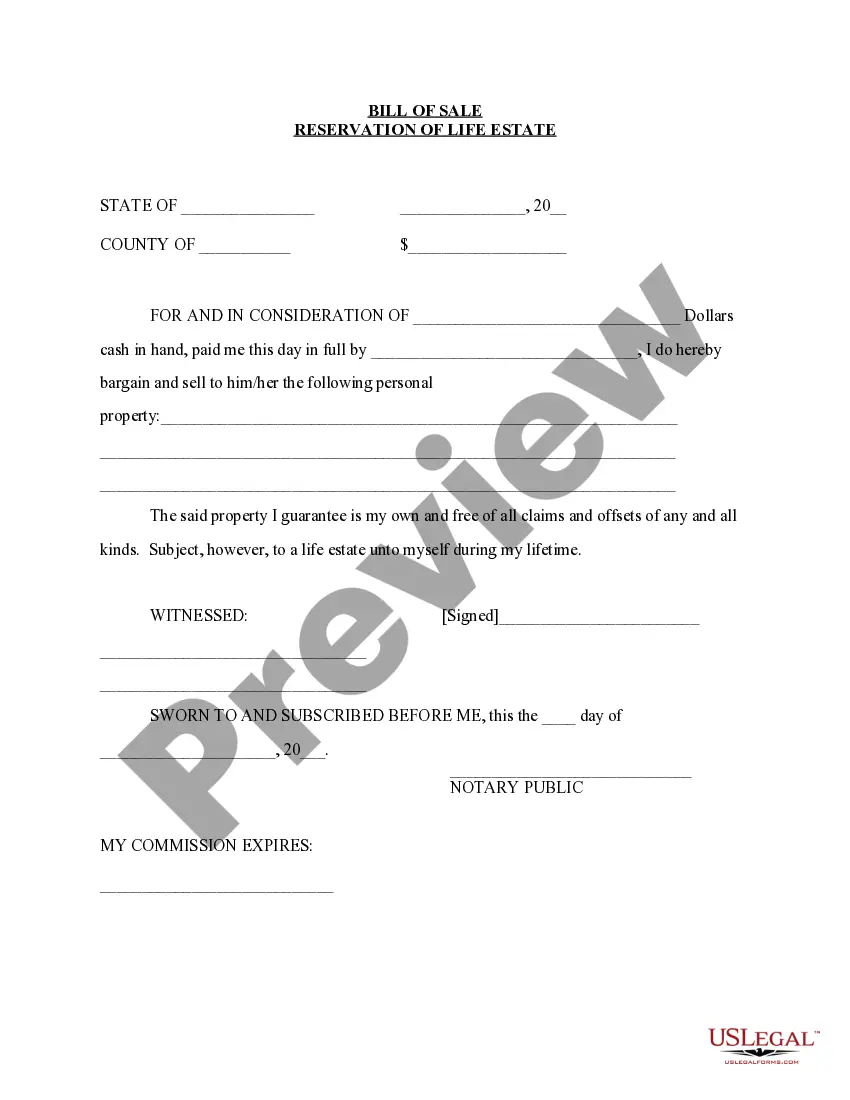
Bill of Sale of Personal Property - Reservation of Life Estate in Seller
About this form
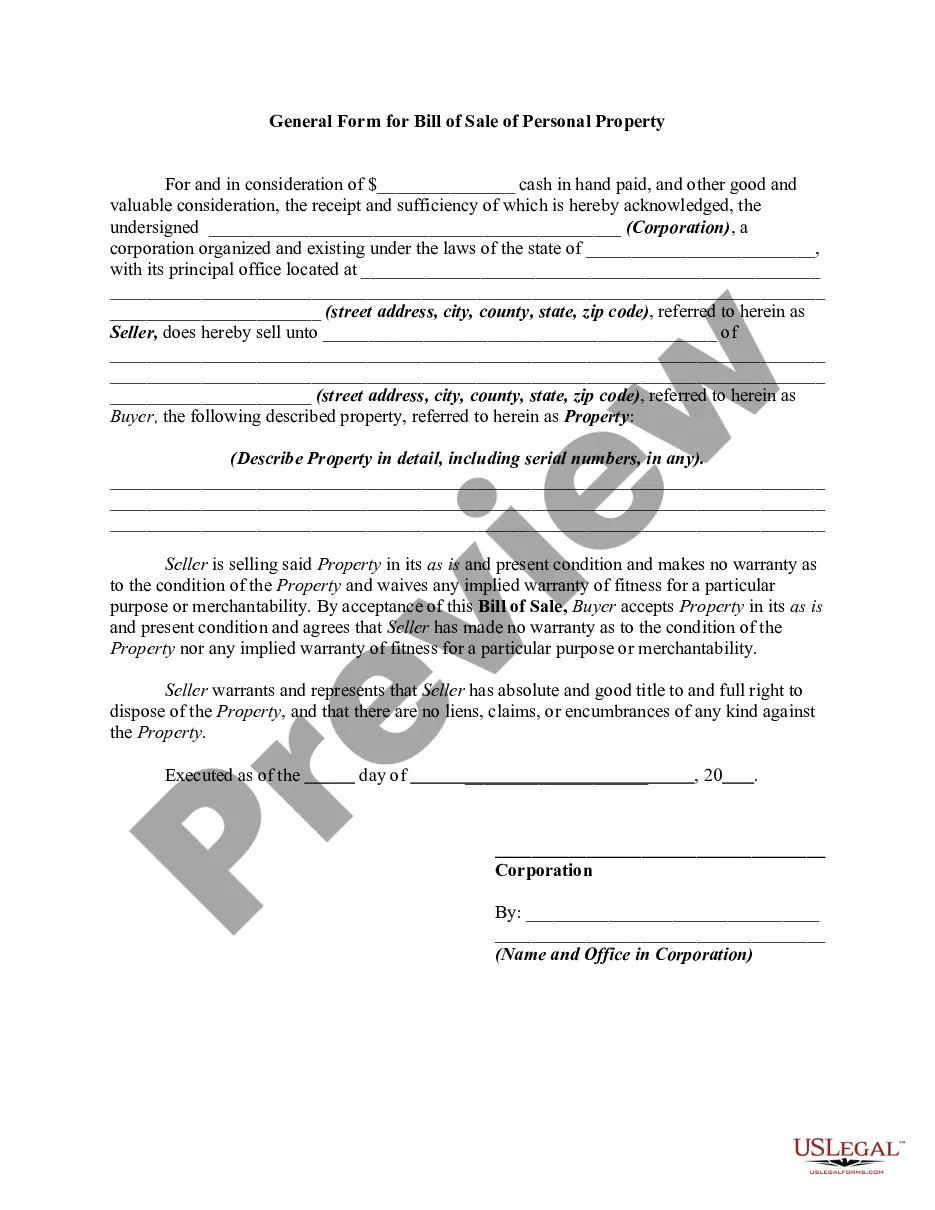
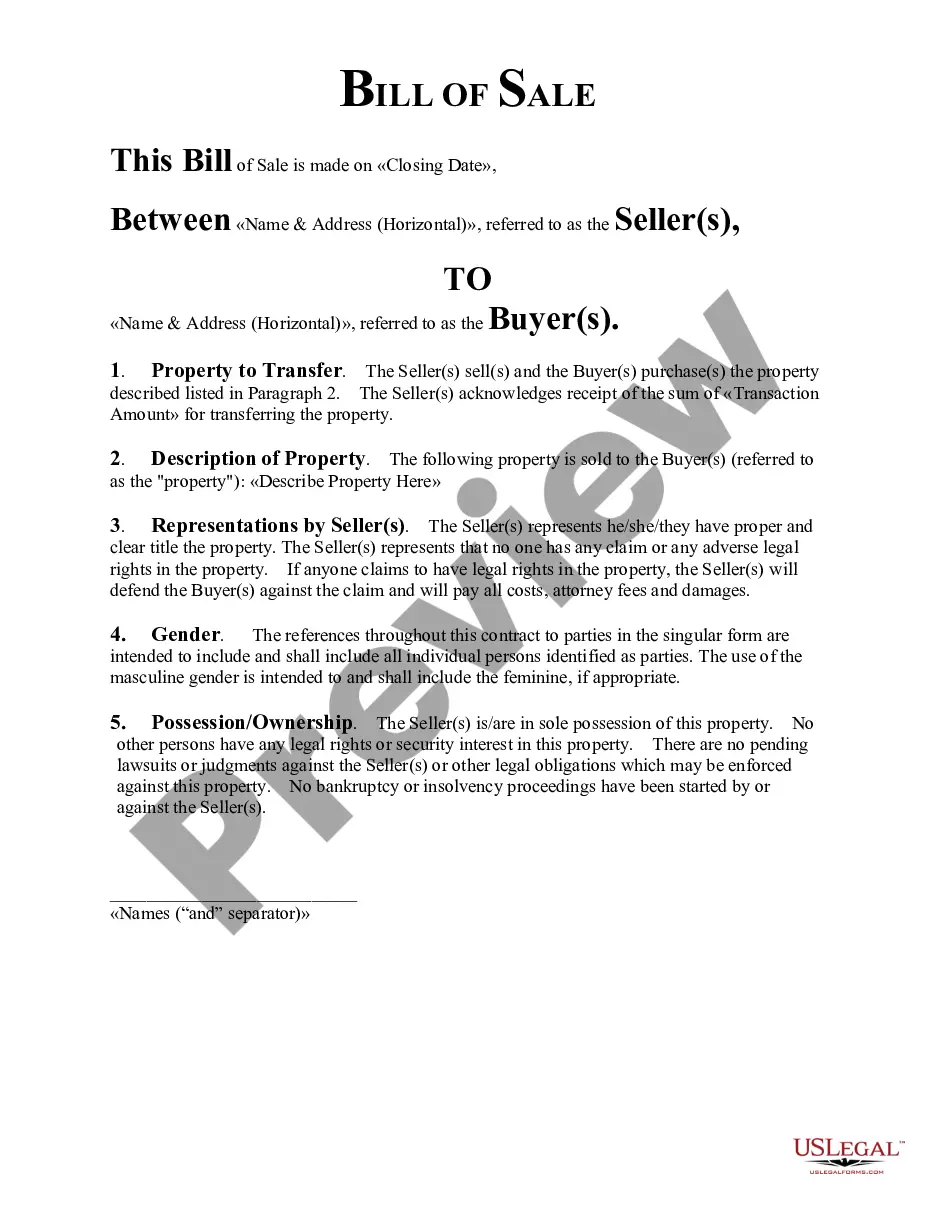
The Bill of Sale of Personal Property - Reservation of Life Estate in Seller is a legal document used to transfer ownership of personal property while reserving a life estate for the seller. This means that the seller retains the right to use and benefit from the property during their lifetime. This form is essential for ensuring clarity around property rights and provides legal protection for both buyer and seller, distinguishing it from standard bills of sale that do not include a reservation of life estate.
Form components explained
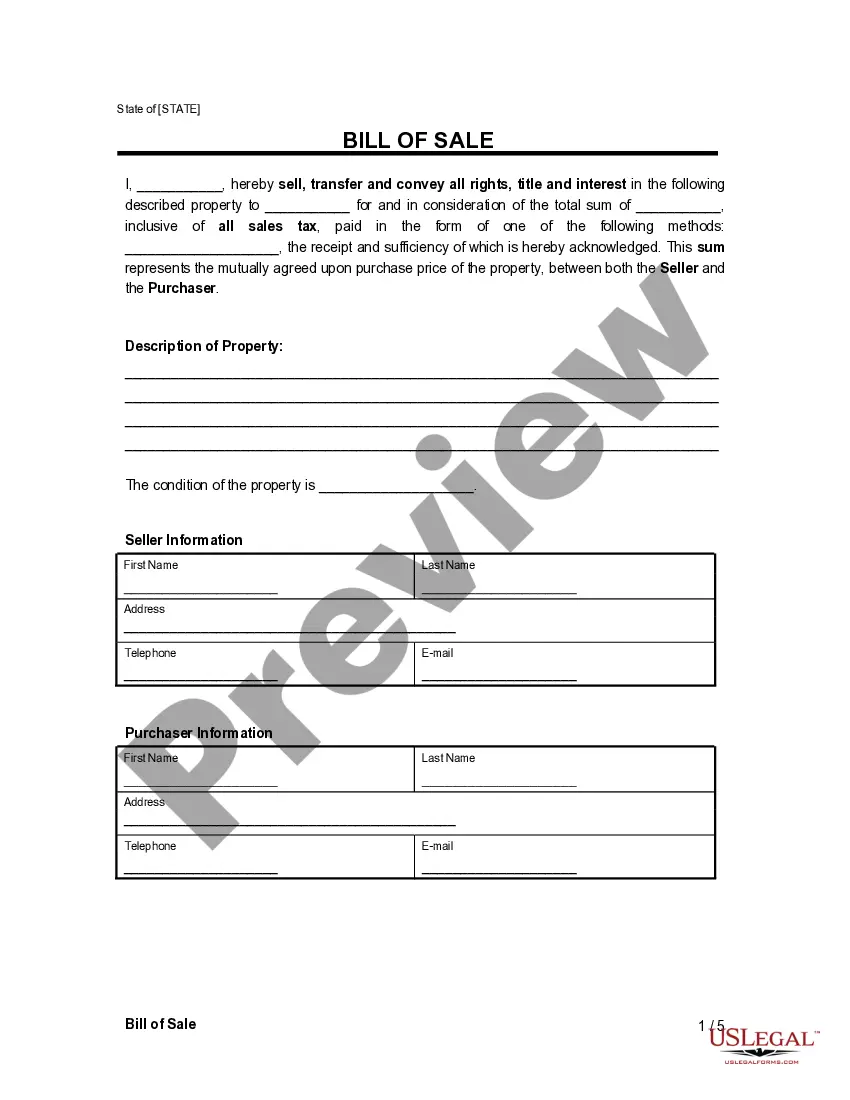
- Identification of the seller and buyer
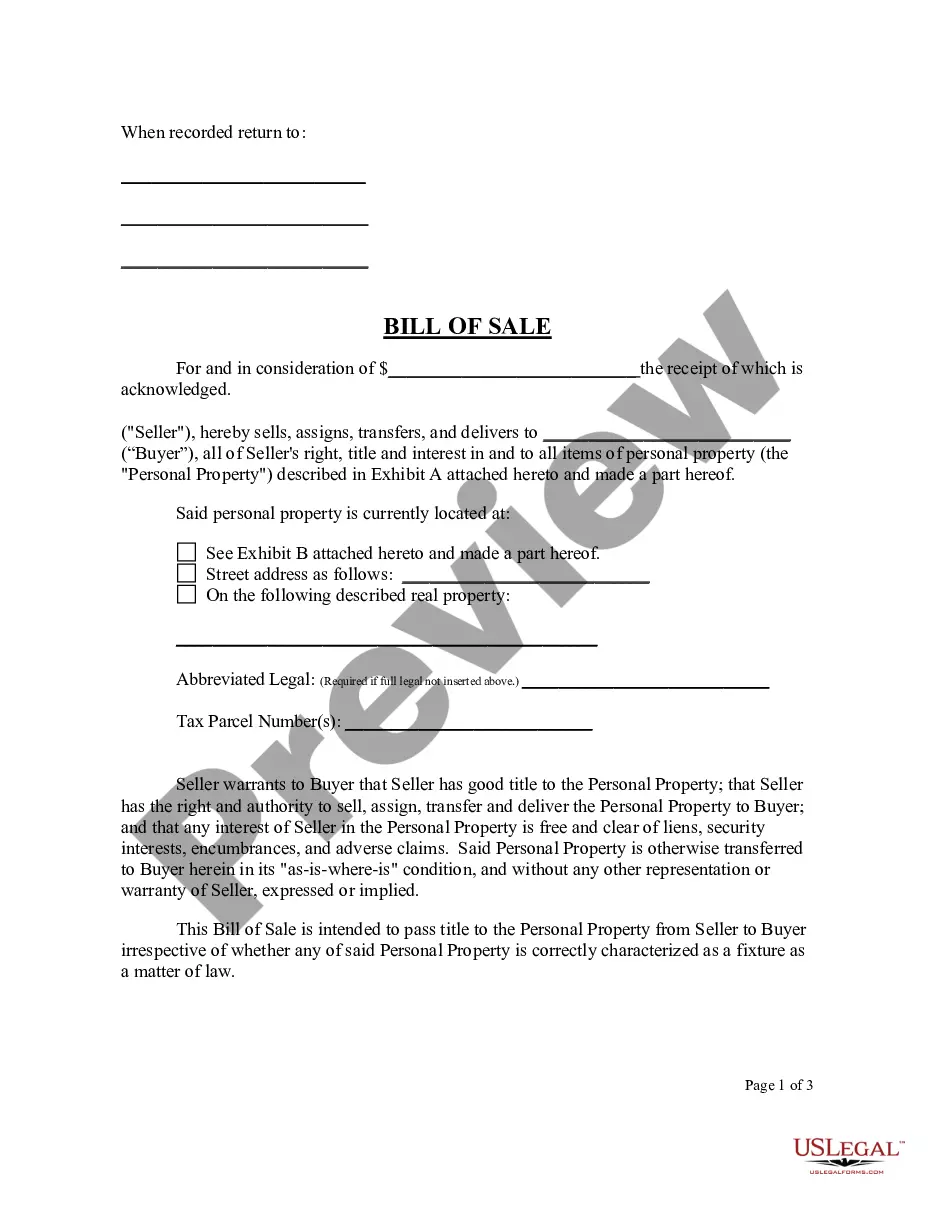
- Details of the personal property being sold
- Reservation of life estate clause for the seller
- Consideration amount confirming payment
- Signatures of the seller, buyer, and a notary public
When this form is needed
This bill of sale should be used when an individual wishes to sell personal property while retaining the right to use it for their lifetime. Common situations may include transferring ownership of real estate, vehicles, or valuable personal items while ensuring continued enjoyment of the property. It is particularly useful in estate planning contexts where one wants to ensure that a loved one can benefit from the property after their death yet wishes to maintain usage rights during their own life.
Who should use this form
- Individuals selling personal property while retaining usage rights
- Parents or guardians planning for property transfer to children
- Individuals involved in estate planning and asset management
- Anyone needing to document a sale that includes a life estate reservation
Instructions for completing this form
- Identify the parties involved by stating the names of the seller and buyer.
- Specify the details of the personal property being sold, including any serial numbers or unique identifiers.
- Enter the consideration amount that confirms the sale price of the property.
- Include the date of the agreement and signatures of both parties.
- Have the form notarized by a licensed notary public to ensure legal validity.
Notarization requirements for this form
This form needs to be notarized to ensure legal validity. US Legal Forms provides secure online notarization powered by Notarize, allowing you to complete the process through a verified video call, available anytime.
Get your form ready online
Our built-in tools help you complete, sign, share, and store your documents in one place.
Make edits, fill in missing information, and update formatting in US Legal Forms—just like you would in MS Word.
Download a copy, print it, send it by email, or mail it via USPS—whatever works best for your next step.
Sign and collect signatures with our SignNow integration. Send to multiple recipients, set reminders, and more. Go Premium to unlock E-Sign.
If this form requires notarization, complete it online through a secure video call—no need to meet a notary in person or wait for an appointment.
We protect your documents and personal data by following strict security and privacy standards.

Make edits, fill in missing information, and update formatting in US Legal Forms—just like you would in MS Word.

Download a copy, print it, send it by email, or mail it via USPS—whatever works best for your next step.

Sign and collect signatures with our SignNow integration. Send to multiple recipients, set reminders, and more. Go Premium to unlock E-Sign.

If this form requires notarization, complete it online through a secure video call—no need to meet a notary in person or wait for an appointment.

We protect your documents and personal data by following strict security and privacy standards.
Typical mistakes to avoid
- Failing to include specific details about the personal property.
- Neglecting to notarize the document if required by local law.
- Not completing the consideration amount section.
- Omitting signatures from both parties.
Benefits of completing this form online
- Convenience of filling out and downloading the form from home.
- Editable templates that allow for customizations to fit specific needs.
- Reliable legal language crafted by licensed attorneys.
Quick recap
- This form enables the sale of personal property while retaining usage rights for the seller during their lifetime.
- It is essential to accurately complete all sections to avoid legal complications.
- Notarization is required to enhance the document's legal standing.
- The form is suitable for individuals looking to manage their personal property in a clear and legally binding manner.
Looking for another form?
Form popularity
FAQ
If the life estate was given to the couple, it would be included in the marital estate. If the life estate was created by a spouse from property acquired during the marriage, it is not separate property and must be included in the marital estate.
Technically most life estates only cover the house involved. Many wills have boilerplate clauses leaving personal property to designated people.
If the property is sold, the proceeds are divided up between the life tenant and the remaindermen. The shares are determined based on the life tenant's age at the time -- the older the life tenant, the smaller his or her share and the larger the share of the remaindermen.
A life estate is a form of joint ownership of real estate. It governs the length of time each owner has rights in the property and what those rights are. The person who holds the life estate is called the "life tenant" and has possession of the property during their lifetime.
The two types of life estates are the conventional and the legal life estate. the grantee, the life tenant. Following the termination of the estate, rights pass to a remainderman or revert to the previous owner.
The person holding the life estate -- the life tenant -- possesses the property during his or her life. The other owner -- the remainderman -- has a current ownership interest but cannot take possession until the death of the life estate holder.
A person owns property in a life estate only throughout their lifetime. Beneficiaries cannot sell property in a life estate before the beneficiary's death. One benefit of a life estate is that property can pass when the life tenant dies without being part of the tenant's estate.
What happens to a life estate after someone dies? Upon the life tenant's death, the property passes to the remainder owner outside of probate.They can sell the property or move into and claim it as their primary residence (homestead). Property taxes will not be reassessed.
Reservation of the present interest allows the owner to retain ownership for a period of time measured by the life of one or more individuals, by a term of years, or by a combination of the two.