Appraisal System Evaluation Form
What is this form?
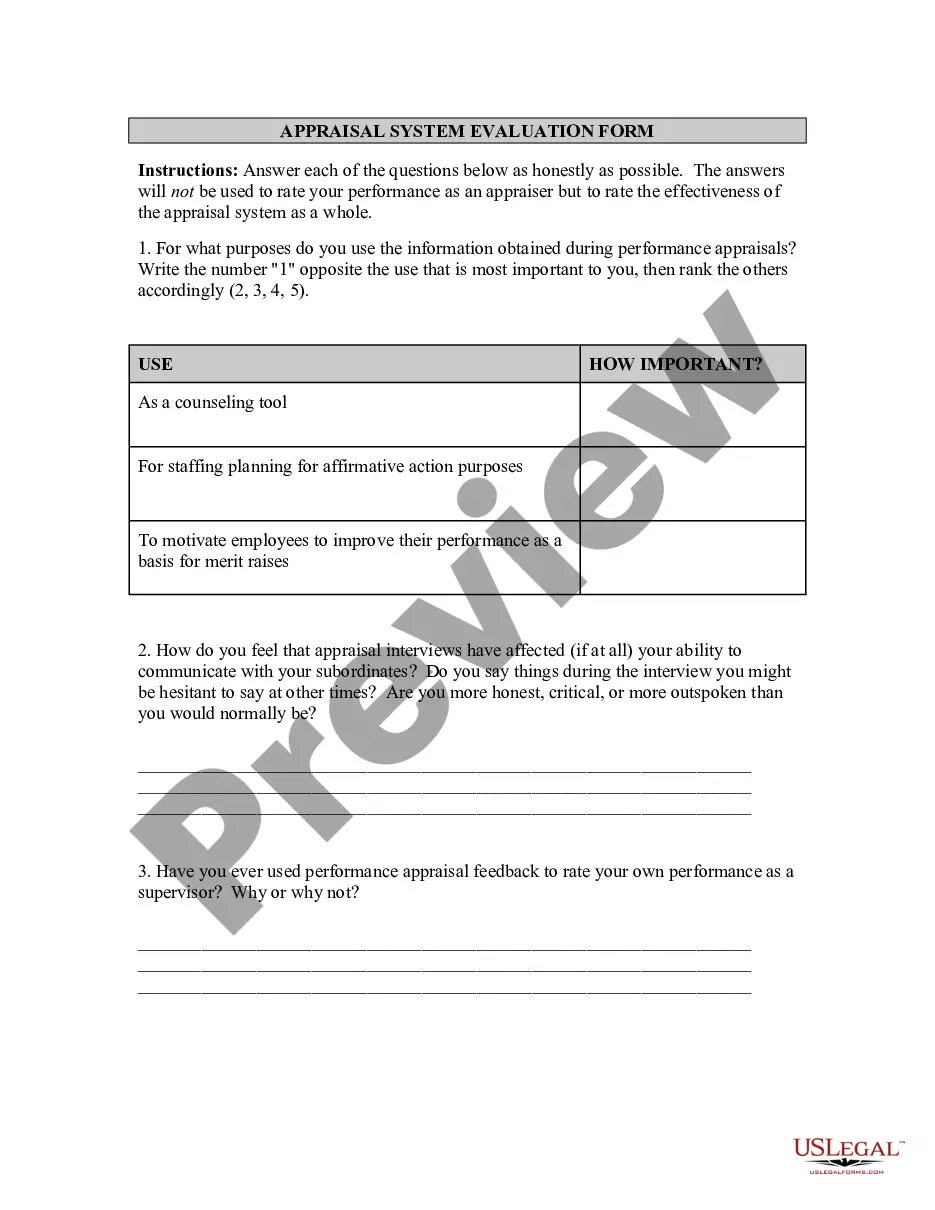
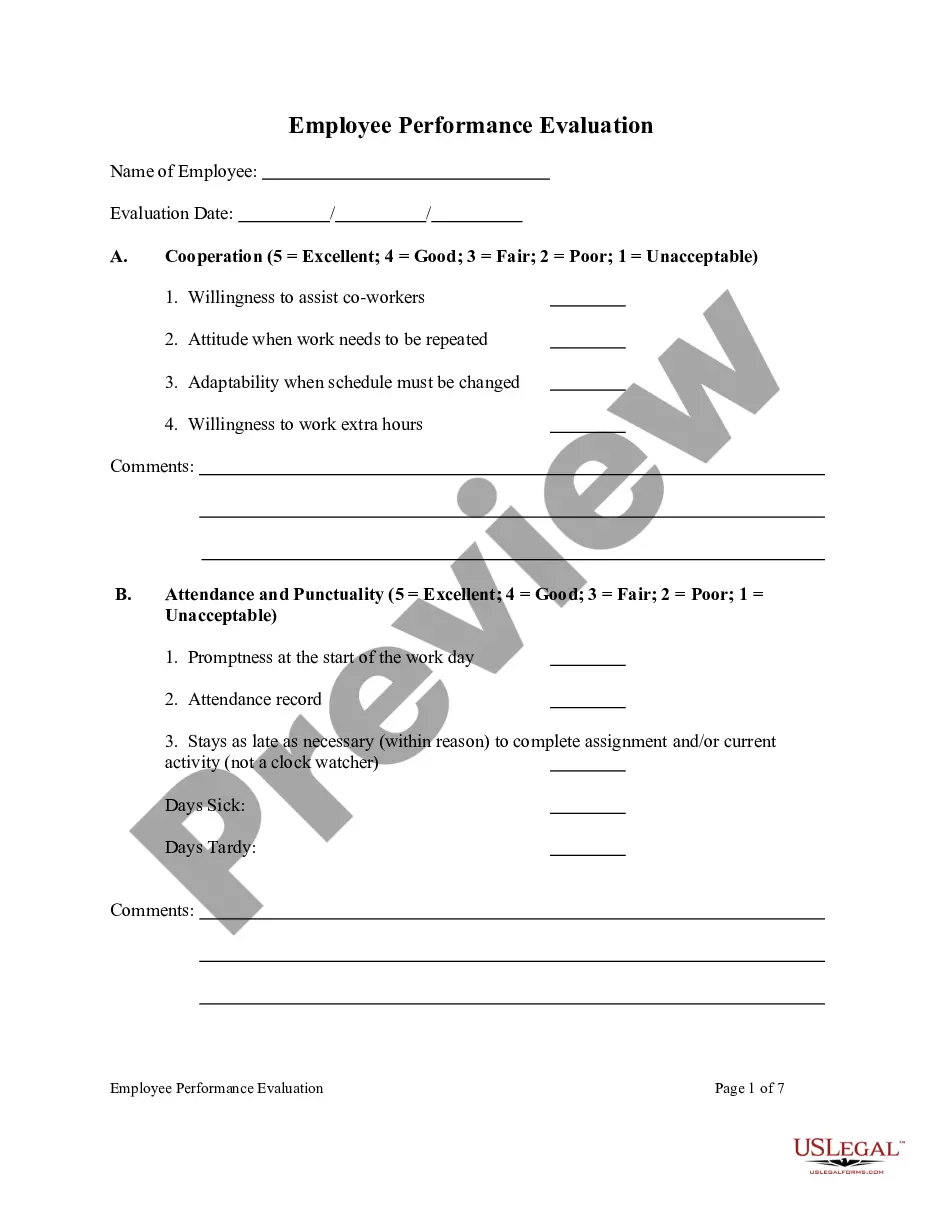
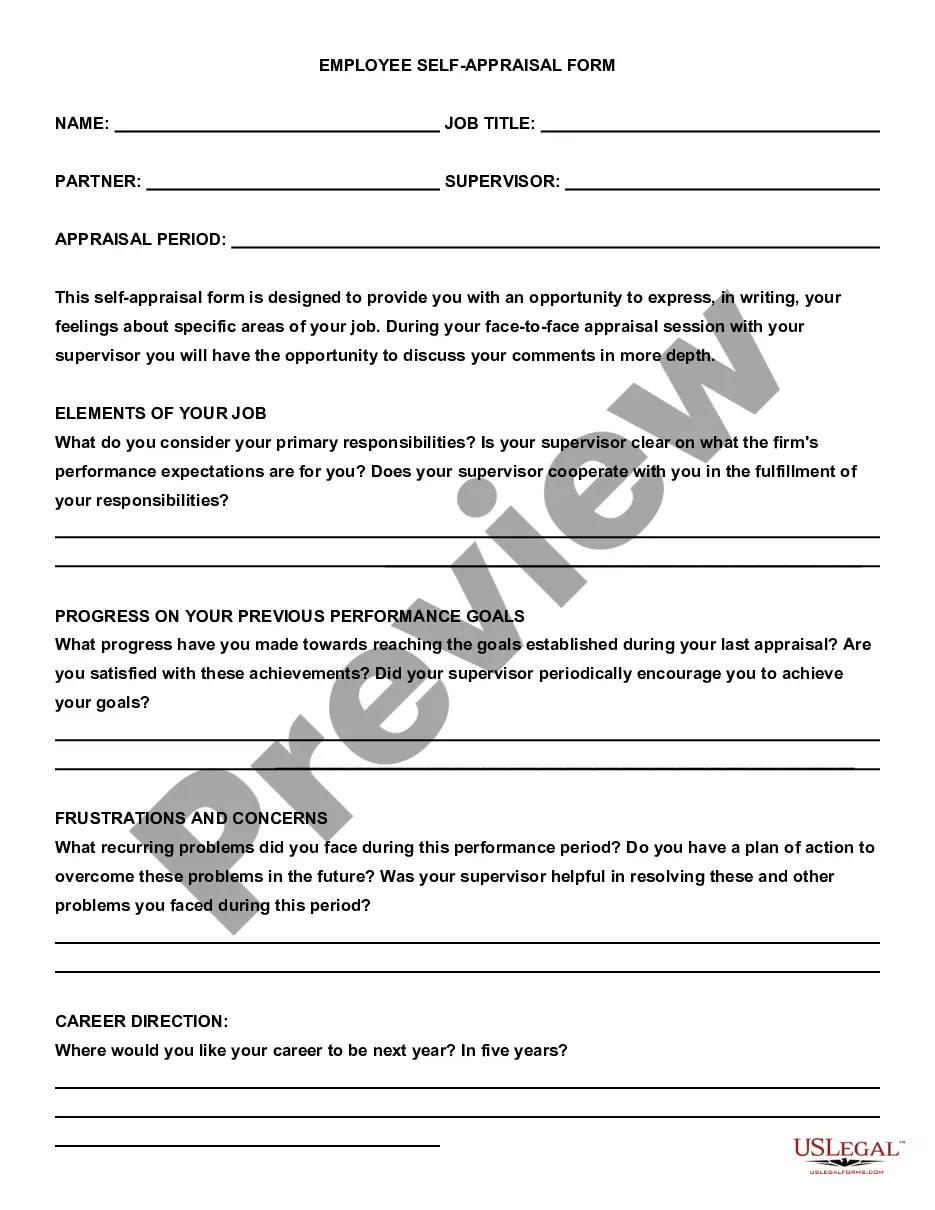
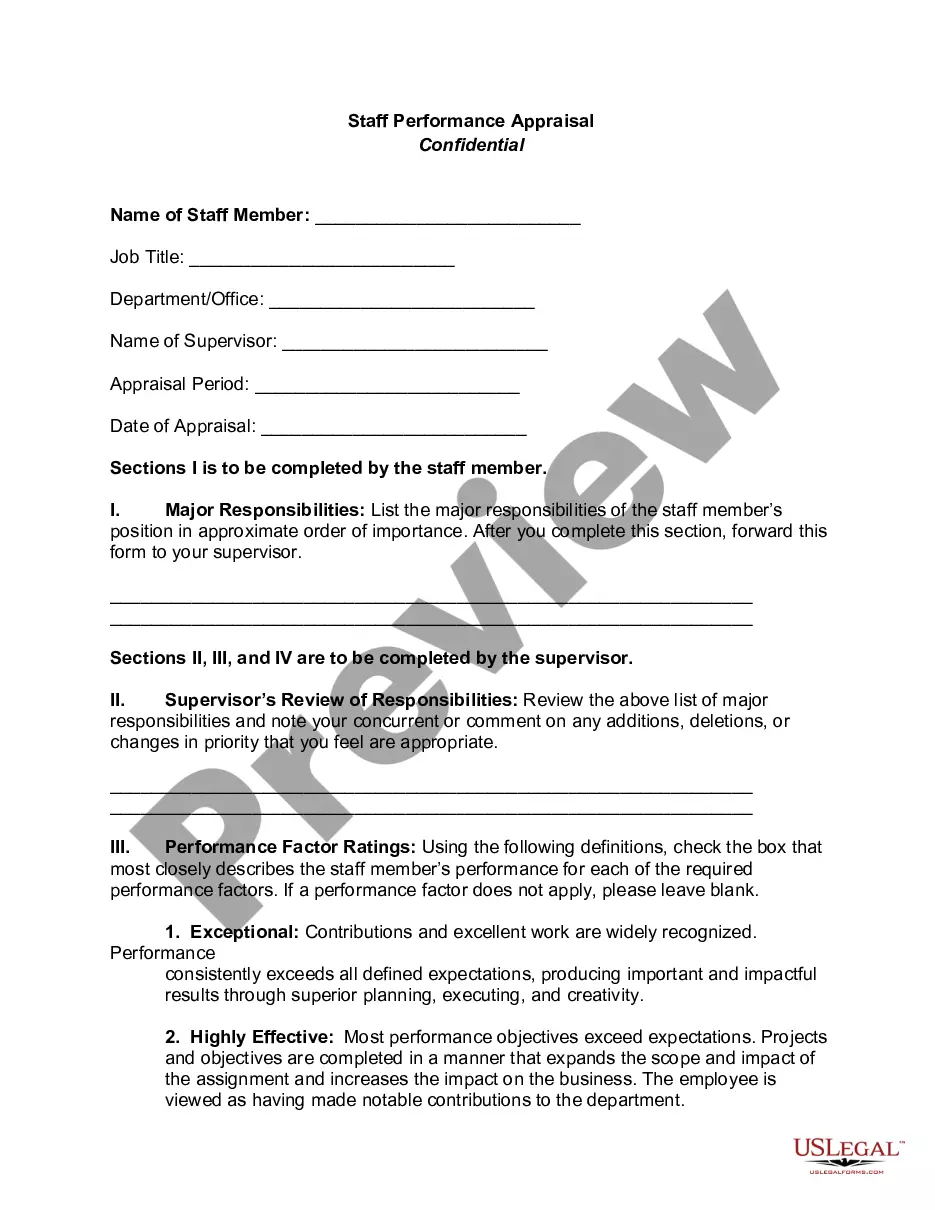
The Appraisal System Evaluation Form is designed to assess the overall effectiveness of a company's performance appraisal system. Unlike individual performance appraisal forms that focus on specific employee evaluations, this form gathers feedback from appraisers to improve the appraisal process as a whole.
Key parts of this document
- Instructions for honest responses to ensure constructive feedback.
- Ranking of purposes for using performance appraisal information.
- Feedback on personal use of appraisal feedback to assess supervisory performance.
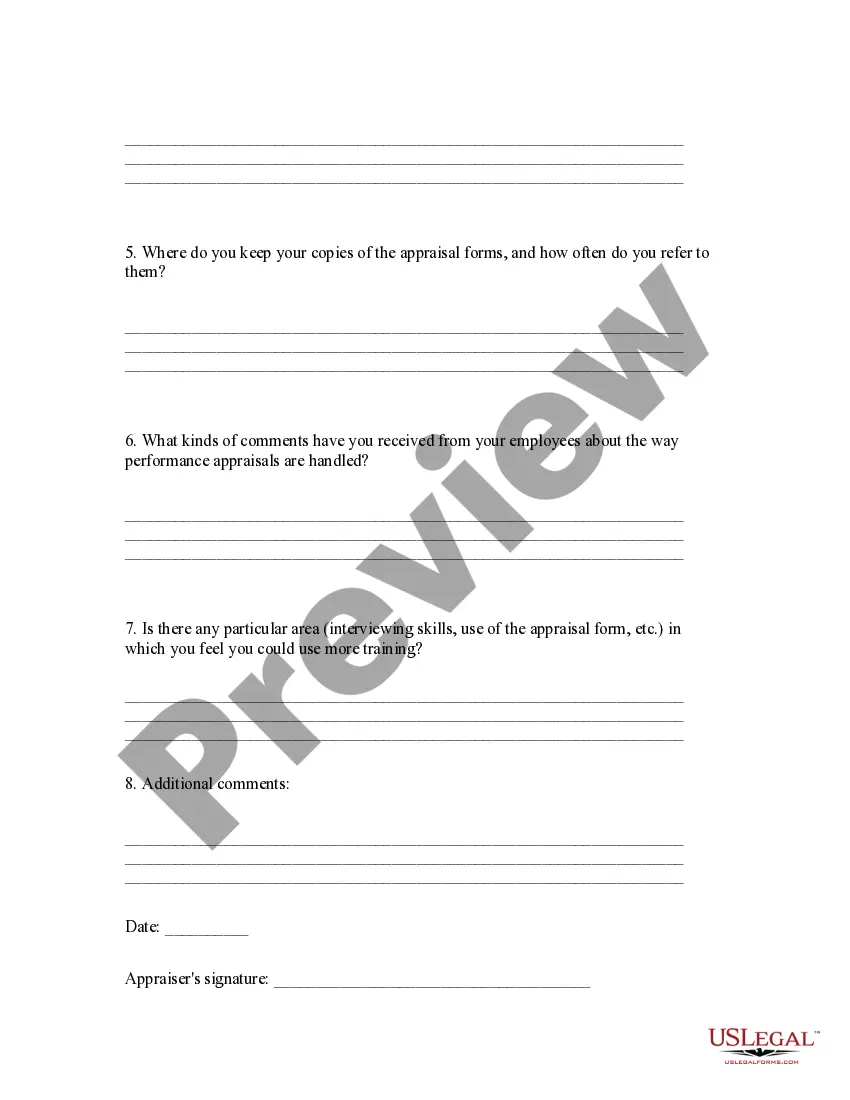
- Suggestions for changes to the appraisal forms.
- Details on where appraisal forms are stored and their frequency of reference.
- Comments received from employees regarding the appraisal process.
- Identification of areas where further training is desired.
- Space for additional comments.

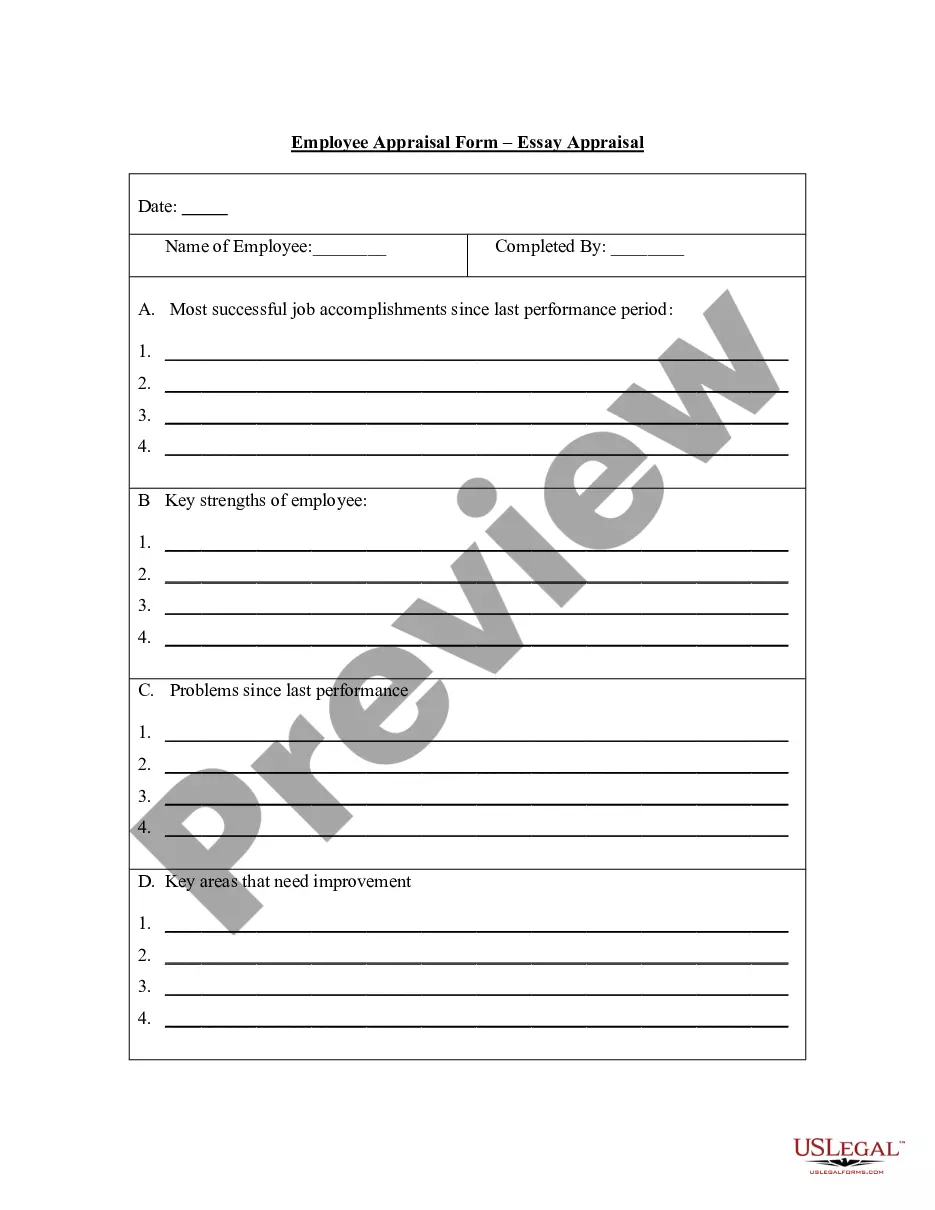
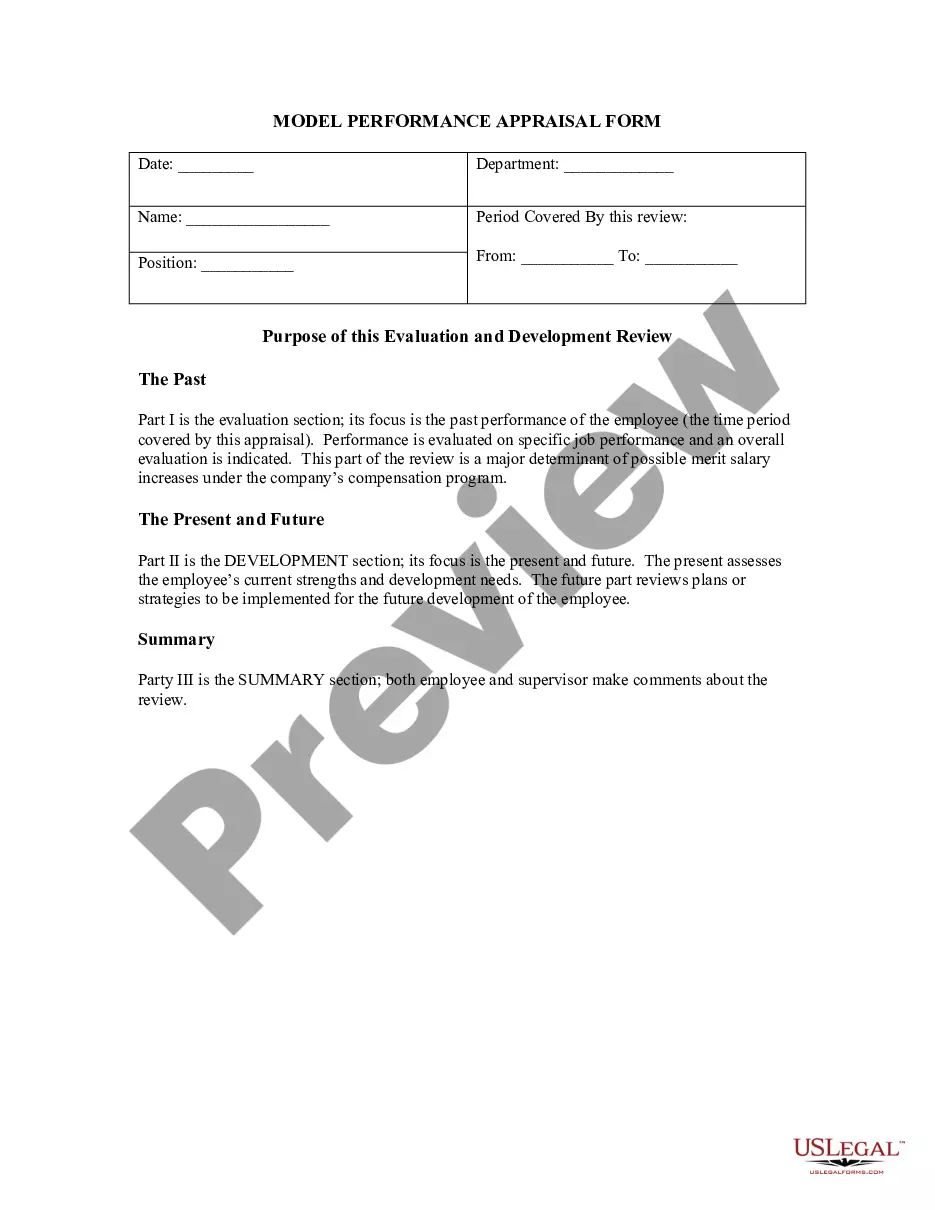
When to use this form
This form is essential for companies looking to evaluate and enhance their performance appraisal systems. Use it when conducting a review of appraisal practices to gather insights from supervisors and ensure the appraisal system meets the needs of both appraisers and employees.
Who this form is for
- Human Resources professionals responsible for evaluating appraisal systems.
- Supervisors conducting performance appraisals within an organization.
- Management teams seeking to improve employee evaluation processes.
- Any organization looking to assess the effectiveness of its appraisal methods.
Instructions for completing this form
- Read the instructions and understand the purpose of the form.
- Answer each question honestly to provide accurate feedback on the appraisal system.
- Rank the purposes of using performance appraisal information in order of importance.
- Provide feedback on personal experiences with performance appraisal feedback.
- Suggest any changes you believe would enhance the appraisal form(s).
- Sign and date the form upon completion before submitting it for review.
Does this document require notarization?
This form does not typically require notarization to be legally valid. However, some jurisdictions or document types may still require it. US Legal Forms provides secure online notarization powered by Notarize, available 24/7 for added convenience.
Get your form ready online
Our built-in tools help you complete, sign, share, and store your documents in one place.
Make edits, fill in missing information, and update formatting in US Legal Forms—just like you would in MS Word.
Download a copy, print it, send it by email, or mail it via USPS—whatever works best for your next step.
Sign and collect signatures with our SignNow integration. Send to multiple recipients, set reminders, and more. Go Premium to unlock E-Sign.
If this form requires notarization, complete it online through a secure video call—no need to meet a notary in person or wait for an appointment.
We protect your documents and personal data by following strict security and privacy standards.

Make edits, fill in missing information, and update formatting in US Legal Forms—just like you would in MS Word.

Download a copy, print it, send it by email, or mail it via USPS—whatever works best for your next step.

Sign and collect signatures with our SignNow integration. Send to multiple recipients, set reminders, and more. Go Premium to unlock E-Sign.

If this form requires notarization, complete it online through a secure video call—no need to meet a notary in person or wait for an appointment.

We protect your documents and personal data by following strict security and privacy standards.
Common mistakes
- Not answering questions honestly, which can compromise the evaluation process.
- Failing to rank responses, leading to incomplete data.
- Overlooking the personal reflection section on appraisal feedback usage.
- Neglecting to provide constructive suggestions for improvement.
Why use this form online
- Convenient downloading options allow for immediate access and use.
- Editability ensures that users can customize the form to fit their specific needs.
- Reliable templates drafted by licensed attorneys guarantee compliance with legal standards.
Legal use & context
- This form helps organizations comply with employment laws by ensuring fair appraisal processes.
- It provides a structured method for collecting feedback, which can improve workplace dynamics.
- Using this form as part of the performance evaluation process can enhance employee satisfaction and performance.
Key takeaways
- The Appraisal System Evaluation Form assesses the effectiveness of appraisal systems.
- It requires honest feedback from appraisers to drive improvements.
- This form is suitable for various users, including HR professionals and supervisors.
- Follow the completion steps closely to gather valuable insights.
Looking for another form?
Form popularity
FAQ
Review the employee's job description. Get a current copy of each person's job description and review the requirements. Highlight areas of improvement. Compare strengths and weaknesses. Recommend actionable goals. Provide constructive feedback. Welcome employee input.
Gather information. List employee responsibilities. Use objective language. Use action verbs. Compare performance ratings. Ask open-ended questions. Use a point system.
Goals and Objectives achieved, missed and newly set. The nature of goals and objectives of an employee varies according to the job description. Competencies. Feedback with open ended questions. Salary, incentives and recognition. Skill Development and performance improvement.
Collaboration and teamwork. Positive option: "I believe that my skills and my ability to work in a team have been valuable during this period. Motivation. Leadership. Problem-solving. Decision-making skills. Working under pressure. Communication. Adaptability.
Communication. Collaboration and teamwork. Problem-solving. Quality and accuracy of work. Attendance, punctuality and reliability. The ability to accomplish goals and meet deadlines.
Reflect on feedback. Make a list of your top accomplishments and identify areas for improvements. Gather analytics to show impact. Make a commitment to improve. Set a SMART goal for yourself. Create a plan of action. Communication. Job Performance.
Be proud. One major goal of the self-evaluation is to highlight your accomplishments and recollect milestones in your professional development. Be honest and critical. Continuously strive for growth. Track your accomplishments. Be professional.
Check Your Attitude. "Attitude is very important," says employment consultant Rick Waters. Be Reflective. Assess Your Performance Against the Job Specifications. Keep a File. Find out the Supervisor's Expectations. Get Feedback From Others. Be a Team Player. Plan Ahead.
Reflect on feedback. Make a list of your top accomplishments and identify areas for improvements. Gather analytics to show impact. Make a commitment to improve. Set a SMART goal for yourself. Create a plan of action. Communication. Job Performance.