Jury Instruction - Preliminary Instructions Before Opening Statements - Short Form
Overview of this form
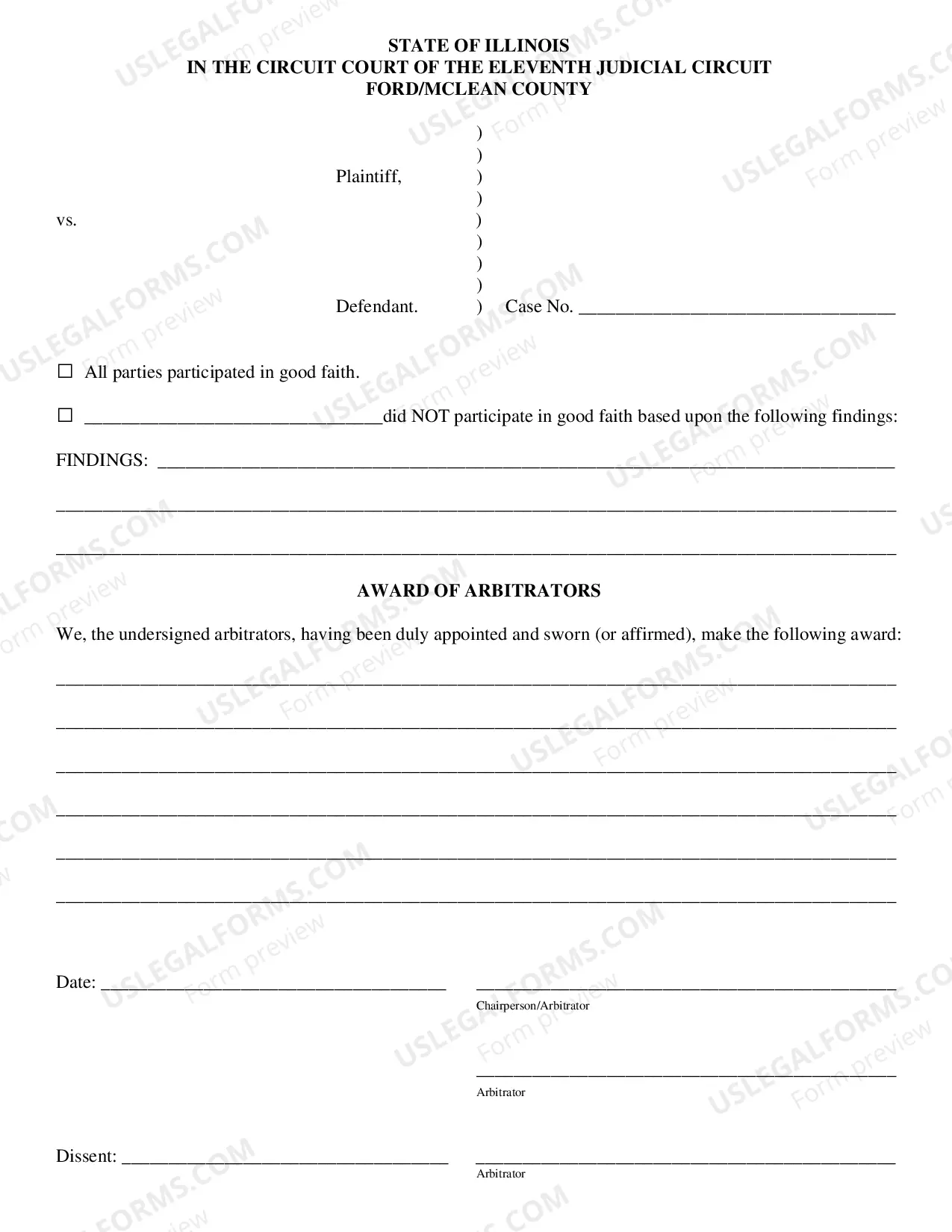
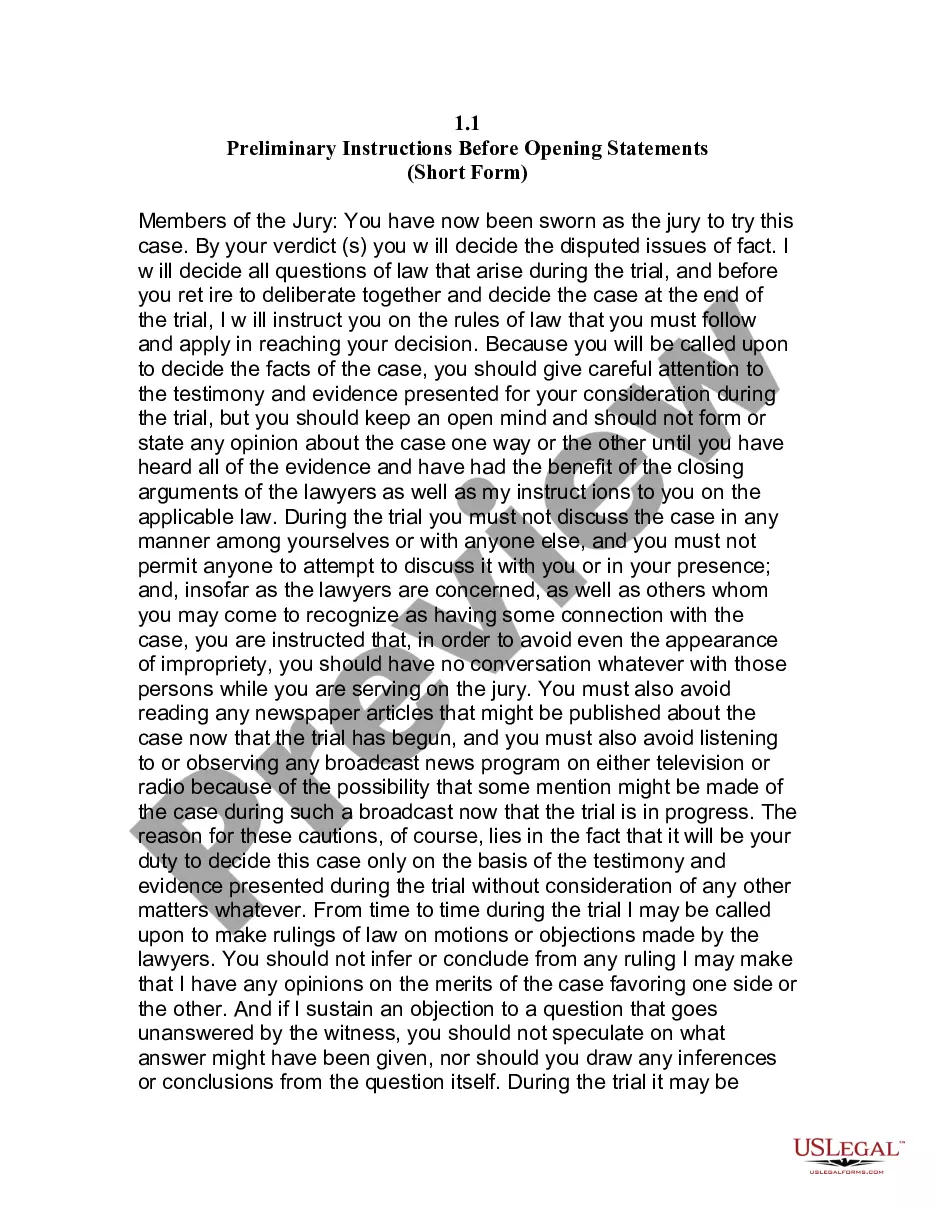
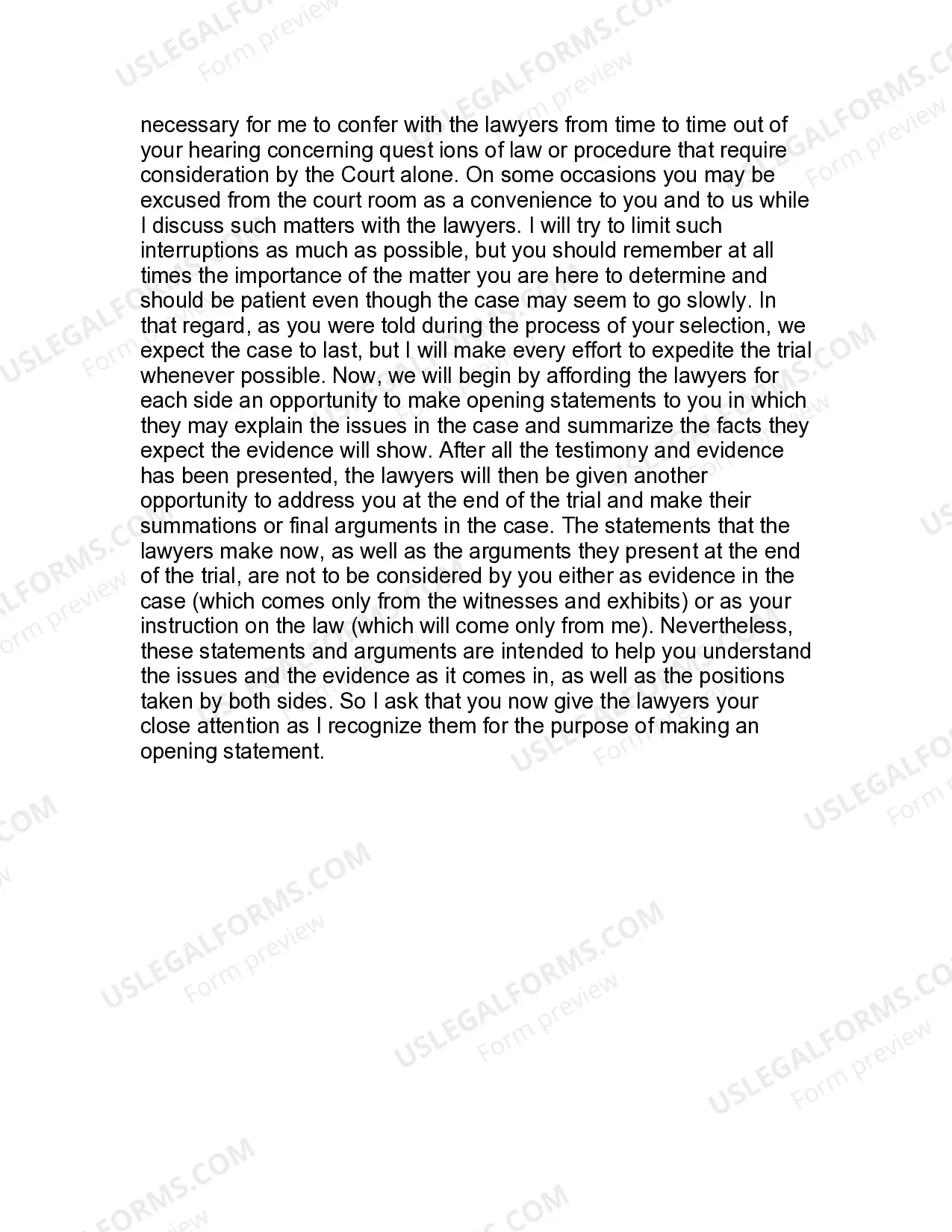
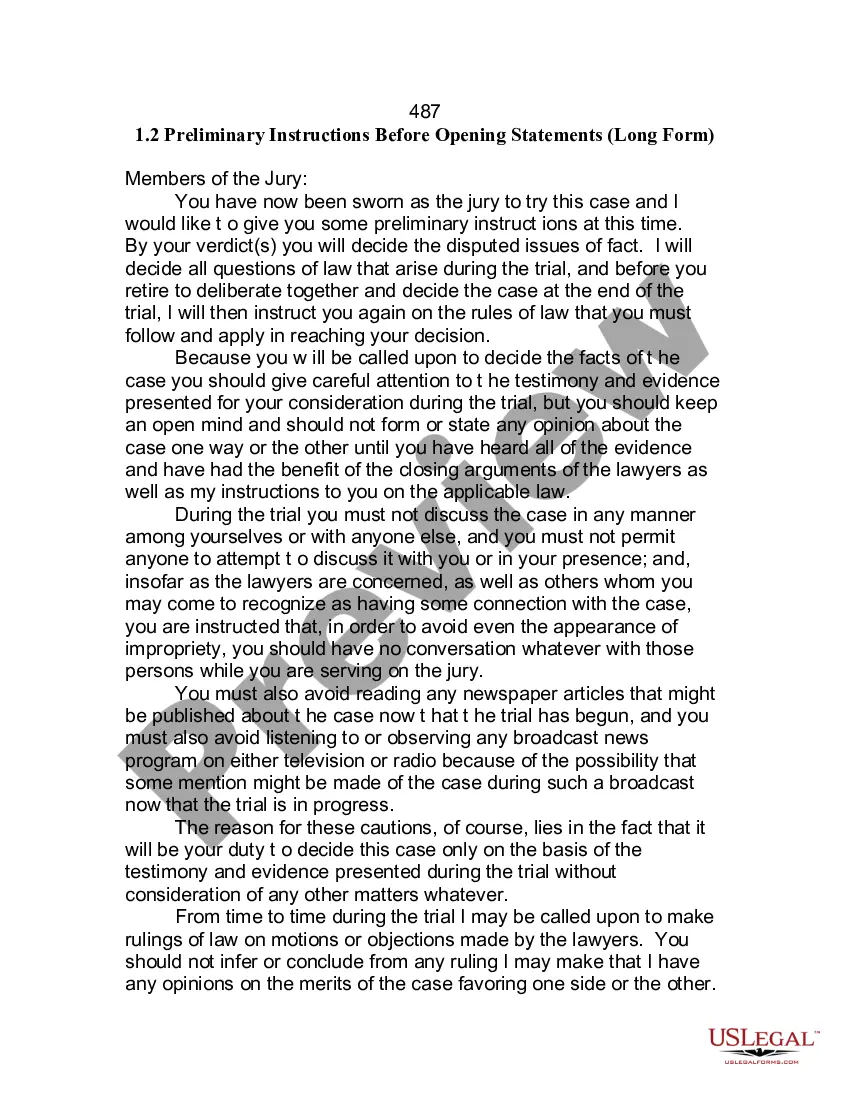
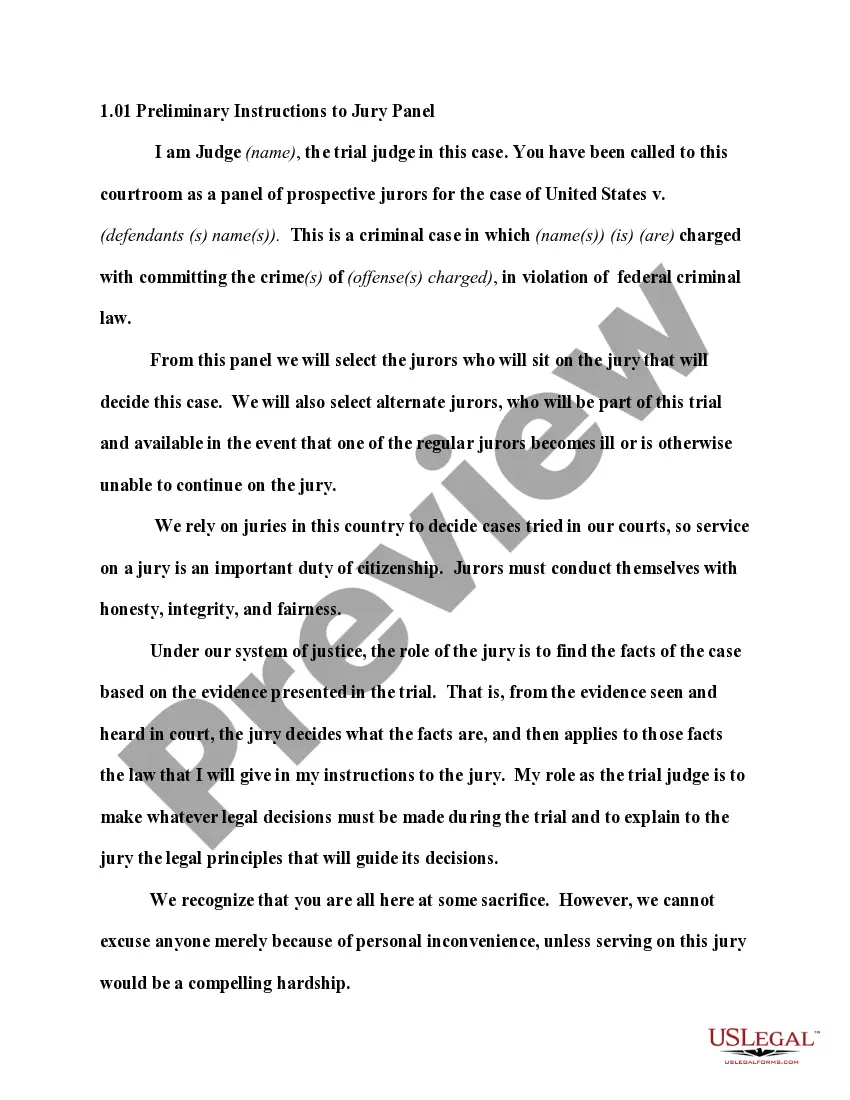
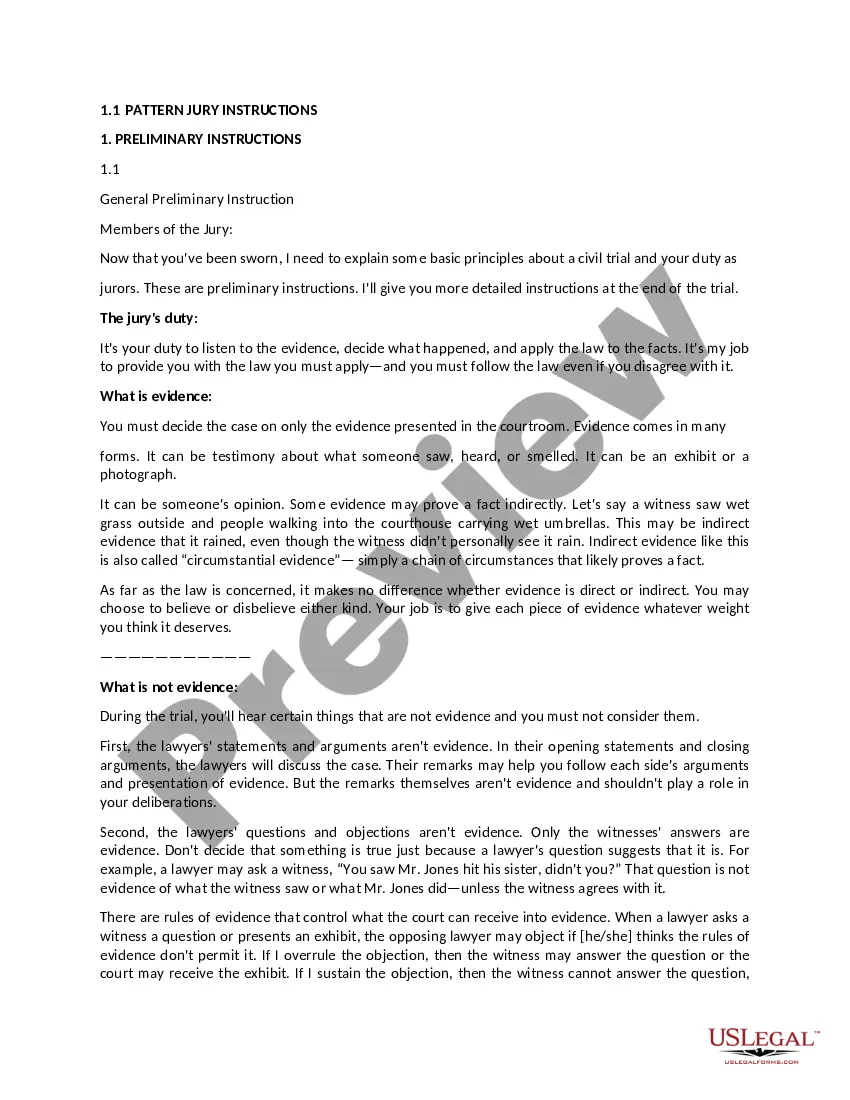
This Jury Instruction - Preliminary Instructions Before Opening Statements - Short Form provides a framework for instructions given to jurors at the start of a trial. Its primary purpose is to guide the jury in understanding their role in the case and the legal standards they must apply, ensuring a fair trial process. Unlike similar forms, this one is tailored for preliminary guidance, helping jurors to focus on the presented evidence without preconceived notions.
Form components explained
- Introduction to the jury's role and responsibilities.
- Instructions on maintaining impartiality during the trial.
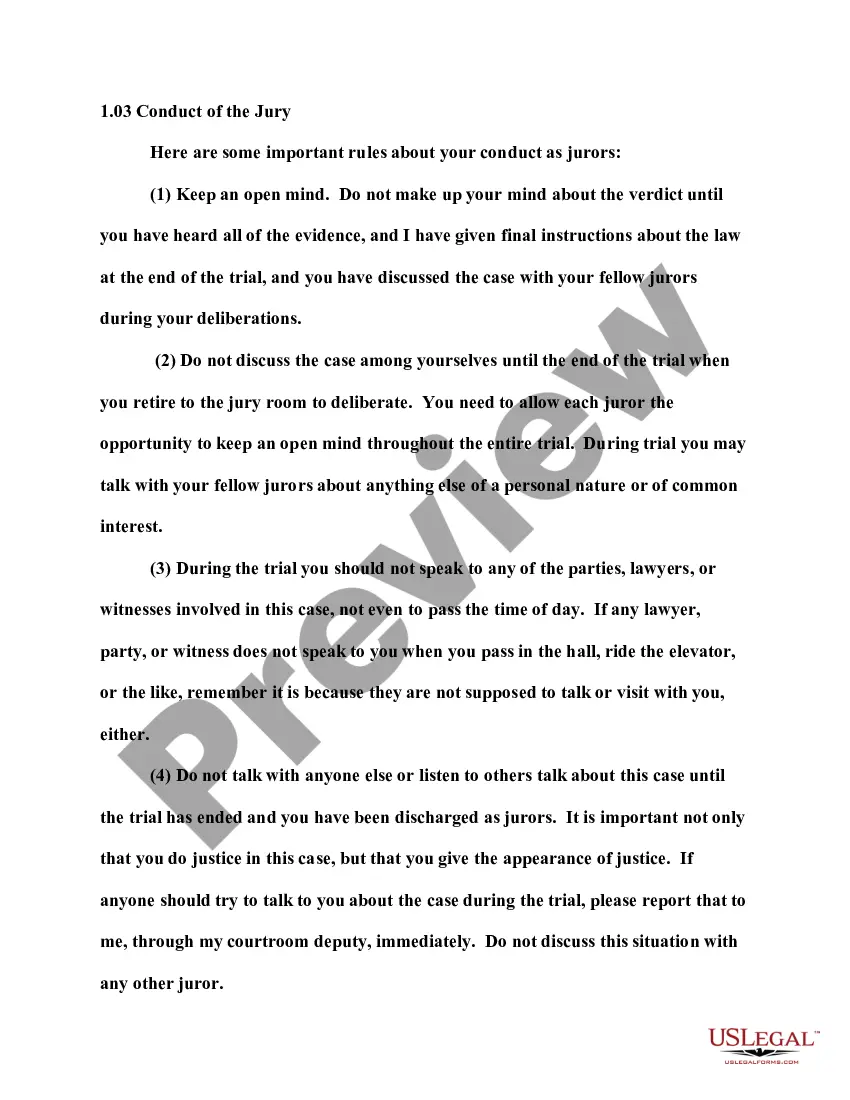
- Guidelines prohibiting discussion of the case outside the jury room.
- Advisement on avoiding external influences like media coverage.
- Explanation of the distinction between juror instructions and lawyer arguments.
Situations where this form applies
This form is used at the beginning of a trial to set clear expectations for jurors. It is essential when initiating a jury's role in legal proceedings, ensuring that jurors understand the importance of their duty to weigh evidence without bias. Use this form to provide concrete guidance before opening statements begin, facilitating a structured approach to the trial.
Who should use this form
- Judges presiding over jury trials.
- Legal practitioners involved in preparing for trial.
- Court administrators overseeing juror duties.
- Individuals interested in understanding jury instructions.
Completing this form step by step
- Identify the key issues relevant to the case.
- Adapt the instructions to reflect the applicable laws of the jurisdiction.
- Ensure clarity in explaining the jurors' responsibilities.
- Review and refine the language to ensure it is understandable for jurors.
- Present the final instructions at the beginning of the trial.
Notarization guidance
Notarization is not commonly needed for this form. However, certain documents or local rules may make it necessary. Our notarization service, powered by Notarize, allows you to finalize it securely online anytime, day or night.
Get your form ready online
Our built-in tools help you complete, sign, share, and store your documents in one place.
Make edits, fill in missing information, and update formatting in US Legal Forms—just like you would in MS Word.
Download a copy, print it, send it by email, or mail it via USPS—whatever works best for your next step.
Sign and collect signatures with our SignNow integration. Send to multiple recipients, set reminders, and more. Go Premium to unlock E-Sign.
If this form requires notarization, complete it online through a secure video call—no need to meet a notary in person or wait for an appointment.
We protect your documents and personal data by following strict security and privacy standards.

Make edits, fill in missing information, and update formatting in US Legal Forms—just like you would in MS Word.

Download a copy, print it, send it by email, or mail it via USPS—whatever works best for your next step.

Sign and collect signatures with our SignNow integration. Send to multiple recipients, set reminders, and more. Go Premium to unlock E-Sign.

If this form requires notarization, complete it online through a secure video call—no need to meet a notary in person or wait for an appointment.

We protect your documents and personal data by following strict security and privacy standards.
Avoid these common issues
- Failing to tailor the instructions to the specific case at hand.
- Using overly complex legal jargon that jurors may not understand.
- Not emphasizing the importance of impartiality.
- Neglecting to address external influences such as media.
Why use this form online
- Convenient access to legally-drafted jury instructions at any time.
- Ability to easily customize the form to fit your specific case needs.
- Reliable template drafted by licensed attorneys to ensure legal compliance.
- Quick download and print options, saving time in legal preparation.
Legal use & context
- This form provides essential guidelines for jurors, which are crucial for a fair trial.
- Jurors are required to follow these instructions as part of their legal obligations.
- Clarifies procedural expectations to minimize confusion during the trial.
Main things to remember
- This form outlines preliminary jury instructions crucial for fair legal proceedings.
- It's imperative to customize this form to fit jurisdiction-specific rules.
- Providing clear instructions helps jurors fulfill their roles effectively.
Looking for another form?

Form popularity
FAQ
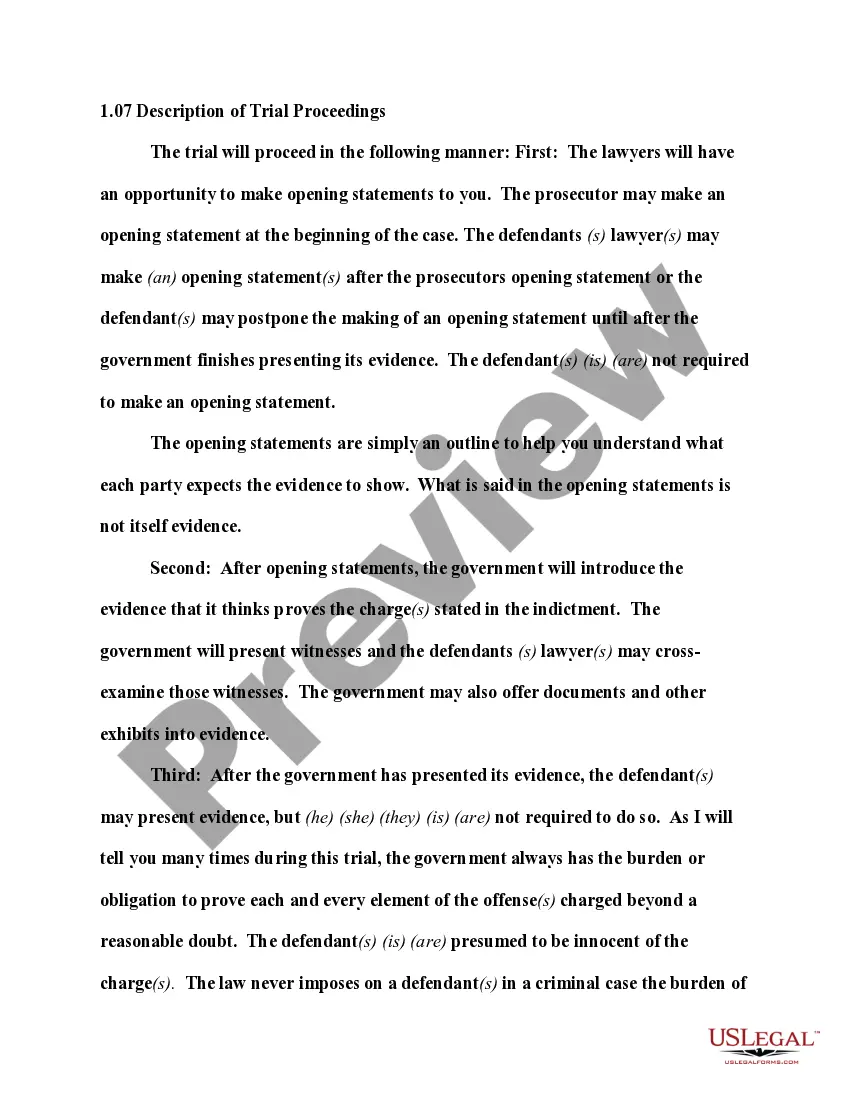
The opening statement at the beginning of the trial is limited to outlining facts. This is each party's opportunity to set the basic scene for the jurors, introduce them to the core dispute(s) in the case, and provide a general road map of how the trial is expected to unfold.
In many jurisdictions, jury selection begins with the court clerk's calling twelve people on the jury list and asking them to take a place in the jury box. The judge usually makes a brief statement explaining what kind of case is to be tried and inquiring whether there is any reason the potential jurors cannot serve.
Conclude your opening by telling the jury what you would like them to do at the end of the case: I just ask that you please keep an open mind about this case until you hear all of the evidence. I also ask that you return a verdict of not guilty for the defendant, Officer Dally. Thank you for your attention.
This is a case about taking chances. Mary Jones had a dream and a plan. Revenge. That's what this case is all about. This is also a case about pain. Mr. Johnson's only companion today is constant pain. This is a case about police brutality
State your theme immediately in one sentence. Tell the story of the case without argument. Persuasively order your facts in a sequence that supports your theme. Decide whether to address the bad facts in the opening or not. Do not read your opening statement. Bring an outline, if necessary.
They ask everyone to stand up to show respect for the Judge, the court and the law by saying: All rise. This court is now in session. Judge comes in, sits down and tells everyone else to be seated. Judge tells everyone what the trial is about.
The opening statement at the beginning of the trial is limited to outlining facts. This is each party's opportunity to set the basic scene for the jurors, introduce them to the core dispute(s) in the case, and provide a general road map of how the trial is expected to unfold.
The primary purpose of an opening statement is to apprise the trier of fact, whether jury or court, of the issues in question and to summarize the evidence that the party intends to offer during the trial.