Jury Instruction - Similar Acts Evidence - Rule 40 4b, FRE
What is this form?
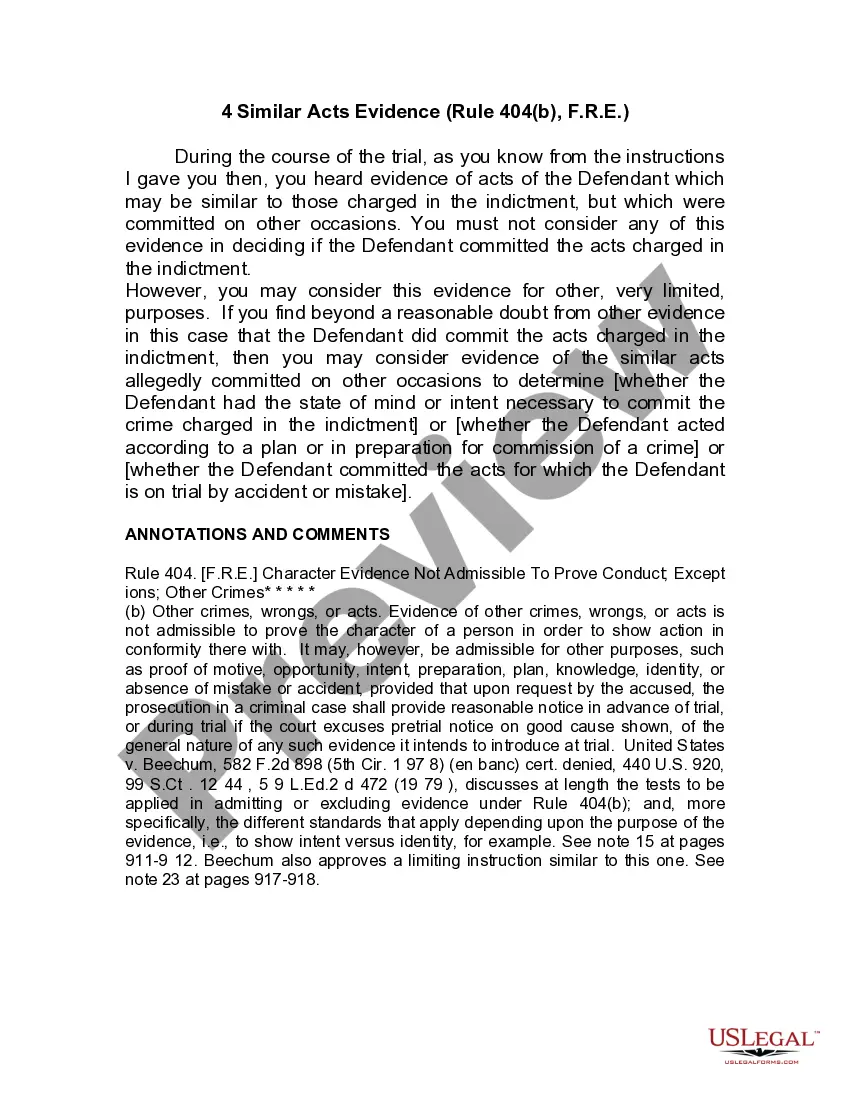
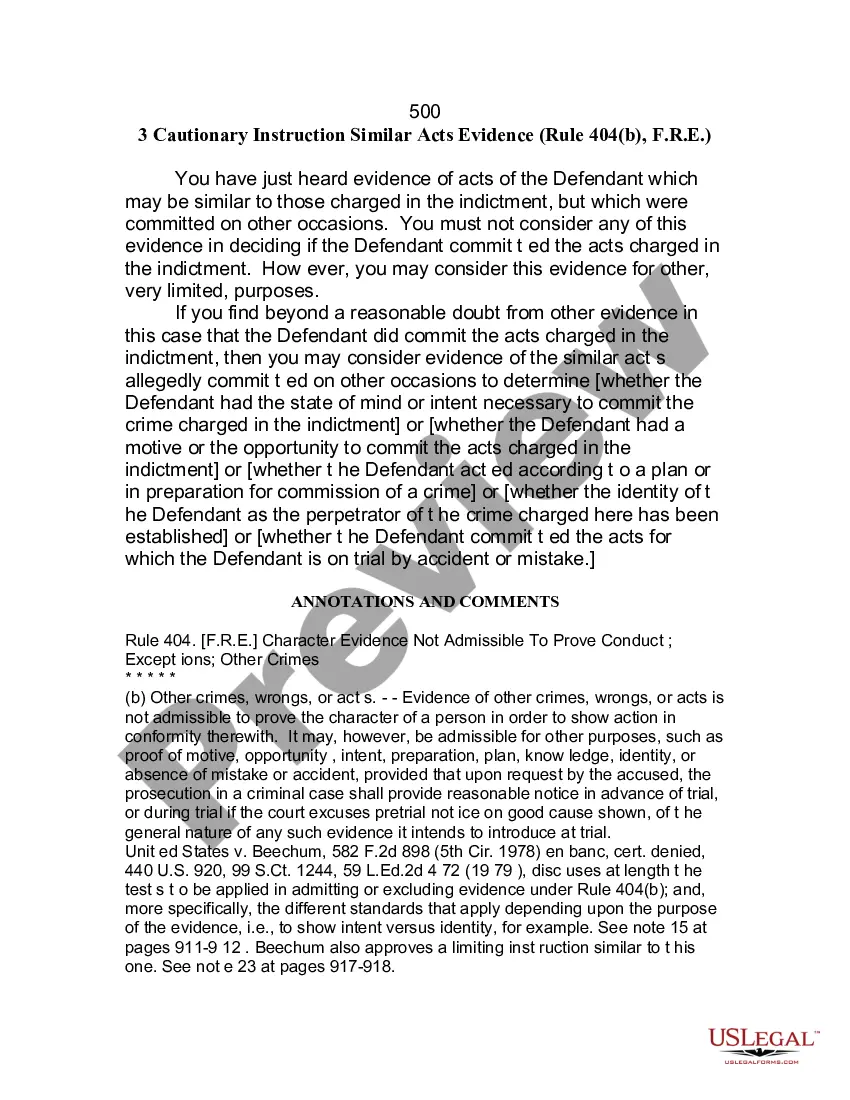
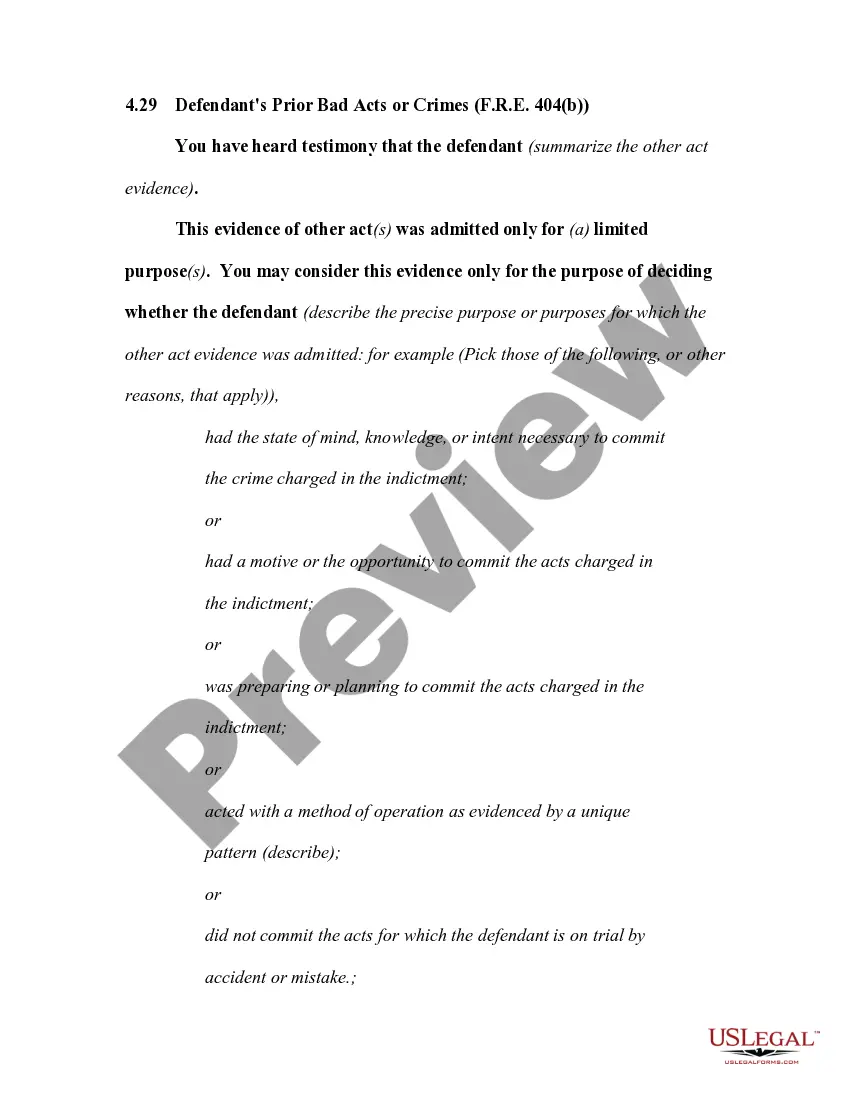
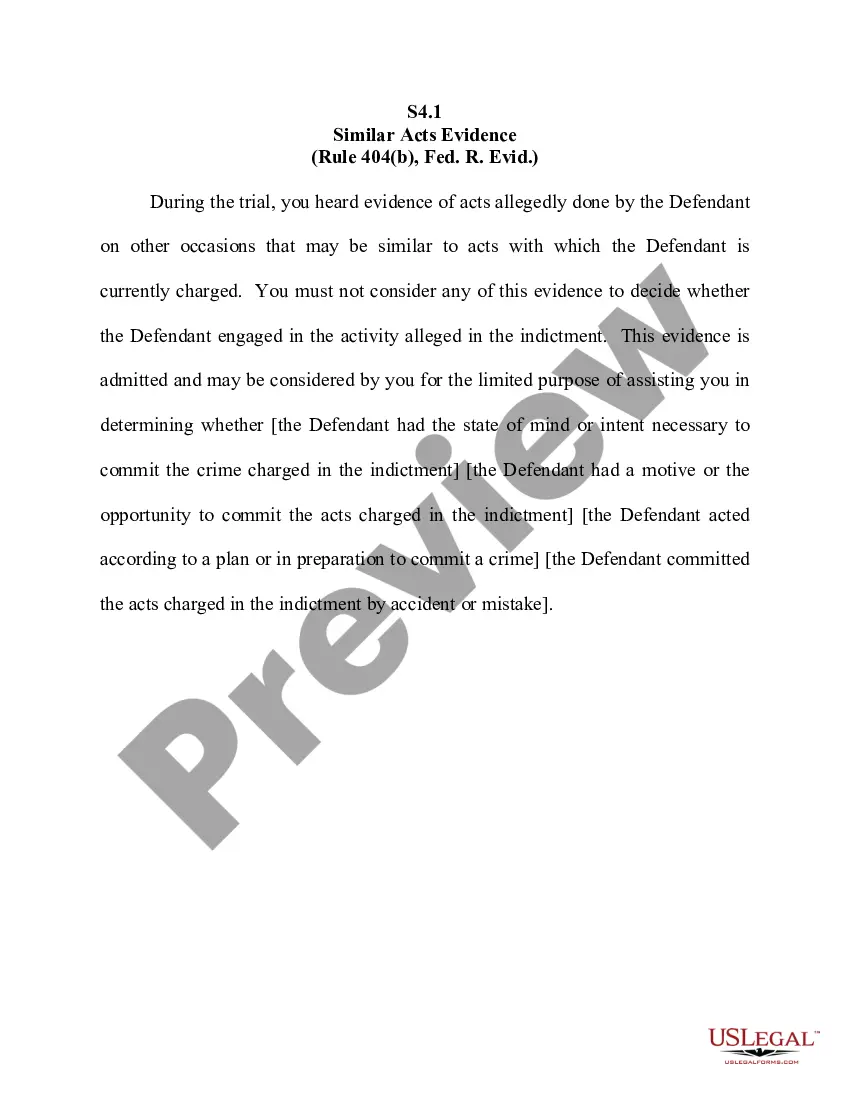
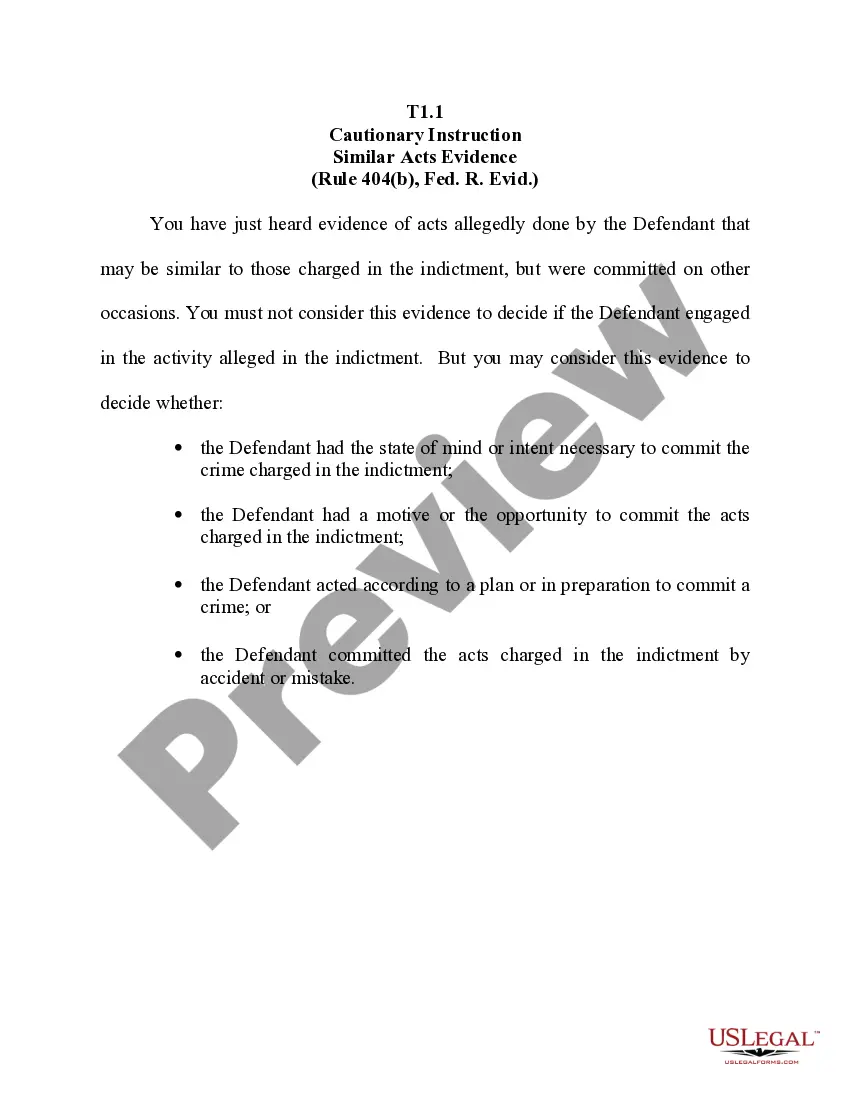
The Jury Instruction - Similar Acts Evidence - Rule 404(b), FRE is a legal document containing sample jury instructions for use in trial proceedings across the United States. This form guides jurors in understanding how to evaluate evidence of similar acts by a defendant that are not directly related to the charges in the indictment. It emphasizes that this evidence must not be used to assume a defendant's guilt but can inform the jury about the defendant's state of mind or intent, or whether the defendant had a plan in committing the crime charged. This form is a critical tool for ensuring jurors adhere to legal standards when considering evidence.
Form components explained
- Instructions for jurors on the appropriate use of similar acts evidence.
- Clarification that similar acts cannot be used to determine character or imply guilt.
- Guidelines on limited purposes for which similar acts may be considered.
- Explanations regarding the defendant's intent, planning, or absence of mistake.
Common use cases
This form is used during criminal trials when evidence of similar acts by the defendant is presented. It is essential to guide jurors in how to interpret this evidence properly and avoid bias. Use this form when your case involves charges against a defendant where understanding previous, similar behaviors could play a role in establishing intent or motive. This ensures that jurors have the correct context to evaluate the evidence appropriately.
Intended users of this form
- Judges presiding over criminal trials.
- Prosecutors presenting evidence in trials.
- Defense attorneys seeking to ensure fair jury instructions.
- Legal professionals working on cases involving similar acts evidence.
How to prepare this document
- Review the evidence presented during the trial regarding similar acts.
- Modify the sample instructions to fit the specific circumstances of the case.
- Ensure the instructions clarify that the similar acts cannot be used as sole proof of guilt.
- Distribute the completed instructions to the jury during deliberations.
Is notarization required?
In most cases, this form does not require notarization. However, some jurisdictions or signing circumstances might. US Legal Forms offers online notarization powered by Notarize, accessible 24/7 for a quick, remote process.
Get your form ready online
Our built-in tools help you complete, sign, share, and store your documents in one place.
Make edits, fill in missing information, and update formatting in US Legal Forms—just like you would in MS Word.
Download a copy, print it, send it by email, or mail it via USPS—whatever works best for your next step.
Sign and collect signatures with our SignNow integration. Send to multiple recipients, set reminders, and more. Go Premium to unlock E-Sign.
If this form requires notarization, complete it online through a secure video call—no need to meet a notary in person or wait for an appointment.
We protect your documents and personal data by following strict security and privacy standards.

Make edits, fill in missing information, and update formatting in US Legal Forms—just like you would in MS Word.

Download a copy, print it, send it by email, or mail it via USPS—whatever works best for your next step.

Sign and collect signatures with our SignNow integration. Send to multiple recipients, set reminders, and more. Go Premium to unlock E-Sign.

If this form requires notarization, complete it online through a secure video call—no need to meet a notary in person or wait for an appointment.

We protect your documents and personal data by following strict security and privacy standards.
Common mistakes
- Failing to clearly state the limited purposes for which similar acts can be considered.
- Using language that suggests similar acts are definitive proof of guilt.
- Neglecting to tailor the instructions to the specifics of the case.
Benefits of completing this form online
- Easy access to legally sound jury instructions drafted by licensed attorneys.
- Quick customization options to fit various criminal cases.
- Convenient download for immediate use in court proceedings.
Legal use & context
- This form is grounded in the Federal Rules of Evidence, supporting its enforceability in court.
- It's designed to protect defendants by ensuring juries do not misuse evidence of prior acts.
- Instructions must be adhered to by jurors to maintain the integrity of the trial process.
Looking for another form?
Form popularity
FAQ
Physical evidence is not needed to prove such a crime. There are countless people serving life sentences because a child made such an accusation, whether it is true or not. Even without a confession, physical evidence, or any other witnesses, a jury may convict.
Jury Instructions. instructions that are given by the trial judge that specifically state what the defendant can be found guilty of and what the prosecution or plaintiff has to prove in order for a guilty verdict.
Instructions to the Jury The judge instructs the jury about the relevant laws that should guide its deliberations. (In some jurisdictions, the court may instruct the jury at any time after the close of evidence. This sometimes occurs before closing arguments.) The judge reads the instructions to the jury.
Criminal law does allow prosecutors to convict a defendant using just circumstantial evidence. In fact, this proof is not considered to be inherently less reliable than direct proof.
Jury instructions, directions to the jury, or judge's charge are legal rules that jurors should follow when deciding a case.
Circumstantial evidence usually is that which suggests a fact by implication or inference: the appearance of the scene of a crime, testimony that suggests a connection or link with a crime, physical evidence that suggests criminal activity.
The notion that one cannot be convicted on circumstantial evidence is, of course, false. Most criminal convictions are based on circumstantial evidence, although it must be adequate to meet established standards of proof. See also hearsay.
A curative instruction is given to a jury by the judge in a case to negate the prejudicial effect of an erroneous instruction or tainted evidence.
A jury instruction is given by the judge to the jury to explain what is happening in the court, to explain the points of law relevant to the case, to explain certain aspects of the evidence presented and to assist the jurors in understanding their duties in reaching a verdict.