Jury Instruction - Entrapment - Evaluating Conduct of Government Agents
What this document covers
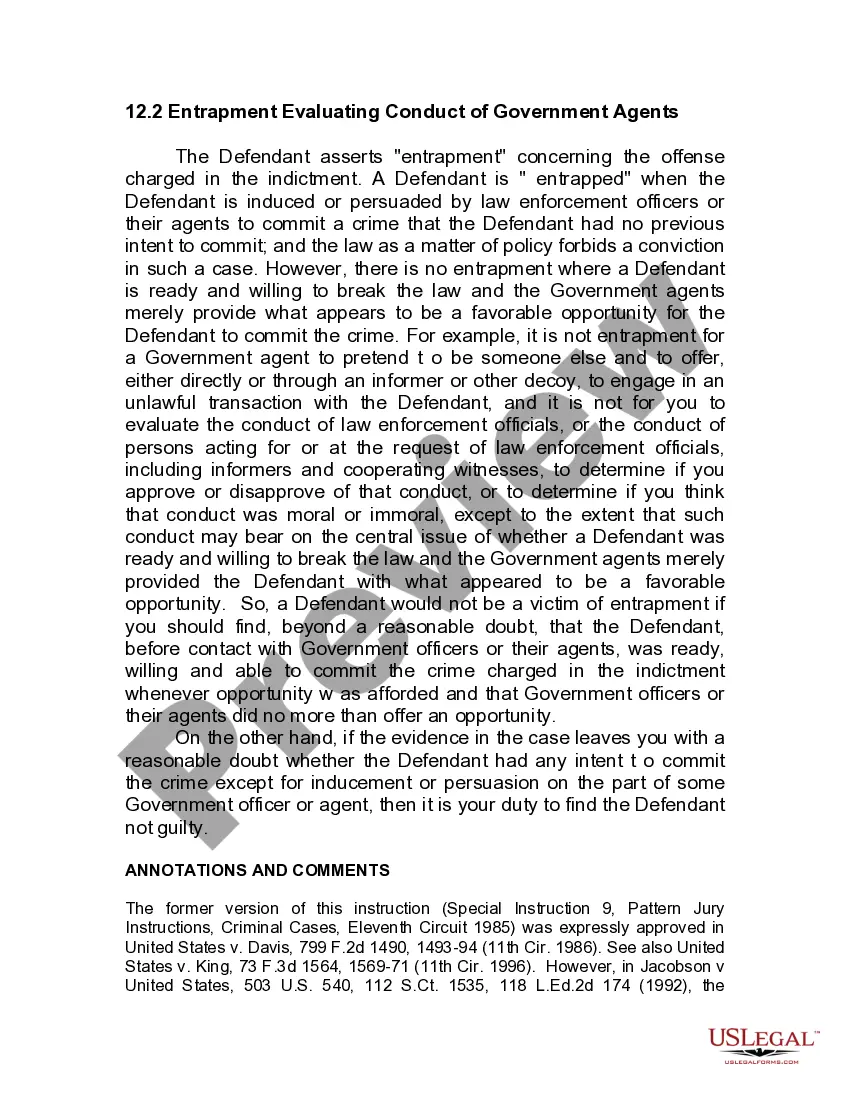
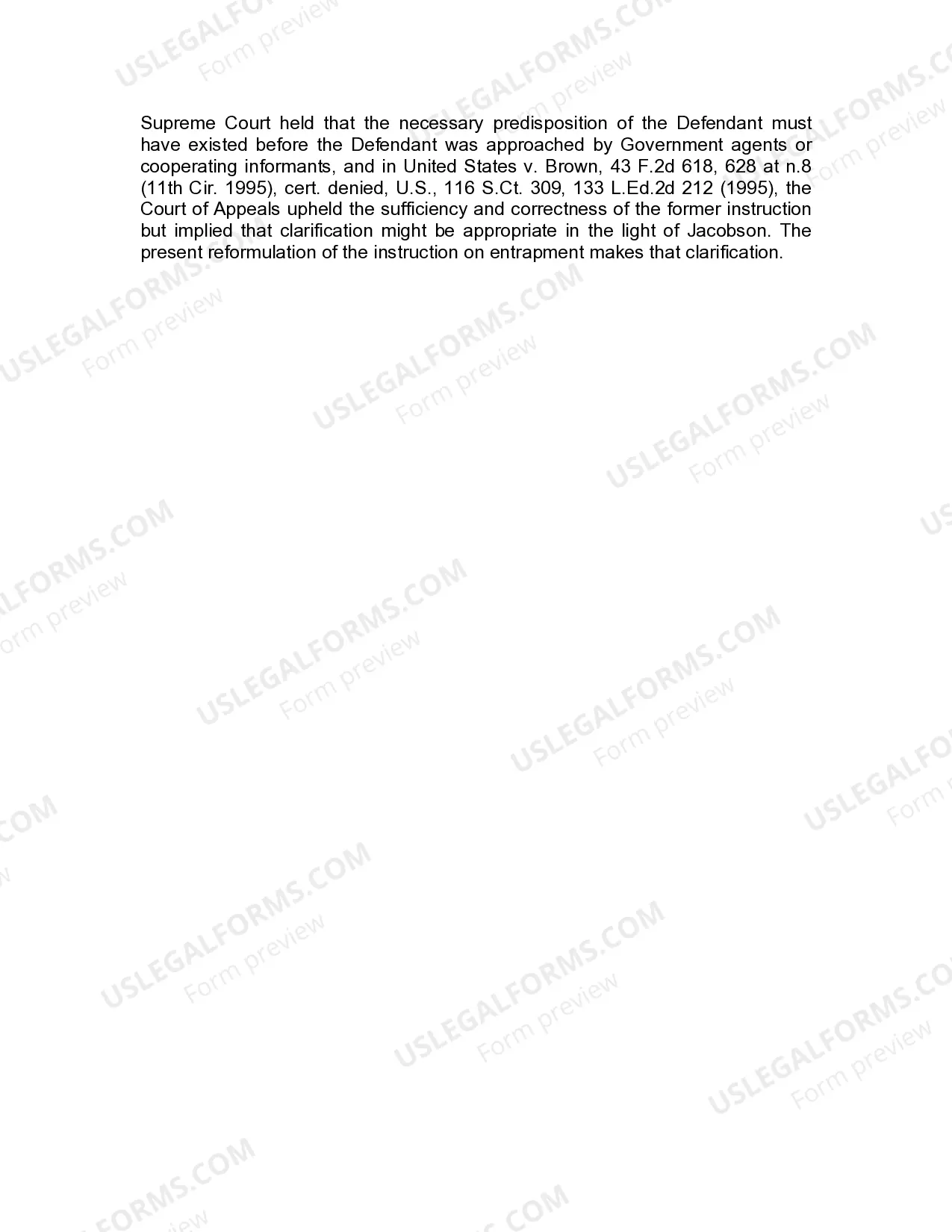
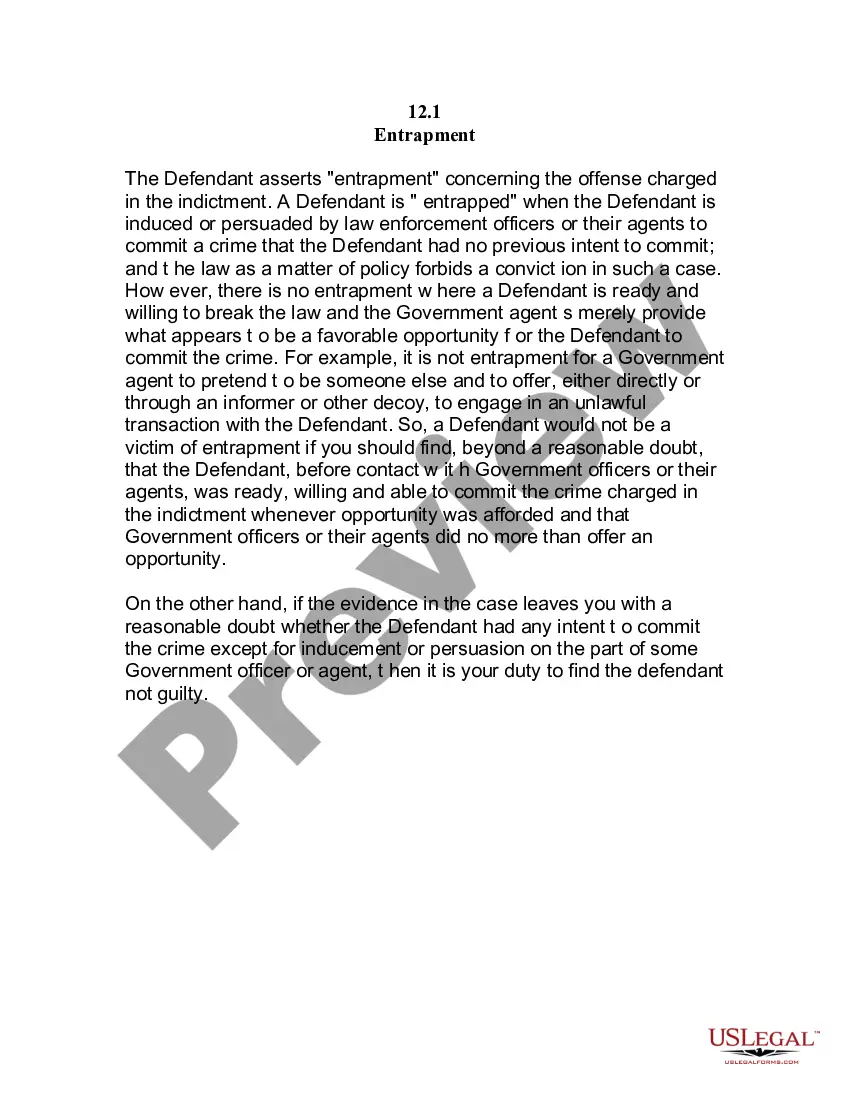
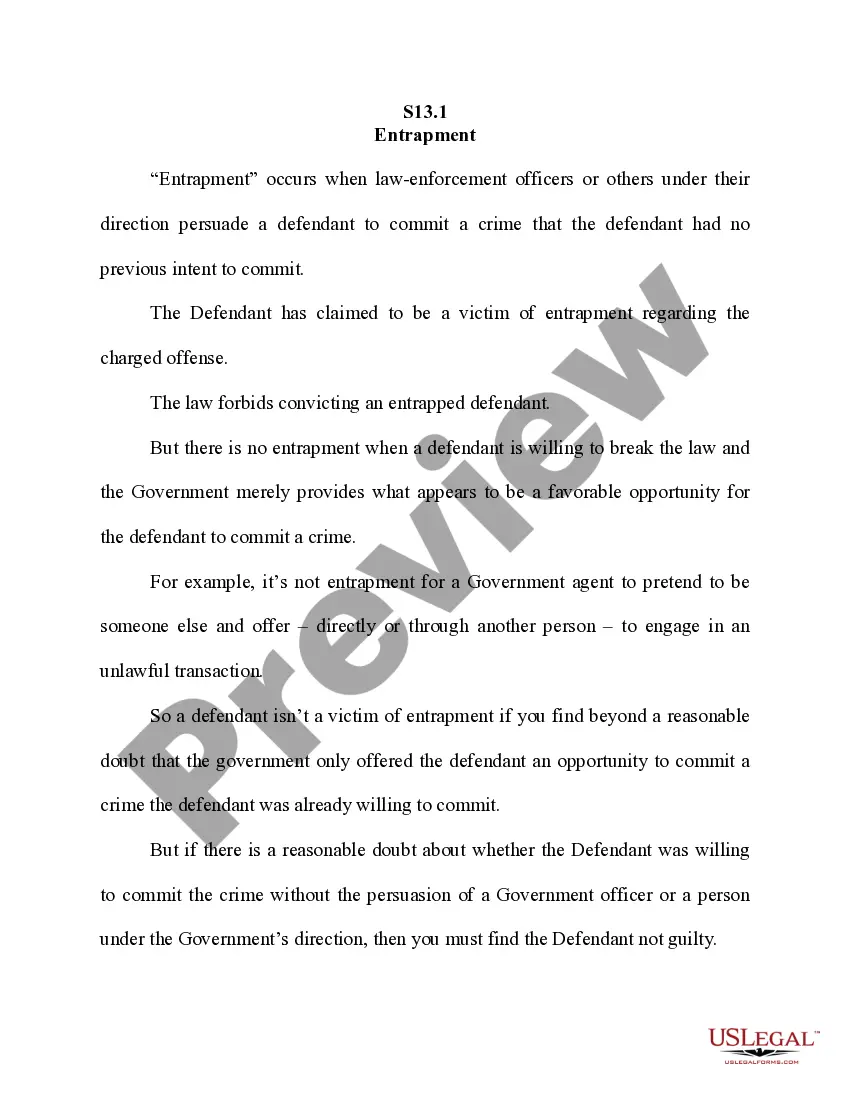
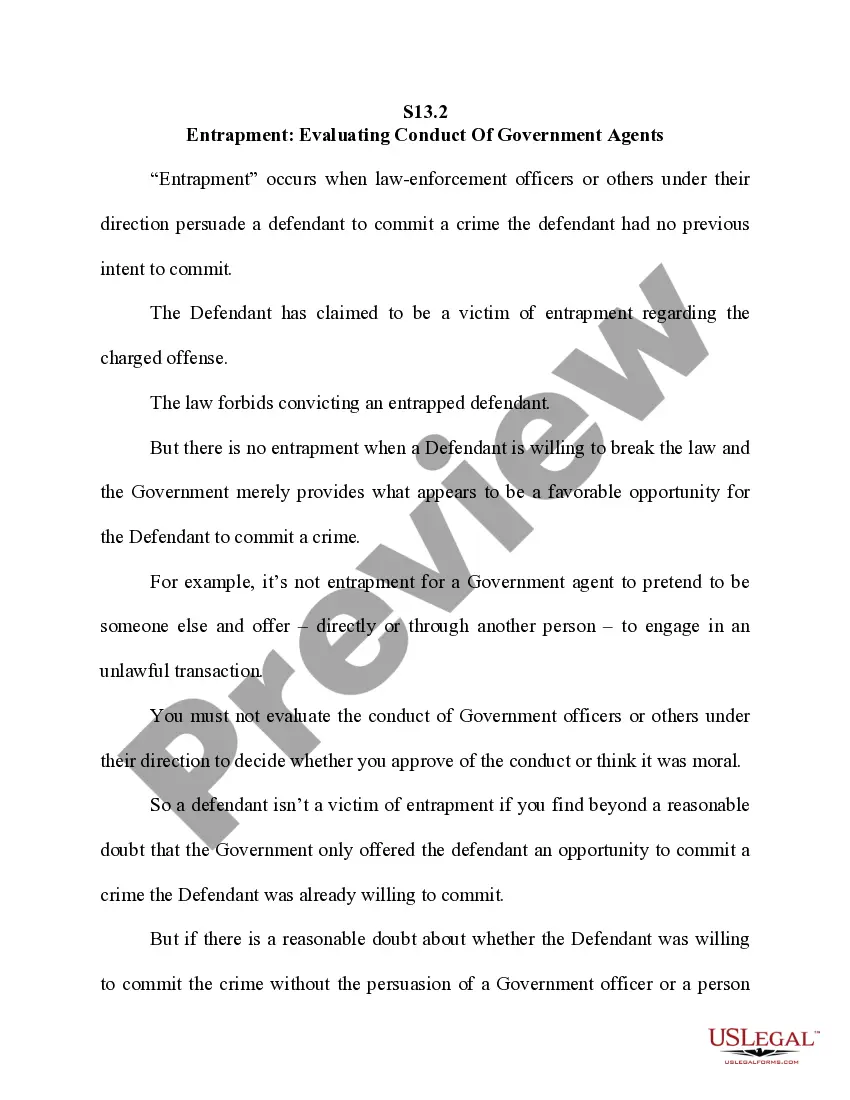
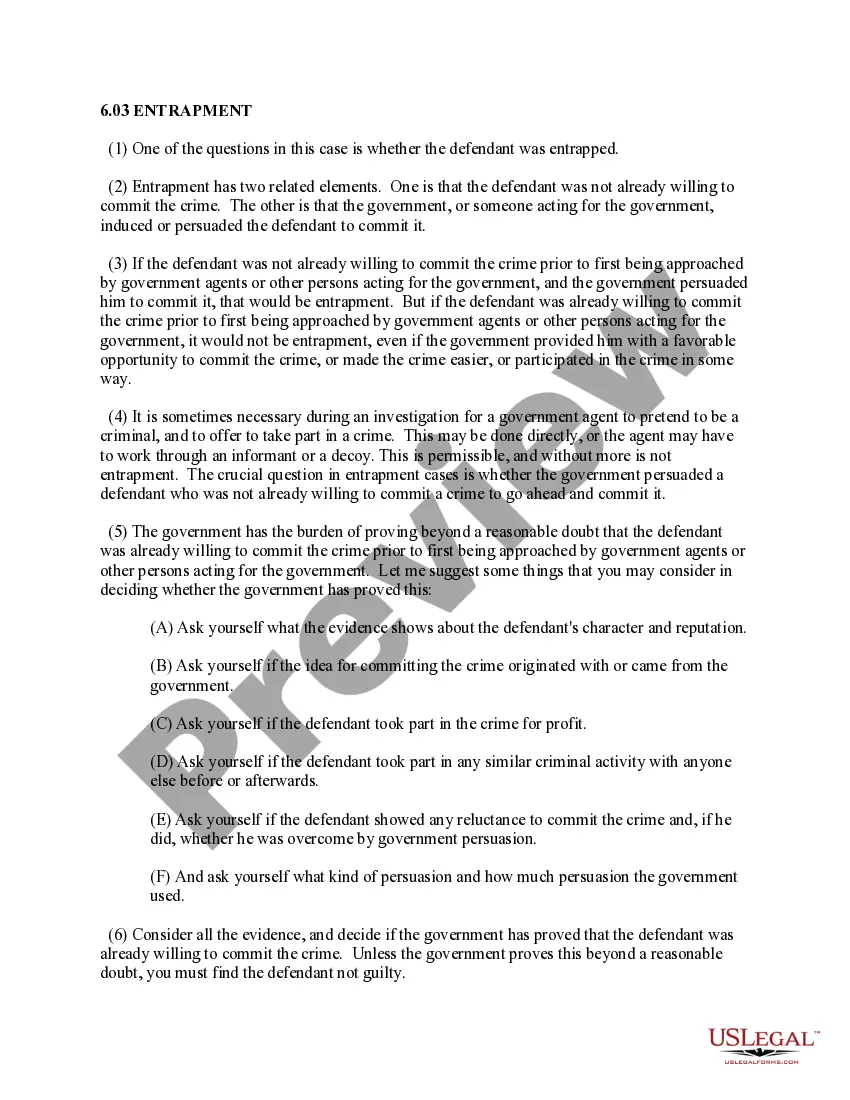
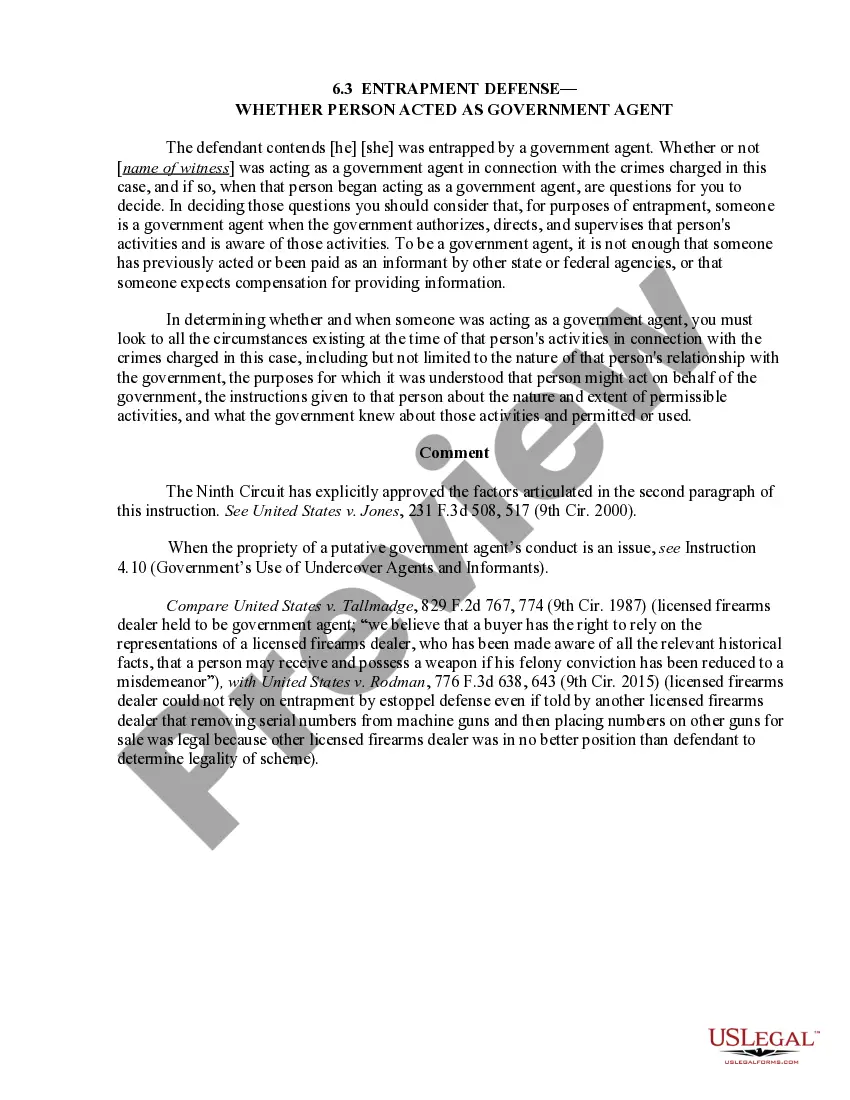
The Jury Instruction - Entrapment - Evaluating Conduct of Government Agents form provides guidance on how jurors should evaluate claims of entrapment in criminal cases. This form includes model jury instructions that outline the legal principles surrounding entrapment, differentiating it from lawful law enforcement conduct. It helps ensure that jurors understand the criteria for establishing entrapment and the role of government agents in the prosecution of a case.
Key components of this form
- Definition of entrapment and the conditions under which it applies.
- Clarification on the responsibility of the defendant regarding intent to commit a crime.
- Guidelines on evaluating the conduct of law enforcement officers and their agents.
- Criteria for determining if the defendant was merely offered an opportunity to commit a crime.
- Instructions on how to reach a verdict based on reasonable doubt regarding entrapment.
Common use cases
This form is used in criminal trials where the defendant argues that they were entrapped by law enforcement. It is applicable when the defense claims that government agents induced them to commit a crime they would not have otherwise committed. The instructions provided help jurors in understanding the nuances of entrapment and the necessary legal standards to arrive at a fair verdict.
Intended users of this form
- Judges looking to provide jury instructions on entrapment cases.
- Attorneys representing defendants in criminal cases involving claims of entrapment.
- Jurors serving on a trial that includes questions of entrapment.
How to complete this form
- Review the case details to identify the entrapment claims being addressed.
- Use the provided definitions and guidelines to formulate clear jury instructions.
- Assess the evidence presented to ensure it aligns with the entrapment criterion.
- Clearly articulate the responsibilities of jurors in evaluating the conduct of government agents.
- Ensure that the instructions reflect the legal standards applicable in your jurisdiction.
Notarization requirements for this form
Notarization is not commonly needed for this form. However, certain documents or local rules may make it necessary. Our notarization service, powered by Notarize, allows you to finalize it securely online anytime, day or night.
Get your form ready online
Our built-in tools help you complete, sign, share, and store your documents in one place.
Make edits, fill in missing information, and update formatting in US Legal Forms—just like you would in MS Word.
Download a copy, print it, send it by email, or mail it via USPS—whatever works best for your next step.
Sign and collect signatures with our SignNow integration. Send to multiple recipients, set reminders, and more. Go Premium to unlock E-Sign.
If this form requires notarization, complete it online through a secure video call—no need to meet a notary in person or wait for an appointment.
We protect your documents and personal data by following strict security and privacy standards.

Make edits, fill in missing information, and update formatting in US Legal Forms—just like you would in MS Word.

Download a copy, print it, send it by email, or mail it via USPS—whatever works best for your next step.

Sign and collect signatures with our SignNow integration. Send to multiple recipients, set reminders, and more. Go Premium to unlock E-Sign.

If this form requires notarization, complete it online through a secure video call—no need to meet a notary in person or wait for an appointment.

We protect your documents and personal data by following strict security and privacy standards.
Avoid these common issues
- Failing to clearly differentiate between entrapment and mere provision of opportunity.
- Overlooking the necessity of proving the defendant's predisposition to commit the crime.
- Inadequately explaining the role of government agents in the entrapment defense.
- Neglecting to provide clear instructions on the reasonable doubt standard concerning entrapment.
Why use this form online
- Easy access to professionally drafted jury instructions that save time and effort.
- Editable templates allow for customization to fit specific case needs.
- Reliable and up-to-date legal language that reflects current laws.
Looking for another form?


Form popularity
FAQ
The noun conduct refers to behavior, like how students are rewarded for good conduct. The verb conduct means carry something through, as in "to conduct a survey." And if you lead an orchestra, you conduct it.
An example of conduct is to lead a meeting. An example of conduct is to lead an orchestra. To direct the course of; manage or control.
Demeanor, demeanour, behavior, control, guidance, behaviour, deportment, management, bearing, carry, convey, transmit. conduct(verb)
As verbs the difference between conduct and conducting is that conduct is (archaictransitive) to lead, or guide; to escort while conducting is .