Jury Instruction - RICO - Supplemental Instruction On Forfeiture Issues After Guilty Verdict
Understanding this form
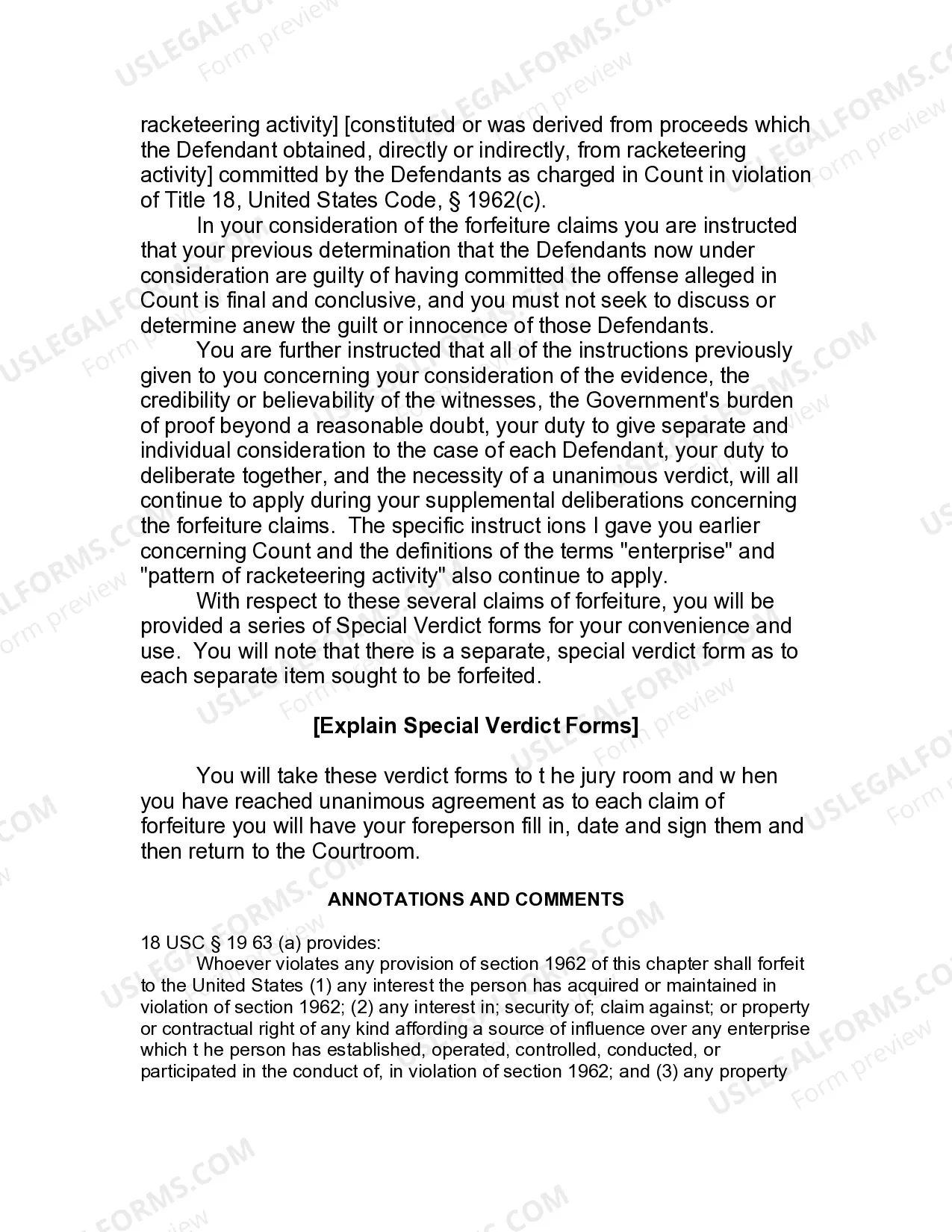
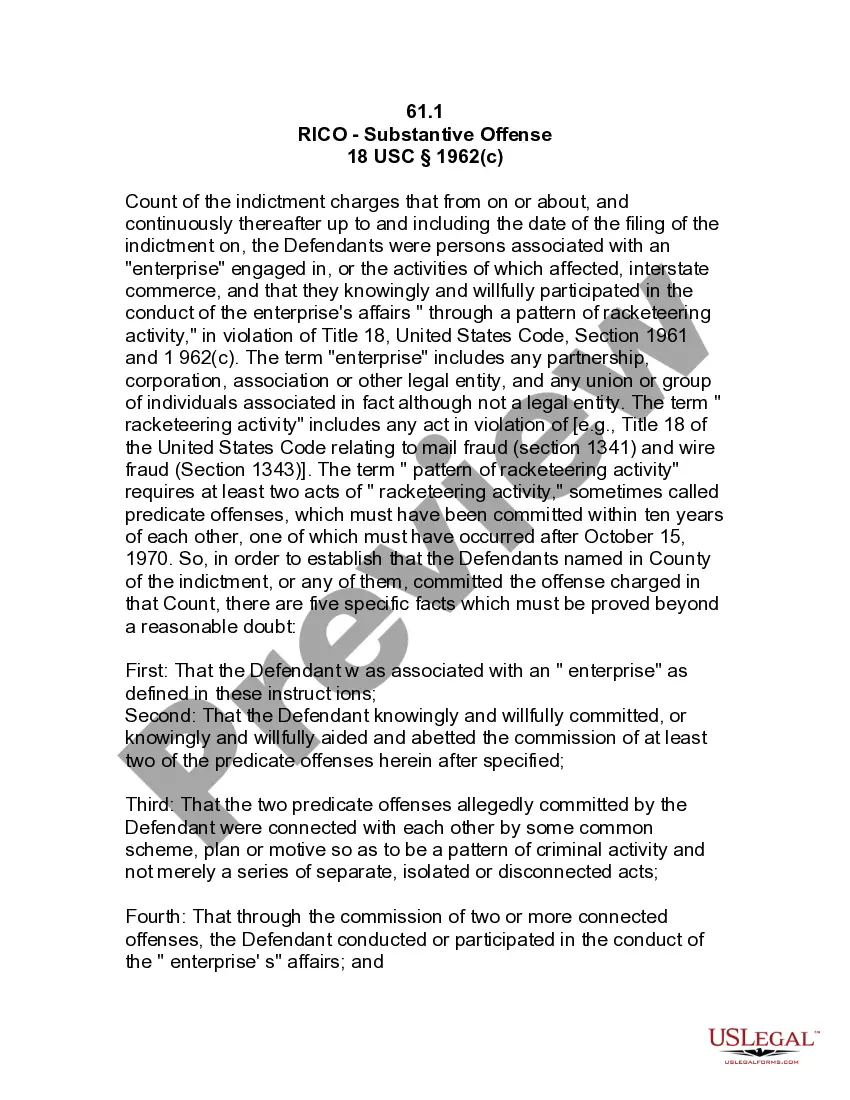
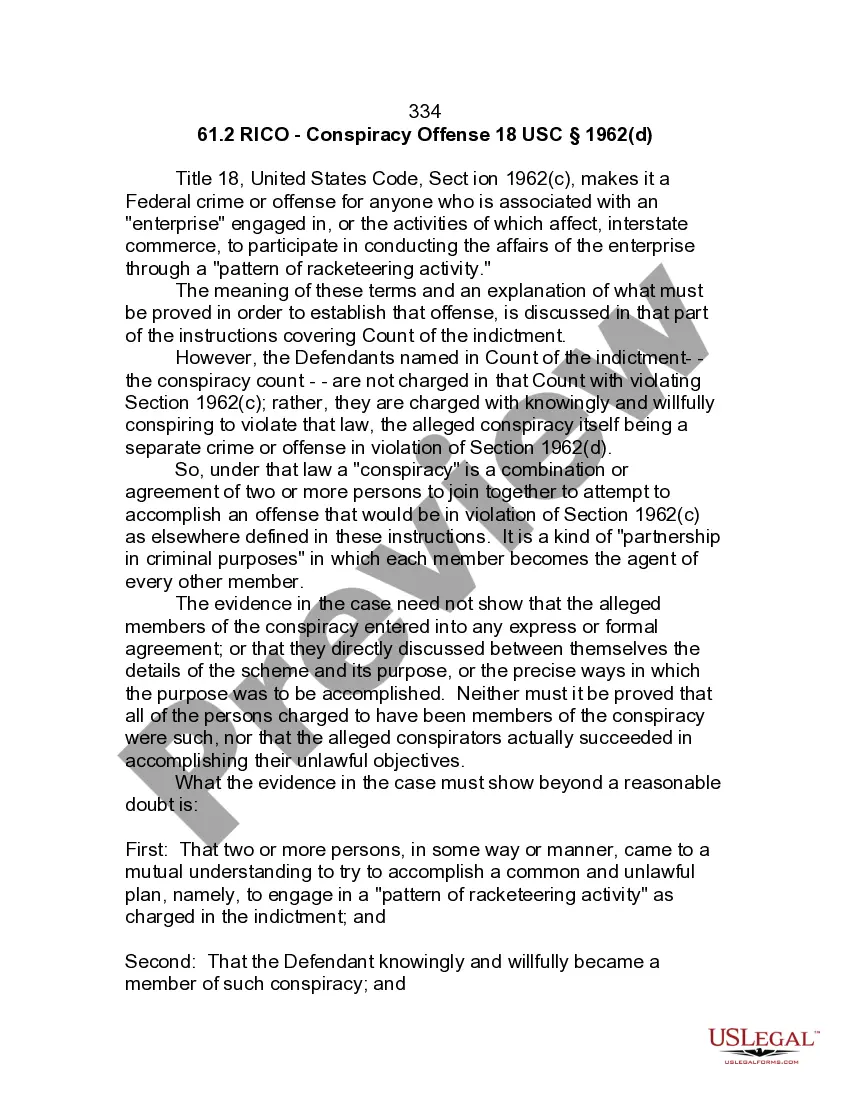
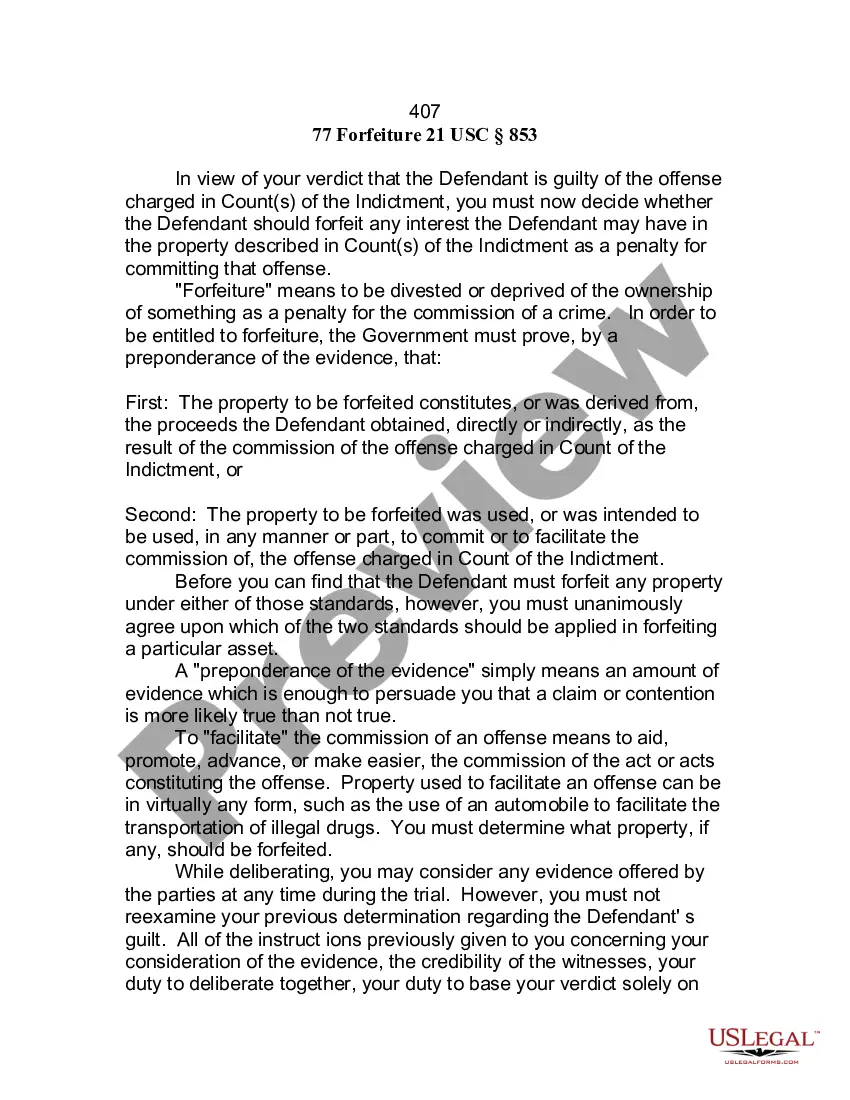
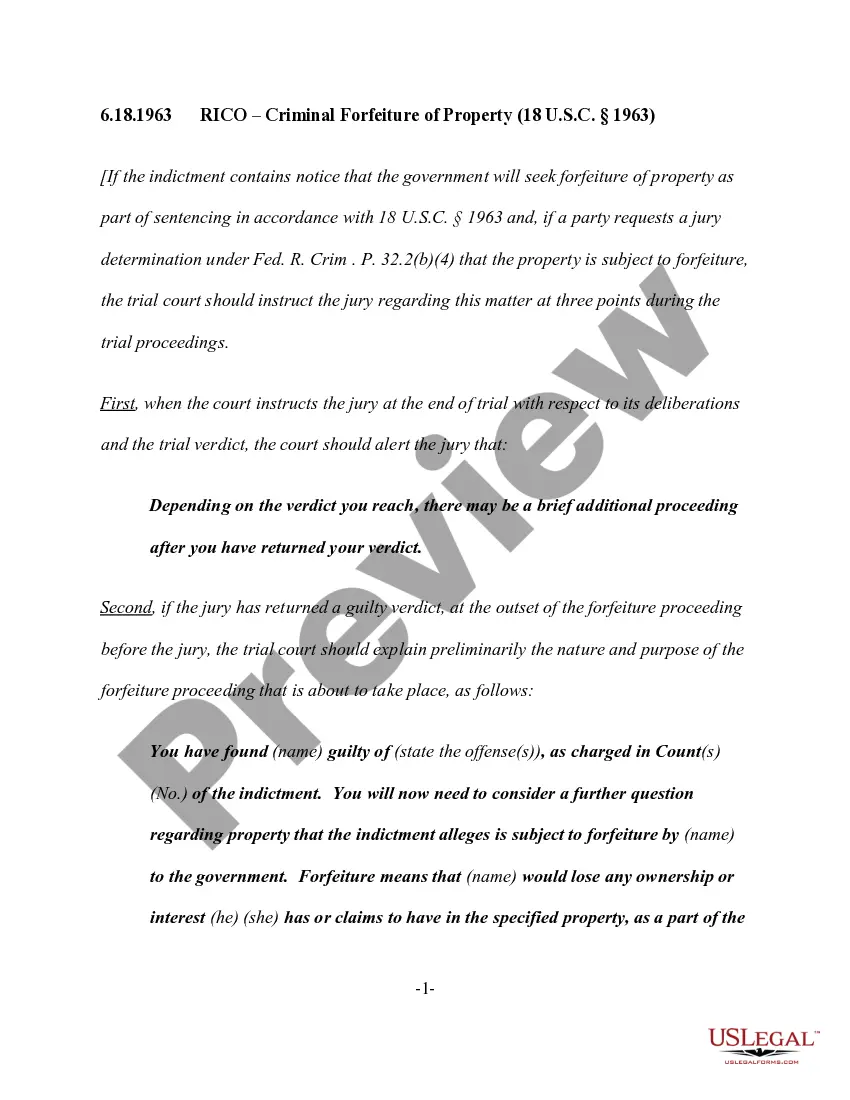
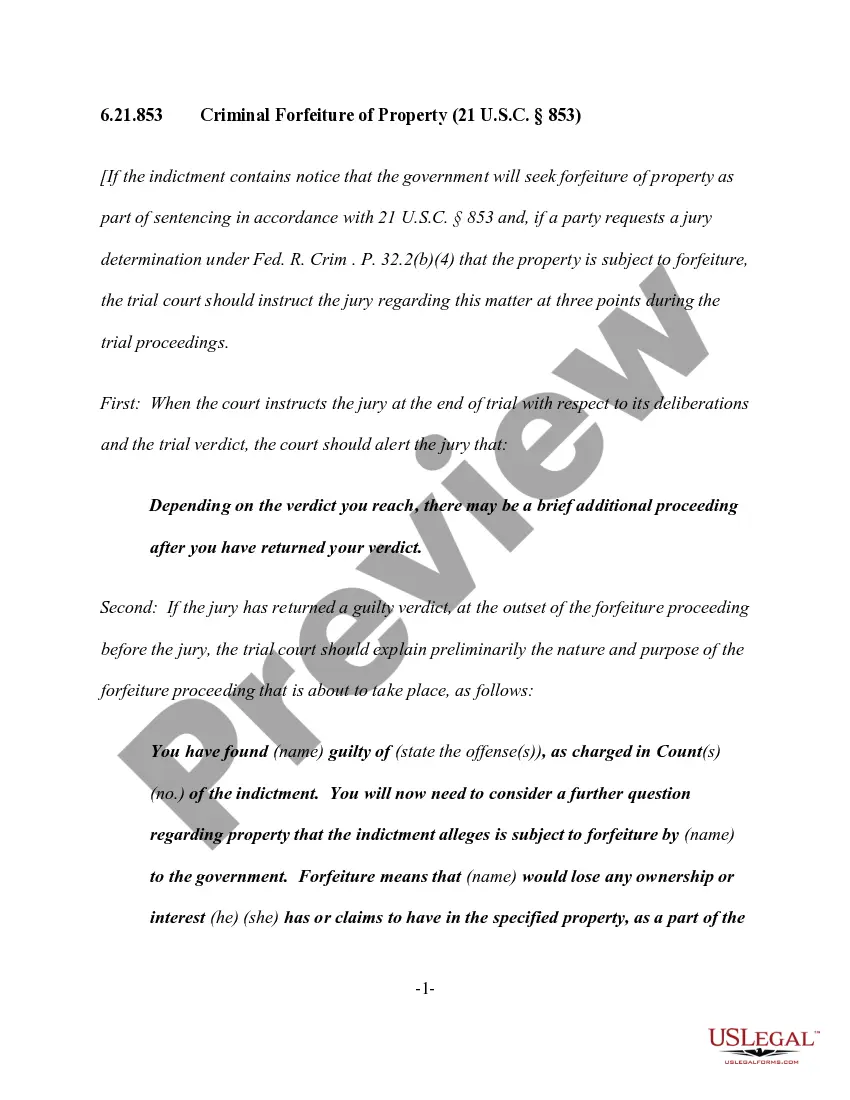
The Jury Instruction - RICO - Supplemental Instruction On Forfeiture Issues form provides a comprehensive template for jury instructions relating to forfeiture claims under the Racketeer Influenced and Corrupt Organizations Act (RICO). This form is used to guide jurors in determining whether defendants who have been found guilty must forfeit certain assets obtained through racketeering activities. Its main purpose is to clarify the conditions under which forfeiture applies, distinguishing it from other jury instructions that may not include specific provisions regarding asset forfeiture.
What’s included in this form
- Definition of forfeiture and its legal implications under Title 18, United States Code, Section 1963(a).
- Instructions for jurors on how to assess whether specific property or proceeds should be forfeited based on the defendants' guilty verdict.
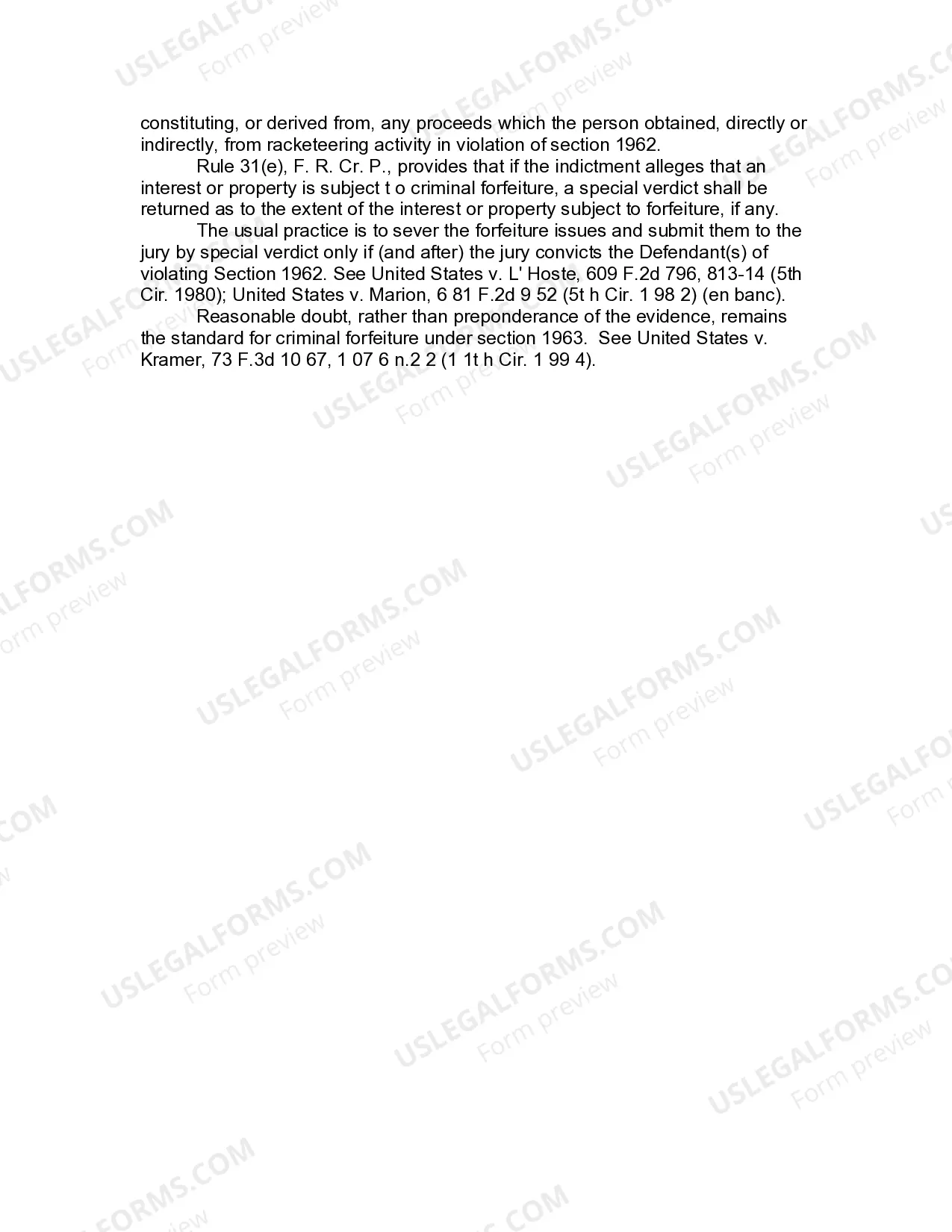
- Emphasis on the requirement for the Government to prove the claims beyond a reasonable doubt.
- Details on the special verdict forms provided for each item subject to forfeiture.
- Clarification that previous determinations of guilt remain in effect during discussions regarding forfeiture.

When to use this document
This form is utilized during jury deliberations after a guilty verdict has been reached in a RICO case. It is specifically relevant when the Court wishes to instruct the jury on issues pertaining to the forfeiture of assets or proceeds linked to the racketeering activities of the convicted defendants. It ensures that jurors understand the conditions that must be met for the forfeiture to be legally enforced.
Who this form is for
- Juries hearing RICO cases where forfeiture of assets is being considered.
- Judges looking to provide accurate and clear instructions regarding forfeiture issues to juries.
- Legal professionals and attorneys involved in RICO cases who need a reliable jury instruction template.
Instructions for completing this form
- Review the relevant sections of the indictment concerning forfeiture.
- Consider the Government's burden of proof in establishing the link between the guilty verdict and the forfeiture claims.
- Discuss among jury members to reach a unanimous decision on each claim of forfeiture.
- Fill out the special verdict forms provided for each asset or property item subject to forfeiture.
- Ensure the foreperson dates and signs the completed verdict forms before returning them to the courtroom.
Is notarization required?
Notarization is generally not required for this form. However, certain states or situations might demand it. You can complete notarization online through US Legal Forms, powered by Notarize, using a verified video call available anytime.
Get your form ready online
Our built-in tools help you complete, sign, share, and store your documents in one place.
Make edits, fill in missing information, and update formatting in US Legal Forms—just like you would in MS Word.
Download a copy, print it, send it by email, or mail it via USPS—whatever works best for your next step.
Sign and collect signatures with our SignNow integration. Send to multiple recipients, set reminders, and more. Go Premium to unlock E-Sign.
If this form requires notarization, complete it online through a secure video call—no need to meet a notary in person or wait for an appointment.
We protect your documents and personal data by following strict security and privacy standards.

Make edits, fill in missing information, and update formatting in US Legal Forms—just like you would in MS Word.

Download a copy, print it, send it by email, or mail it via USPS—whatever works best for your next step.

Sign and collect signatures with our SignNow integration. Send to multiple recipients, set reminders, and more. Go Premium to unlock E-Sign.

If this form requires notarization, complete it online through a secure video call—no need to meet a notary in person or wait for an appointment.

We protect your documents and personal data by following strict security and privacy standards.
Avoid these common issues
- Not understanding the difference between guilt and the specifics of forfeiture claims.
- Failing to reach a unanimous decision on each forfeiture item.
- Confusing standards of proof, such as applying preponderance of evidence instead of beyond a reasonable doubt.
- Overlooking instructions related to specific items outlined in the additional portion of the indictment.
Legal use & context
- This form serves as a crucial guide for juries in federal criminal cases involving racketeering and forfeiture.
- The guidance provided in the form is aligned with federal law specified under the RICO statute.
- Effective jury instructions are required for due process, ensuring a fair assessment of forfeiture claims.
- Prior case law reinforces the importance of clear instructions surrounding forfeiture issues in criminal convictions.
What to keep in mind
- The Jury Instruction form is essential for addressing forfeiture issues in RICO cases post-conviction.
- Clarity on legal terms related to forfeiture assists jurors in making informed decisions.
- Specific instructions regarding verdict forms streamline the jury's deliberation process.
- Understanding the burden of proof is vital for establishing the legitimacy of forfeiture claims.
Looking for another form?
Form popularity
FAQ
A judgment notwithstanding the verdict (or JNOV) is an order by a judge after a jury has returned its verdict. The judge can overturn the jury's verdict if he or she feels it cannot reasonably be supported by the evidence or if it contradicts itself.
The judge instructs the jury about the relevant laws that should guide its deliberations. (In some jurisdictions, the court may instruct the jury at any time after the close of evidence.The judge reads the instructions to the jury. This is commonly referred to as the judge's charge to the jury.
The Sixth Amendment's guarantee of a trial by an impartial jury requires that a jury's verdict must be based on nothing else but the evidence and law presented to them in court.
The jury listens to the evidence during a trial, decides what facts the evidence has established, and draws inferences from those facts to form the basis for their decision.If the jury finds the accused guilty or liable, it is up to the judge to sentence the defendant.
The Judge will always seek a unanimous verdict first. That is a verdict upon which all the jurors are agreed, so either guilty or not guilty.If they cannot do that he will tell them that a majority verdict will be accepted. In a jury of 12 no more than two jurors can disagree.
Jury instructions, directions to the jury, or judge's charge are legal rules that jurors should follow when deciding a case.
These are civil or criminal jury instructions approved by a state court, bench committee, or bar association. They are commonly used by courts in the relevant jurisdiction, as they ease the process of drafting fair jury instructions and theoretically do not have errors.
A jury instruction is a guideline given by the judge to the jury about the law they will have to apply to the facts they have found to be true. The purpose of the instructions is to help the jury arrive at a verdict that follows the law of that jurisdiction.