Jury Instruction - Killing Of A Witness
What is this form?
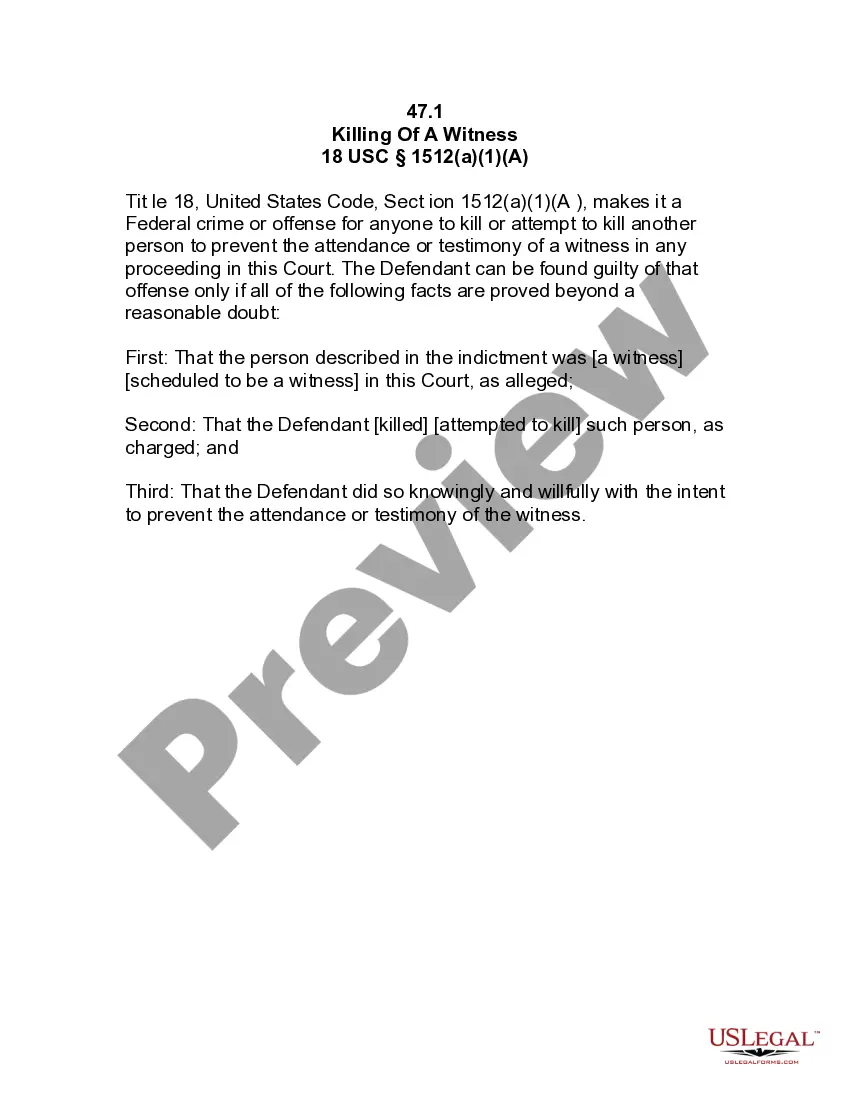
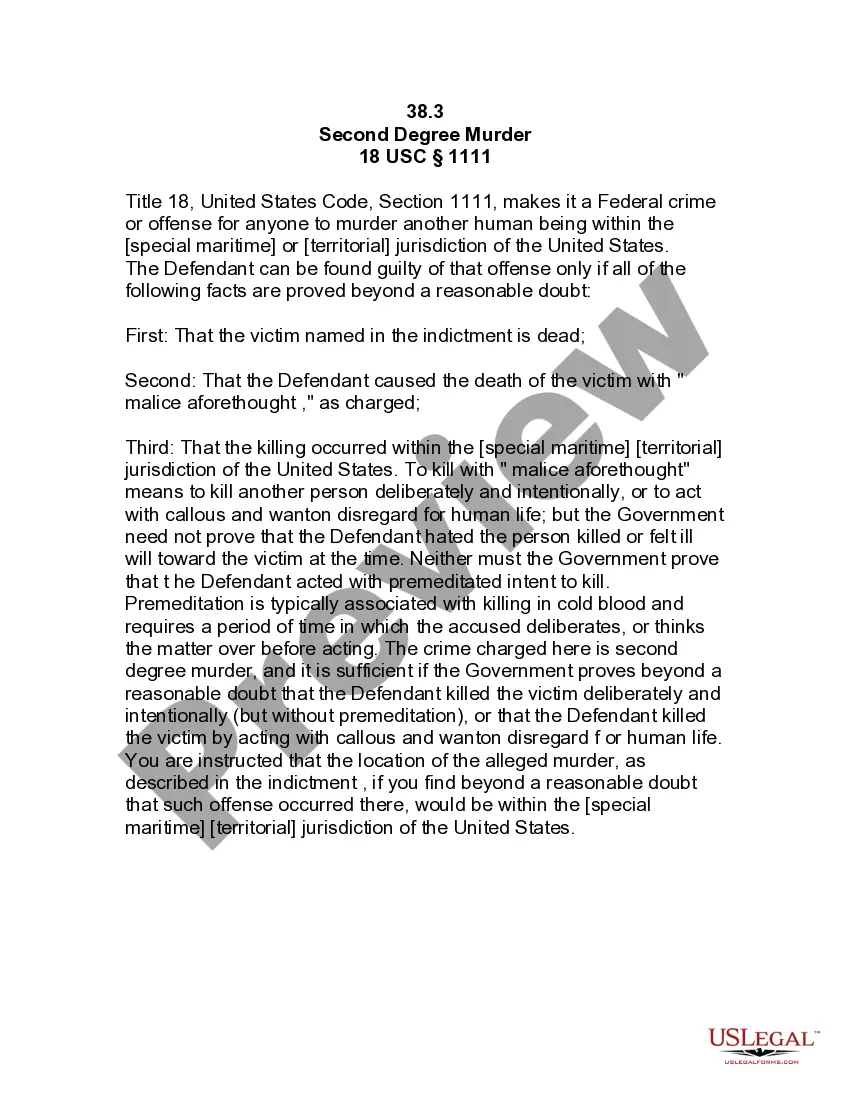
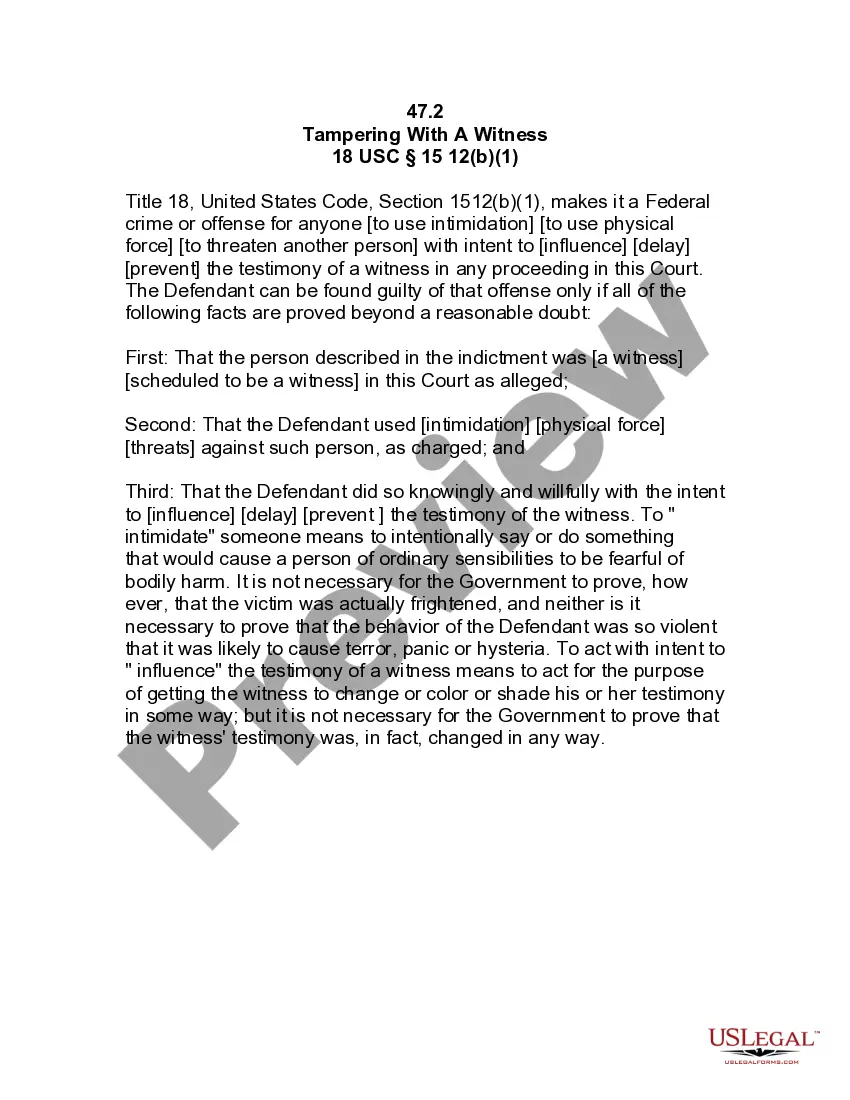
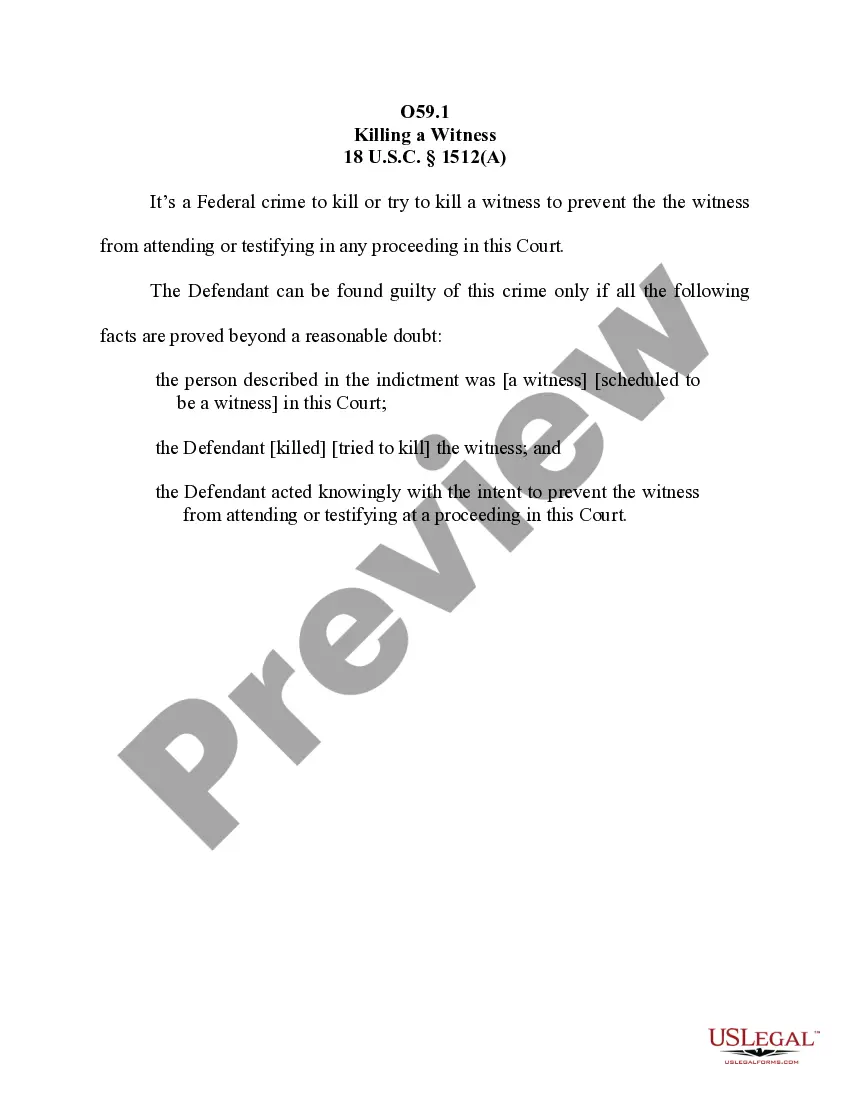
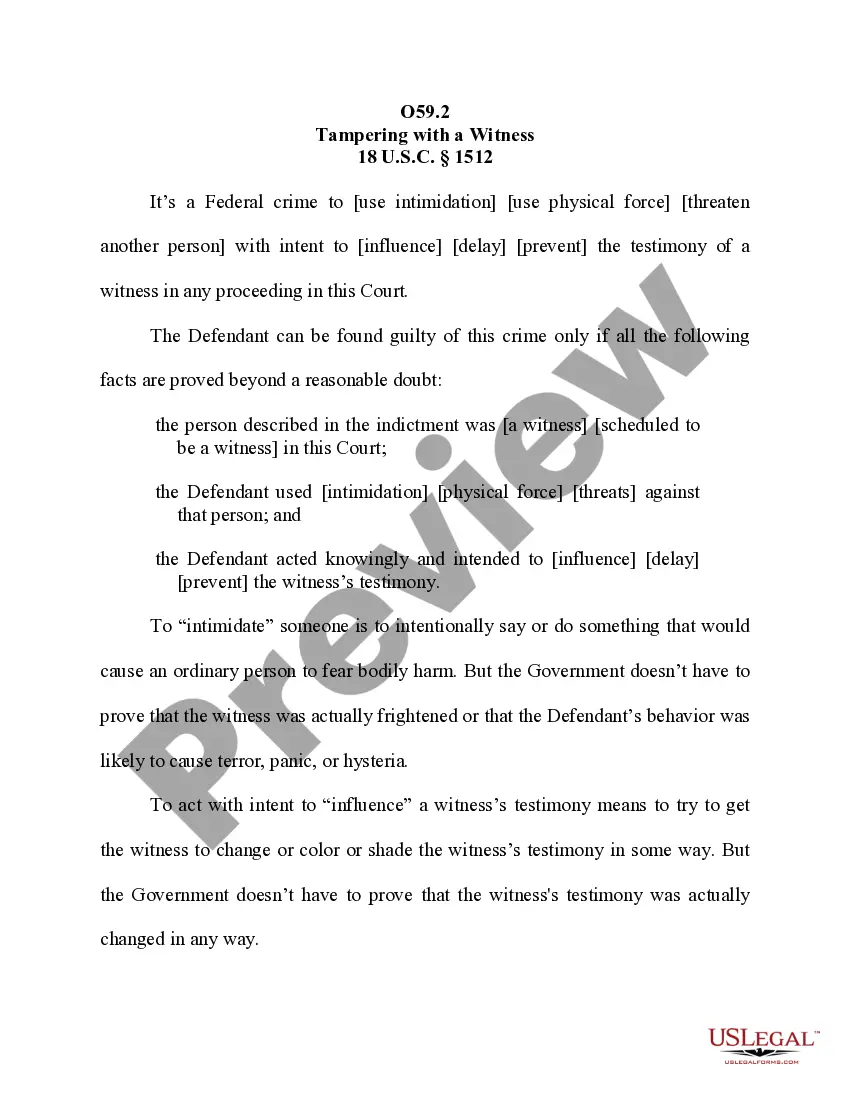
The Jury Instruction for Killing of a Witness provides legal guidelines for jurors deciding cases involving the federal crime of killing or attempting to kill a witness to prevent their testimony. This form is specifically tailored to align with 18 USC 1512(a)(1)(A) and serves as a model that can be adjusted according to the specifics of a case, distinguishing itself from other jury instructions with its focus on witness intimidation cases.
Form components explained
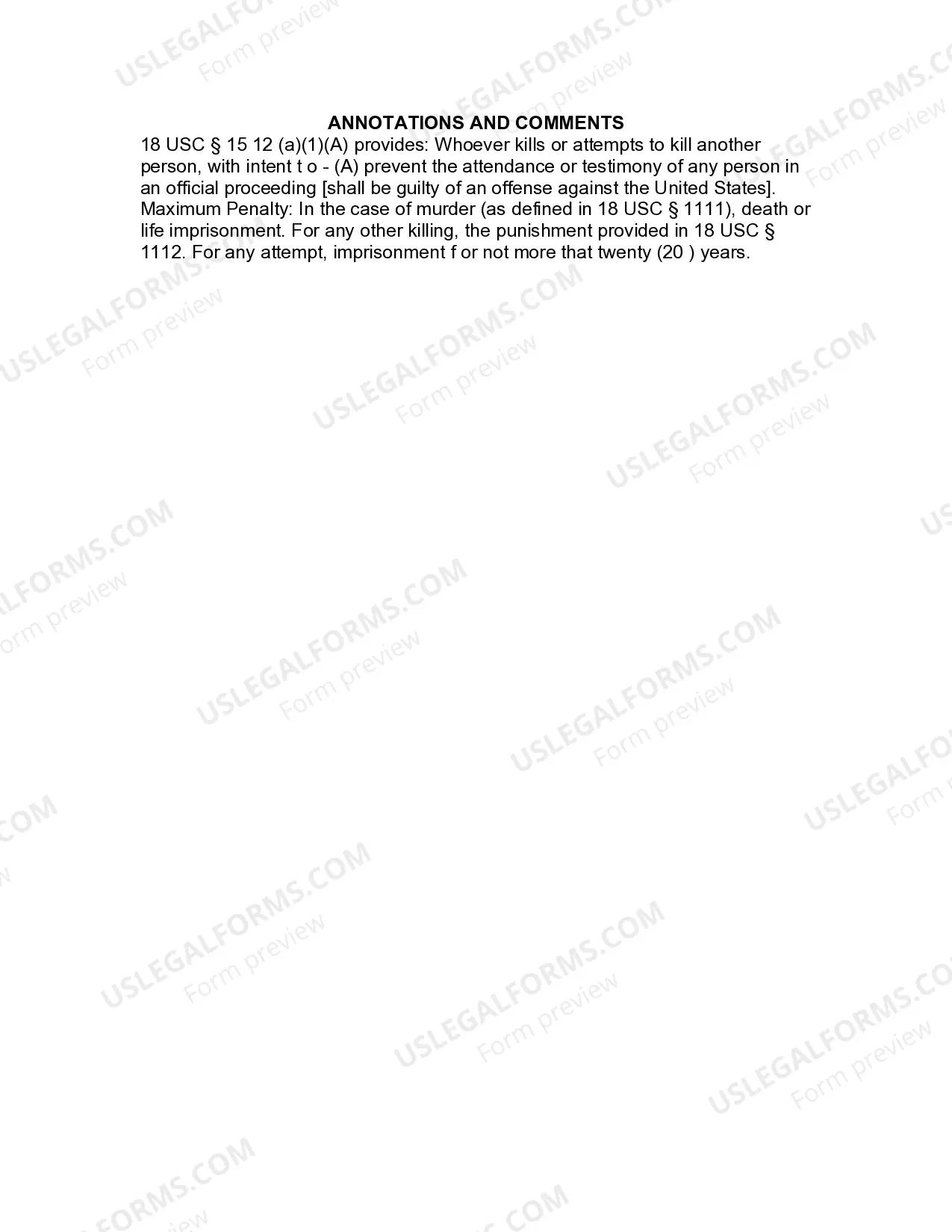
- Federal statute reference: 18 USC 1512(a)(1)(A), defining the crime of killing a witness.
- Criteria for conviction, outlining the evidentiary requirements for the prosecution.
- Definitions and explanations of key terms related to the crime and its implications.
- Punishment frameworks, detailing potential penalties for violations of this statute.
When to use this form
This form is utilized in legal proceedings where the defendant is accused of killing or attempting to kill a witness to hinder their participation in an official legal process. It is relevant in serious criminal cases involving witness intimidation and must be carefully considered during jury instructions to ensure that jurors understand the gravity of the charges being evaluated.
Who can use this document
- Judges overseeing cases involving witness intimidation charges.
- Defense attorneys representing clients accused of this crime.
- Prosecutors preparing jury instructions for cases under this statute.
- Legal professionals needing a framework for jury guidance in federal trials.
Steps to complete this form
- Review the federal statute outlined in 18 USC 1512(a)(1)(A).
- Ensure all necessary facts are identified and clearly defined.
- Modify the language as needed to fit the specific case's context.
- Detail the potential penalties relevant to the allegations at hand.
- Present the form to the jury with clarity to aid in understanding the case.
Does this document require notarization?
Notarization is not commonly needed for this form. However, certain documents or local rules may make it necessary. Our notarization service, powered by Notarize, allows you to finalize it securely online anytime, day or night.
Get your form ready online
Our built-in tools help you complete, sign, share, and store your documents in one place.
Make edits, fill in missing information, and update formatting in US Legal Forms—just like you would in MS Word.
Download a copy, print it, send it by email, or mail it via USPS—whatever works best for your next step.
Sign and collect signatures with our SignNow integration. Send to multiple recipients, set reminders, and more. Go Premium to unlock E-Sign.
If this form requires notarization, complete it online through a secure video call—no need to meet a notary in person or wait for an appointment.
We protect your documents and personal data by following strict security and privacy standards.

Make edits, fill in missing information, and update formatting in US Legal Forms—just like you would in MS Word.

Download a copy, print it, send it by email, or mail it via USPS—whatever works best for your next step.

Sign and collect signatures with our SignNow integration. Send to multiple recipients, set reminders, and more. Go Premium to unlock E-Sign.

If this form requires notarization, complete it online through a secure video call—no need to meet a notary in person or wait for an appointment.

We protect your documents and personal data by following strict security and privacy standards.
Typical mistakes to avoid
- Failing to accurately define who qualifies as a witness.
- Not fully explaining the intent required for the offense.
- Using outdated legal terminology that may confuse jurors.
- Neglecting the potential penalties that could impact juror perceptions.
Benefits of using this form online
- Easy access to tailored templates drafted by licensed attorneys.
- Quick customization options to fit specific legal scenarios.
- Reliability in adhering to current federal legal standards.
- Downloadable and easily shareable formats for court submissions.
Legal use & context
- This form serves as an official guide for jurors in federal trials related to witness intimidation.
- It outlines requirements critical for establishing a defendant's guilt beyond a reasonable doubt.
- Understanding this instruction is vital for ensuring the integrity of the judicial process.
Main things to remember
- The form guides jurors in deliberations regarding serious charges related to witness intimidation.
- Adaptability allows for case-specific modifications while staying within legal parameters.
- The knowledge of potential penalties helps frame the seriousness of the offense.
Looking for another form?









Form popularity
FAQ
Jury instructions are given to the jury by the judge, who usually reads them aloud to the jury. The judge issues a judge's charge to inform the jury how to act in deciding a case.
Primary tabs 1) A person with first-hand knowledge of an event, that testifies to that knowledge during a trial or other legal proceeding (see: eyewitness, earwitness) 2) A person who sees a second person sign a document, then adds their own signature confirming (or "attesting") that the first signature is genuine.
There are three types of witnessesii: eyes witnesses, character witnesses and expert witnesses. 1. Eye witnesses are witnesses who base their testimony on what they saw of the incident and their testimony consists of the facts of the incident rather than their inferences from what they saw.
He must, with understanding, take the oath or a substitute. Evid. He must have personal knowledge about the subject of his testimony. He must remember what he perceived. He must be able to communicate what he perceived.
Instructions to the Jury (In some jurisdictions, the court may instruct the jury at any time after the close of evidence. This sometimes occurs before closing arguments.) The judge reads the instructions to the jury. This is commonly referred to as the judge's charge to the jury.
The elements of witness capacity are the ability to perceive, remember, narrate in an understandable manner, and sincerity.
A lay witness the most common type is a person who watched certain events and describes what they saw. An expert witness is a specialist someone who is educated in a certain area. A character witness is someone who knew the victim, the defendant, or other people involved in the case.
(a) A person is disqualified to be a witness if he or she is: (1) Incapable of expressing himself or herself concerning the matter so as to be understood, either directly or through interpretation by one who can understand him; or (2) Incapable of understanding the duty of a witness to tell the truth.
In the United States, such a witness is "more than likely to be true based on his/her experience, knowledge, training and appearance of honesty and forthrightness...." Some factors for determining the credibility of testimony in U.S. courts include: (1) the witness had personal knowledge, (2) he or she was actually