Jury Instruction - Concealment Of Property Belonging To Bankruptcy Estate Of Debtor
Overview of this form
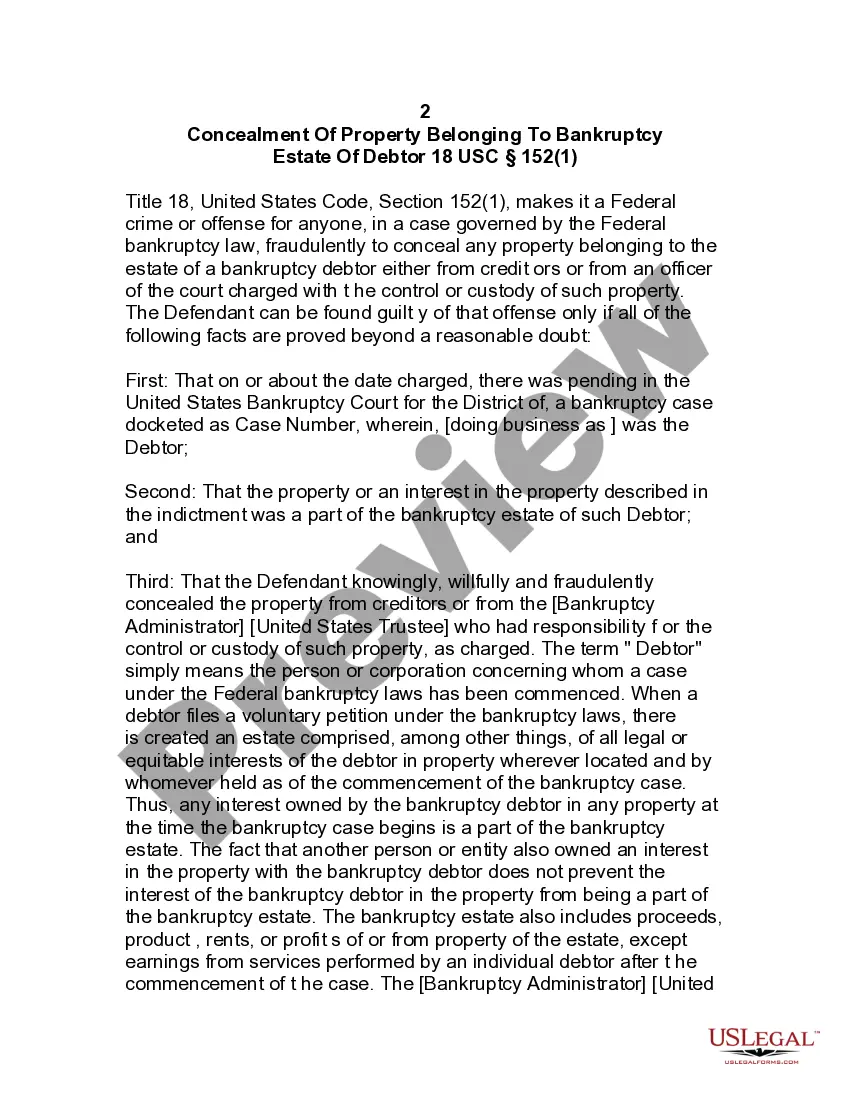
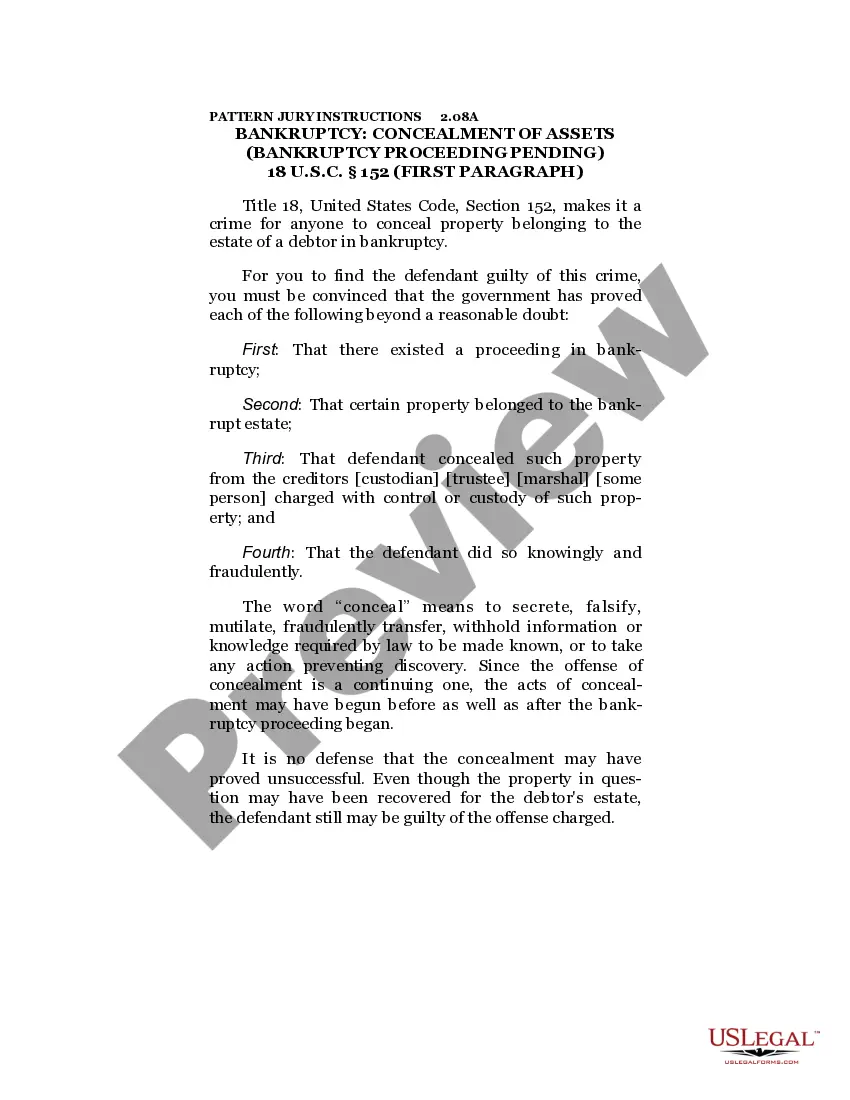
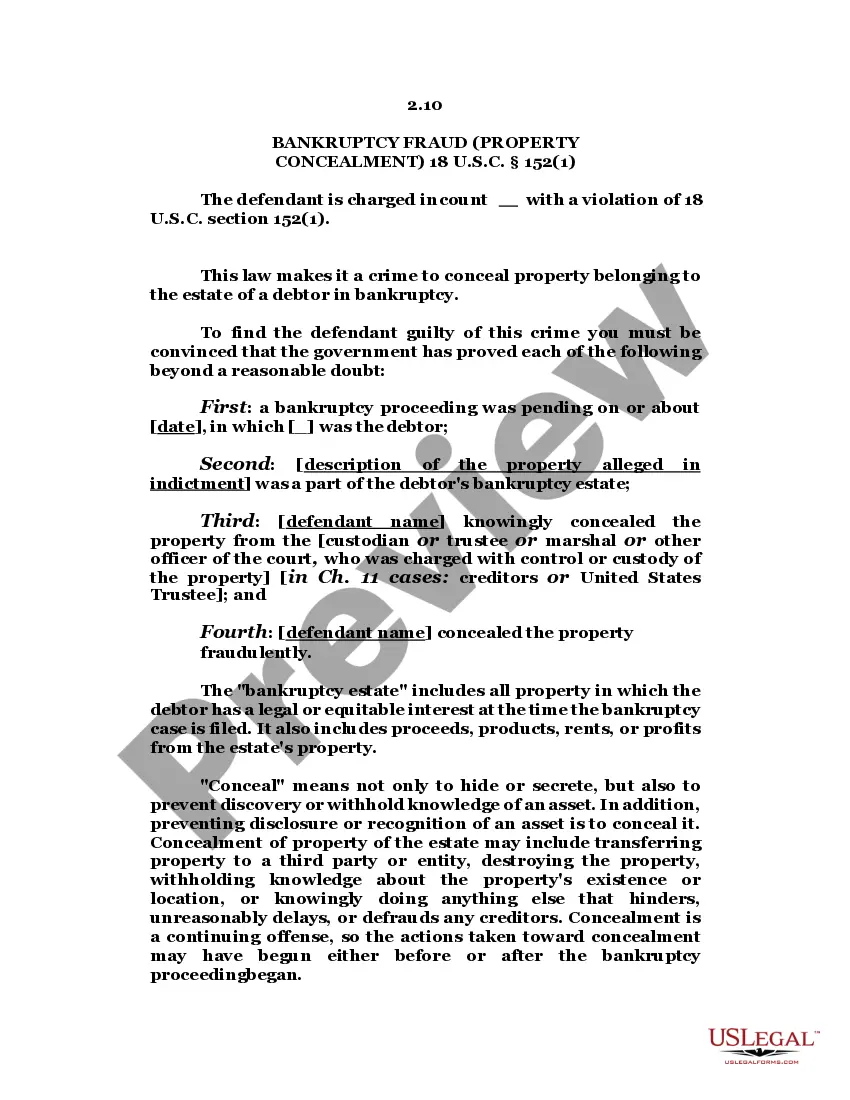
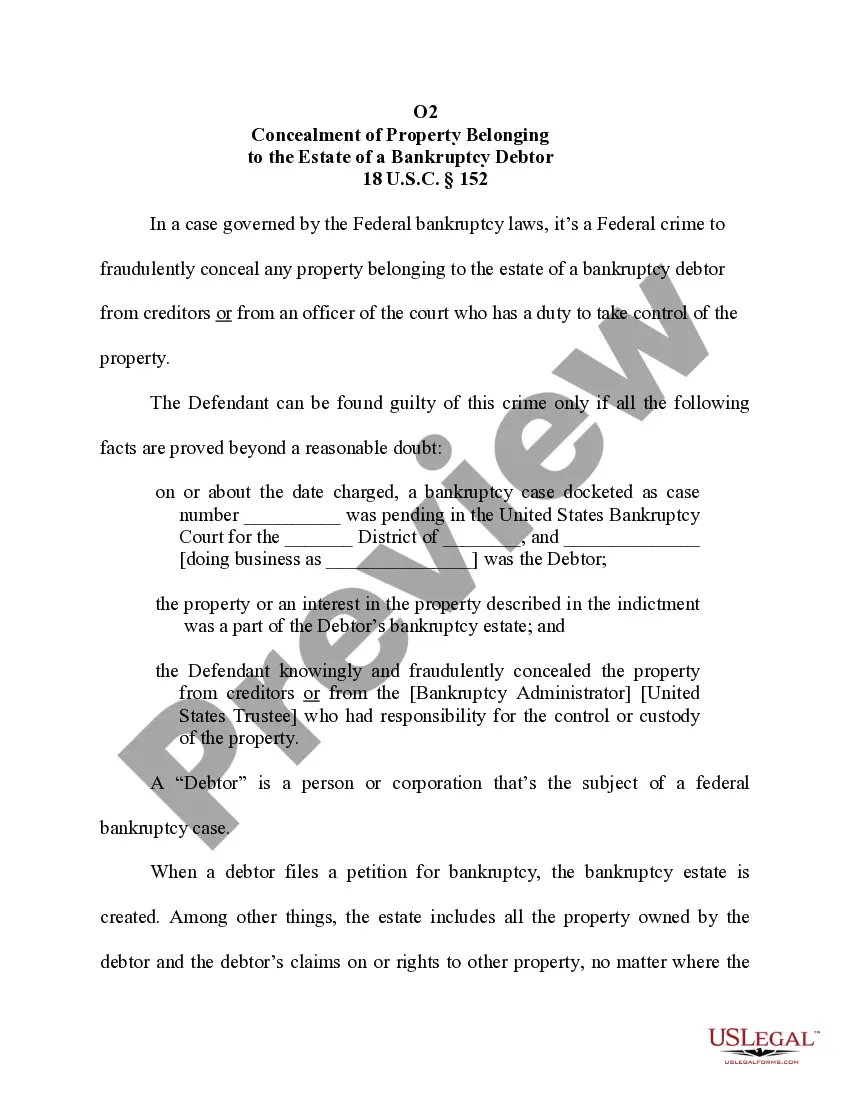
The Jury Instruction for Concealment of Property Belonging to Bankruptcy Estate of Debtor is a legal guide used in federal bankruptcy cases. It outlines essential jury instructions regarding the crime of concealing property that should belong to a debtor's bankruptcy estate. This form differs from other legal instructions by focusing specifically on fraudulent concealment within bankruptcy contexts, providing a structured framework for attorneys and jurors alike to ensure fair legal processes.
Key components of this form
- Description of the crime under Title 18 USC Section 152(1).
- Elements required to prove the offense beyond a reasonable doubt.
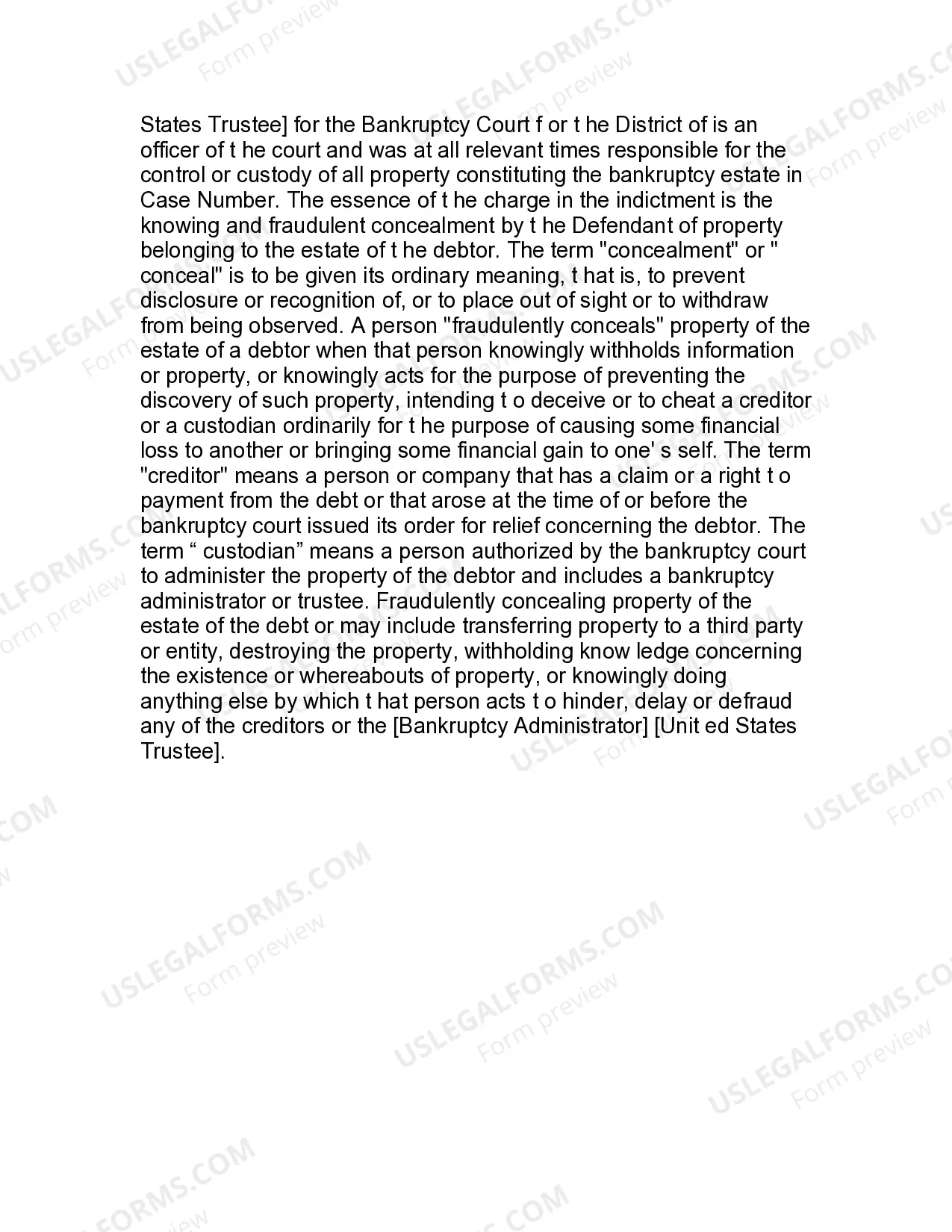
- Definitions of key terms such as "debtor," "creditor," and "custodian."
- Consequences for fraudulent concealment, including potential penalties.
- Annotations that guide the application of the law in specific cases.

When to use this document
This form is needed in situations where there are allegations of a debtor fraudulently concealing property that should be available to their bankruptcy estate. It assists in instructing a jury on how to evaluate evidence related to the concealment of assets during bankruptcy proceedings, ensuring that the legal responsibilities of the debtor are understood.
Who this form is for
- Attorneys representing parties in bankruptcy cases.
- Judges overseeing federal bankruptcy trials.
- Jurors assigned to cases involving bankruptcy-related concealment charges.
- Legal scholars studying bankruptcy law and its implications.
Steps to complete this form
- Begin by identifying the bankruptcy case details, including the case number and the debtorâs name.
- Clearly outline the specific property alleged to have been concealed.
- Ensure all definitions of terms used are consistent with the law, including defining âcreditorâ and âcustodian.â
- Provide comprehensive jury instructions tailored to the facts of the case.
- Review the assembled document to confirm it adheres to legal requirements and accurately reflects the situation at hand.
Is notarization required?
This form does not typically require notarization unless specified by local law. It is advisable to check with the local court for any additional requirements regarding submission.
Get your form ready online
Our built-in tools help you complete, sign, share, and store your documents in one place.
Make edits, fill in missing information, and update formatting in US Legal Forms—just like you would in MS Word.
Download a copy, print it, send it by email, or mail it via USPS—whatever works best for your next step.
Sign and collect signatures with our SignNow integration. Send to multiple recipients, set reminders, and more. Go Premium to unlock E-Sign.
If this form requires notarization, complete it online through a secure video call—no need to meet a notary in person or wait for an appointment.
We protect your documents and personal data by following strict security and privacy standards.

Make edits, fill in missing information, and update formatting in US Legal Forms—just like you would in MS Word.

Download a copy, print it, send it by email, or mail it via USPS—whatever works best for your next step.

Sign and collect signatures with our SignNow integration. Send to multiple recipients, set reminders, and more. Go Premium to unlock E-Sign.

If this form requires notarization, complete it online through a secure video call—no need to meet a notary in person or wait for an appointment.

We protect your documents and personal data by following strict security and privacy standards.
Typical mistakes to avoid
- Failing to accurately define legal terms, leading to confusion in jury instructions.
- Not including all elements necessary to establish concealment beyond a reasonable doubt.
- Neglecting to update case information, such as case numbers or debtor details, before submission.
Advantages of online completion
- Convenience of accessing the legal form from anywhere at any time.
- Editability allows users to customize the form to fit specific case requirements.
- Availability of professionally drafted legal content increases reliability.
Legal use & context
- This form is used in federal bankruptcy cases to provide jury instructions that clarify the nature of concealing property.
- It is enforceable in jurisdictions adhering to federal bankruptcy law.
- Failure to comply with these instructions may lead to penalties, including imprisonment for those found guilty of fraudulent concealment.
What to keep in mind
- The form guides the jury in understanding legal standards related to bankruptcy concealment.
- It's crucial for fair trial processes in bankruptcy-related cases.
- Ensure all case details are accurately captured to maintain legal integrity.
Looking for another form?




Form popularity
FAQ
: items that belong to someone and that are small enough to be carried Be sure to take your personal belongings with you when you get off the bus.
Love and belongingness needs - friendship, intimacy, trust, and acceptance, receiving and giving affection and love. Affiliating, being part of a group (family, friends, work).
To build a sense of belonging requires active effort and practice. One way to work on increasing your sense of belonging is to look for ways you are similar with others instead of focusing on ways you are different.
Membership Benefit: A Sense of Belonging and Community. 8 Ways to Help Members Feel a Sense of Belonging. #1: New member onboarding. #2: Online meetups. #3: Local meetups. #4: Member buddy programs. #5: Niche groups. #6: Online community.
Sense of belonging is the psychological feeling of belonging or connectedness to a social, spatial, cultural, professional, or other type of group or a community (Hurtado & Carter, 1997).
Belonging is a sense of fitting in or feeling like you are an important member of a group. A really close family gives each of its members a strong sense of belonging.A feeling of belonging describes this sense of truly fitting or meshing, especially with friends, family members, or other sympathetic folks.
Belonging is a necessary ingredient for our performanceindividually, in teams and for our organizationsbecause we can more effectively engage and bring our best selves to their work. And even more importantly, belonging is good for our wellbeing as humans.
The definition of a belonging is something owned by someone, or a close relationship. An example of a belonging is person's wedding ring. An example of a belonging is a person's best friend. (uncountable) The action of the verb to belong.
To build a sense of belonging requires active effort and practice. One way to work on increasing your sense of belonging is to look for ways you are similar with others instead of focusing on ways you are different.