Jury Instruction - Uttering A Forged Endorsement
What is this form?
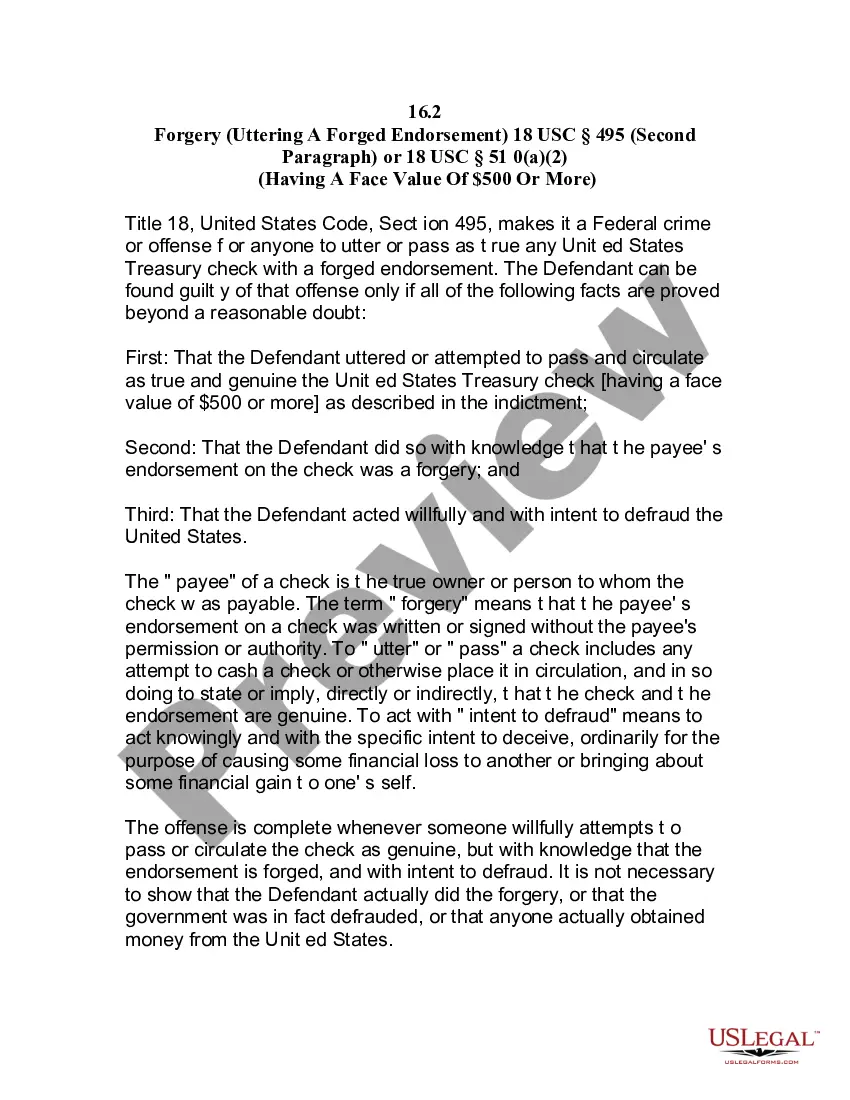
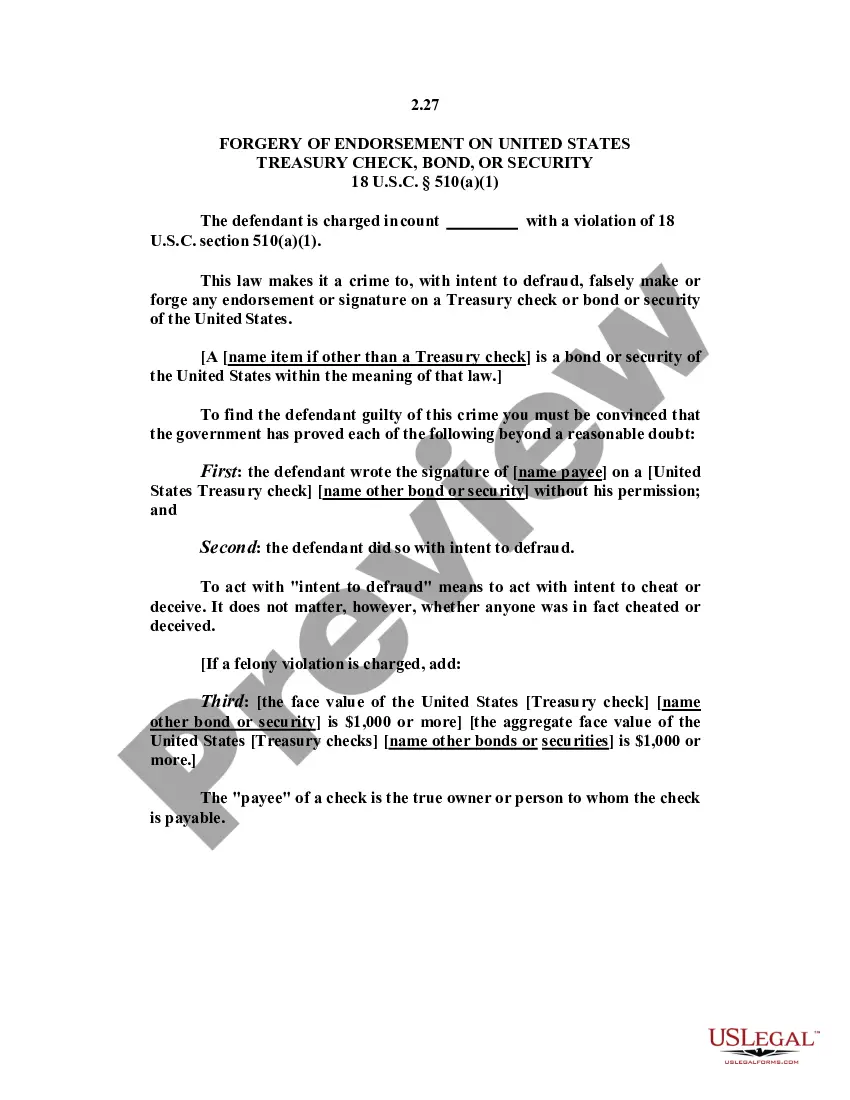
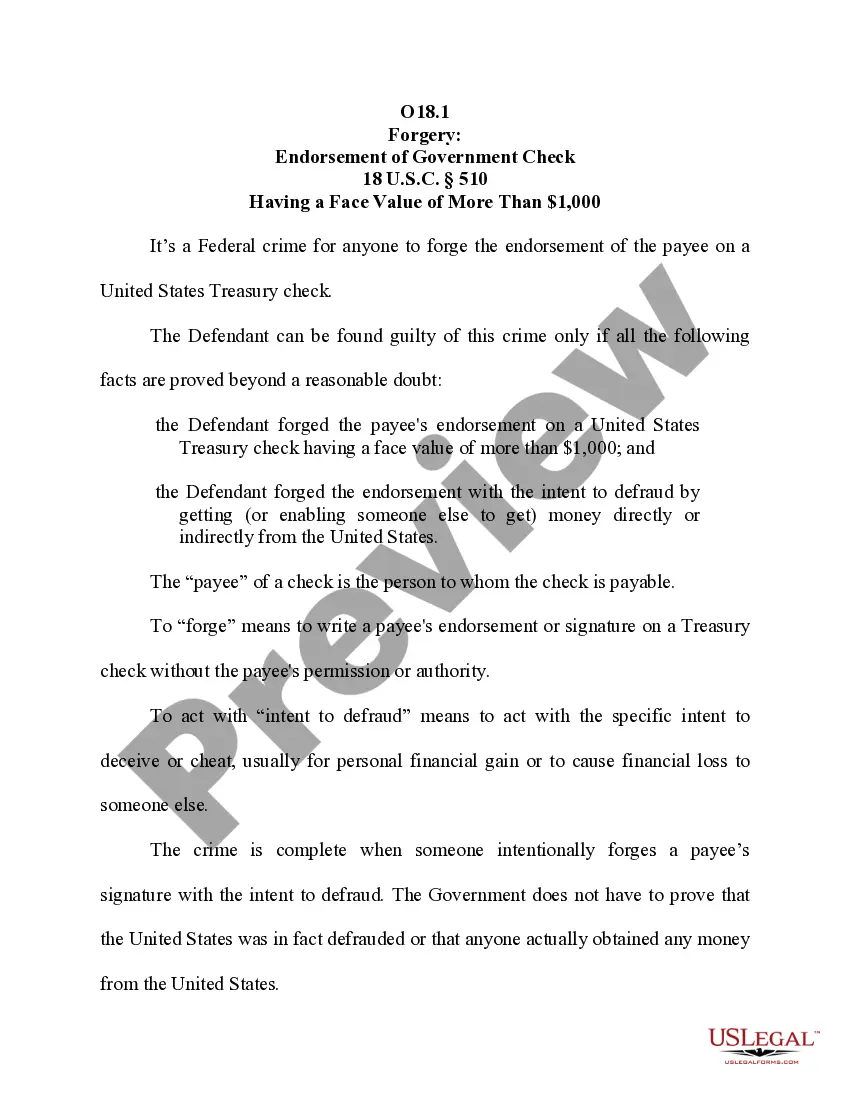
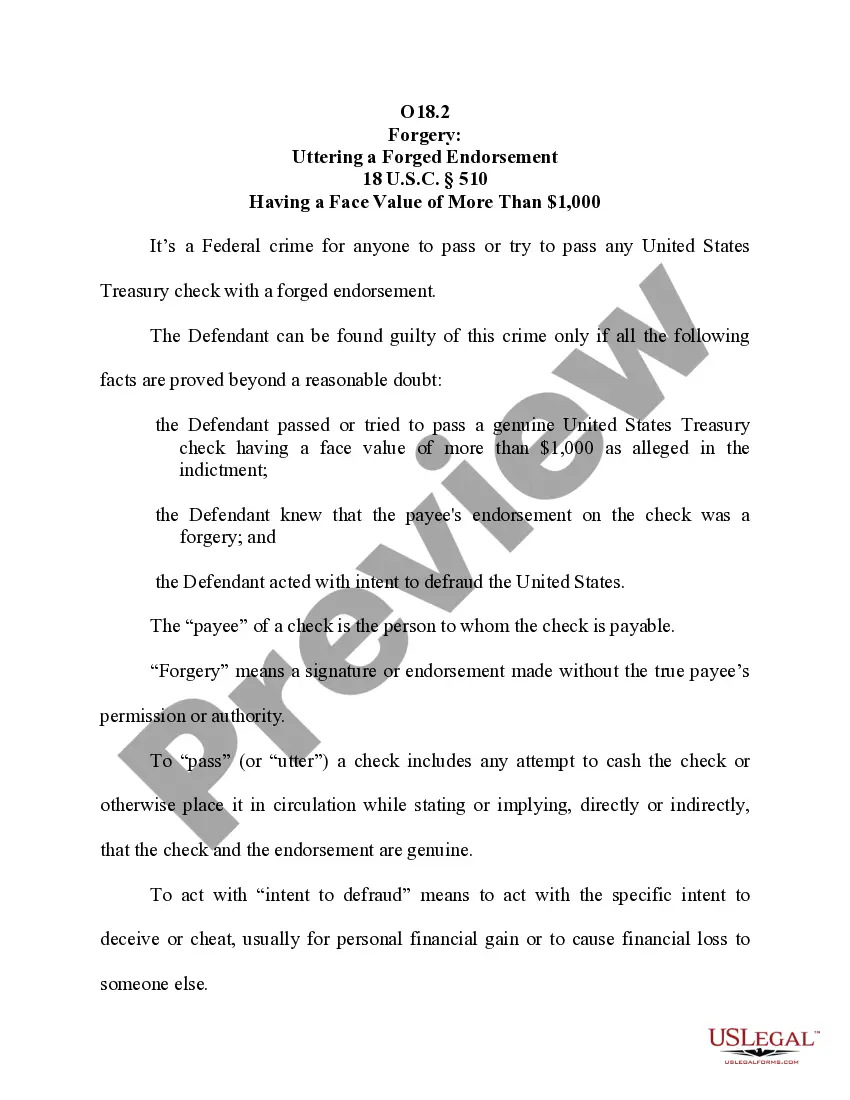
The Jury Instruction - Uttering A Forged Endorsement is a legal template that provides sample jury instructions for cases involving the forgery of endorsements on United States Treasury checks. This form is essential for guiding jury members in understanding the legal standards associated with this federal offense, specifically under Title 18 of the United States Code. Unlike other forms, this document emphasizes the legal definitions, necessary elements for proof, and the ramifications of uttering or passing a forged endorsement.
Key parts of this document
- Definition of forgery and endorsement, including the meaning of passing or uttering a check.
- Specific elements the prosecution must prove beyond a reasonable doubt.
- Clarification of the terms "willfully" and "intent to defraud."
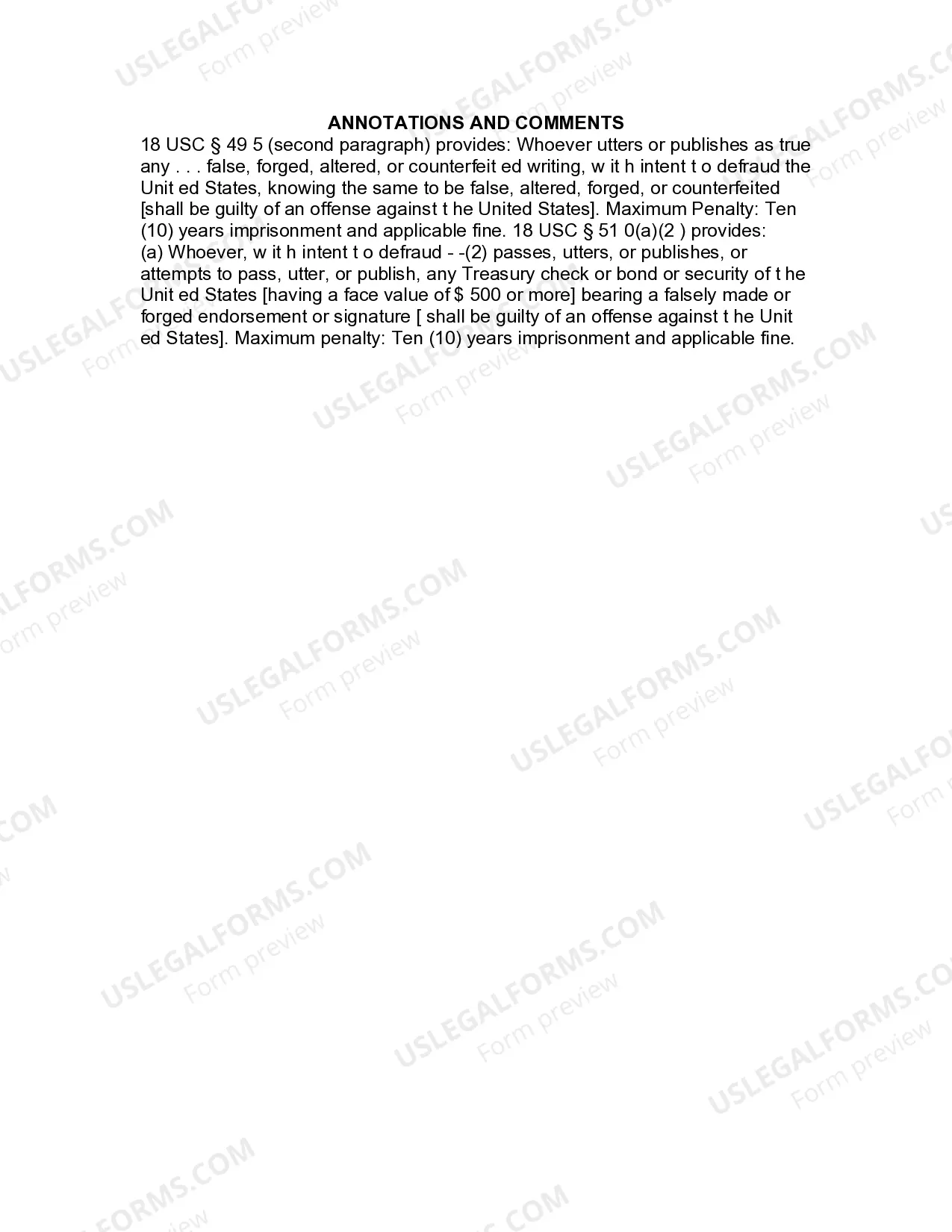
- Maximum penalties associated with the offense, including imprisonment and fines.
- Annotations referencing applicable statutes (18 USC 495 and 18 USC 510(a)(2)).
When this form is needed
This form is used in legal contexts where the defendant is charged with the crime of forging a check endorsement. It is applicable in jury trials, particularly when the case involves checks with a face value of $500 or more, allowing jurors to understand their responsibilities in determining whether the defendant acted with the necessary intent and knowledge of the forgery.
Who should use this form
- Legal professionals preparing for a trial involving forgery cases.
- Judges who need a comprehensive guide for jury instructions in relevant cases.
- Law students studying criminal law and understanding jury responsibilities.
Completing this form step by step
- Identify the specific elements of the crime that must be presented to the jury.
- Customize the language of the jury instructions to fit the particulars of the case.
- Incorporate relevant statutory references to support the legal arguments.
- Ensure clarity in the definitions provided to avoid juror confusion.
- Review the instructions with other legal practitioners to align on legal terminology and intent.
Does this document require notarization?
This form usually doesn’t need to be notarized. However, local laws or specific transactions may require it. Our online notarization service, powered by Notarize, lets you complete it remotely through a secure video session, available 24/7.
Get your form ready online
Our built-in tools help you complete, sign, share, and store your documents in one place.
Make edits, fill in missing information, and update formatting in US Legal Forms—just like you would in MS Word.
Download a copy, print it, send it by email, or mail it via USPS—whatever works best for your next step.
Sign and collect signatures with our SignNow integration. Send to multiple recipients, set reminders, and more. Go Premium to unlock E-Sign.
If this form requires notarization, complete it online through a secure video call—no need to meet a notary in person or wait for an appointment.
We protect your documents and personal data by following strict security and privacy standards.

Make edits, fill in missing information, and update formatting in US Legal Forms—just like you would in MS Word.

Download a copy, print it, send it by email, or mail it via USPS—whatever works best for your next step.

Sign and collect signatures with our SignNow integration. Send to multiple recipients, set reminders, and more. Go Premium to unlock E-Sign.

If this form requires notarization, complete it online through a secure video call—no need to meet a notary in person or wait for an appointment.

We protect your documents and personal data by following strict security and privacy standards.
Mistakes to watch out for
- Failing to clearly define "forgery" and "utter" leading to juror misunderstandings.
- Omitting critical components necessary for jury deliberation.
- Using outdated case law or statutes that do not reflect current laws.
Benefits of completing this form online
- Convenience of accessing legal documents from anywhere, anytime.
- Editability allows customization for specific case facts.
- Reliability of professionally drafted templates ensuring legal accuracy.
Legal use & context
- The form serves as a model for jury instructions specifically pertaining to federal forgery cases.
- The enforceability of the instructions relies on meeting federal legal standards.
- Jurors must understand the implications of intent and knowledge concerning the crime charged.
Looking for another form?


Form popularity
FAQ
Under North Carolina law, a person commits forgery by creating, altering, or possessing counterfeit: any financial instruments, including bank notes or other currency. wills, deeds, leases, promissory notes, or any order for the payment of money or delivery of goods.
Penalties for forgery in Canada The maximum penalty for forgery in Canada is: 10 years in jail, if tried by indictment. Two years less one day in jail and/or a $5,000 fine, if tried on a summary basis.
United States. In the U.S., uttering is the act of offering a forged document to another when the offeror has knowledge that the document is forged.For example, forging a log for personal profit might be considered uttering and publishing. Another example would be the forging of a university diploma.
Uttering is the passing or publishing of a forged document with the intent to injure or defraud. Forgery is the making of a false document or the alteration of a true document to make it false, with the intent to injure or defraud.
Uttering a forged instrument is a criminal offense. When a person knowingly publishes or puts into circulation any forged or altered financial document, legal document or other writing with the intent to misrepresent it as true and defraud others it amounts to uttering a forged instrument.
Uttering is passing that document to someone with the intent to defraud. So, if you made a counterfeit $100 bill, that would be forgery. If you gave that counterfeit bill to a convenience store in exchange for groceries, that would be uttering.
Uttering is a crime involving a person with the intent to defraud that knowingly sells, publishes or passes a forged or counterfeited document. More specifically, forgery creates a falsified document and uttering is the act of knowingly passing on or using the forged document.
Forgery is the changing or making of a document with the intent to defraud someone. Uttering is passing that document to someone with the intent to defraud. So, if you made a counterfeit $100 bill, that would be forgery.
Florida law enforcement and prosecutors take accusations of check forgery seriously. This is a criminal act of dishonesty which can be classified as a third-degree felony, which is punishable by up to five years in prison and a $5,000 fine.