Jury Instruction - Assaulting A Federal Officer - With Use Of A Deadly Weapon or Inflicting Bodily Injury
What is this form?
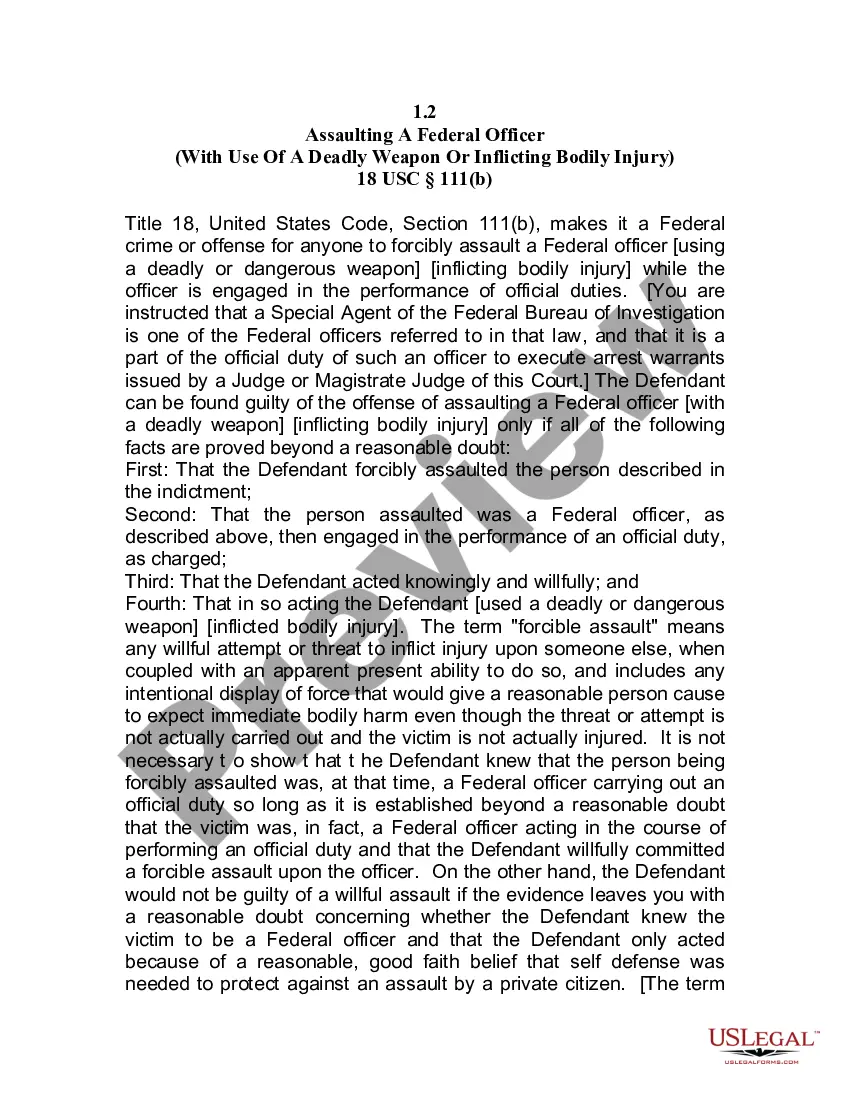
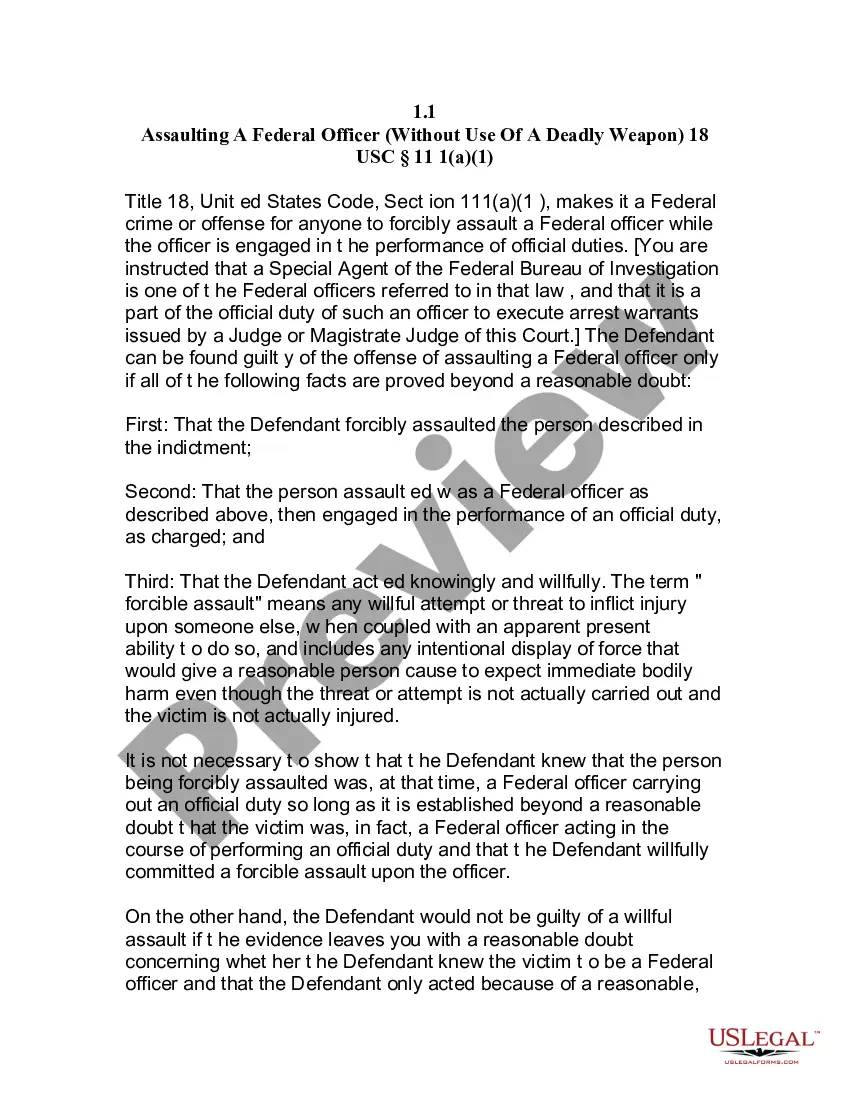
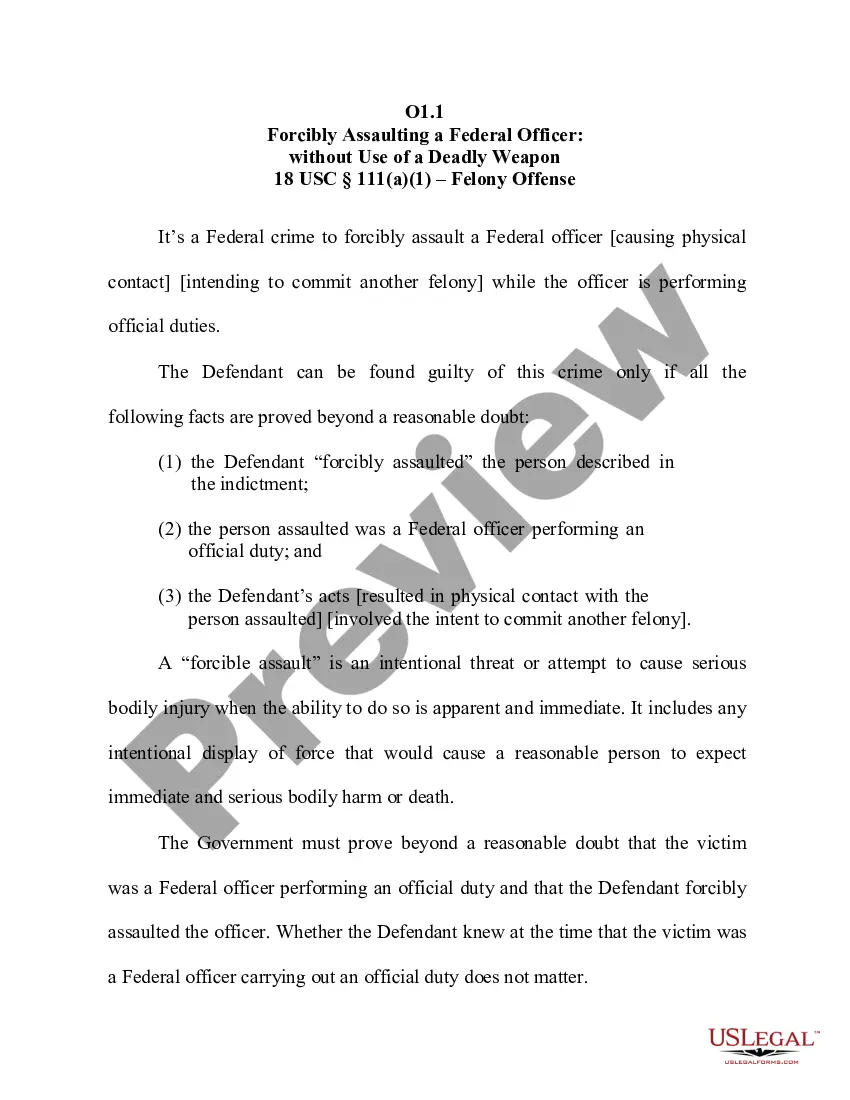
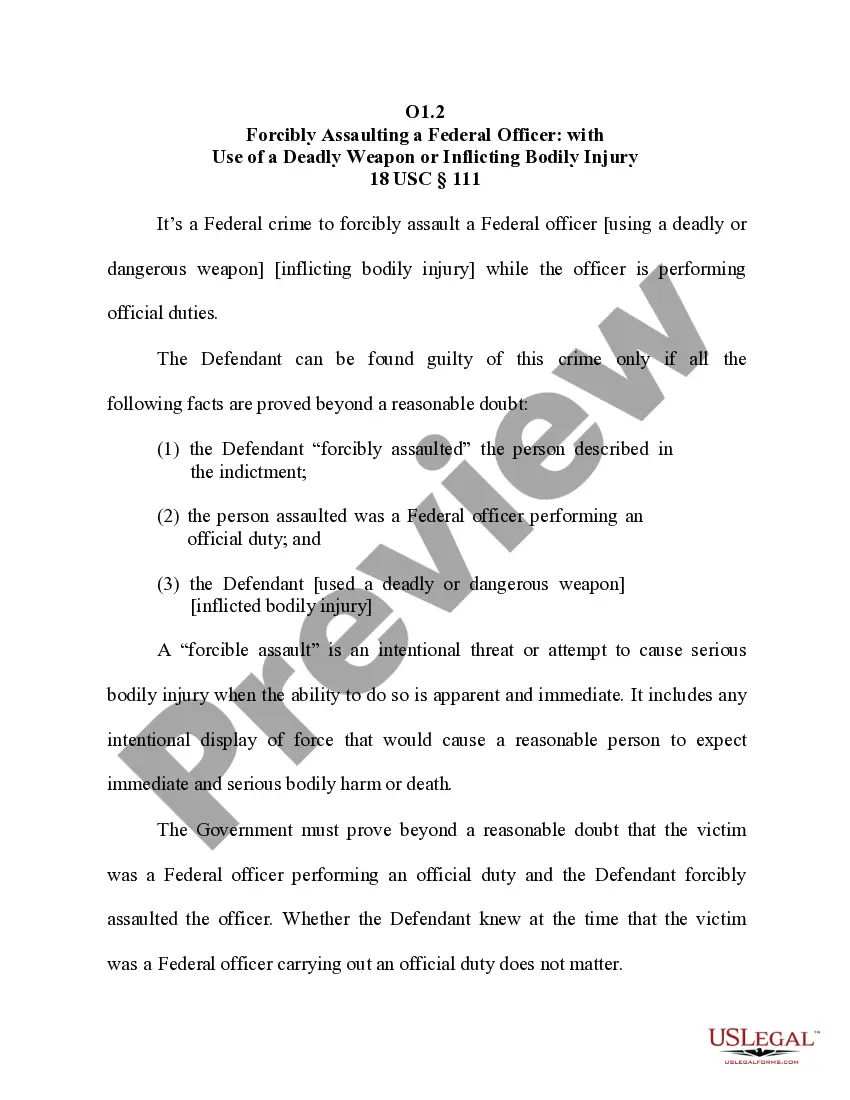
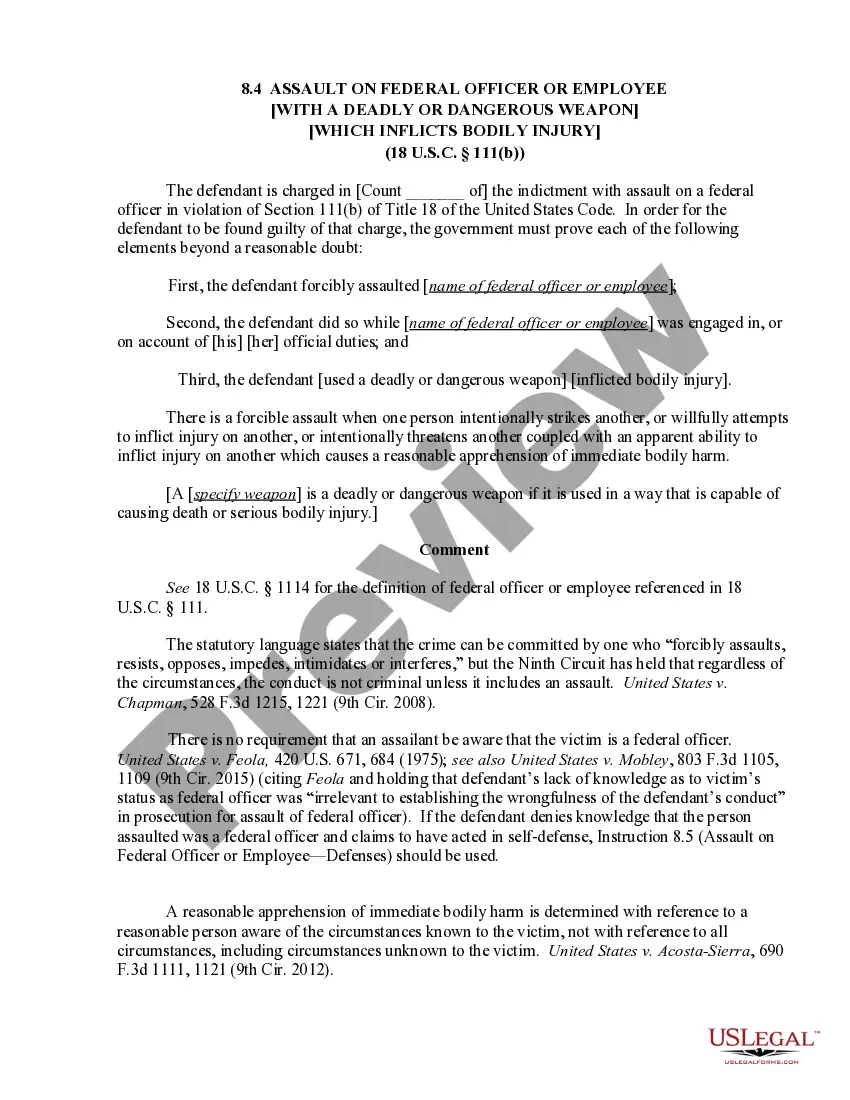
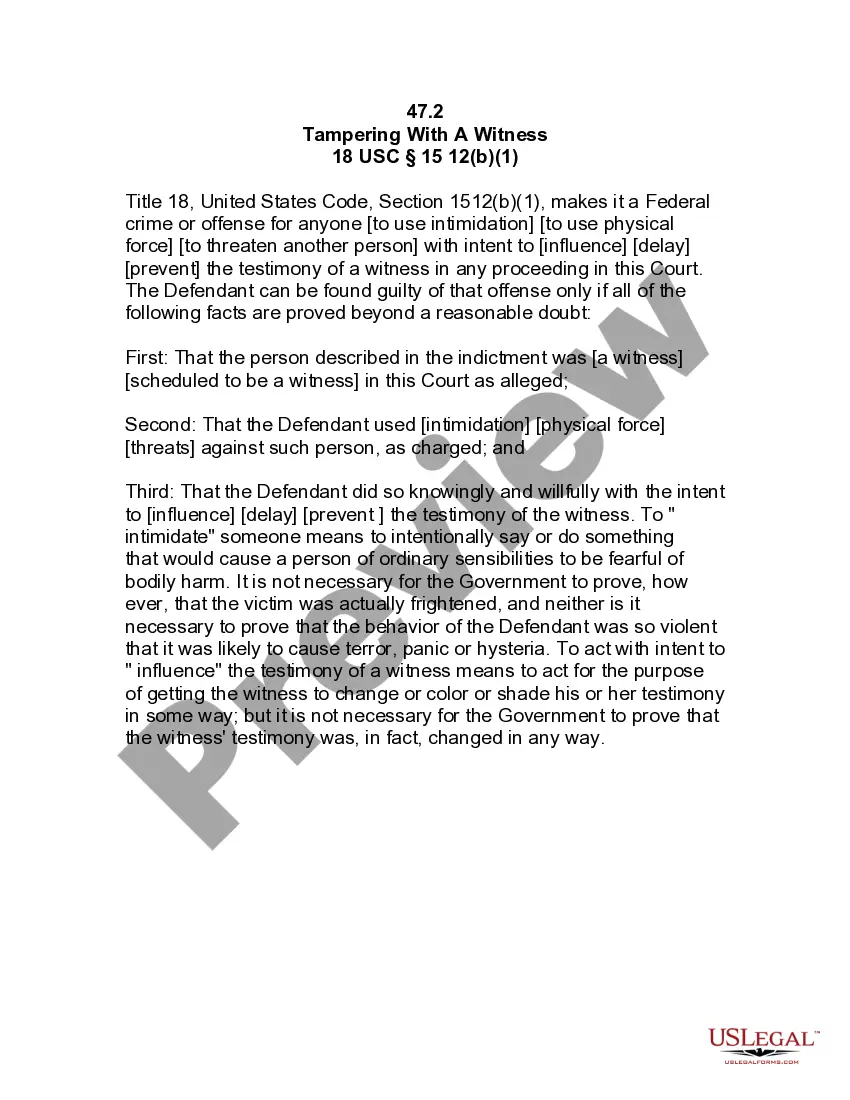
This form provides jury instructions related to the offense of assaulting a federal officer with the use of a deadly weapon or inflicting bodily injury. Specifically designed for situations arising under 18 USC 111(b), it serves as a framework for the legal responsibilities and elements required to establish such an offense. Unlike other jury instructions, this form focuses specifically on assaults involving federal officers and the nuances related to using deadly weapons and inflicting bodily harm.
Key components of this form
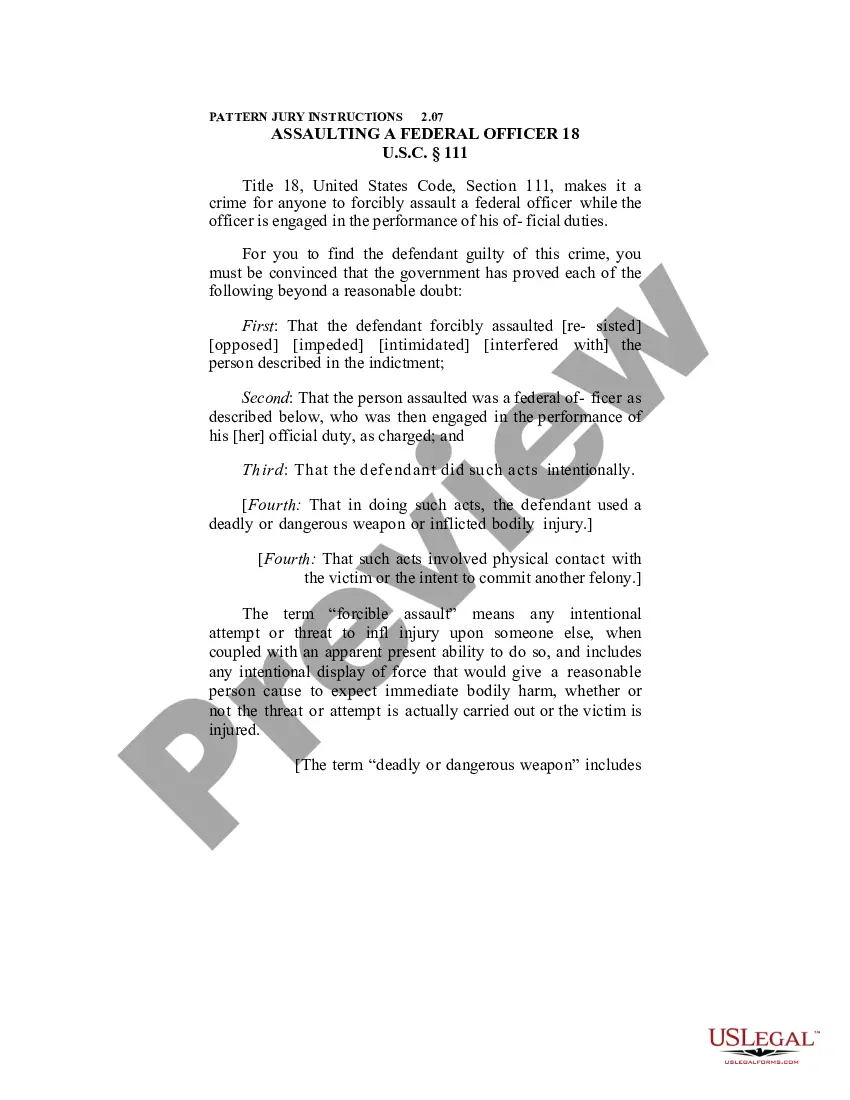
- Definition of forcible assault and associated legal standards.
- Clarification of what constitutes a federal officer and their official capacity.
- Required elements for proving guilt beyond a reasonable doubt.
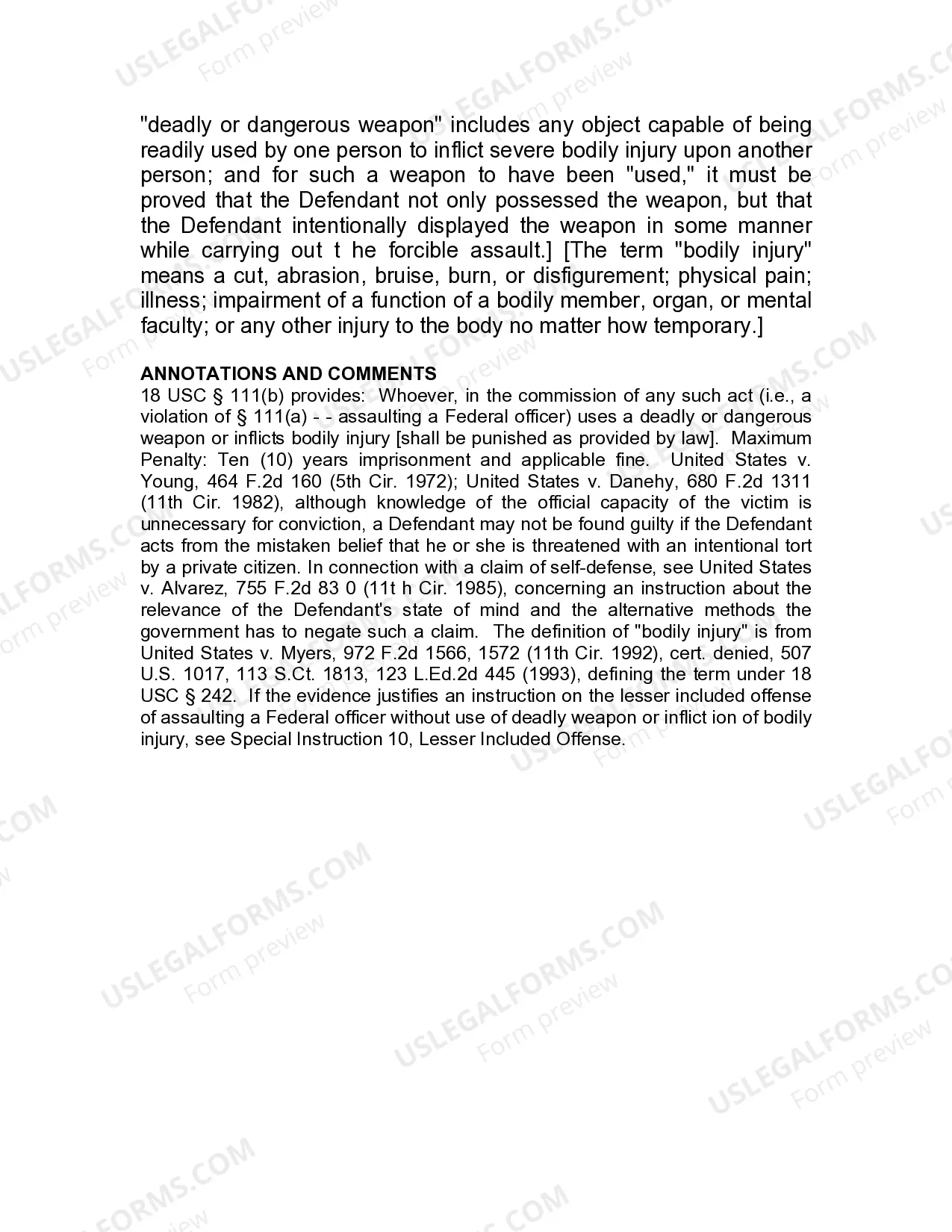
- Explanation of deadly or dangerous weapons as defined by law.
- Legal concepts surrounding mistaken beliefs regarding self-defense.
When this form is needed
This form should be used in legal cases involving charges of assault against a federal officer that involve a deadly weapon or bodily injury. It is pertinent in situations where an individual is accused of actions that may lead to federal criminal charges and necessitate clarity in jury instructions during a trial. This form can guide judges and juries in understanding the specific circumstances under which the defendant could be found guilty.
Who can use this document
- Judges presiding over cases involving federal crimes of assault.
- Legal practitioners representing defendants or the government in related trials.
- Members of juries who require clarity on the specific legal definitions and requirements involved in such cases.
Steps to complete this form
- Review the charges laid against the defendant to ensure clarity on the nature of the assault.
- Identify the federal officer involved and confirm that they were performing official duties at the time.
- Confirm that the elements of forcible assault and the use of a deadly weapon are satisfied based on the specific facts of the case.
- Adapt the model jury instructions to fit the unique circumstances of the case, ensuring legal definitions are precise.
- Distribute the completed jury instructions to jurors and related parties before the trial commences.
Notarization guidance
Notarization is generally not required for this form. However, certain states or situations might demand it. You can complete notarization online through US Legal Forms, powered by Notarize, using a verified video call available anytime.
Get your form ready online
Our built-in tools help you complete, sign, share, and store your documents in one place.
Make edits, fill in missing information, and update formatting in US Legal Forms—just like you would in MS Word.
Download a copy, print it, send it by email, or mail it via USPS—whatever works best for your next step.
Sign and collect signatures with our SignNow integration. Send to multiple recipients, set reminders, and more. Go Premium to unlock E-Sign.
If this form requires notarization, complete it online through a secure video call—no need to meet a notary in person or wait for an appointment.
We protect your documents and personal data by following strict security and privacy standards.

Make edits, fill in missing information, and update formatting in US Legal Forms—just like you would in MS Word.

Download a copy, print it, send it by email, or mail it via USPS—whatever works best for your next step.

Sign and collect signatures with our SignNow integration. Send to multiple recipients, set reminders, and more. Go Premium to unlock E-Sign.

If this form requires notarization, complete it online through a secure video call—no need to meet a notary in person or wait for an appointment.

We protect your documents and personal data by following strict security and privacy standards.
Common mistakes
- Failing to clearly define the role of the federal officer in the case.
- Neglecting to specify the elements of the offense beyond reasonable doubt.
- Inadequate adaptation of the jury instructions to fit the unique nuances of the case.
Benefits of completing this form online
- Easy access to professionally drafted legal instructions ensures compliance with federal standards.
- Convenient editing capabilities allow tailoring of the form to specific cases.
- Reliable format minimizes the risk of errors in legal proceedings.
Legal use & context
- The jury instructions enable jurors to understand the legal definitions and requirements for convicting someone under 18 USC 111(b).
- These instructions emphasize the need for proof beyond a reasonable doubt regarding the defendant's actions and intent.
- They also clarify that the specific knowledge of the victim's federal status is not necessary for conviction, which can help shape jury deliberations.
Looking for another form?

Form popularity
FAQ
When talking about the essential difference between assault and battery, it comes down to the specific circumstances. In some jurisdictions, assault is defined as the threat of bodily injury that causes a reasonable fear of harm in the victim while battery is the actual physical injury or impact on another person.
Threatening to Hit or Kill Someone. Pointing a Weapon at Someone and Threatening Them. Swinging and Missing. Using Language That Threatens or Harms Someone's Reputation. Wearing a Mask while Threatening. Throwing an Object at Someone. Nursing Home Abuse. Attempted Rape.
1. a sudden violent attack; onslaught. 2. an unlawful physical attack upon another, esp. an attempt or threat to do bodily harm.
Assault is an act of one person causing another person to reasonably apprehend the infliction of criminal force against him. In Criminal Law, assault is considered as an offence and in Common Law, it is considered as a tort.
An assault is the act of inflicting physical harm or unwanted physical contact upon a person or, in some specific legal definitions, a threat or attempt to commit such an action. It is both a crime and a tort and, therefore, may result in criminal prosecution, civil liability, or both.
Examples of aggravated assault include: striking or threatening to strike a person with a weapon or dangerous object. shooting a person with a gun or threatening to kill someone while pointing a gun at the victim. assault with the intent to commit another felony crime such as robbery or rape.
A : a threat or attempt to inflict offensive physical contact or bodily harm on a person (as by lifting a fist in a threatening manner) that puts the person in immediate danger of or in apprehension (see apprehension sense 1) of such harm or contact compare battery sense 1b. b : rape entry 1 sense 1. assault.
Examples of felony assault or battery include: striking or threatening to strike a person with a weapon or dangerous object. shooting a person with a gun or threatening to kill someone while pointing a gun at the victim. assault or battery with the intent to commit another felony crime such as robbery or rape.
Three elements must be established in order to establish tortious assault: first, there must be a positive act by the defendant; second, the plaintiff had reasonable apprehension (the requisite state of mind) of immediate physical contact, and third, the defendant's act of interference was intentional (the defendant