Jury Instruction - Definition of Reasonable Doubt
Overview of this form
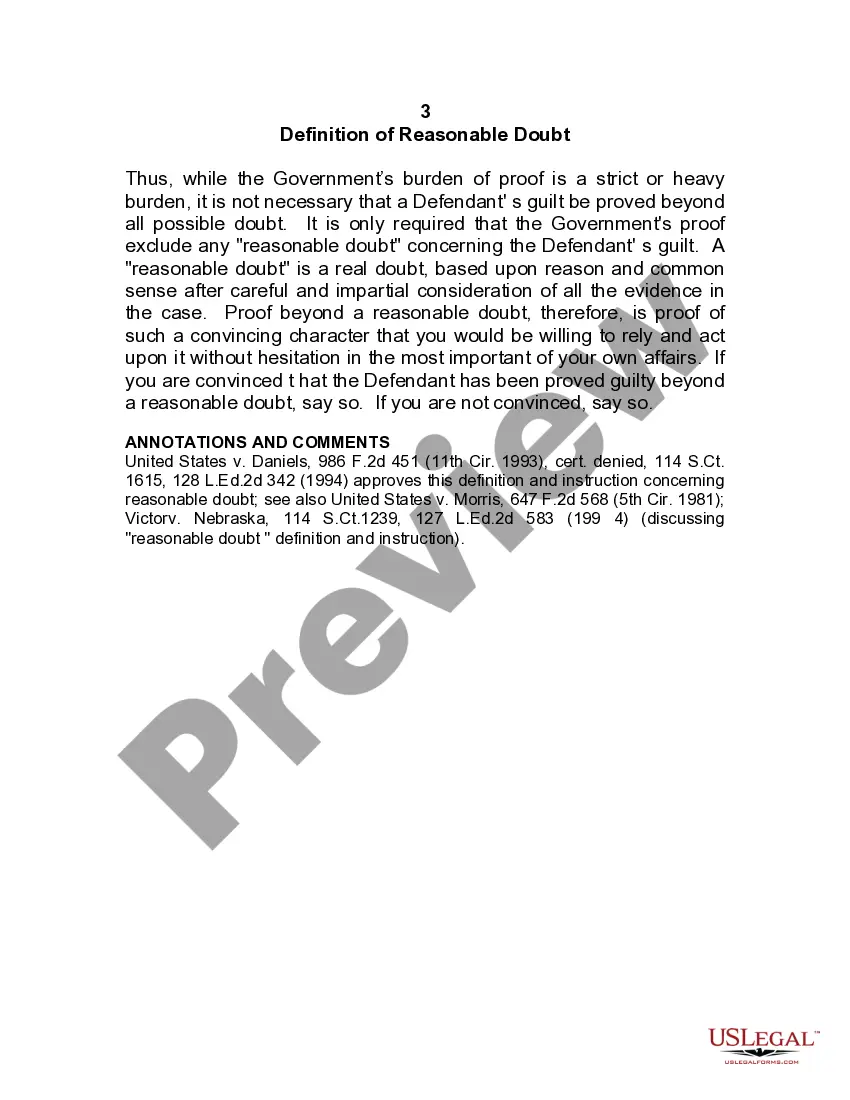
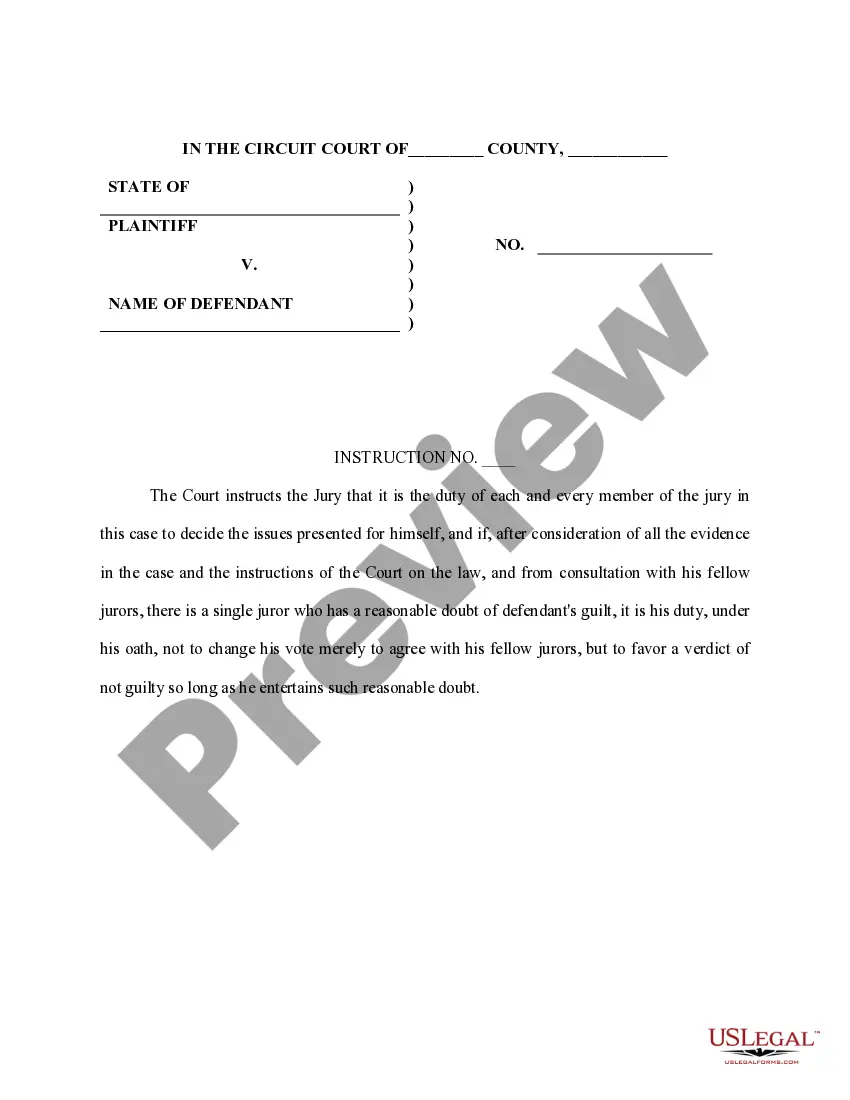
The Jury Instruction - Definition of Reasonable Doubt form provides clear guidelines for jurors on understanding the concept of reasonable doubt in a criminal trial. This form serves to establish the necessary standard of proof that the prosecution must meet to secure a conviction. Unlike other legal documents, this form is tailored specifically to provide jury instructions, ensuring jurors comprehend their vital role in the justice system.
Main sections of this form
- Definition of reasonable doubt, explaining it as a doubt based on reason and common sense.
- A clear description of the government's burden of proof in a criminal case.
- Guidance on how jurors should approach their verdict based on the evidence presented.
- References to key court cases that support the definition and instruction of reasonable doubt.
When to use this form
This form should be used in criminal trials to instruct jurors about the standard of reasonable doubt. It is vital when jury deliberations occur, particularly in cases involving serious criminal charges where a high standard of proof is required. Use this form to ensure jurors have a clear understanding of the expectations regarding their verdict.
Who needs this form
- Judges presiding over criminal trials
- Attorneys representing defendants or the prosecution
- Legal professionals involved in jury instructions
- Court clerks responsible for providing jury materials
Completing this form step by step
- Review the definition of reasonable doubt and ensure it aligns with local judicial standards.
- Instruct the jury clearly on the difference between reasonable doubt and absolute certainty.
- Provide references to applicable case law that supports the jury's understanding.
- Ensure the instructions are clear and free from legal jargon.
- Distribute copies of the jury instructions to all jurors before deliberation.
Is notarization required?
This form usually doesn’t need to be notarized. However, local laws or specific transactions may require it. Our online notarization service, powered by Notarize, lets you complete it remotely through a secure video session, available 24/7.
Get your form ready online
Our built-in tools help you complete, sign, share, and store your documents in one place.
Make edits, fill in missing information, and update formatting in US Legal Forms—just like you would in MS Word.
Download a copy, print it, send it by email, or mail it via USPS—whatever works best for your next step.
Sign and collect signatures with our SignNow integration. Send to multiple recipients, set reminders, and more. Go Premium to unlock E-Sign.
If this form requires notarization, complete it online through a secure video call—no need to meet a notary in person or wait for an appointment.
We protect your documents and personal data by following strict security and privacy standards.

Make edits, fill in missing information, and update formatting in US Legal Forms—just like you would in MS Word.

Download a copy, print it, send it by email, or mail it via USPS—whatever works best for your next step.

Sign and collect signatures with our SignNow integration. Send to multiple recipients, set reminders, and more. Go Premium to unlock E-Sign.

If this form requires notarization, complete it online through a secure video call—no need to meet a notary in person or wait for an appointment.

We protect your documents and personal data by following strict security and privacy standards.
Common mistakes
- Failing to adapt the form to meet jurisdiction-specific requirements.
- Using language that is too complex or legalistic for jurors.
- Neglecting to reference important case law that clarifies the concept of reasonable doubt.
- Not providing the form at the appropriate time during jury deliberation.
Why use this form online
- Accessible and easy to download for quick reference.
- Editable to tailor the instruction for specific cases.
- Drafted by licensed attorneys to ensure legal reliability.
Legal use & context
- This form is legally recognized across federal and state jurisdictions when providing jury instructions.
- Clear definitions help minimize misinterpretations of the reasonable doubt standard.
- Incorporating case law enhances the credibility of the instruction.
Key takeaways
- The Jury Instruction - Definition of Reasonable Doubt is essential for guiding jury deliberations in criminal cases.
- Understanding reasonable doubt is critical to uphold the burden of proof in the justice system.
- Adapting the form to local laws ensures its effectiveness and appropriateness in all jurisdictions.
Looking for another form?










Form popularity
FAQ
The three primary standards of proof are proof beyond a reasonable doubt, preponderance of the evidence and clear and convincing evidence.
Understanding Reasonable Doubt Under U.S. law, a defendant is considered innocent until proven guilty. If the judge or jury has a reasonable doubt about the defendant's guilt, the defendant cannot be convicted. Simply put, reasonable doubt is the highest standard of proof used in any court of law.
Understanding Reasonable Doubt Under U.S. law, a defendant is considered innocent until proven guilty. If the judge or jury has a reasonable doubt about the defendant's guilt, the defendant cannot be convicted. Simply put, reasonable doubt is the highest standard of proof used in any court of law.
Beyond a reasonable doubt is the legal burden of proof required to affirm a conviction in a criminal case.This means that the prosecution must convince the jury that there is no other reasonable explanation that can come from the evidence presented at trial.
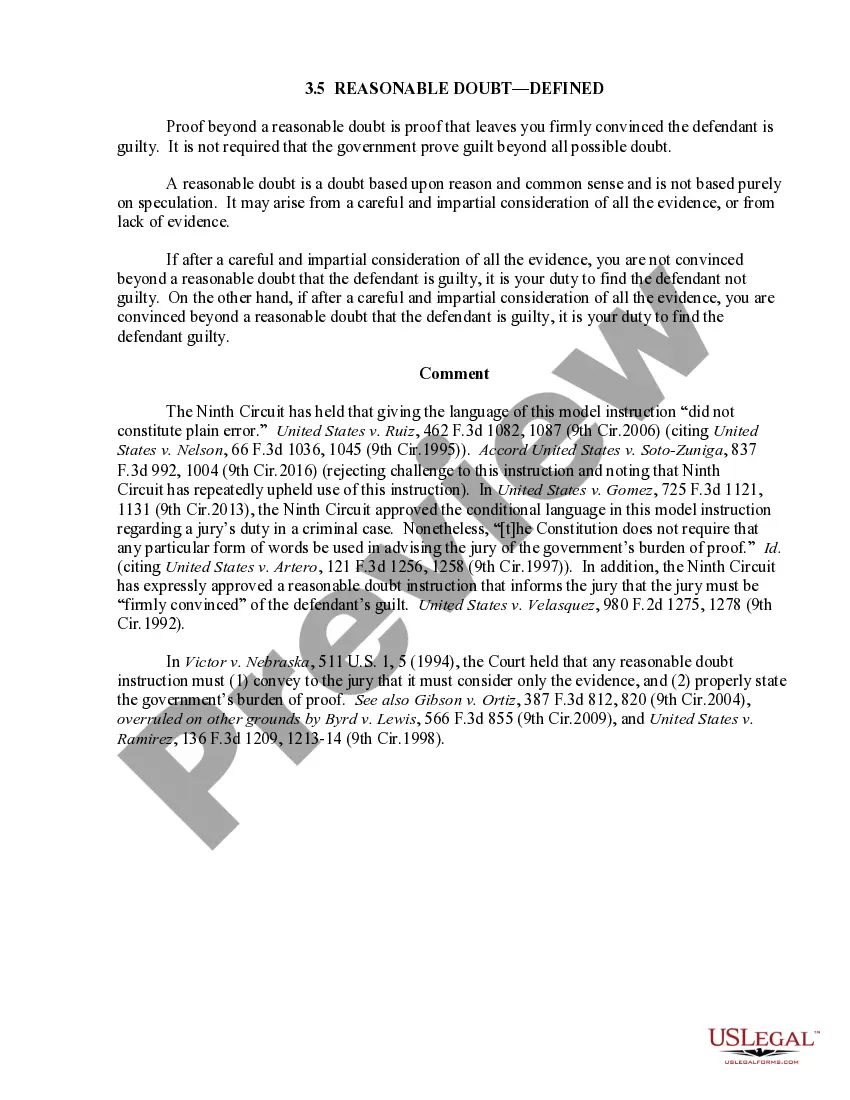
For example, judges of the Ninth U.S. Circuit Court of Appeals instruct juries that, A reasonable doubt is a doubt based upon reason and common sense and is not based purely on speculation. It may arise from a careful and impartial consideration of all the evidence, or from lack of evidence.
There are different standards in different circumstances. For example, in criminal cases, the burden of proving the defendant's guilt is on the prosecution, and they must establish that fact beyond a reasonable doubt. In civil cases, the plaintiff has the burden of proving his case by a preponderance of the evidence.
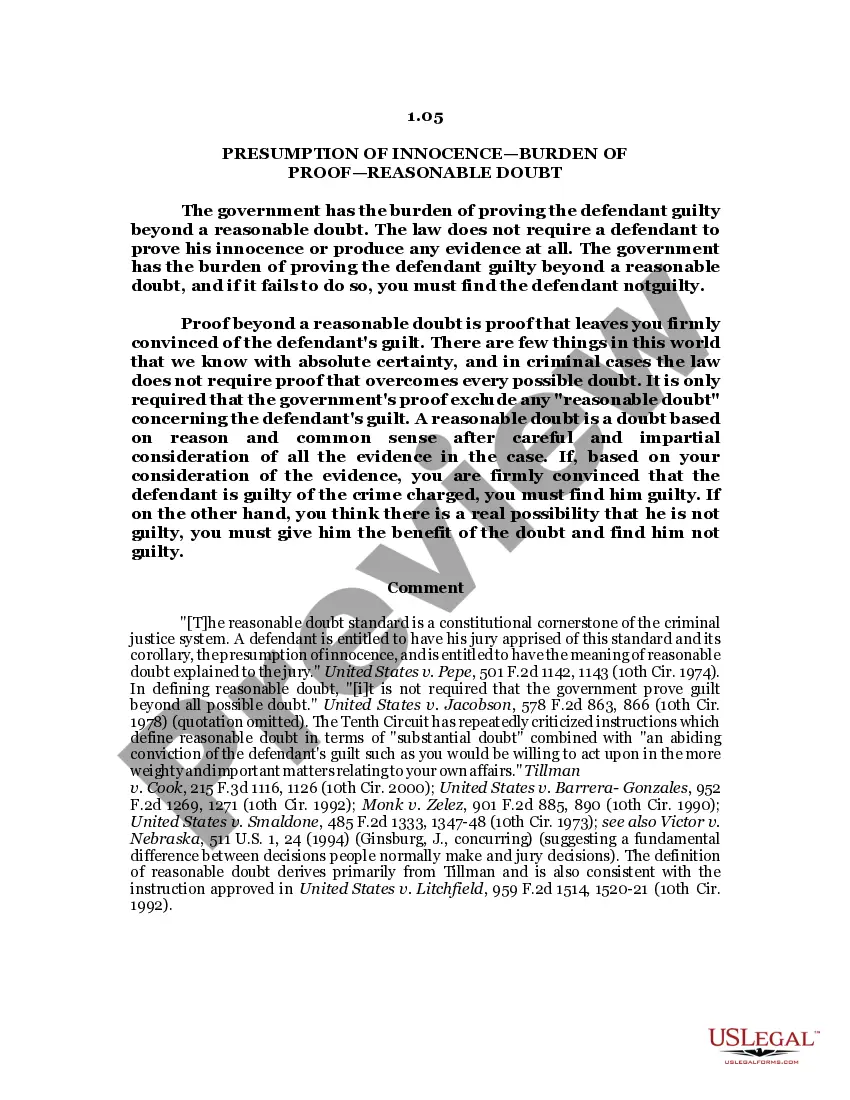
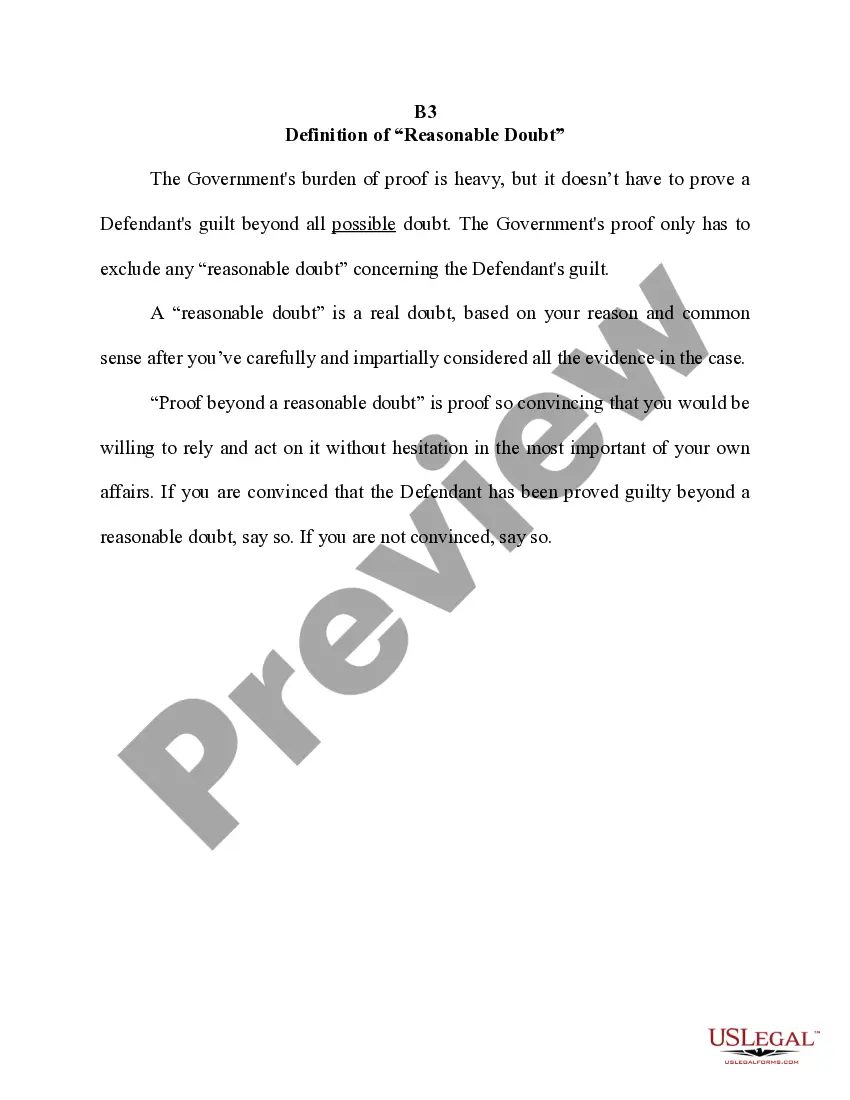
A reasonable doubt is not a doubt based upon sympathy or prejudice, and instead, is based on reason and common sense. Reasonable doubt is logically connected to the evidence or absence of evidence. Proof beyond a reasonable doubt does not involve proof to an absolute certainty.
Proof beyond a reasonable doubt is proof that leaves you firmly convinced of the defendant's guilt. There are very few things in this world that we know with absolute certainty, and in criminal cases the law does not require proof that overcomes every possible doubt.