Jury Instruction - 2.2.3.1 Convicted Prisoner Alleging Excessive Force
Understanding this form
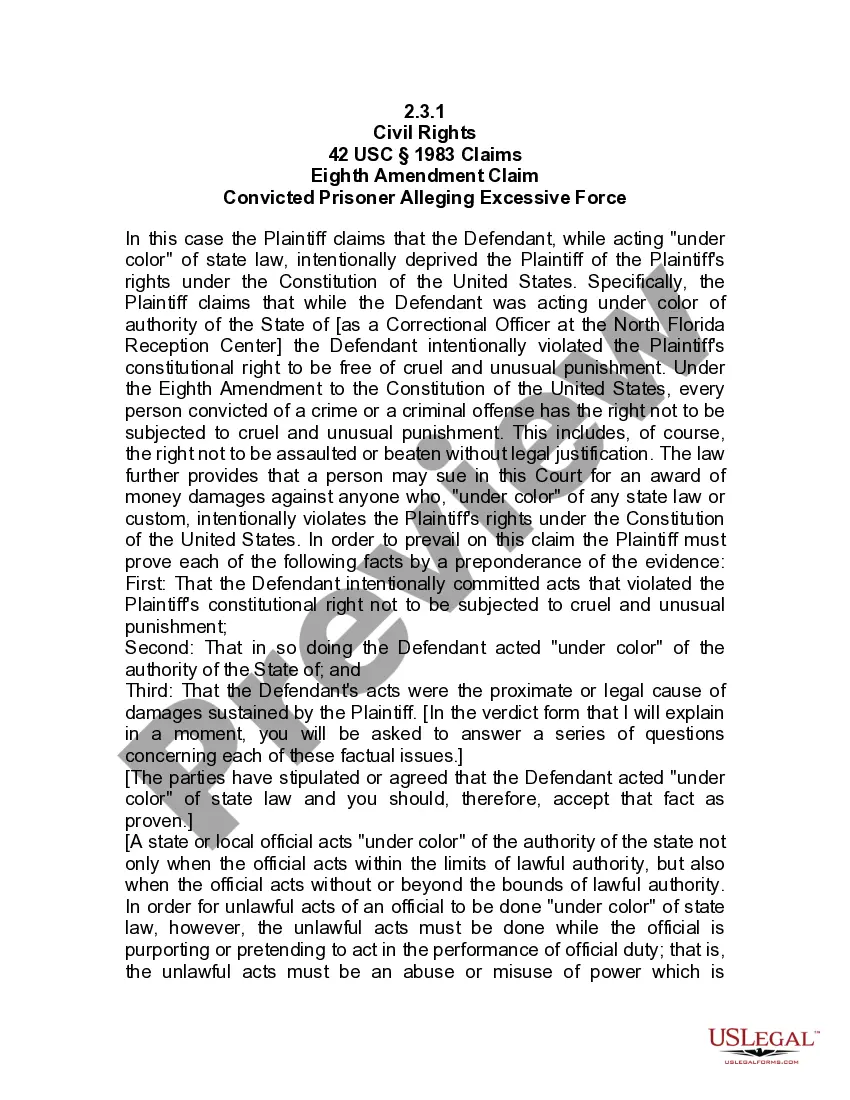
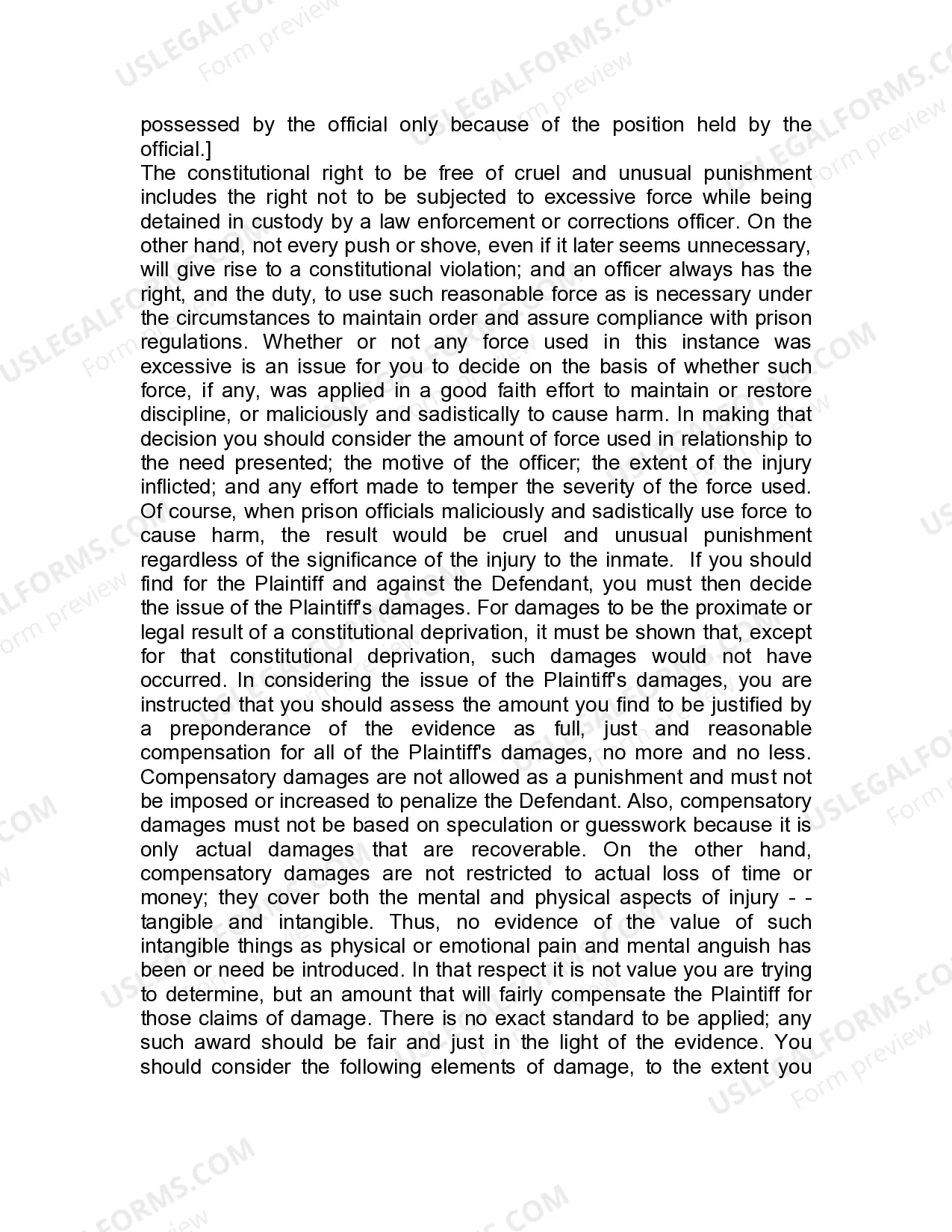
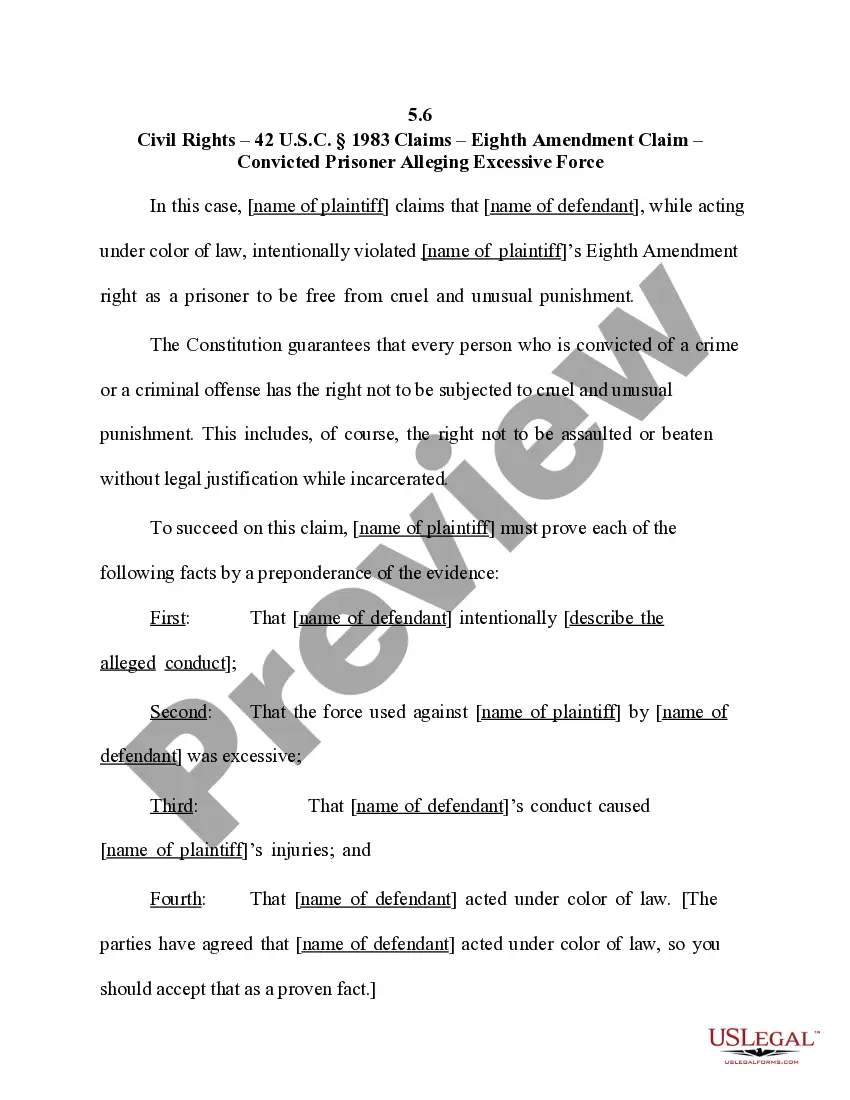
The Jury Instruction - 2.2.3.1 Convicted Prisoner Alleging Excessive Force form provides sample jury instructions for claims under 42 USC 1983 pertaining to allegations of excessive force against convicted prisoners. This form outlines the specific legal standards and criteria the jury must consider when determining if a defendant, acting under state authority, has violated a prisoner's constitutional rights by using excessive force. It is distinct from other jury instructions as it focuses specifically on the context of prison environments and the Eighth Amendment protections against cruel and unusual punishment.
What’s included in this form
- Definition of excessive force and constitutional rights under the Eighth Amendment.
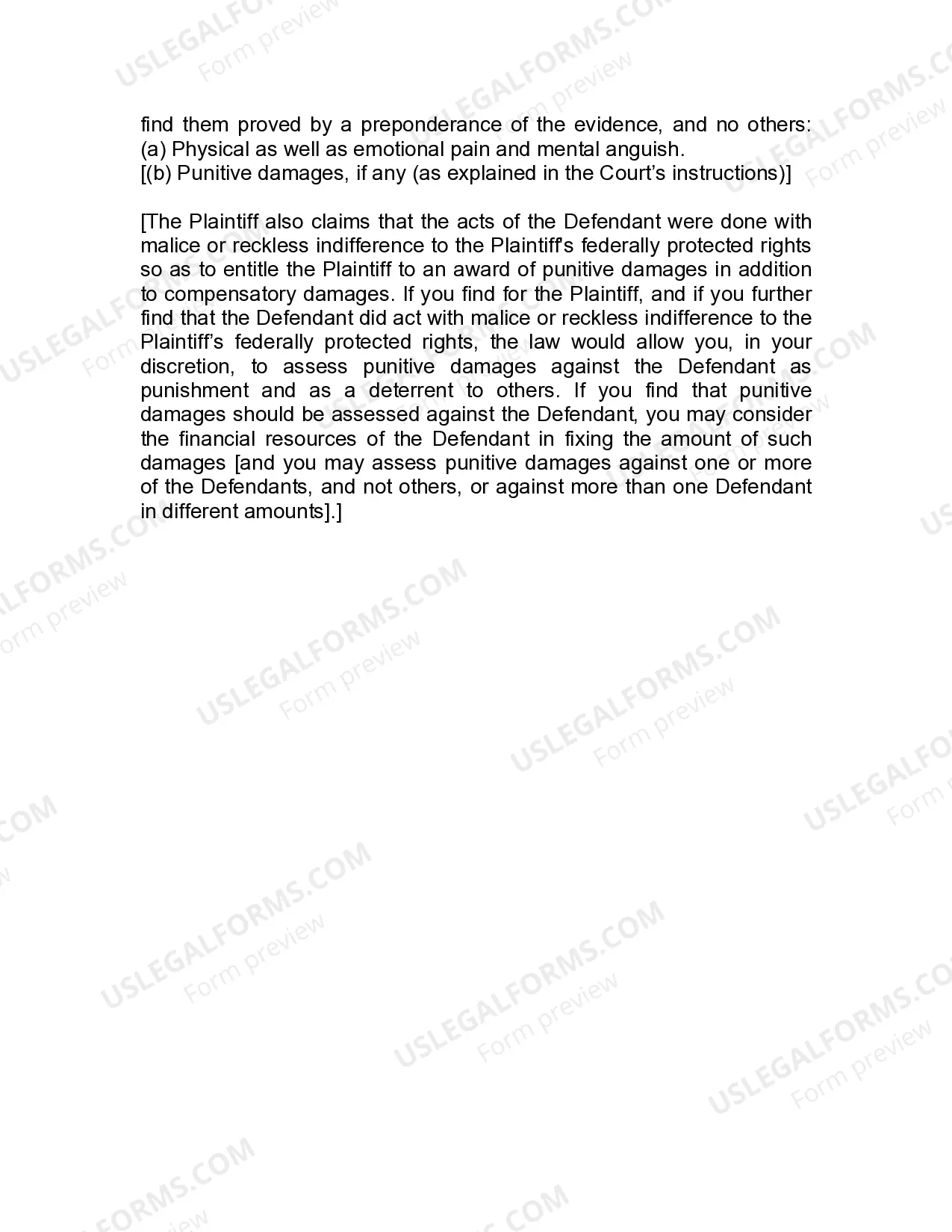
- Factors the jury must assess, including the intention behind the use of force and the extent of the injury.
- Instructions for determining damages related to physical and emotional pain.
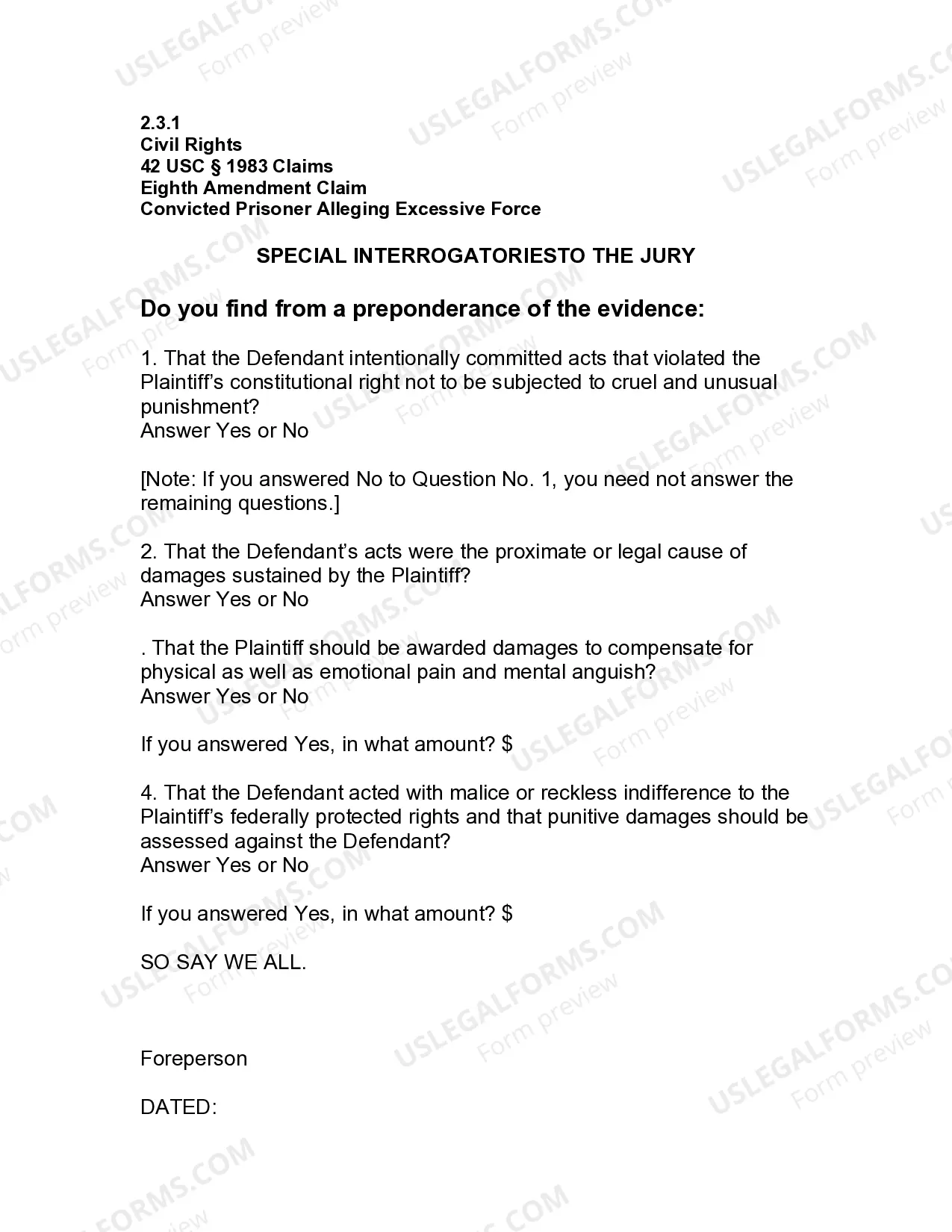
- Questions for the jury to deliberate on regarding the defendant's actions and the resulting damages.



When to use this form
This form should be used during trials involving claims of excessive force by correctional officers against convicted prisoners. It serves as a guide for juries to understand the relevant legal standards and instructions required to make informed decisions on the case at hand, particularly when the plaintiff alleges a violation of rights under the Eighth Amendment.
Intended users of this form
- Judges presiding over cases involving excessive force claims from convicted prisoners.
- Lawyers representing either defendants or plaintiffs in civil rights lawsuits related to prison conditions.
- Juries tasked with deliberating on cases of alleged excessive force in correctional settings.
How to complete this form
- Begin by clearly stating the facts of the case and identify the parties involved.
- Outline the constitutional rights that the plaintiff claims have been violated.
- Present evidence indicating whether the defendant acted with intent to cause harm or in good faith.
- Define the extent of damages suffered by the plaintiff, including any physical or emotional pain.
- Ensure that the jury instructions are clearly framed to guide deliberations on the questions presented.
Notarization guidance
Notarization is generally not required for this form. However, certain states or situations might demand it. You can complete notarization online through US Legal Forms, powered by Notarize, using a verified video call available anytime.
Get your form ready online
Our built-in tools help you complete, sign, share, and store your documents in one place.
Make edits, fill in missing information, and update formatting in US Legal Forms—just like you would in MS Word.
Download a copy, print it, send it by email, or mail it via USPS—whatever works best for your next step.
Sign and collect signatures with our SignNow integration. Send to multiple recipients, set reminders, and more. Go Premium to unlock E-Sign.
If this form requires notarization, complete it online through a secure video call—no need to meet a notary in person or wait for an appointment.
We protect your documents and personal data by following strict security and privacy standards.

Make edits, fill in missing information, and update formatting in US Legal Forms—just like you would in MS Word.

Download a copy, print it, send it by email, or mail it via USPS—whatever works best for your next step.

Sign and collect signatures with our SignNow integration. Send to multiple recipients, set reminders, and more. Go Premium to unlock E-Sign.

If this form requires notarization, complete it online through a secure video call—no need to meet a notary in person or wait for an appointment.

We protect your documents and personal data by following strict security and privacy standards.
Common mistakes
- Failing to clearly establish the intent behind the defendant's actions.
- Overlooking the distinction between lawful use of force and excessive force.
- Neglecting to adequately define damages related to both physical and emotional harm.
Benefits of completing this form online
- Convenience of accessing and downloading the form immediately.
- Editability allows for customization to fit specific case needs.
- Reliability, with forms prepared by licensed attorneys, ensuring legal soundness.
Legal use & context
- This form is legally recognized as an instructional guide for juries in civil rights cases.
- It is essential for outlining the necessary elements required to prove claims of excessive force.
- Jury instructions must align with federal and state laws governing Eighth Amendment claims.