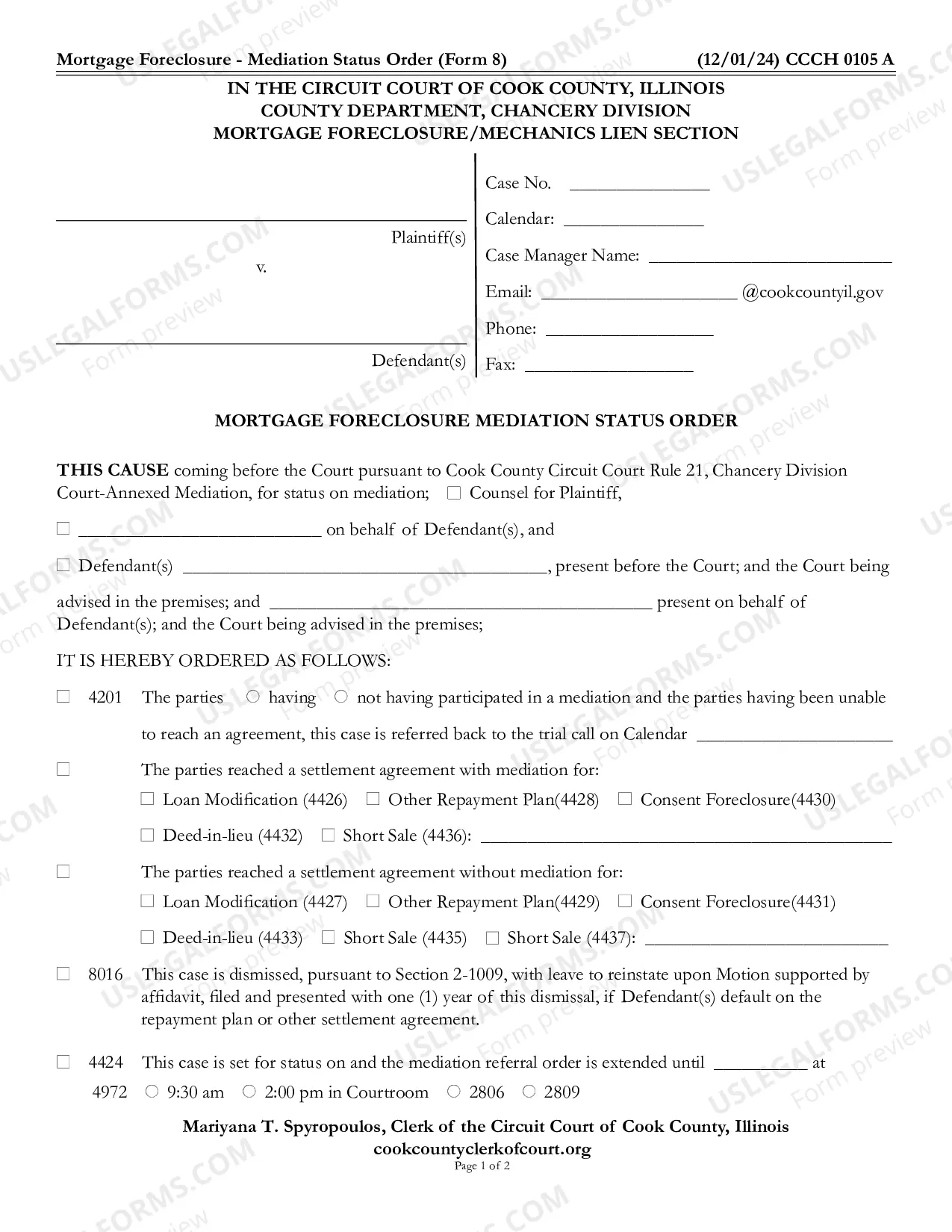
Jury Instruction - 1.2.3 Sex Discrimination Quid Pro Quo Violation
About this form
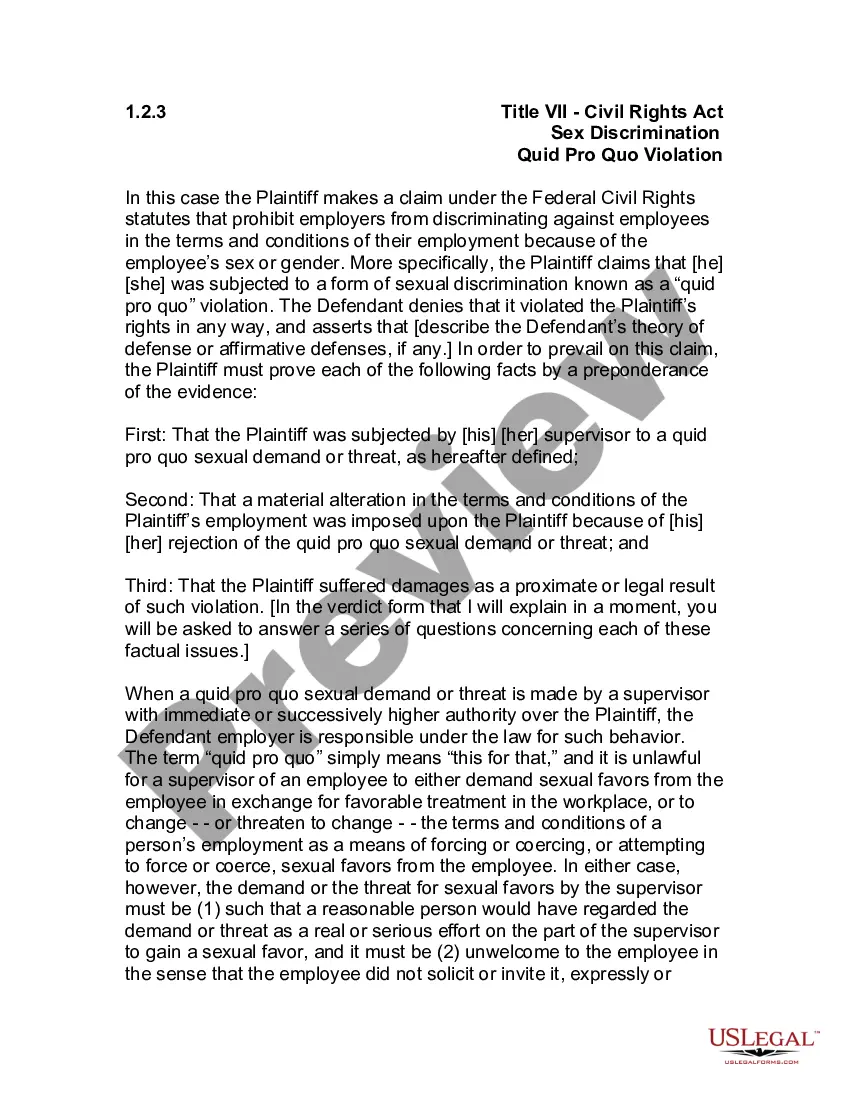
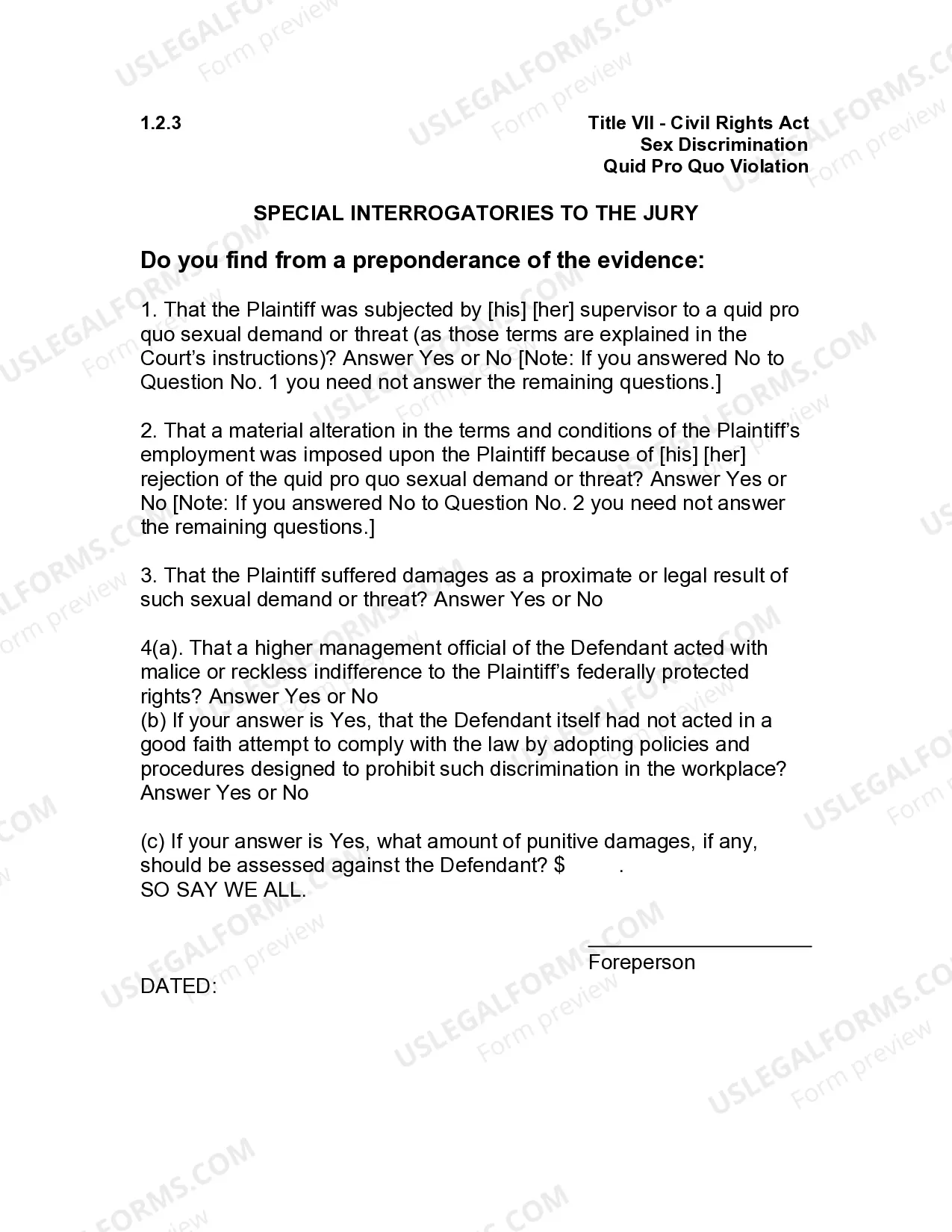
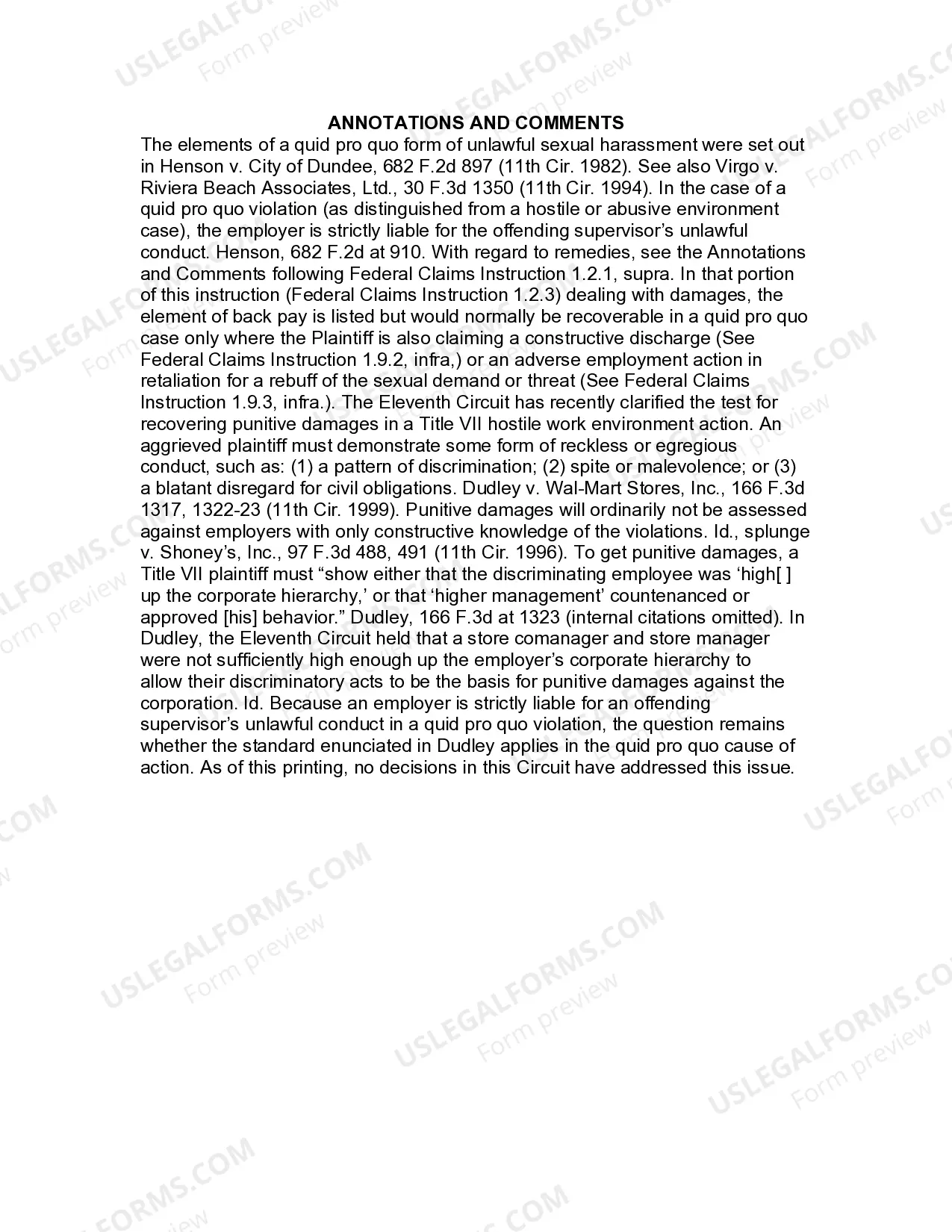
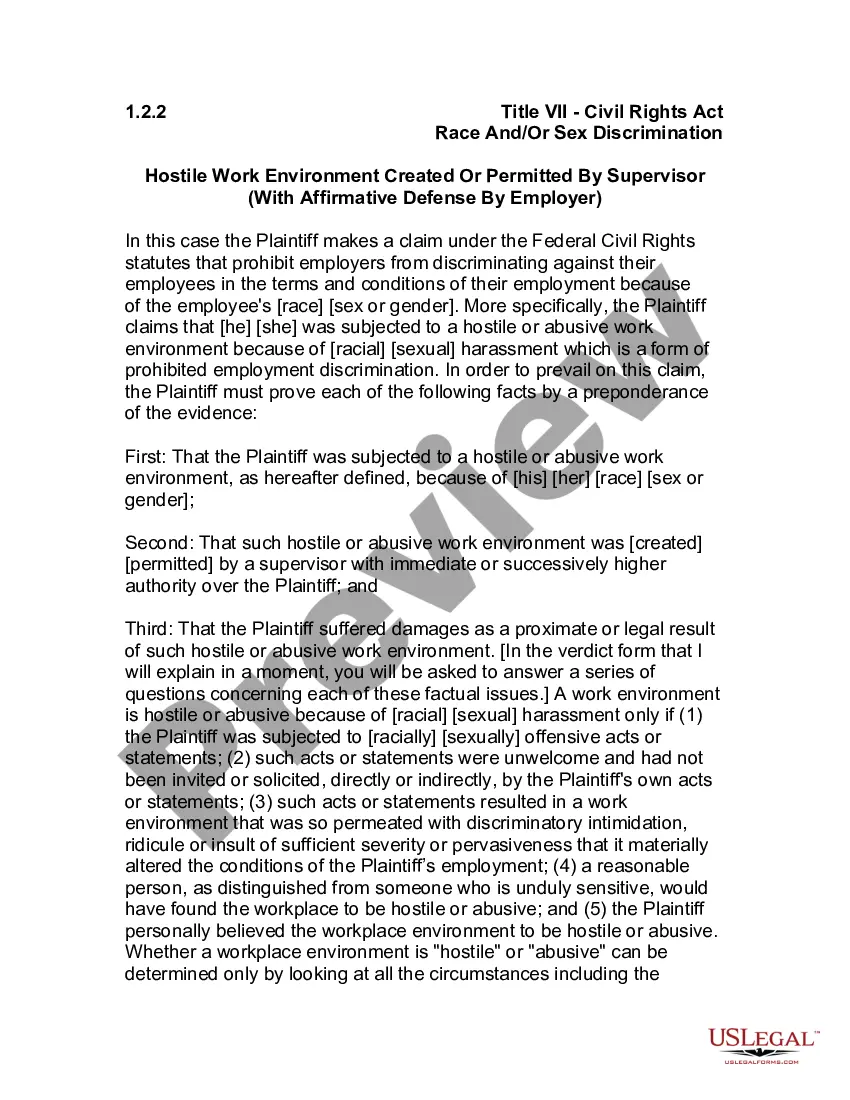
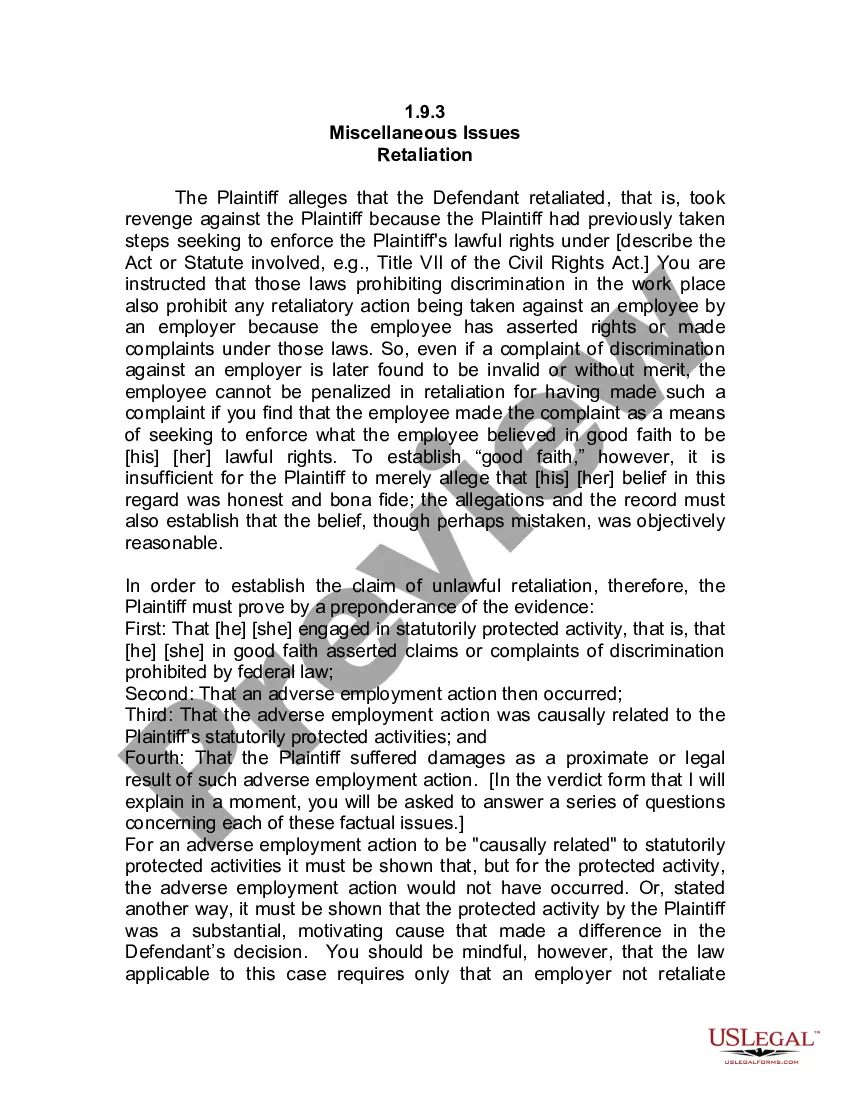
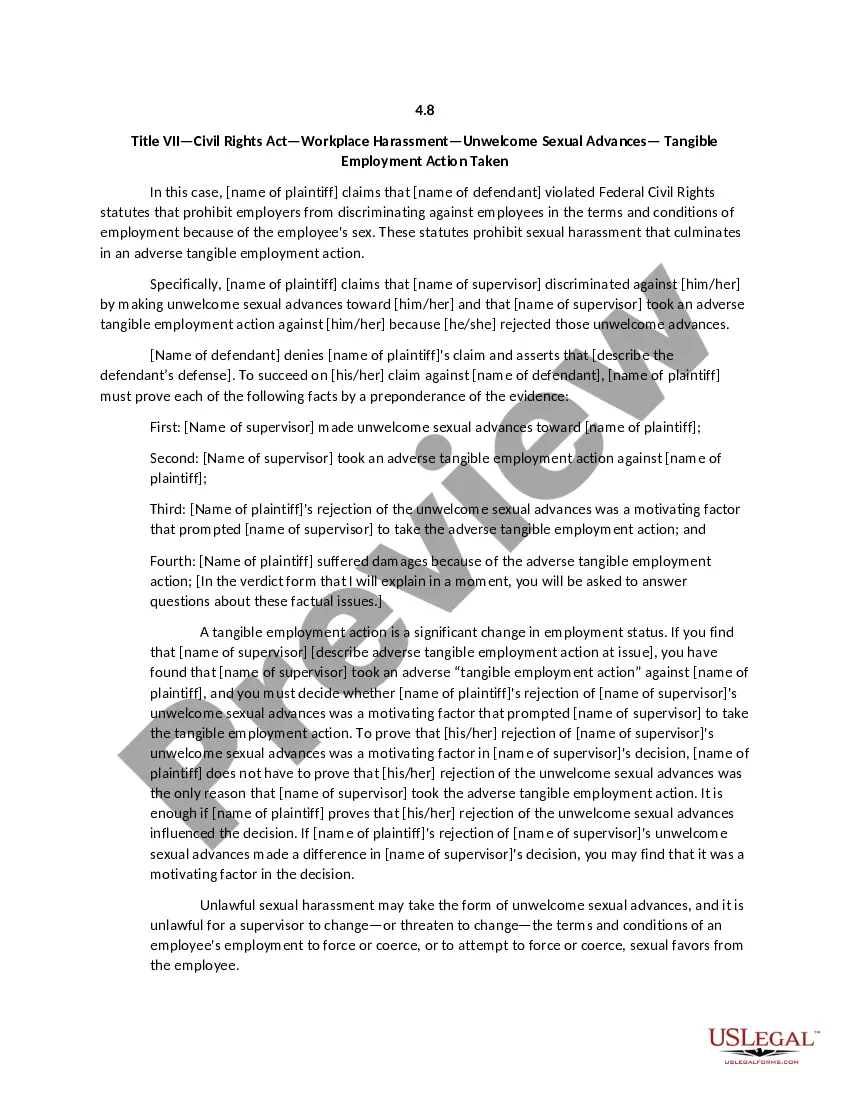
The Jury Instruction - 1.2.3 Sex Discrimination Quid Pro Quo Violation form provides sample jury instructions for use in cases concerning sex discrimination in the workplace. This form outlines the necessary legal framework for jurors to evaluate claims under federal civil rights statutes, focusing on quid pro quo violations, where job conditions are contingent on sexual favors. It serves as a guide for jurors to understand the legal definitions and responsibilities of both plaintiffs and defendants in these cases.
What’s included in this form
- Overview of quid pro quo sexual discrimination definitions
- Criteria for proving unlawful discrimination based on sexual demands
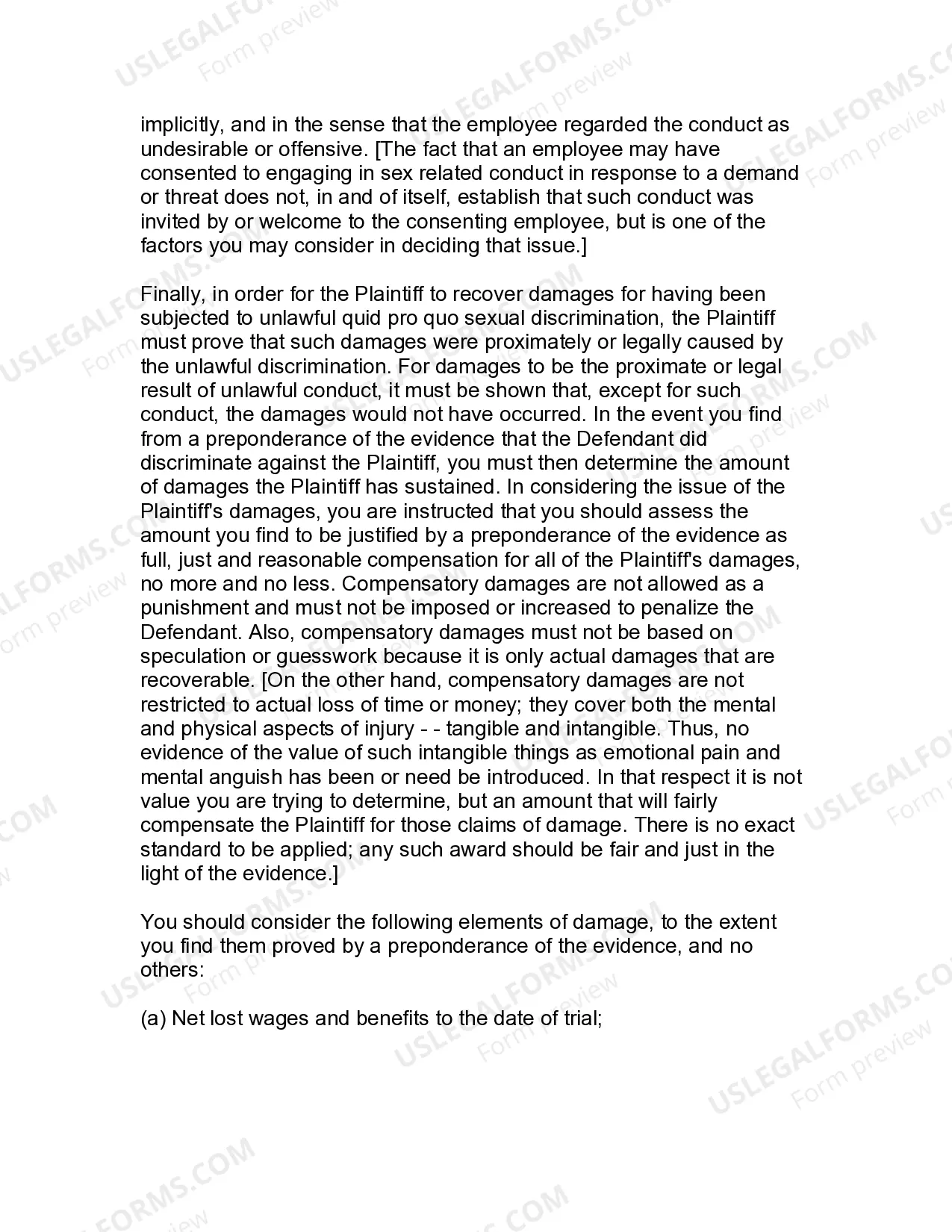
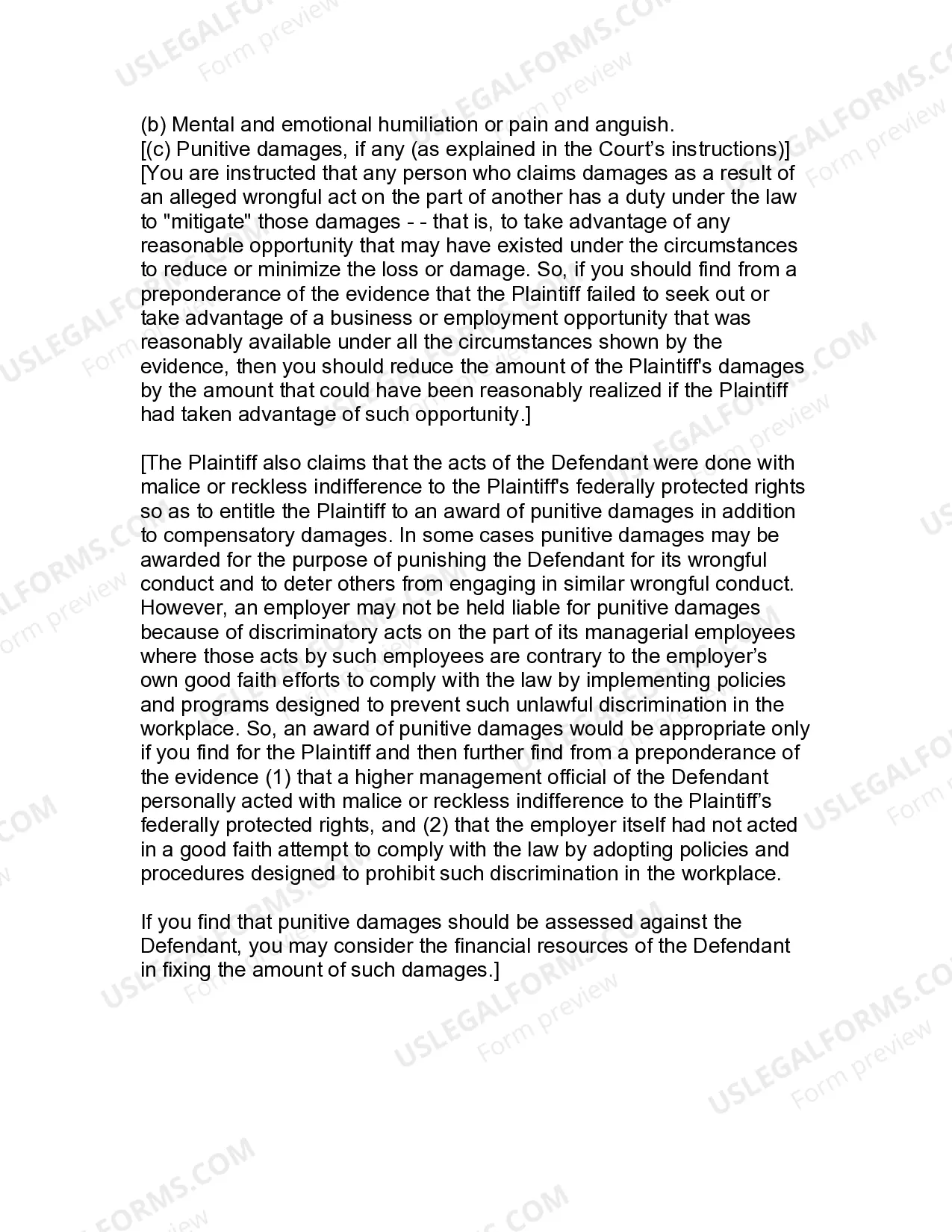
- Guidelines on assessing damages, including compensatory and punitive damages
- Special interrogatories for the jury to determine key facts
- Responsibilities of the employer regarding supervisor conduct
When this form is needed
This form should be used in legal proceedings where a plaintiff alleges sex discrimination under quid pro quo conditions, particularly when a supervisor's demands significantly altered the terms of the plaintiff's employment. Scenarios include cases where an employee faced threats or coercive actions from a supervisor in exchange for workplace benefits or conditions. This form prepares jurors to evaluate the legitimacy of these claims and the extent of damages incurred.
Who needs this form
- Jurors involved in sex discrimination cases
- Legal professionals preparing jury instructions for federal civil rights litigation
- Employers seeking to understand legal obligations regarding workplace behavior
- Employees learning about their rights under Title VII of the Civil Rights Act
How to complete this form
- Identify the parties involved in the case, including the plaintiff and defendant.
- Prepare special interrogatories by clearly stating the issues the jury must decide.
- Articulate the definitions of quid pro quo and other relevant terms for juror clarity.
- Outline the criteria for proving damages and what constitutes compensatory damages.
- Ensure all instructions adhere to federal guidelines and accurately reflect the case's circumstances.
Does this form need to be notarized?
This form usually doesn’t need to be notarized. However, local laws or specific transactions may require it. Our online notarization service, powered by Notarize, lets you complete it remotely through a secure video session, available 24/7.
Get your form ready online
Our built-in tools help you complete, sign, share, and store your documents in one place.
Make edits, fill in missing information, and update formatting in US Legal Forms—just like you would in MS Word.
Download a copy, print it, send it by email, or mail it via USPS—whatever works best for your next step.
Sign and collect signatures with our SignNow integration. Send to multiple recipients, set reminders, and more. Go Premium to unlock E-Sign.
If this form requires notarization, complete it online through a secure video call—no need to meet a notary in person or wait for an appointment.
We protect your documents and personal data by following strict security and privacy standards.

Make edits, fill in missing information, and update formatting in US Legal Forms—just like you would in MS Word.

Download a copy, print it, send it by email, or mail it via USPS—whatever works best for your next step.

Sign and collect signatures with our SignNow integration. Send to multiple recipients, set reminders, and more. Go Premium to unlock E-Sign.

If this form requires notarization, complete it online through a secure video call—no need to meet a notary in person or wait for an appointment.

We protect your documents and personal data by following strict security and privacy standards.
Common mistakes to avoid
- Failing to define key terms such as quid pro quo clearly.
- Neglecting to include all necessary interrogatories to guide jurors' decisions.
- Overlooking the importance of differentiating between compensatory and punitive damages.
- Using unclear language that may confuse jurors about their responsibilities.
Why use this form online
- Easy access to comprehensive jury instructions drafted by licensed attorneys.
- Convenient download options allowing immediate use and adaptation.
- Ensures accurate legal language is employed, minimizing errors in jury instructions.
Legal use & context
- This form is designed for use in federal civil rights litigation concerning sex discrimination.
- It provides a legal framework within which jurors can make informed decisions based on evidence presented.
- Employers are advised to implement policies to prevent quid pro quo violations to limit liability.
Quick recap
- Understand the critical elements necessary for proving quid pro quo sexual discrimination.
- Use this form to guide jury instructions effectively, ensuring clarity and legal accuracy.
- Acknowledge the potential for punitive damages in cases involving malicious conduct from supervisors.
Looking for another form?
Form popularity
FAQ
Is a 14 a good ACT score? A score of 14 is definitely low. It places you in the bottom 13th percentile nationally out of the 2 million test takers of the ACT entrance exam. The score indicates you've done a very poor job answering the questions on the English, Math, Reading and Science sections of the test.
A score of 24 means you've scored better than about 74% of students. A 28 means you've scored better than 88% of students, and a 30 means you've scored better than 93% of them! Anything 35 or above is in the 99th percentilea truly phenomenal score.
Students who earned an ACT Composite score of 12 in 7th grade scored at the national mean (an ACT Composite score of 211), on average, in grade 11 or 12. For 7th grade scores of 20 or higher, median scores for grades 11/12 are 30 or higher.
Is a 17 a good ACT score? A score of 17 is pretty low. It places you in the bottom 31st percentile nationally out of the 2 million test takers of the ACT entrance exam. The score indicates you've done a well below average job answering the questions on the English, Math, Reading and Science sections of the test.
Nationally, What's a Bad ACT Score? If you look at the ACT percentiles, any composite score below 20 (the 50th percentile) is below average. (For more on how the ACT is scored and how the composite is calculated, see our guide.) In other words, to be above average nationally, you need at least a 21 ACT composite score.
Both ACT and SAT scores are used for college admissions decisions and awarding merit-based scholarships. Most colleges do not prefer one test over the other. Neither the SAT or ACT is harder than the other. Different students tend to do better on one test over the other.
With a 12 ACT score, you're already strongly competitive for these schools. You're very likely to get admitted if you apply. If you improve your ACT score, your Safety Schools will get better and better.
Students who earned an ACT Composite score of 12 in 7th grade scored at the national mean (an ACT Composite score of 211), on average, in grade 11 or 12. For 7th grade scores of 20 or higher, median scores for grades 11/12 are 30 or higher.
Composite ACT score which is 20 or below 20 is known to be below average in terms of National average.So, nationally stating, 17 ACT scores may be considered as bad ACT scores. This indicates that you got to score more than 17 as an ACT score if you don't want it to be considered below average.
Even if you don't think you're eligible for scholarships, it doesn't hurt to check2026and double-check. With a GPA of 3.0 and a 24 ACT score (remember, the average is 21), you could still get up to $7,000 a year at Oklahoma State University. Get that score even higherabove 30and you can get up to $12,500 a year.