Jury Instruction - 1.2.1 Race And Or Sex Discrimination Discharge - Failure To Promote Including - Same Decision Defense
About this form
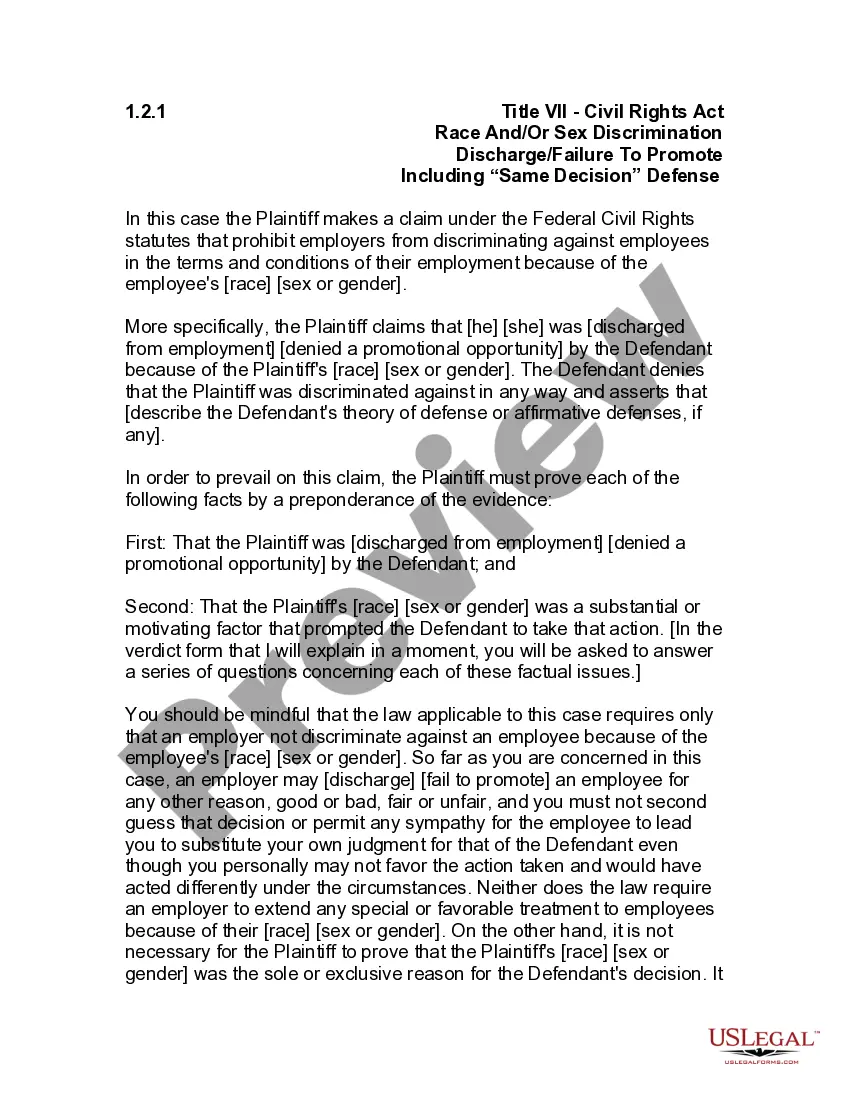
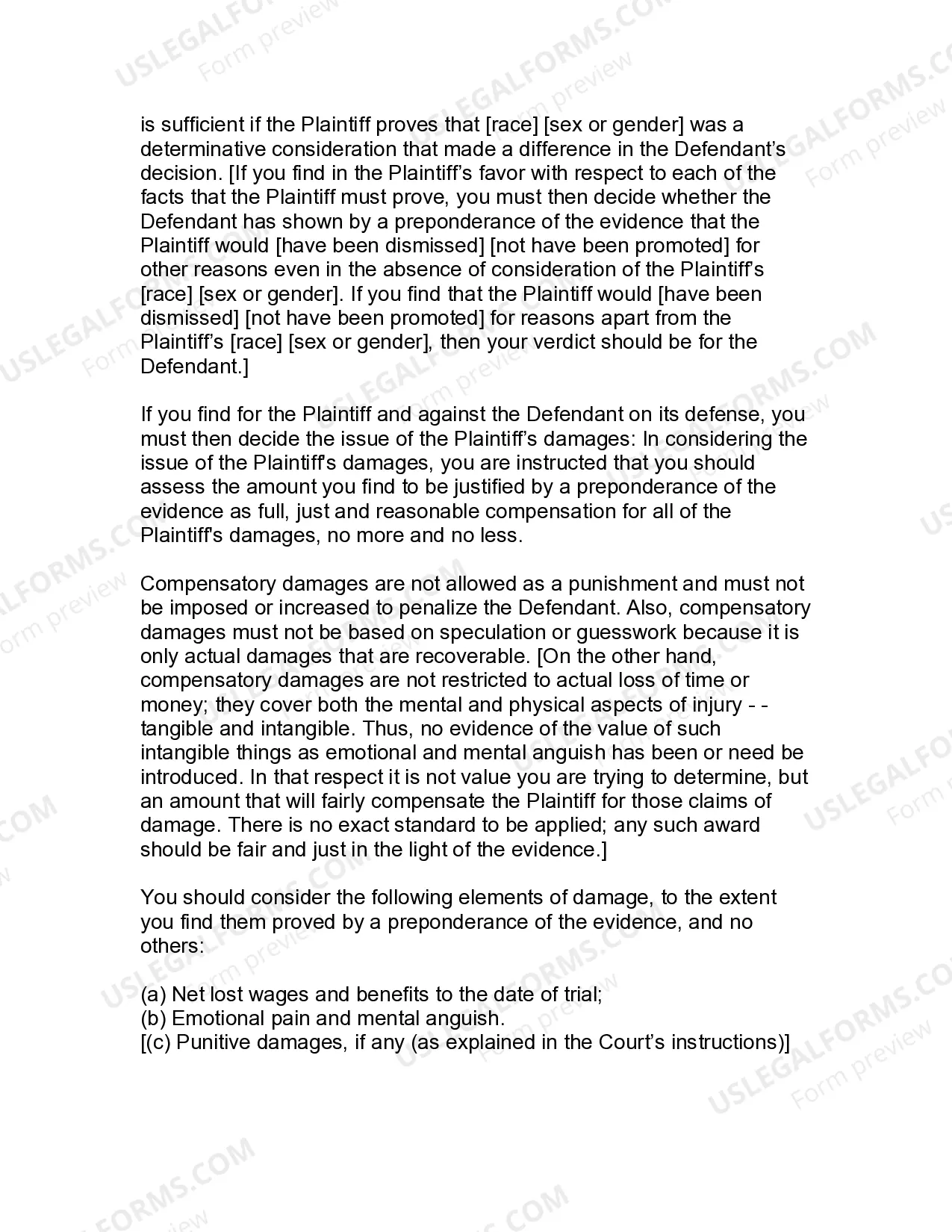
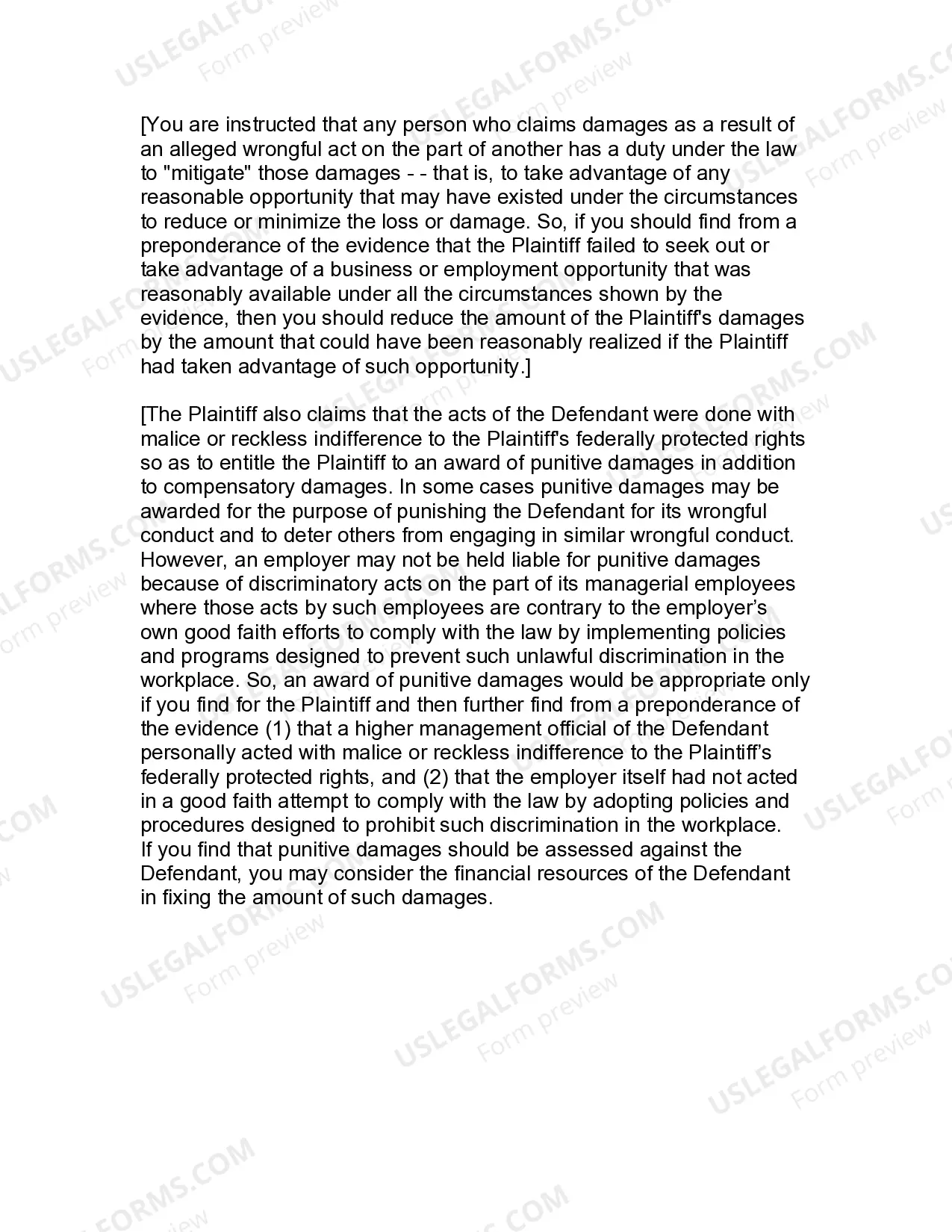
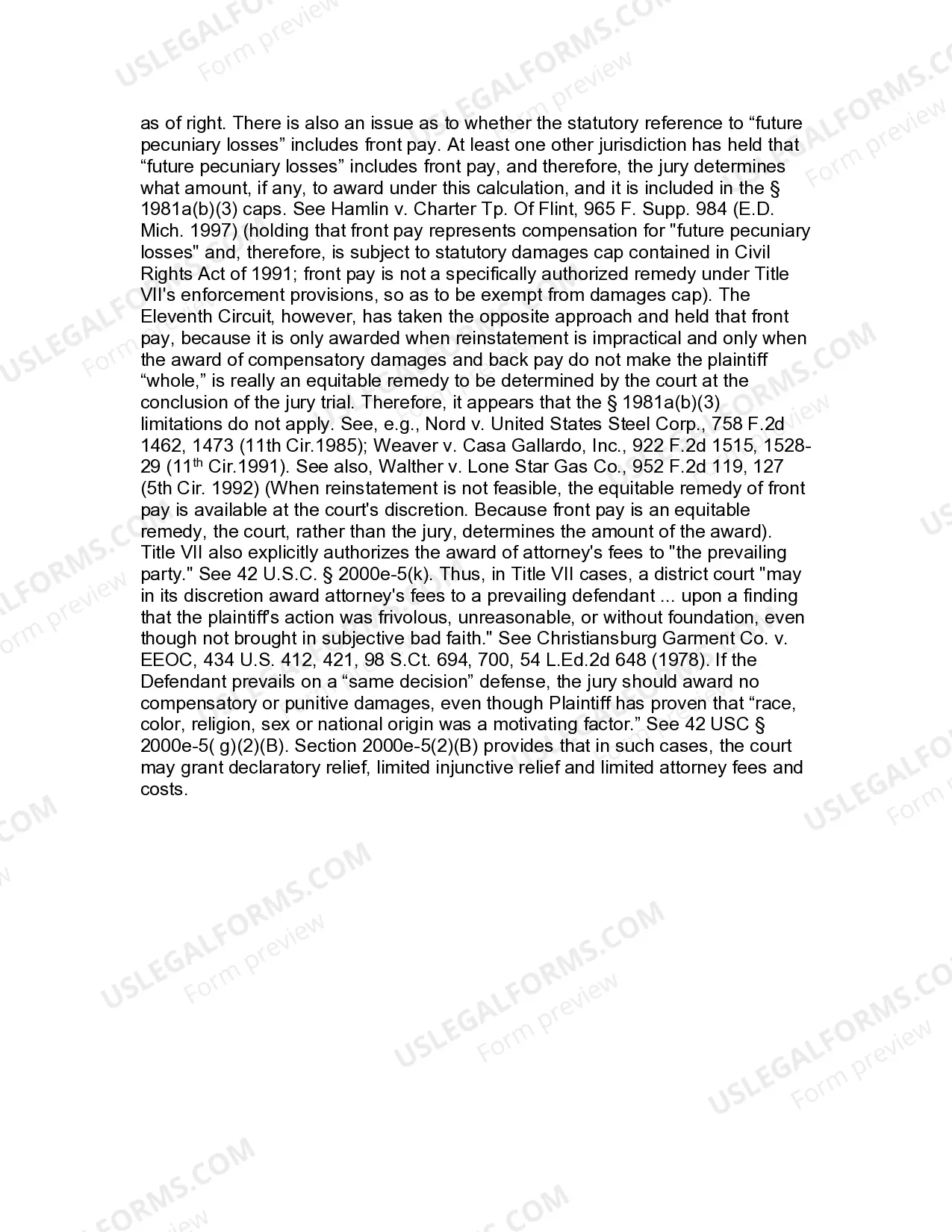
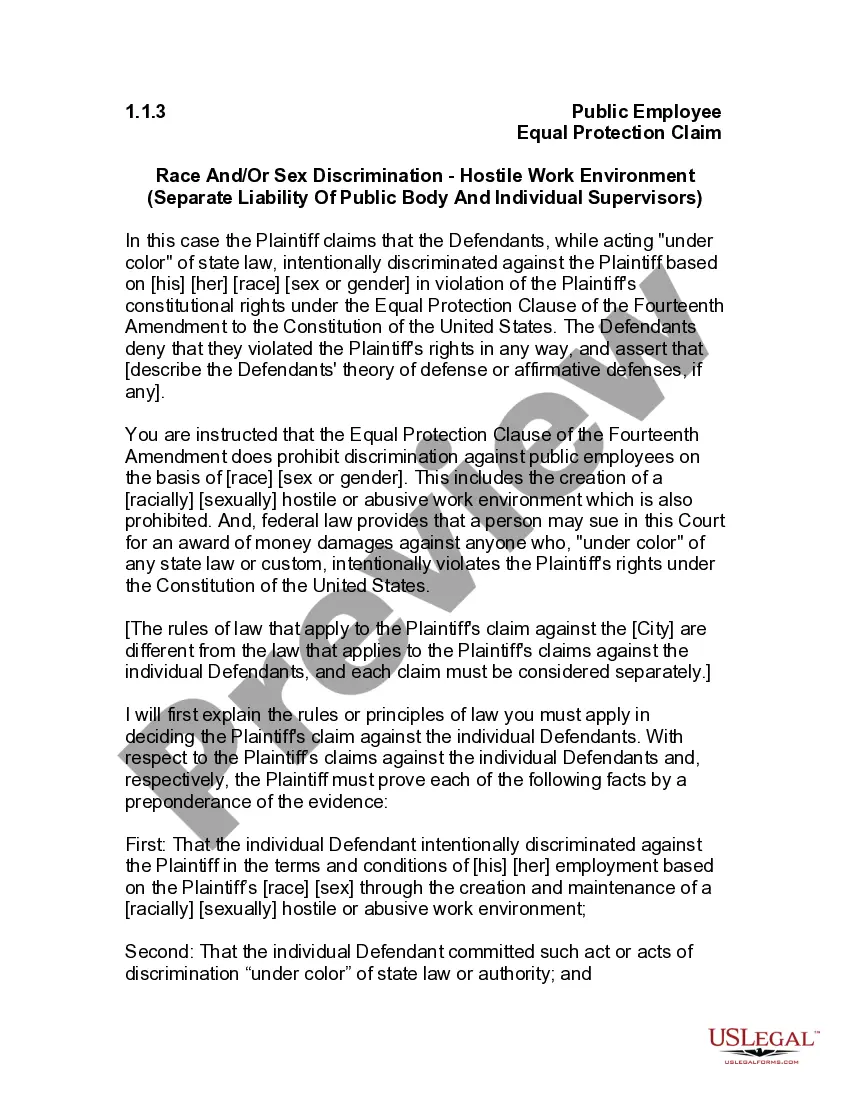
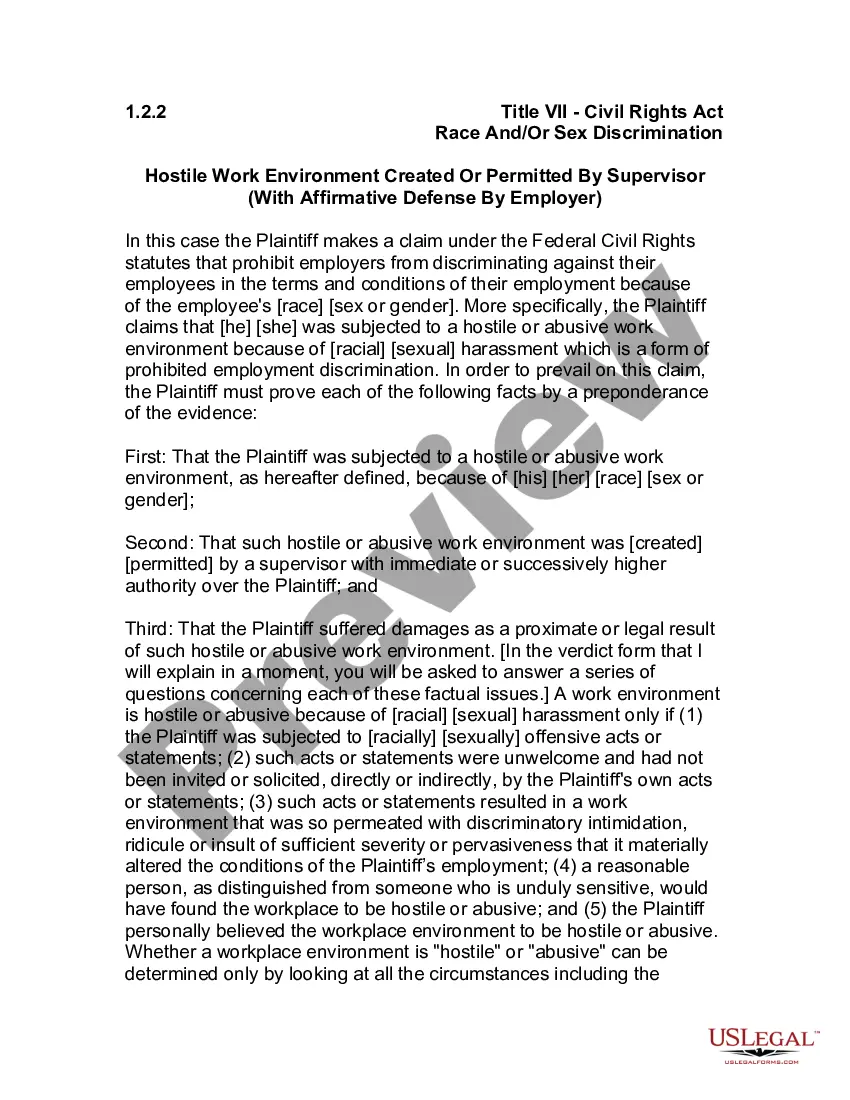
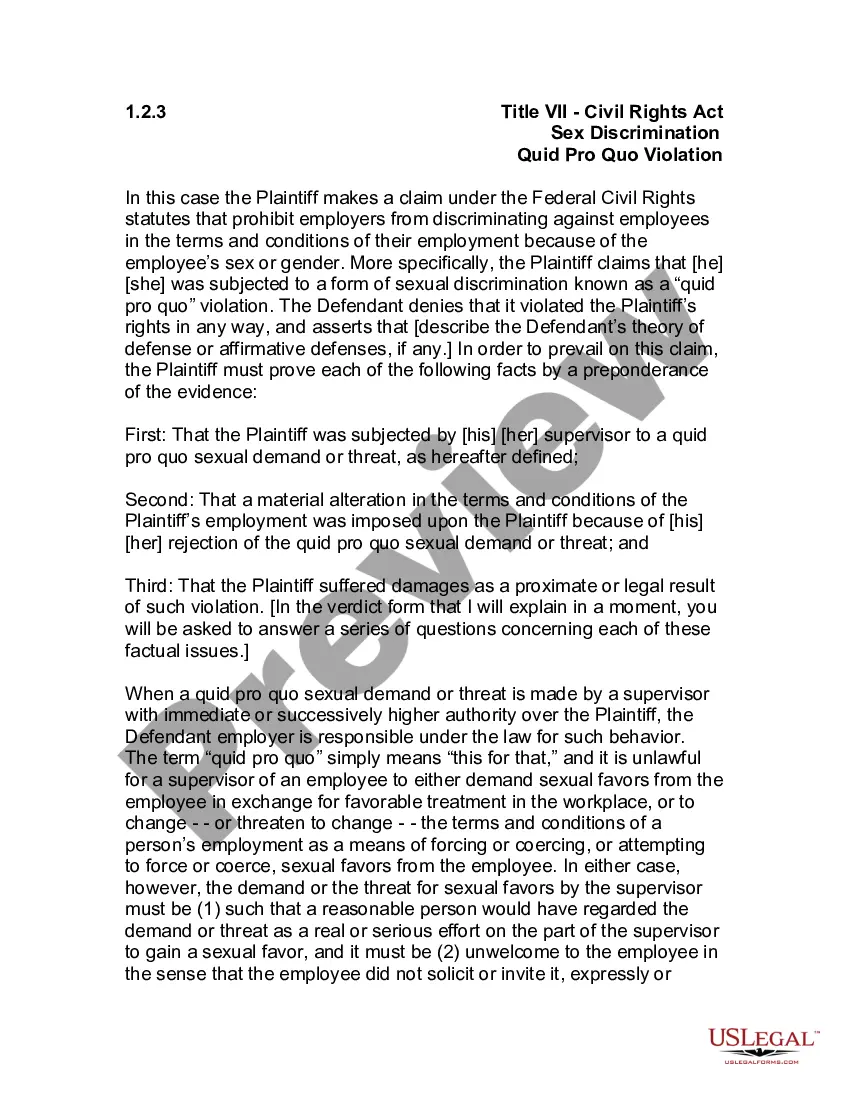
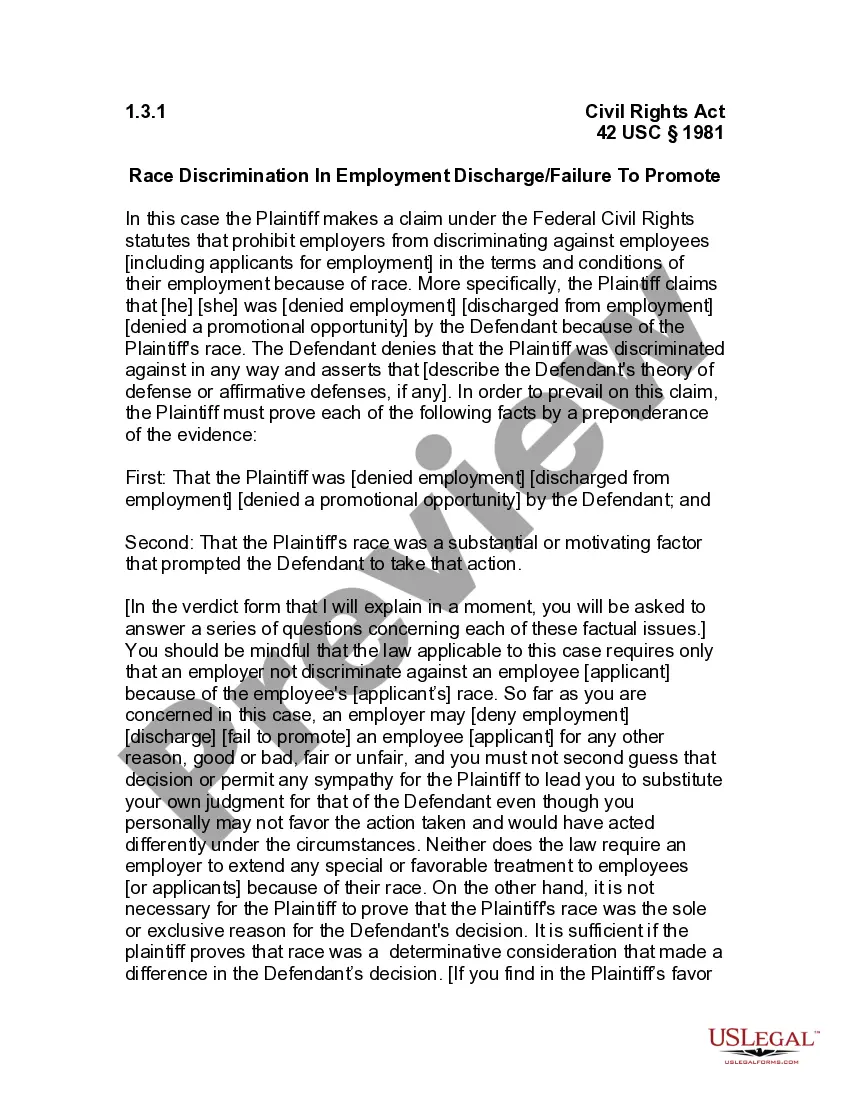
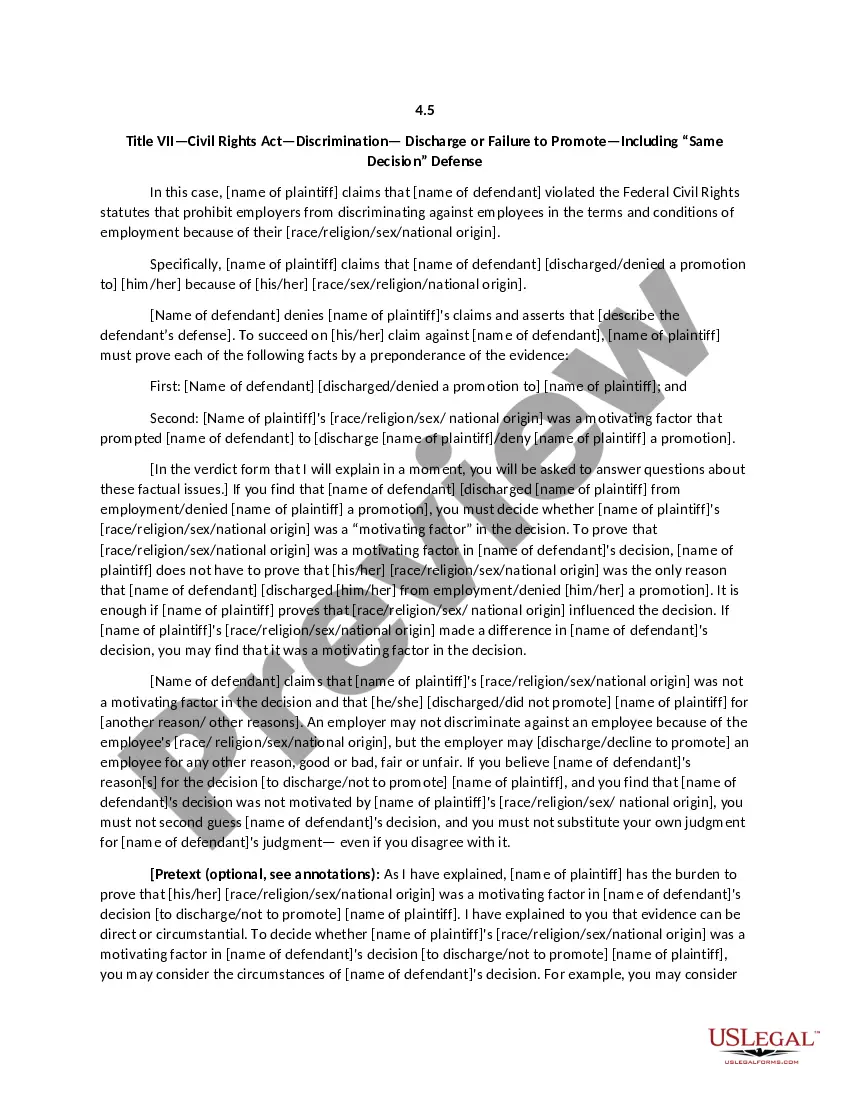
The Jury Instruction - Race and/or Sex Discrimination Discharge - Failure to Promote Including Same Decision Defense is designed to provide model jury instructions in cases involving claims of discrimination based on race, sex, or gender. This form is essential for guiding juries in understanding the law surrounding employment discrimination under federal civil rights statutes. Unlike other forms that may address different types of cases or claims, this specific jury instruction focuses on employment-related discrimination claims and includes defenses that employers might raise.
What’s included in this form
- Introduction to the Plaintiff's claim regarding discrimination based on race, sex, or gender.
- Explanation of the Defendant's denial of discrimination and any affirmative defenses.
- Requirements for the Plaintiff to establish a case, which includes proving discrimination was a motivating factor.
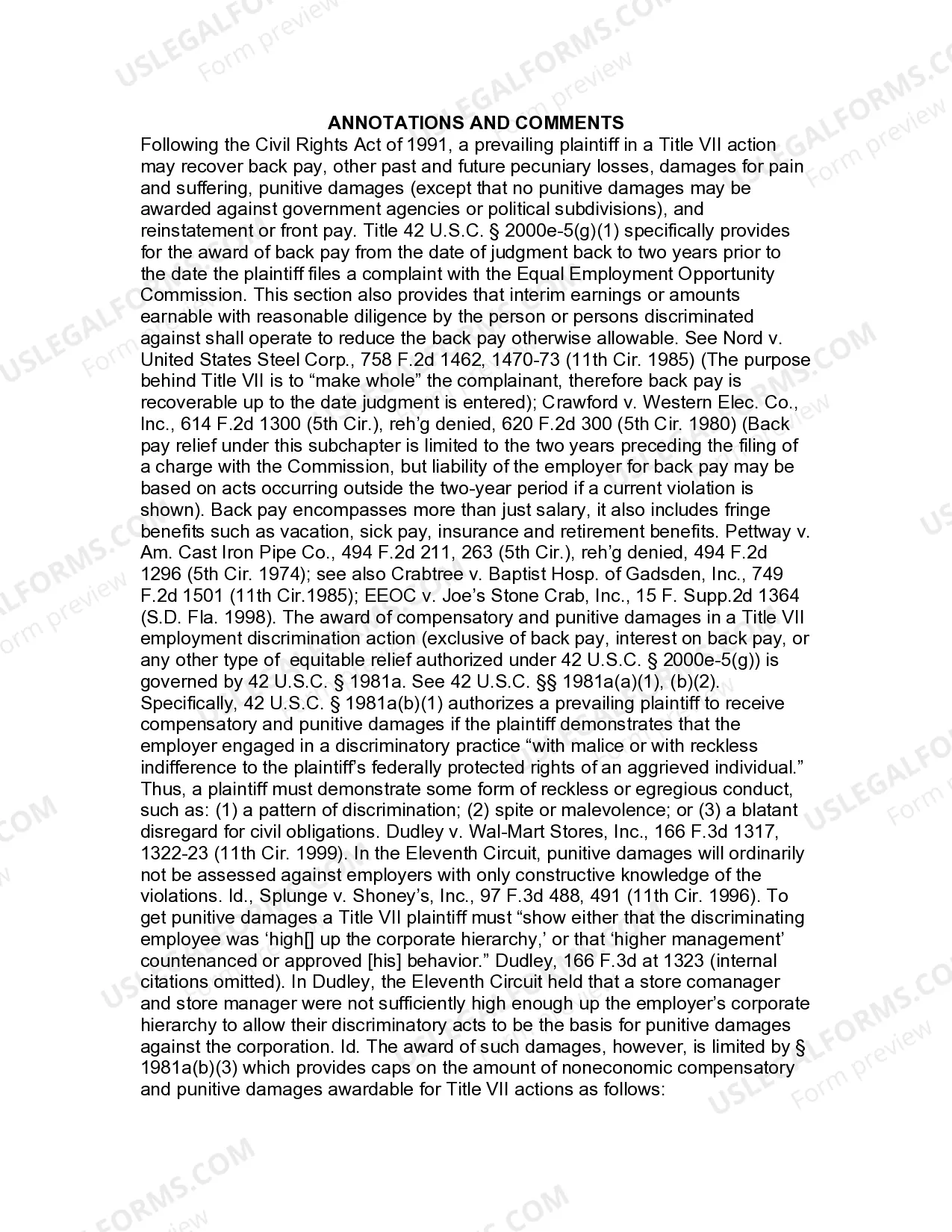
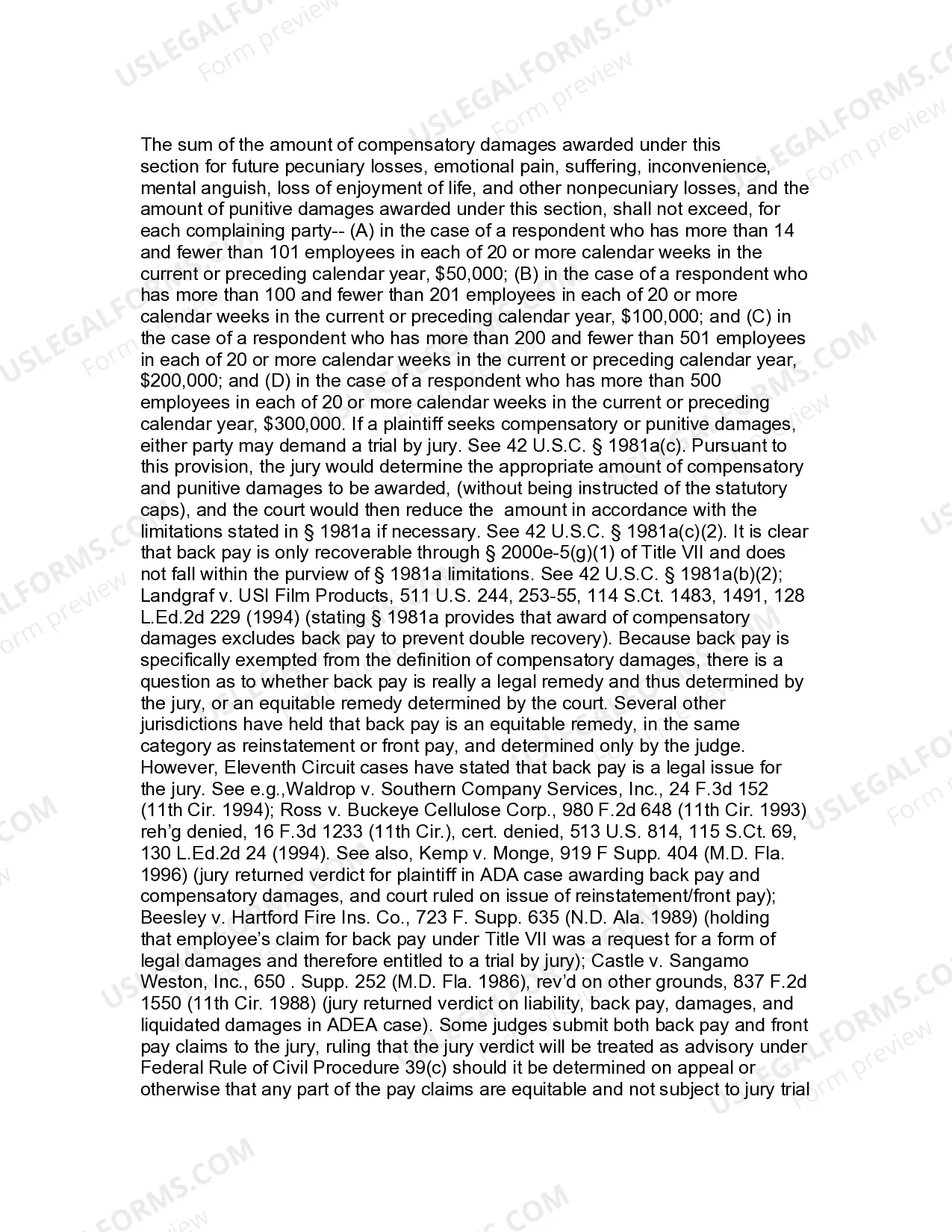
- Considerations for jury regarding compensatory and punitive damages.
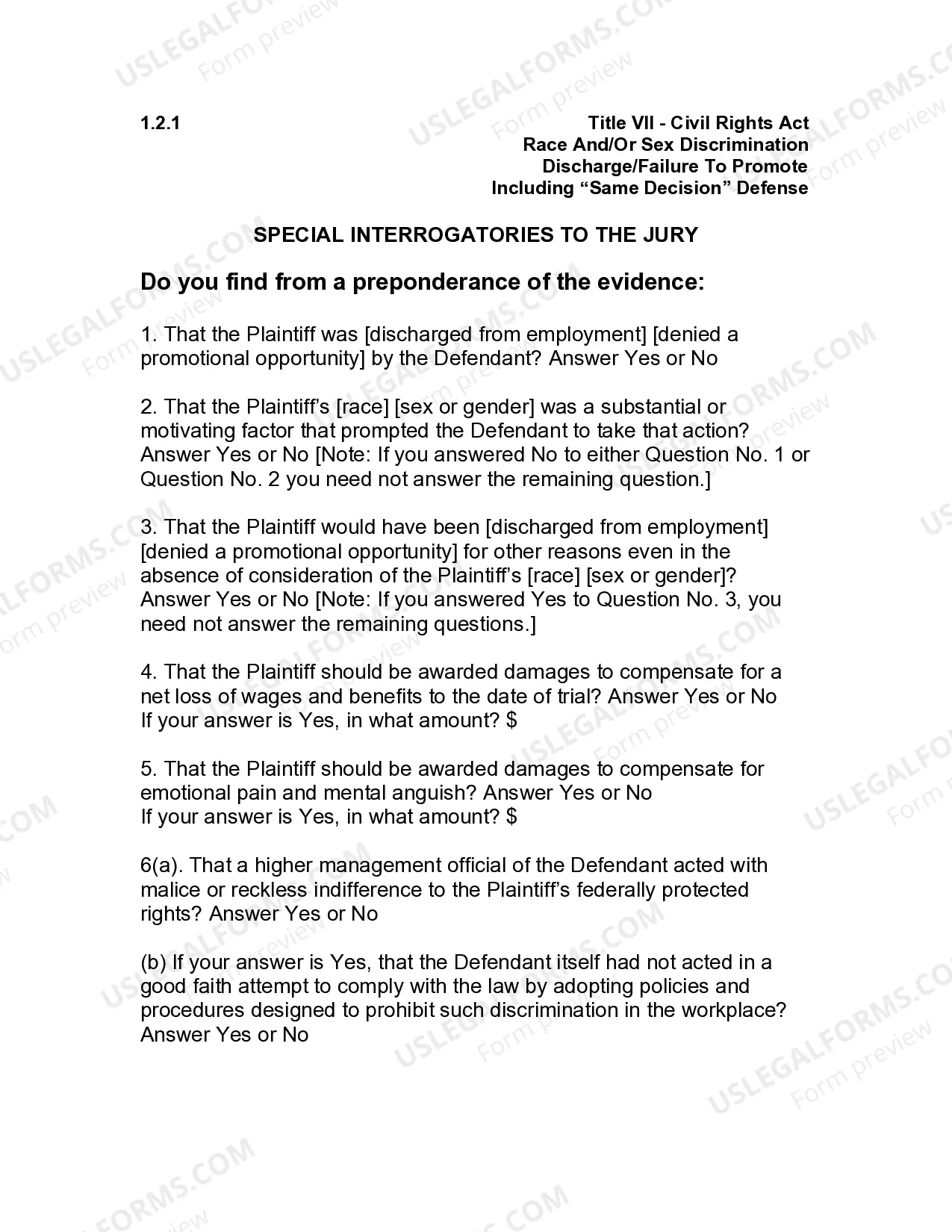
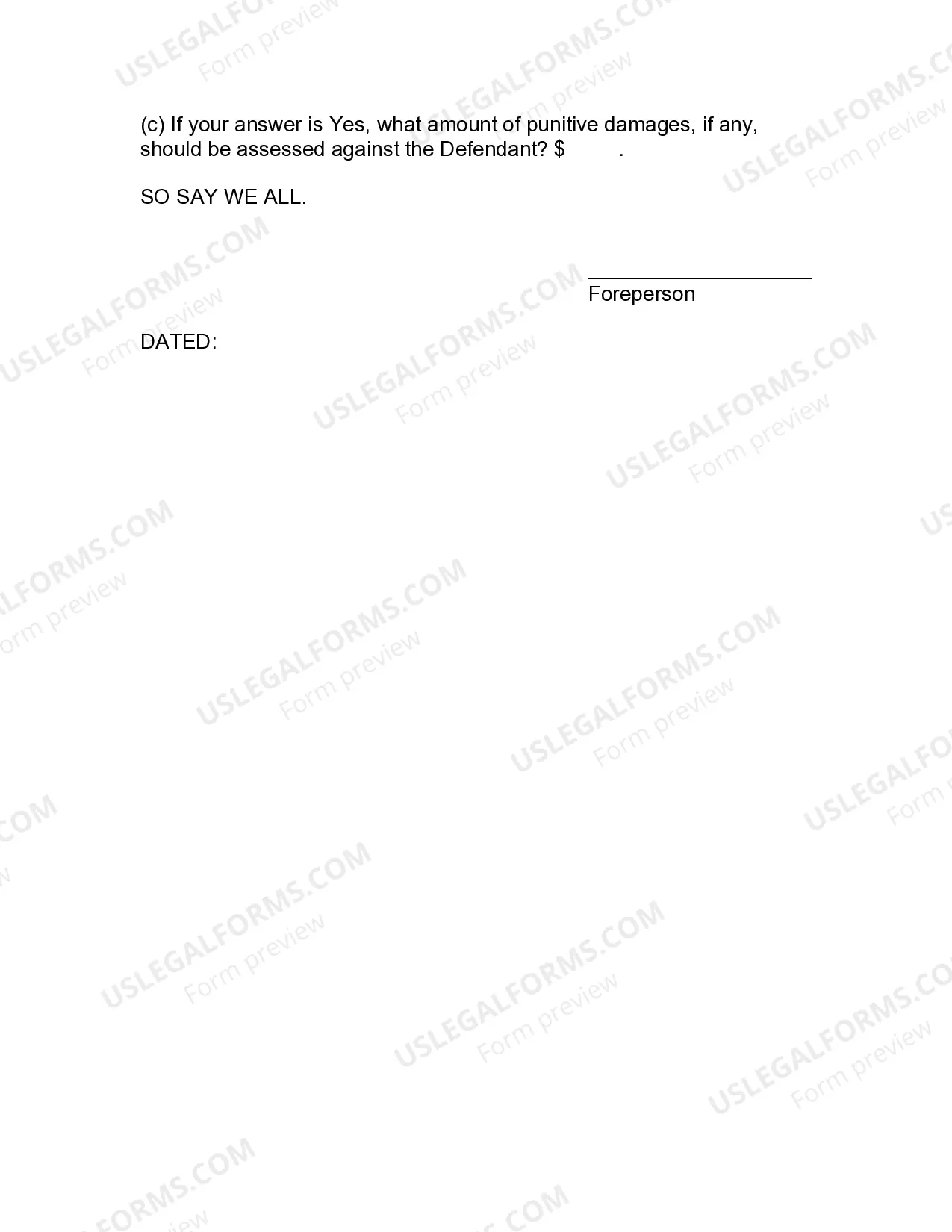
- Special interrogatories to the jury that clarify key questions regarding the discrimination claim.
When to use this document
This form should be used during jury trials where a Plaintiff alleges race or sex discrimination in employment, specifically regarding wrongful discharge or failure to promote. It is applicable in situations where the Defendant claims that other non-discriminatory reasons were behind their employment decisions, allowing juries to understand the legal standards required to make a fair assessment of the case.
Who needs this form
- Attorneys representing clients in employment discrimination cases.
- The Plaintiff alleging discrimination based on race, sex, or gender.
- Employers who need to understand jury instructions related to discrimination defenses.
- Judges presiding over cases involving employment-related discrimination claims.
Steps to complete this form
- Identify the Plaintiff and Defendant as relevant to the case.
- Summarize the Plaintiff's claims of discrimination, including details about the employment situation and decisions made.
- Outline the Defendant's arguments against the discrimination claims, including any affirmative defenses.
- Prepare the special interrogatories to guide jurors in their decision-making process.
- Review and adapt the jury instructions to fit the specific circumstances of the case.
Does this form need to be notarized?
Notarization is generally not required for this form. However, certain states or situations might demand it. You can complete notarization online through US Legal Forms, powered by Notarize, using a verified video call available anytime.
Get your form ready online
Our built-in tools help you complete, sign, share, and store your documents in one place.
Make edits, fill in missing information, and update formatting in US Legal Forms—just like you would in MS Word.
Download a copy, print it, send it by email, or mail it via USPS—whatever works best for your next step.
Sign and collect signatures with our SignNow integration. Send to multiple recipients, set reminders, and more. Go Premium to unlock E-Sign.
If this form requires notarization, complete it online through a secure video call—no need to meet a notary in person or wait for an appointment.
We protect your documents and personal data by following strict security and privacy standards.

Make edits, fill in missing information, and update formatting in US Legal Forms—just like you would in MS Word.

Download a copy, print it, send it by email, or mail it via USPS—whatever works best for your next step.

Sign and collect signatures with our SignNow integration. Send to multiple recipients, set reminders, and more. Go Premium to unlock E-Sign.

If this form requires notarization, complete it online through a secure video call—no need to meet a notary in person or wait for an appointment.

We protect your documents and personal data by following strict security and privacy standards.
Typical mistakes to avoid
- Failing to clearly articulate the Plaintiff's claims and the legal standards involved.
- Not properly explaining the Defendant's burden in demonstrating affirmative defenses.
- Neglecting to tailor the jury instructions to the specific case facts.
- Overloading jurors with excessive legal jargon or complex legal concepts.
Why use this form online
- Accessible and easy to download, allowing for quick use in legal proceedings.
- Editable templates ensure the form can be customized for specific cases.
- Reliability and legal compliance, drafted by licensed attorneys to follow best practices.
Legal use & context
- This form adheres to federal civil rights laws prohibiting employment discrimination.
- It is a critical tool for ensuring juries understand the legal framework around discrimination claims.
- Proper usage can influence the outcome of a case by ensuring clear communication of the law.
Main things to remember
- The form addresses critical aspects of proving race and sex discrimination in employment.
- Jurors are provided with clear guidelines to make informed decisions based on evidence.
- It is flexible and can be adapted to various jurisdictional requirements.
Looking for another form?
Form popularity
FAQ
How to File a Discrimination Claim. In order to officially file the workplace discrimination claim, you need to contact The Equal Employment Opportunity Commission (EEOC). You may file the claim in person at the nearest EEOC office, and you can also file the claim by mail or online.
Discrimination in employment involves three basic elements: it must be a decision not based on individual merit, the decision must derive from racial or sexual prejudice, and the decision must have a harmful impact on the interest of employees.
The four types of discrimination are direct discrimination, indirect discrimination, harassment and victimisation.
Age Discrimination. Disability Discrimination. Sexual Orientation. Status as a Parent. Religious Discrimination. National Origin. Sexual Harassment. Race, Color, and Sex.
Discrimination occurs where someone is treated less favourably due to a particular protected attribute, even if the treatment isn't openly antagonistic for example, not getting a promotion because you are pregnant, or being the subject of joking banter by reference to that protected attribute and even where it is
Discriminatory behaviour is when someone is treated unfairly because of one or more of the protected characteristics, as defined by the Equality Act 2010: · Age.
Protected characteristics These are age, disability, gender reassignment, marriage and civil partnership, pregnancy and maternity, race, religion or belief, sex, and sexual orientation.
Age. disability. gender reassignment. marriage and civil partnership. pregnancy and maternity. race. religion or belief. sex.