Jury Instruction - 6.2 Burden of Proof for Multiple Claims or if Both Plaintiff and Defendant or Third Parties Have Burden of Proof
What is this form?
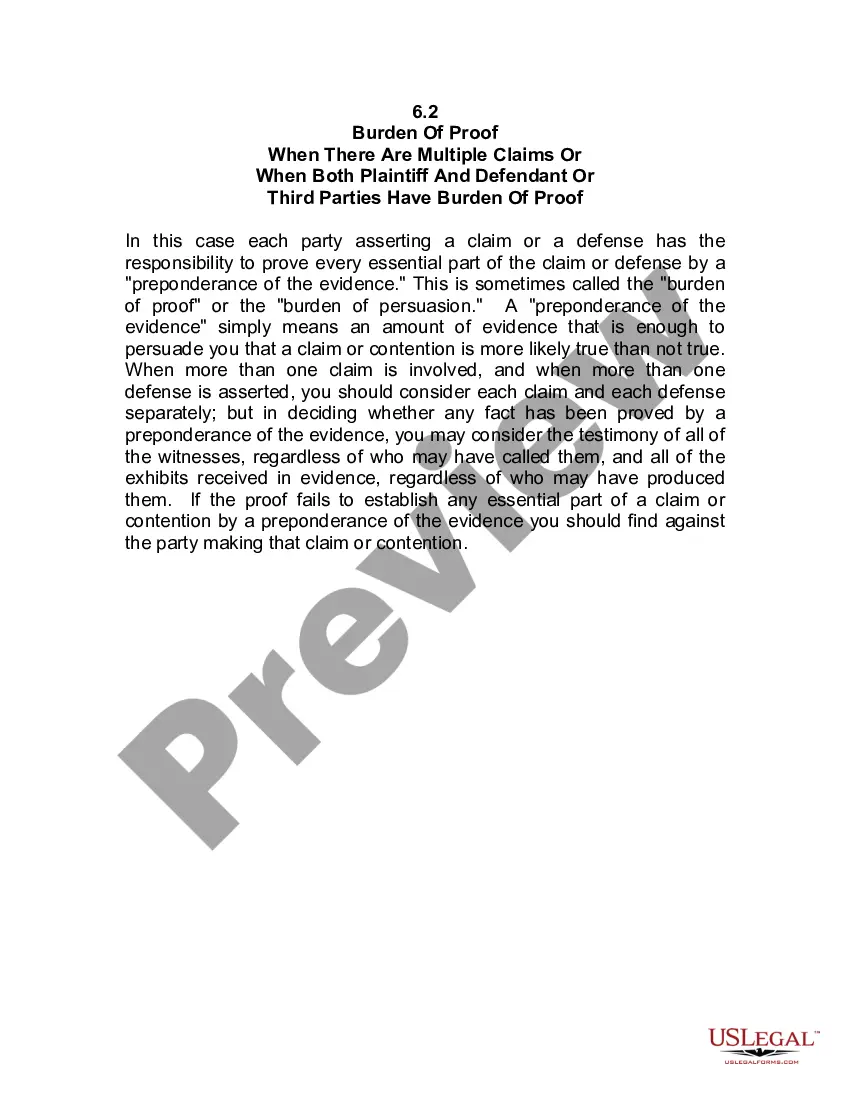
The Jury Instruction regarding the Burden of Proof for Multiple Claims is a legal template designed to assist jurors in understanding their responsibilities when weighing evidence in cases with multiple claims or parties involved. This form outlines how each party, whether plaintiff, defendant, or third party, must establish their claims or defenses by a preponderance of the evidence. It is crucial for ensuring that jurors approach each argument fairly and independently, differentiating it from general jury instructions which may not address complexities involving multiple burdens of proof.
Key parts of this document
- Definition of burden of proof, explaining the requirement to prove claims by a preponderance of evidence.
- Instructions on how to assess each claim and defense separately.
- Clarification on considering testimony and evidence from all parties.
- Guidance on finding against a party if their claim is not proved.
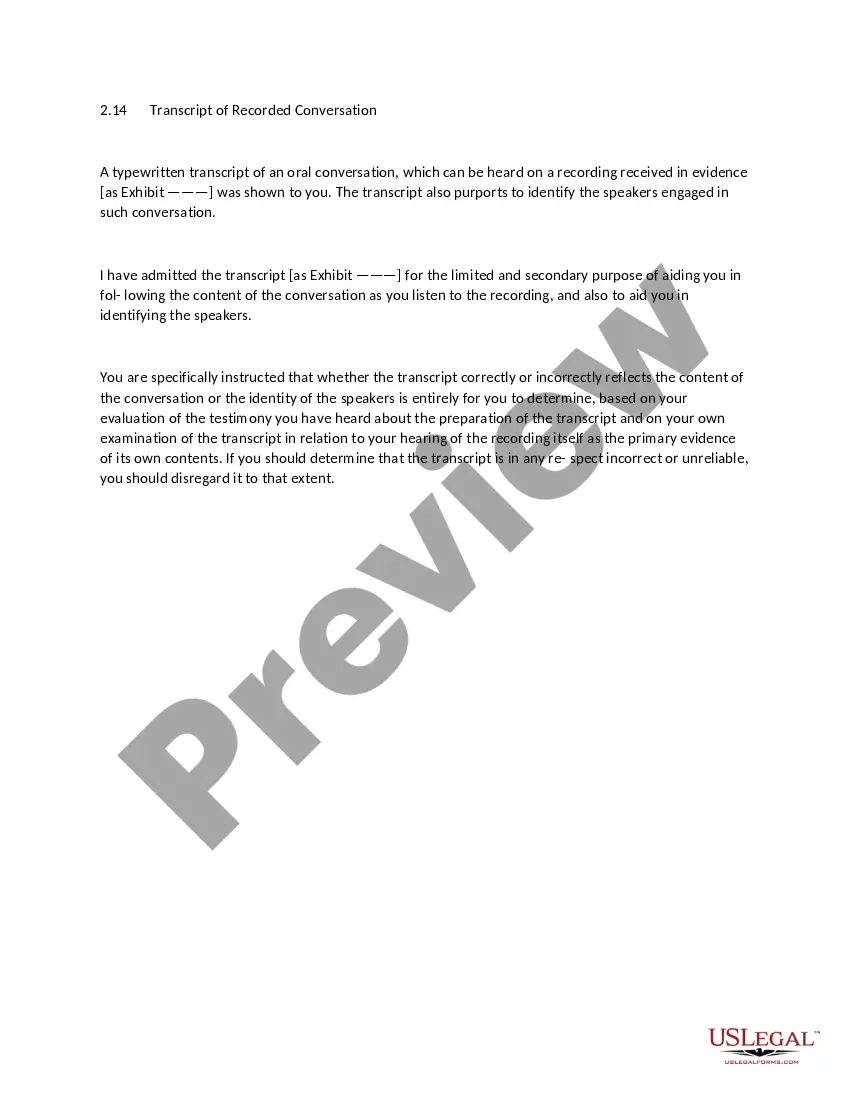

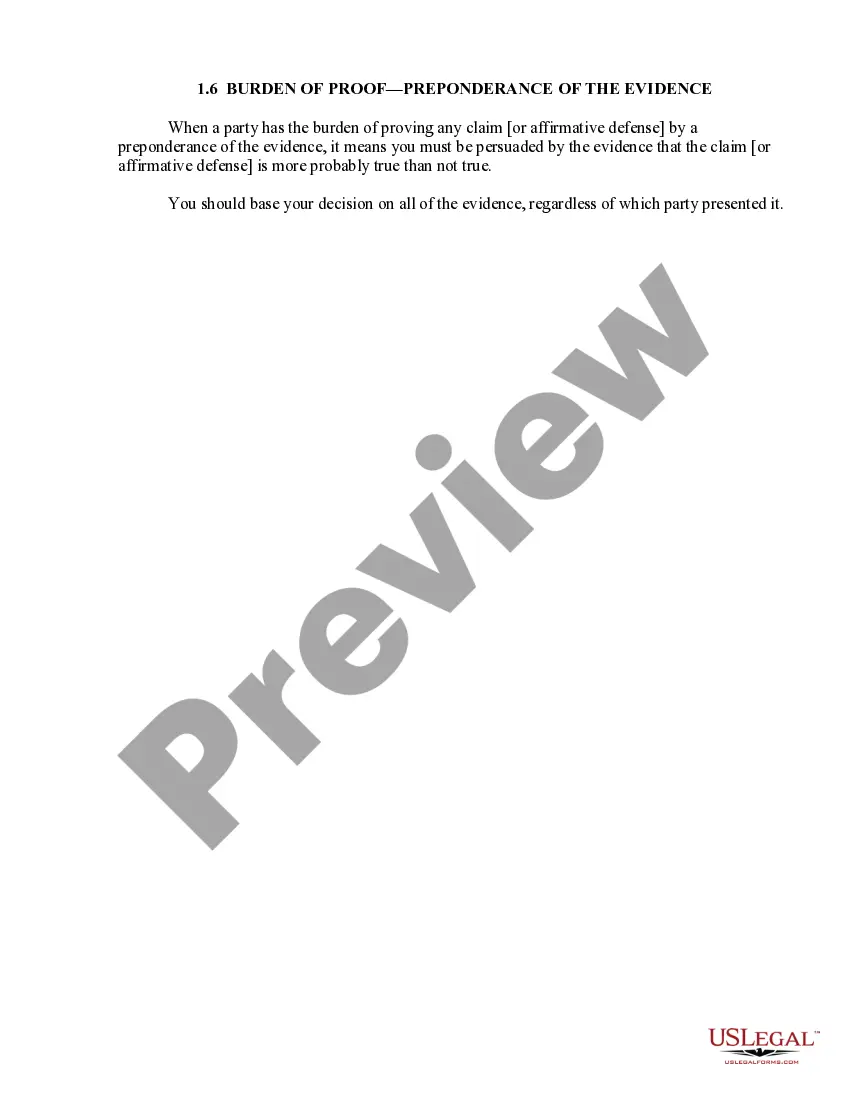
When to use this document
This form should be used in legal cases where there are multiple claims presented by either the plaintiff or the defendant, or when third parties are involved who may also have a burden of proof. It helps ensure that jurors accurately evaluate each claim based on its own merits, which is particularly important in complex litigation scenarios such as civil disputes or multi-party lawsuits.
Who should use this form
- Judges and legal practitioners preparing jury instructions for complex trials.
- Jurors needing clear guidance on how to assess evidence in cases involving multiple claims.
- Attorneys representing clients in civil lawsuits with overlapping claims or defenses.
How to prepare this document
- Clarify the specific claims or defenses each party is asserting.
- Ensure all essential terms and definitions of burden of proof are clearly stated.
- Review and adjust the instructions for assessing evidence in accordance with the case details.
- Include any jurisdiction-specific language or requirements if applicable.
- Finalize the document for presentation to the jury during the trial.
Does this form need to be notarized?
This form does not typically require notarization to be legally valid. However, some jurisdictions or document types may still require it. US Legal Forms provides secure online notarization powered by Notarize, available 24/7 for added convenience.
Get your form ready online
Our built-in tools help you complete, sign, share, and store your documents in one place.
Make edits, fill in missing information, and update formatting in US Legal Forms—just like you would in MS Word.
Download a copy, print it, send it by email, or mail it via USPS—whatever works best for your next step.
Sign and collect signatures with our SignNow integration. Send to multiple recipients, set reminders, and more. Go Premium to unlock E-Sign.
If this form requires notarization, complete it online through a secure video call—no need to meet a notary in person or wait for an appointment.
We protect your documents and personal data by following strict security and privacy standards.

Make edits, fill in missing information, and update formatting in US Legal Forms—just like you would in MS Word.

Download a copy, print it, send it by email, or mail it via USPS—whatever works best for your next step.

Sign and collect signatures with our SignNow integration. Send to multiple recipients, set reminders, and more. Go Premium to unlock E-Sign.

If this form requires notarization, complete it online through a secure video call—no need to meet a notary in person or wait for an appointment.

We protect your documents and personal data by following strict security and privacy standards.
Mistakes to watch out for
- Failing to tailor the instructions to fit the specifics of the case.
- Using ambiguous language that may confuse jurors.
- Overlooking the need to separate claims and defenses clearly.
- Not considering the role of third parties in cases with shared burdens of proof.
Why use this form online
- Convenient access to professionally drafted legal templates.
- Editable format allows for quick customization to fit specific cases.
- Peace of mind knowing that the instructions are based on legal expertise.
- Instantly downloadable, saving time in legal preparations.
Looking for another form?

Form popularity
FAQ
In New South Wales, a defendant charged with an indictable offence who has a right to trial by jury may elect to be tried by a judge alone (Criminal Procedure Act 1986, section 132). A jury verdict can only be appealed against if there is a serious error of law or serious misdirection by the trial judge.
They must reach a unanimous/majority verdict. They have split function. Discussions are conducted in secret.
Subdivision (c) states the right to object to an instruction or the failure to give an instruction.Many cases hold that a proper request for a jury instruction is not alone enough to preserve the right to appeal failure to give the instruction. The request must be renewed by objection.
Jury Instructions. instructions that are given by the trial judge that specifically state what the defendant can be found guilty of and what the prosecution or plaintiff has to prove in order for a guilty verdict.
Jury. a group of citizens who will decide the issues or questions of facts at trial.
Juries in civil cases The Supreme Court Act 1981 gives a qualified right to jury trial in the following four cases only: libel and slander; malicious prosecution; false imprisonment; and fraud.
A curative instruction is given to a jury by the judge in a case to negate the prejudicial effect of an erroneous instruction or tainted evidence.
California Jury Instructions Civil is authored using the precise language of the law. Book of Approved Jury Instructions (BAJI) has been recognized for more than 50 years as the source for civil jury instructions in California. The instructions have been tested in court, and judges and lawyers are familiar with them.
Jury instructions, directions to the jury, or judge's charge are legal rules that jurors should follow when deciding a case.