Letter from Tenant to Landlord - Lease Agreement containing provision limiting liability of landlord arising from the landlords willful conduct in violation of law
Overview of this form
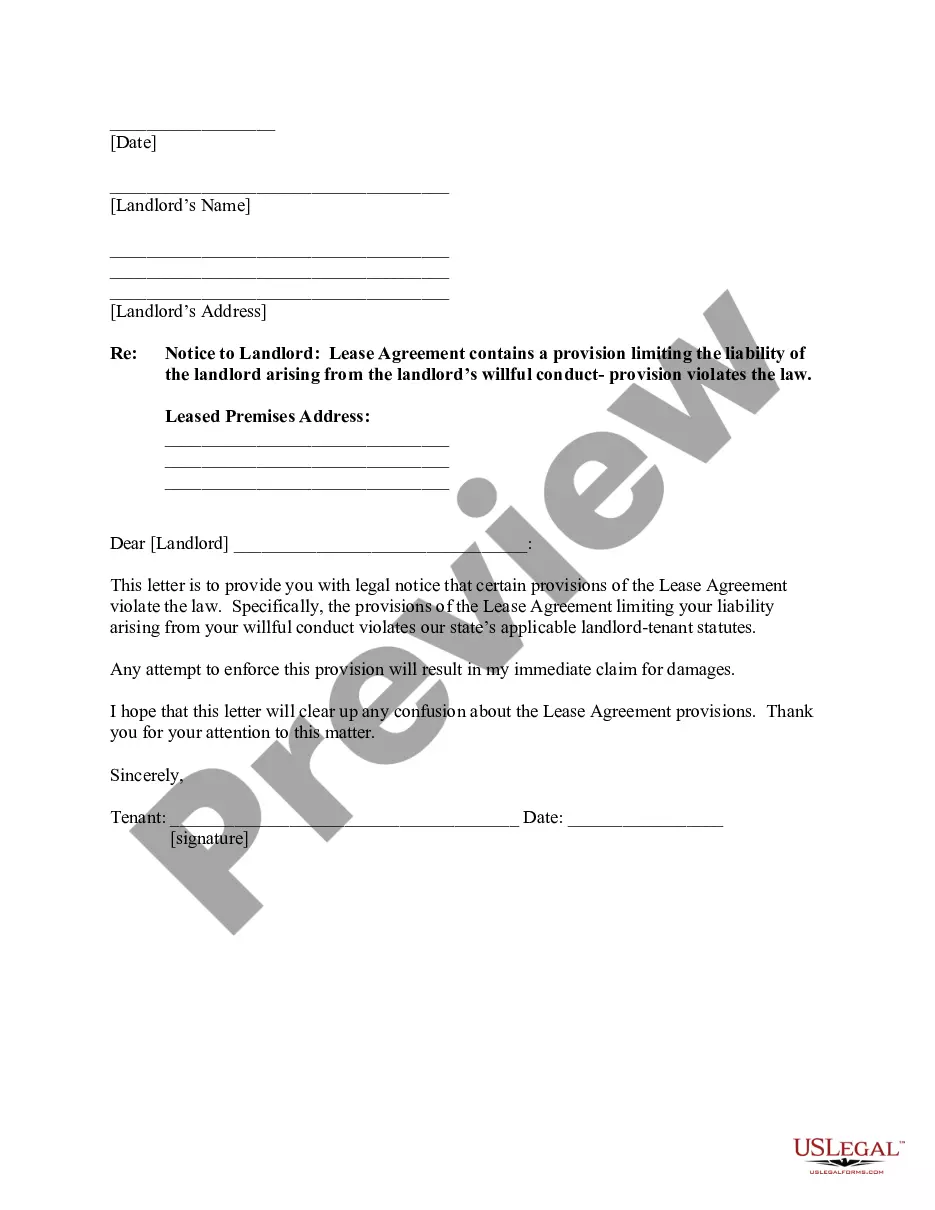
This form is a Letter from Tenant to Landlord regarding a Lease Agreement containing a provision that limits the liability of the landlord for their willful conduct in violation of the law. Its purpose is to formally notify the landlord that such clauses are illegal under applicable landlord-tenant statutes. This letter is critical for tenants who need to protect their rights and seek accountability for unlawful lease provisions.
Main sections of this form
- Date of the notice
- Landlord's name and address
- Leased premises address
- Clear statement of legal violations in the Lease Agreement
- Tenant's signature and date
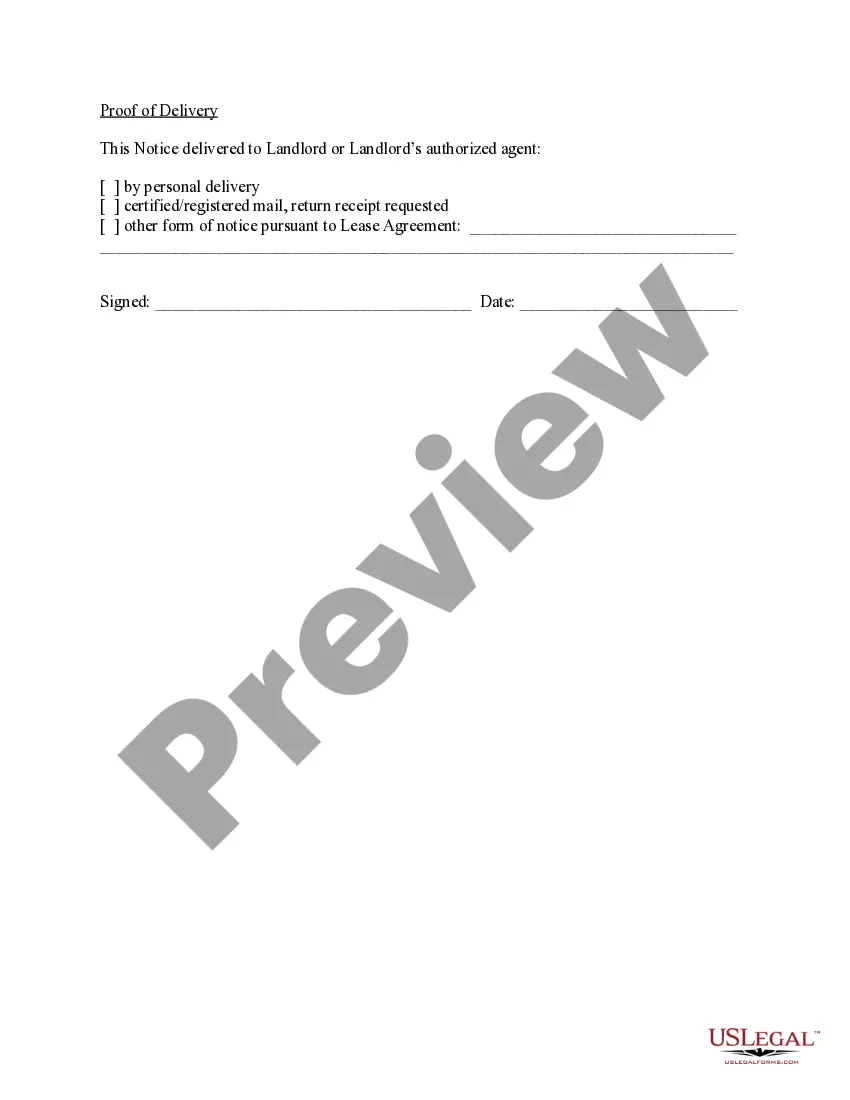
- Proof of delivery options


Situations where this form applies
You should use this form when you, as a tenant, identify that specific provisions in your Lease Agreement unlawfully limit the landlord's liabilities related to their willful conduct. This letter serves as a formal notification to the landlord, giving them an opportunity to address the violation before any further legal actions are pursued.
Who this form is for
- Tenants who have signed a lease with potentially unlawful liability limitations.
- Individuals seeking to assert their rights under landlord-tenant laws.
- Those who wish to provide official notice to their landlord regarding legal concerns.
How to complete this form
- Enter the date at the top of the letter.
- Provide the landlord's full name and address.
- Specify the address of the leased premises.
- Clearly articulate the legal violations in the Lease Agreement.
- Sign and date the letter as the tenant.
- Choose a proof of delivery method and document it.
Is notarization required?
Notarization is not commonly needed for this form. However, certain documents or local rules may make it necessary. Our notarization service, powered by Notarize, allows you to finalize it securely online anytime, day or night.
Get your form ready online
Our built-in tools help you complete, sign, share, and store your documents in one place.
Make edits, fill in missing information, and update formatting in US Legal Forms—just like you would in MS Word.
Download a copy, print it, send it by email, or mail it via USPS—whatever works best for your next step.
Sign and collect signatures with our SignNow integration. Send to multiple recipients, set reminders, and more. Go Premium to unlock E-Sign.
If this form requires notarization, complete it online through a secure video call—no need to meet a notary in person or wait for an appointment.
We protect your documents and personal data by following strict security and privacy standards.

Make edits, fill in missing information, and update formatting in US Legal Forms—just like you would in MS Word.

Download a copy, print it, send it by email, or mail it via USPS—whatever works best for your next step.

Sign and collect signatures with our SignNow integration. Send to multiple recipients, set reminders, and more. Go Premium to unlock E-Sign.

If this form requires notarization, complete it online through a secure video call—no need to meet a notary in person or wait for an appointment.

We protect your documents and personal data by following strict security and privacy standards.
Common mistakes
- Failing to include the date of the notice.
- Not specifying the exact provisions that are believed to be illegal.
- Omitting proof of delivery details.
Advantages of online completion
- Convenient access to downloadable templates.
- Edit and personalize the form easily for your situation.
- Reliability from templates drafted by licensed attorneys.
Looking for another form?









Form popularity
FAQ
A lease is automatically void when it is against the law, such as a lease for an illegal purpose. In other circumstances, like fraud or duress, a lease can be declared void at the request of one party but not the other.
Updated Oct 17, 2020. A waiver of subrogation clause is good for both a tenant and a landlord. A waiver of subrogation is a two-way agreement in which each party agrees to give up subrogation rights against the other in the event of some kind of loss, such as damage to a building or personal possessions from a fire.
The rental property address, including unit number (if applicable) The names of all tenants on the lease agreement. The date the lease violation notice was written. The specific reason for the notice. The time and date the violation occurred (if applicable)
If the tenant refuses, you are permitted to send them a notice to agree or quit the property. The tenant refusing you access constitutes a breach in the lease agreement, so they could be evicted if they continue to deny access.
Your name, and the landlord's name and address. The date you're writing the letter. Informing the landlord you're breaking your lease early. The reason why you're breaking your lease. The building and apartment you're vacating. The date by which you're vacating.
The date that the tenant warning letter was written. The name and the basic personal information of the tenant. The name of the landlord or the owner of the property. The reason why a tenant warning letter has been written.
The landlord had a duty to reasonably maintain the property; The landlord knew or should have known of the dangerous condition; The landlord breached their duty by failing to repair/fix the dangerous condition;
Showing the premises to prospective tenants 'reasonable' notice / number of times. The law does not say what 'reasonable' means.If you refuse access, the landlord/agent can apply to the Tribunal for an order that authorises them or any other person to enter the premises.
While tenants cannot unreasonably deny access to a landlord, landlords must also follow all of the state and local rules regarding access to tenants' apartments. Roughly half of states have rules governing landlord entry into tenants' apartments.