Sample Letter for Trustee's Notice of Sale of Property
About this form
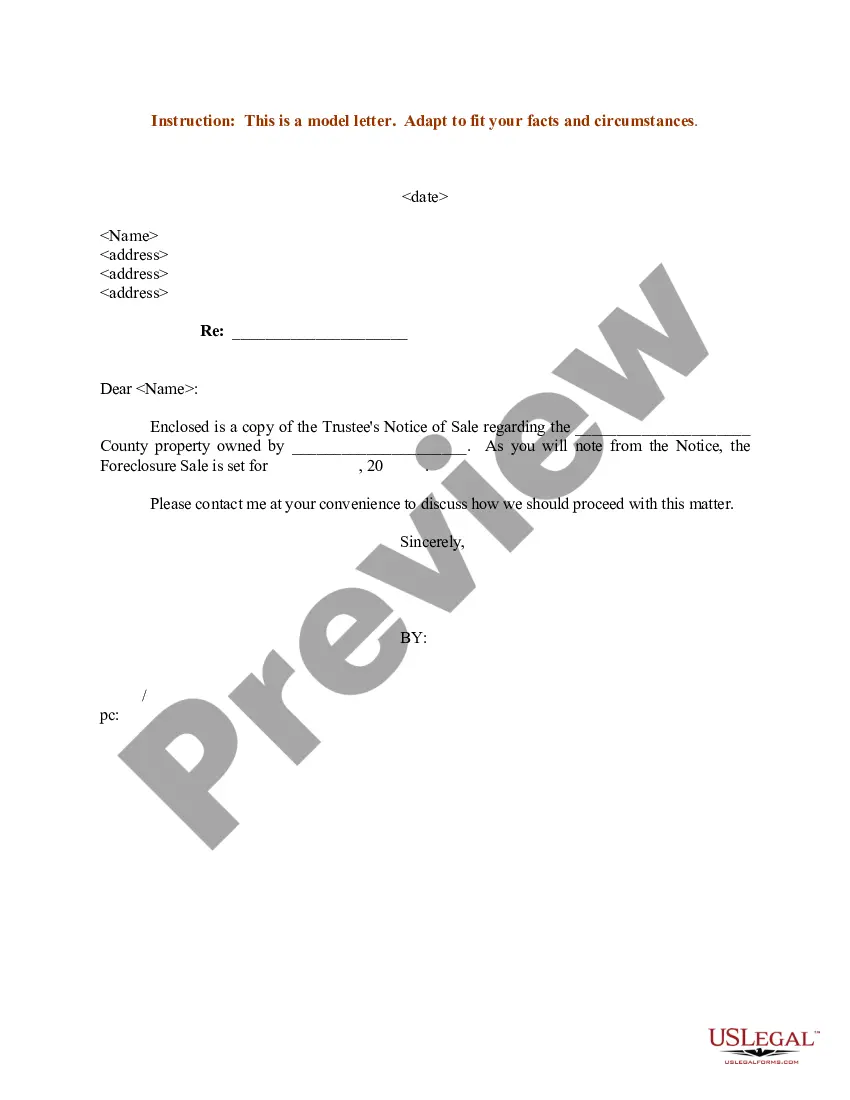
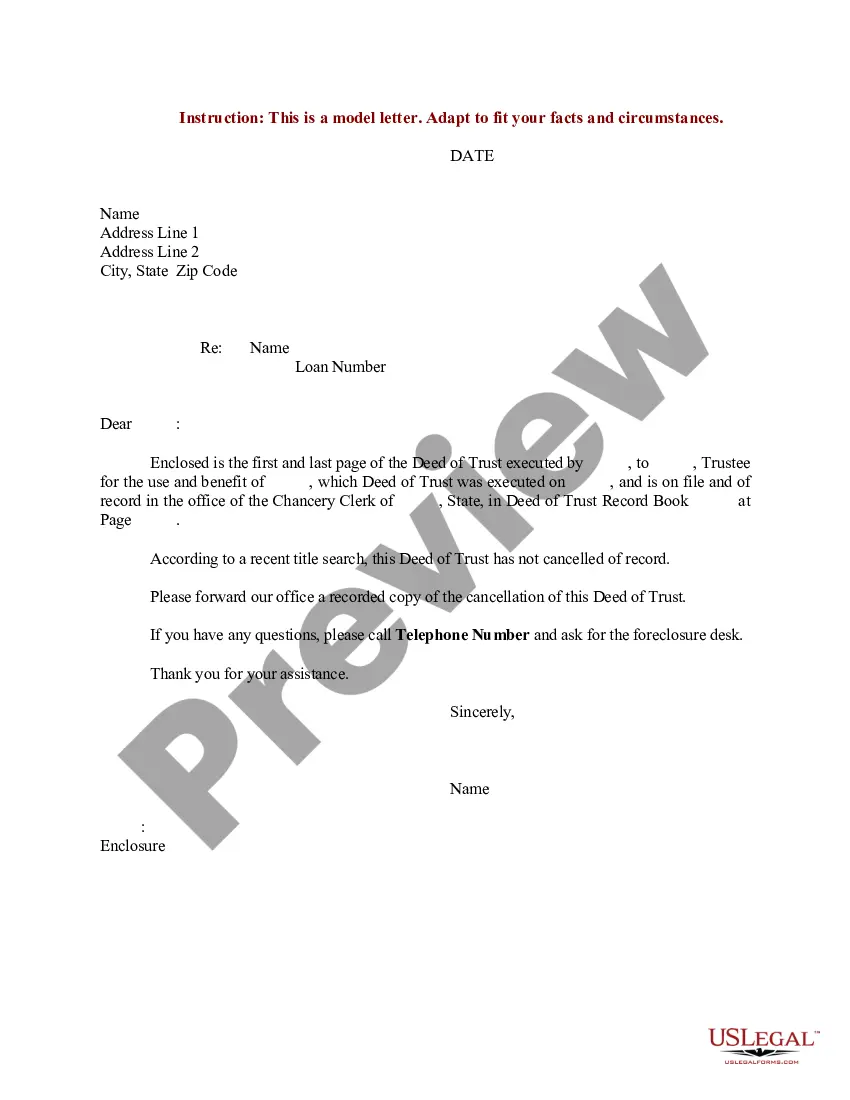
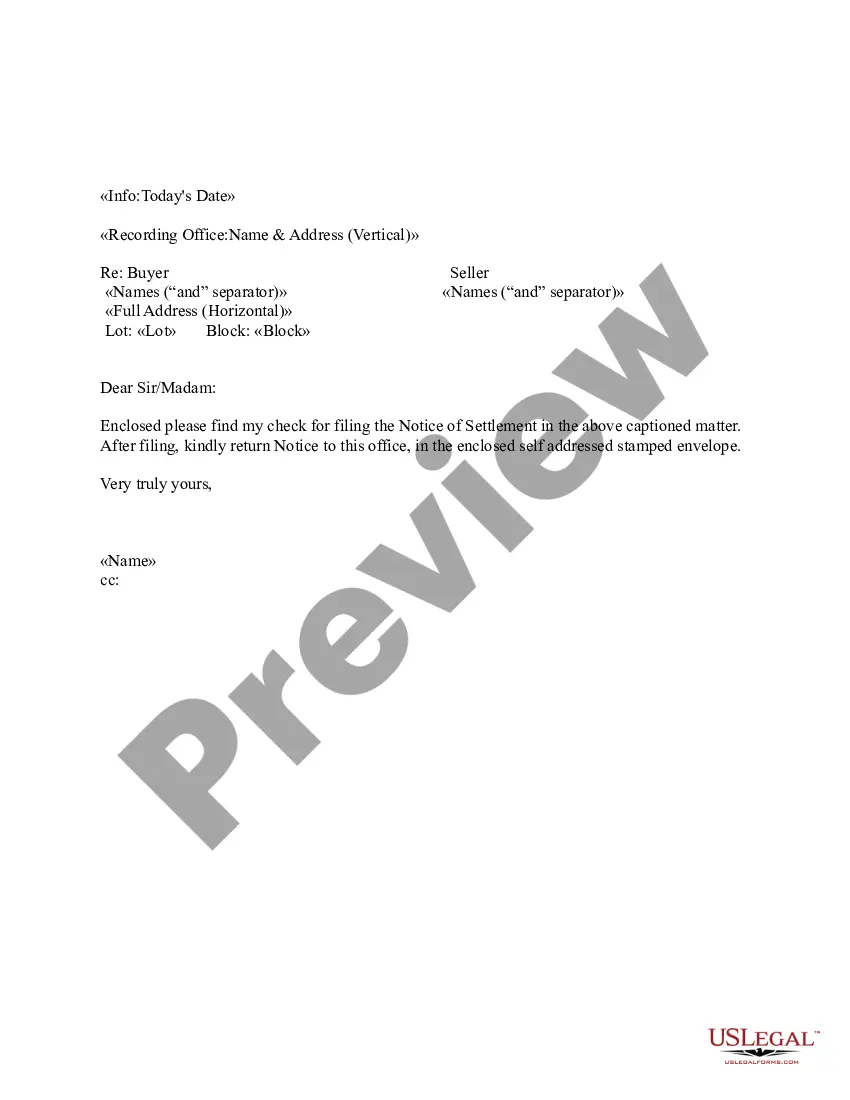
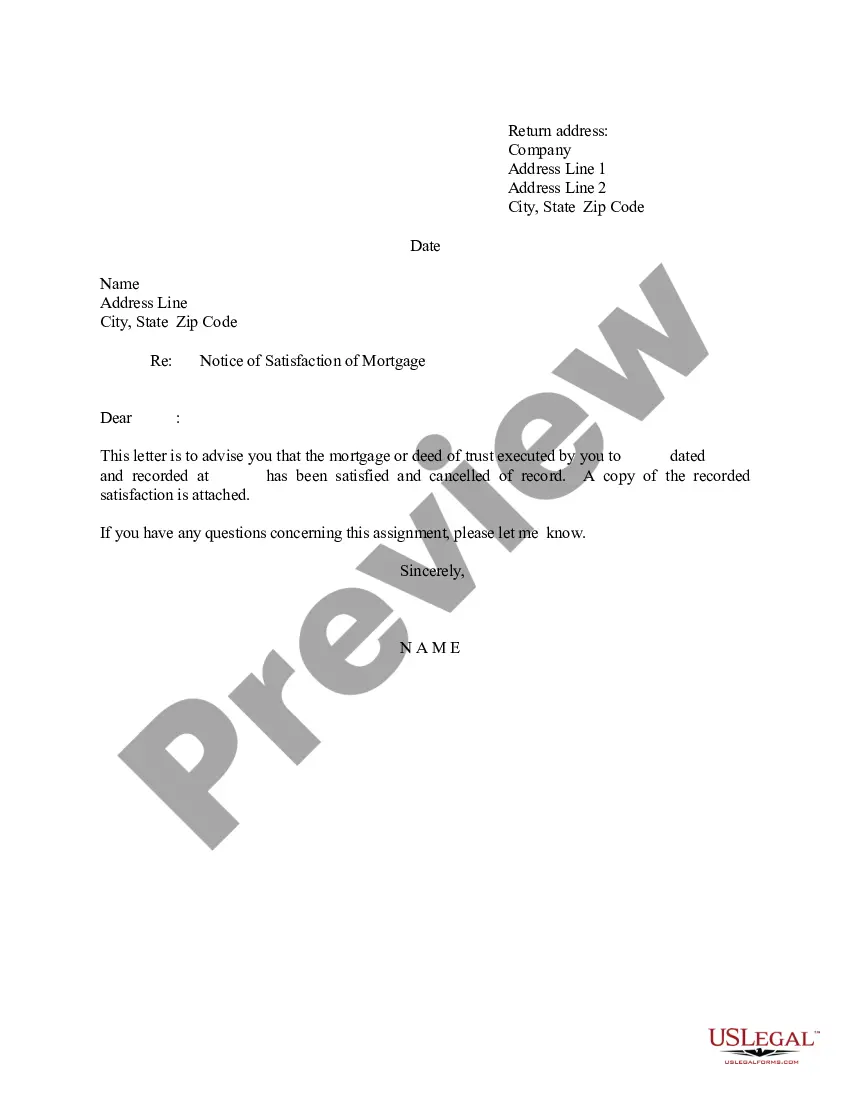
This Sample Letter for Trustee's Notice of Sale of Property is a template designed to facilitate communication regarding the sale of property under a trust. Unlike other forms, this letter specifically addresses the obligations of the trustee to notify interested parties about the property sale, ensuring compliance with legal requirements governing trust administration.
What’s included in this form
- Date of the notice
- Trustee's name and contact information
- Property details including address
- Legal reference or case number
- Recipient's name and address
- Salutation and body of the letter explaining the notice of sale
When this form is needed
This form should be used when a trustee is required to notify beneficiaries and other parties about the sale of property under their management. It is applicable in situations where a property is being sold due to trust conditions or to settle debts associated with the estate.
Who this form is for
This letter is intended for:
- Trustees managing an estate
- Beneficiaries of a trust
- Legal representatives handling trust matters
- Real estate professionals involved in trust property sales
How to complete this form
- Identify the date of the notice.
- Enter the trustee's name and contact information.
- Specify the property details, including the address and relevant legal references.
- Provide the recipient's name and address.
- Compose the body of the letter to explain the notice of sale.
- Sign and date the letter to finalize it.
Notarization guidance
This form must be notarized to be legally valid. US Legal Forms provides secure online notarization powered by Notarize, allowing you to complete the process through a verified video call.
Get your form ready online
Our built-in tools help you complete, sign, share, and store your documents in one place.
Make edits, fill in missing information, and update formatting in US Legal Forms—just like you would in MS Word.
Download a copy, print it, send it by email, or mail it via USPS—whatever works best for your next step.
Sign and collect signatures with our SignNow integration. Send to multiple recipients, set reminders, and more. Go Premium to unlock E-Sign.
If this form requires notarization, complete it online through a secure video call—no need to meet a notary in person or wait for an appointment.
We protect your documents and personal data by following strict security and privacy standards.

Make edits, fill in missing information, and update formatting in US Legal Forms—just like you would in MS Word.

Download a copy, print it, send it by email, or mail it via USPS—whatever works best for your next step.

Sign and collect signatures with our SignNow integration. Send to multiple recipients, set reminders, and more. Go Premium to unlock E-Sign.

If this form requires notarization, complete it online through a secure video call—no need to meet a notary in person or wait for an appointment.

We protect your documents and personal data by following strict security and privacy standards.
Common mistakes to avoid
- Failing to include the correct property address.
- Neglecting to sign the letter.
- Omitting necessary details about the trust or the reason for the sale.
- Incorrectly addressing the letter to the recipients.
Why complete this form online
- Conveniently edit and customize the template to fit specific needs.
- Reliable format that is legally sound and professionally drafted.
- Quick access to downloadable files, saving time compared to traditional methods.
- No need for travel, as the form can be completed at your convenience.
Looking for another form?
Form popularity
FAQ
After you've received a Notice of Default, you have 3 months in which to attempt to get your loan current. As mentioned above, that means paying all back payments, interest, fees, property taxes, and insurance. After 3 months, the bank can officially set a date for the auction of your home.
The auction notice, or Notice of Sale, is your final notice that the lender intends to sell the property at auction. The county prints the location, time and date of the trustee's auction on the Notice of Sale. It also contains the name and contact information for the trustee in charge of the sale.
More specifically, it's a legal process by which the owner forfeits all rights to the property. If the owner can't pay off the outstanding debt, or sell the property via short sale, the property then goes to a foreclosure auction. If the property doesn't sell there, the lending institution takes possession of it.
Once a default notice has been issued, the debt can be passed or sold to a debt collector. You may then start receiving letters and phone calls from the debt collector to chase up on the debt, and payments would need to be made to the debt collector rather than the original creditor.
A notice of default is the first step to a bank or mortgage lender's foreclosure process.If the mortgage is not paid up to date, the lender will seize the home. A notice of default is also known as a reinstatement period, notice of public auction, or notice of foreclosure.
A Notice of Trustee's Sale informs homeowners and mortgage borrowers of record that their home will be sold at a trustee's sale on a specific date and at a specific location. The actual sale typically completes a non-judicial foreclosure in states allowing this type of foreclosure process.
How long it takes for your home to foreclose once you receive notice of lis pendens will depend on the state. In California, it might take a minimum of 120 days, and 180 days in Florida, while in New York it can take as long as 15 months after the notice is filed.
One of the documents is the 'Bill of Sale,' also referred to as a 'Notice of Sale'. Although not legally needed in Florida since it doesn't actually replace the title transfer, it does provide extra protection both for the vehicle buyer and seller, and makes for an excellent personal record.
The Notice of Sale (NOS) generally states: the property address and/or legal description. a statement that the property will be sold at a public auction, and. the date, time, and location of the foreclosure sale.