Sample Letter for History of Deed of Trust
What this document covers
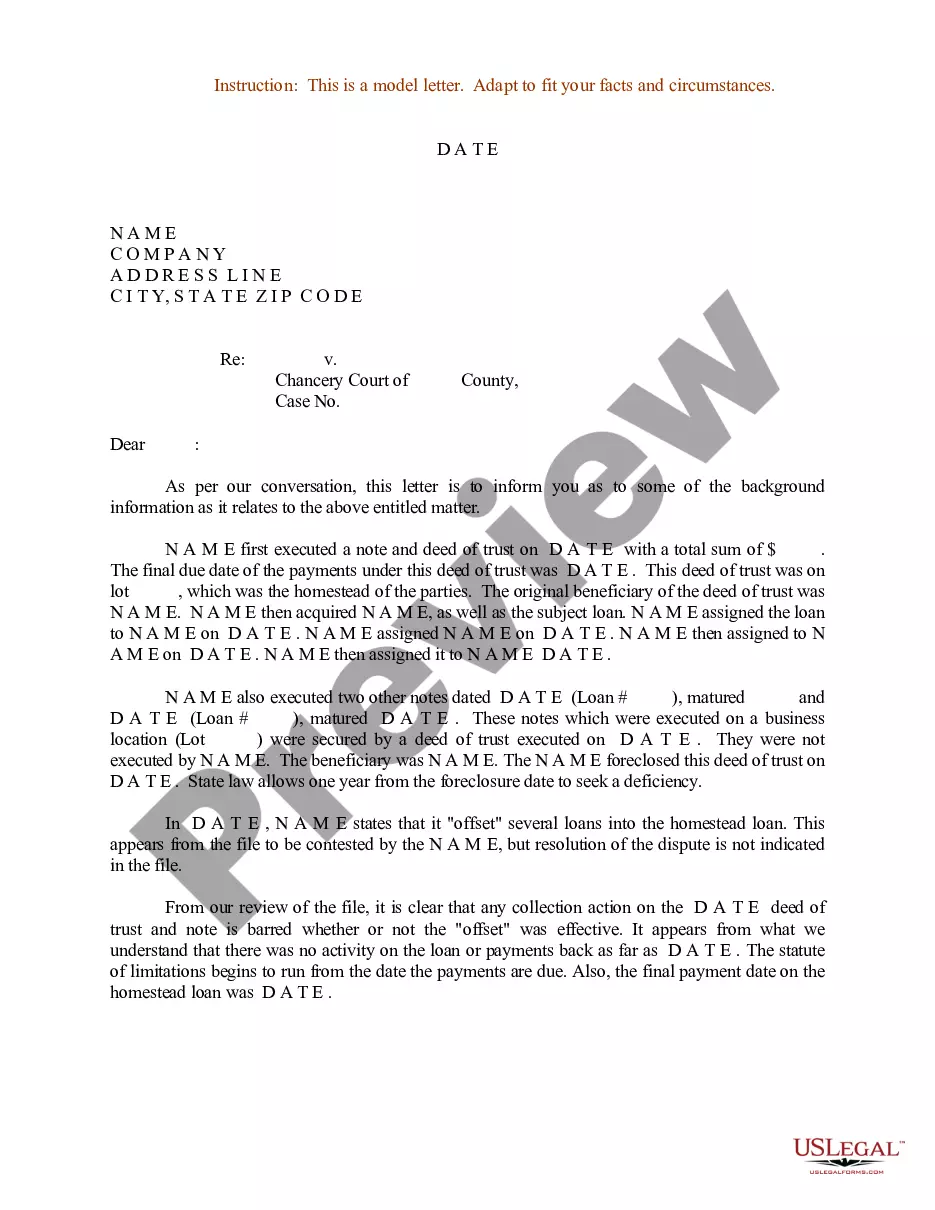
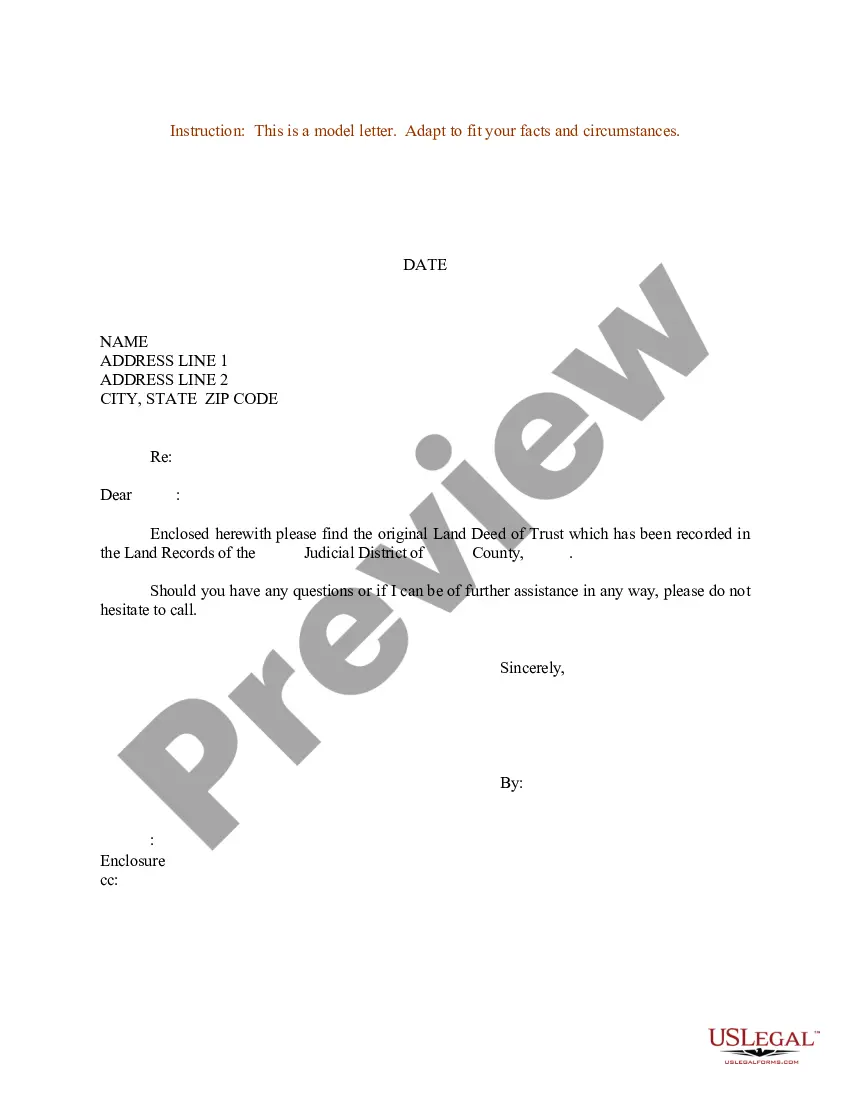
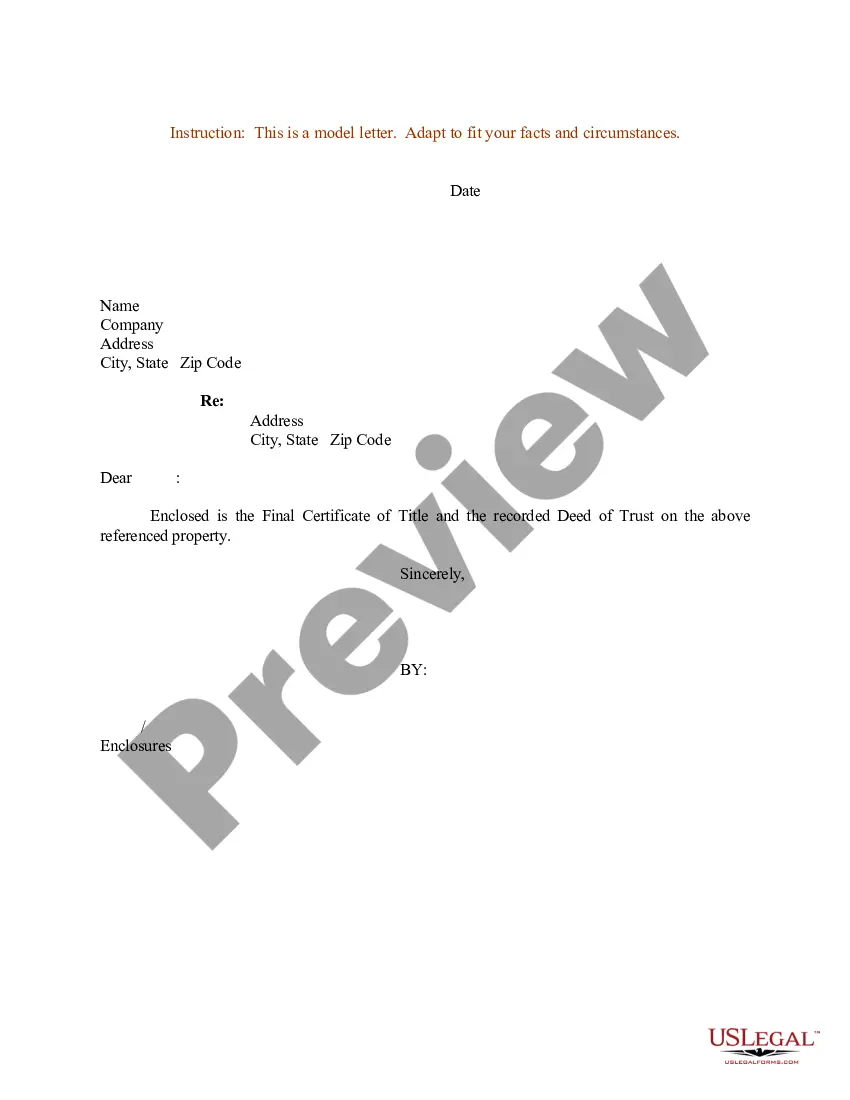
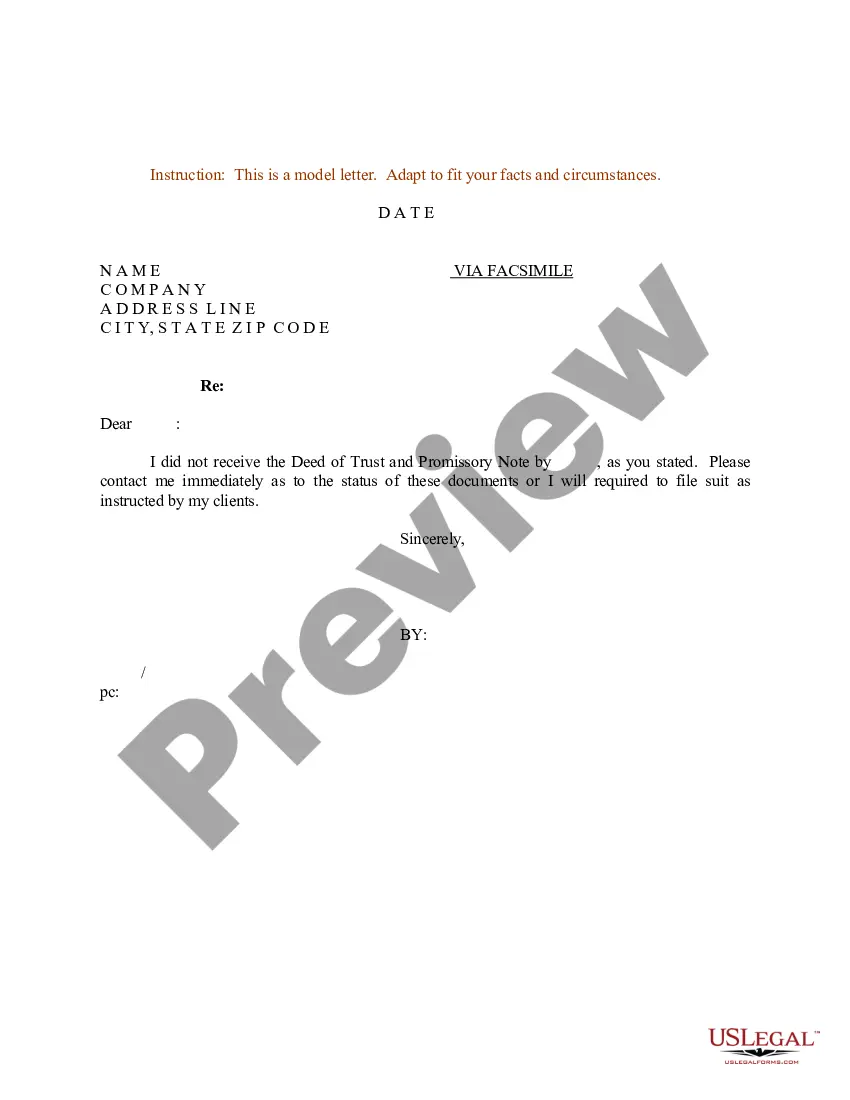
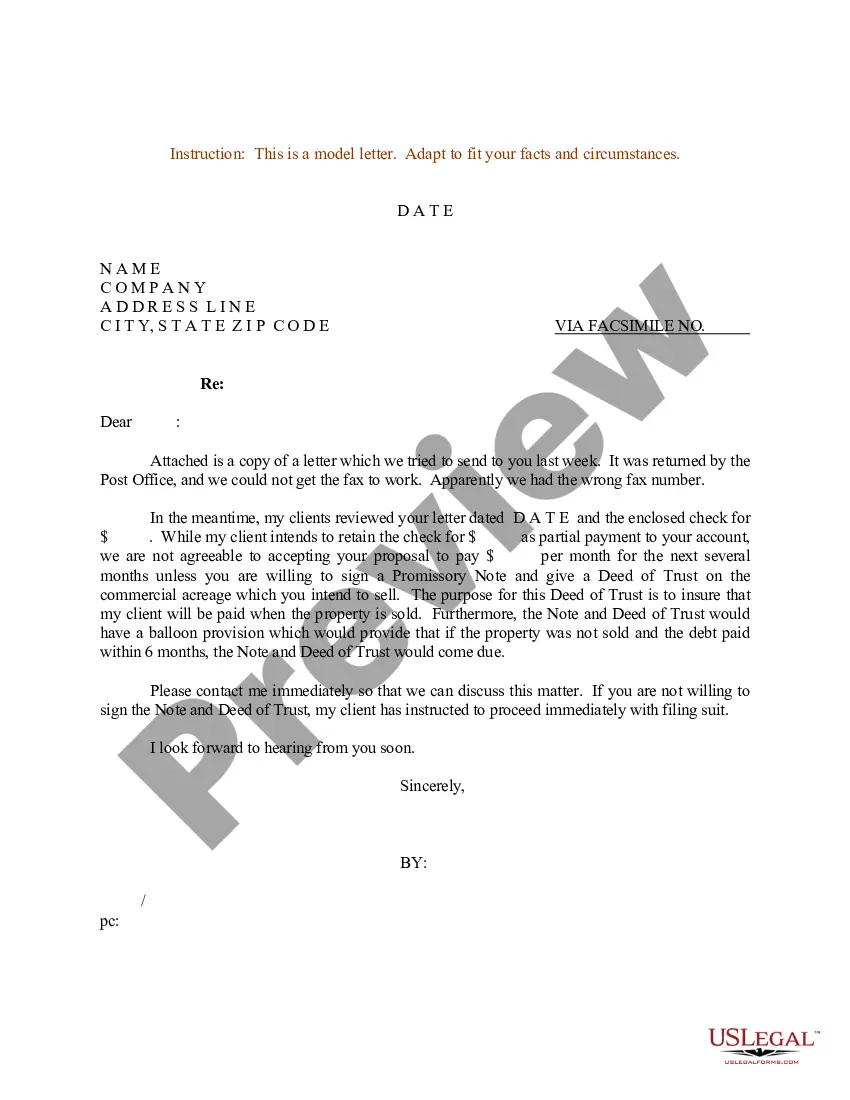
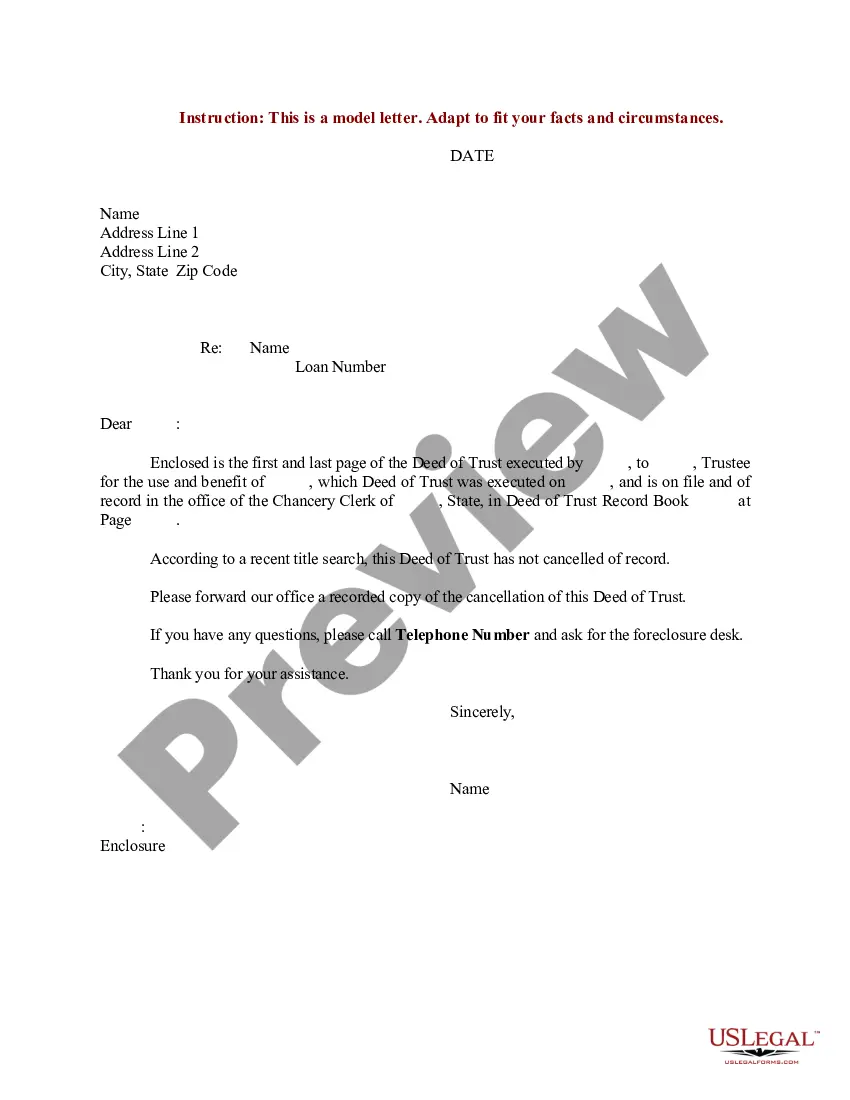
The Sample Letter for History of Deed of Trust is a template designed to outline the history and specific circumstances surrounding a deed of trust. This form can help individuals communicate effectively regarding any disputes or resolutions that may involve their homestead loan, distinguishing it from other legal correspondence by its focus on deed of trust history.
Key components of this form
- Date of the letter.
- Recipient's name and address.
- Details of the loan offsets into the homestead loan.
- Statement regarding contested issues and resolution status.
- Information on the statute of limitations and final payment date.
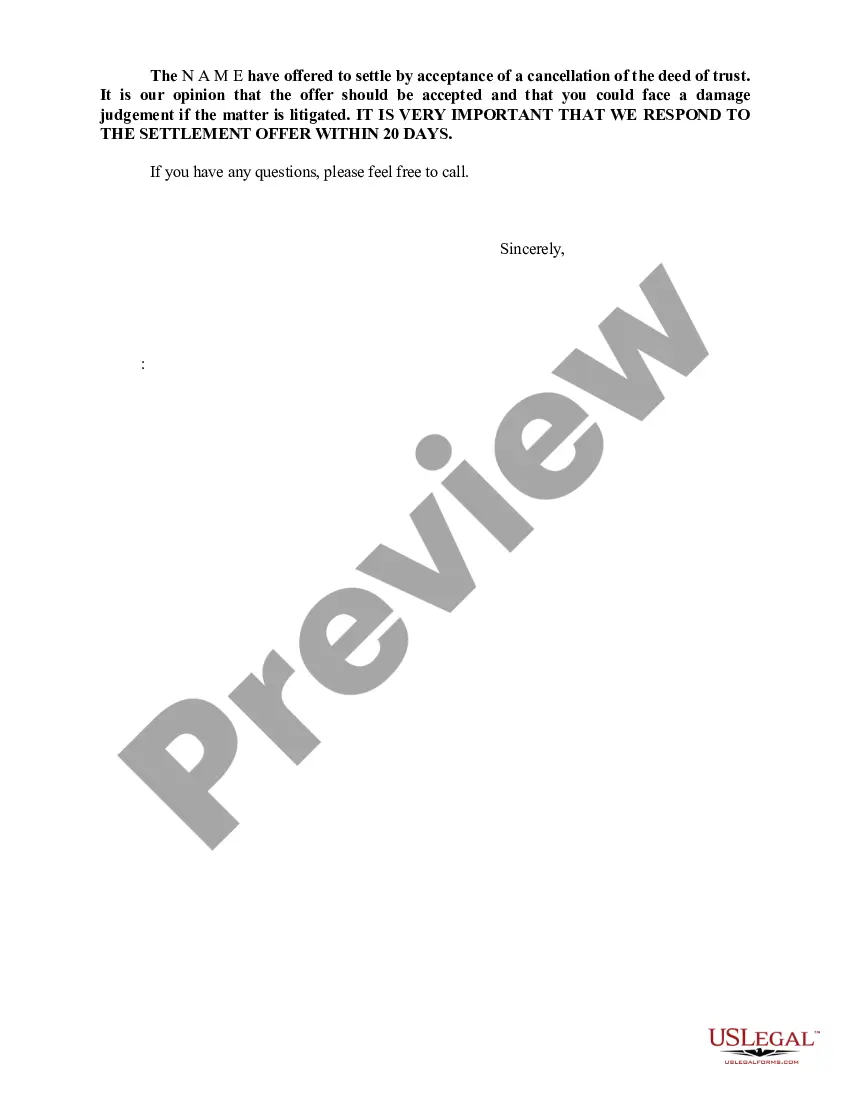
- Settlement offer and response timeframe.
When to use this form
This letter is particularly useful when there is a need to clarify the history and status of a deed of trust, especially when disputes arise regarding loan offsets. It can be utilized in situations where a borrower has not made payments, and a response to a settlement offer is required within a specific timeframe, making it an essential tool for managing loan-related communications.
Who should use this form
- Homeowners looking to address their deed of trust details.
- Borrowers involved in disputes regarding loan offsets.
- Attorneys representing clients in deed of trust matters.
- Individuals seeking to formally respond to settlement offers linked to their homestead loans.
How to prepare this document
- Enter the date when the letter is being created.
- Fill in the recipient's name and address accurately.
- Summarize the circumstances of the loan offsets and any contesting parties involved.
- Include relevant dates and details about the statute of limitations.
- State the settlement offer and emphasize the urgency of the 20-day response period.
Notarization requirements for this form
In most cases, this form does not require notarization. However, some jurisdictions or signing circumstances might. US Legal Forms offers online notarization powered by Notarize, accessible 24/7 for a quick, remote process.
Get your form ready online
Our built-in tools help you complete, sign, share, and store your documents in one place.
Make edits, fill in missing information, and update formatting in US Legal Forms—just like you would in MS Word.
Download a copy, print it, send it by email, or mail it via USPS—whatever works best for your next step.
Sign and collect signatures with our SignNow integration. Send to multiple recipients, set reminders, and more. Go Premium to unlock E-Sign.
If this form requires notarization, complete it online through a secure video call—no need to meet a notary in person or wait for an appointment.
We protect your documents and personal data by following strict security and privacy standards.

Make edits, fill in missing information, and update formatting in US Legal Forms—just like you would in MS Word.

Download a copy, print it, send it by email, or mail it via USPS—whatever works best for your next step.

Sign and collect signatures with our SignNow integration. Send to multiple recipients, set reminders, and more. Go Premium to unlock E-Sign.

If this form requires notarization, complete it online through a secure video call—no need to meet a notary in person or wait for an appointment.

We protect your documents and personal data by following strict security and privacy standards.
Mistakes to watch out for
- Forgetting to include the date of the letter.
- Providing incorrect contact information for the recipient.
- Not clearly stating the details of the loan offsets.
- Overlooking the response timeframe for the settlement offer.
Advantages of online completion
- Convenience of downloading and editing the document as needed.
- Ease of access to legal advice from licensed attorneys through the templates.
- Ability to quickly generate a letter tailored to specific circumstances.
- Secure storage of the document on your device for future reference.
Looking for another form?

Form popularity
FAQ
The Crummey notices may be made via electronic mail, i.e., email, to each of the current beneficiaries. If your trustee elects to do this, he or she should request the beneficiary acknowledge receipt in a return e-mail. The e-mail can also be electronically filed and/or printed and stored for record keeping.
Crummey notices are a crucial part of the administration of a trust because they are necessary in order to classify the gift as a completed gift for tax purposes. Unless a gift is considered completed, it will not qualify for the annual gift tax exclusion.
The Crummey letter is created to change a future gift into a present gift by allowing the beneficiaries the right to withdraw the funds for a certain period of time. Now the beneficiaries could actually use their right to withdraw the contribution, but if they do, the insurance policy may lapse because it is not paid.
A Crummey trust is part of an estate planning technique that can be employed to take advantage of the gift tax exclusion when transferring money or assets to another person while retaining the option to place limitations on when the recipient can access the money.
Named after the court case that gave rise to the rule, a Crummey Notice is simply a letter letting a beneficiary know that assets have been added to a trust and informing the beneficiary of his/her right to withdraw those assets if applicable.
Reference the name of the irrevocable trust, and the trust account number if applicable. Write a salutation followed by a colon. Identify yourself as a beneficiary of the irrevocable trust in the body of the letter. State that you are requesting money from the trust, and the reason for the request.
Despite the Tax Court's rulings, the IRS continues to review and challenge ILIT contributions and their qualifications as annual exclusion gifts during audits. Thus, clients generally should still be advised to give actual written notice to Crummey powerholders upon each gift to a trust.
The Crummey Letter is a letter that is sent to the beneficiaries of an irrevocable trust informing them of that a gift has been made to the trust, and that they have the immediate and unrestricted right to withdraw those assets.
The Crummey Letter is a letter that is sent to the beneficiaries of an irrevocable trust informing them of that a gift has been made to the trust, and that they have the immediate and unrestricted right to withdraw those assets.