Sample Letter for Initiate Probate Proceedings for Estate - Complaint to Probate Will
Overview of this form
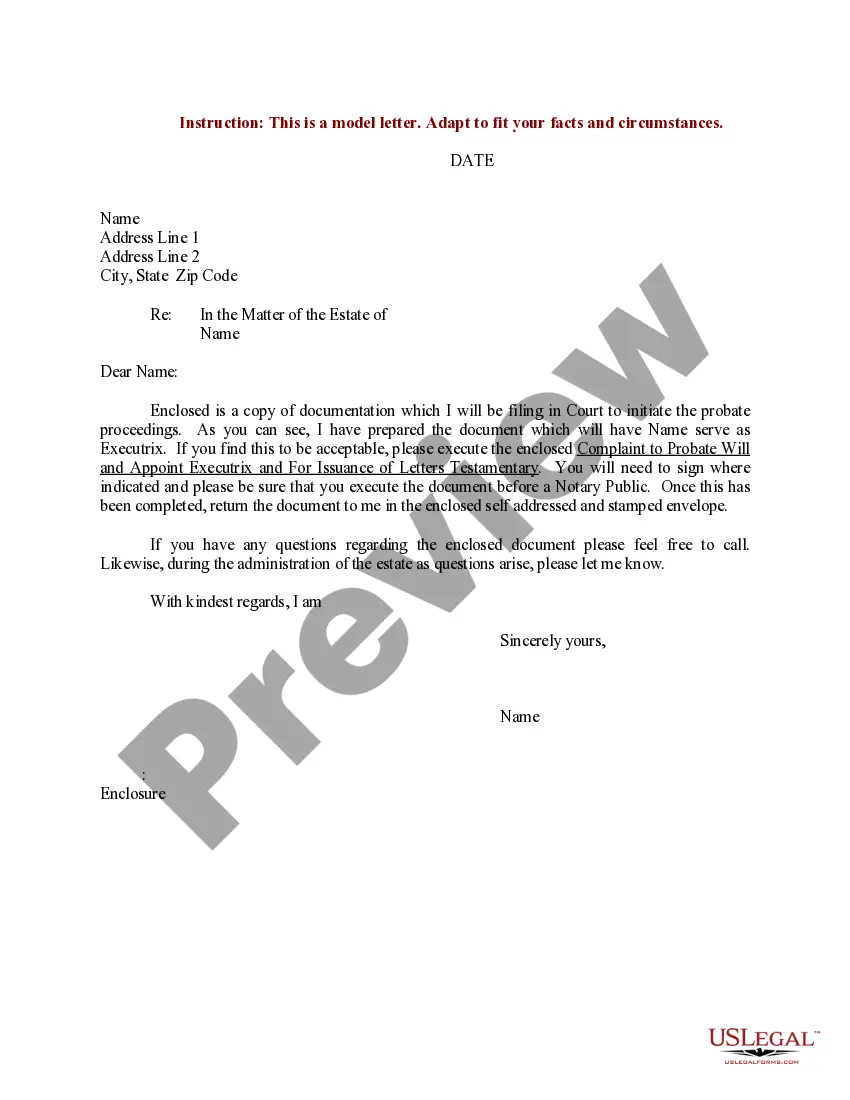
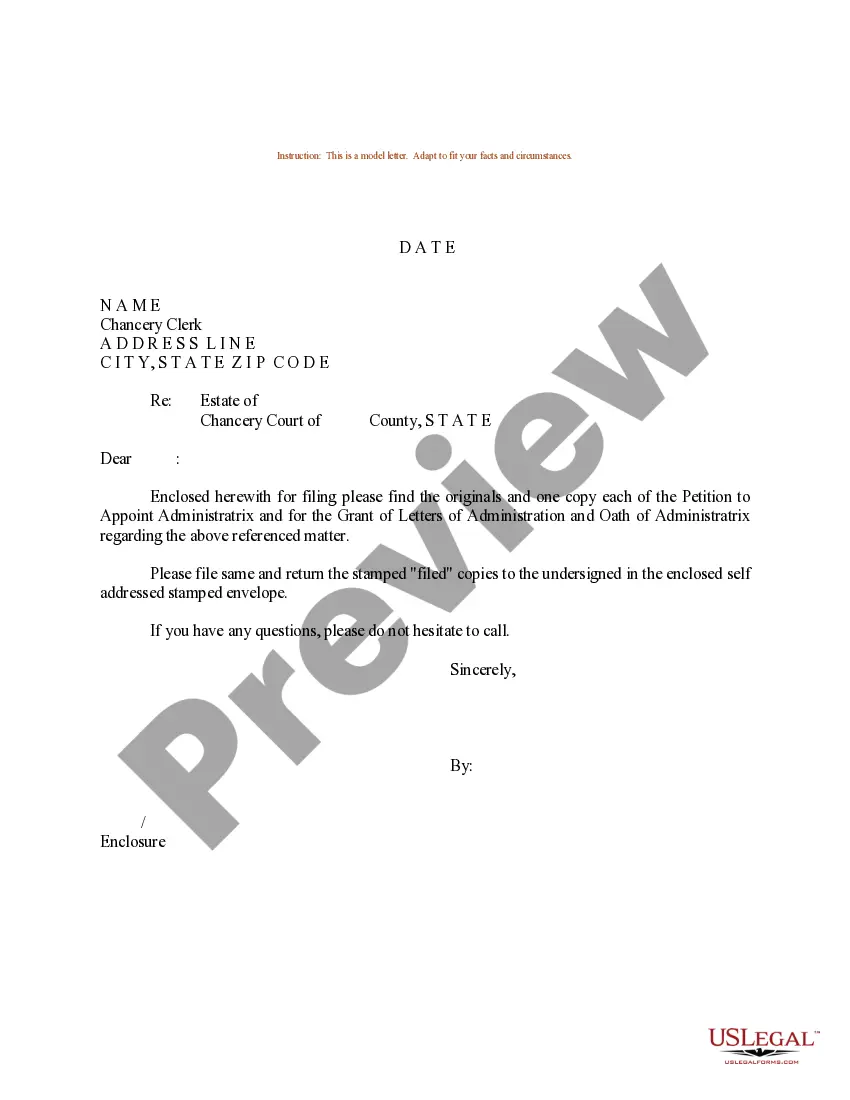
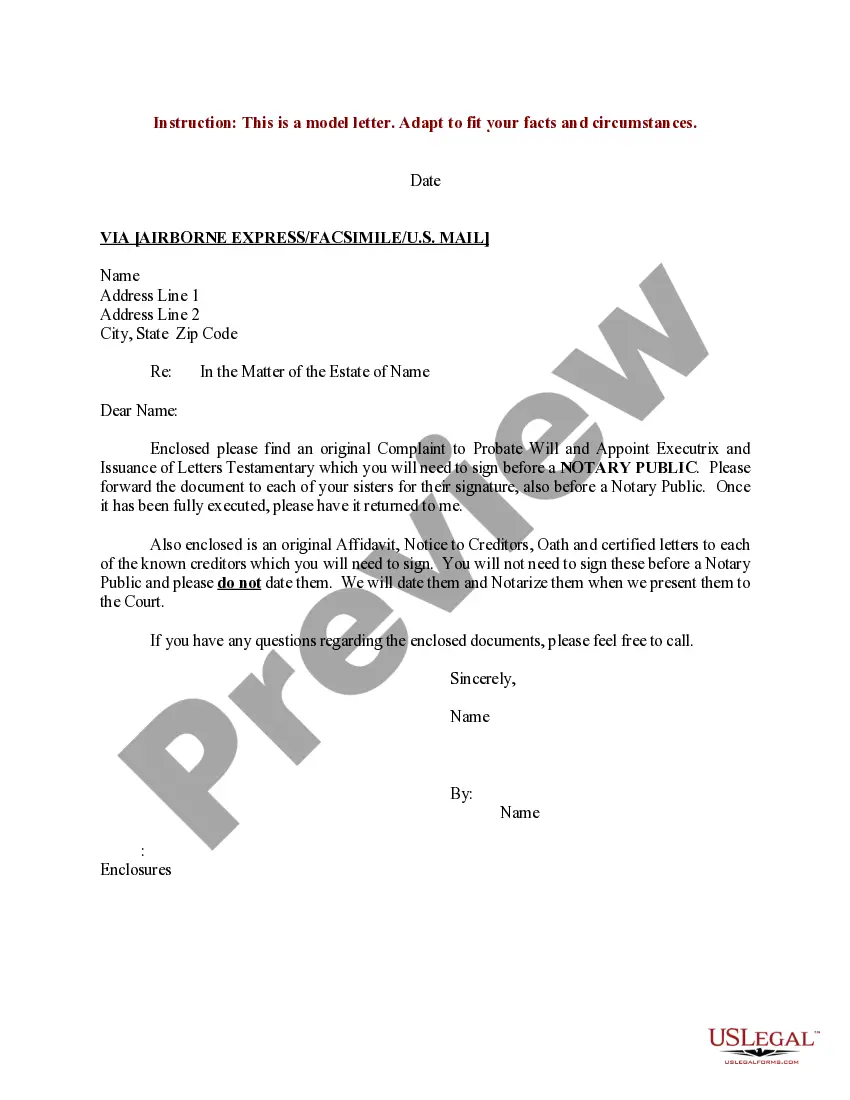
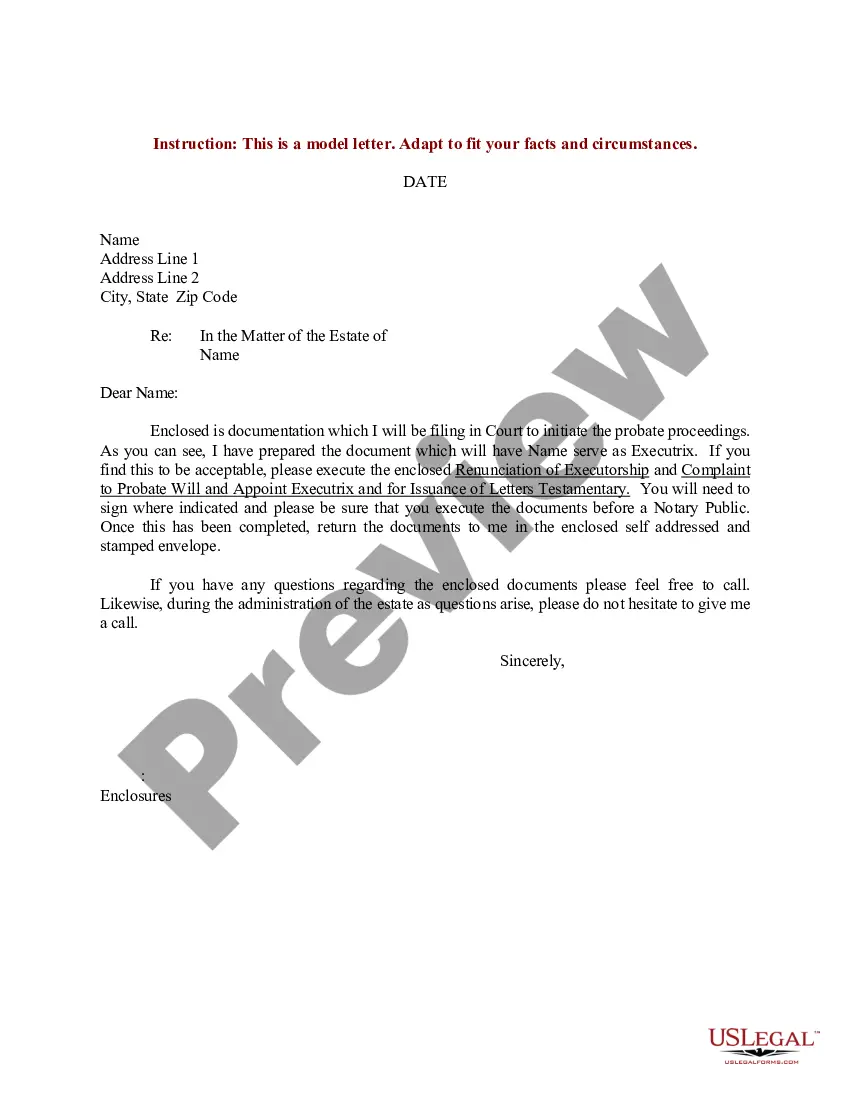
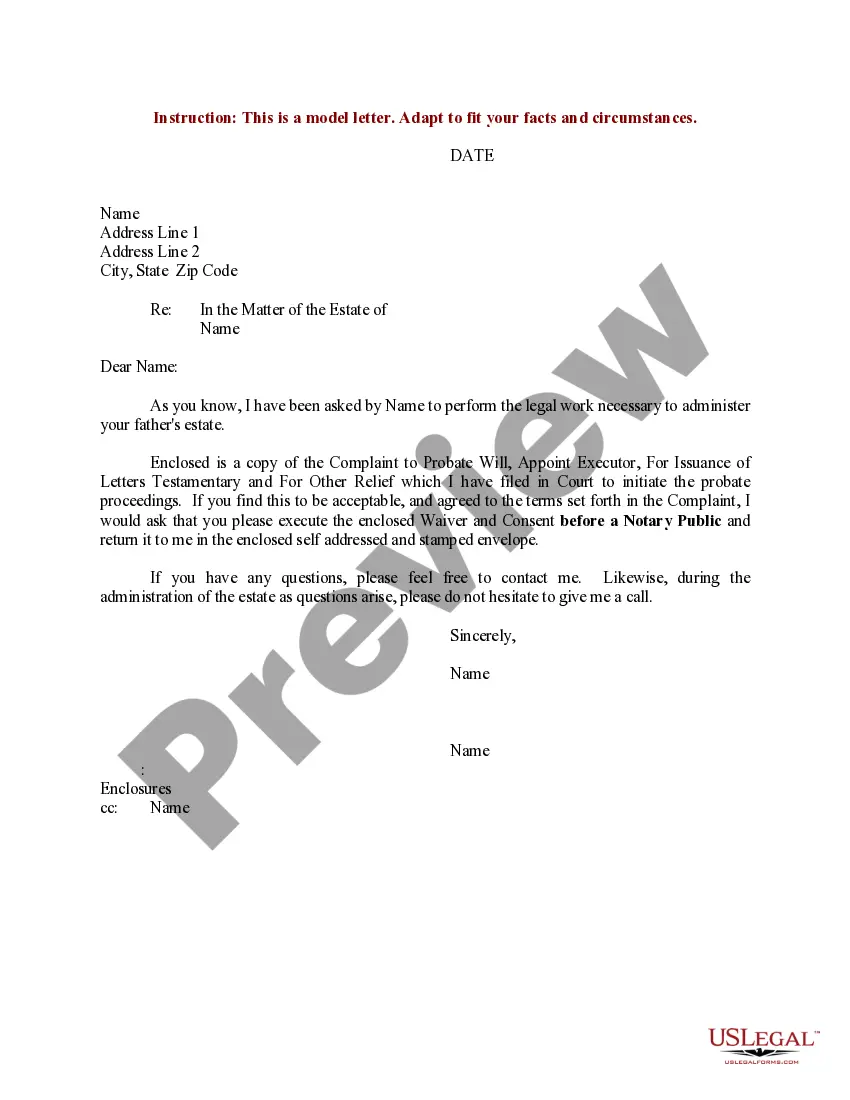
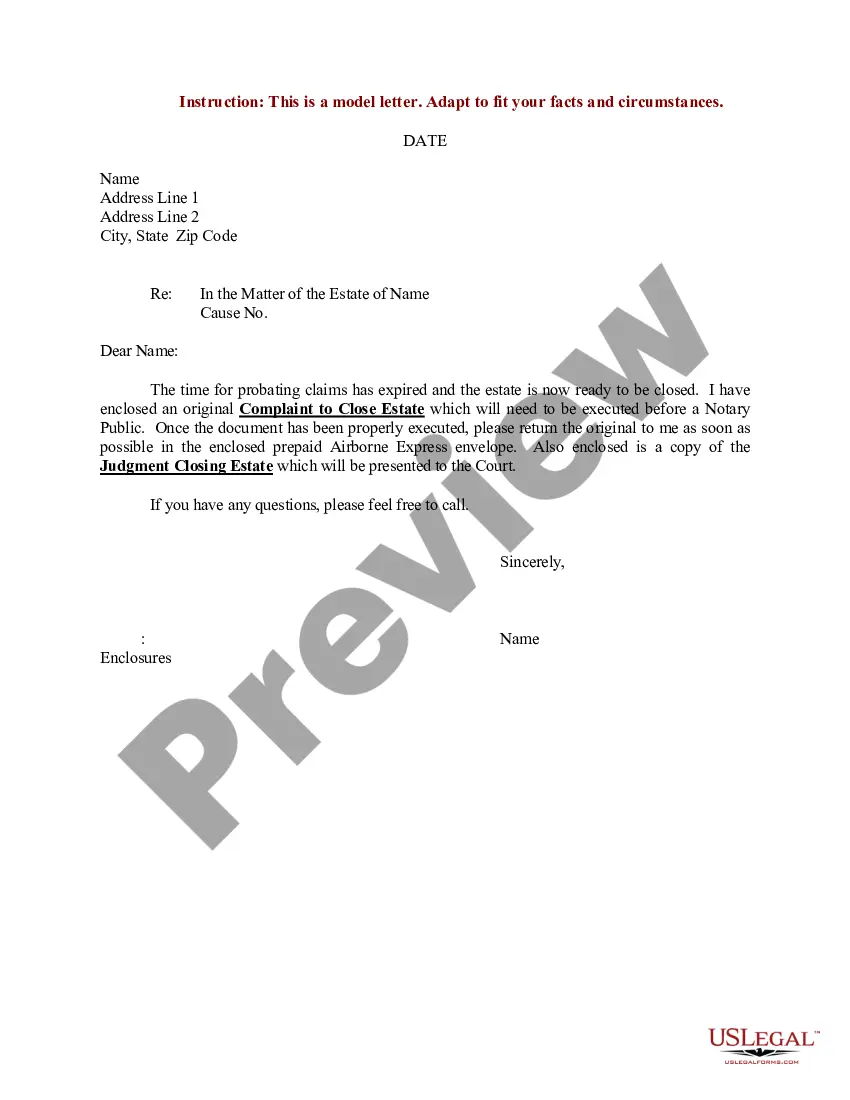
This Sample Letter for Initiate Probate Proceedings for Estate serves as a formal communication intended to initiate the probate process for a deceased person's estate. This form is essential for notifying involved parties and filing the necessary documentation in court, setting it apart from other general probate forms. With this sample letter, you can effectively communicate the intent to probate a will and appoint an executrix, facilitating a smoother transition through the legal process.
Main sections of this form
- Date of the letter
- Recipient's name and address
- Subject line stating the estate's name
- Notification of intent to file a complaint
- Execution instructions for the complaint
- Notarization requirement for the signatory
Common use cases
This form should be utilized when an executor or administrator needs to formally inform other parties about initiating probate proceedings for an estate. It is particularly useful in situations where legal documentation must be filed in court, and other beneficiaries or interested parties need to sign off on the complaint to probate the will.
Who should use this form
- Executors or executrices appointed in a will
- Beneficiaries of the estate
- Legal representatives of the estate
- Individuals handling the probate process for a deceased person's estate
How to complete this form
- Enter the date on which the letter is written.
- Fill in the recipient's name and address accurately.
- State the subject matter of the estate in the subject line.
- Include a brief notification about the enclosed documentation for filing.
- Provide clear instructions for signing the enclosed complaint before a notary public.
- Ensure you include self-addressed and stamped envelope for return of the signed document.
Does this form need to be notarized?
Yes, this form must be notarized to be legally valid. The document requires signatures in the presence of a Notary Public to ensure authenticity and compliance with legal standards. US Legal Forms offers integrated online notarization, providing secure video calls for convenient verification without the need for travel.
Get your form ready online
Our built-in tools help you complete, sign, share, and store your documents in one place.
Make edits, fill in missing information, and update formatting in US Legal Forms—just like you would in MS Word.
Download a copy, print it, send it by email, or mail it via USPS—whatever works best for your next step.
Sign and collect signatures with our SignNow integration. Send to multiple recipients, set reminders, and more. Go Premium to unlock E-Sign.
If this form requires notarization, complete it online through a secure video call—no need to meet a notary in person or wait for an appointment.
We protect your documents and personal data by following strict security and privacy standards.

Make edits, fill in missing information, and update formatting in US Legal Forms—just like you would in MS Word.

Download a copy, print it, send it by email, or mail it via USPS—whatever works best for your next step.

Sign and collect signatures with our SignNow integration. Send to multiple recipients, set reminders, and more. Go Premium to unlock E-Sign.

If this form requires notarization, complete it online through a secure video call—no need to meet a notary in person or wait for an appointment.

We protect your documents and personal data by following strict security and privacy standards.
Common mistakes
- Forgetting to include the date of the letter.
- Not providing complete recipient address information.
- Omitting the subject line related to the estate.
- Neglecting to specify notarization requirements.
- Failing to include a self-addressed envelope for return.
Why use this form online
- Convenience of downloading and printing from home.
- Editability to customize the document as needed.
- Access to reliable legal templates created by licensed attorneys.
- Quickly navigate state-specific requirements, if applicable.
Looking for another form?
Form popularity
FAQ
Letters of Office (also called Letters Testamentary) issued to appointed executor when the executor is designated under a valid Will; Letters of Administration issued to administrator when the decedent died without a valid Will (intestate estate); or.
Applying for probate in New South Wales All applications must be filed at the Supreme Court of New South Wales Registry, either in person or by post. The application must be accompanied by supporting documents including the will and death certificate, as well as an application fee.
Though there is no time limit on the probate application itself, there are aspects of the process which do have time scales. Inheritance tax for example, is a very important part of attaining probate in the first place and must be done within 6 months of date of death.
Keep the letter brief and straightforward as it is a legal document. Confirm the situation whereby probate has been granted. Was it written in the will? Clearly outline the obligations of the recipient so they know what is required of them. Sign the letter to make it legally binding.
Common Assets That Go Through Probate owned solely in the name of the deceased personfor example, real estate or a car titled in that person's name alone, or. a share of property owned as tenants in commonfor example, the deceased person's interest in a warehouse owned with his brother as an investment.
Probate will always be necessary if the deceased died owning real estate except if it is owned as joint tenants (see If the deceased owned property with someone else in the After the Grant of Probate or Letters of Administration chapter).
A will remains a private document until probate is granted. Once the probate court declares the will as valid, beneficiaries must be notified within three months, though ideally, notification will much sooner.
Identify the appropriate person or agency to contact to make a claim on your deceased relative's estate. Place your name, address and phone number at the top of the letter, followed by the date, then the name, address and phone number of the individual or agency handling your deceased relative's estate.
Probate is initiated by filing a petition with the California Superior Court in the county in which the deceased individual lived at the time of their death. This is done, in part, to request a court hearing to appoint an estate representative. An original of the will, if there is one, must be filed with the petition.