Sample Letter for Letter from Boss Denying Telecommuting
What this document covers
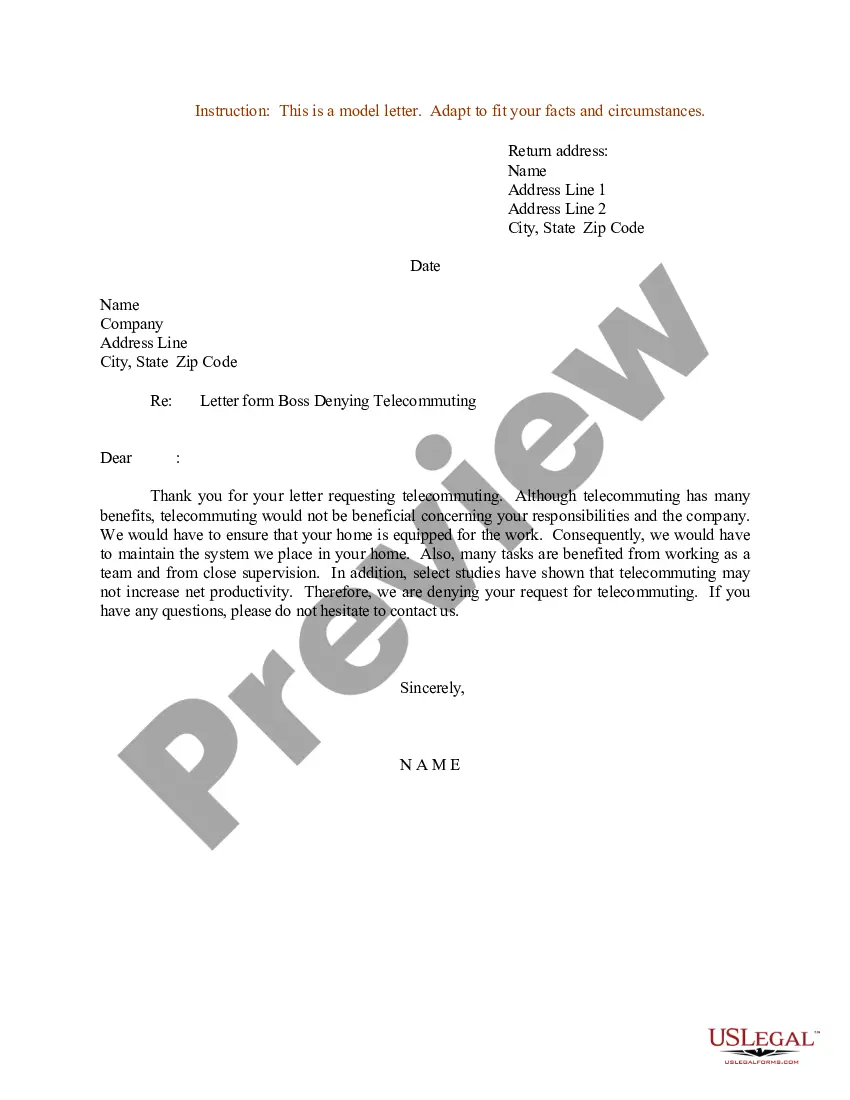
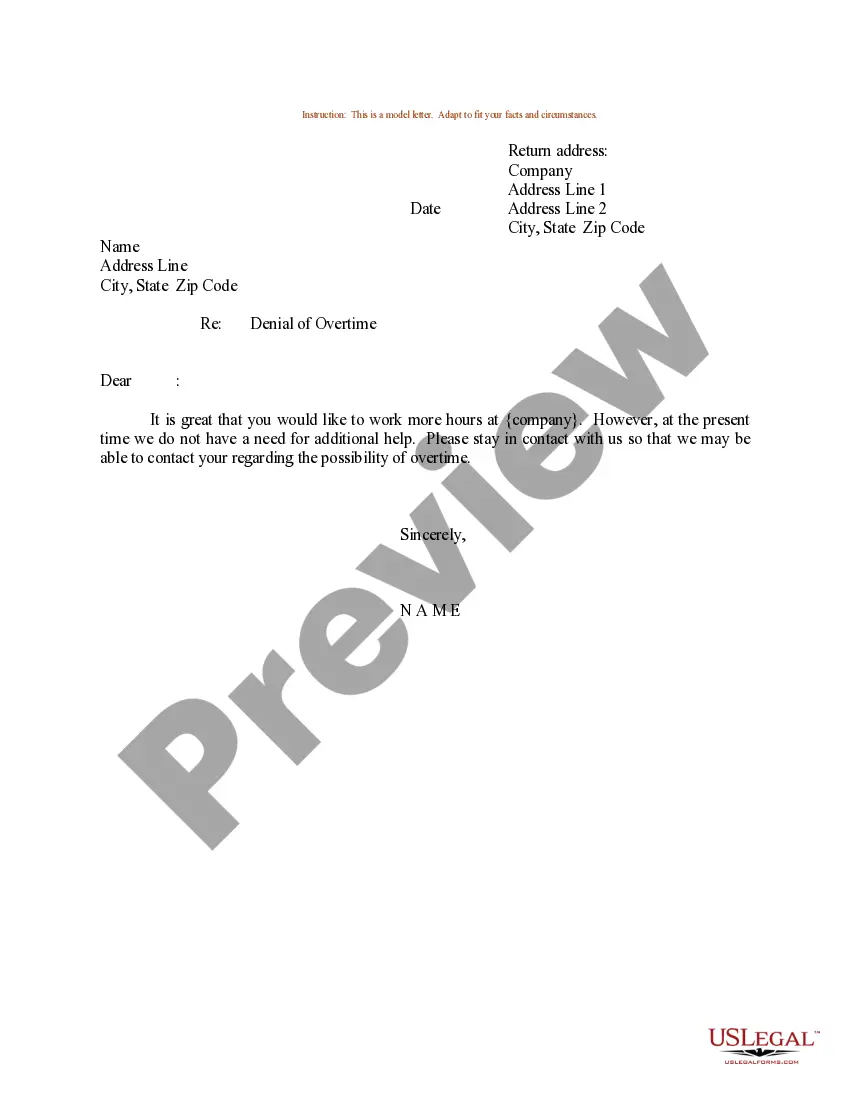
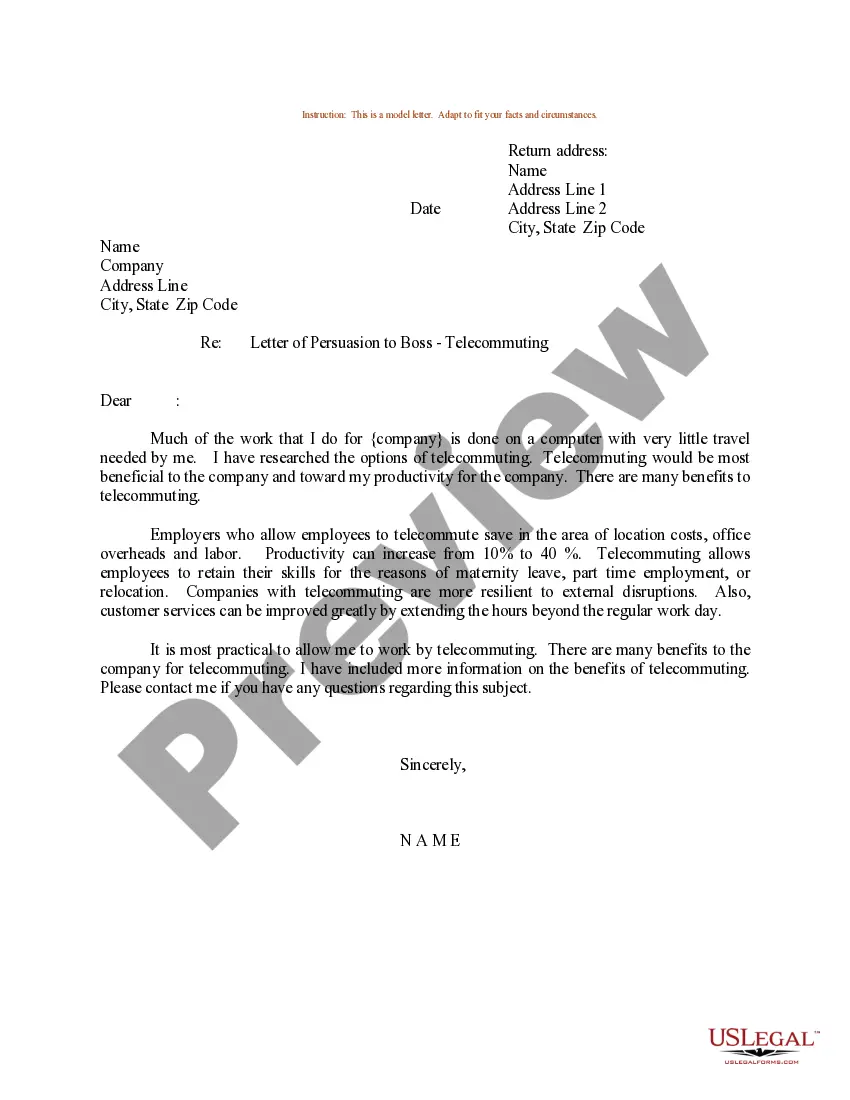
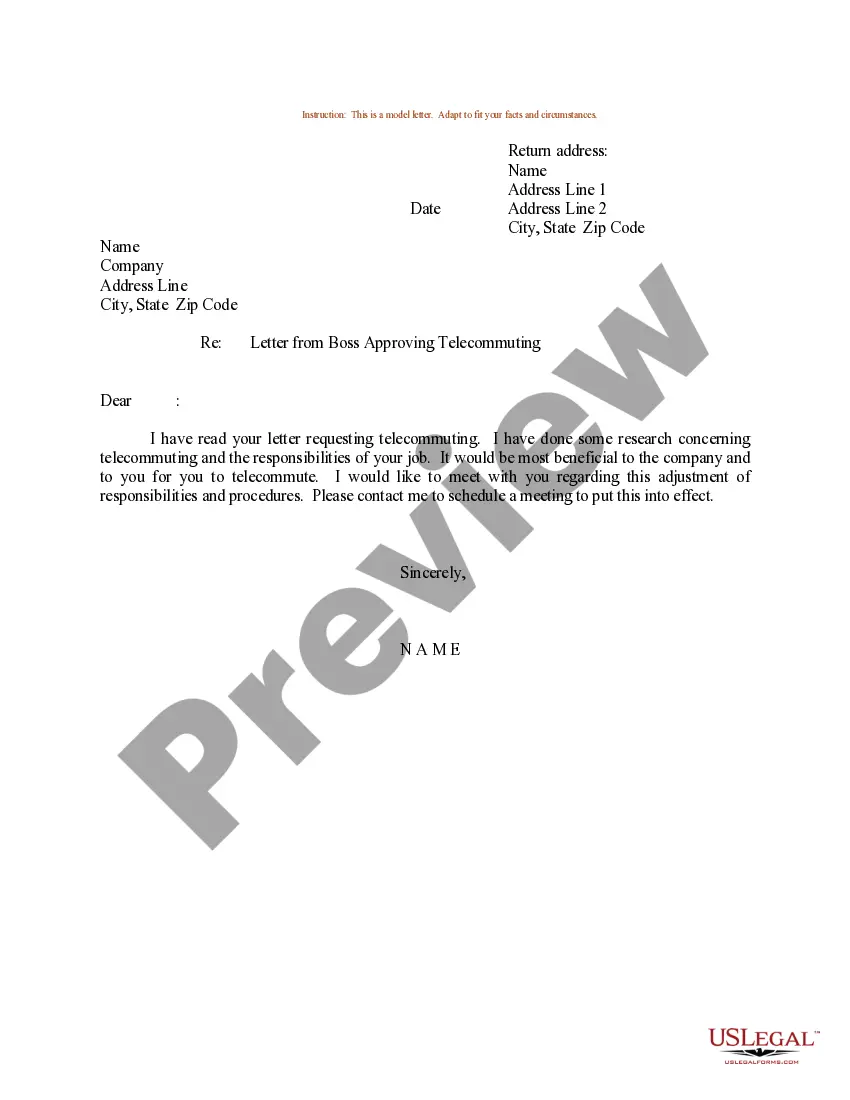
This Sample Letter for Letter from Boss Denying Telecommuting is a template designed to help employers communicate their decisions regarding employees' requests to work from home. This form differs from other employment-related letters as it specifically addresses telecommuting requests, providing a structured format to clearly convey the denial of such requests.
Key parts of this document
- Return address: Includes the sender's name and address.
- Date: The date the letter is written.
- Recipient address: The name and address of the employee receiving the letter.
- Subject line: Clearly states the purpose of the letter.
- Body of the letter: Provides a professional and concise explanation for the denial of the telecommuting request.
- Closing: A formal sign-off and the sender's name.
When this form is needed
This form should be used when an employee has formally requested to telecommute and the employer has made the decision to deny this request. It ensures that the response is documented in writing and provides a clear explanation for the decision, which can be important for both legal compliance and maintaining professional relations.
Intended users of this form
- Employers who have received telecommuting requests from employees.
- HR professionals managing employee requests and correspondence.
- Managers and supervisors needing to communicate decisions about work arrangements.
- Business owners looking to create formal communication regarding telecommuting policies.
How to prepare this document
- Identify the return address: Fill in your name and address details at the top of the letter.
- Enter the date: Write the date on which the letter is being sent.
- Provide recipient details: Complete the employee's name and address in the designated area.
- Draft the body of the letter: Use clear and concise language to explain the reason for denying the telecommuting request.
- Sign off: Use a professional closing and write your name at the bottom of the letter.
Notarization requirements for this form
In most cases, this form does not require notarization. However, some jurisdictions or signing circumstances might. US Legal Forms offers online notarization powered by Notarize, accessible 24/7 for a quick, remote process.
Get your form ready online
Our built-in tools help you complete, sign, share, and store your documents in one place.
Make edits, fill in missing information, and update formatting in US Legal Forms—just like you would in MS Word.
Download a copy, print it, send it by email, or mail it via USPS—whatever works best for your next step.
Sign and collect signatures with our SignNow integration. Send to multiple recipients, set reminders, and more. Go Premium to unlock E-Sign.
If this form requires notarization, complete it online through a secure video call—no need to meet a notary in person or wait for an appointment.
We protect your documents and personal data by following strict security and privacy standards.

Make edits, fill in missing information, and update formatting in US Legal Forms—just like you would in MS Word.

Download a copy, print it, send it by email, or mail it via USPS—whatever works best for your next step.

Sign and collect signatures with our SignNow integration. Send to multiple recipients, set reminders, and more. Go Premium to unlock E-Sign.

If this form requires notarization, complete it online through a secure video call—no need to meet a notary in person or wait for an appointment.

We protect your documents and personal data by following strict security and privacy standards.
Common mistakes to avoid
- Failing to provide a clear reason for the denial.
- Omitting the recipient's name or address.
- Using an informal tone instead of maintaining professionalism.
- Not signing the letter before sending.
Benefits of completing this form online
- Immediate access: Download the template anytime you need it.
- Editability: Customize the letter to fit your specific situation and needs.
- Legal reliability: The template is crafted by licensed attorneys, ensuring it meets legal standards.
What to keep in mind
- This form helps employers formally deny telecommuting requests.
- Clarity and professionalism are vital in workplace communication.
- The letter serves as a vital record of the employer's decision.
Looking for another form?
Form popularity
FAQ
Tell your story. Cover letters support resumes by creating a narrative of your work experience. Customize your cover letter. You must tailor each letter to your targeted job in order for a cover letter to be effective. Demonstrate fit.
Use an appropriate business letter format. Keep it simple. If appropriate, provide the recipient with pertinent information to help them remember who you are. Briefly explain what it is you want the reader to do.
I am so proud to be able to call you my boss. Thank you so much for everything that you have done for me over the years. After all you have done, thanks do not feel like enough. All I can do is offer my gratitude and appreciation for your leadership and for you being such a wonderful boss.
Most formal letters will start with 'Dear' before the name of the person that you are writing to: 'Dear Ms Brown,' or 'Dear Brian Smith,' You can choose to use first name and surname, or title and surname. 'Dear Sir/Madam,' Remember to add the comma.
Be sincere. When you are writing to your boss to express gratitude and appreciation, you have to be careful with your tone. Be specific. In your letter, mention why you're writing and provide a specific thank you. Be brief.
Dear Mr./Ms./Mrs. Dear Mr./Ms./Mrs. Dear Title/Position Last Name (e.g. "Dear Dr. Dear First Name Last Name (e.g. "Dear James Johnson") Dear First Name (when you know the individual on a personal level) "Dear Human Resources Manager"
Think About Your Intent. What is your focus here? Your Contact Information. In the upper right corner, you should place all of your contact information. Your Boss's Contact Information. Date the Letter. Open With a Greeting. First Paragraph. Second Paragraph. Third Paragraph.
Your words of encouragement, guidance, and advice kept us sane while chasing deadlines. We just wanted to appreciate you and express how glad we are to work under your leadership. We're, truly, proud to be led by such a great boss. Thank you for everything.
Make a suggestion rather than giving advice. Make a request rather than saying what you think. Instead of giving orders, make a request. Involve the other person, rather than focusing on your own needs. Remind your boss why it's important. Extra Help.