Sample Letter for Letter to Department Chair Seeking Approval of Thesis
Understanding this form
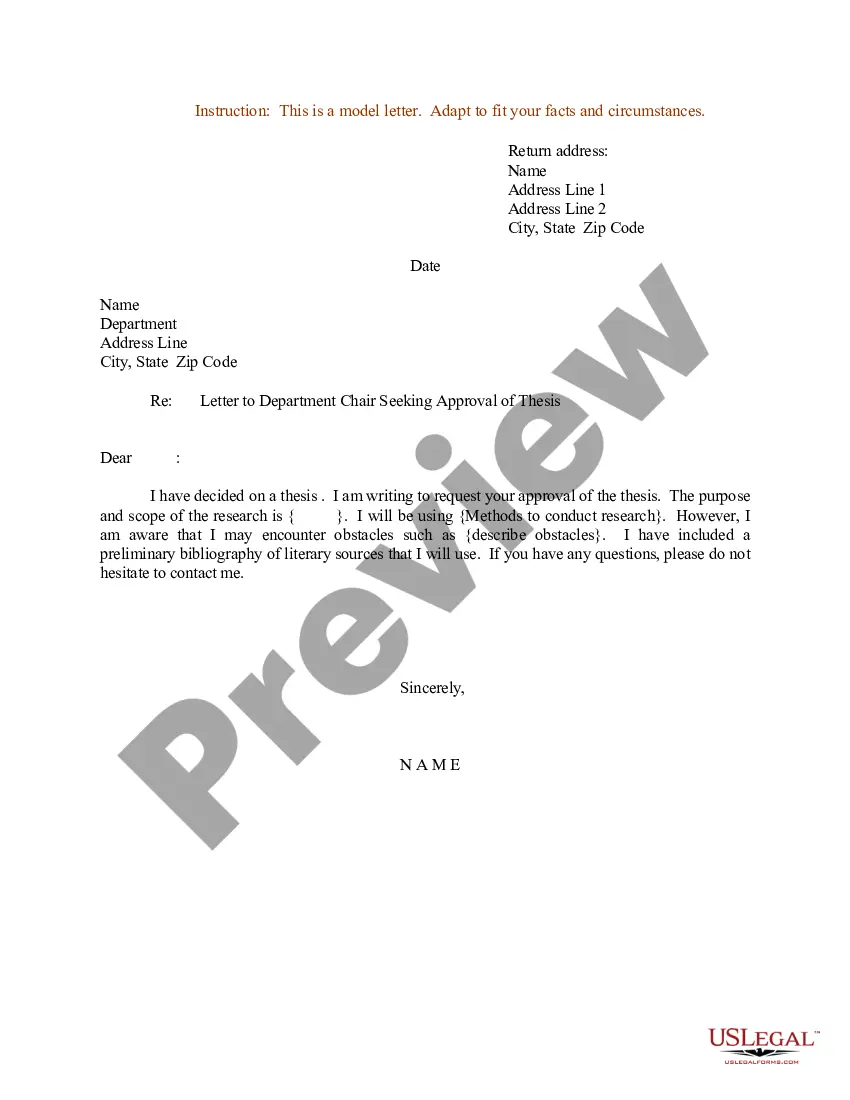
This Sample Letter for Letter to Department Chair Seeking Approval of Thesis is a template in Word format designed to assist students in formally requesting approval for their thesis proposal. This letter serves as a communication tool between the student and the department chair, distinguishing itself from other academic forms by its specific focus on thesis approval requests. It is an essential step in the academic process, ensuring that students receive the necessary permissions to proceed with their research efforts.
Form components explained
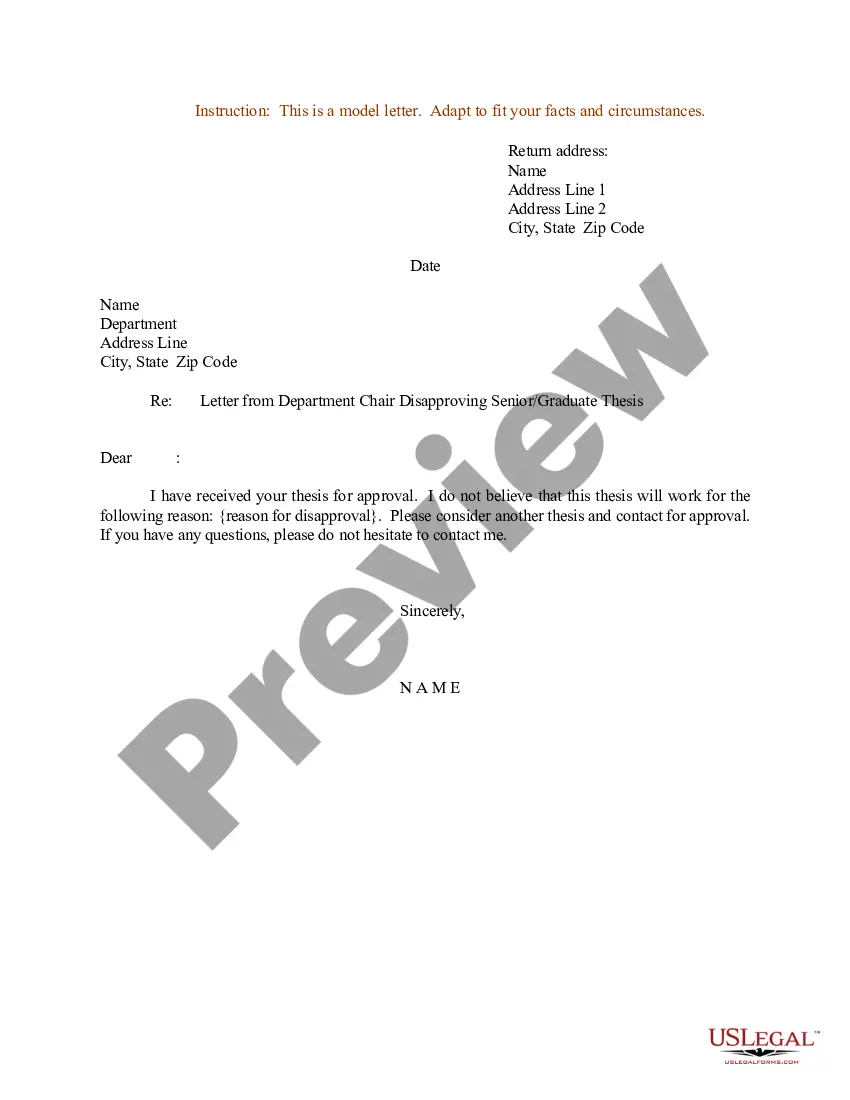
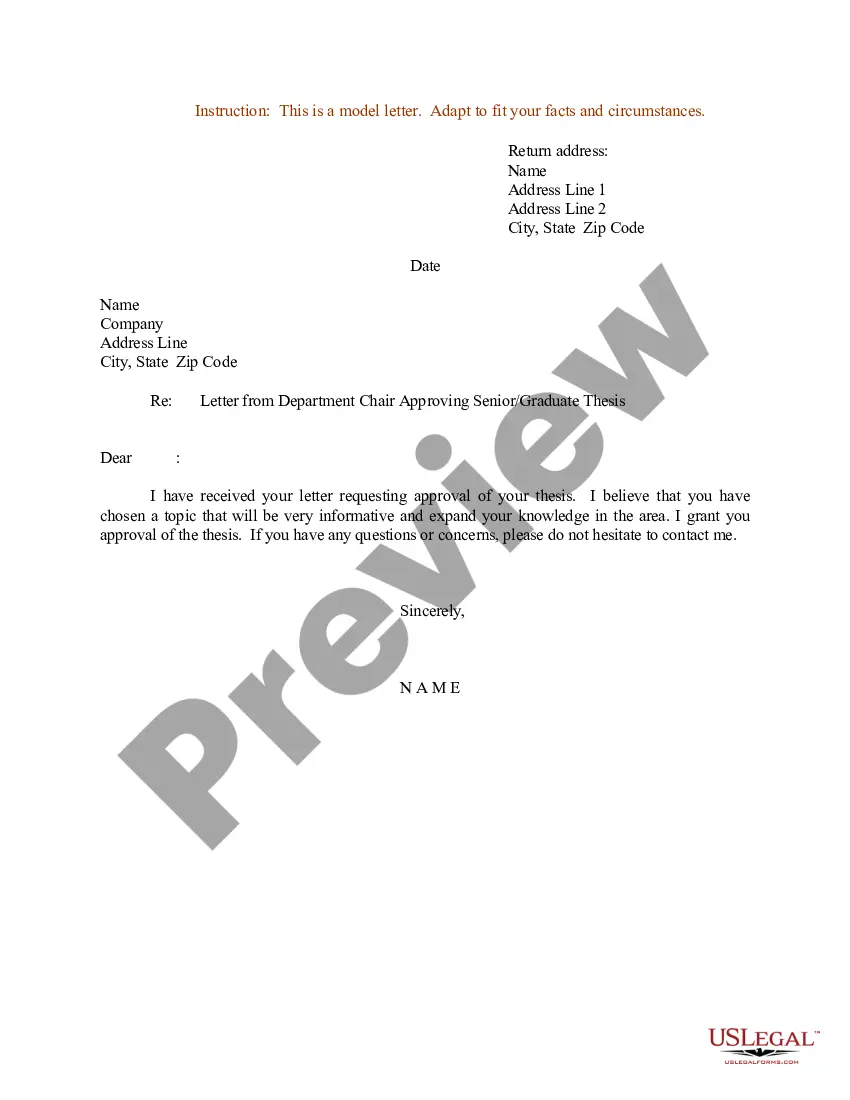
- Return address: Includes the sender's name and address.
- Date: The date when the letter is sent.
- Recipient's details: Contains the name and address of the department chair.
- Subject line: Clearly indicates the purpose of the letter.
- Closing statement: Provides a courteous end to the letter.
Situations where this form applies
This form is useful when a student has completed their thesis proposal and needs official approval from their department chair. It should be used at the beginning of the thesis process or whenever a revision to the proposal is needed. The letter is crucial for maintaining clear communication within academic departments and ensuring that students follow protocol in their educational endeavors.
Who this form is for
- Graduate or postgraduate students seeking thesis approval.
- Students who need to communicate formally with their department chair.
- Individuals looking to ensure their academic proposals meet departmental requirements.
How to prepare this document
- Identify the sender's return address, including name, street address, city, state, and zip code.
- Enter the current date when the letter will be sent.
- Add the recipient's name and departmental details for clarity.
- State the subject clearly in the subject line to summarize the letter's purpose.
- Include a closing statement and the sender's name at the end of the letter.
Notarization guidance
This form does not typically require notarization unless specified by local law. It serves as a formal request and does not need to be notarized to be valid within the academic context.
Get your form ready online
Our built-in tools help you complete, sign, share, and store your documents in one place.
Make edits, fill in missing information, and update formatting in US Legal Forms—just like you would in MS Word.
Download a copy, print it, send it by email, or mail it via USPS—whatever works best for your next step.
Sign and collect signatures with our SignNow integration. Send to multiple recipients, set reminders, and more. Go Premium to unlock E-Sign.
If this form requires notarization, complete it online through a secure video call—no need to meet a notary in person or wait for an appointment.
We protect your documents and personal data by following strict security and privacy standards.

Make edits, fill in missing information, and update formatting in US Legal Forms—just like you would in MS Word.

Download a copy, print it, send it by email, or mail it via USPS—whatever works best for your next step.

Sign and collect signatures with our SignNow integration. Send to multiple recipients, set reminders, and more. Go Premium to unlock E-Sign.

If this form requires notarization, complete it online through a secure video call—no need to meet a notary in person or wait for an appointment.

We protect your documents and personal data by following strict security and privacy standards.
Typical mistakes to avoid
- Neglecting to proofread for spelling and grammatical errors.
- Omitting essential recipient details such as the department chair's name.
- Using informal language instead of maintaining a professional tone.
Benefits of completing this form online
- Convenient access to a legally vetted format created by licensed attorneys.
- Editable in Word, allowing for personalized revisions and adjustments.
- Easy to download and print for submission to academic departments.
Key takeaways
- This form is essential for students seeking approval for their thesis proposals.
- Ensure all components are completed accurately to maintain professionalism.
- This letter helps facilitate communication between students and faculty, streamlining the thesis approval process.
Looking for another form?







Form popularity
FAQ
Explain precisely what your request is. Mention the reason for the request. Use polite language and a professional tone. Demonstrate respect and gratitude to the reader. The content of the letter should be official. You may provide contact information where you can be reached.
Select the preferred mode of contact. Address the recipient appropriately. State what you need. Justify why you need it. Explain the significance of their intervention. Demonstrate your enthusiasm for their intervention. Round up your message. Close the letter.
Be clear and concise. Craft your subject line well to communicate the intent of the email. Know your audience. Break up long requests into smaller sections with headers and bullet points. Describe the positive impact on the company this request would have if approved.
Be clear and concise. Craft your subject line well to communicate the intent of the email. Know your audience. Break up long requests into smaller sections with headers and bullet points.
Addresses: Write down the necessary addresses. Salutation: Here you offer some form of respectful greeting. Title: It should be centered, brief and informative. Body: This should be a maximum of 4 paragraphs. Sign out: Here you mention your name and offer your signature for authentication.
The letter should be formally written because it is an official letter. Be specific; your request should be straight to the point; this will enable the person in charge to feel comfortable when approving your project. Explain what that approval is for and why you need that approval.
Choose your contact method. Address the recipient professionally. Start with what you need. Explain why you need it. Tell them why they should care. Show your enthusiasm for their response. Conclude your message.
Explain precisely what your request is. Mention the reason for the request. Use polite language and a professional tone. Demonstrate respect and gratitude to the reader. The content of the letter should be official. You may provide contact information where you can be reached.
Explain precisely what your request is. Mention the reason for the request. Use polite language and a professional tone. Demonstrate respect and gratitude to the reader. The content of the letter should be official. You may provide contact information where you can be reached.