Sample Letter for Directive - Break Policy
Understanding this form
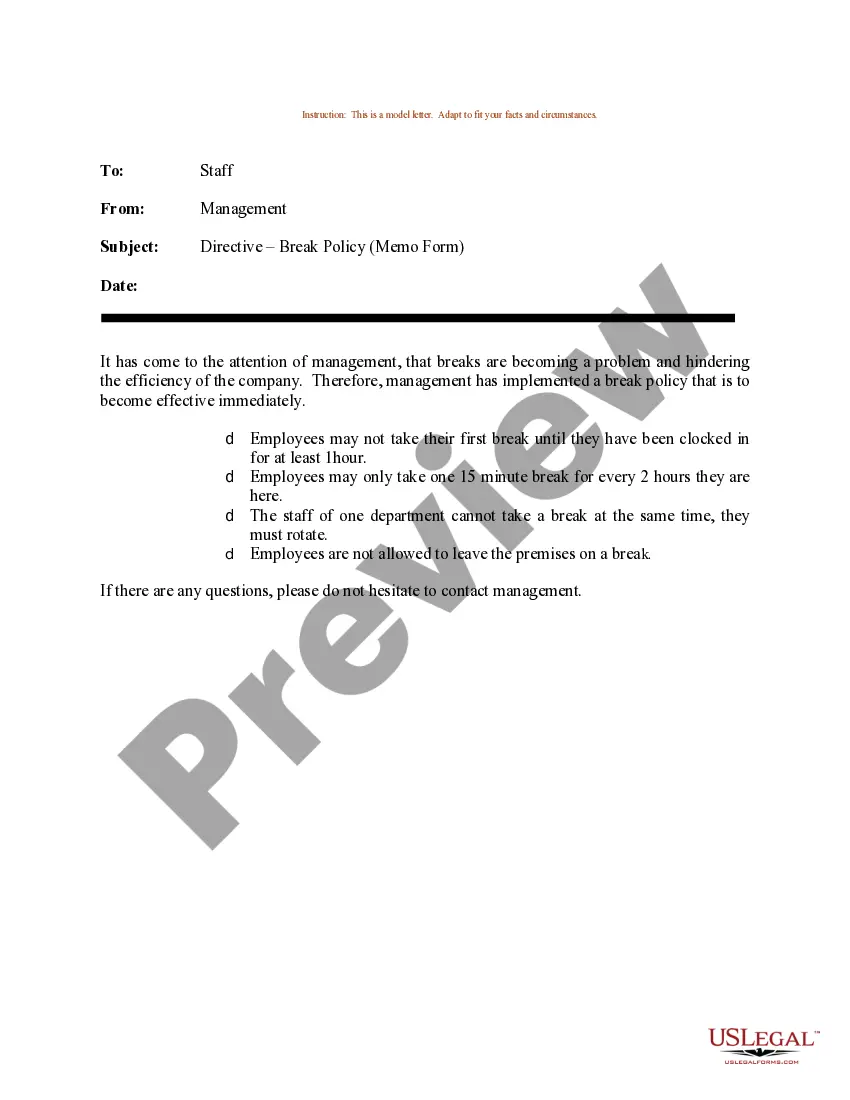
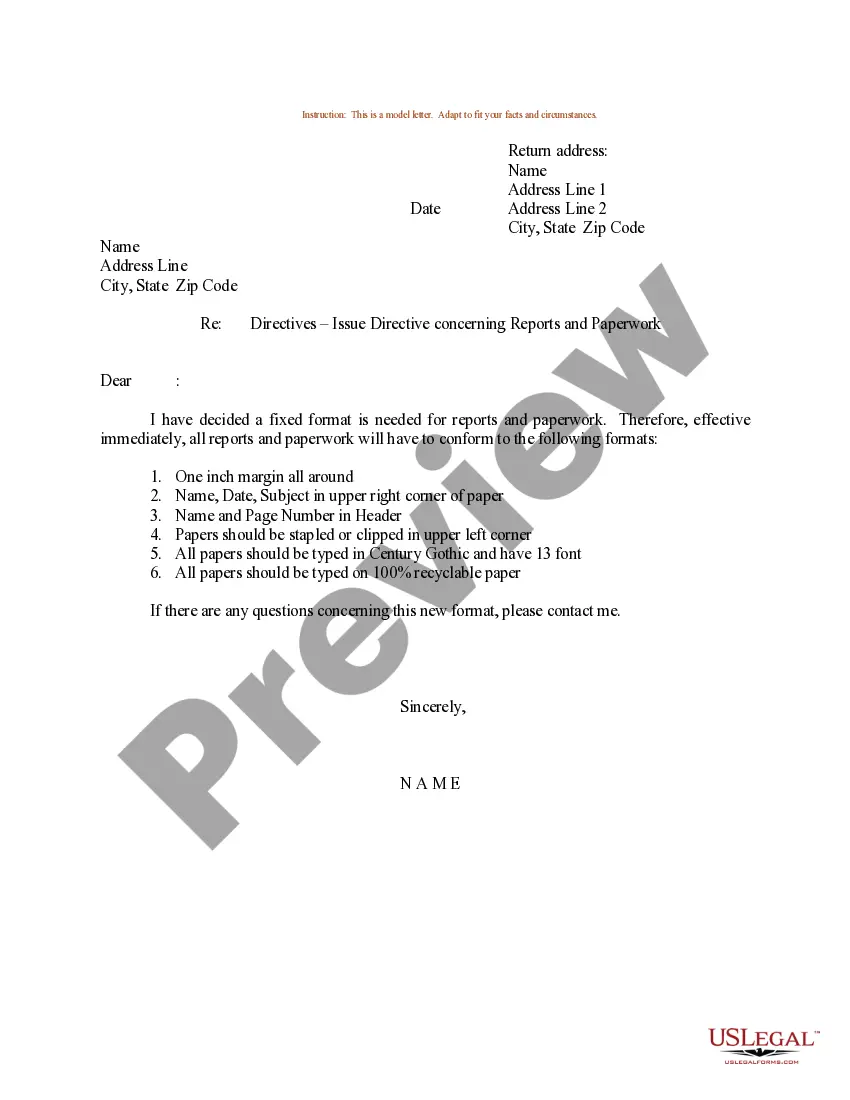
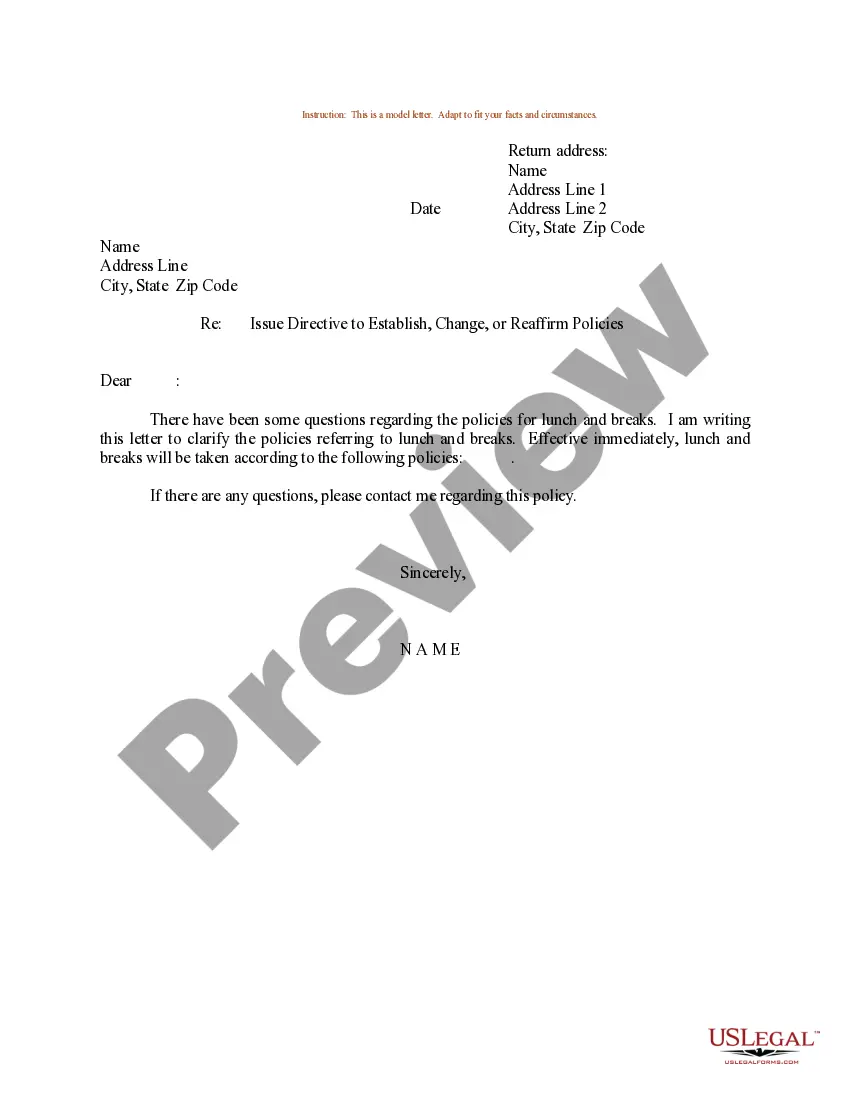
The Sample Letter for Directive - Break Policy serves as a formal document that outlines an employer's rules regarding employee breaks. This letter sets specific guidelines, including when breaks can be taken, their duration, and the rotation of breaks among staff. It helps maintain order and ensures compliance with company policies, differentiating it from more general workplace communication forms.
Form components explained
- Break timing: Employees may not take their first break until clocked in for at least one hour.
- Break limits: Employees are allowed only one 15-minute break for every two hours worked.
- Break rotation: Staff in the same department must rotate break times.
- Premises requirement: Employees are prohibited from leaving the premises during breaks.
When this form is needed
This form is used when an employer needs to establish clear break policies for employees. It is particularly useful during onboarding, policy updates, or when addressing compliance with labor laws. By providing this directive, employers can prevent misunderstandings about break times and ensure a structured work environment.
Who can use this document
- Employers seeking to implement or clarify their break policies.
- Human resources personnel responsible for employee management.
- Business owners looking to establish a consistent workplace environment.
Completing this form step by step
- Begin by entering the date at the top of the letter.
- Clearly state the intended recipients of the letter, typically the employees.
- Outline the specific break policies as detailed in the form content.
- Sign the letter to authenticate the directive.
- Distribute the letter to all relevant employees and retain a copy for records.
Is notarization required?
Notarization is not commonly needed for this form. However, certain documents or local rules may make it necessary. Our notarization service, powered by Notarize, allows you to finalize it securely online anytime, day or night.
Get your form ready online
Our built-in tools help you complete, sign, share, and store your documents in one place.
Make edits, fill in missing information, and update formatting in US Legal Forms—just like you would in MS Word.
Download a copy, print it, send it by email, or mail it via USPS—whatever works best for your next step.
Sign and collect signatures with our SignNow integration. Send to multiple recipients, set reminders, and more. Go Premium to unlock E-Sign.
If this form requires notarization, complete it online through a secure video call—no need to meet a notary in person or wait for an appointment.
We protect your documents and personal data by following strict security and privacy standards.

Make edits, fill in missing information, and update formatting in US Legal Forms—just like you would in MS Word.

Download a copy, print it, send it by email, or mail it via USPS—whatever works best for your next step.

Sign and collect signatures with our SignNow integration. Send to multiple recipients, set reminders, and more. Go Premium to unlock E-Sign.

If this form requires notarization, complete it online through a secure video call—no need to meet a notary in person or wait for an appointment.

We protect your documents and personal data by following strict security and privacy standards.
Mistakes to watch out for
- Failing to communicate the policy to all employees promptly.
- Not clearly defining the break schedule, leading to confusion.
- Overlooking specific state labor laws that may affect break policies.
Benefits of completing this form online
- Convenience of immediate access and download from any device.
- Editability allows for quick modifications to tailor the letter to specific needs.
- Reliability, as templates are prepared by licensed attorneys to ensure legal compliance.
Looking for another form?
Form popularity
FAQ
Under California wage and hour law, non-exempt employees must receive a thirty (30) minute lunch or meal break if they work more than five (5) hours in a day. The meal break must be provided within the first 5 hours of the workday.
This common practice is not required everywhere, however: The federal wage and hour law, called the Fair Labor Standards Act (FLSA), doesn't require employers to provide meal or rest breaks.your break lasts 20 minutes or less; generally, these shorter breaks are considered part of your work day and must be paid.
Under California law, non-exempt employees are entitled to one unpaid 30-minute meal break, and two paid 10-minute rest breaks, during a typical 8-hour shift. Employees must receive their off-duty meal breaks before the end of the fifth hour of work.
When breaks aren't stipulated by law, employers may have company policies in place that provide for a certain amount of break time per work shift.For example, an employee could be given a 30-minute lunch break (unpaid) and two 15-minute breaks (paid) during each eight-hour shift.
What is a rest break? California requires employers to provide employees ten-minute rest breaks for every four hours (or major fraction) worked. Anything over two hours is a major fraction of a four-hour period.
Many employers provide employees with a rest or lunch break, whether paid or unpaid. This common practice is not required everywhere, however: The federal wage and hour law, called the Fair Labor Standards Act (FLSA), doesn't require employers to provide meal or rest breaks.you have to work through your break, or.
Employers must authorize and permit uninterrupted rest breaks for all nonexempt employees whose total daily work time is at least 3.5 hours. These mandatory rest breaks must be offered at the rate of 10 minutes for every four hours worked, or "major fraction" thereof.
Employers must provide employees with at least a 30-minute meal break for every 8 hours of continuous work. In addition, employees must be provided with at least a 10-minute rest break for every 4 hours worked in a day. If the employee's total work time is 3 ½ hours or less, then a break is not required.
Under California law, non-exempt employees are entitled to one unpaid 30-minute meal break, and two paid 10-minute rest breaks, during a typical 8-hour shift. Employees must receive their off-duty meal breaks before the end of the fifth hour of work.