Sample Letter for Disagree with a Bill, Rent Payment, or other Financial Issue
What this document covers
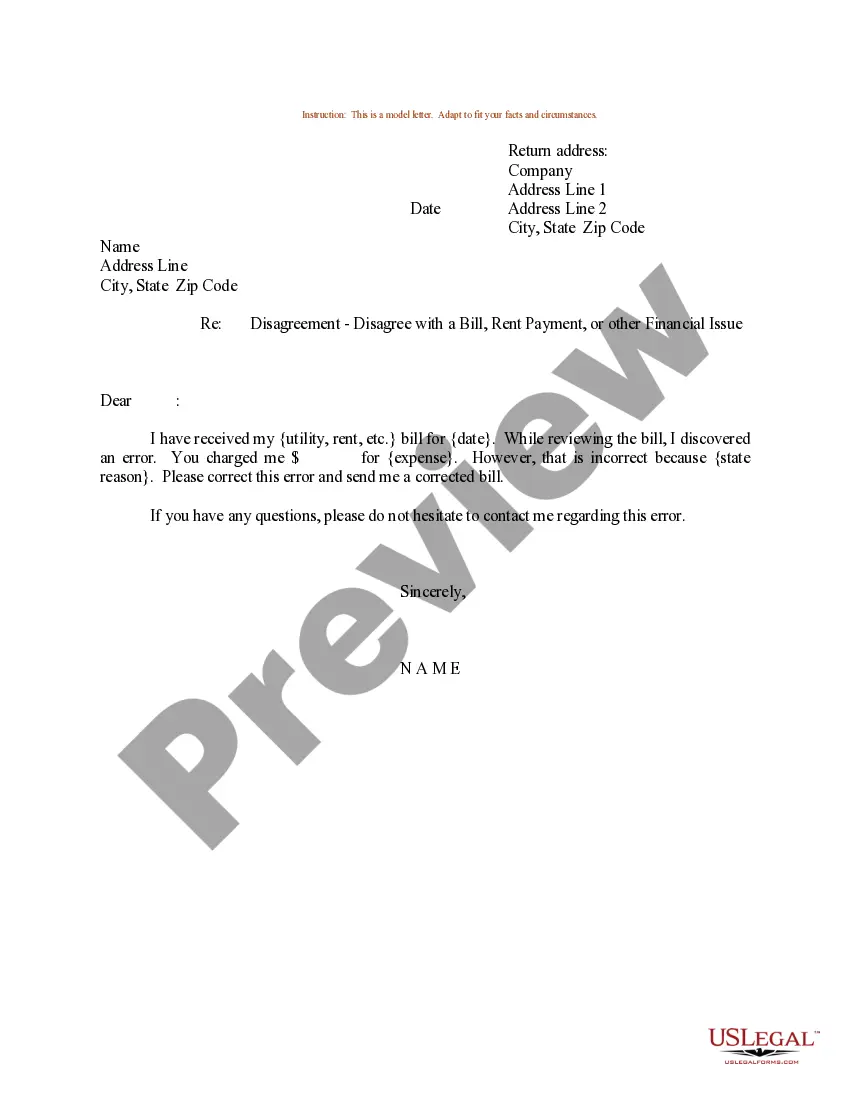
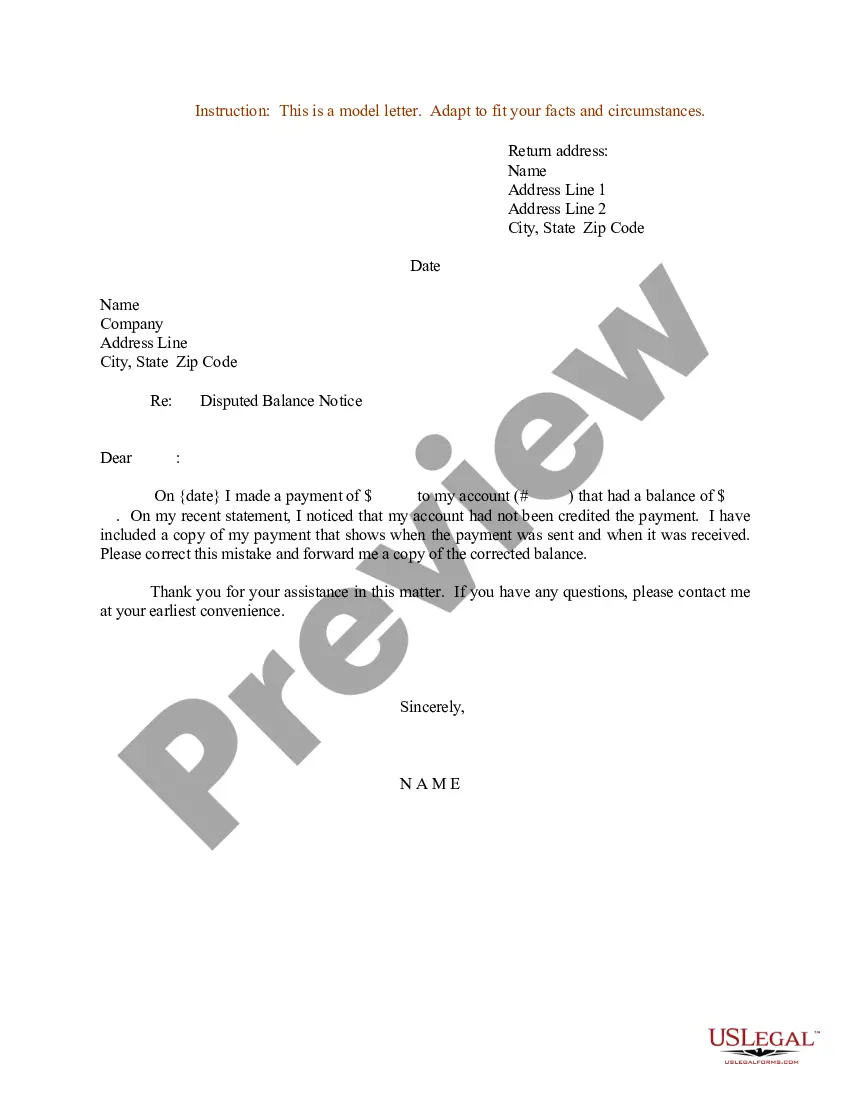
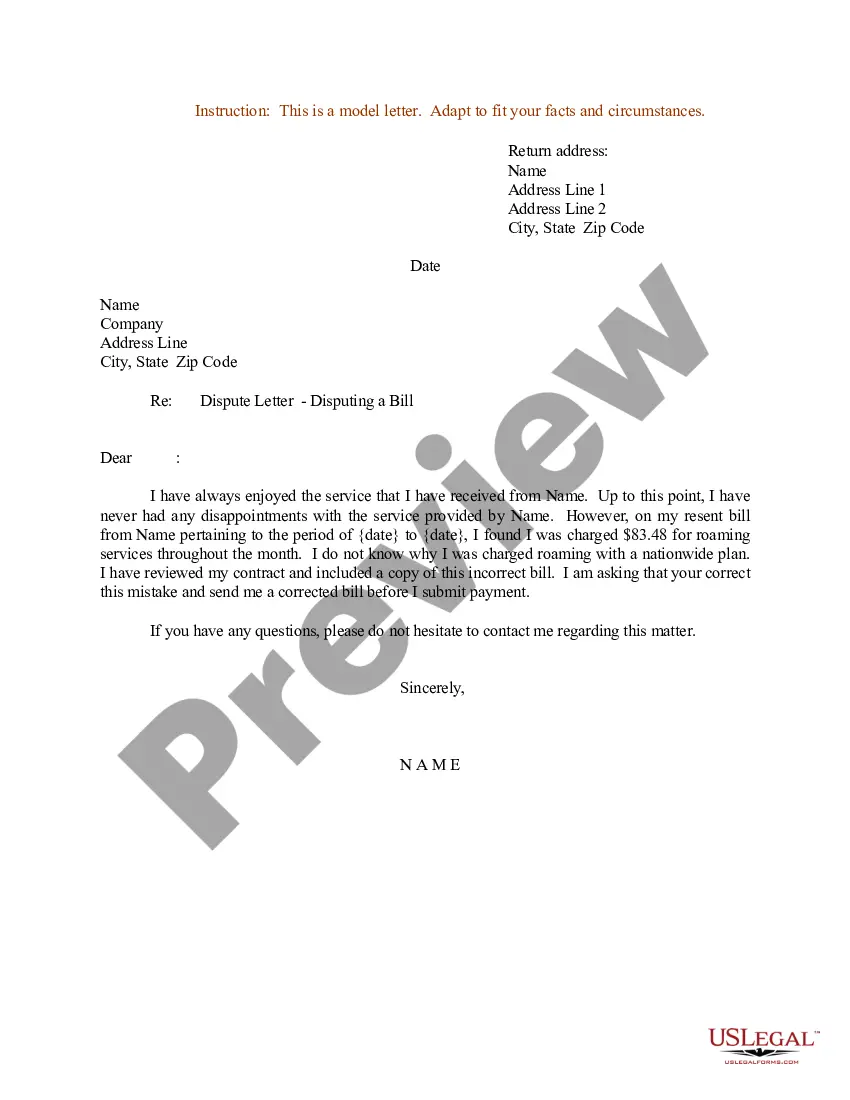
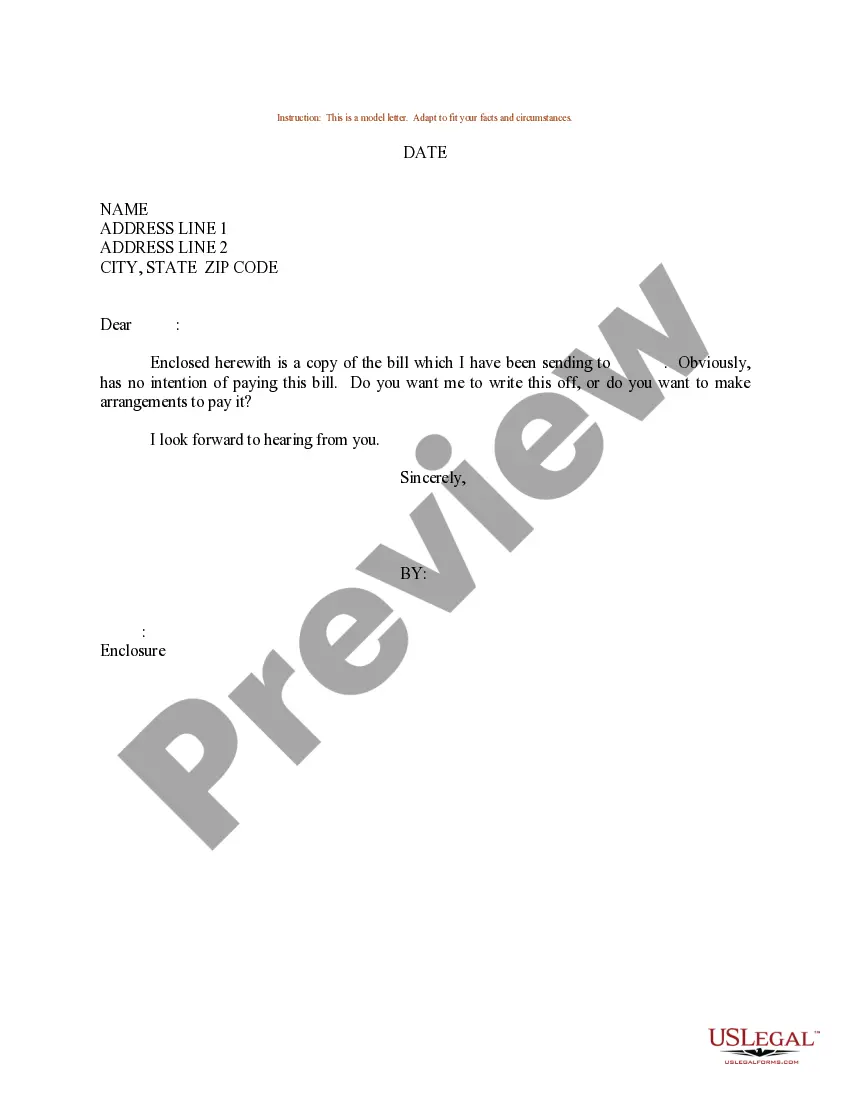
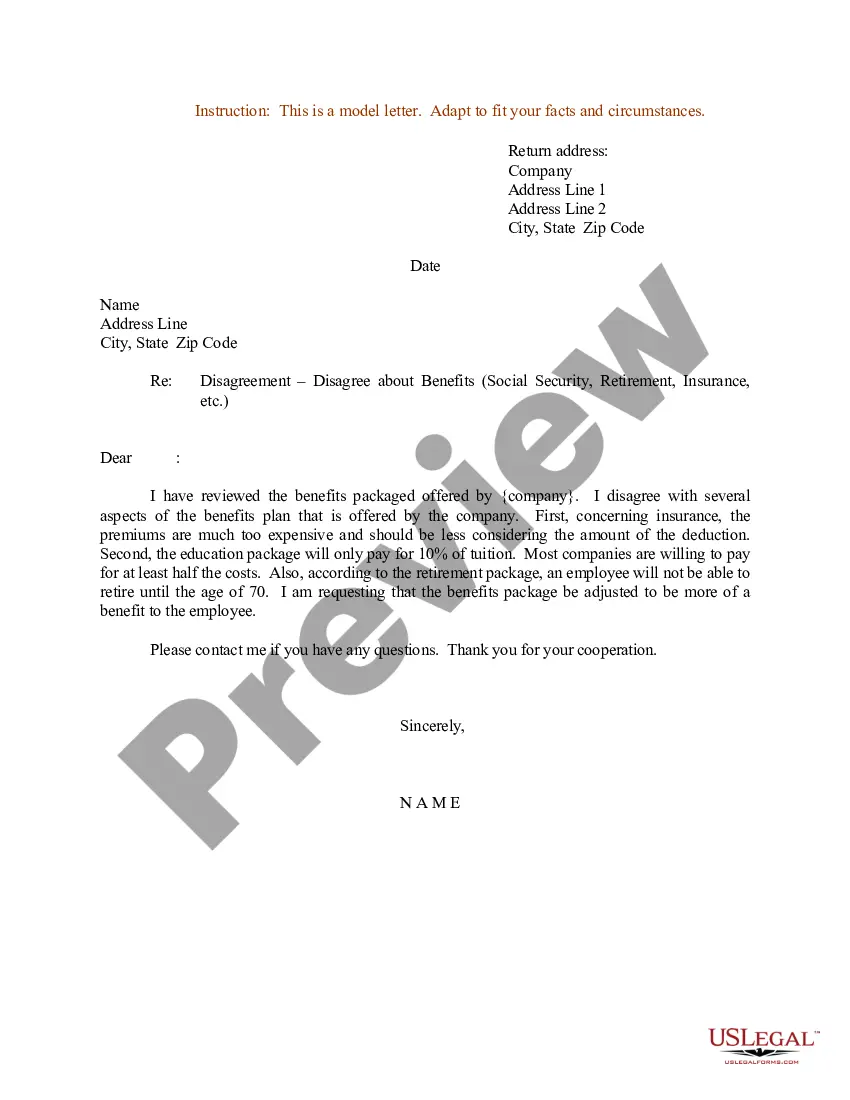
This Sample Letter for Disagree with a Bill, Rent Payment, or other Financial Issue is a template designed to help you formally address discrepancies in bills or unpaid rent. Unlike other general complaint letters, this specific form focuses solely on financial disputes, providing a structured way to articulate your concerns clearly.
Key components of this form
- Return address section for your details.
- Date field to specify when the letter is sent.
- Recipient address for clear communication with the party involved.
- Subject line to highlight the purpose of the letter.
- A main body section for explaining the disagreement.
- Signature line for your name to authenticate the letter.
Situations where this form applies
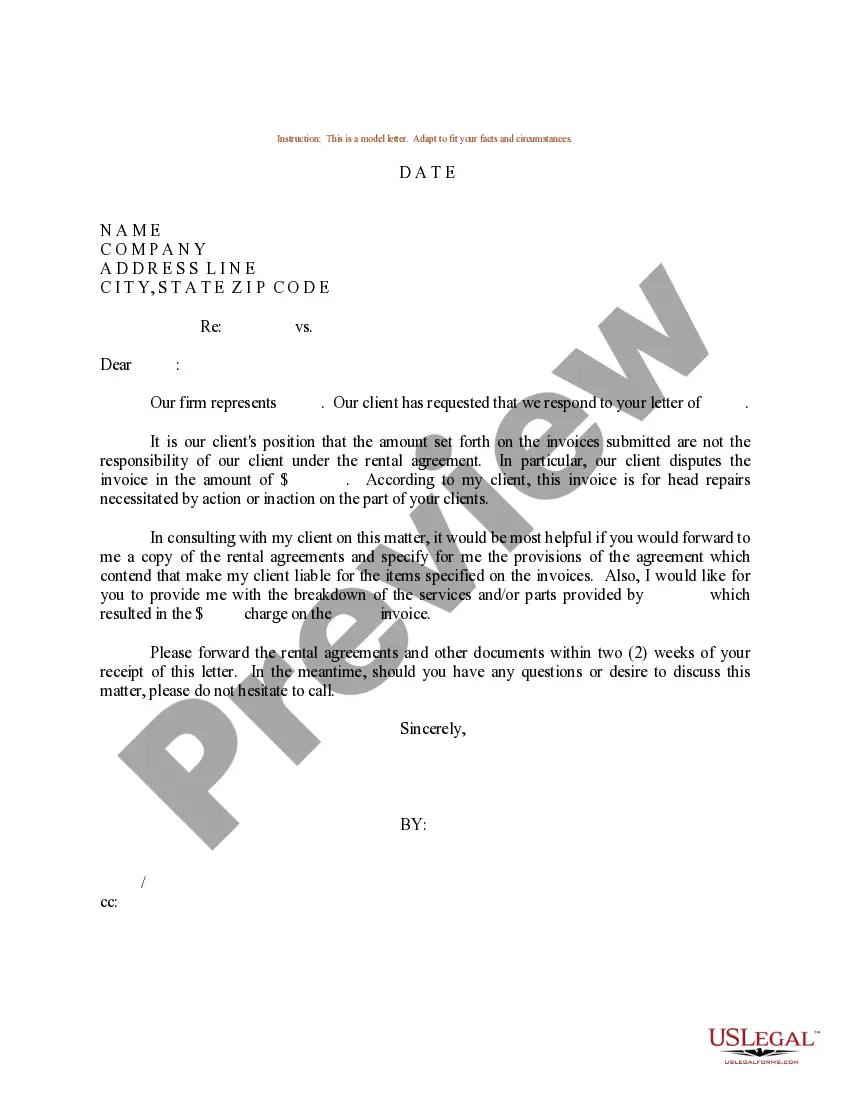
This form is used when you notice an error in a bill, a rent payment, or any other financial obligation that you wish to dispute. It's suitable in various scenarios, such as when you receive a bill for services not rendered, notice incorrect charges, or wish to clarify a rent payment disagreement with your landlord.
Who needs this form
- Individuals disputing errors in bills or invoices.
- Tenants who believe their rent charges are incorrect.
- Consumers seeking clarification on questionable financial transactions.
Completing this form step by step
- Identify your address and the address of the recipient.
- Insert the current date.
- Fill in the subject line indicating the disagreement theme.
- Clearly state the details of the bill or payment you are disputing in the body of the letter.
- Conclude the letter with your name and an optional signature.
Does this document require notarization?
This form does not typically require notarization unless specified by local law. For added assurance, confirm local requirements as they may vary by jurisdiction.
Get your form ready online
Our built-in tools help you complete, sign, share, and store your documents in one place.
Make edits, fill in missing information, and update formatting in US Legal Forms—just like you would in MS Word.
Download a copy, print it, send it by email, or mail it via USPS—whatever works best for your next step.
Sign and collect signatures with our SignNow integration. Send to multiple recipients, set reminders, and more. Go Premium to unlock E-Sign.
If this form requires notarization, complete it online through a secure video call—no need to meet a notary in person or wait for an appointment.
We protect your documents and personal data by following strict security and privacy standards.

Make edits, fill in missing information, and update formatting in US Legal Forms—just like you would in MS Word.

Download a copy, print it, send it by email, or mail it via USPS—whatever works best for your next step.

Sign and collect signatures with our SignNow integration. Send to multiple recipients, set reminders, and more. Go Premium to unlock E-Sign.

If this form requires notarization, complete it online through a secure video call—no need to meet a notary in person or wait for an appointment.

We protect your documents and personal data by following strict security and privacy standards.
Common mistakes
- Failing to clearly specify the error or disagreement.
- Not including essential contact information.
- Overlooking the importance of a formal tone in the letter.
Benefits of using this form online
- Easy customization to fit your specific situation.
- Immediate availability for download and use, saving time.
- Structured format ensures all necessary elements are included.
Legal use & context
- The letter serves as a formal notification of your disagreement.
- It may be used as evidence in future disputes if necessary.
- Maintaining a record of such communications is important for legal protection.
Key takeaways
- This sample letter is essential for disputing financial discrepancies.
- Use this form to ensure clear and professional communication.
- Make sure to include all relevant information when completing the letter.
Looking for another form?
Form popularity
FAQ
Consider diffusing the situation by using love and humor. Clearly describe the disagreement and explain what you want done to resolve it. Avoid accusations and threats, particularly in a first letter. Remember to remain courteous, despite the way you may feel. Keep the tone respectful.
I respect your point but from my perspective (or but in my opinion)2026 I take your point but that isn't the way I see it; instead, I think that2026 True, that is a fair point, but I have to say I disagree2026 I understand where you are coming from but2026
I see what you're saying but2026 I understand where you're coming from, but2026 That's a valid point, but2026 I'm sorry but I disagree with you about this.
Write the application reference number and name/address of the scheme at the top of your letter. Make clear that you object. Refer to development plan. Make clear if there are any other material considerations that should be taken into account. Don't be emotive, focus on the issues.
Before getting in to why you disagree, find some common ground or positive aspects first. Be constructive. This means fleshing out your criticisms and backing up your opinions with evidence. When something is an opinion, agree to disagree, when something is factually incorrect point out the error respectfully.
Things to Do To Prove The Validity of Your Dispute. Inspect the invoice. Check your accounting records. Look at the business contract. Contact the company. Collect proof to support your dispute. Requirements Creditors Must Adhere to When a Bill of Service is in Dispute.
I am writing to dispute a billing error in the amount of $______ on my account. The amount is inaccurate because describe the problem. I am requesting that the error be corrected, that any finance and other charges related to the disputed amount be credited as well, and that I receive an accurate statement.
Identify yourself. Explain the error and the situation in which it occurred precisely. Make a request for correction of the mistake. Apologize for the mistake you have incurred. You may give a claim or policy number that is relevant to the document. Attach supporting documents.
Hardship Examples. There are a variety of situations that may qualify as a hardship. Keep it original. Be honest. Keep it concise. Don't cast blame or shirk responsibility. Don't use jargon or fancy words. Keep your objectives in mind. Provide the creditor an action plan.