Contract with Independent Contractor to Teach Insurance Courses with Covenant Not to Compete and Confidentiality Agreement
Overview of this form
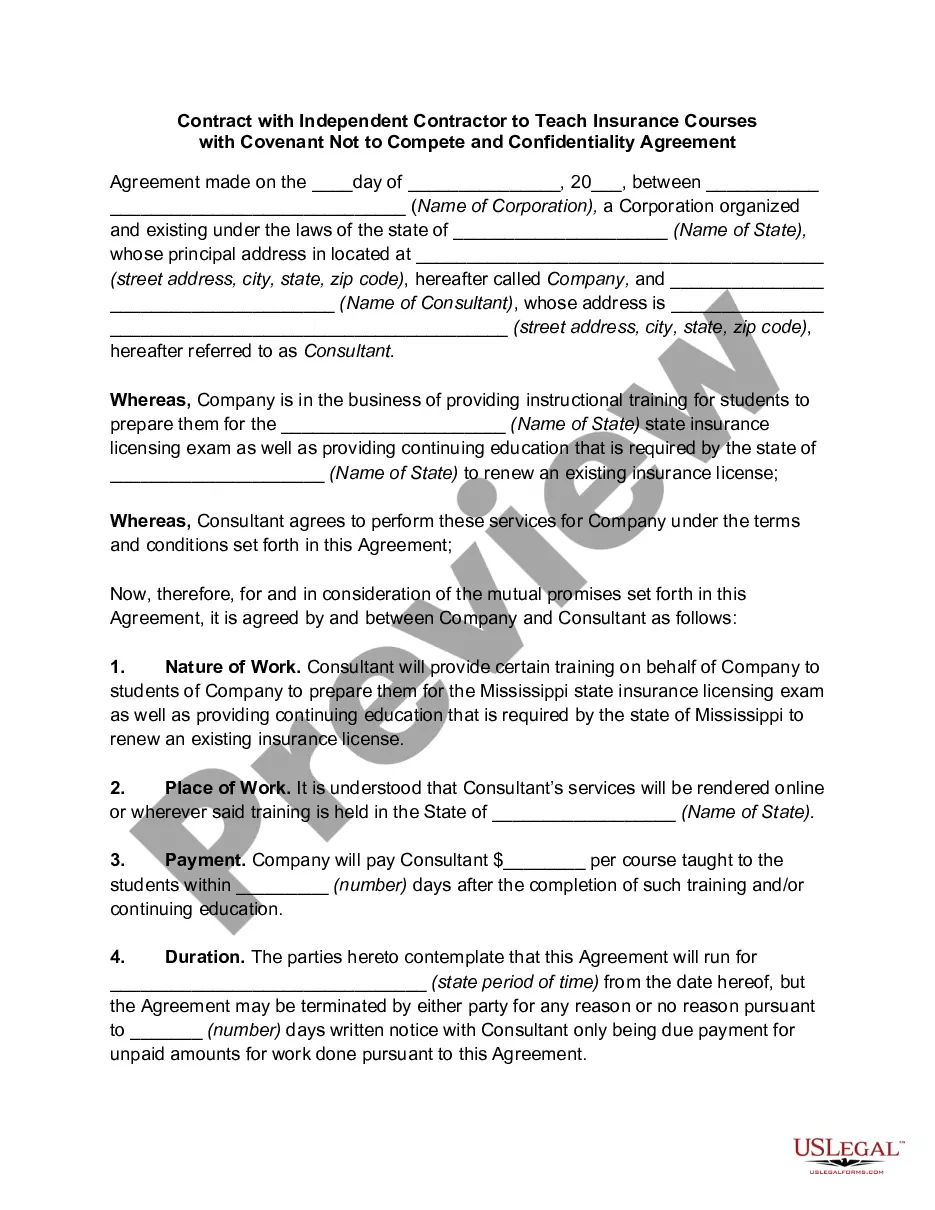
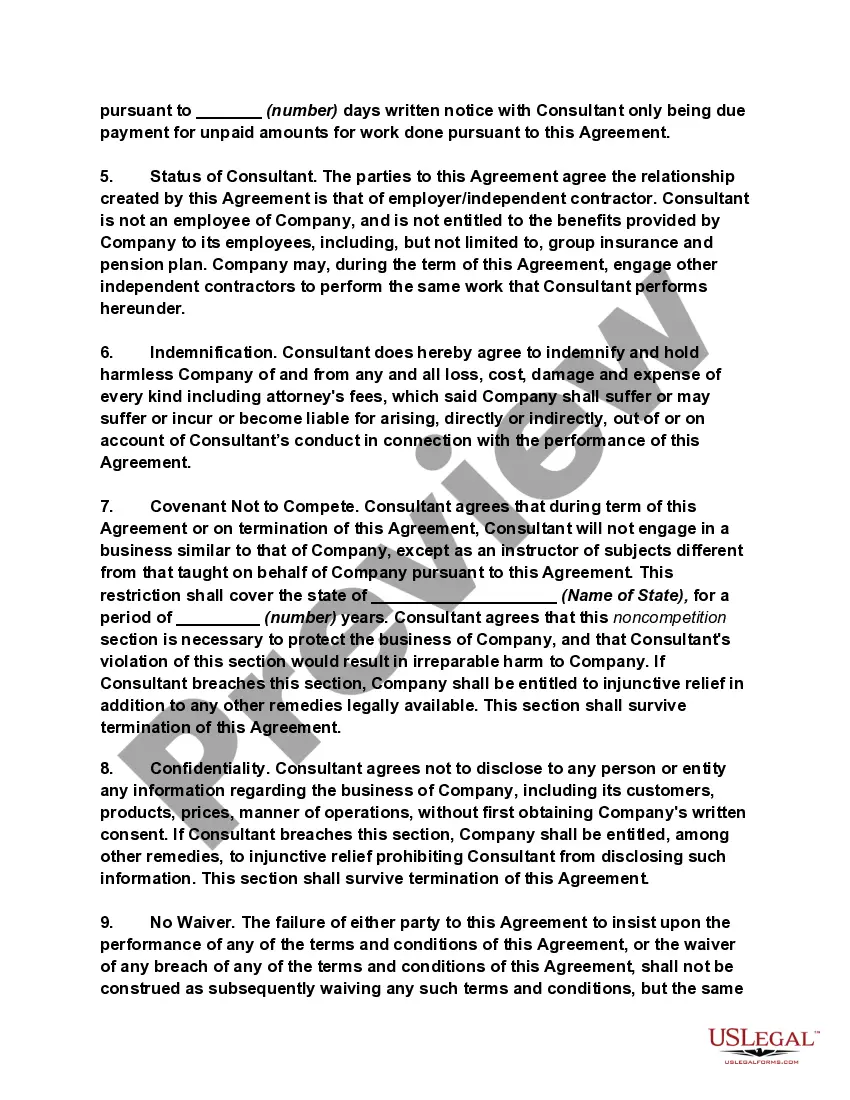
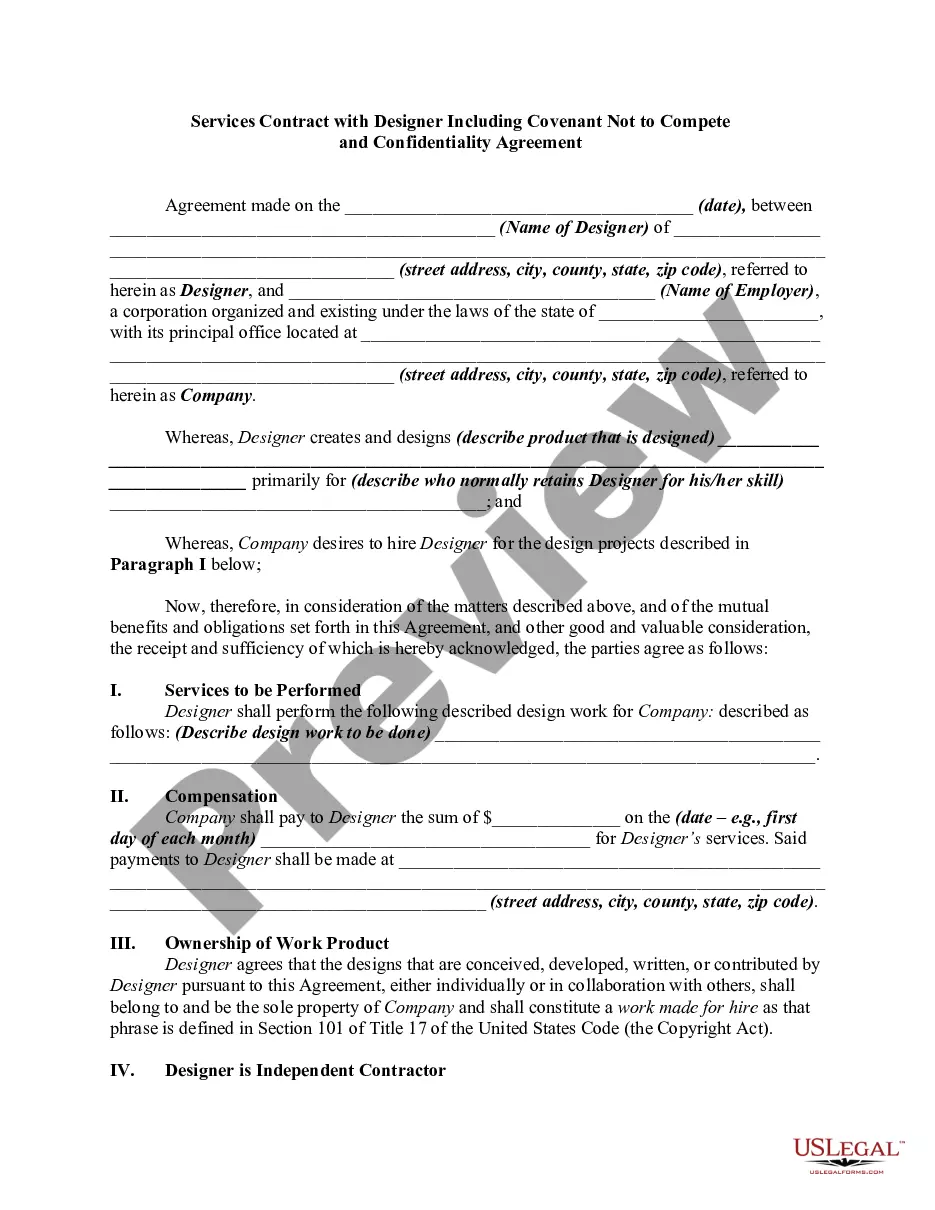
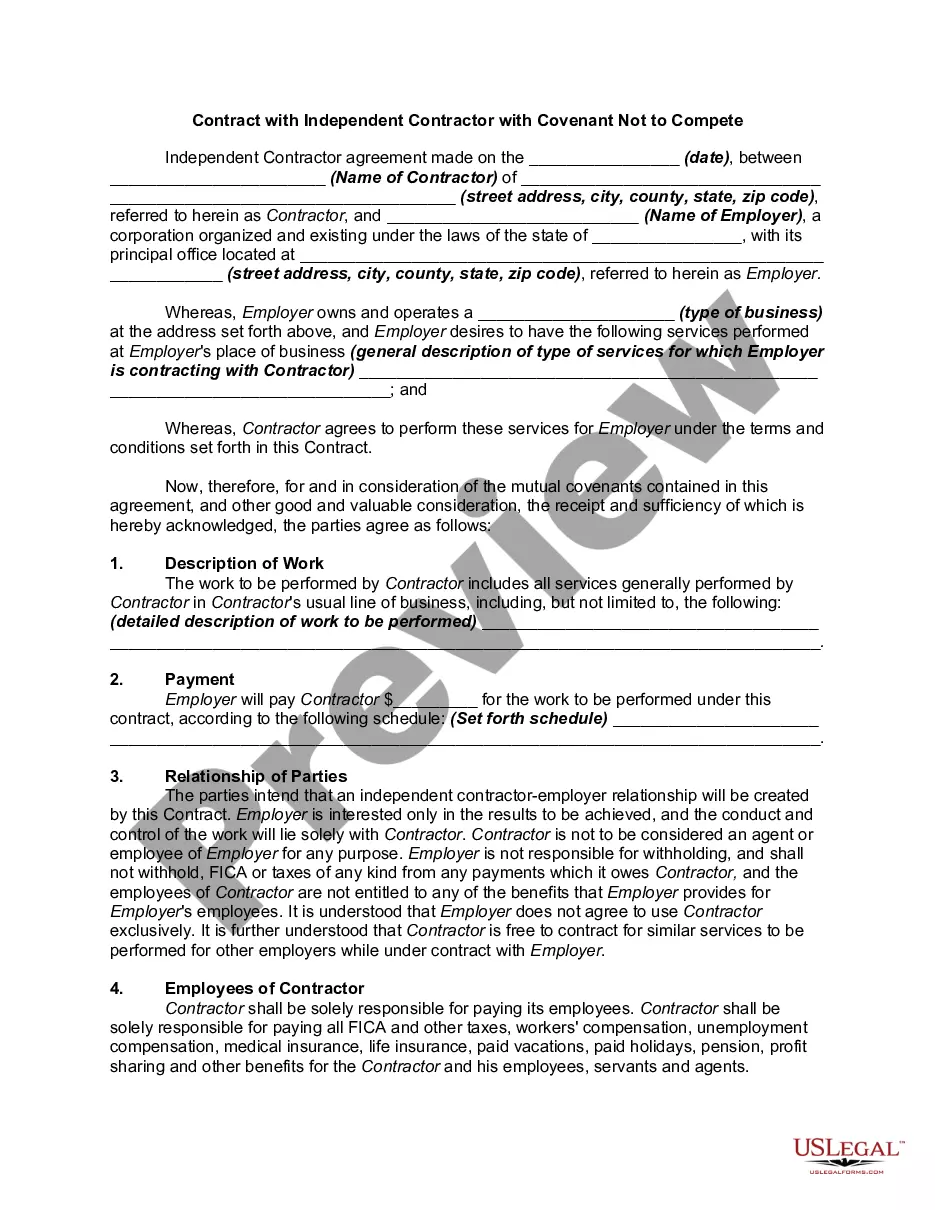
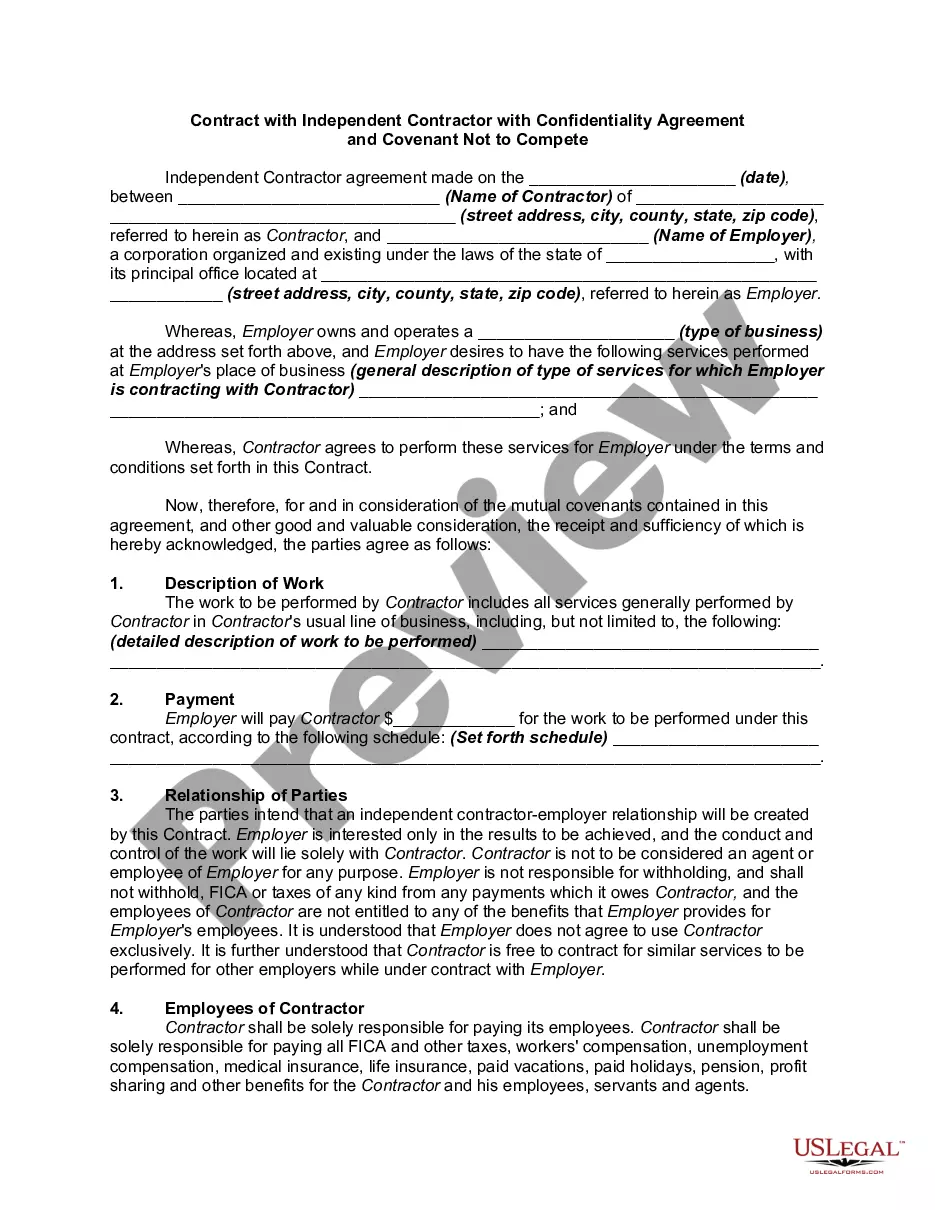
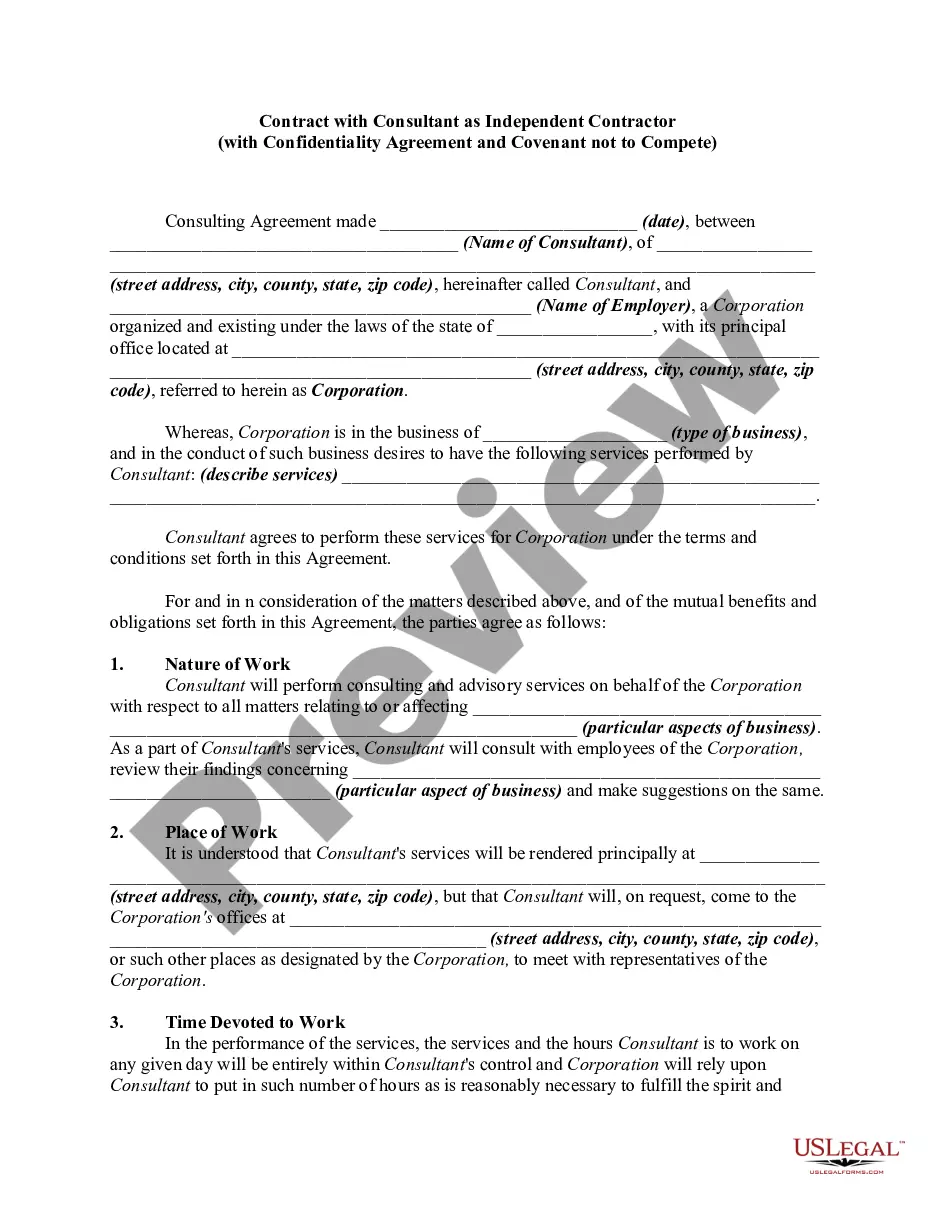
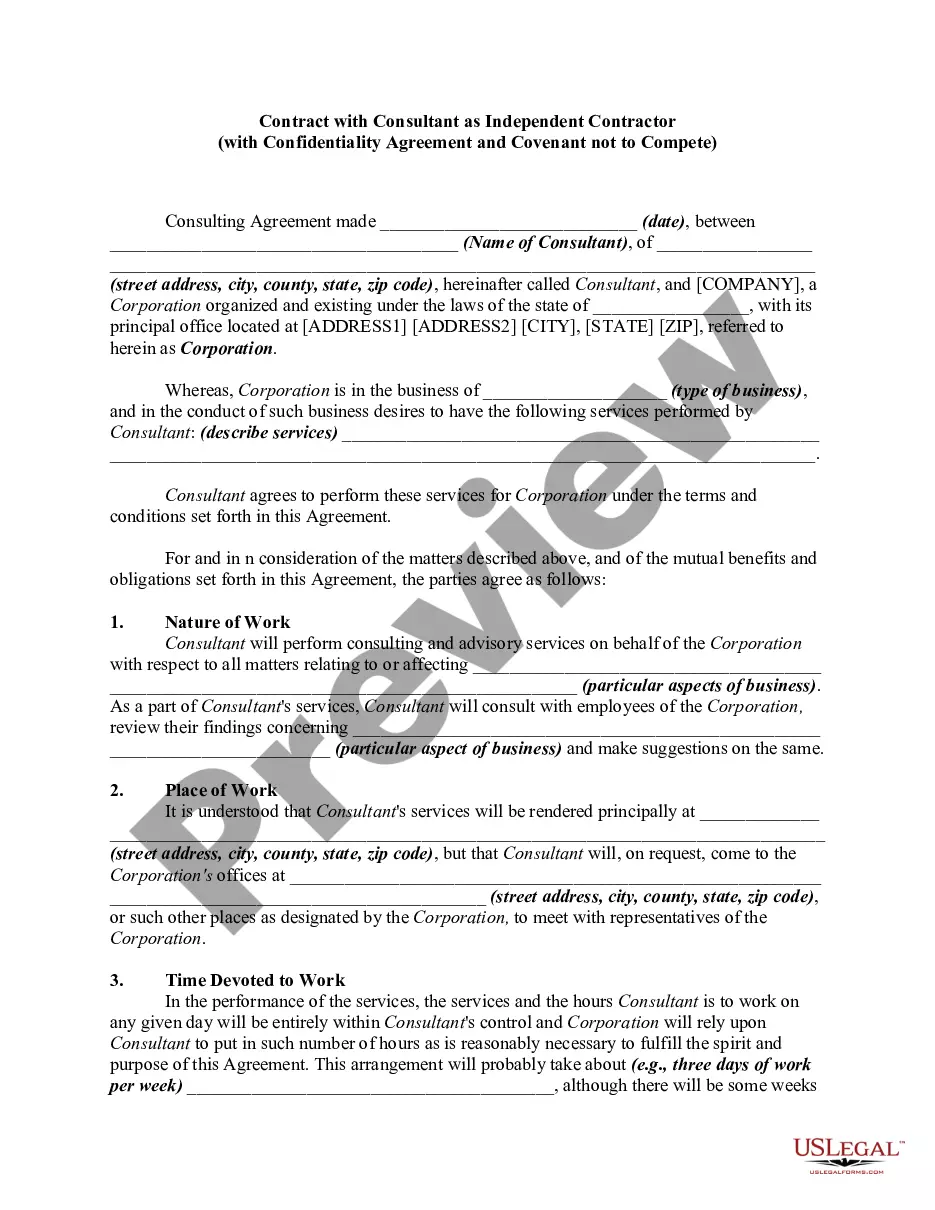
This form is a Contract with Independent Contractor to Teach Insurance Courses, which includes a Covenant Not to Compete and Confidentiality Agreement. It defines the relationship between a company and an independent contractor providing educational services. Unlike traditional employment agreements, this contract outlines the independent nature of the contractor's work, specifies compensation, and includes important clauses regarding confidentiality and non-competition.
Form components explained
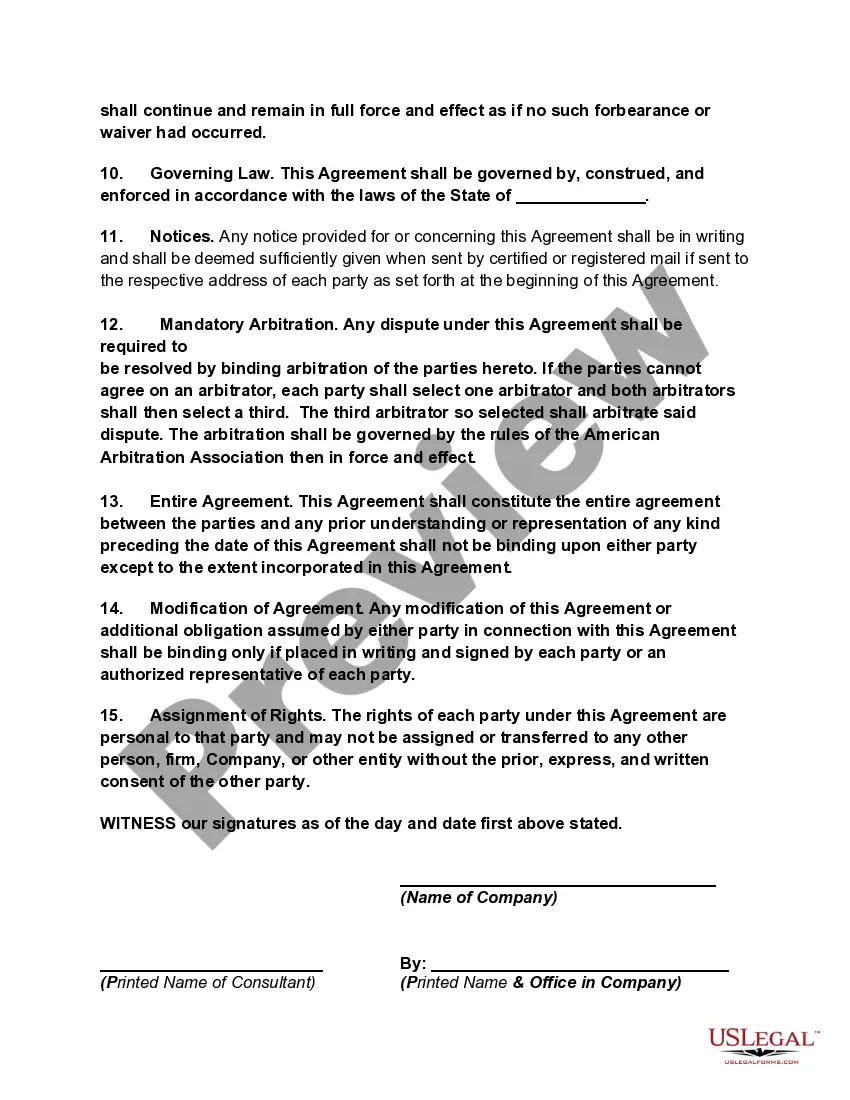
- Nature of Work: Describes the specific services the consultant will provide.
- Place of Work: Specifies where the services will be rendered, such as online or at designated locations.
- Payment: Outlines the payment terms for each course taught.
- Duration: Indicates the length of the agreement and notice period for termination.
- Status of Consultant: Clarifies that the consultant is not an employee and will not receive employee benefits.
- Covenant Not to Compete: Restricts the consultant from engaging in similar business activities during and after the contract period.
- Confidentiality: Obligates the consultant to keep company information private.
- Indemnification: Specifies that the consultant must protect the company from certain liabilities.
- Governing Law: States the jurisdiction whose laws govern the agreement.

Situations where this form applies
This form should be used when a company hires an independent contractor to teach insurance courses, especially when the services are aimed at preparing students for state licensing exams or providing continuing education. It is beneficial in situations where the company wants to ensure that proprietary information remains confidential and that the contractor does not compete with the company in similar businesses.
Who needs this form
- Businesses providing training or educational services in the insurance sector.
- Independent contractors with expertise in teaching insurance courses.
- Companies that require confidentiality and competitive protection when engaging contractors.
- Firms looking to formalize the terms of engagement with contracted educators.
Instructions for completing this form
- Identify the parties: Fill in the names and addresses of the company and the consultant.
- Specify the nature of work: Detail the courses and services the consultant will provide.
- Enter payment terms: State the payment rate and timing after course completion.
- Define the agreement duration: Indicate the time frame for the contract and the notice period for termination.
- Complete the sections on confidentiality and non-competition: Clearly outline expectations and restrictions on the consultant.
- Obtain signatures: Ensure both parties sign the agreement to make it legally binding.
Is notarization required?
Notarization is generally not required for this form. However, certain states or situations might demand it. You can complete notarization online through US Legal Forms, powered by Notarize, using a verified video call available anytime.
Get your form ready online
Our built-in tools help you complete, sign, share, and store your documents in one place.
Make edits, fill in missing information, and update formatting in US Legal Forms—just like you would in MS Word.
Download a copy, print it, send it by email, or mail it via USPS—whatever works best for your next step.
Sign and collect signatures with our SignNow integration. Send to multiple recipients, set reminders, and more. Go Premium to unlock E-Sign.
If this form requires notarization, complete it online through a secure video call—no need to meet a notary in person or wait for an appointment.
We protect your documents and personal data by following strict security and privacy standards.

Make edits, fill in missing information, and update formatting in US Legal Forms—just like you would in MS Word.

Download a copy, print it, send it by email, or mail it via USPS—whatever works best for your next step.

Sign and collect signatures with our SignNow integration. Send to multiple recipients, set reminders, and more. Go Premium to unlock E-Sign.

If this form requires notarization, complete it online through a secure video call—no need to meet a notary in person or wait for an appointment.

We protect your documents and personal data by following strict security and privacy standards.
Common mistakes to avoid
- Failing to clearly define the nature of work, leading to misunderstandings about responsibilities.
- Not specifying payment details, which can result in disputes over compensation.
- Omitting necessary clauses or not customizing them to meet state-specific requirements.
- Not including provisions for termination and notice, which can complicate ending the agreement.
- Overlooking the obligation for signatures, which can leave the agreement unenforceable.
Why use this form online
- Convenience: Easily access and download the form from anywhere at any time.
- Editability: Fill in the form electronically, which reduces errors and saves time.
- Reliability: The form is drafted by licensed attorneys, ensuring it meets legal standards.
- Cost-effective: Avoid legal fees by using a pre-drafted form tailored to common scenarios.
- Quick updates: Stay current with legal changes by downloading the latest version as needed.
Legal use & context
- This contract helps clarify the independent contractor's status, protecting both parties' rights.
- It is legally enforceable provided it complies with local and state laws regarding contractor agreements.
- Employers must ensure that the contractor understands the implications of the covenant not to compete and confidentiality clauses.
Looking for another form?
Form popularity
FAQ
This contract defines the relationship between a company and an independent contractor who teaches insurance courses. It clarifies the contractor’s non-employee status, payment terms for each course, and protections such as confidentiality and a covenant not to compete. It also covers the nature and place of work, contract duration, indemnification, and governing law across multiple states.
Enforceability of a covenant not to compete varies by state. This form includes such a covenant to protect the company’s training programs and confidential information, but state law governs its enforceability. For specific circumstances, consult a licensed attorney to evaluate scope and duration as applied to independent contractors.
Enforceability depends on state law and the contract's scope. This form includes a covenant not to compete with an independent contractor who teaches insurance courses; whether it will be enforced depends on jurisdiction and how broadly it restricts competition.
No. A non-compete restricts competitive activity, while a confidentiality clause requires keeping company information private. This form includes both provisions to protect proprietary educational materials, course content, and student information while the contractor teaches insurance courses.
Businesses providing training or educational services in the insurance sector; independent contractors with expertise in teaching insurance courses; companies that require confidentiality and competitive protection when engaging contractors; firms looking to formalize terms of engagement with contracted educators.
This form pairs an independent contractor arrangement with a covenant not to compete and a confidentiality clause, specifically for teaching insurance courses. It also states the contractor is not an employee and sets course-based payment, duration, and governing law.