Checklist - Small Business Legal Compliance Inventory
Understanding this form
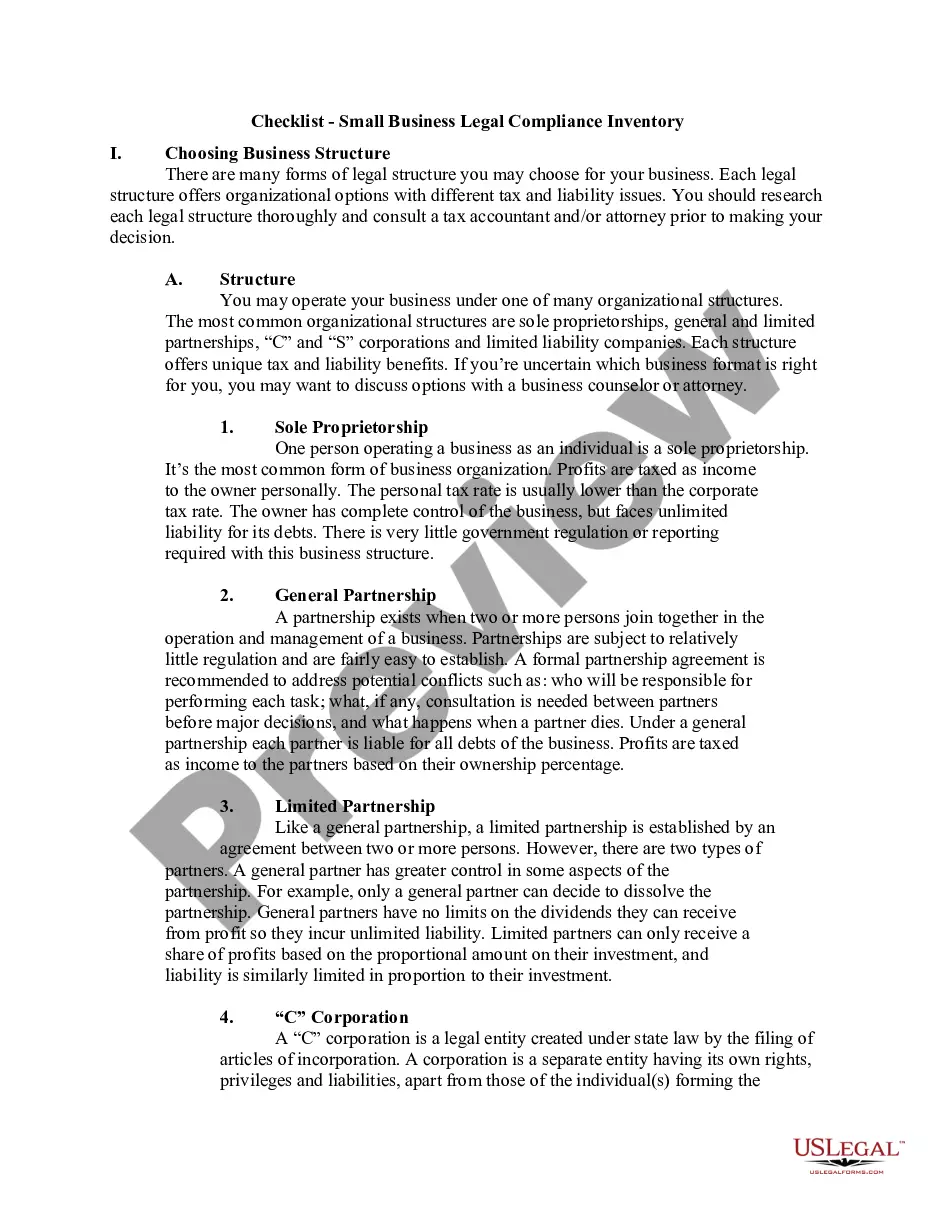
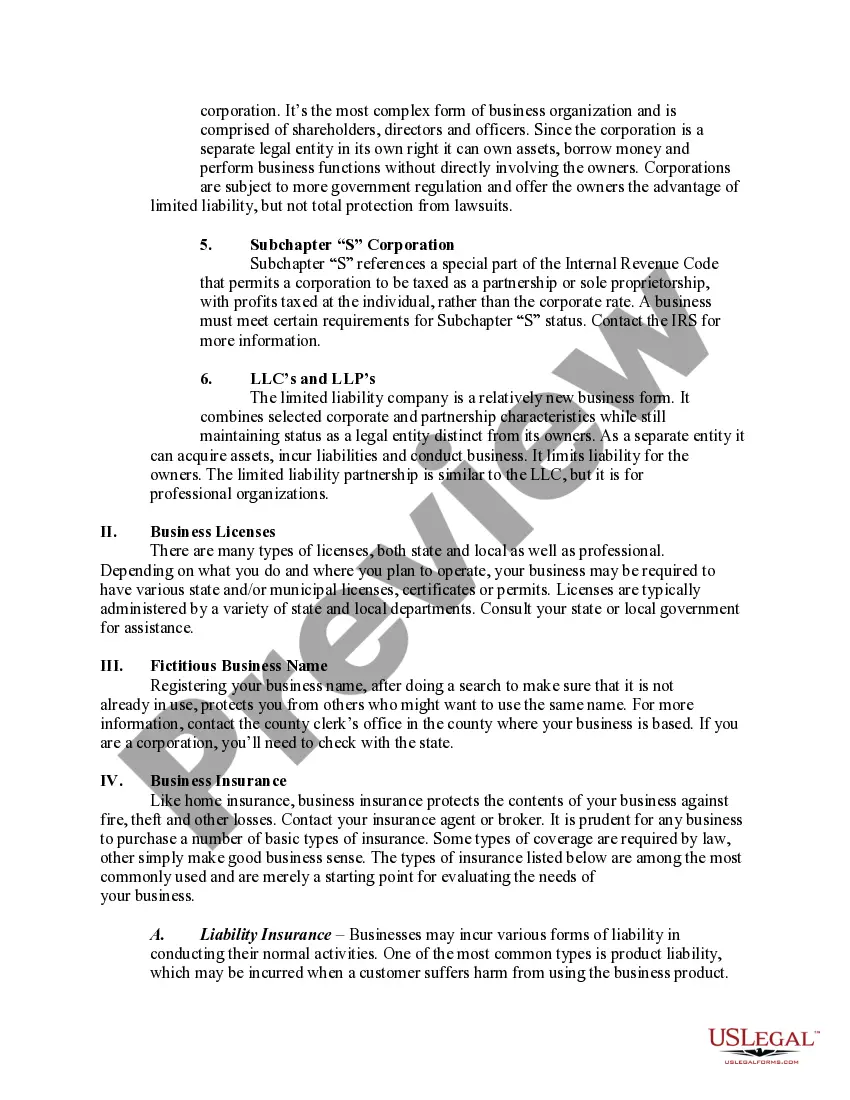
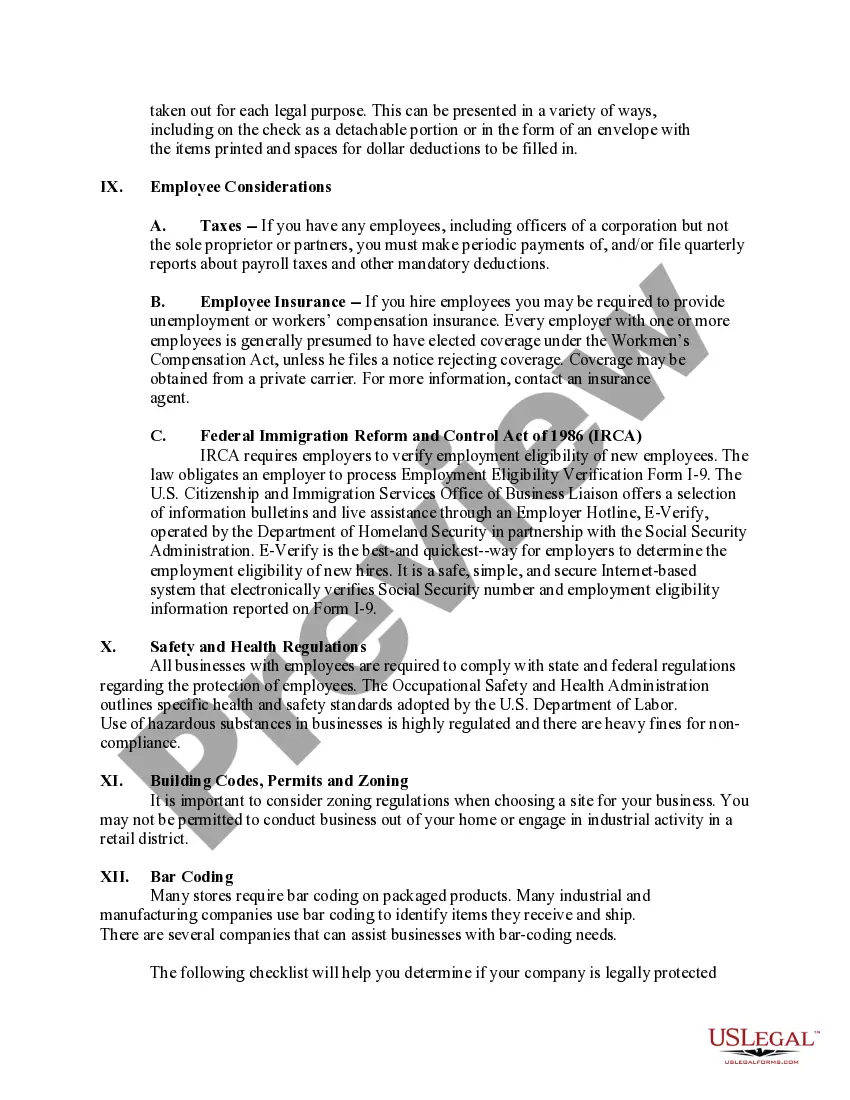
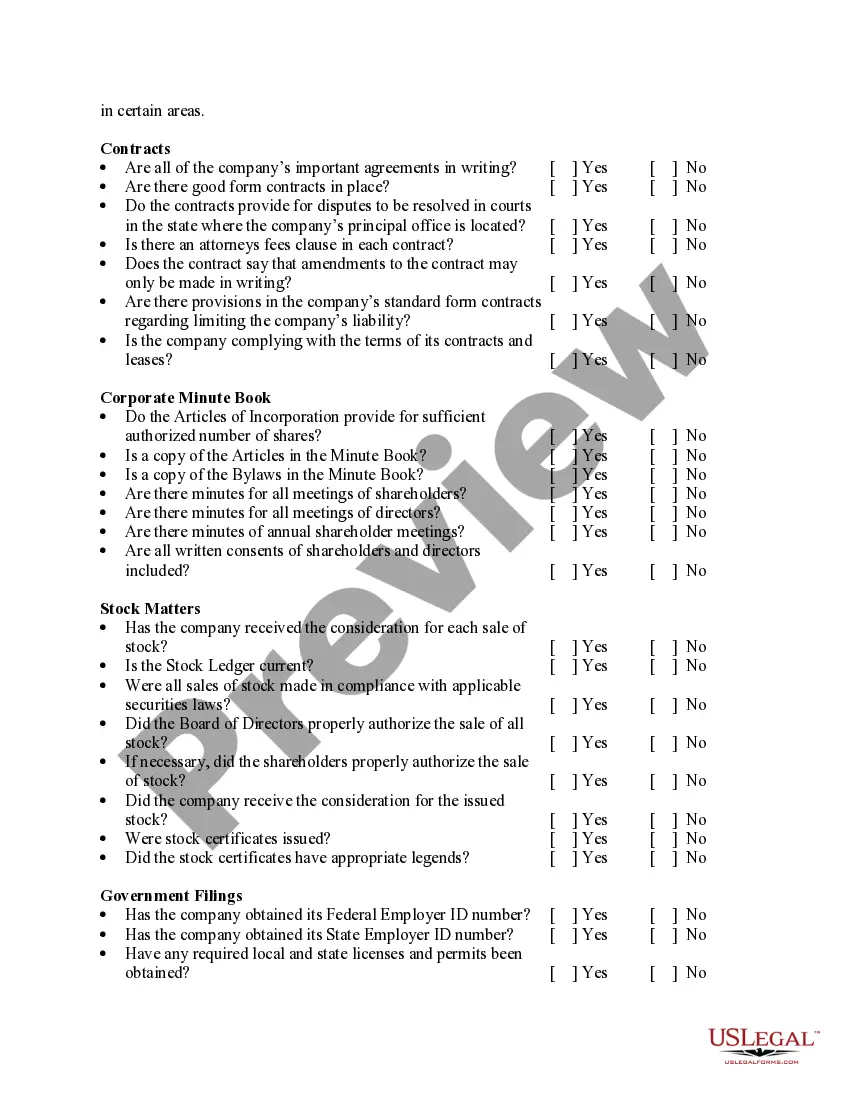
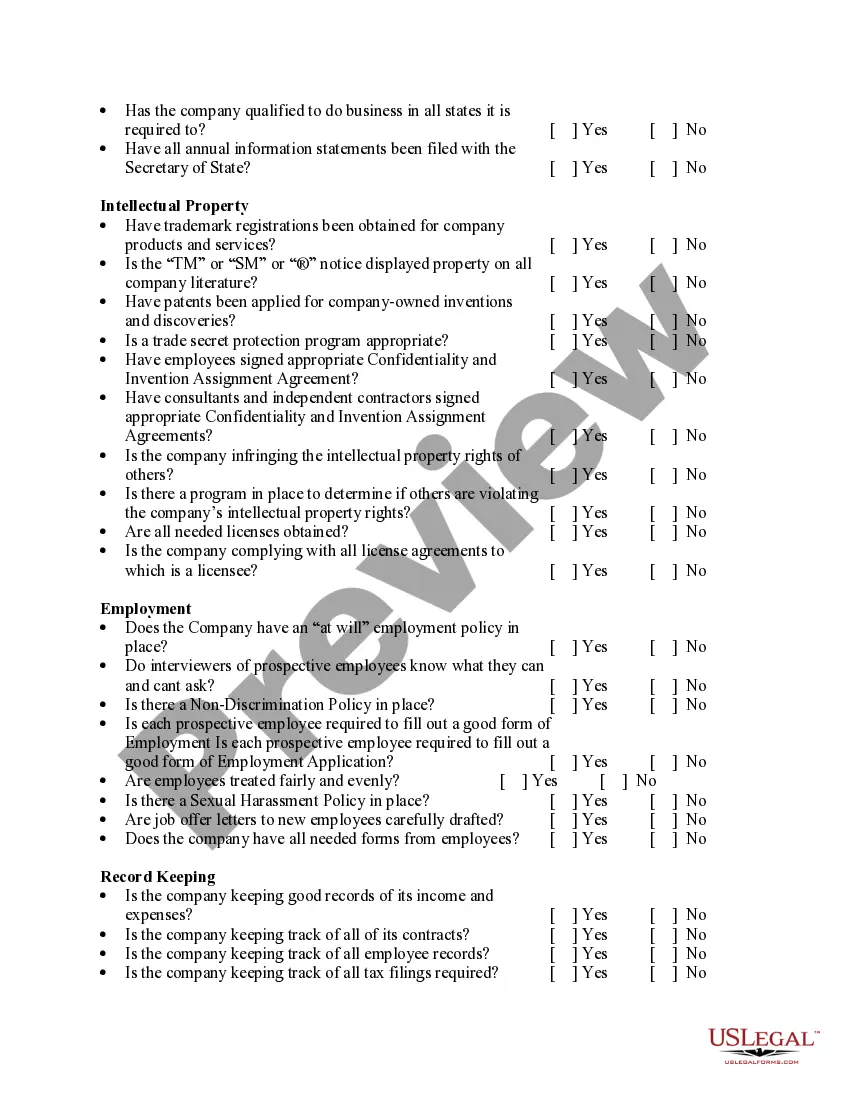
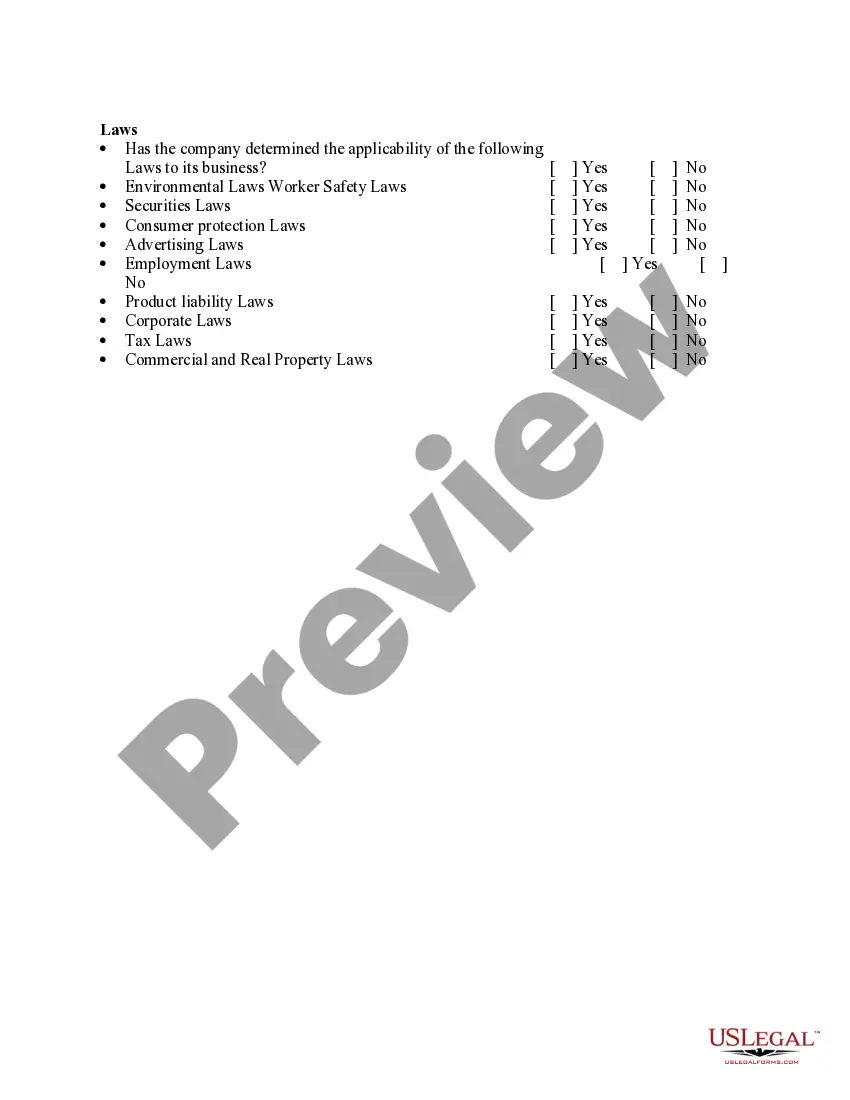
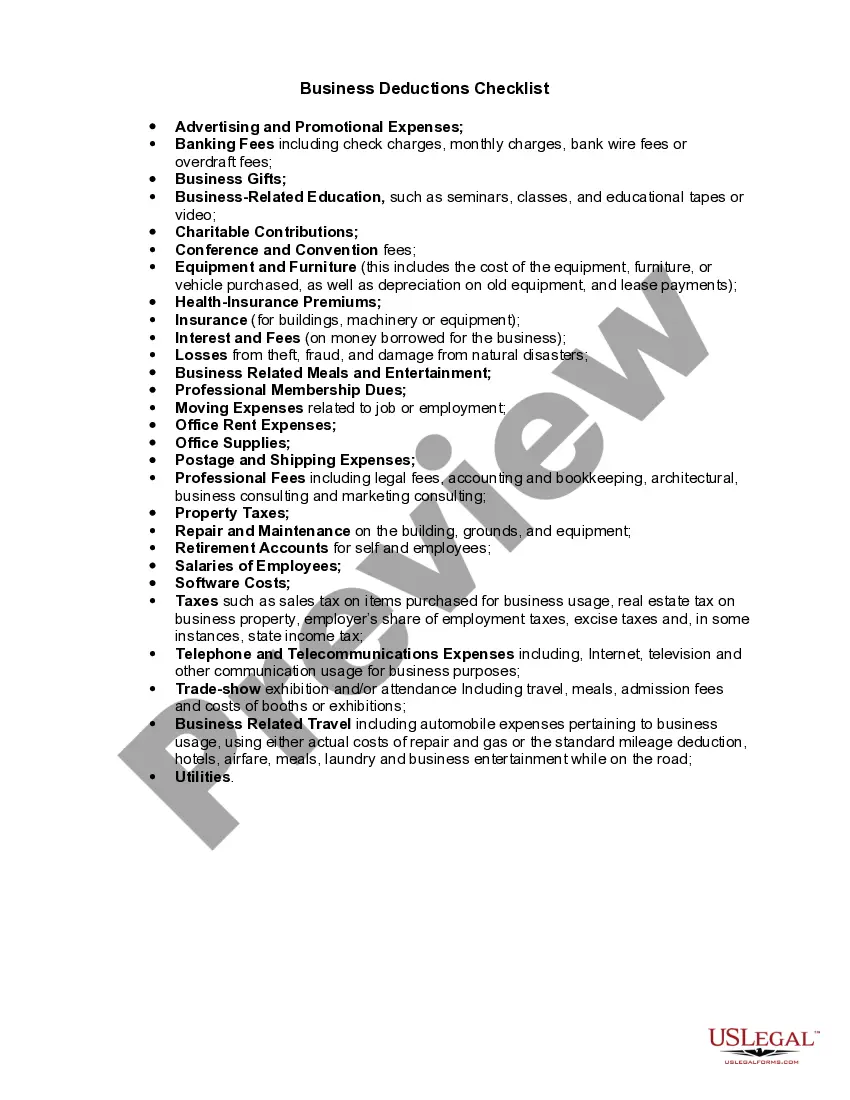
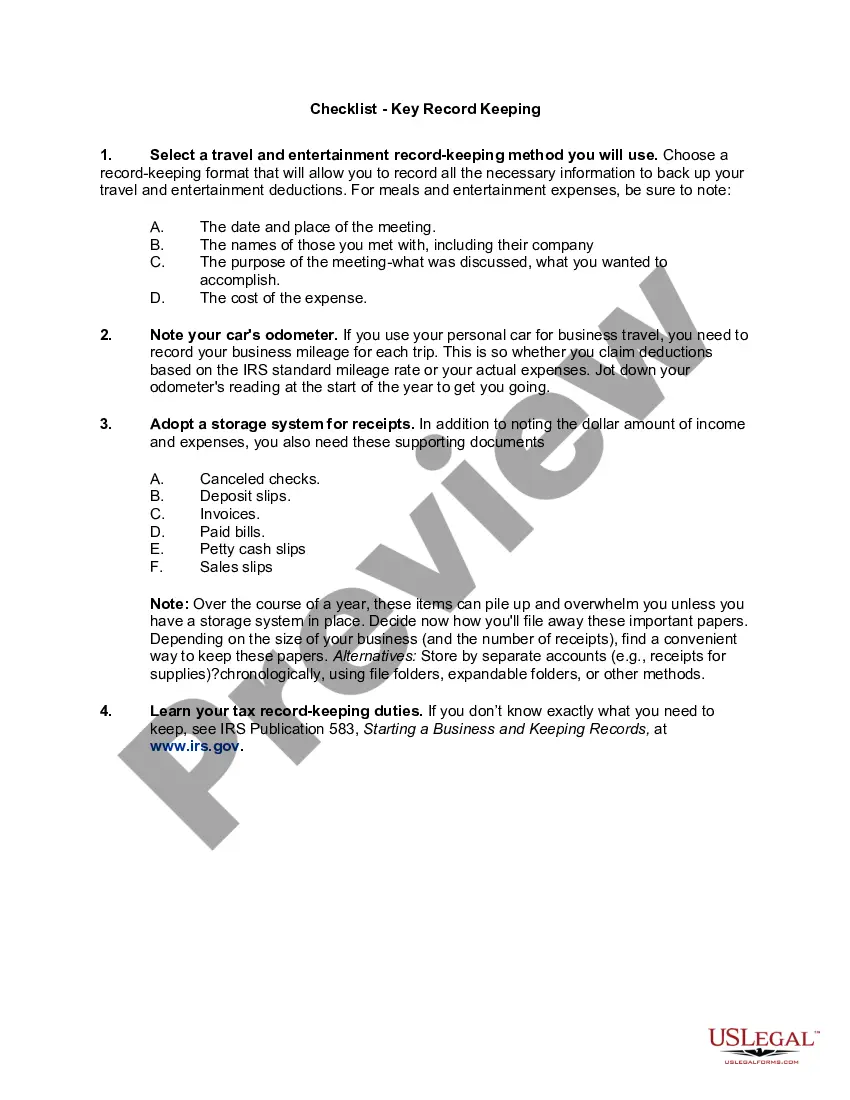
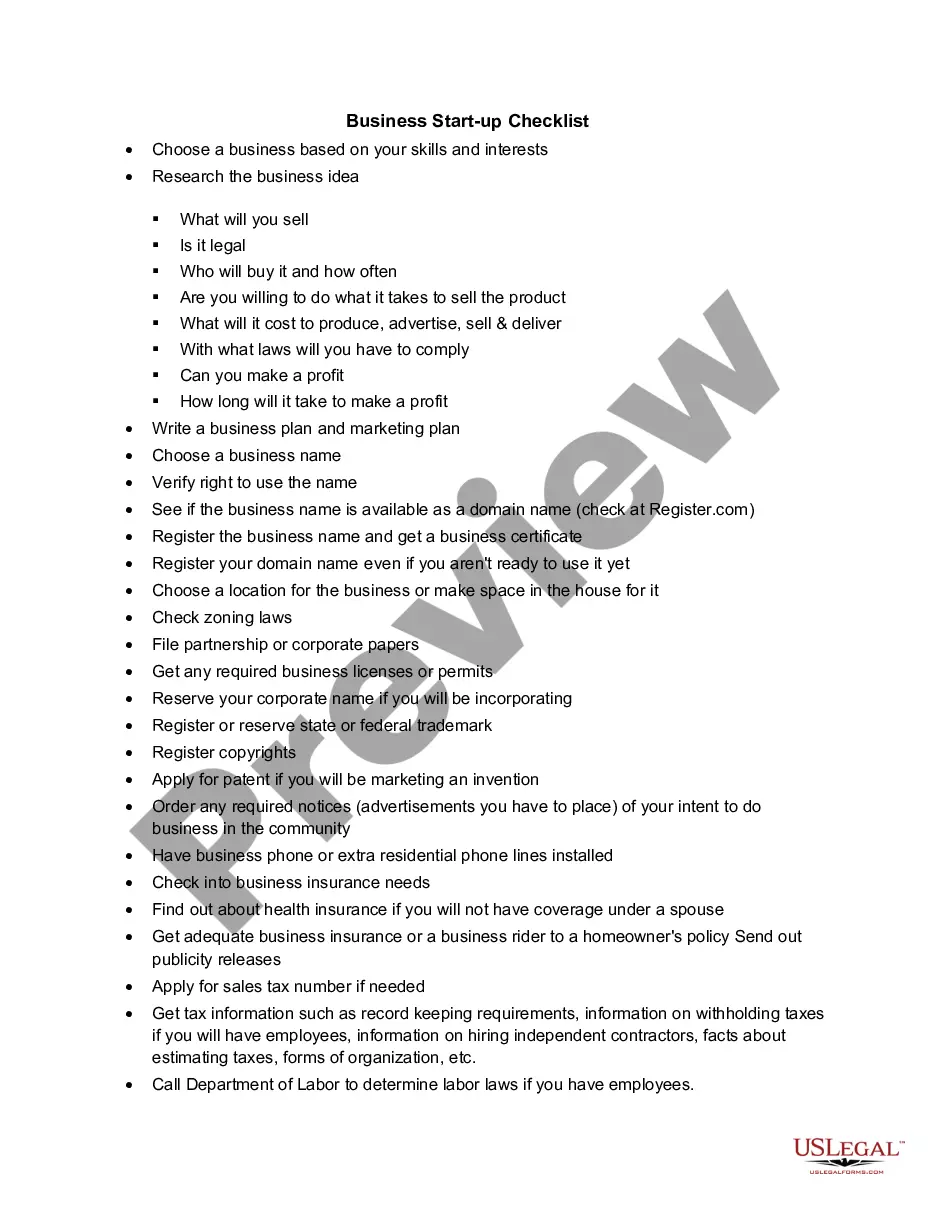
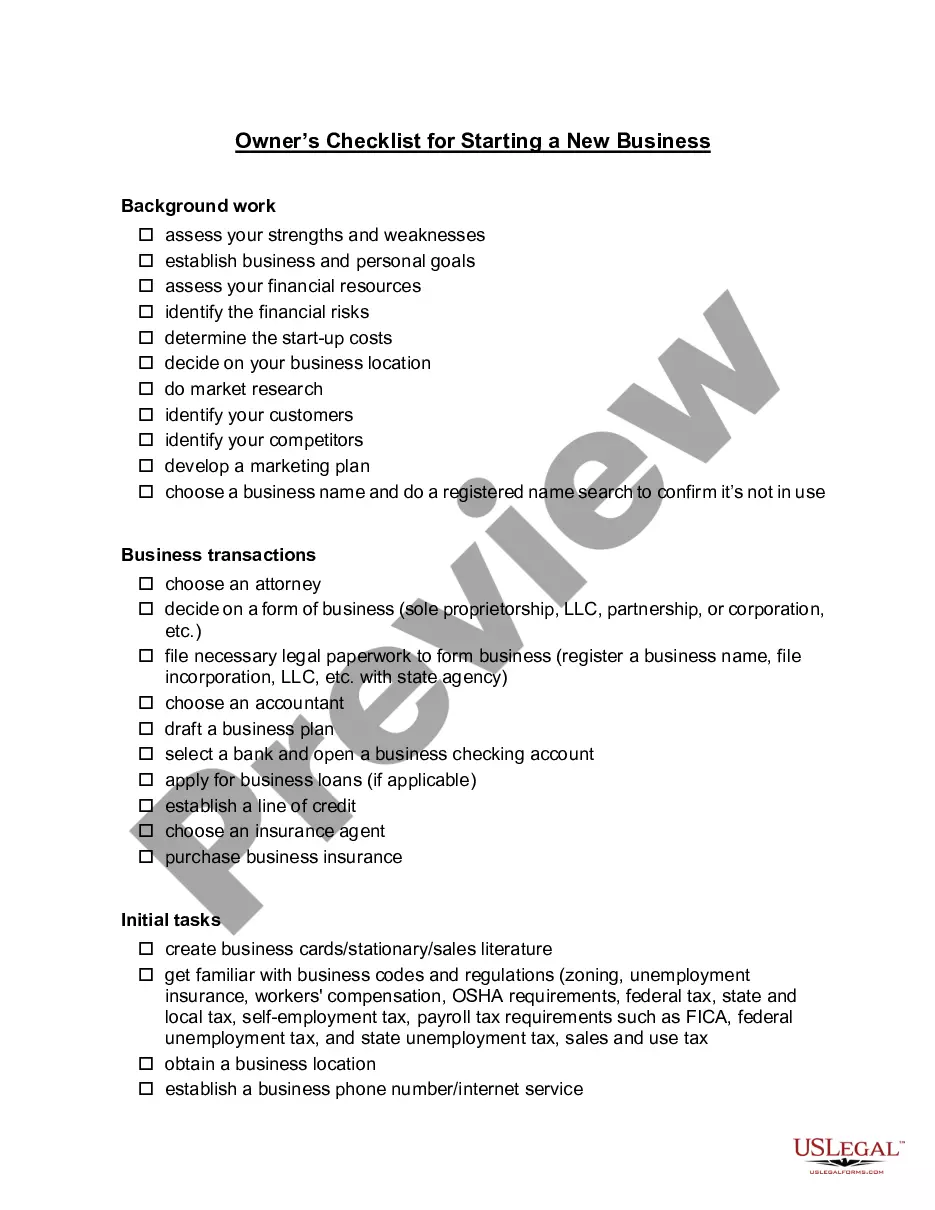
The Checklist - Small Business Legal Compliance Inventory is a comprehensive guide designed to help small business owners ensure they are in full compliance with various legal requirements. This form assists in organizing critical legal obligations, including business structure, licenses, contracts, insurance, and employee considerations. Unlike other legal forms that may focus on specific areas, this checklist provides a holistic view of necessary compliance measures tailored for small businesses.
What’s included in this form
- Choosing the right business structure and understanding its implications.
- Details on required business licenses and permits for operation.
- Guidelines for registering a fictitious business name.
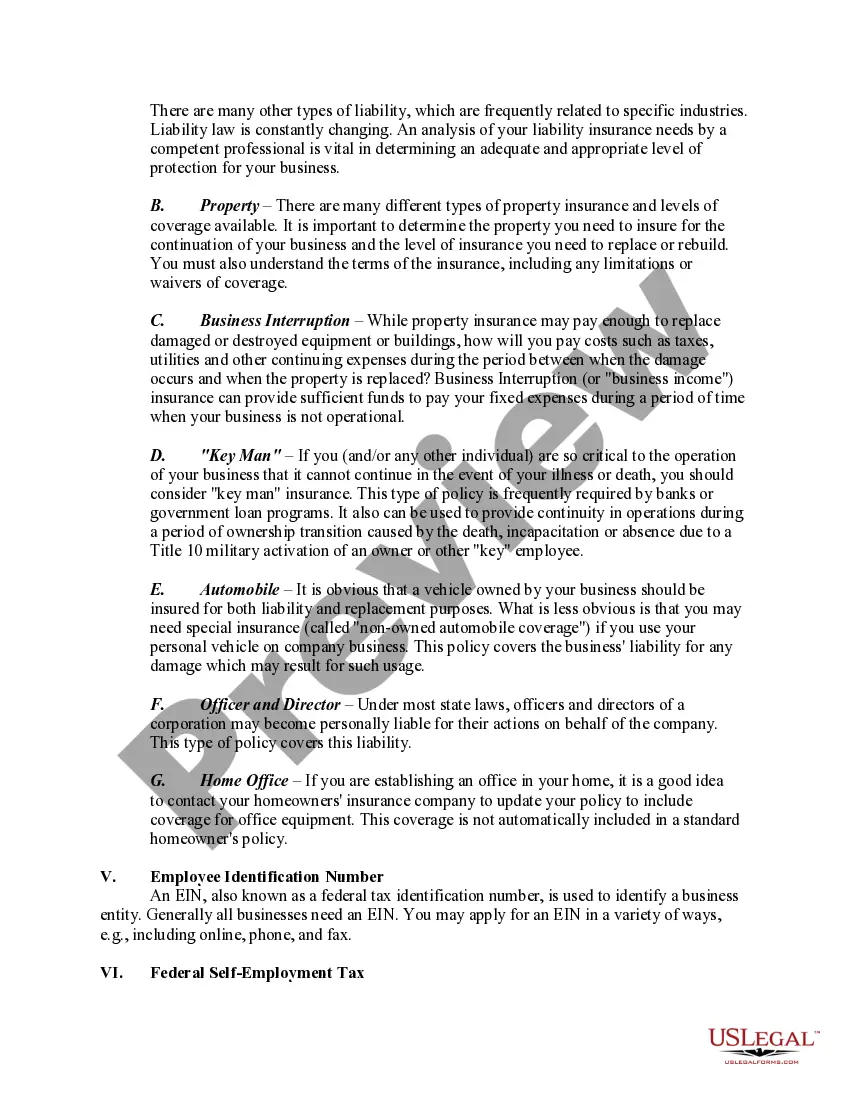
- Information on various types of business insurance needed for protection.
- Requirements for obtaining an Employee Identification Number (EIN).
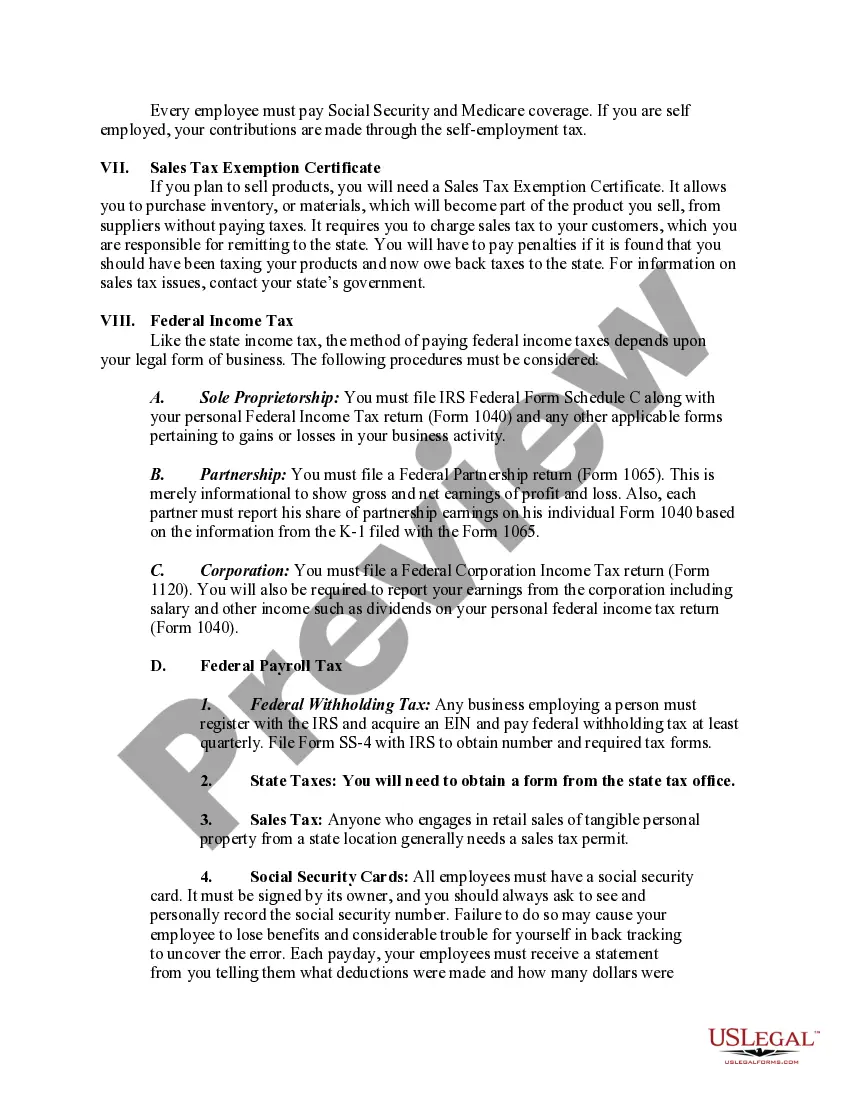
- Considerations for employee management, including payroll taxes and insurance requirements.
When to use this document
This form is essential for new and existing small business owners who want to ensure they are meeting all necessary legal compliance requirements. Use this checklist when starting a new business, expanding operations, hiring employees, or when conducting regular compliance audits to assess your business's adherence to legal standards.
Who needs this form
- Small business owners looking to comply with local, state, and federal regulations.
- Entrepreneurs starting a new business venture.
- Business managers responsible for compliance oversight.
- Individuals considering changes or expansions in their business operations.
Instructions for completing this form
- Identify the appropriate business structure for your company.
- List all required licenses and permits based on your business activities and location.
- Ensure your business name is registered and complies with local naming conventions.
- Select the types of business insurance necessary for your operations.
- Gather the required information to apply for an Employee Identification Number (EIN).
- Review employee-related obligations, including payroll tax filings and insurance coverage.
Does this document require notarization?
This form usually doesn’t need to be notarized. However, local laws or specific transactions may require it. Our online notarization service, powered by Notarize, lets you complete it remotely through a secure video session, available 24/7.
Get your form ready online
Our built-in tools help you complete, sign, share, and store your documents in one place.
Make edits, fill in missing information, and update formatting in US Legal Forms—just like you would in MS Word.
Download a copy, print it, send it by email, or mail it via USPS—whatever works best for your next step.
Sign and collect signatures with our SignNow integration. Send to multiple recipients, set reminders, and more. Go Premium to unlock E-Sign.
If this form requires notarization, complete it online through a secure video call—no need to meet a notary in person or wait for an appointment.
We protect your documents and personal data by following strict security and privacy standards.

Make edits, fill in missing information, and update formatting in US Legal Forms—just like you would in MS Word.

Download a copy, print it, send it by email, or mail it via USPS—whatever works best for your next step.

Sign and collect signatures with our SignNow integration. Send to multiple recipients, set reminders, and more. Go Premium to unlock E-Sign.

If this form requires notarization, complete it online through a secure video call—no need to meet a notary in person or wait for an appointment.

We protect your documents and personal data by following strict security and privacy standards.
Avoid these common issues
- Failing to select the appropriate business structure, which can lead to tax and liability issues.
- Neglecting to obtain necessary licenses and permits prior to operating.
- Not registering a fictitious business name, resulting in potential legal conflicts.
- Overlooking required business insurance, leaving the business vulnerable to risks.
- Inadequately managing employee documentation and compliance, which can lead to penalties.
Why use this form online
- Convenience of accessing the checklist anytime and anywhere, ensuring you stay compliant.
- Editability allows users to customize the form based on specific business needs.
- Reliability of using a legally vetted checklist created by licensed attorneys.
Legal use & context
- This checklist serves as a guide and is not a substitute for professional legal advice.
- Compliance with state and federal laws is essential to avoid legal penalties.
- Regularly updating the checklist ensures continued compliance as regulations change.
What to keep in mind
- The Checklist - Small Business Legal Compliance Inventory is a crucial tool for ensuring legal compliance.
- It covers various aspects of business operations, from structure to employee management.
- Use this checklist regularly to maintain compliance and avoid potential legal issues.
Looking for another form?
Form popularity
FAQ
An example of compliance is when someone is told to go outside and they listen to the order. An example of compliance is when a financial report is prepared that adheres to standard accounting principles. The state of being in accordance with relevant federal or regional authorities and their regulatory requirements.
Improved Operations and Safety Many business rules and regulations can help you more than harm you. Following safety and security rules helps prevent injuries, fires or building evacuations that hurt your profitability. In addition to learning the bare minimum you need to do to meet your legal obligations.
Build a collection of business compliant contracts and policies. Understand Fair Work for business compliance. Read up on Single Touch Payroll (STP) Understand how you need to pay your employees. Store employee data securely: business compliance 101. Talk to a professional. Build a compliant culture.
Helps To Realize A Company's Mission Many compliance rules and regulations help a company to act in ways that are consistent with those stated values. This is because well-designed policies and procedures also tend to address a company's internal and external aspirations and not just external laws and regulations.
In the most basic sense, the benefits of rules and regulations in business are that they protect the company. By protecting employees, you protect the company from lawsuits.It makes for a stable office environment where people feel safe to come to work, to be themselves and to go about their business.
Simply put, regulatory compliance is when a business follows state, federal, and international laws and regulations relevant to its operations.Regulatory compliance (adhering to government laws) differs from other aspects of corporate compliance (such as following internal policies and rules).
To ensure that businesses protect their information, have consistent cohesion departmentally, and follow all governmental regulations, a governance, risk and compliance, (GRC) program is important.There are many risks in the workplace as it relates to ensuring governance, risk management and compliance.
Regulatory compliance describes the goal that organizations aspire to achieve in their efforts to ensure that they are aware of and take steps to comply with relevant laws, policies, and regulations.
Compliance Demands Grow with Your Business. In its business sense, compliance refers to a company meeting its legal obligations, often to protect the health, safety and welfare of others. Reduced Legal Problems. Improved Operations and Safety. Better Public Relations. Higher Employee Retention.