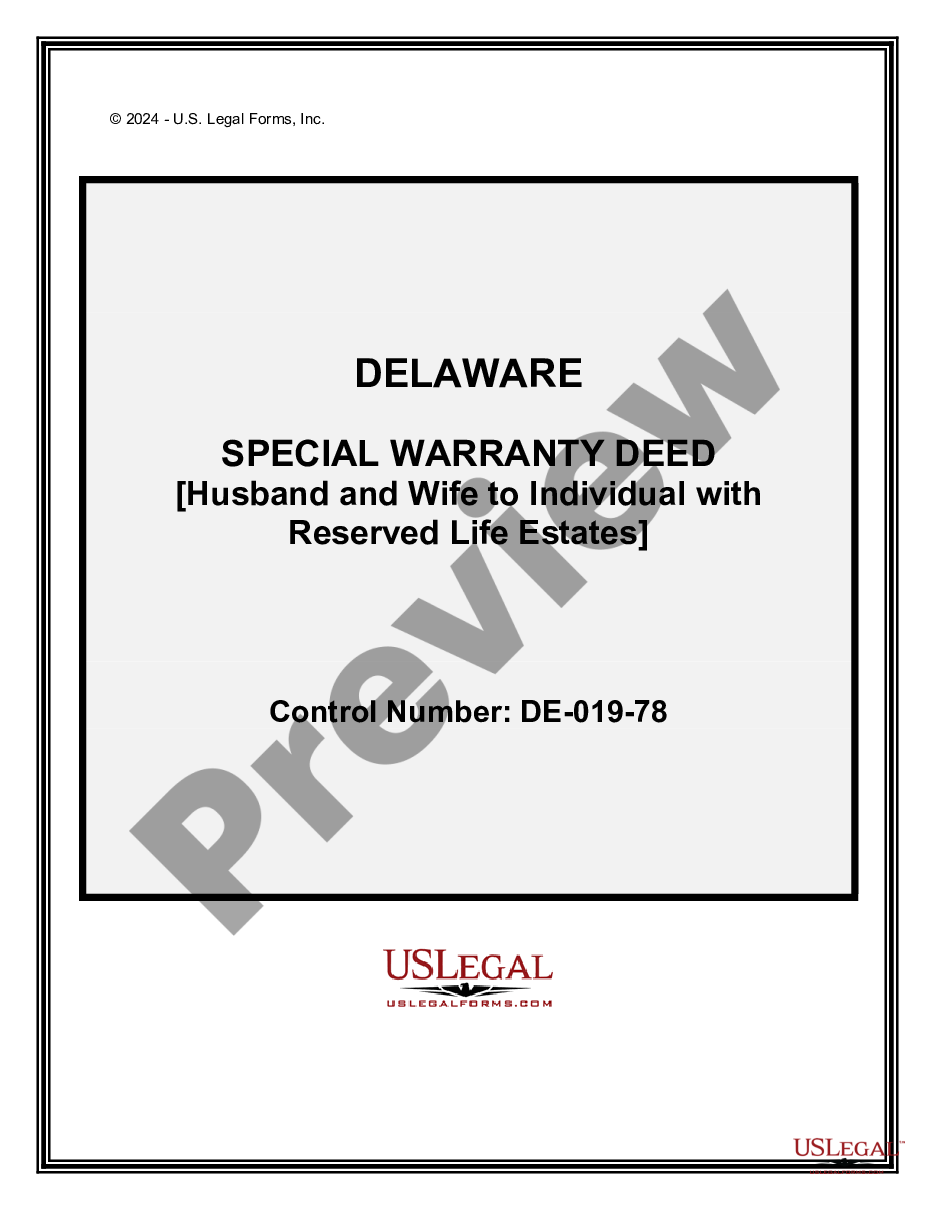
Assignment of a Specified Amount of Wages
About this form
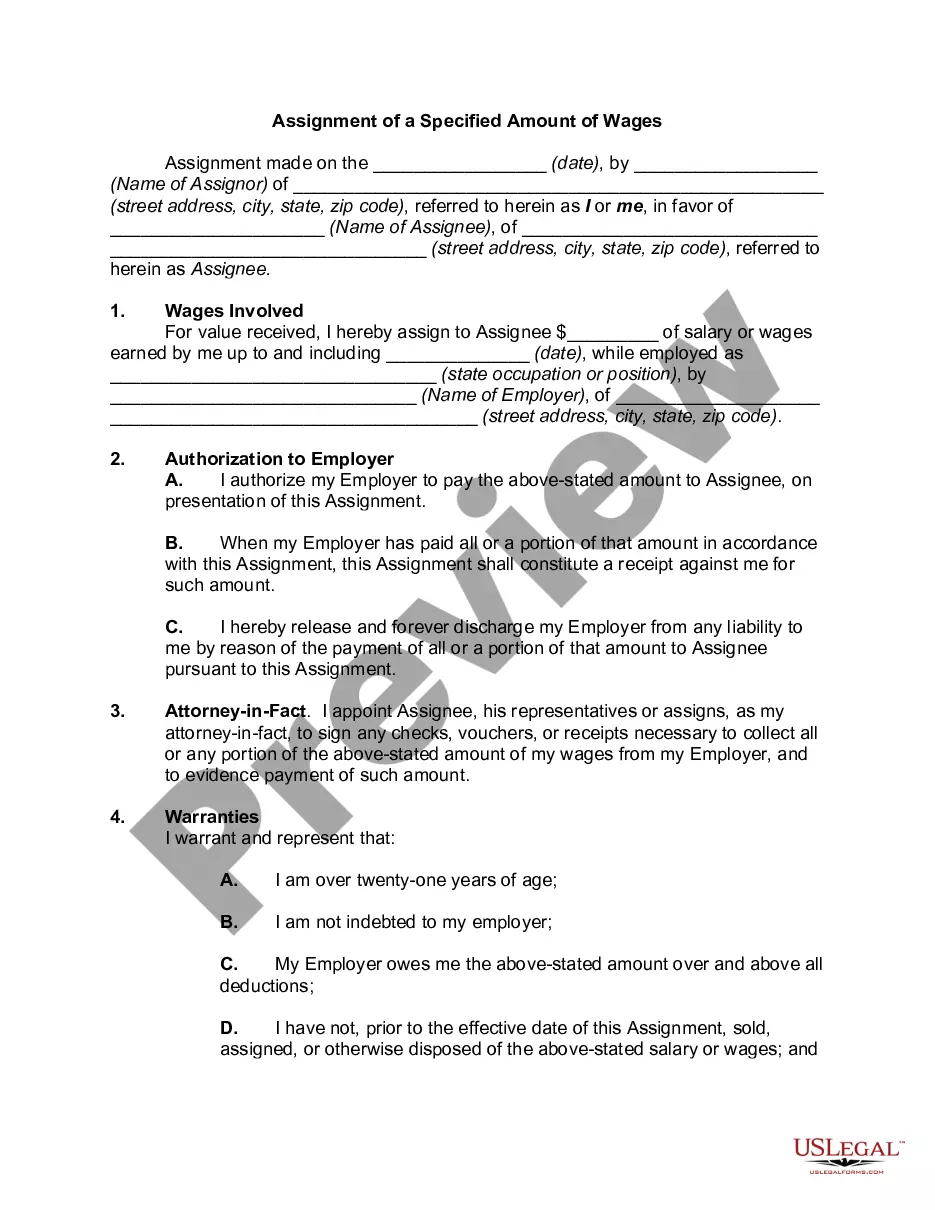
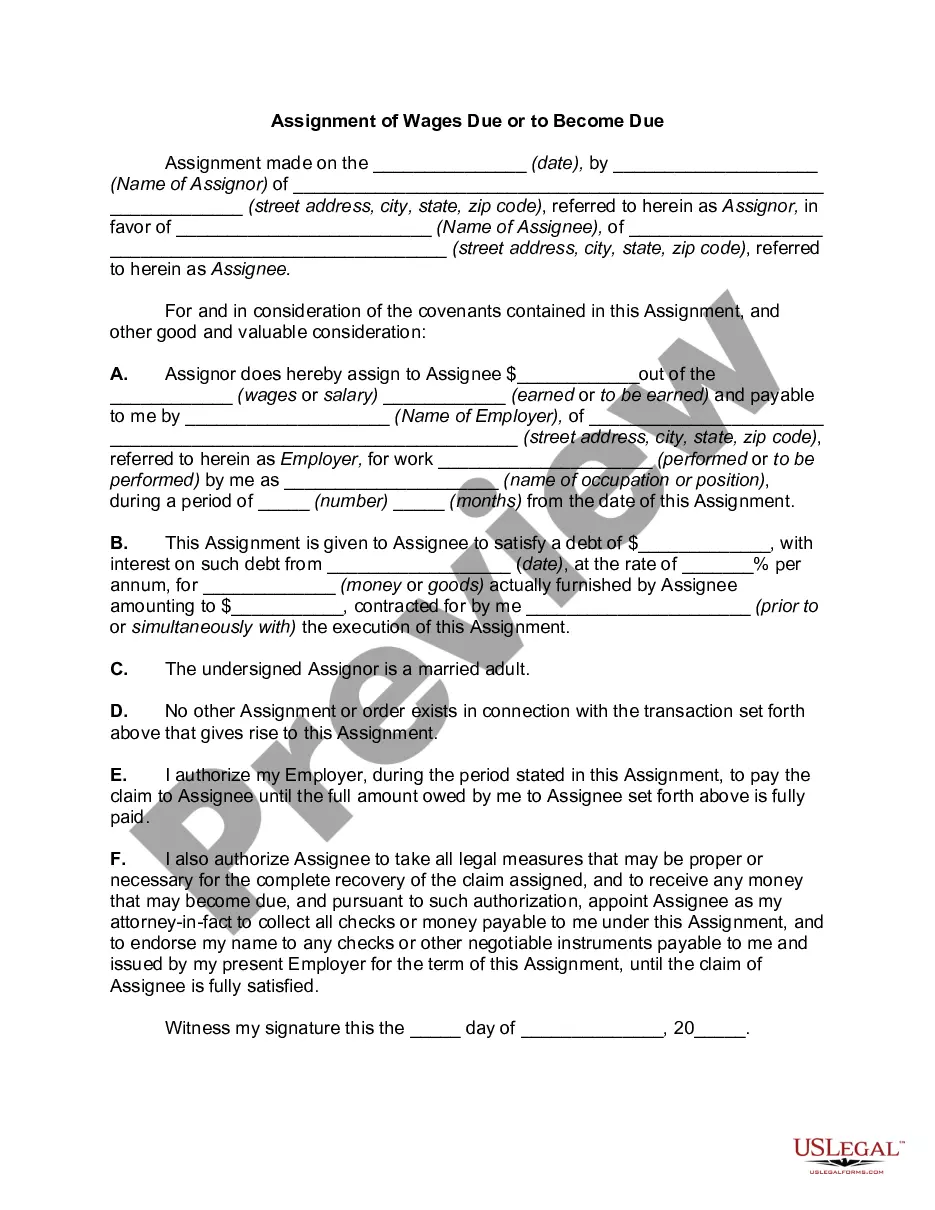
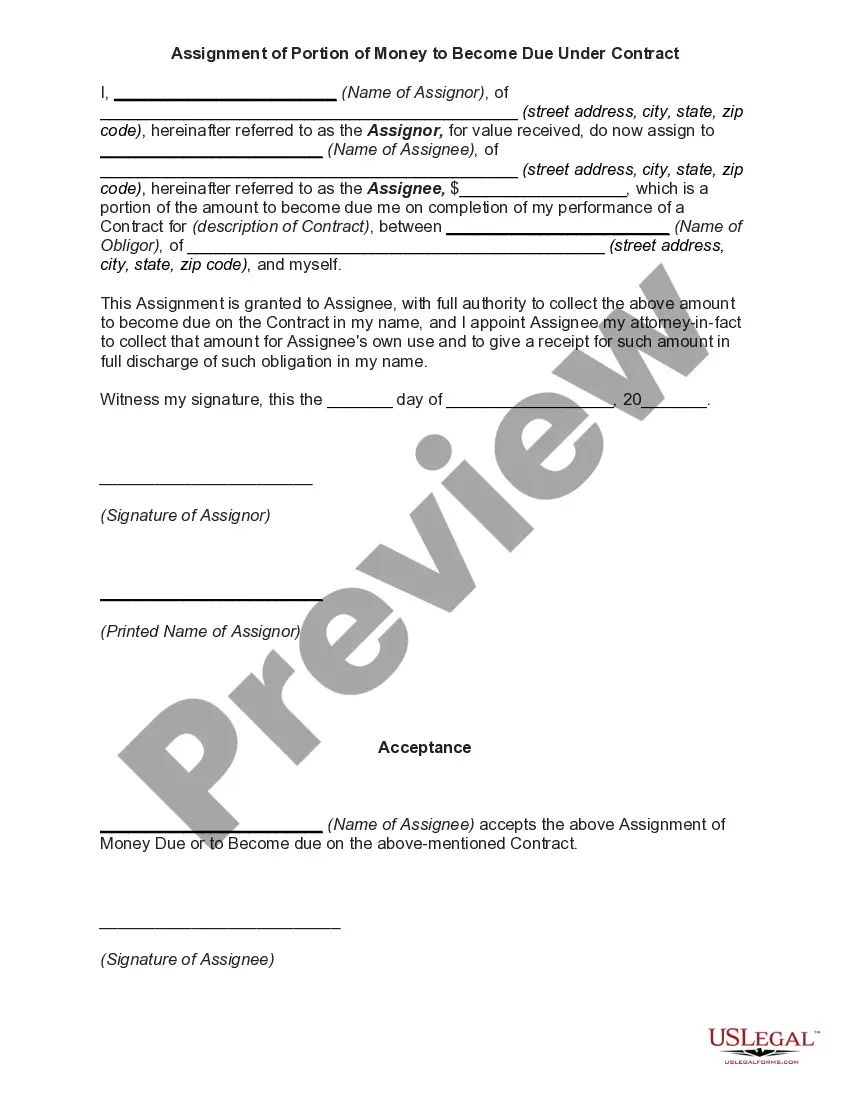
The Assignment of a Specified Amount of Wages is a legal document that allows an employee to assign a portion of their future wages to another person or organization, known as the assignee. This form specifies the amount of wages to be assigned, the employer, and provides legal protections to both parties involved. Unlike other wage assignment forms, this document ensures that all parties are aware of the transaction's details and establishes the terms of payment clearly and legally.
Key components of this form
- Date of assignment
- Name and address of the assignor (employee)
- Name and address of the assignee (individual or organization receiving wages)
- Amount of wages assigned and specific date range for earnings
- Authorization for the employer to pay the assignee
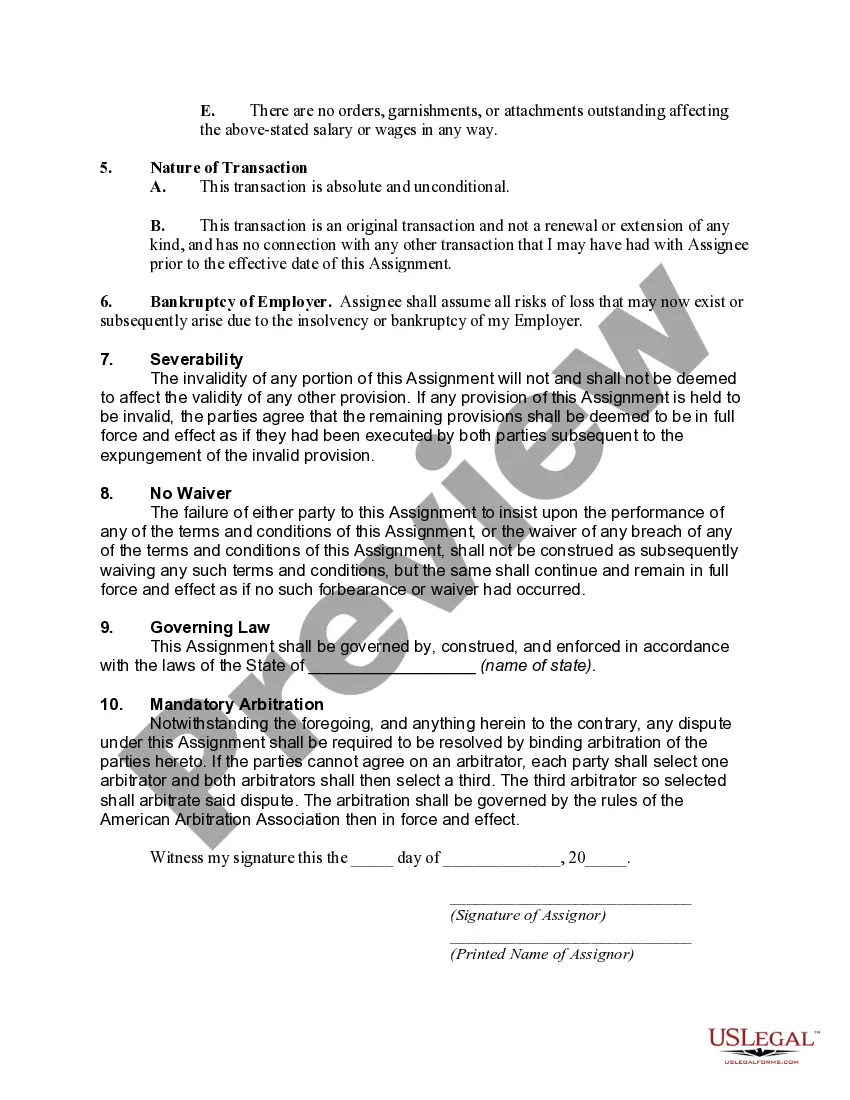
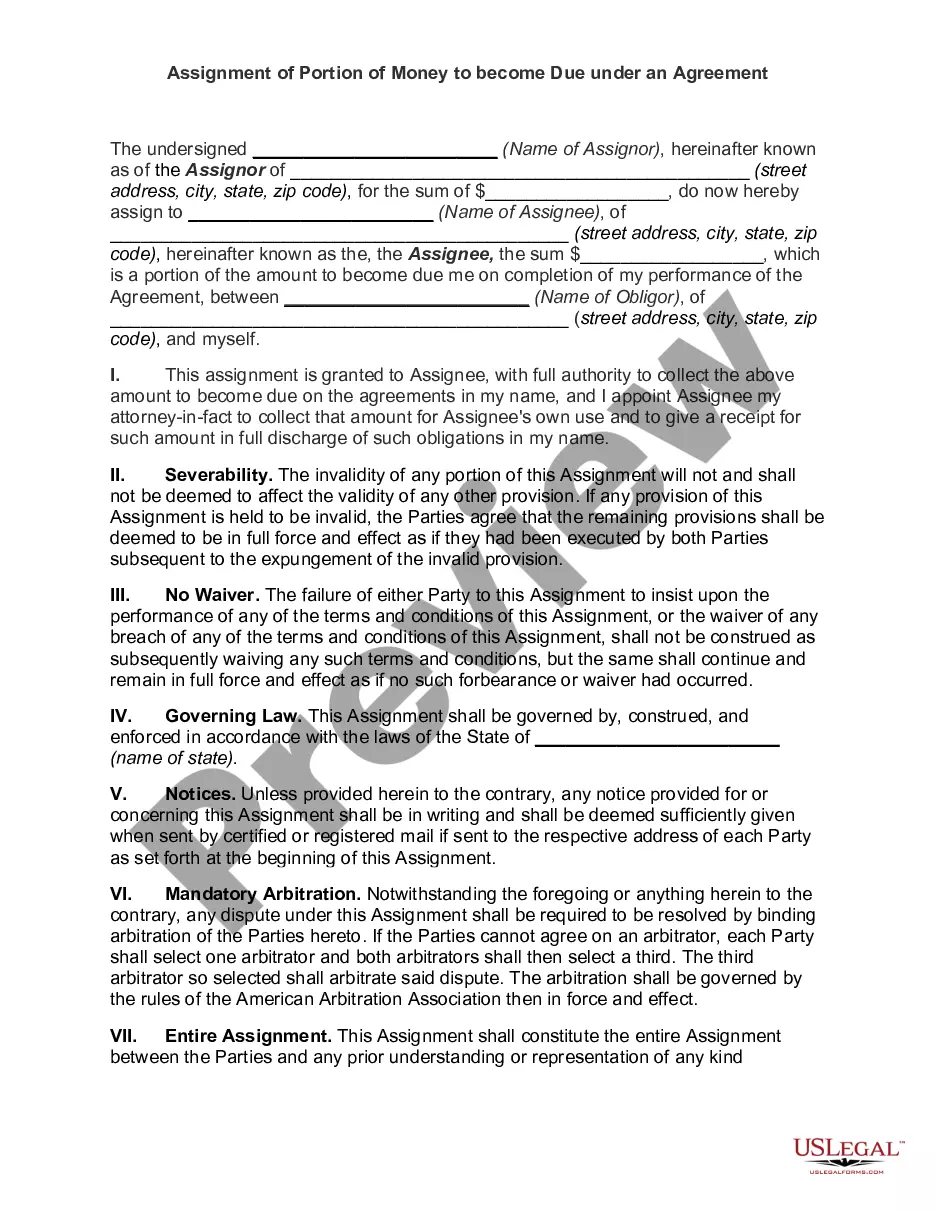
- Warranties and representations made by the assignor
- Governing law and mandatory arbitration clause
Common use cases
This form is typically used when an employee needs to direct a portion of their wages to a third party. Common scenarios include settling debts, making loan repayments, or fulfilling other financial obligations. It is important to ensure that the assignment does not conflict with any existing wage garnishments or legal orders.
Who this form is for
- Employees seeking to assign a portion of their wages to cover a debt or obligation
- Individuals or entities that are the intended recipients of wage assignments
- Employers who are instructed to redirect wage payments
Instructions for completing this form
- Identify and enter the date of the assignment at the top of the form.
- Fill in the name and address details of both the assignor and the assignee.
- Specify the exact amount of wages being assigned and the date range for the wages earned.
- Ensure to include the name and address of the employer.
- Have the assignor sign and date the document to finalize the assignment.
Does this form need to be notarized?
In most cases, this form does not require notarization. However, some jurisdictions or signing circumstances might. US Legal Forms offers online notarization powered by Notarize, accessible 24/7 for a quick, remote process.
Get your form ready online
Our built-in tools help you complete, sign, share, and store your documents in one place.
Make edits, fill in missing information, and update formatting in US Legal Forms—just like you would in MS Word.
Download a copy, print it, send it by email, or mail it via USPS—whatever works best for your next step.
Sign and collect signatures with our SignNow integration. Send to multiple recipients, set reminders, and more. Go Premium to unlock E-Sign.
If this form requires notarization, complete it online through a secure video call—no need to meet a notary in person or wait for an appointment.
We protect your documents and personal data by following strict security and privacy standards.

Make edits, fill in missing information, and update formatting in US Legal Forms—just like you would in MS Word.

Download a copy, print it, send it by email, or mail it via USPS—whatever works best for your next step.

Sign and collect signatures with our SignNow integration. Send to multiple recipients, set reminders, and more. Go Premium to unlock E-Sign.

If this form requires notarization, complete it online through a secure video call—no need to meet a notary in person or wait for an appointment.

We protect your documents and personal data by following strict security and privacy standards.
Avoid these common issues
- Failing to accurately state the amount of wages assigned.
- Not providing correct names and addresses of all parties involved.
- Neglecting to have the assignor sign and date the form.
- Ignoring state-specific requirements or failing to consult relevant laws.
Benefits of using this form online
- Convenient access and 24/7 availability to download the form.
- Editability allows users to personalize the document where necessary.
- Reliable templates drafted by licensed attorneys ensuring legal validity.
Looking for another form?



Form popularity
FAQ
The Assignment of a Specified Amount of Wages is a written agreement that lets an employee earmark a portion of future earnings to a designated recipient. It defines the amount, the employer who will withhold or redirect payments, and the terms of payment, including a date range. Use it when a debt or obligation requires directed wage payments.
Garnishment is typically a court-ordered deduction from wages, while this wage assignment is a voluntary agreement between the employee and the recipient. The form specifies the exact amount and time frame, and it requires the employer’s authorization to pay the assignee, avoiding court involvement unless a separate order applies.
To complete this form, fill in the date of assignment, the assignor’s name and address, the assignee’s name and address, the amount to be paid and the earnings period, and the authorization to your employer to pay the assignee. The document may also include the assignor’s warranties, governing law, and arbitration terms.
The assignee is the person or organization receiving the wages. List full name and address for the assignee, and the employer must be authorized to redirect payments under the form’s terms. The employer will make payments to the assignee as specified, within the defined date range.
The assignor makes warranties and representations in this wage assignment, including authority to enter the assignment and accuracy of the information provided. These warranties help ensure the arrangement is properly executed and enforceable.
This form is distinct from a general wage assignment because it specifies a fixed amount and a defined earnings period, plus an explicit authorization for the employer to pay the assignee. It may also include a governing law and mandatory arbitration clause, features not always present in a generic wage assignment.