Agreement to Conduct Advertising Effectiveness Study
About this form
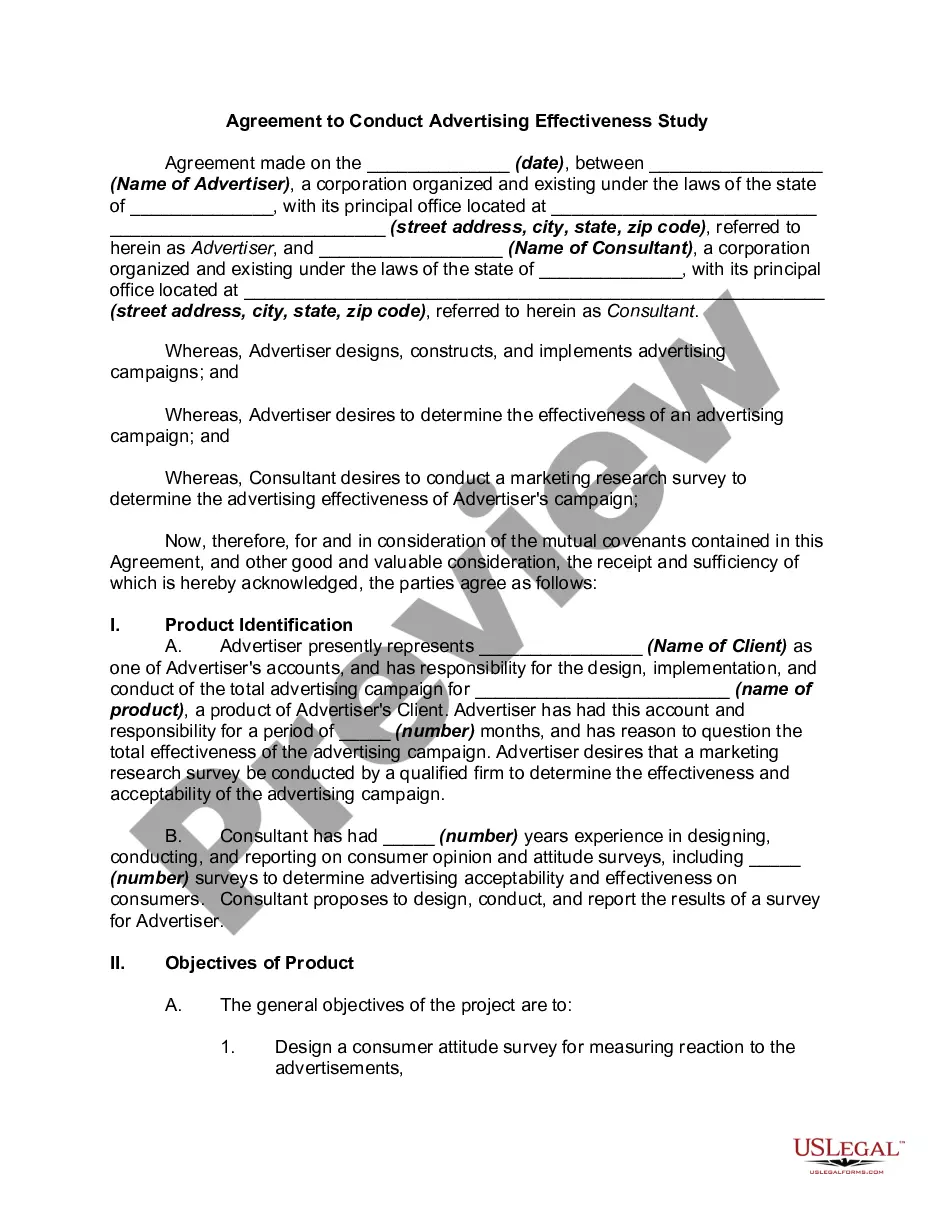
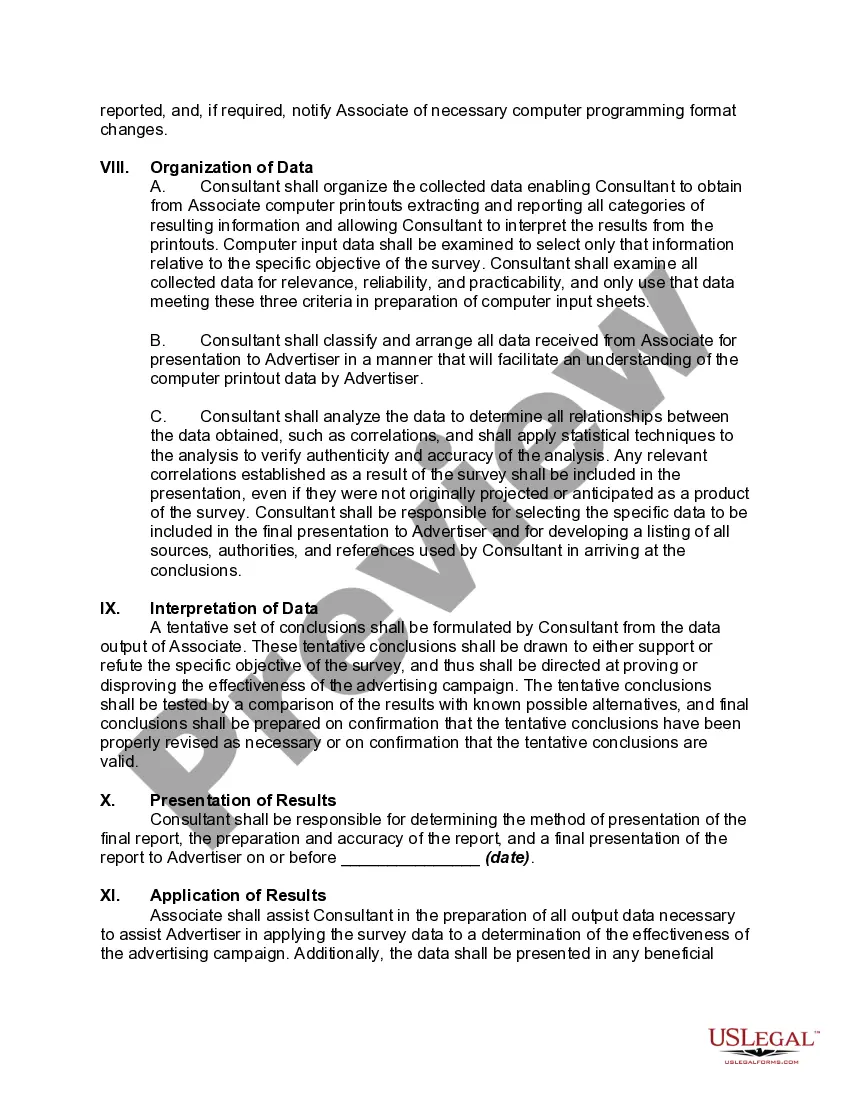
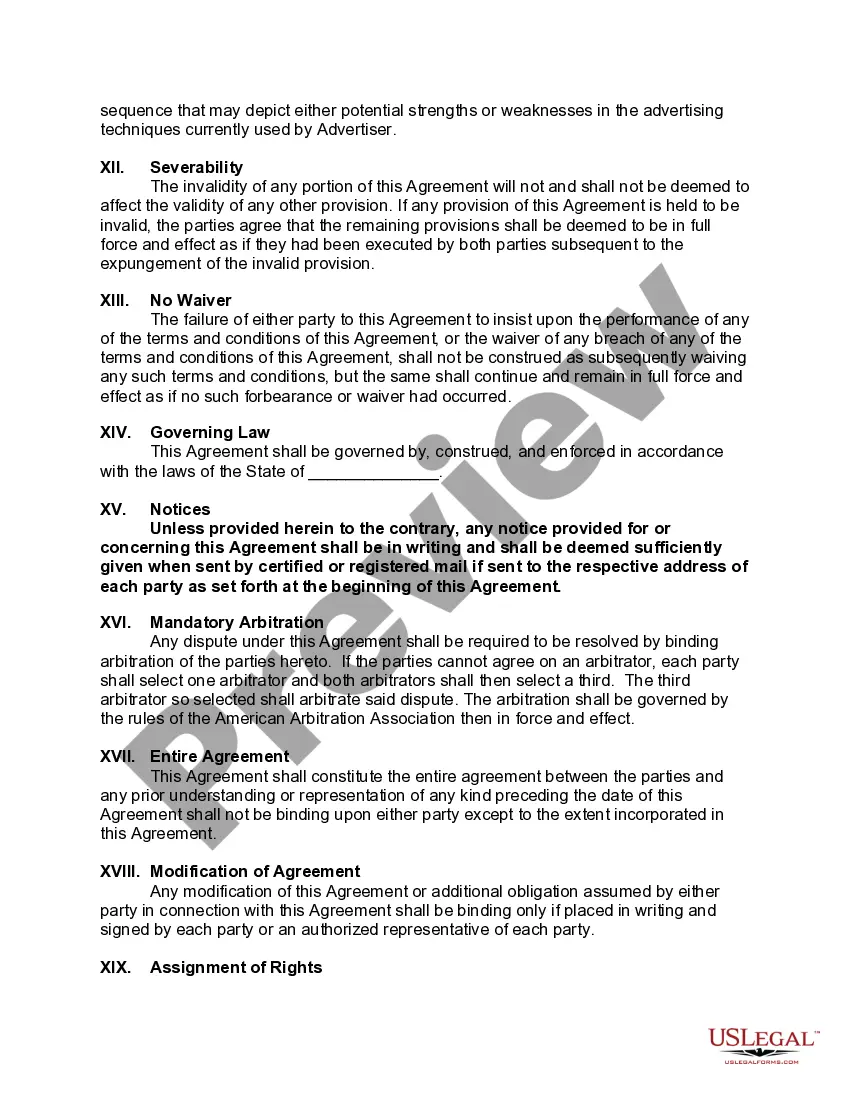
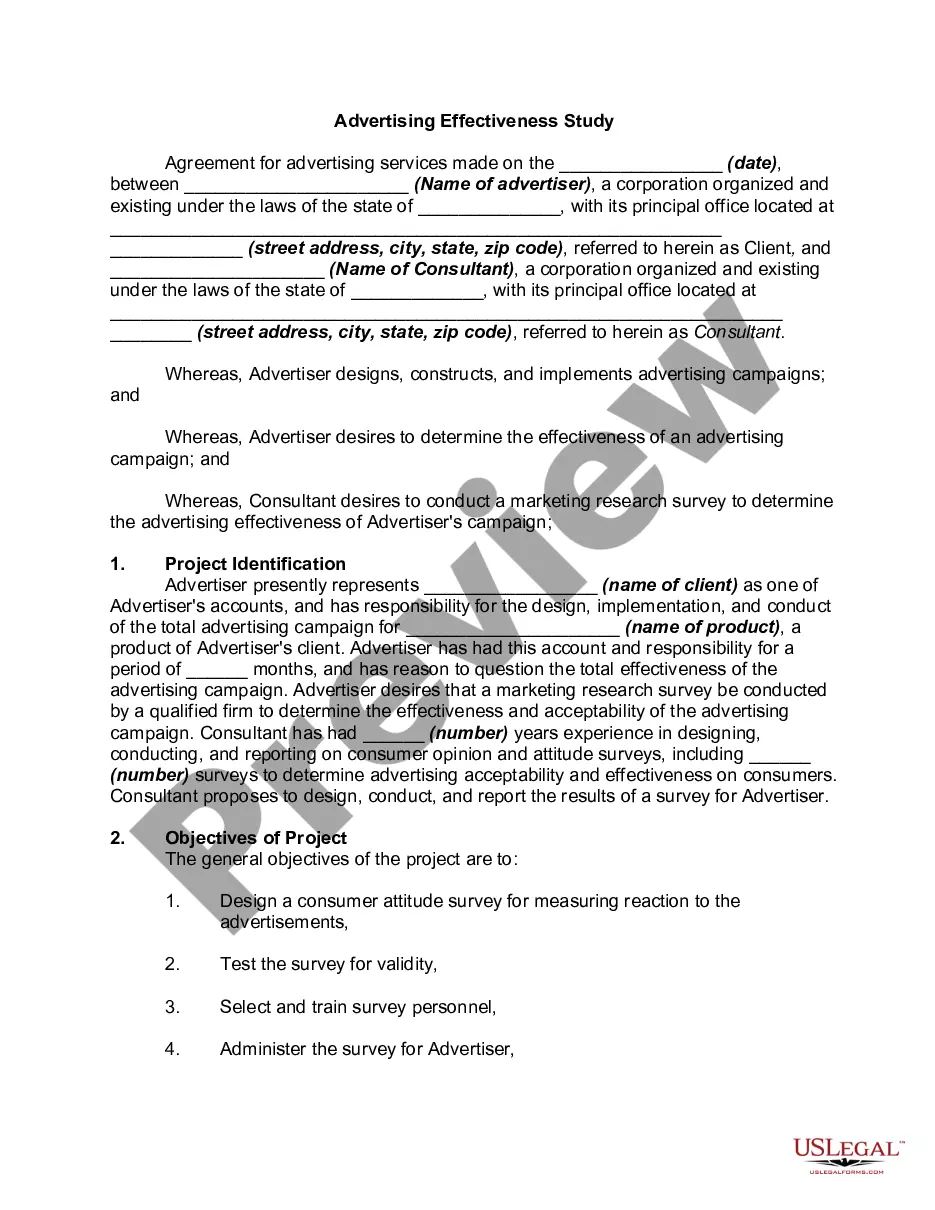
The Agreement to Conduct Advertising Effectiveness Study is a legal document that outlines the terms and conditions between an advertiser and a consultant for conducting a marketing research study. This form specifically addresses the need for evaluating the effectiveness of an advertising campaign, making it distinct from general contracts or agreements in marketing. It serves both parties by clarifying responsibilities, expected outcomes, and payment terms related to the study.
Form components explained
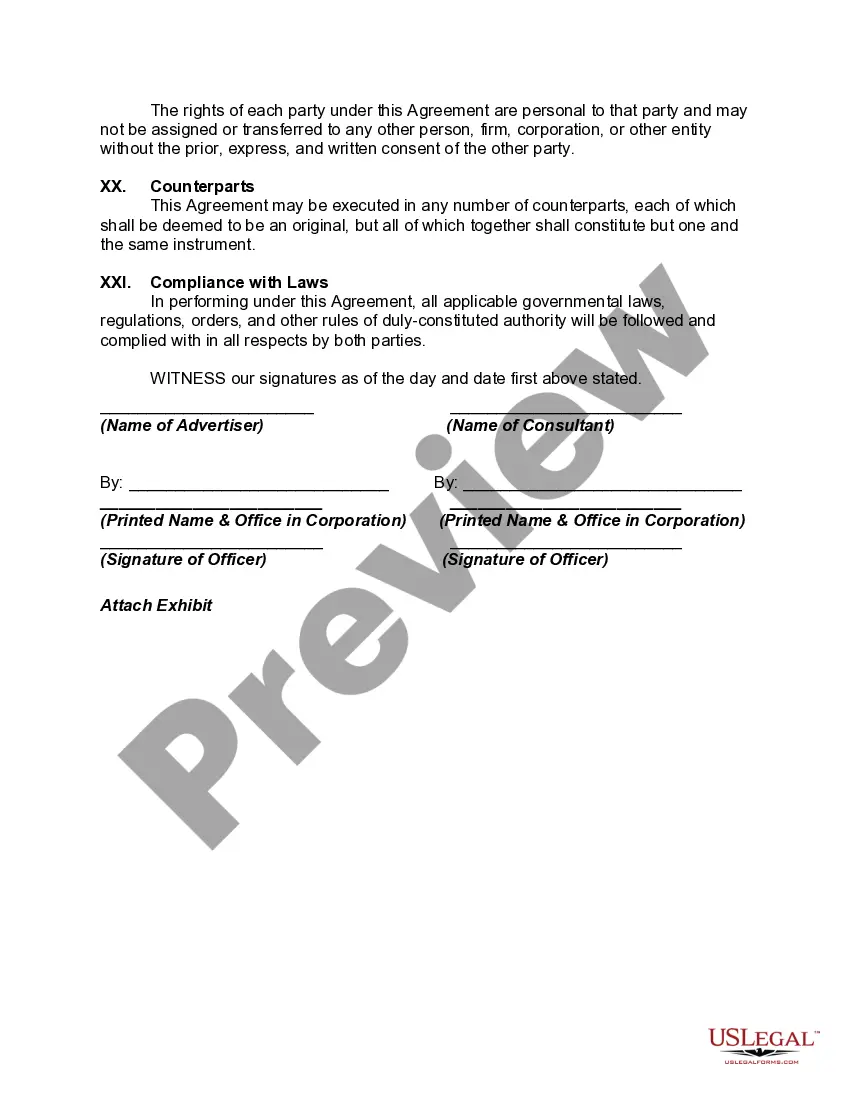
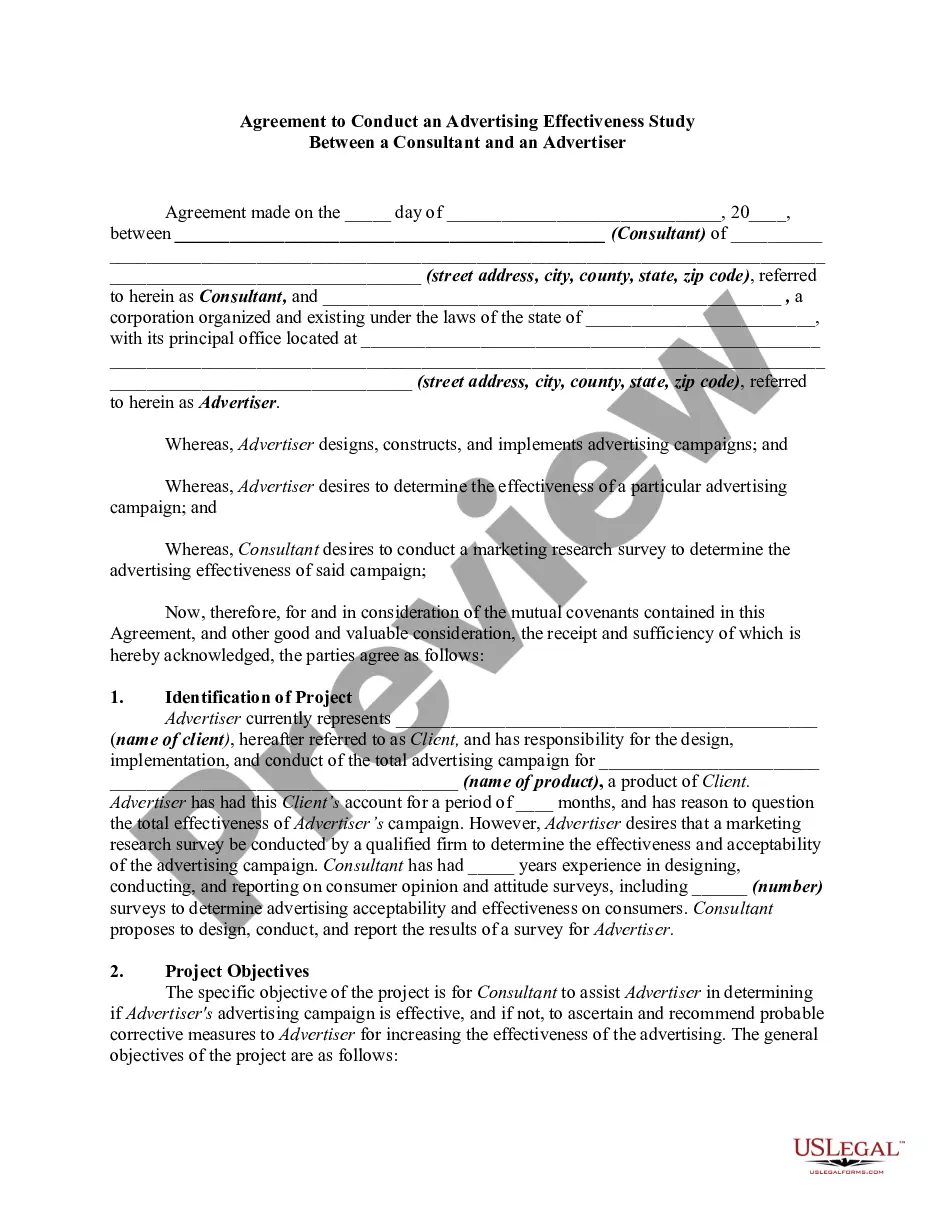
- Identification of the parties involved (Advertiser and Consultant).
- Objectives of the advertising effectiveness study.
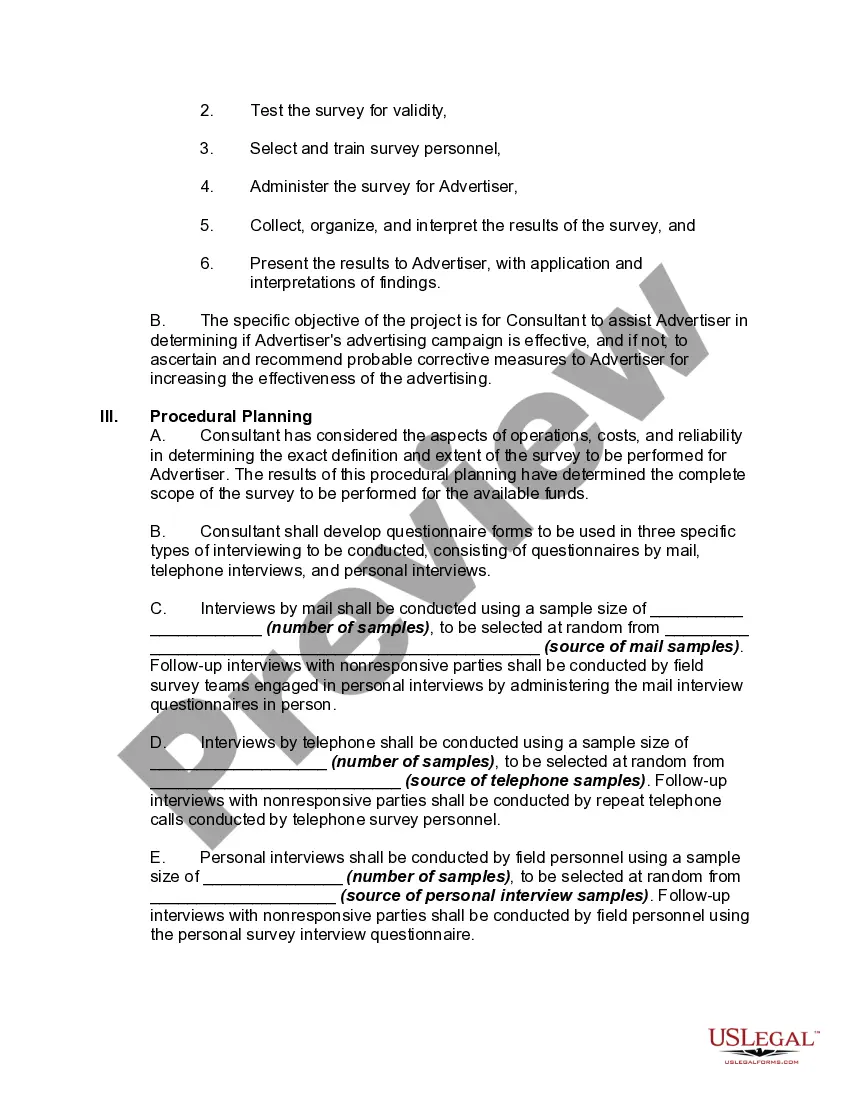
- Detailed procedural planning for conducting the survey.
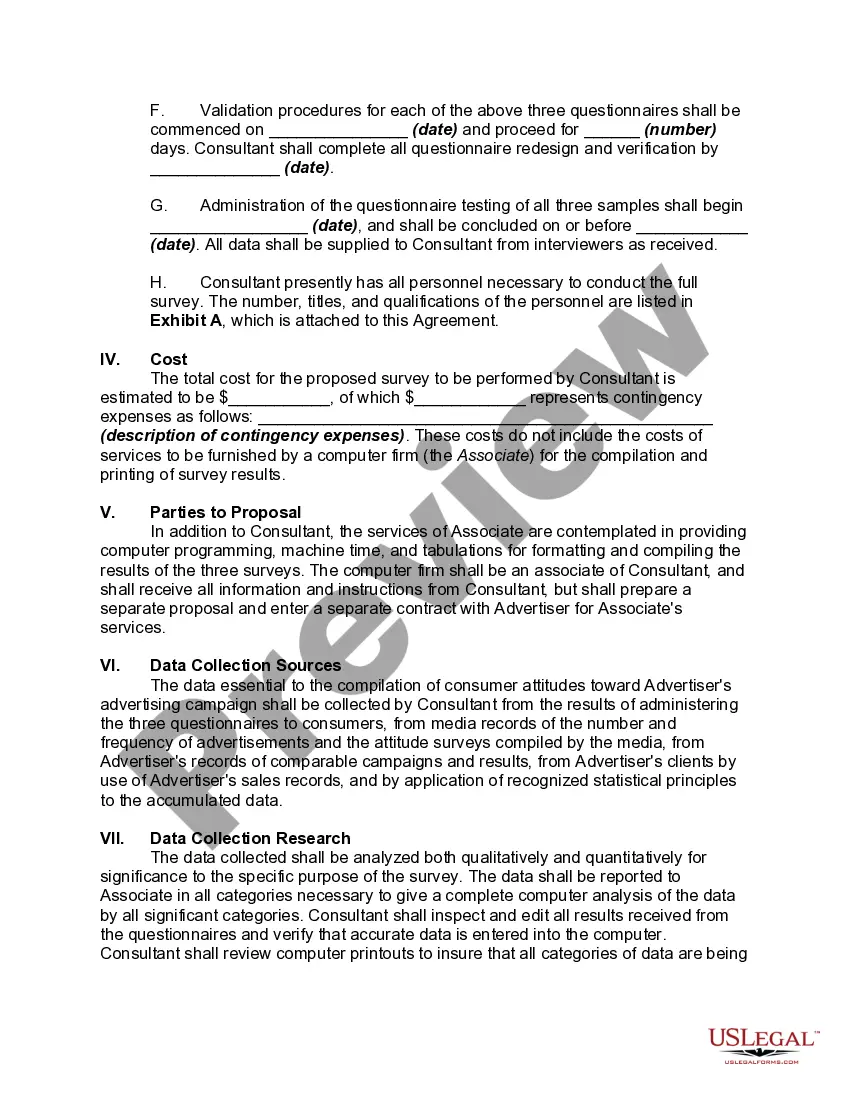
- Cost estimates and budget for the research.
- Data collection sources and methodologies.
- Provisions for presenting results and applying findings.
Common use cases
This agreement is necessary when an advertiser wants to assess the impact of their advertising efforts. It is particularly useful in scenarios such as launching new products, re-evaluating existing marketing strategies, or before making significant investments in marketing. Businesses that are unsure if their advertising is reaching or resonating with their target audience should also consider using this form.
Who should use this form
- Advertisers looking to evaluate their current advertising campaigns.
- Consultants who offer marketing research and need a formal agreement with their clients.
- Marketing firms responsible for designing and implementing advertising strategies.
- Businesses involved in product launches or major advertising shifts.
How to prepare this document
- Identify the names and addresses of both parties (Advertiser and Consultant).
- Specify the date of the agreement and the primary objectives of the study.
- Detail the methodology for the survey, including sampling techniques and types of interviews.
- List the estimated costs and any contingency expenses.
- Enter the dates for various stages of the survey implementation and completion.
Does this document require notarization?
This form does not typically require notarization unless specified by local law. It is advisable to verify with local regulations to ensure compliance before finalizing the agreement.
Get your form ready online
Our built-in tools help you complete, sign, share, and store your documents in one place.
Make edits, fill in missing information, and update formatting in US Legal Forms—just like you would in MS Word.
Download a copy, print it, send it by email, or mail it via USPS—whatever works best for your next step.
Sign and collect signatures with our SignNow integration. Send to multiple recipients, set reminders, and more. Go Premium to unlock E-Sign.
If this form requires notarization, complete it online through a secure video call—no need to meet a notary in person or wait for an appointment.
We protect your documents and personal data by following strict security and privacy standards.

Make edits, fill in missing information, and update formatting in US Legal Forms—just like you would in MS Word.

Download a copy, print it, send it by email, or mail it via USPS—whatever works best for your next step.

Sign and collect signatures with our SignNow integration. Send to multiple recipients, set reminders, and more. Go Premium to unlock E-Sign.

If this form requires notarization, complete it online through a secure video call—no need to meet a notary in person or wait for an appointment.

We protect your documents and personal data by following strict security and privacy standards.
Typical mistakes to avoid
- Failing to clearly define the objectives of the advertising study, which can lead to ambiguous results.
- Not including all necessary parties in the agreement, leading to potential disputes.
- Overlooking budgetary constraints or failing to outline expenses thoroughly.
- Neglecting to specify the timeline for completion, which can create confusion about project deadlines.
Why complete this form online
- Accessibility of the form helps streamline the agreement process for both parties.
- Customizable fields ensure that it meets specific business needs efficiently.
- Easy download and print options allow for immediate use without delays.
- Reliability of templates drafted by licensed attorneys ensures legal compliance.
- The agreement is enforceable as long as both parties adhere to its terms.
- It is essential to comply with state-specific regulations regarding advertising practices.
- Failing to follow the outlined procedures may affect the validity of the results and any subsequent actions taken.
Quick recap
- The Agreement to Conduct Advertising Effectiveness Study is essential for evaluating advertising impact.
- Clear objectives and budgeting are crucial components to include in the agreement.
- Online access to this form speeds up the process and ensures thorough preparation.
- Understanding state-specific requirements can enhance compliance and effectiveness.
Looking for another form?
Form popularity
FAQ
We believe that a good ad is one that is written and designed to emotionally connect with its target audience. Once connected, your ad's rhetoric strongly persuades its consumer to want the product or service. The individual recognizes a need for it and feels a sense of urgency until the purchase is made.
Put together a strategy. Write a summary. Make your data available. Post on social media. Start a blog. Link out from your email signature and profiles. Use your Research Office. Register for an ORCID ID.
The four standard rules for creating good advertising are summarized as follows: 1. Attract attention develop a good headline 2. Gain interest make people want to read, watch, or listen 3. Build desire help the customer want your product 4.
Product Appeal Research. ADVERTISEMENTS: Advertising Message (Copy Testing) Research. Advertising Media Selection Research. Advertising Effectiveness Research.
Keep your ads relevant. Create multiple ads in an ad group. Describe what sets your product apart. Use your customers' language. Address your customers directly. Pre-qualify your visitors. Be specific. Include a call to action.
Determine your target audience. Knowing who you want to see your product is the first step in creating an advertising strategy. Discover media habits of target customers. Check in on the competition. Decide on an advertising medium source. Schedule your advertisements appropriately.
The SWOT analysis of the product and the company. Set up your main objectives. Research the market, the competition, your audience. Identify your target audience. Select your channels. Brainstorm for fresh ideas. The design process. Deliver your advertisements.
Emotional Appeal. Promotional Advertising. Bandwagon Advertising. Facts and Statistics. Unfinished Ads. Weasel Words. Endorsements. Complementing the Customers.
Pre-test and Post Test: Pre-test implies testing advertising message before it is sent to specific media. Communication and Sales Effect Test: Communication test measures communicability (ability to communicate) of the message. Laboratory and Field Test: Experimental and Survey Test: Message and Media Effect Test: