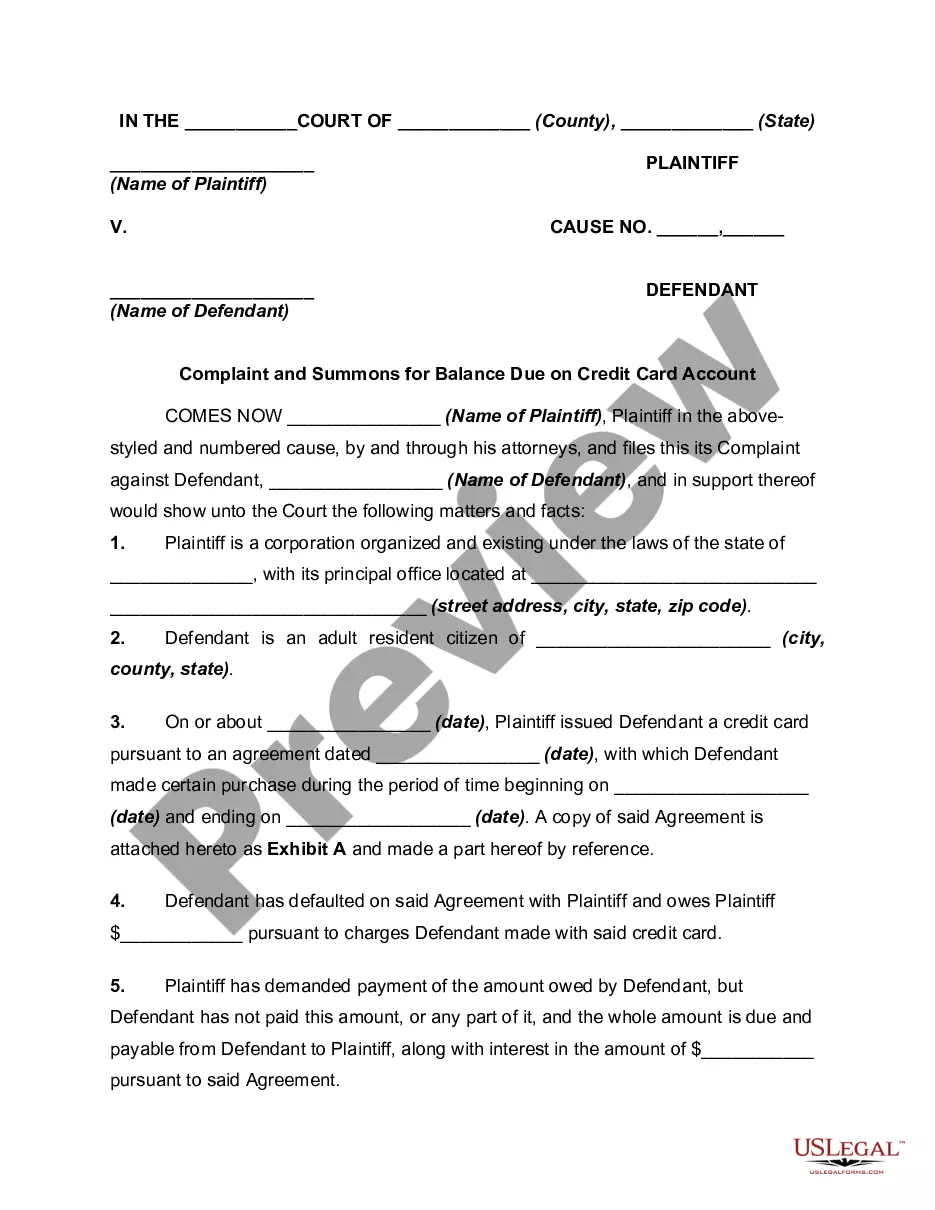
Complaint and Summons for Balance Due on Credit Card Account
Understanding this form
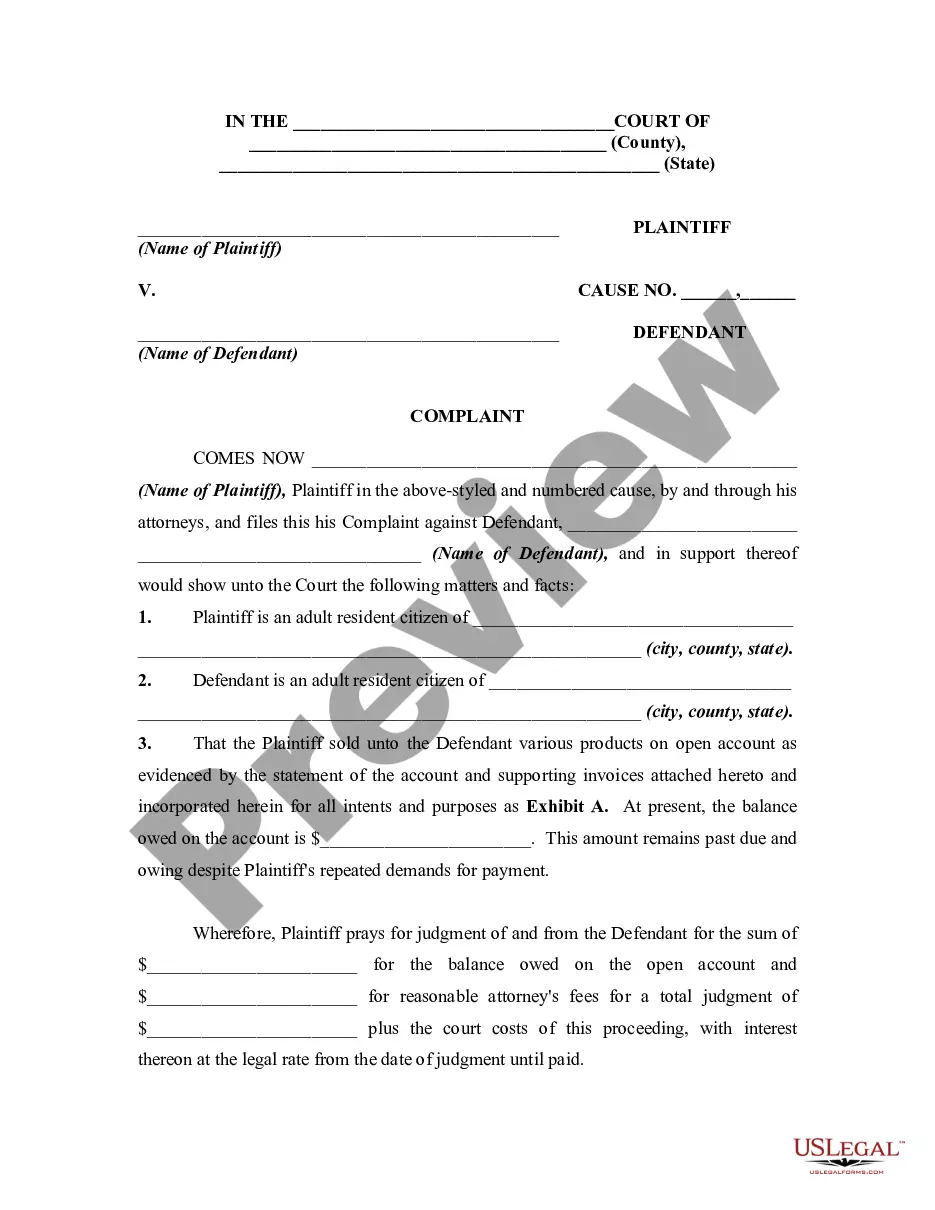
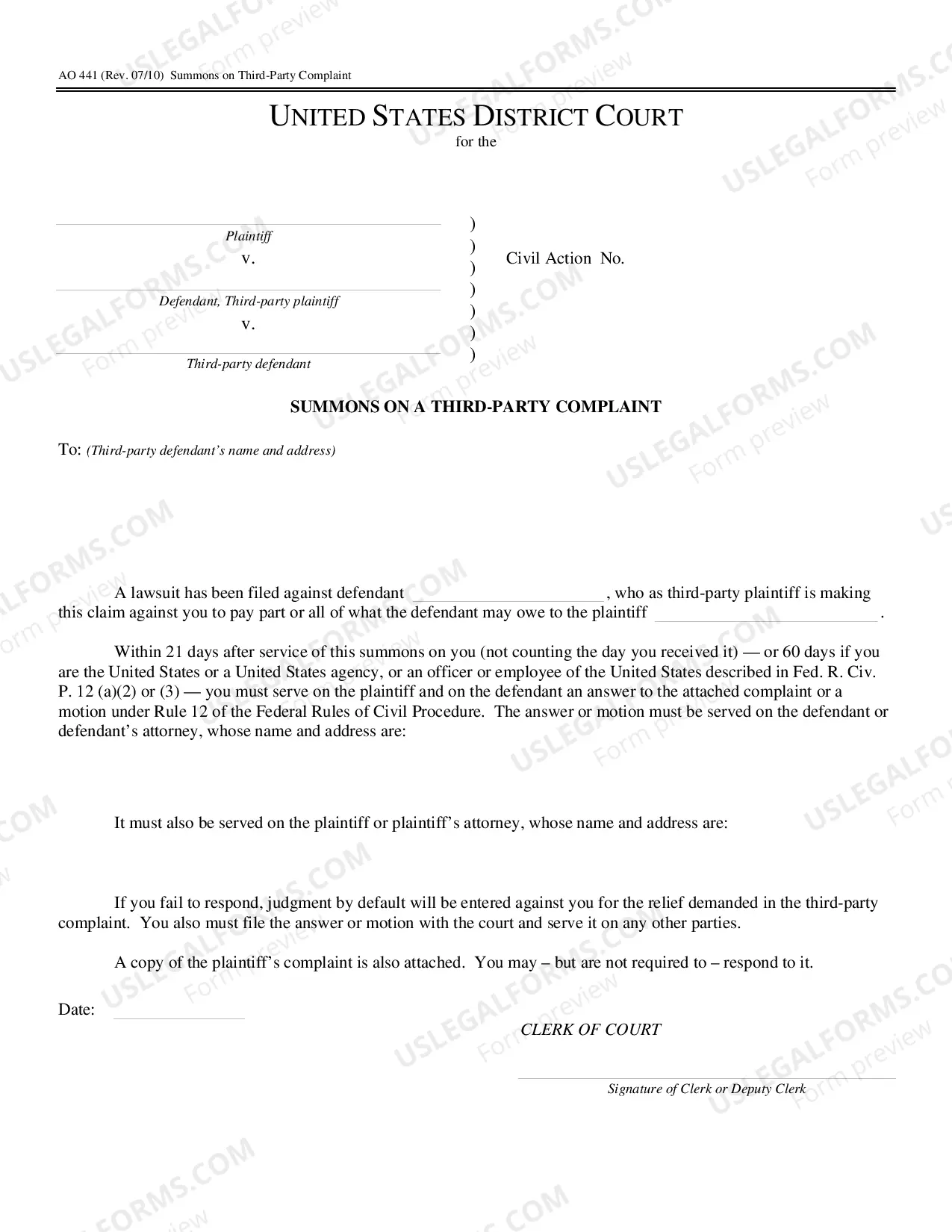
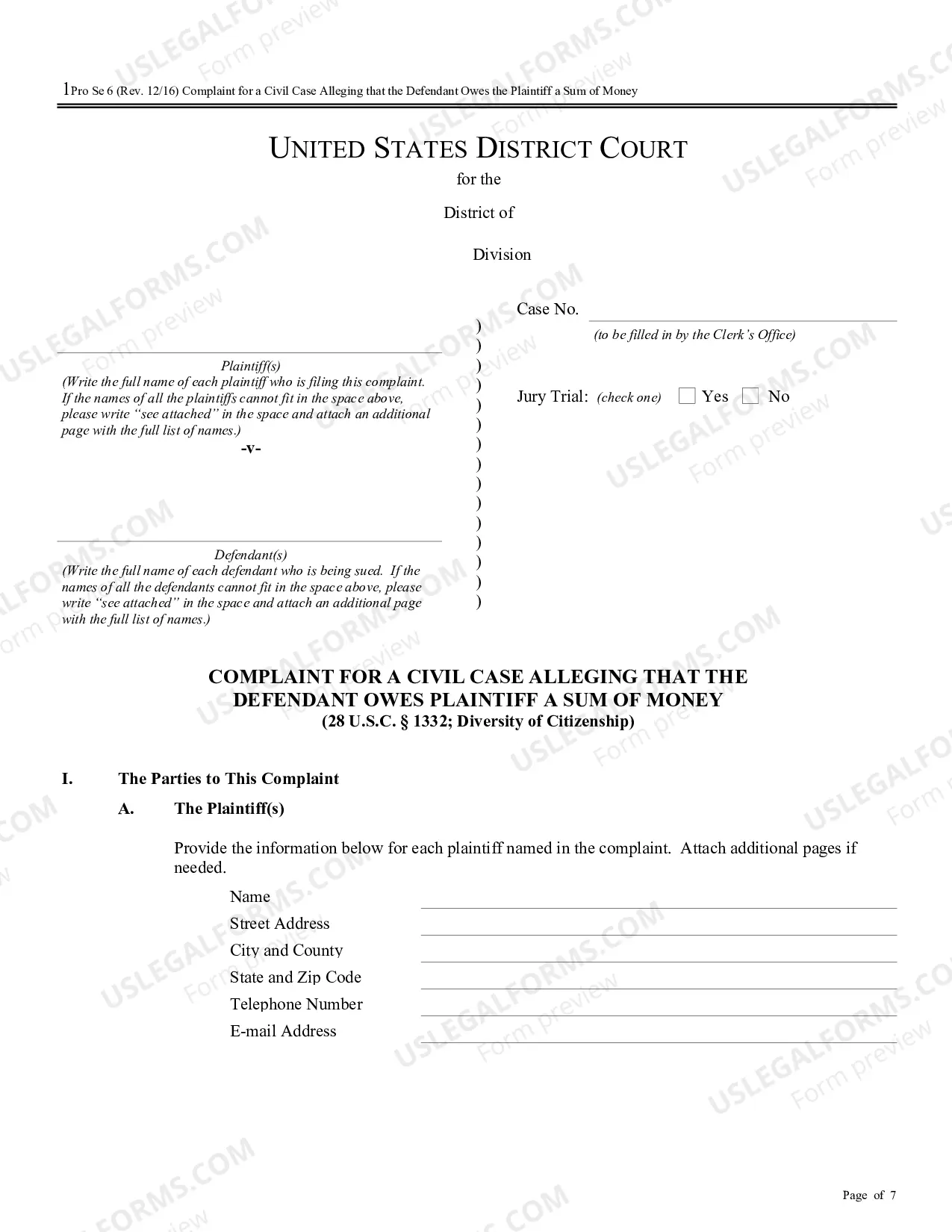
The Complaint and Summons for Balance Due on Credit Card Account is a legal document used to initiate a lawsuit against a debtor who has failed to pay their credit card bill. This form allows the creditor (plaintiff) to claim the amount owed and seek a court judgment to recover the debt. It differs from other complaint forms by specifically addressing credit card debt and includes provisions for notifying the debtor (defendant) of the lawsuit and their rights in responding to it.
Form components explained
- The names and addresses of the plaintiff and defendant.
- A description of the credit card agreement and purchases made by the defendant.
- The total amount owed, including any specified interest and fees.
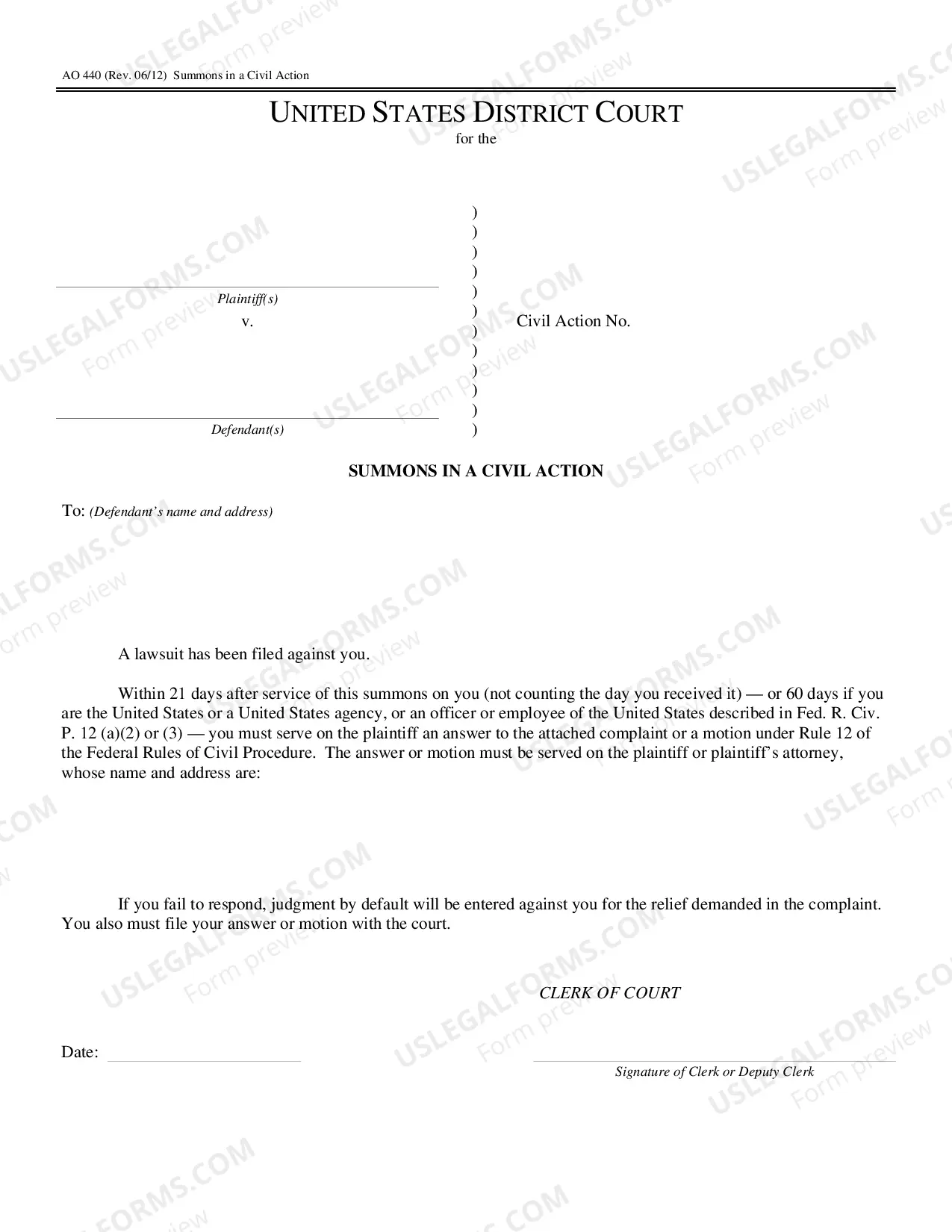
- Details about the service of process to notify the defendant of the lawsuit.
- Instructions for the defendant on how and when to respond to the complaint.


When to use this document
This form should be used when a creditor has made multiple attempts to collect on a past-due credit card balance and the debtor has not responded or made payments. It is an appropriate step when you need to escalate the collection process legally and seek a court judgment for the outstanding balance. It can also be used if the creditor wishes to enforce any terms of the original agreement set forth in the credit card contract.
Who needs this form
The following individuals or entities should consider using this form:
- CREDITORS seeking recovery of unpaid credit card debts.
- ATTORNEYS representing clients in collection matters.
- BUSINESSES that have extended credit to customers and require legal proceedings to collect outstanding balances.
Instructions for completing this form
- Identify and enter the parties involved: the plaintiff and defendant's names and addresses.
- Provide specifics about the credit card agreement, including dates and amounts charged.
- Clearly state the total amount owed, including any applicable interest per the original agreement.
- Complete the summons section, specifying the period the defendant has to respond.
- Have the document signed by the appropriate parties, including any attorneys if applicable.
Notarization guidance
This form does not typically require notarization unless specified by local law. However, it is advisable to check specific jurisdictional requirements to ensure compliance with any additional legal formalities that may apply.
Get your form ready online
Our built-in tools help you complete, sign, share, and store your documents in one place.
Make edits, fill in missing information, and update formatting in US Legal Forms—just like you would in MS Word.
Download a copy, print it, send it by email, or mail it via USPS—whatever works best for your next step.
Sign and collect signatures with our SignNow integration. Send to multiple recipients, set reminders, and more. Go Premium to unlock E-Sign.
If this form requires notarization, complete it online through a secure video call—no need to meet a notary in person or wait for an appointment.
We protect your documents and personal data by following strict security and privacy standards.

Make edits, fill in missing information, and update formatting in US Legal Forms—just like you would in MS Word.

Download a copy, print it, send it by email, or mail it via USPS—whatever works best for your next step.

Sign and collect signatures with our SignNow integration. Send to multiple recipients, set reminders, and more. Go Premium to unlock E-Sign.

If this form requires notarization, complete it online through a secure video call—no need to meet a notary in person or wait for an appointment.

We protect your documents and personal data by following strict security and privacy standards.
Typical mistakes to avoid
- Failing to provide all parties' accurate names and addresses.
- Not including the necessary documentation, like the credit card agreement, as evidence.
- Incorrectly calculating the amount owed or including improper fees.
- Not adhering to the required time frame for serving the summons.
- Overlooking state-specific rules that may alter the complaint requirements.
Why use this form online
- Convenient access to legal forms anytime and anywhere.
- Editable templates allow for easy customization to fit your specifics.
- Reliability through attorney-drafted content ensuring legal compliance.
- Efficiency in saving time and reducing the complexity of legal paperwork.
Legal use & context
- It is essential to file the complaint within the statute of limitations for debt collection in your state, which often varies by jurisdiction.
- Judgments obtained can lead to wage garnishment or liens on property in the case of a failure to respond.
- Legal proceedings should be undertaken seriously, and understanding your rights when filing or responding to a complaint is crucial.
Quick recap
- The Complaint and Summons form is used for collecting unpaid credit card debts through legal action.
- Ensure accurate and complete information is provided for all parties involved.
- Understand the filing requirements and timelines for your specific state.
- Utilizing legal forms online offers convenience and reliability.
Looking for another form?

Form popularity
FAQ
Set Your Timer. You've got only a certain amount of time to file an Answer to the lawsuit. Assess Your Liability. Take a look at the lawsuit papers and take careful notes. Review Your Financial Situation. Make A Realistic Offer. Prepare To Defend The Lawsuit.
How to negotiate a settlement before going to court. If the debt is active and valid, try to stop the lawsuit by contacting the creditor or the attorney listed on the summons to discuss a settlement. You might offer to pay some of your debt with a lump-sum payment or in monthly installments.
1Don't ignore it. If you do this, the court will simply rule in the issuer or debt collector's favor.2Try to work things out.3Answer the summons.4Consult an attorney.5Go to court.6Respond to the ruling.
Don't ignore it. If you do this, the court will simply rule in the issuer or debt collector's favor. Try to work things out. Answer the summons. Consult an attorney. Go to court. Respond to the ruling.
A statute of limitations is a law that tells you how long someone has to sue you. In California, most credit card companies and their debt collectors have only four years to do so. Once that period elapses, the credit card company or collector loses its right to file a lawsuit against you.
If you get a summons notifying you that a debt collector is suing you, don't ignore it. If you do, the collector may be able to get a default judgment against you (that is, the court enters judgment in the collector's favor because you didn't respond to defend yourself) and garnish your wages and bank account.
Credit card companies may settle for a negotiated amount equal to roughly 40-60 percent of the balance owed, according to the BBB. Credit card companies tend not to publicize settlements, so there are no hard statistics on success rates or settlement amounts.
When your card issuer or a collection agency that has purchased your debt from the issuer can't get you to pay your bill, a lawsuit seeks to obtain a court judgment, which may give the company the right to garnish your wages and bank account until the debt is paid.
Make sure you respond to the Complaint and your response is timely filed. Review potential affirmative defenses that could apply to your case. Make the debt collector prove that they have the legal right to sue you.