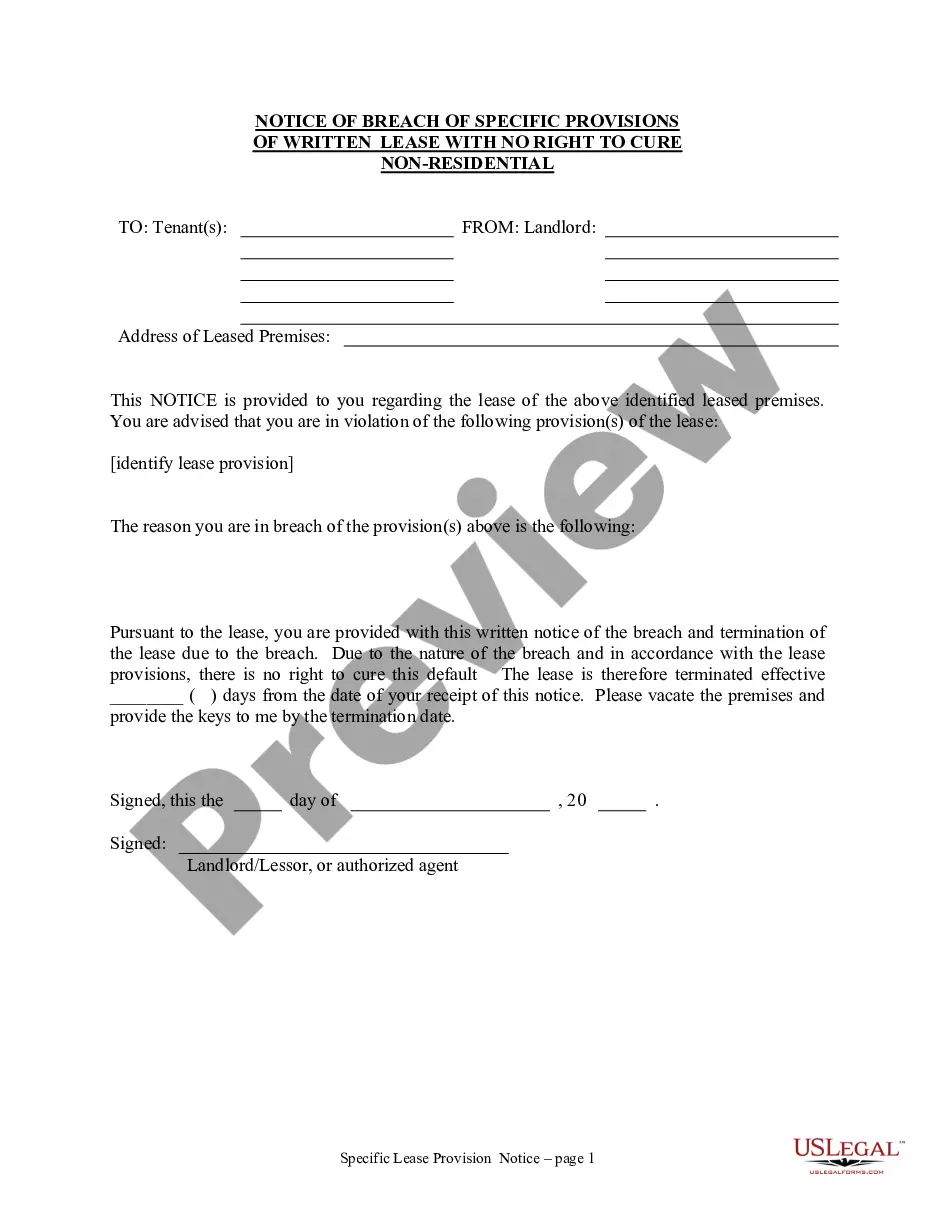
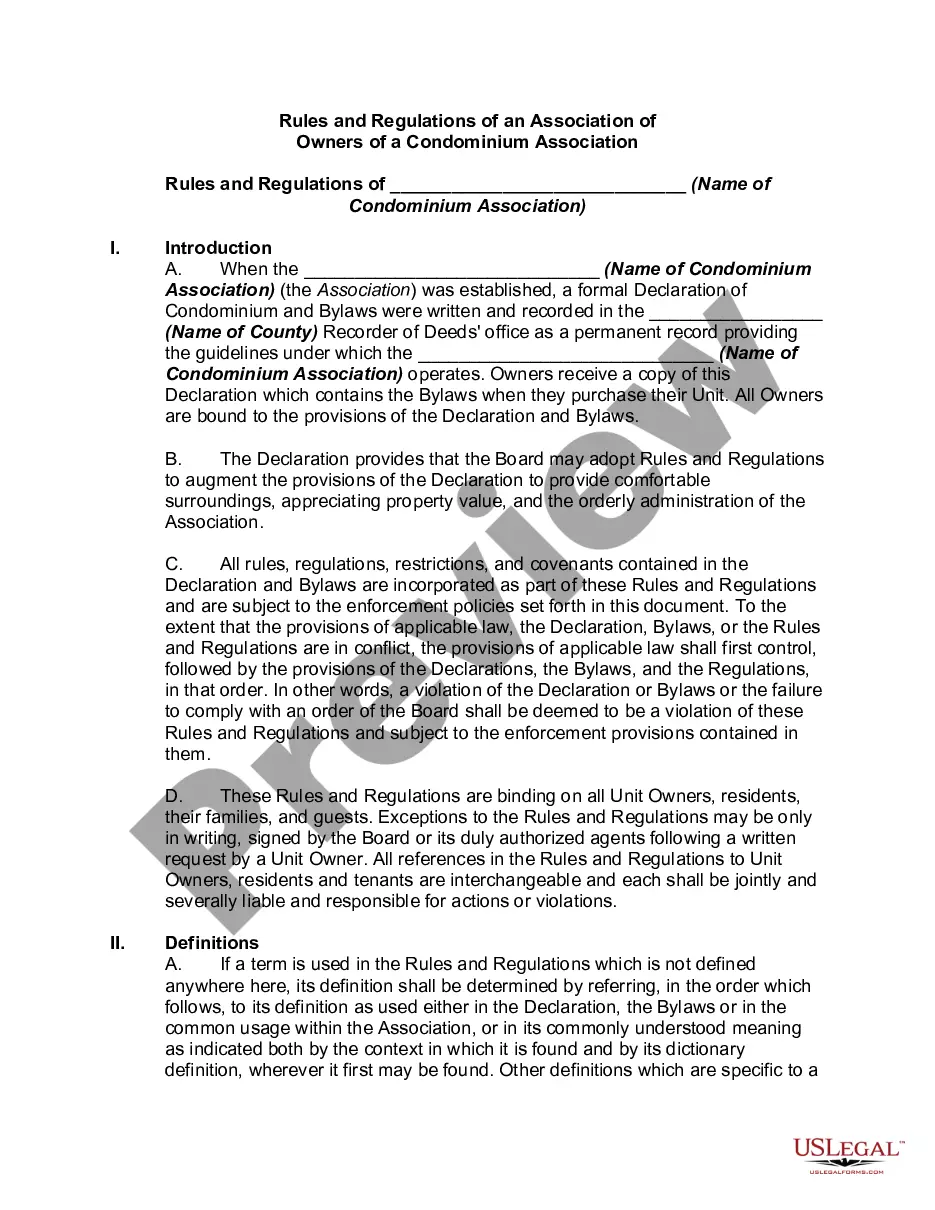
Rules and Regulations of an Association of Owners of a Condominium Association
What this document covers
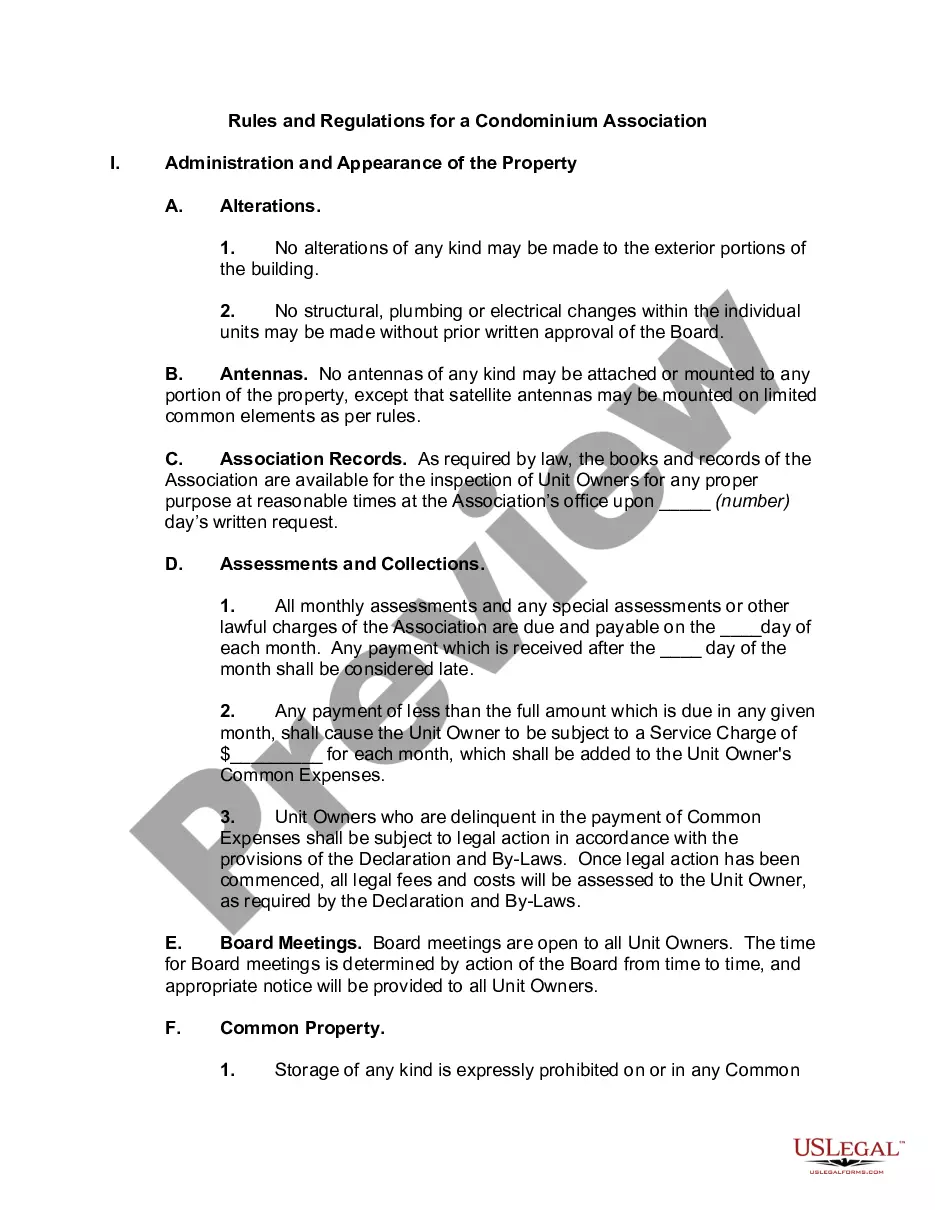
The Rules and Regulations of an Association of Owners of a Condominium Association is a legal document that outlines the guidelines and standards for behavior and responsibilities within a condominium community. This document is crucial for maintaining order, enhancing property value, and ensuring a comfortable living environment for all residents. Unlike general agreements, these rules are specifically tailored for condominium associations and encompass the duties of residents, maintenance of common areas, assessments, and enforcement procedures.
Key parts of this document
- Introduction detailing the association's formation and the binding nature of the rules.
- Definitions of key terms essential for understanding the rules.
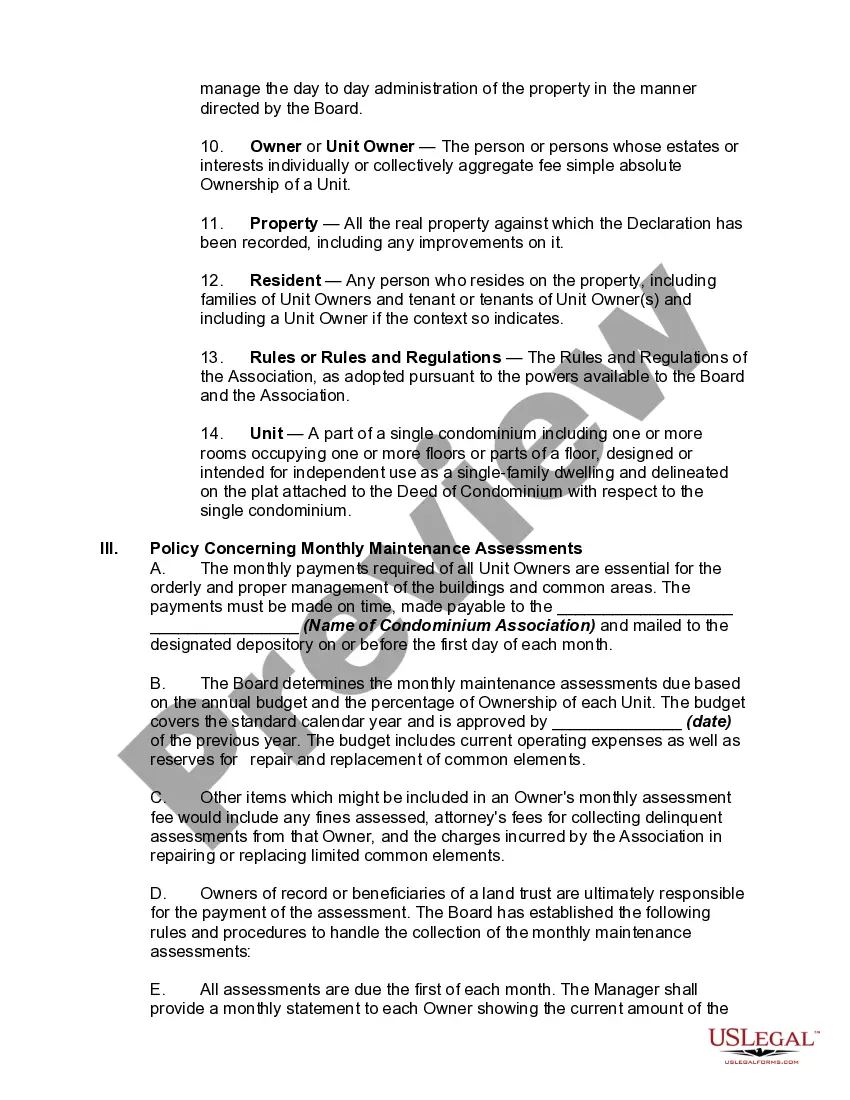
- Policies regarding monthly maintenance assessments and payment responsibilities.
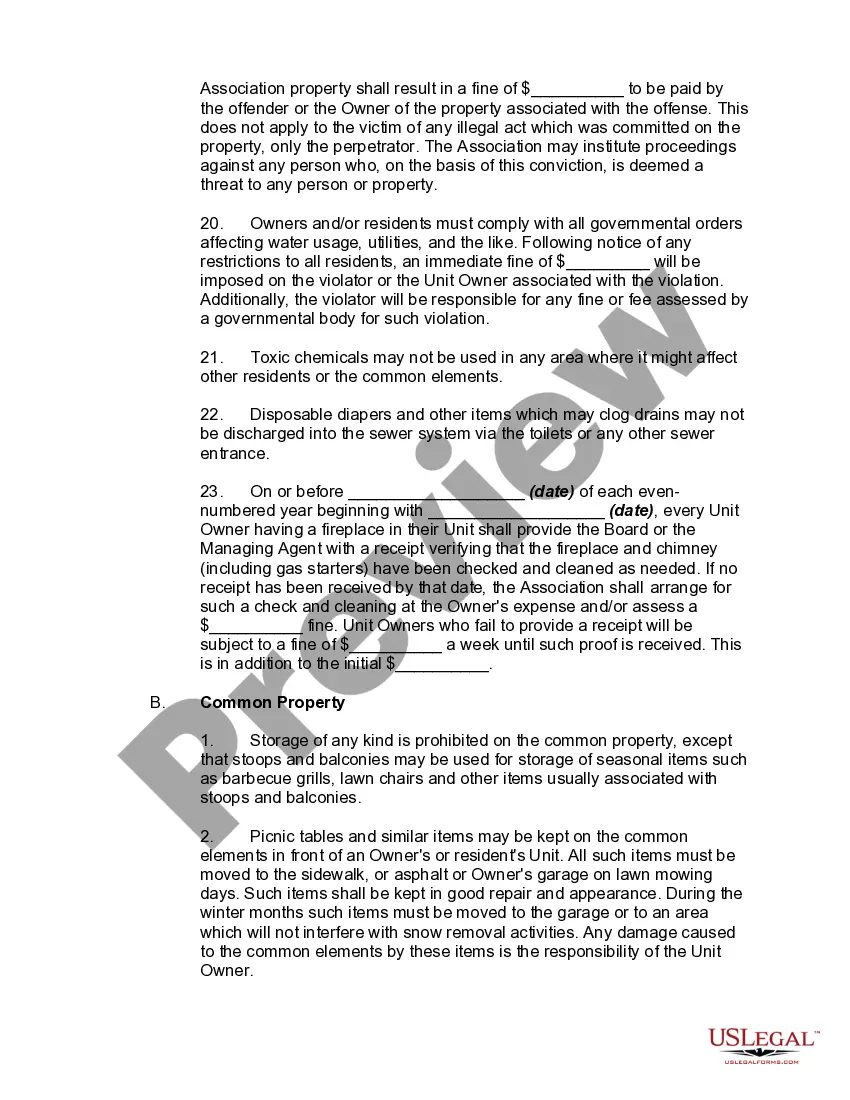
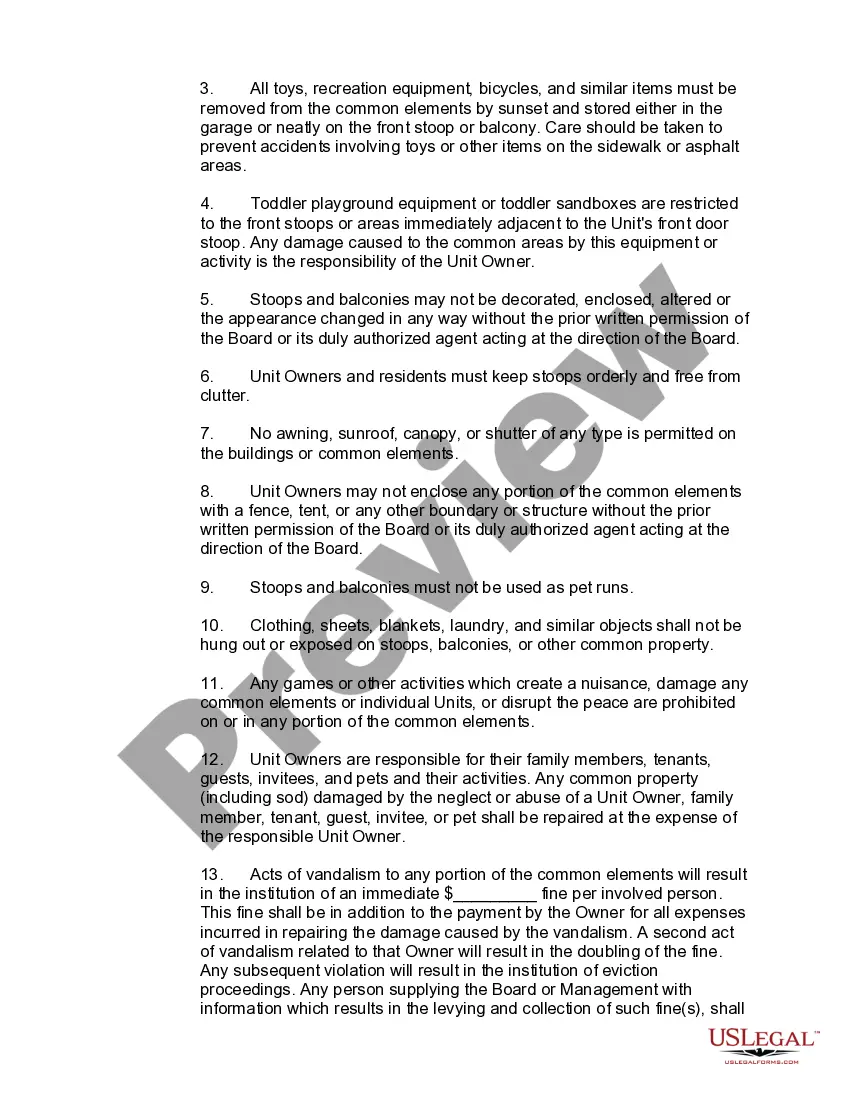
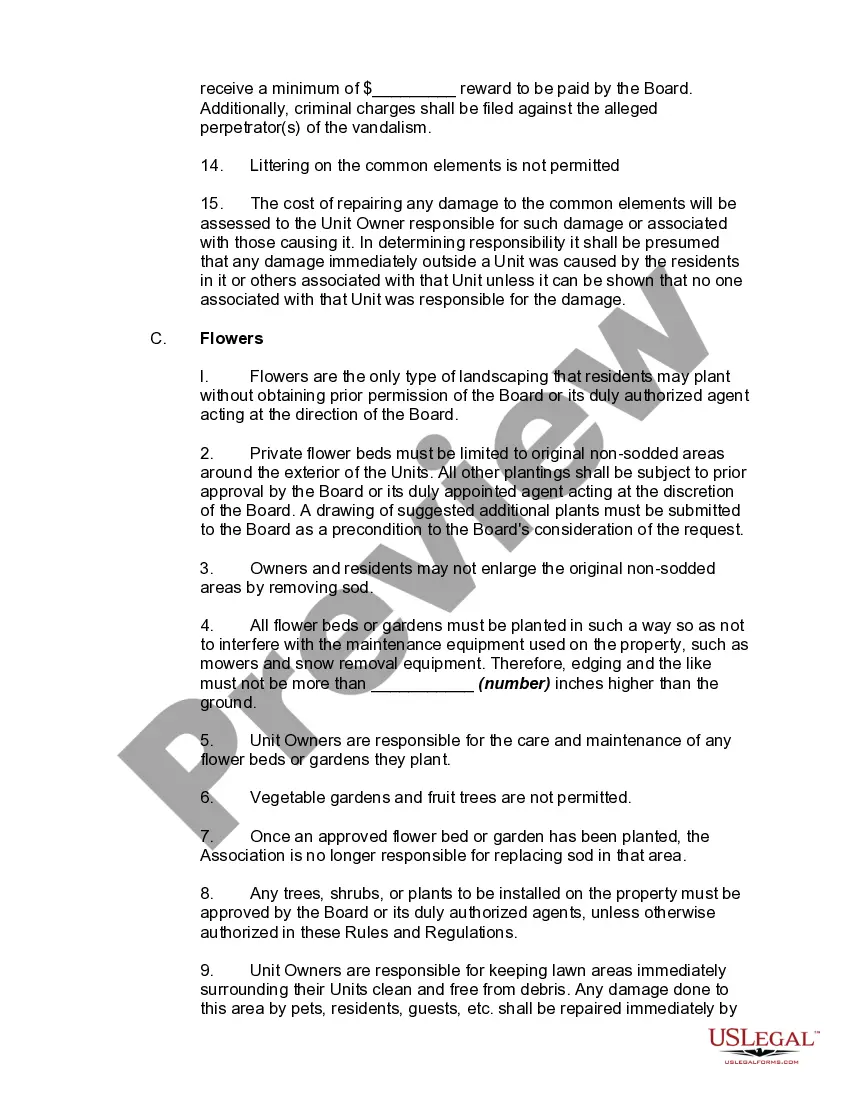
- Rules governing property appearance and use, including modifications and restrictions.
- Enforcement procedures, including violation complaint processes and penalties.
- Detailed information about common property usage and residents' responsibilities.

Situations where this form applies
This form should be used when establishing or revising the rules and regulations of a condominium association. It is essential for new associations during their formation to guide residents and board members alike. Additionally, this form can be applied when existing rules require updates or modifications to reflect changes in community needs, legal requirements, or governance practices.
Intended users of this form
This form is intended for:
- Condominium associations interested in creating structured governance.
- Board members responsible for enforcing community standards.
- Unit owners who need to understand their rights and obligations within the association.
How to prepare this document
- Identify the name of the condominium association and the county where it is located.
- Fill in the fields for definitions relevant to the communityâs needs.
- Establish a clear policy for maintenance assessments, including payment deadlines and penalties for late payments.
- Review and confirm all rules regarding property use and responsibilities.
- Outline the procedures for reporting complaints and enforcing the regulations.
Notarization requirements for this form
This form does not typically require notarization unless specified by local law. However, it is advisable to check with local regulations to ensure compliance, as some jurisdictions may have specific requirements for the formal adoption of condominium rules.
Get your form ready online
Our built-in tools help you complete, sign, share, and store your documents in one place.
Make edits, fill in missing information, and update formatting in US Legal Forms—just like you would in MS Word.
Download a copy, print it, send it by email, or mail it via USPS—whatever works best for your next step.
Sign and collect signatures with our SignNow integration. Send to multiple recipients, set reminders, and more. Go Premium to unlock E-Sign.
If this form requires notarization, complete it online through a secure video call—no need to meet a notary in person or wait for an appointment.
We protect your documents and personal data by following strict security and privacy standards.

Make edits, fill in missing information, and update formatting in US Legal Forms—just like you would in MS Word.

Download a copy, print it, send it by email, or mail it via USPS—whatever works best for your next step.

Sign and collect signatures with our SignNow integration. Send to multiple recipients, set reminders, and more. Go Premium to unlock E-Sign.

If this form requires notarization, complete it online through a secure video call—no need to meet a notary in person or wait for an appointment.

We protect your documents and personal data by following strict security and privacy standards.
Common mistakes
- Failing to review state-specific laws that may alter the association's rules.
- Neglecting to adequately communicate changes to residents.
- Using overly complex language that may confuse residents.
- Inadequately defining the process for reporting violations and ensuring follow-through.
Why use this form online
- Easy access to customizable templates that save time and ensure compliance.
- Ability to edit and update the document as regulations or community needs change.
- Secure storage of documents for long-term accessibility and review.
Legal use & context
- These rules are enforceable as long as they comply with applicable laws and regulations.
- Unit owners must be notified of any changes to ensure transparency and compliance.
- Violations can lead to penalties, including fines and enforcement actions.
Key takeaways
- The form provides a comprehensive overview of rules governing a condominium association.
- Proper completion and enforcement of these rules help maintain property values and community standards.
- All residents should be made aware of their rights and responsibilities under the association's rules.
Definitions you should know
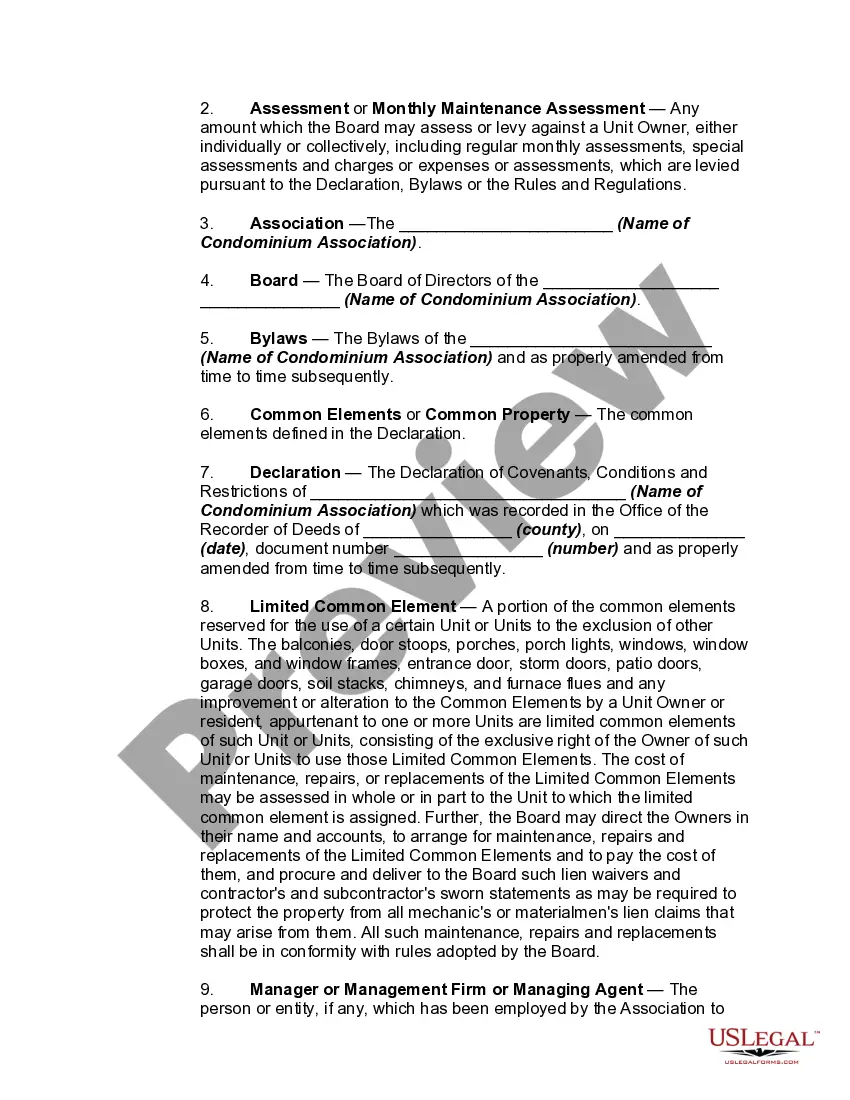
- Unit Owner: An individual who holds ownership rights to a specific unit within the condominium.
- Board of Directors: An elected group responsible for managing the association and enforcing rules.
- Common Elements: Areas shared among unit owners, such as hallways, pools, and landscaping.
- Monthly Maintenance Assessment: Fees collected from unit owners to cover the costs of maintaining common areas.
Looking for another form?
Form popularity
FAQ
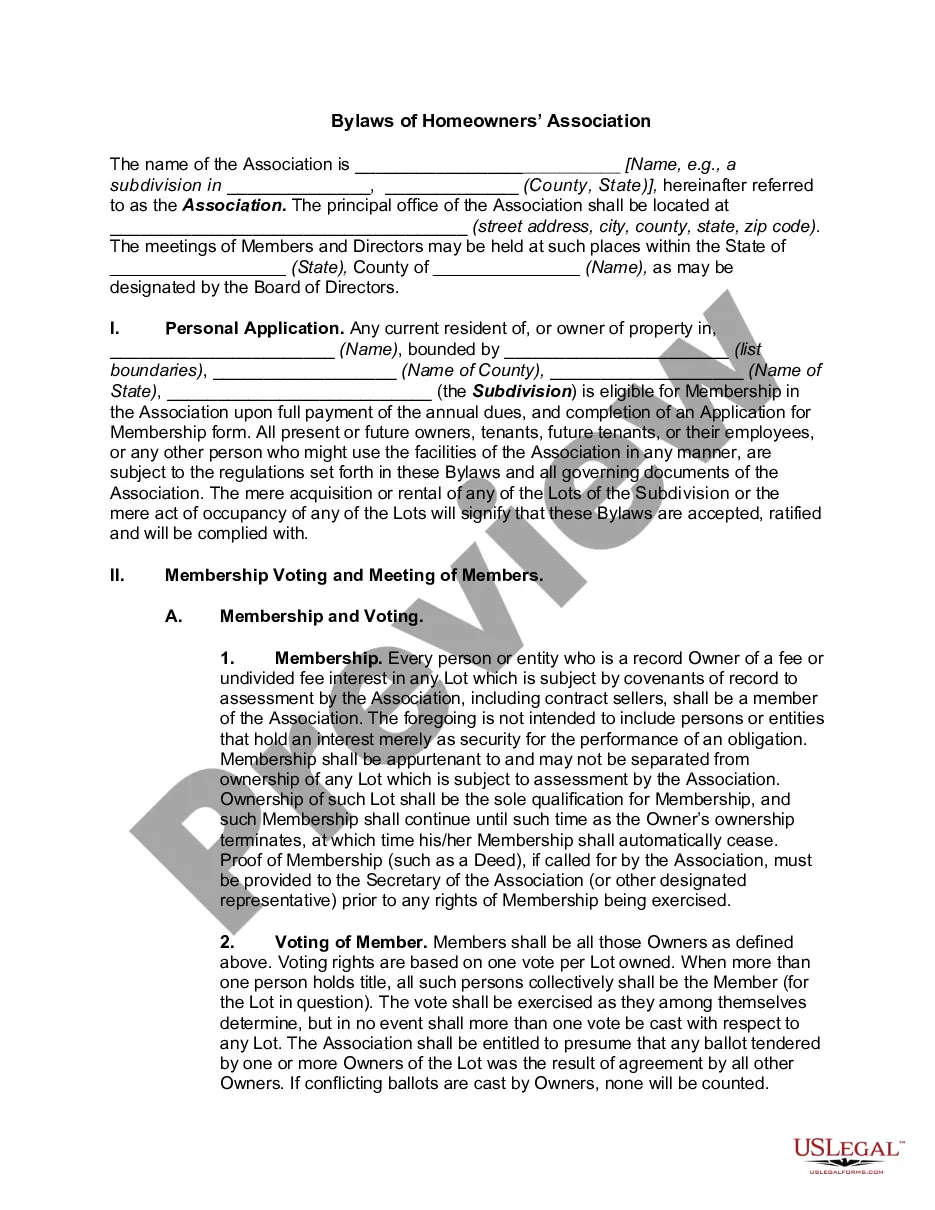
Simply put, bylaws are the fundamental rules by which an organization governs itself. Bylaws can be considered the organization's contract with its members. They state, interpret or implement the general governance policies of the organization.
The bylaws of a corporation specify the numerous methods that affect the company's operations. A corporation's bylaws can contain provisions relating to the ways it conducts its affairs, the duties of its directors and the responsibilities of its officers and employees.
Rules And Regulations-- What's What. Documents, Documents, Documents.It is the document that, among other things, establishes the association, contains the use restrictions, the maintenance requirements, and defines the common elements. The Bylaws set up the corporation and how it is to be run.
To put it simply, bylaws are a set of rules and guidelines that a company must follow. These rules and guidelines set: Rules and obligations for shareholders, directors, and officers. Rules pertaining to the removal of officers and directors.
ARTICLE I. NAME OF ORGANIZATION. The name of the corporation is YOUR NONPROFIT NAME HERE. ARTICLE II. CORPORATE PURPOSE. Section 1. ARTICLE III. MEMBERSHIP. ARTICLE IV. MEETINGS OF MEMBERS. ARTICLE V. BOARD OF DIRECTORS. ARTICLE VI. OFFICERS. ARTICLE VII. COMMITTEES. ARTICLE VIII. CORPORATE STAFF.
HOA rules and regulations are intended to work in unison with bylaws and CC&Rs. They are designed to maintain the value and well-being of the association, but they should not be used to restrict members' enjoyment of their community. Rules should be followed by members, but they are not set in stone.