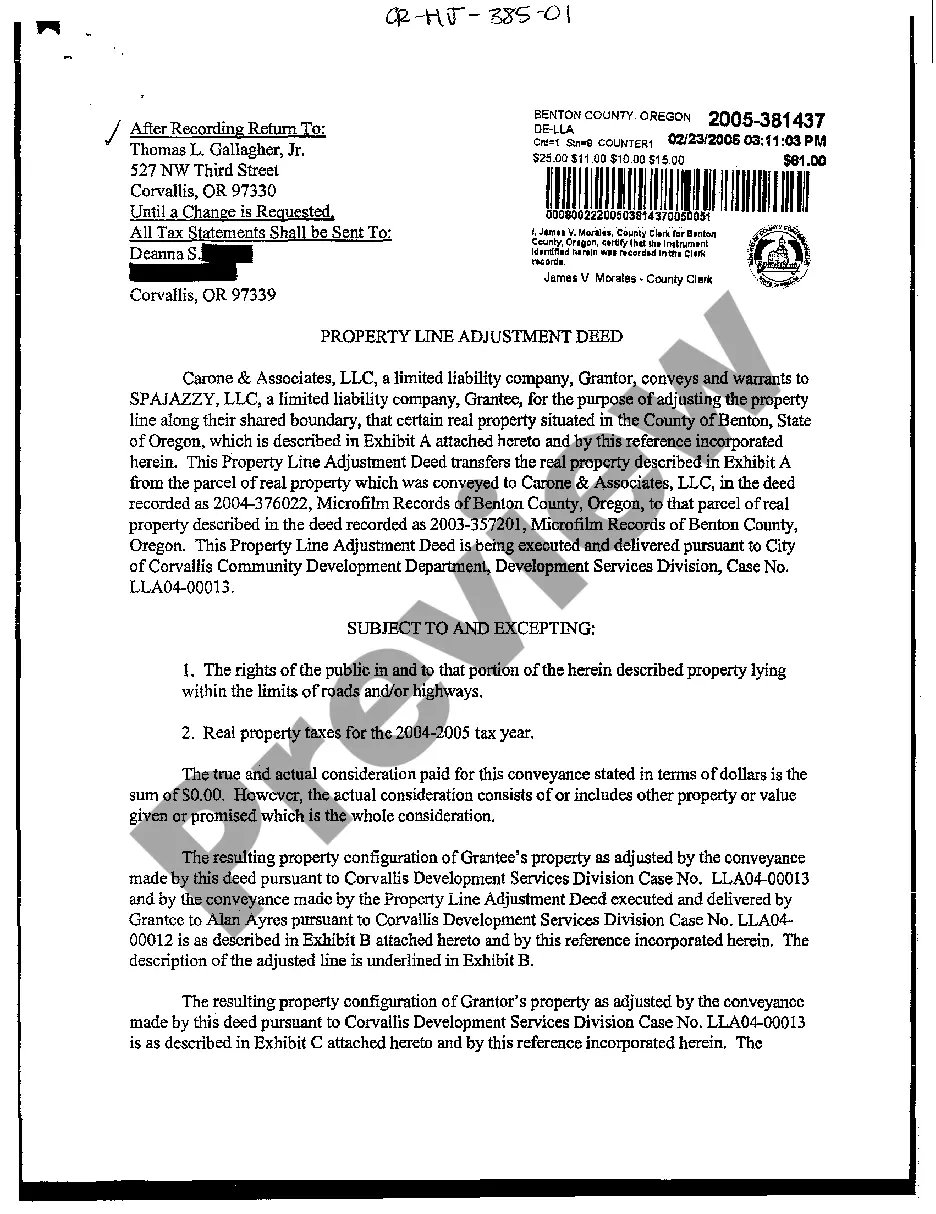
District of Columbia Notice of Breach of Written Lease for Violating Specific Provisions of Lease with Right to Cure for Nonresidential Property from Landlord to Tenant
What this document covers
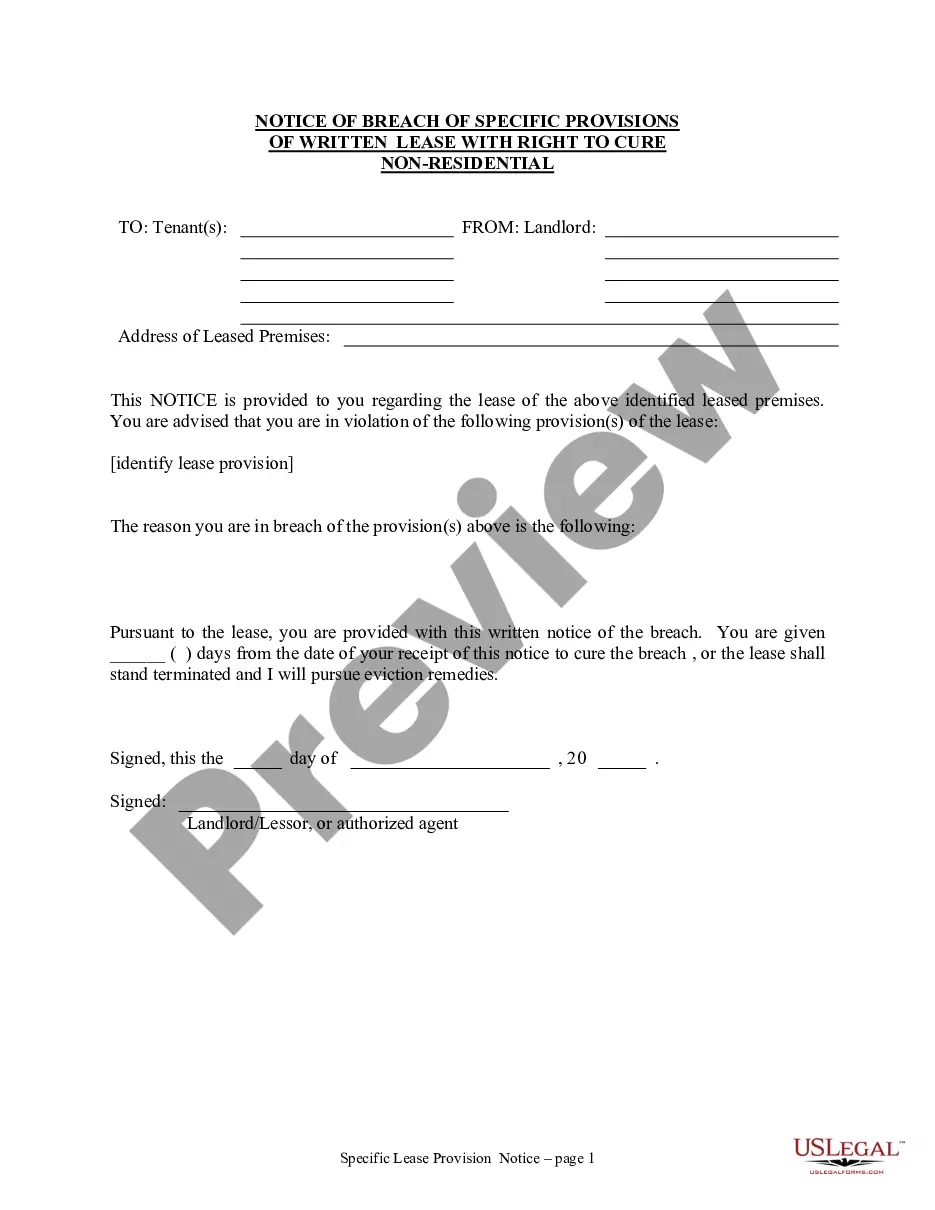
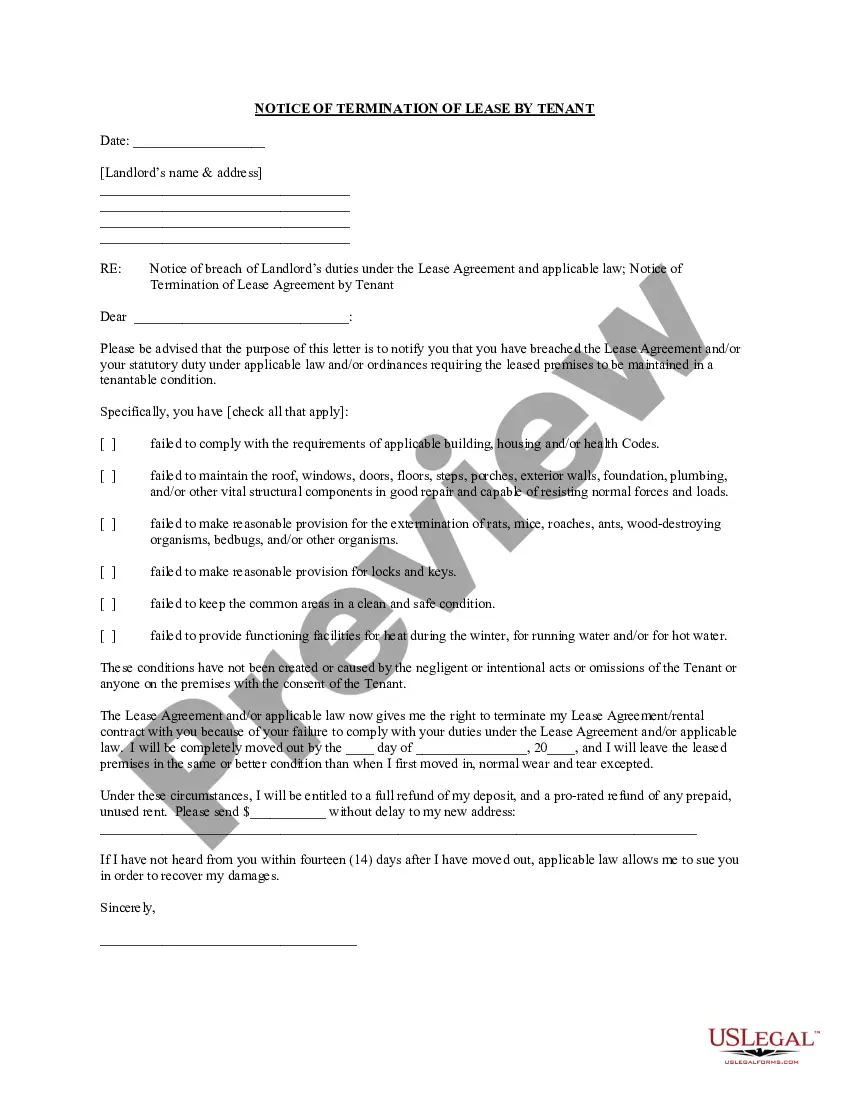
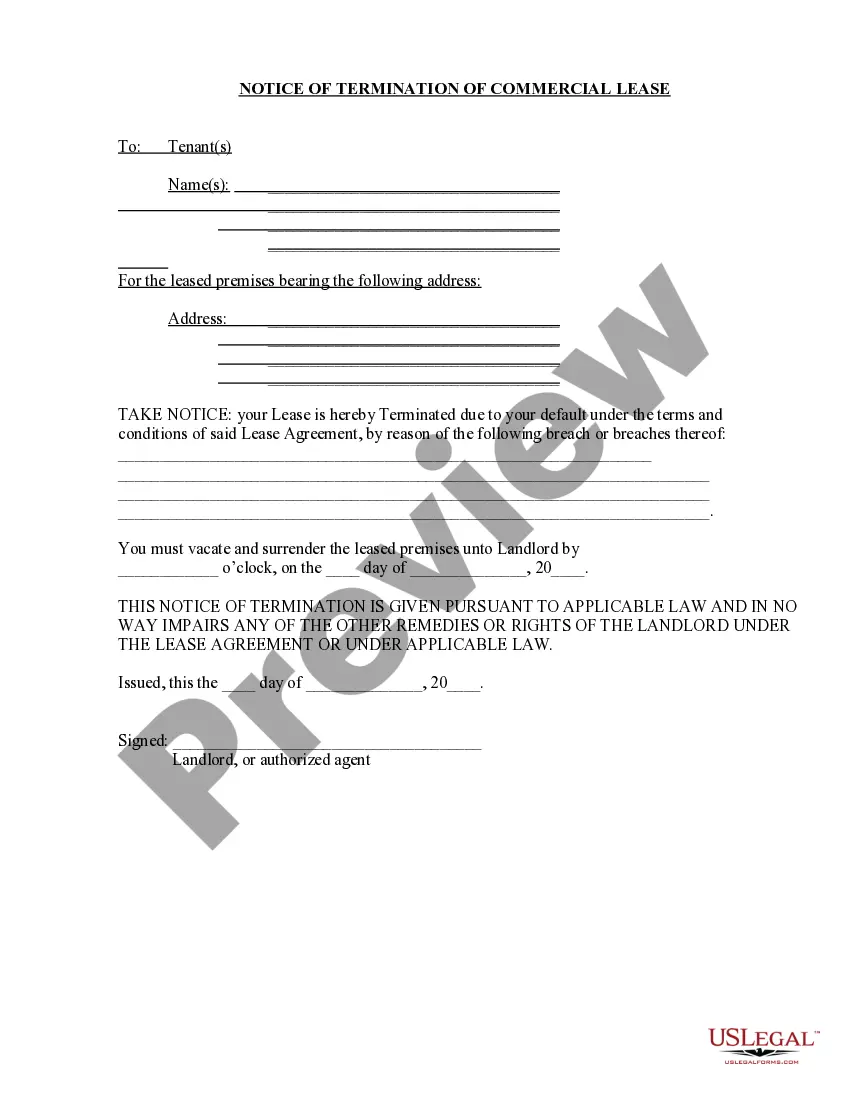
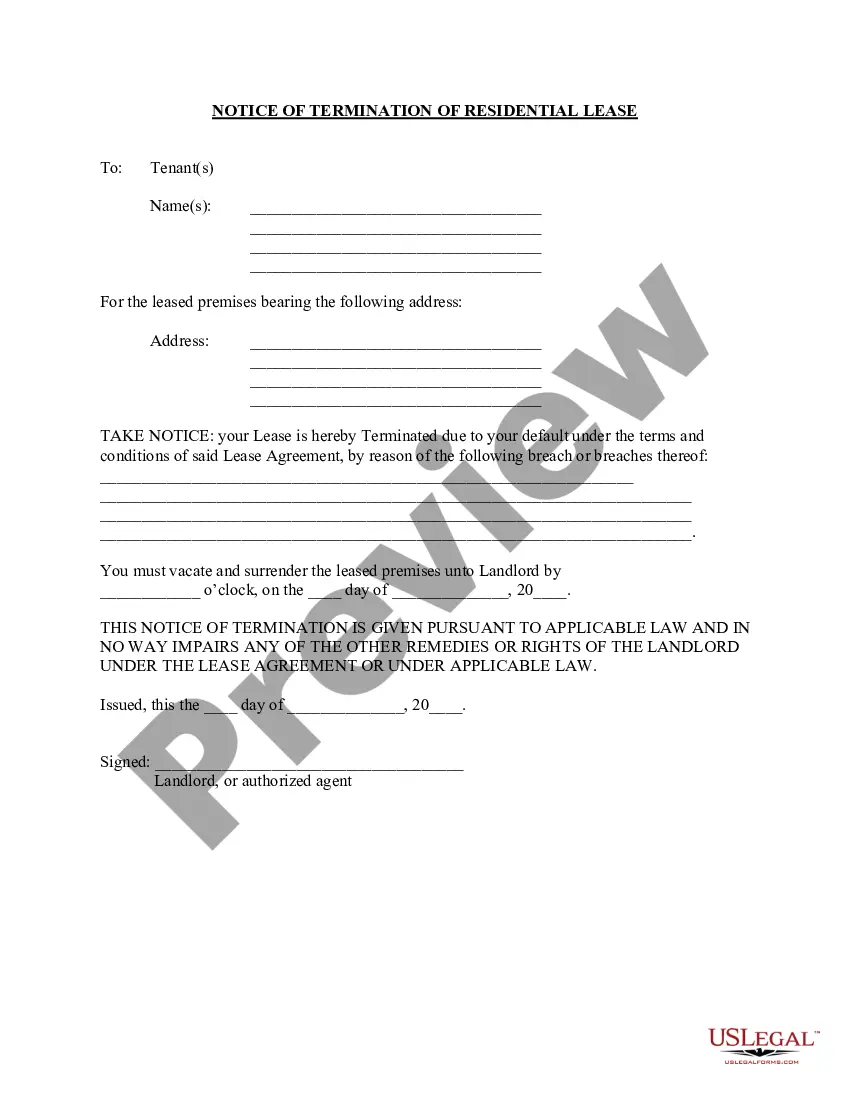
This Notice of Breach of Written Lease for Violating Specific Provisions of Lease with Right to Cure for Non-Residential Property is a legal document that allows a landlord to formally notify a tenant of a breach of lease. This form specifically addresses violations of a written lease where the landlord grants the tenant an opportunity to cure the breach. It is important to note that this form is meant for non-residential leases, setting it apart from residential notices and ensuring both clarity and compliance in the landlord-tenant relationship.
Main sections of this form
- Details of the landlord and tenant involved.
- Address of the leased premises.
- Specific lease provision(s) that have been violated.
- Explanation of how the breach occurred.
- Deadline for the tenant to cure the breach.
- Signature of the landlord or authorized agent.
- Proof of delivery methods and confirmation.

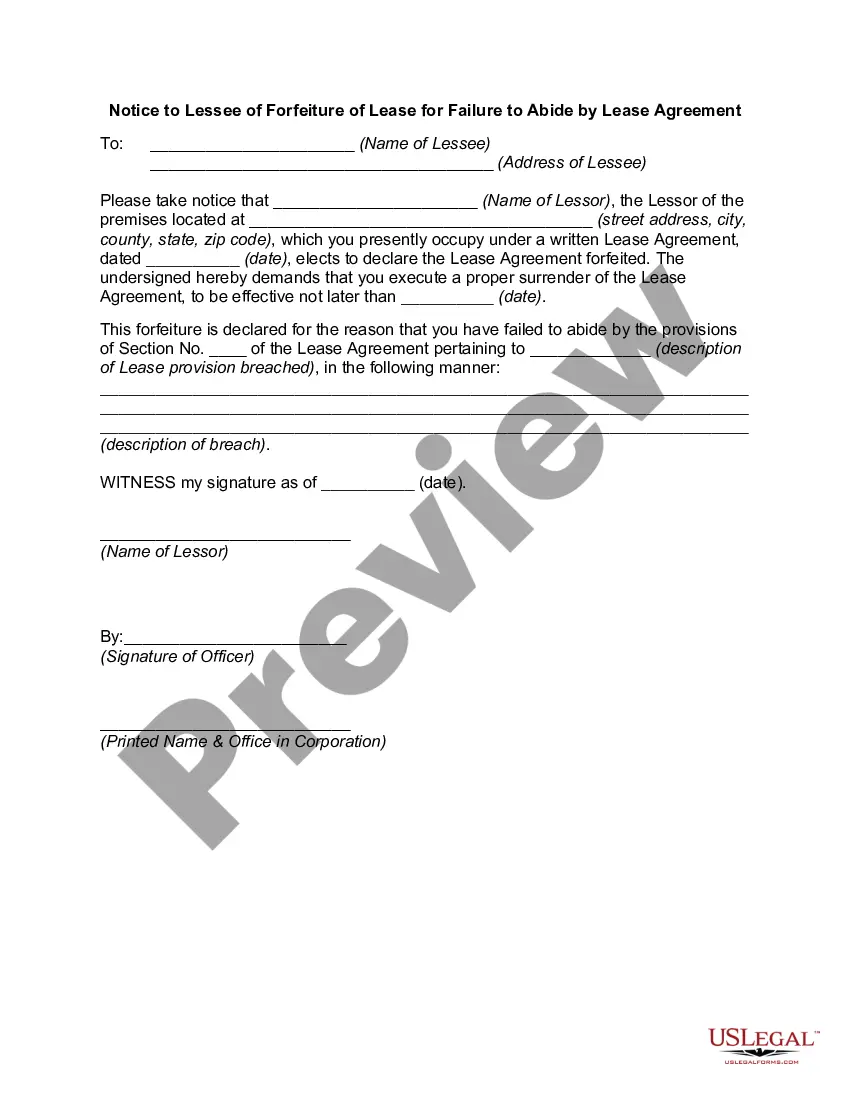
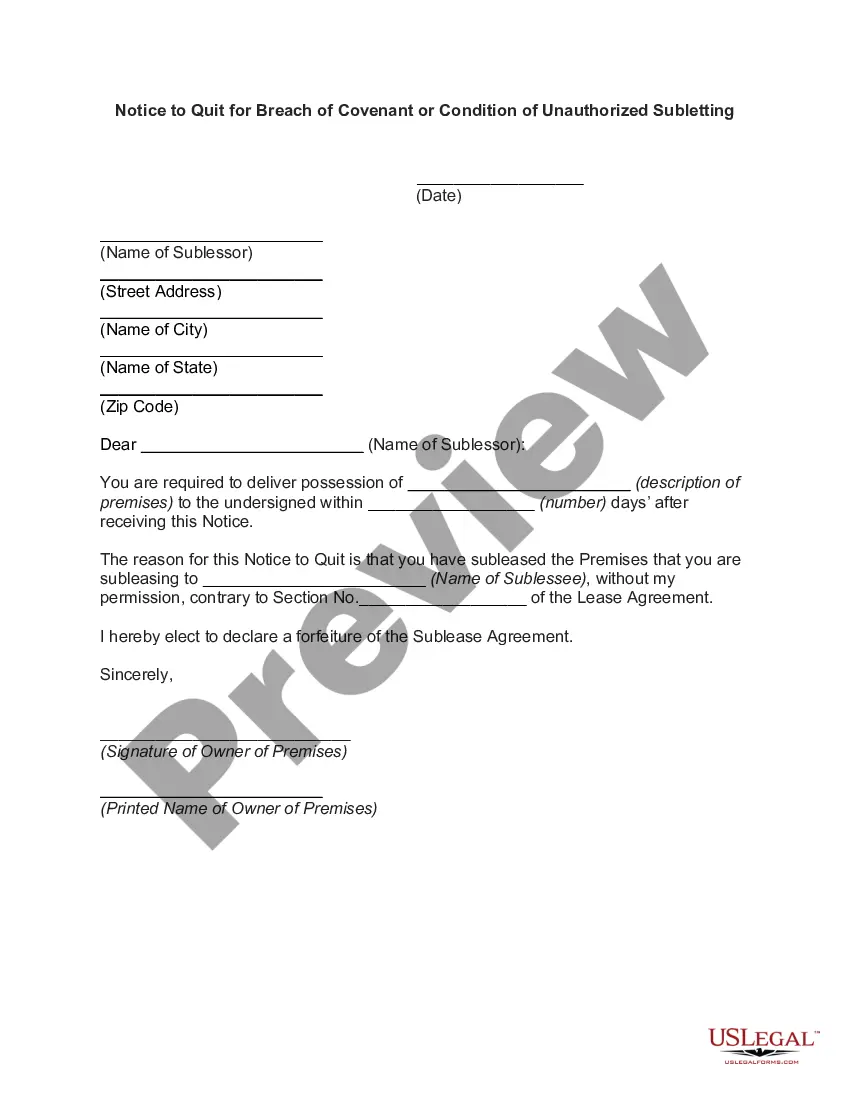
When to use this document
This form should be used when a tenant violates specific provisions of a non-residential lease agreement. Landlords can utilize this document to formally notify the tenant of the breach, allowing them the opportunity to remedy the situation before pursuing any eviction remedies. It is an essential step in maintaining legal compliance and protecting the landlord's rights under the lease.
Who this form is for
- Landlords of non-residential properties.
- Property managers handling lease agreements.
- Legal representatives acting on behalf of landlords.
- Tenants who wish to understand their lease rights after receiving such a notice.
Instructions for completing this form
- Identify the landlord and tenant, including their contact information.
- Specify the address of the leased premises.
- Clearly state the specific lease provision(s) that have been violated.
- Describe the reason for the breach and how it occurred.
- Set a deadline by which the tenant must cure the breach.
- Sign the form and ensure proof of delivery is noted.
Notarization guidance
This form does not typically require notarization to be legally valid. However, some jurisdictions or document types may still require it. US Legal Forms provides secure online notarization powered by Notarize, available 24/7 for added convenience.
Get your form ready online
Our built-in tools help you complete, sign, share, and store your documents in one place.
Make edits, fill in missing information, and update formatting in US Legal Forms—just like you would in MS Word.
Download a copy, print it, send it by email, or mail it via USPS—whatever works best for your next step.
Sign and collect signatures with our SignNow integration. Send to multiple recipients, set reminders, and more. Go Premium to unlock E-Sign.
If this form requires notarization, complete it online through a secure video call—no need to meet a notary in person or wait for an appointment.
We protect your documents and personal data by following strict security and privacy standards.

Make edits, fill in missing information, and update formatting in US Legal Forms—just like you would in MS Word.

Download a copy, print it, send it by email, or mail it via USPS—whatever works best for your next step.

Sign and collect signatures with our SignNow integration. Send to multiple recipients, set reminders, and more. Go Premium to unlock E-Sign.

If this form requires notarization, complete it online through a secure video call—no need to meet a notary in person or wait for an appointment.

We protect your documents and personal data by following strict security and privacy standards.
Common mistakes to avoid
- Failing to specify the exact provision that has been violated.
- Not providing a reasonable time frame for the tenant to rectify the breach.
- Neglecting to deliver the notice using a legally acceptable method.
- Forgetting to sign the document before delivery.
Why complete this form online
- Convenience of accessing the form anytime and anywhere.
- Editable formats that can be tailored to specific situations.
- Reliability, as the forms are created by licensed attorneys.
Legal use & context
- The notice serves as a formal record of the landlord's notification to the tenant.
- Failure to cure the breach by the specified deadline may lead to eviction proceedings.
- It's important to retain a copy of the notice for legal purposes.
Key takeaways
- This form provides a structured way for landlords to notify tenants of lease violations.
- It grants tenants the right to cure their breach, fostering communication and resolution.
- Landlords must follow specific procedures for delivery to ensure the notice is legally valid.
Looking for another form?
Form popularity
FAQ
It is a District of Columbia notice from a landlord to a tenant about a breach of a written nonresidential lease, with a right to cure. The form requires identifying the parties and leased premises, listing the specific lease provision violated, describing how the breach occurred, setting a cure deadline, and including the landlord’s signature and delivery proof.
A warning notice is an initial formal alert from the landlord about a lease breach. For this form, it notifies the tenant of a specific nonresidential lease violation and offers a cure period, documenting the violated provisions, how the breach occurred, the cure deadline, and delivery proof.
A warning letter is a formal notice warning the tenant of a lease breach and outlining the required cure. In this form, the warning letter targets a specific provision in a nonresidential DC lease, records the breach details, provides a cure deadline, and notes the method of delivery.
The notice does not evict a tenant by itself. It provides a right to cure a breach in a nonresidential lease. If the breach is not cured by the deadline, the landlord may pursue eviction or other remedies consistent with the lease and applicable DC law, following proper legal procedures.
The form includes a cure deadline in the specified section, and requires a description of how the breach occurred. If the tenant fails to cure by the deadline, the landlord can pursue listed remedies, including possible eviction, while keeping delivery proof and the landlord’s signature for record.
This form specifically provides a right to cure for a nonresidential DC lease, with a defined cure deadline and a clear description of the violated provisions. It also includes sections for delivery proof and the landlord’s signature, separating it from breach notices that do not offer a cure period.