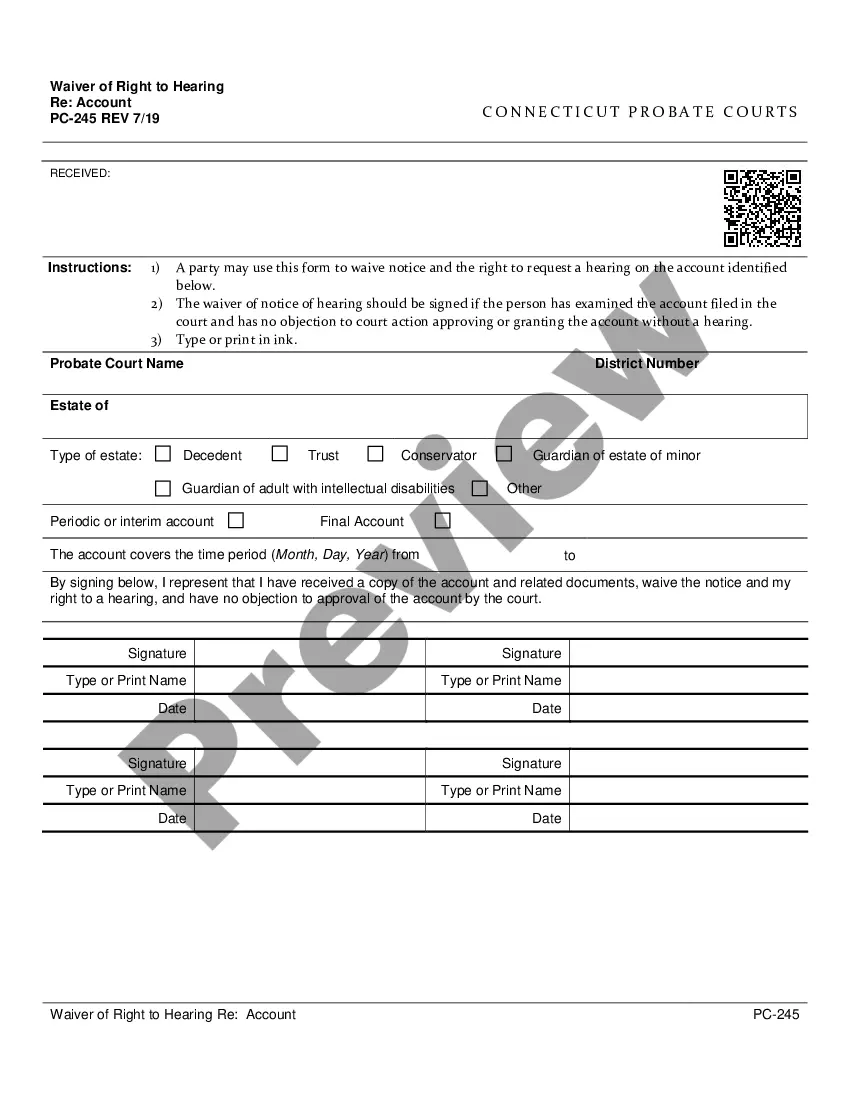
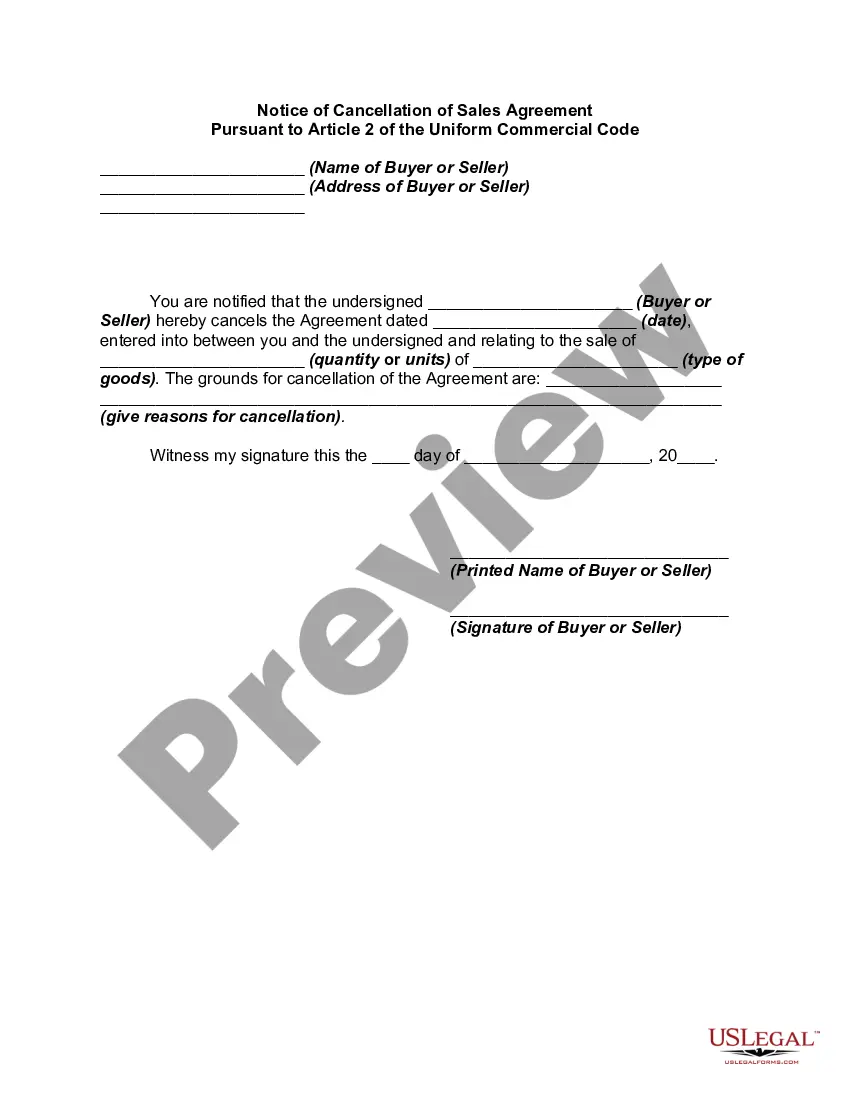
Notice of Cancellation of Sales Agreement Pursuant to Article 2 of the Uniform Commercial Code
What is this form?
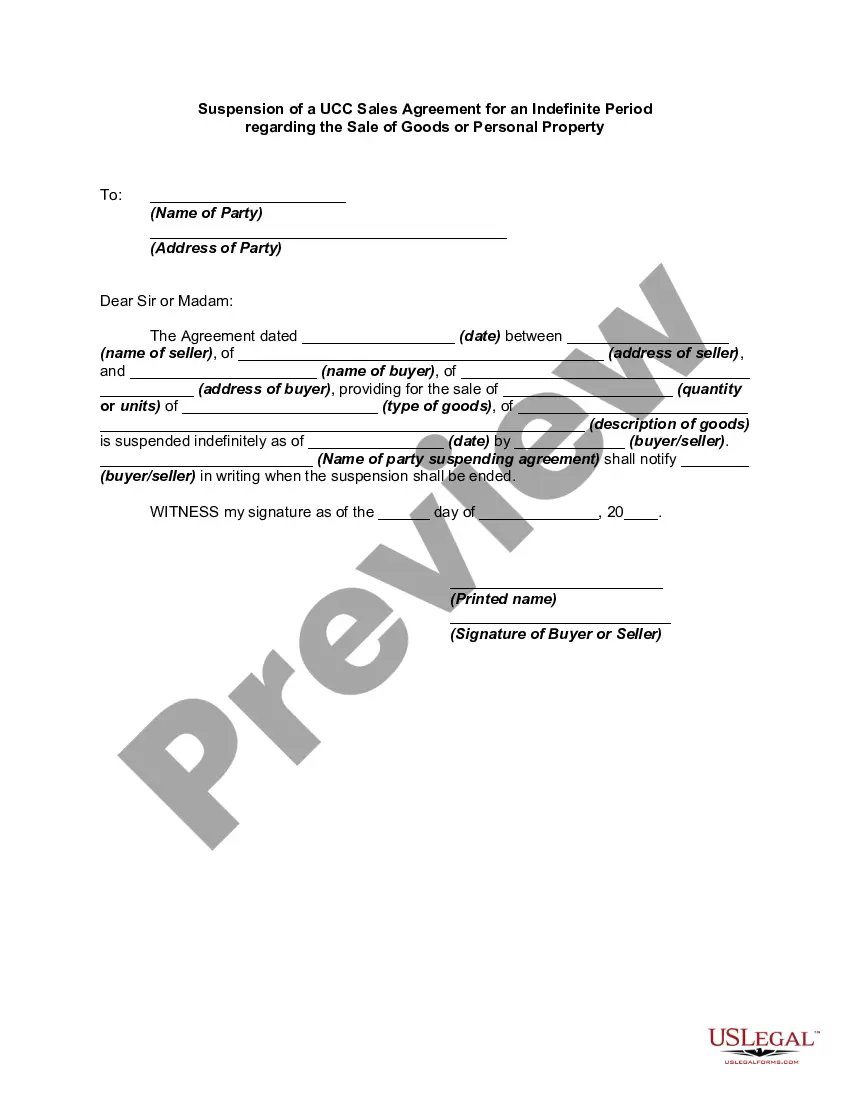
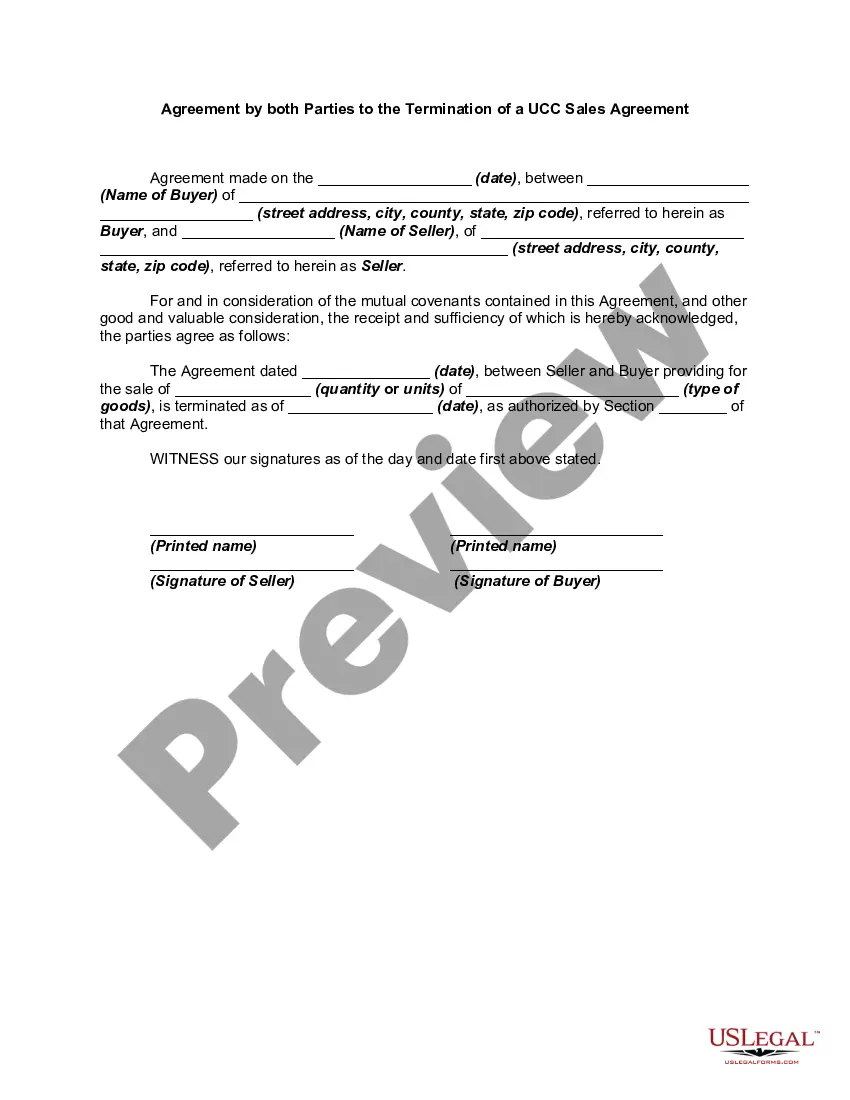
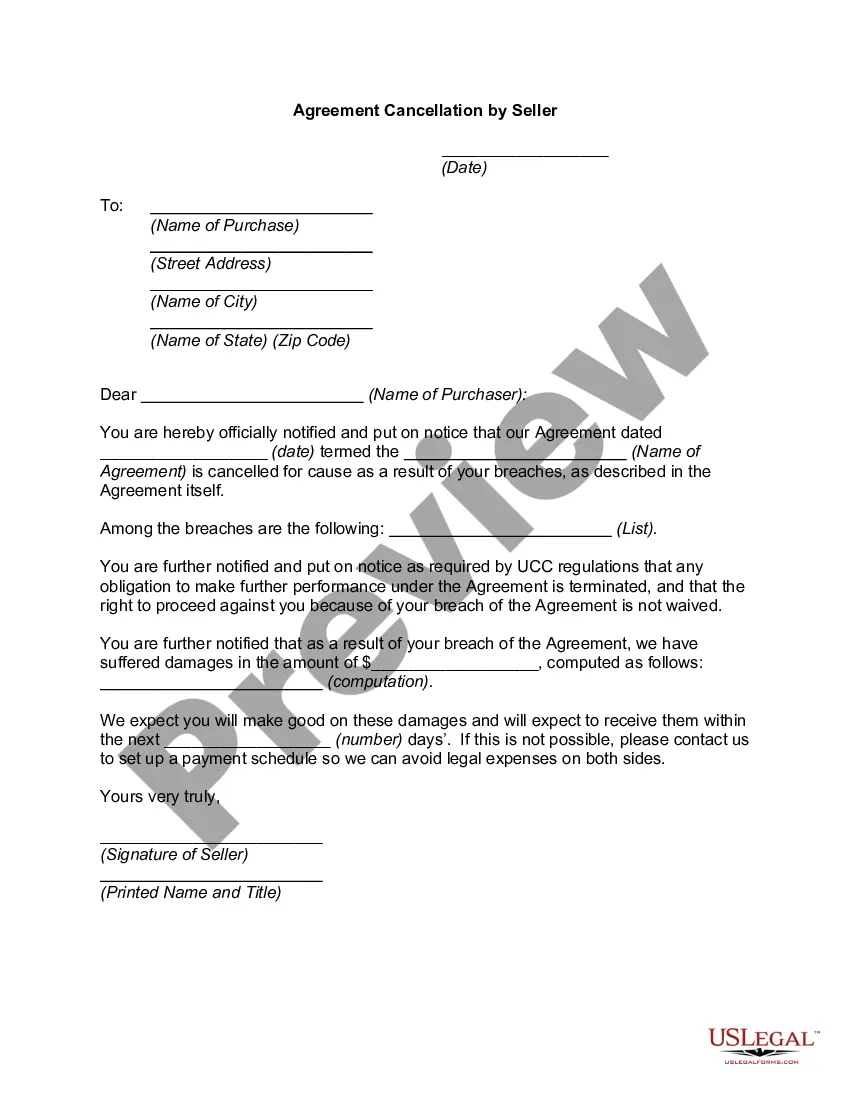
The Notice of Cancellation of Sales Agreement Pursuant to Article 2 of the Uniform Commercial Code is a formal document used by sellers or lessors to notify buyers or lessees of the cancellation of a sales agreement. This form is essential for discharging obligations under the contract, allowing sellers to pursue remedies for breach and freeing buyers from further obligations related to the agreement. It is distinct from other cancellation forms as it references specific provisions of the UCC, applicable across the United States.
Form components explained
- Name and address of the buyer or seller
- Date of the original agreement
- Description of the goods involved in the agreement
- Grounds for cancellation
- Signatures of the buyer or seller
When this form is needed
This form should be used when a seller or lessor decides to cancel a sales agreement due to a breach of contract, non-payment, or any other valid reason. It is important to notify the buyer or lessee formally, ensuring that all parties are aware of the cancellation and that the seller can seek any further legal remedies available.
Who should use this form
- Businesses or individuals selling goods who need to cancel a sales agreement
- Lessors who wish to terminate a lease agreement
- Any party to a sales agreement looking to officially document the cancellation
Steps to complete this form
- Identify the parties involved by filling in the names and addresses of the buyer or seller.
- Specify the date of the original sales agreement.
- Detail the type and quantity of goods associated with the agreement.
- Clearly state the reasons for canceling the agreement.
- Sign and date the notice to finalize the cancellation.
Does this form need to be notarized?
Notarization is generally not required for this form. However, certain states or situations might demand it. You can complete notarization online through US Legal Forms, powered by Notarize, using a verified video call available anytime.
Get your form ready online
Our built-in tools help you complete, sign, share, and store your documents in one place.
Make edits, fill in missing information, and update formatting in US Legal Forms—just like you would in MS Word.
Download a copy, print it, send it by email, or mail it via USPS—whatever works best for your next step.
Sign and collect signatures with our SignNow integration. Send to multiple recipients, set reminders, and more. Go Premium to unlock E-Sign.
If this form requires notarization, complete it online through a secure video call—no need to meet a notary in person or wait for an appointment.
We protect your documents and personal data by following strict security and privacy standards.

Make edits, fill in missing information, and update formatting in US Legal Forms—just like you would in MS Word.

Download a copy, print it, send it by email, or mail it via USPS—whatever works best for your next step.

Sign and collect signatures with our SignNow integration. Send to multiple recipients, set reminders, and more. Go Premium to unlock E-Sign.

If this form requires notarization, complete it online through a secure video call—no need to meet a notary in person or wait for an appointment.

We protect your documents and personal data by following strict security and privacy standards.
Common mistakes to avoid
- Failing to provide a specific reason for cancellation.
- Not including the date of the original agreement or the correct details about the goods.
- Omitting signatures or failing to date the form.
Benefits of using this form online
- Convenient download options allow for immediate use.
- Easily editable to accommodate specific circumstances.
- Access to templates prepared by licensed attorneys ensures legal reliability.
Looking for another form?






Form popularity
FAQ
Article 2 is a vast segment of the UCC that specifically addresses contracts for the sale of goods. A good is any movable property identified at the time of the contract. 'Goods' are also sometimes known as 'chattels. '
Basically, the broad categories that are not covered are transactions involving the sale of real estate, transactions involving the sale of businesses (although other articles of the UCC can and will apply), and transactions involving "intangibles, such as goodwill, patents, trademarks, and copyrights."
Another pretty large category of transactions that are not covered by UCC Article 2 is "services." Article 2 does not apply to contracts for services.
Article 2 of the UCC deals with the sale of goods. Sale and goods have defined meanings. Article 2A of the UCC deals with the leasing of goods. Lease has a defined meaning, and the UCC recognizes two types of leases: consumer leases and finance leases.
There are many business-related contracts that the UCC does not cover, including real estate contracts, service contracts, and employment contracts.Key among these are real estate contracts, service contracts, and employment contracts.
The policy of section 2-207 is that the parties should be able to enforce their agreement, whatever it is, despite discripancies between the oral agreement and the confirmation (or between an offer and acceptance) if enforcement can be granted without requiring either party to be bound to a material term to which he
Article 2 of the UCC governs contracts for the sale of goods. A body of law based on tradition and president.
UCC Corner: Introduction to Article 2Article 2 of the UCC (MCL 440.2101 et. seq.) governs the sale of goods. Article 2 is meant to provide default rules and gap-fillers that apply where two parties have not comprehensively addressed common issues in a written contract.