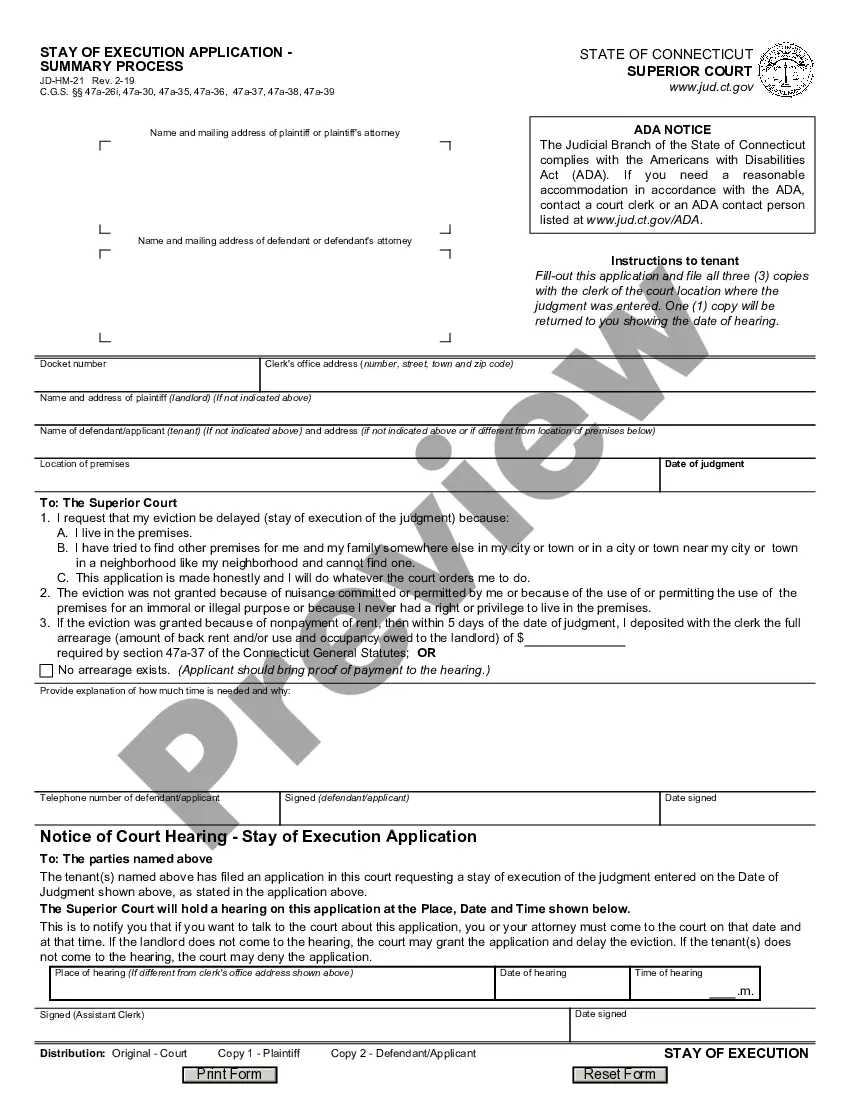
Demand for Address of Party under Statute or Rule
What this document covers
The Demand for Address of Party under Statute or Rule is a legal document used to request the residential address of a party involved in a legal action. This form follows the notice pleadings format established by the Federal Rules of Civil Procedure, making it relevant in many states. Unlike other forms that may require extensive details, this form focuses on obtaining the necessary address information for legal filings, streamlining the communication process between parties.
Form components explained
- Title and identification of the court and jurisdiction.
- Name of the plaintiff and defendant involved in the case.
- Demand statement requesting the address of the opposing party.
- Citation of relevant statute or rule supporting the request.
- Signature line for the attorney representing the requesting party.
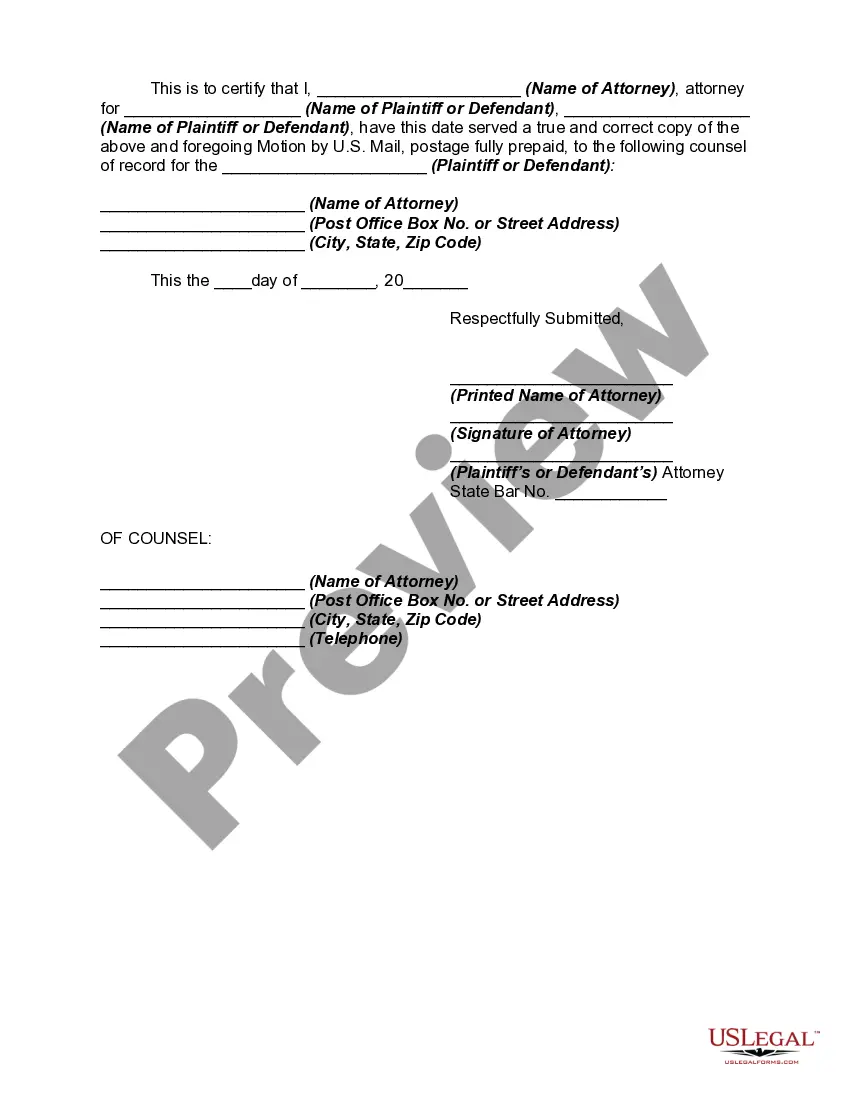
- Certificate of service confirming the document has been sent to the opposing counsel.
When to use this form
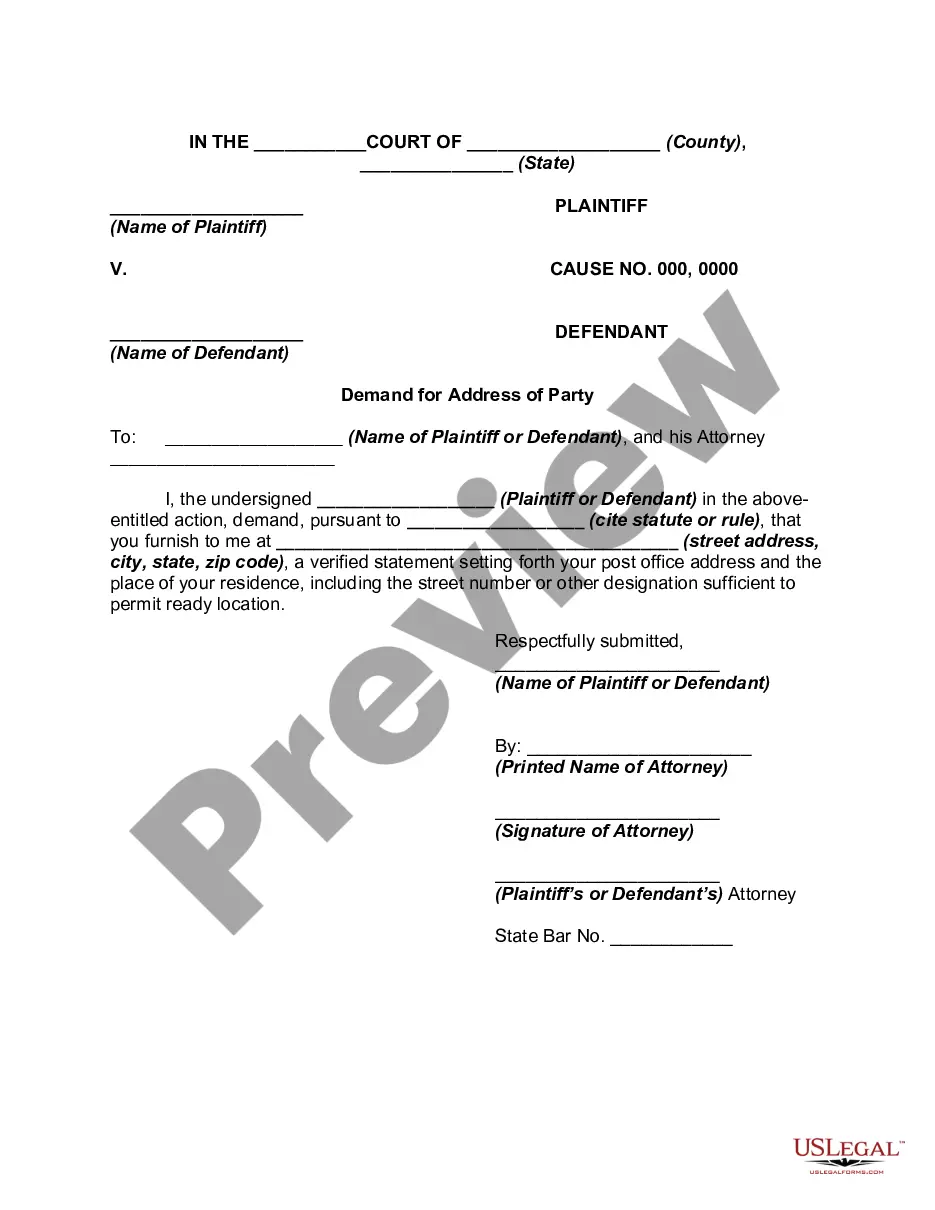
This form should be used when you need to formally request the address of a party involved in a legal matter but do not have this information. It is particularly useful when the party's address is necessary for serving legal documents or for other procedural requirements in a court case. If you are facing challenges in locating the opposing party, utilizing this form can help ensure that all parties are properly informed and that legal processes can proceed smoothly.
Who should use this form
- Litigants in a civil lawsuit who require the address of another party.
- Attorneys representing clients in legal actions.
- Individuals seeking to enforce their rights in court proceedings.
Completing this form step by step
- Identify and fill in the court name and jurisdiction at the top of the form.
- Enter the names of the plaintiff and defendant as they appear in the case.
- Clearly state the demand for the address of the opposing party and cite the pertinent statute or rule.
- Provide your current contact address for receiving the requested information.
- Sign and date the form, ensuring to include the attorney's name and bar number if applicable.
- Complete the certificate of service to confirm that you have sent a copy of the form to the opposing counsel.
Notarization guidance
Notarization is generally not required for this form. However, certain states or situations might demand it. You can complete notarization online through US Legal Forms, powered by Notarize, using a verified video call available anytime.
Get your form ready online
Our built-in tools help you complete, sign, share, and store your documents in one place.
Make edits, fill in missing information, and update formatting in US Legal Forms—just like you would in MS Word.
Download a copy, print it, send it by email, or mail it via USPS—whatever works best for your next step.
Sign and collect signatures with our SignNow integration. Send to multiple recipients, set reminders, and more. Go Premium to unlock E-Sign.
If this form requires notarization, complete it online through a secure video call—no need to meet a notary in person or wait for an appointment.
We protect your documents and personal data by following strict security and privacy standards.

Make edits, fill in missing information, and update formatting in US Legal Forms—just like you would in MS Word.

Download a copy, print it, send it by email, or mail it via USPS—whatever works best for your next step.

Sign and collect signatures with our SignNow integration. Send to multiple recipients, set reminders, and more. Go Premium to unlock E-Sign.

If this form requires notarization, complete it online through a secure video call—no need to meet a notary in person or wait for an appointment.

We protect your documents and personal data by following strict security and privacy standards.
Common mistakes
- Failing to cite the correct statute or rule when making the demand.
- Not providing adequate contact information to receive the response.
- Omitting the certificate of service or failing to properly serve opposing counsel.
Why complete this form online
- Convenience of downloading and completing the form at your own pace.
- Editability to personalize the document according to your specific case needs.
- Access to legal forms prepared by licensed attorneys, ensuring compliance with legal standards.
Looking for another form?










Form popularity
FAQ
Rule 11 refers to Federal Rule of Civil Procedure 11.Rule 11 is intended to make sure that when an attorney or a party submits a legal document to the Court in a civil litigation, he believes in good-faith that the document is truthful, supported by the law, and is being submitted for an appropriate purpose.
Federal Rule of Civil Procedure 11 provides that a district court may sanction attorneys or parties who submit pleadings for an improper purpose or that contain frivolous arguments or arguments that have no evidentiary support.
Step 1: Consult With Representatives. If you are considering going to court, talk to your potential representatives before filing a lawsuit. Step 2: File Complaint / Pleading. Step 3: Discovery. Step 4: Trial. Step 5: Verdict. Step 6: Appeal.
A party may move for a more definite statement of a pleading to which a responsive pleading is allowed but which is so vague or ambiguous that the party cannot reasonably prepare a response. The motion must be made before filing a responsive pleading and must point out the defects complained of and the details desired.
Rule 11(c)(3) Order. When imposing sanctions, the court shall describe the conduct . . . Simply, the court must outline what you did wrong so that you (and an appellate court) know what violation the court has determined you have committed. Rule 11 does not apply to discovery.
A jury trial demand is a request to have your case decided by fellow citizens as opposed to the judge should you proceed to trial. The decision to choose or waive a jury trial lies with the defendant.
Most of the time, the parties or lawyers in a lawsuit broker their own Rule 11 agreements. Other times, Rule 11 agreements will be reached at the behest of the court. Regardless, after the agreement has been negotiated, papered, and filed with the court, the parties are bound.
Federal Rule of Civil Procedure 11 provides that a district court may sanction attorneys or parties who submit pleadings for an improper purpose or that contain frivolous arguments or arguments that have no evidentiary support.
Rule 11 of the Federal Rules of Civil Procedure imposes a threshold prefiling investigation that, while appearing straightforward, might leave doubt about what satisfies the requisite inquiry. Under Rule 11, there is an affirmative duty to investigate both as to law and as to fact before a complaint is filed.