Default Notice to Lessee who has already Vacated the Premises
What this document covers
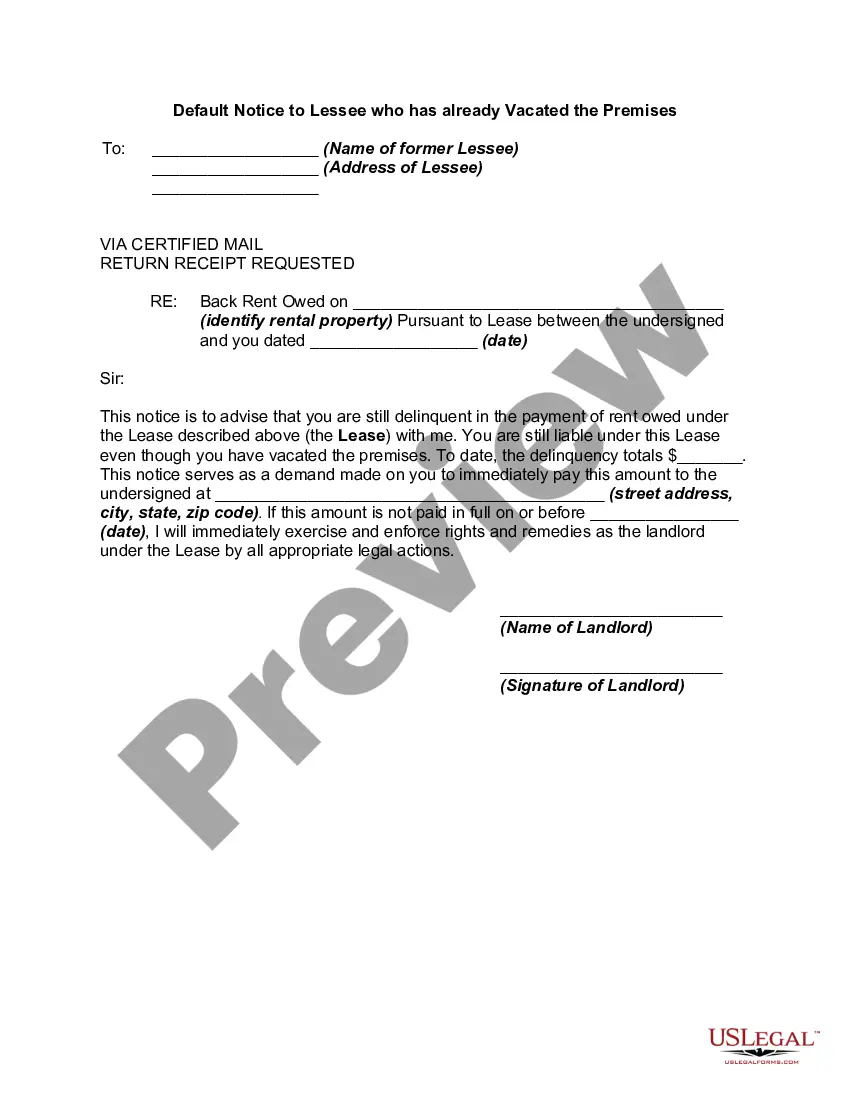
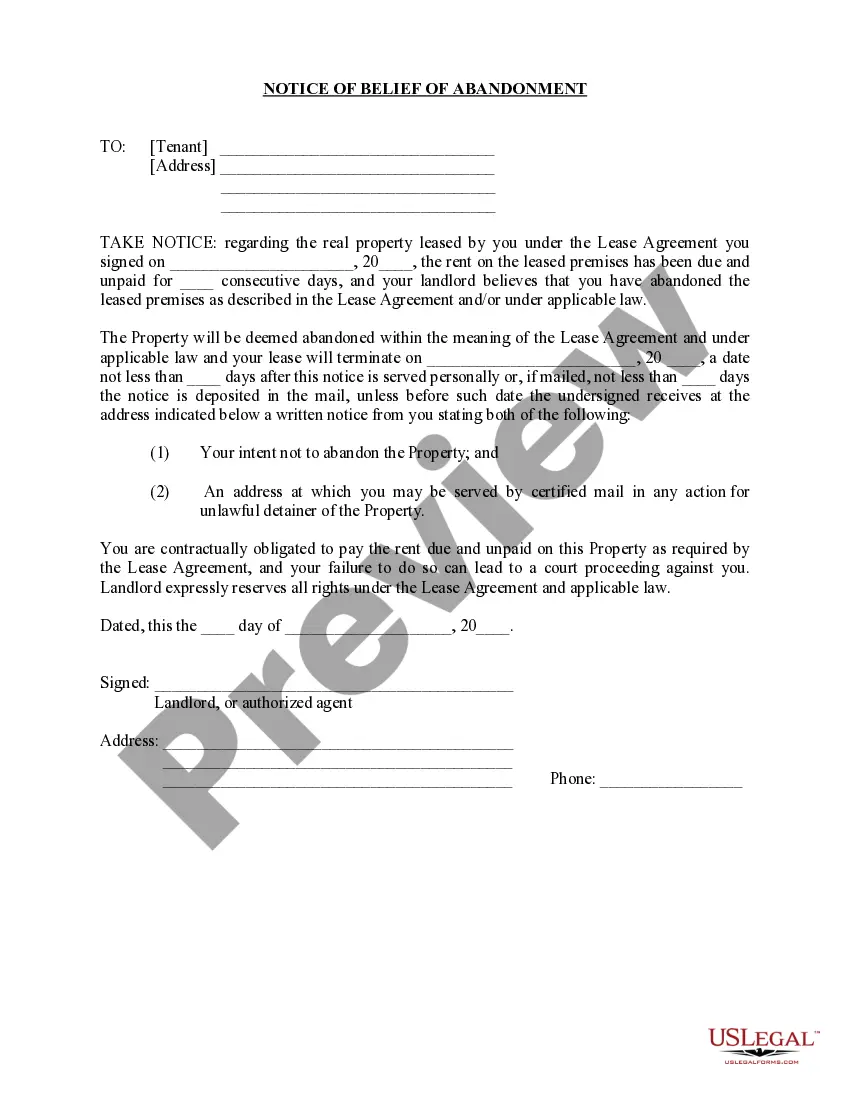
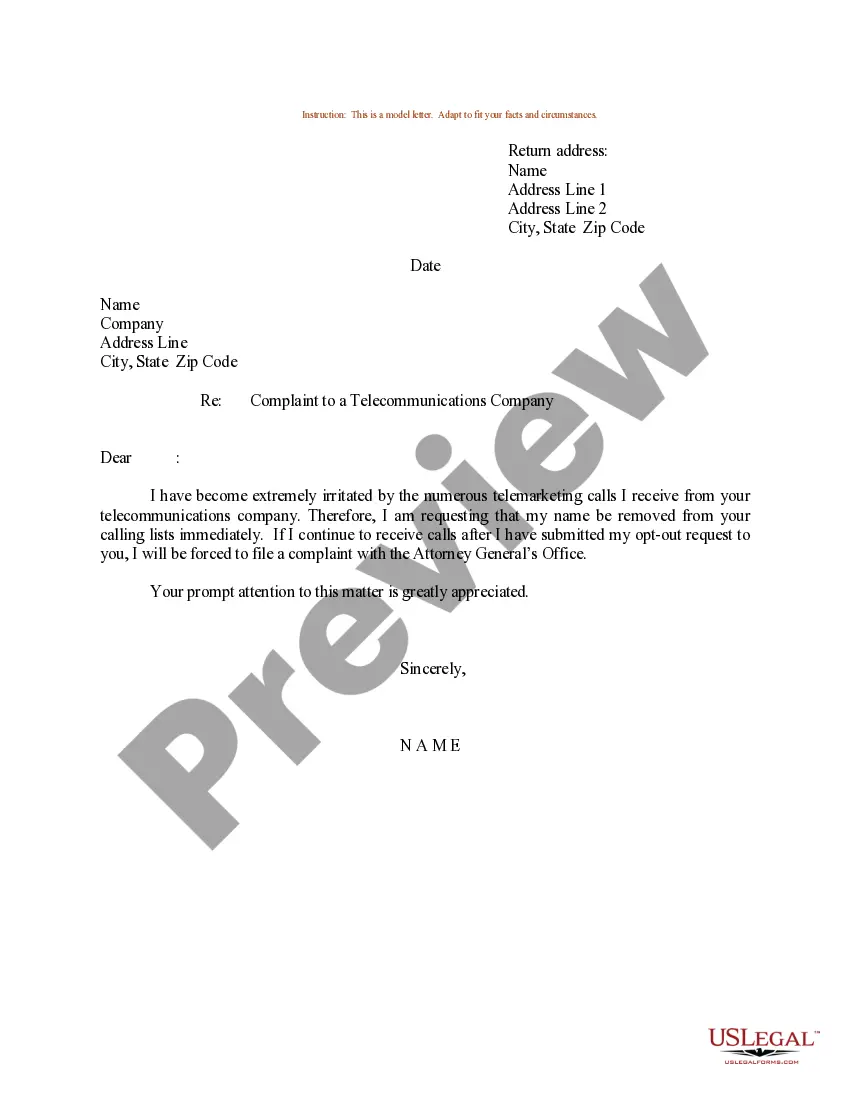
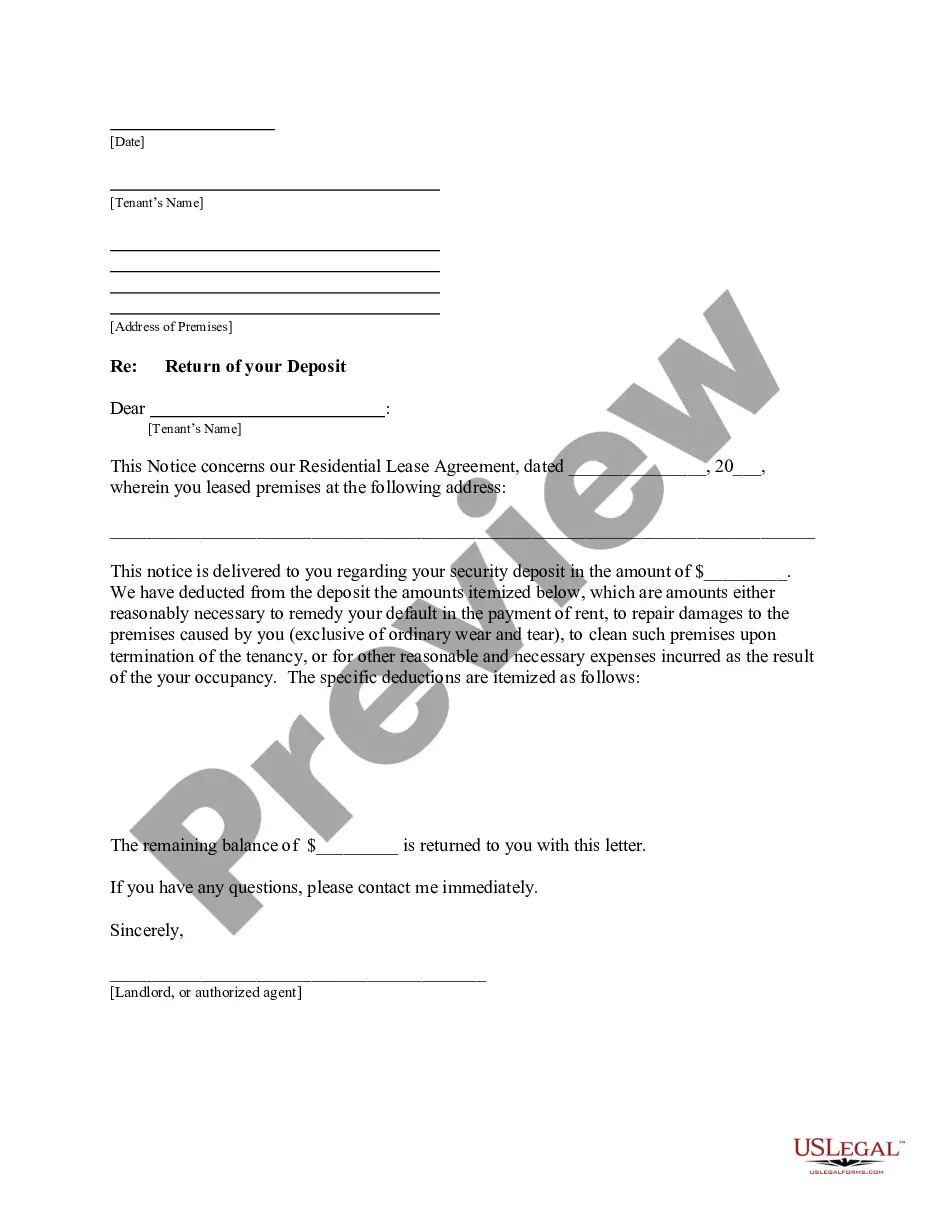
The Default Notice to Lessee who has already Vacated the Premises is a legal document used by landlords to notify a former tenant about unpaid rent following their early departure from the rental property. This form emphasizes the tenant's ongoing liability under the lease despite having vacated, distinguishing it from other eviction or notice forms. It serves as an official demand for the repayment of back rent owed to the landlord.
What’s included in this form
- Recipient information: includes the name and address of the former lessee.
- Property identification: specifies the rental property related to the lease.
- Lease information: details the date of the lease agreement.
- Delinquent amount: indicates the total amount of back rent owed.
- Payment deadline: sets a date for the payment to be made to avoid legal remedies.
- Landlord's signature and name: certifies the notice from the landlord.


When this form is needed
This form should be used when a tenant has vacated a rental property before the lease term has ended and has failed to pay the rent owed. It formalizes the landlord's request for payment and provides the tenant with notice of their outstanding obligation, which is essential before pursuing any legal action for recovery of the debt.
Who should use this form
- Landlords seeking to collect unpaid rent from former tenants.
- Property management companies handling multiple rental properties.
- Individuals renting out residential properties who need a formal method of communication regarding unpaid rent.
Instructions for completing this form
- Identify the parties: fill in the name and address of the former lessee.
- Specify the property: enter the address of the rental property in the designated section.
- Enter lease details: indicate the date of the lease agreement.
- State the delinquent amount: clearly document the total amount of back rent owed.
- Provide a payment deadline: specify a date by which the payment must be made.
- Sign and date the notice: the landlord must sign to authenticate the document.
Does this form need to be notarized?
This form does not typically require notarization unless specified by local law. However, if you have questions about specific requirements in your jurisdiction, consider consulting a legal professional.
Get your form ready online
Our built-in tools help you complete, sign, share, and store your documents in one place.
Make edits, fill in missing information, and update formatting in US Legal Forms—just like you would in MS Word.
Download a copy, print it, send it by email, or mail it via USPS—whatever works best for your next step.
Sign and collect signatures with our SignNow integration. Send to multiple recipients, set reminders, and more. Go Premium to unlock E-Sign.
If this form requires notarization, complete it online through a secure video call—no need to meet a notary in person or wait for an appointment.
We protect your documents and personal data by following strict security and privacy standards.

Make edits, fill in missing information, and update formatting in US Legal Forms—just like you would in MS Word.

Download a copy, print it, send it by email, or mail it via USPS—whatever works best for your next step.

Sign and collect signatures with our SignNow integration. Send to multiple recipients, set reminders, and more. Go Premium to unlock E-Sign.

If this form requires notarization, complete it online through a secure video call—no need to meet a notary in person or wait for an appointment.

We protect your documents and personal data by following strict security and privacy standards.
Mistakes to watch out for
- Failing to provide complete and accurate tenant and property information.
- Not specifying the correct amount of back rent owed.
- Omitting the deadline for payment, which can lead to confusion.
- Not signing the notice, making it less enforceable.
Benefits of completing this form online
- Convenient access: download and complete the form from anywhere, at any time.
- Editability: easily customize the document to fit specific circumstances.
- Reliability: forms are drafted by licensed attorneys to ensure legal accuracy and compliance.
Legal use & context
- This notice is enforceable and can serve as a basis for legal action if the tenant fails to respond.
- Appropriate for use in small claims court as evidence of the landlord's attempts to collect unpaid rent.
- While it formalizes communication, it should be part of a wider strategy for debt recovery.
Key takeaways
- The form serves as a formal demand for back rent from a former tenant who has vacated the premises.
- It is important to include accurate details regarding the tenant and the amount owed.
- Failure to complete the form correctly can hinder recovery of unpaid rent.
Looking for another form?

Form popularity
FAQ
The termination notice must be in writing, signed by the landlord/agent and set out: the address of the premises. the day by which the landlord/agent wants vacant possession. the grounds for termination (the reason/s, if any).
Eviction notices When written by a landlord, a notice to vacate is commonly known as an "eviction notice," which tells the tenant they must move out of the rental property.
For some landlords and property managers, a written email with all of the necessary information will do the trick. Keep your written notice simple and polite. Your notice to vacate letter is not the place to raise complaints or settle past issues with your landlord, property manager, or leasing staff.
Termination without grounds without a reason The landlord/agent cannot end your agreement without grounds before the last day of the fixed term.If the landlord/agent wants to end your agreement at the end of the fixed term, they must give you at least 30 days notice that includes the last day of the term.
Unfortunately that is not the case. Once a break notice has been served is cannot be unilaterally withdrawn. Even if both parties agree that the notice is withdrawn, service of the notice terminates the existing lease and creates a new tenancy by implication. There are a number of consequences that flow from this.
A Notice to Vacate is a notice written by the landlord or property manager giving a notice to leave the premises within a specified time frame. This type of notice is typically given during the end of a lease period, or due to an infringement of the lease agreement.
When responding to the notice to quit, there are several options available to the tenant: Pay any delinquent rent that is due to the landlord within the allotted time of the notice. Move out of the premises within the allotted time of the notice. File an answer with the judicial court.
An eviction is a legal proceeding in which a landlord asks a court to order the tenant to leave the property. Giving a tenant a notice to terminate is often a first step in the eviction process, but it isn't the same as an eviction.